
Government Services Reimagined: BlockchainBased Digital Identity for Citizens


Welcome to Blockchain Trends, your go-to source for unraveling the real-world applications of blockchain technology.
Imagine a future where accessing government services is seamless, secure, and entirely under your control. Our in-depth exploration of blockchain digital identity government services delves into how this transformative technology is poised to revolutionize citizen interaction with public institutions. Curious to learn how blockchain can reshape governance and empower individuals? Let's dive in...
Government Services Reimagined: Blockchain-Based Digital Identity for Citizens
- Introduction: The Need for Secure and Efficient Government Services
- Understanding Blockchain Digital Identity
- Blockchain's Role in Transforming Government Services
- Use Cases: Blockchain Digital Identity in Action
- Implementing Blockchain Digital Identity for Governments
- Challenges and Opportunities of Blockchain Digital Identity
- The Future of Government Services: A Decentralized Vision
- Conclusion: Embracing Blockchain for a More Secure and Efficient Future
-
Frequently Asked Questions
- How can blockchain enhance digital identity for government services?
- What are the potential benefits of using blockchain-based digital identity for citizens interacting with government?
- What are some of the regulatory hurdles that need to be addressed before large-scale implementation of blockchain digital identity in government services?
- How can blockchain-based digital identity improve the security of government services and reduce identity theft?
- Beyond security, what other applications of blockchain technology could be integrated with blockchain-based digital identity for government services?
- Final Reflection: Embracing Trust in the Digital Realm
- Unleash the Future: Become a Blockchain Identity Pioneer!
Introduction: The Need for Secure and Efficient Government Services
The Challenges of Traditional Government Identity Systems
Traditional government identity systems, often relying on centralized databases and physical documents, face significant challenges in the digital age. These systems are frequently plagued by inefficiencies, security vulnerabilities, and a lack of citizen control over personal data. For instance, many government services still require citizens to physically visit offices and present paper-based identification for verification, leading to long wait times and bureaucratic delays.
A study by McKinsey estimated that inefficient public services can cost economies up to 1% of GDP annually, highlighting the substantial economic impact of these outdated systems. Furthermore, centralized databases are prime targets for cyberattacks, as demonstrated by numerous large-scale data breaches in government agencies worldwide, exposing sensitive citizen information to potential misuse and identity theft.
The reliance on physical documents also presents considerable risks. Paper-based IDs are easily forged, lost, or damaged, making them unreliable for secure identity verification. This lack of robustness can lead to fraud in public programs, such as social welfare distribution and voting processes.
Moreover, the siloed nature of many government identity systems, where different departments maintain separate databases, creates fragmentation and hinders seamless service delivery. Citizens often need to re-verify their identity multiple times when interacting with different government agencies, leading to frustration and a disjointed user experience. The current infrastructure often struggles to keep pace with the increasing demands of a digitally transforming society, necessitating a more robust and citizen-centric approach to government identity management.
Why Blockchain Digital Identity is a Game Changer for Public Sector
Blockchain digital identity offers a transformative approach to address the shortcomings of traditional government identity systems. By leveraging the inherent security and transparency of blockchain technology, governments can create more efficient, secure, and citizen-empowering identity solutions. Blockchain's decentralized nature eliminates the single point of failure associated with centralized databases, significantly reducing the risk of large-scale data breaches.
Instead of relying on a central authority, identity information can be distributed across a network of nodes, making it far more resilient to cyberattacks and data manipulation. This enhanced security is crucial for maintaining citizen trust and safeguarding sensitive personal data within government services.
Furthermore, blockchain digital identity empowers citizens with greater control over their personal information. Self-sovereign identity (SSI) models, built on blockchain, enable individuals to own and manage their digital identities, deciding who has access to their data and for what purpose. This shift from centralized control to user-centric identity management aligns with modern expectations for data privacy and digital autonomy.
Blockchain can also streamline government service delivery by creating interoperable identity systems. A blockchain-based digital identity can be used across various government agencies and services, eliminating the need for repeated identity verification and simplifying citizen interactions with the public sector. This enhanced efficiency translates to reduced administrative costs, faster service delivery, and improved citizen satisfaction.
Understanding Blockchain Digital Identity
What is Blockchain Digital Identity?
Blockchain digital identity is a system that utilizes blockchain technology to create, manage, and verify digital identities. Unlike traditional systems where identity data is stored in centralized databases controlled by a single entity, blockchain digital identity distributes identity information across a decentralized network. This decentralization is achieved through the use of cryptography and distributed ledger technology (DLT), which ensures data immutability and transparency. In essence, a blockchain digital identity system acts as a secure and verifiable record of an individual's attributes and credentials, allowing them to prove their identity digitally without relying on physical documents or centralized authorities.
At its core, blockchain digital identity leverages cryptographic keys to establish ownership and control over identity data. Individuals are typically given a private key that allows them to manage their identity and authorize access to their data, while a public key is used for verification. When a citizen needs to prove their identity, they can use their private key to digitally sign a request, which can then be verified using their public key stored on the blockchain.
This process ensures that the identity claim is authentic and has not been tampered with. The blockchain acts as a trusted and auditable record of identity transactions, providing a secure foundation for digital interactions with government services and beyond.
Key Benefits of Blockchain Identity in Government
Implementing blockchain identity solutions within government services offers a wide range of benefits, spanning security, efficiency, and citizen empowerment. One of the most significant advantages is enhanced security. The decentralized and cryptographic nature of blockchain makes it significantly more resistant to data breaches and identity theft compared to traditional centralized systems. By distributing identity data across a network and using strong encryption, blockchain minimizes the risk of a single point of failure and makes it exceedingly difficult for malicious actors to compromise the entire system. This is particularly crucial for protecting sensitive citizen data held by government agencies.
Another key benefit is improved efficiency and reduced costs. Blockchain can streamline identity verification processes, eliminating the need for manual checks and paper-based documentation. This can significantly reduce administrative overhead and processing times for government services. For example, in Estonia, which has pioneered digital identity solutions, citizens can access a wide range of government services online using their digital IDs, resulting in significant time and cost savings.
Furthermore, blockchain-based systems can enhance transparency and accountability in government operations. All identity transactions recorded on the blockchain are auditable and tamper-proof, fostering greater trust and confidence in public institutions. Finally, blockchain identity empowers citizens by giving them greater control over their personal data and how it is used, promoting a more citizen-centric and privacy-respecting approach to government services.
Blockchain's Role in Transforming Government Services
Enhanced Security and Data Privacy for Citizen Information
Blockchain technology fundamentally enhances the security and data privacy of citizen information within government services. Traditional centralized databases are vulnerable to single points of failure, making them attractive targets for cyberattacks. In contrast, blockchain's distributed architecture eliminates this vulnerability by distributing data across multiple nodes.
Even if some nodes are compromised, the integrity of the overall system and the security of the data remain intact due to the consensus mechanisms and cryptographic techniques employed by blockchain networks. This inherent resilience is paramount for safeguarding the vast amounts of sensitive personal data held by government agencies, ranging from citizen identification details to healthcare records and financial information.
Moreover, blockchain facilitates enhanced data privacy through cryptographic controls and selective disclosure mechanisms. Using zero-knowledge proofs and similar techniques, citizens can selectively share specific attributes of their identity without revealing unnecessary personal information. For instance, when accessing an age-restricted government service, a citizen could prove they are over the required age without disclosing their exact date of birth.
This principle of data minimization is crucial for respecting citizen privacy and complying with increasingly stringent data protection regulations like GDPR. Blockchain's ability to enable secure and privacy-preserving identity management is a significant advancement over traditional systems, which often lack robust mechanisms for data protection and citizen control.
Streamlined Access to Government Services with Decentralized Identity
Decentralized identity solutions built on blockchain can dramatically streamline citizen access to government services. Currently, citizens often face cumbersome processes involving multiple logins, physical document submissions, and in-person visits to access various government services. A blockchain-based digital identity can act as a universal credential, allowing citizens to securely and seamlessly access a wide range of services across different government agencies and platforms. This eliminates the need for citizens to create and manage multiple usernames and passwords, simplifying the user experience and reducing administrative burden for both citizens and government employees.
Furthermore, blockchain can enable interoperability between different government systems. By establishing a common identity layer based on blockchain, different government agencies can securely share and verify citizen information without creating data silos. This interoperability facilitates more efficient service delivery and reduces duplication of effort. For example, a citizen's blockchain-based digital identity could be used to access healthcare services, apply for social welfare benefits, and participate in online voting, all without requiring separate identity verification processes for each service. This streamlined access not only improves citizen convenience but also reduces administrative costs and improves the overall efficiency of government operations.
Reducing Fraud and Identity Theft in Public Programs
Blockchain digital identity offers powerful tools to combat fraud and identity theft in public programs. Traditional systems relying on paper-based documents and centralized databases are susceptible to fraudulent activities, such as identity manipulation and double dipping in welfare programs. Blockchain's inherent transparency and immutability make it significantly more difficult to commit and conceal fraud.
All identity transactions and claims are recorded on the blockchain ledger, creating an auditable and tamper-proof record of activity. This transparency allows government agencies to track and verify identity information more effectively, reducing opportunities for fraudulent claims and ensuring that public resources are distributed to legitimate recipients.
Moreover, blockchain can enhance the security of identity verification processes, making it harder for fraudsters to impersonate citizens or create synthetic identities. Cryptographic authentication methods used in blockchain digital identity systems are far more robust than traditional username and password systems, significantly reducing the risk of unauthorized access and identity theft.
For instance, biometrics linked to a blockchain identity can provide a highly secure and reliable method of identity verification. By implementing blockchain-based identity solutions, governments can strengthen the integrity of public programs, reduce financial losses due to fraud, and enhance public trust in the fair and efficient administration of government services.
Use Cases: Blockchain Digital Identity in Action
Digital Identity for Voting and Elections: Securing the Democratic Process
Blockchain digital identity holds immense potential for securing and modernizing voting and election processes. Traditional voting systems are often criticized for being vulnerable to fraud and manipulation, raising concerns about the integrity of democratic elections. Blockchain can address these concerns by providing a transparent, auditable, and secure platform for voter registration and vote casting. A blockchain-based digital identity can be used to securely verify voter eligibility, preventing duplicate registrations and ensuring that only legitimate voters participate in elections. This digital verification can significantly reduce the risk of voter impersonation and other forms of electoral fraud.
Furthermore, blockchain can enhance the transparency of the vote counting process. Votes cast using a blockchain-based system can be recorded on a public ledger, making them auditable and verifiable by election observers and the public. This transparency can increase public trust in the fairness and accuracy of election results.
While full-scale blockchain voting systems are still under development and face challenges related to scalability and security, pilot projects and trials are being conducted in various countries and regions to explore the feasibility and benefits of using blockchain to secure the democratic process. For example, in Sierra Leone, blockchain technology was used in the 2018 general election to provide a secure and transparent vote counting system, demonstrating the potential of blockchain to enhance electoral integrity.
Blockchain-Based Healthcare Records: Improving Data Interoperability
The healthcare sector faces significant challenges in managing and sharing patient data securely and efficiently. Patient records are often fragmented across different healthcare providers and institutions, hindering data interoperability and impacting the quality of care. Blockchain technology offers a solution to these challenges by enabling the creation of secure and interoperable healthcare record systems.
A blockchain-based system can provide patients with a digital identity that allows them to control access to their healthcare records and share them securely with authorized healthcare providers. This patient-centric approach empowers individuals to manage their health information and facilitates seamless data exchange between healthcare professionals.
Blockchain can also improve data security and privacy in healthcare. Healthcare data is highly sensitive and subject to stringent privacy regulations like HIPAA. Blockchain's cryptographic security features and decentralized architecture can enhance the protection of patient data against unauthorized access and breaches.
Furthermore, blockchain can facilitate secure and auditable data sharing for research purposes, enabling medical researchers to access anonymized patient data while maintaining patient privacy. Several initiatives are exploring the use of blockchain for healthcare records, including projects focused on creating patient-controlled health data platforms and improving the efficiency of clinical trials. For instance, the Estonian e-Health system utilizes blockchain-like technology to ensure the integrity and auditability of patient records, demonstrating the practical application of blockchain in healthcare.
Land Registry and Property Ownership: Ensuring Transparency and Trust
Land registry systems in many parts of the world are plagued by inefficiencies, corruption, and disputes over property ownership. Traditional paper-based land registries are often vulnerable to fraud, tampering, and loss, creating uncertainty and hindering economic development. Blockchain technology offers a robust and transparent solution for modernizing land registry systems and establishing secure and verifiable records of property ownership.
By recording land titles and ownership information on a blockchain, governments can create a tamper-proof and auditable land registry that is accessible to authorized parties. This transparency and security can significantly reduce land disputes, improve the efficiency of property transactions, and foster greater trust in land administration.
Blockchain-based land registries can also enhance the accessibility and affordability of land registration services, particularly in developing countries where traditional systems are often inaccessible to marginalized communities. Digital land registries based on blockchain can streamline the registration process, reduce bureaucratic delays, and lower transaction costs. Several countries, including Georgia and Sweden, have initiated pilot projects to explore the use of blockchain for land registry. For example, Georgia has partnered with blockchain technology companies to develop a blockchain-based land registry system aimed at improving transparency and security in property ownership records, showcasing the real-world application of blockchain in this domain.
Secure and Transparent Distribution of Government Subsidies
The distribution of government subsidies and social welfare benefits often suffers from inefficiencies and leakages, with funds sometimes failing to reach intended recipients due to fraud or administrative errors. Blockchain technology can enhance the security and transparency of subsidy distribution, ensuring that funds are delivered efficiently and effectively to those who need them most.
By using blockchain digital identity to verify beneficiary eligibility and track the disbursement of funds, governments can reduce fraud and improve accountability in social welfare programs. Smart contracts on blockchain can automate the distribution process, ensuring that subsidies are released automatically when pre-defined conditions are met, further reducing administrative overhead and the potential for human error or corruption.
Furthermore, blockchain can provide greater transparency in the flow of government funds, allowing citizens and oversight bodies to track how subsidies are being distributed and used. This enhanced transparency can increase public trust in government programs and deter fraudulent activities. Pilot projects exploring blockchain for subsidy distribution have been implemented in various contexts, including refugee aid distribution and agricultural subsidies. For example, the World Food Programme has used blockchain technology to distribute cash assistance to Syrian refugees in Jordan, demonstrating the potential of blockchain to improve the efficiency and transparency of humanitarian aid and social welfare programs.
Implementing Blockchain Digital Identity for Governments
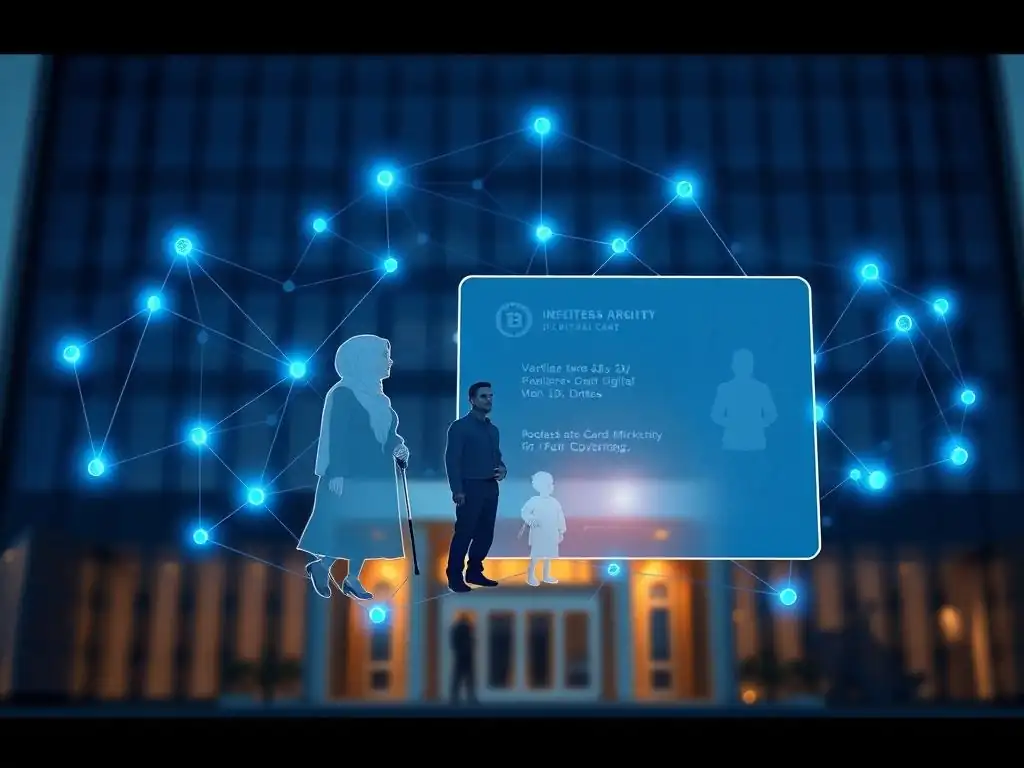
Key Considerations for Blockchain Adoption in the Public Sector
Governments considering adopting blockchain digital identity solutions must carefully consider several key factors to ensure successful implementation and maximize benefits. One crucial consideration is data privacy and regulatory compliance. Government identity systems handle highly sensitive personal data, and blockchain solutions must be designed to comply with relevant data protection regulations, such as GDPR and other national privacy laws. This includes implementing robust data encryption, access controls, and mechanisms for citizen consent and data portability. Balancing the transparency inherent in blockchain with the need for data privacy is a critical design challenge.
Scalability and performance are also paramount concerns. National identity systems need to handle a massive volume of transactions and user requests efficiently. Governments must choose blockchain platforms and architectures that can scale to meet the demands of a large population and ensure fast transaction processing times. Interoperability with existing government infrastructure is another essential consideration. Blockchain identity solutions need to integrate seamlessly with legacy systems and databases used by various government agencies to avoid creating new data silos and ensure smooth service delivery.
Furthermore, governments must address governance and legal frameworks for blockchain identity. This includes establishing clear legal recognition for digital identities, defining roles and responsibilities for identity management, and developing dispute resolution mechanisms. Public awareness and education are also crucial for successful adoption. Governments need to educate citizens about the benefits of blockchain digital identity and build trust in the security and privacy of these new systems.
Choosing the Right Blockchain Platform for Government Identity Solutions
Selecting the appropriate blockchain platform is a critical decision for governments implementing digital identity solutions. Several types of blockchain platforms exist, each with its own characteristics and suitability for government applications. Permissioned blockchains, also known as consortium blockchains, are often preferred for government use cases due to their enhanced control over network participants and data access. These platforms allow governments to control who can participate in the network and access identity data, ensuring compliance with regulatory requirements and maintaining data privacy. Examples of permissioned blockchain platforms include Hyperledger Fabric and R3 Corda.
Public blockchains, like Ethereum and Bitcoin, are generally open and permissionless, meaning anyone can join the network and participate in transaction validation. While offering greater transparency and decentralization, public blockchains may not be ideal for government identity systems due to concerns about data privacy and regulatory compliance. However, hybrid approaches that combine features of both permissioned and public blockchains are also emerging.
When choosing a platform, governments should consider factors such as scalability, security, privacy features, interoperability, cost, and the availability of developer support and expertise. The specific requirements and priorities of each government will determine the most suitable blockchain platform for their digital identity solution.
Addressing Regulatory Compliance and Data Governance
Regulatory compliance and data governance are paramount considerations for governments implementing blockchain digital identity. Government identity systems handle highly sensitive personal data, and strict adherence to data protection regulations is essential. Blockchain solutions must be designed to comply with regulations such as GDPR, CCPA, and other national privacy laws. This includes implementing features that support data minimization, purpose limitation, and citizen rights to access, rectify, and erase their personal data. Data governance frameworks need to be established to define policies and procedures for data collection, storage, processing, and sharing within the blockchain identity system.
Furthermore, governments need to address legal recognition and interoperability of digital identities. Legislation may be required to formally recognize blockchain-based digital identities as legally valid forms of identification for accessing government services and conducting digital transactions. International standards and frameworks are also needed to ensure interoperability of digital identities across borders, facilitating cross-border service delivery and citizen mobility. Governments should engage with regulatory bodies, legal experts, and technology providers to develop comprehensive regulatory frameworks and data governance policies that support the responsible and ethical deployment of blockchain digital identity solutions.
Challenges and Opportunities of Blockchain Digital Identity
Scalability and Performance Considerations for National Identity Systems
Scalability and performance are significant challenges for deploying blockchain digital identity solutions at a national scale. National identity systems must be capable of handling millions or even billions of transactions and user requests efficiently and reliably. Traditional blockchain platforms, particularly public blockchains, can face limitations in terms of transaction throughput and latency. Processing a large volume of identity verifications and transactions in a timely manner is crucial for ensuring seamless service delivery and avoiding bottlenecks in government operations. Therefore, governments need to carefully consider scalability requirements and choose blockchain architectures and consensus mechanisms that can meet these demands.
Layer-2 scaling solutions, such as state channels and rollups, are being developed to improve the scalability of blockchain networks. These solutions can offload transaction processing from the main blockchain, increasing throughput and reducing transaction costs. Furthermore, advancements in blockchain technology, such as sharding and improved consensus algorithms, are continuously enhancing the scalability and performance of blockchain platforms.
Governments should explore and evaluate these scaling solutions and technological advancements to ensure that their blockchain digital identity systems can scale effectively to meet the needs of a national population. Performance testing and benchmarking are also crucial to assess the scalability and responsiveness of blockchain identity solutions under realistic load conditions.
Interoperability with Existing Government Infrastructure
Integrating blockchain digital identity solutions with existing government infrastructure presents a significant challenge. Government agencies often rely on legacy systems and databases that may not be easily compatible with blockchain technology. Interoperability is crucial to ensure seamless data exchange and service delivery across different government departments and platforms. Blockchain identity solutions need to be designed to integrate with these legacy systems, either through APIs or other integration mechanisms. This may require significant effort and investment in system integration and modernization.
Furthermore, data standardization is essential for interoperability. Different government agencies may use different data formats and standards for identity information. Establishing common data standards and protocols for blockchain digital identity is crucial to ensure that identity data can be shared and verified across different systems and agencies. Collaboration and coordination between government agencies, technology providers, and standards organizations are necessary to address interoperability challenges and develop common standards for blockchain digital identity in the public sector. Open standards and interoperability frameworks can facilitate the adoption and integration of blockchain identity solutions across diverse government systems and jurisdictions.
Public Awareness and Education: Building Trust in Blockchain Technology
Public awareness and education are critical for the successful adoption of blockchain digital identity by governments. Blockchain technology is still relatively new to many citizens, and there may be misconceptions or concerns about its security, privacy, and complexity. Building public trust in blockchain digital identity is essential for ensuring widespread acceptance and adoption.
Governments need to invest in public awareness campaigns to educate citizens about the benefits of blockchain digital identity, address their concerns, and promote understanding of how these systems work. Clear and accessible information about data privacy and security measures implemented in blockchain identity solutions is particularly important for building public confidence.
Furthermore, digital literacy and access are important considerations. Governments need to ensure that all citizens, including those with limited digital skills or access to technology, can effectively use blockchain digital identity solutions. This may require providing digital literacy training programs and ensuring equitable access to digital devices and internet connectivity. User-friendly interfaces and support mechanisms are also crucial for making blockchain digital identity accessible and usable for all citizens. Building public trust and ensuring inclusivity are essential for realizing the full potential of blockchain digital identity in transforming government services and empowering citizens.
The Future of Government Services: A Decentralized Vision
The Potential of Self-Sovereign Identity (SSI) in Government
Self-sovereign identity (SSI) holds transformative potential for reshaping government services and empowering citizens in the digital age. SSI is a paradigm shift from traditional centralized identity models, giving individuals control over their digital identities and personal data. In an SSI model, citizens own and manage their identity credentials, deciding who has access to their data and for what purposes.
Blockchain technology provides the underlying infrastructure to enable SSI, offering secure and decentralized mechanisms for identity management and verification. Governments can play a crucial role in fostering the adoption of SSI by providing frameworks, standards, and infrastructure to support citizen-centric digital identity solutions.
SSI aligns with principles of data privacy, citizen empowerment, and digital autonomy. It reduces reliance on centralized databases and minimizes the risk of data breaches and identity theft. By giving citizens control over their identity data, SSI promotes greater trust and transparency in government services.
Furthermore, SSI can facilitate more efficient and personalized service delivery. Citizens can selectively share relevant identity information with government agencies, streamlining access to services and reducing the need for repeated identity verification. The adoption of SSI in government services represents a move towards a more citizen-centric and decentralized model of governance, empowering individuals and fostering greater digital inclusion.
Blockchain-Enabled Smart Contracts for Automated Government Processes
Blockchain-enabled smart contracts can automate and streamline various government processes, increasing efficiency, reducing costs, and minimizing bureaucratic delays. Smart contracts are self-executing agreements written in code and stored on a blockchain. They automatically enforce the terms of a contract when pre-defined conditions are met, eliminating the need for intermediaries and manual intervention. Governments can leverage smart contracts to automate processes such as subsidy distribution, permit issuance, contract management, and regulatory compliance. For example, smart contracts can automatically disburse social welfare payments when beneficiaries meet eligibility criteria, ensuring timely and transparent distribution of funds.
Smart contracts can also enhance transparency and accountability in government operations. The code and execution of smart contracts are auditable and tamper-proof, providing a clear and verifiable record of government actions. This transparency can reduce corruption and increase public trust in government institutions. Furthermore, smart contracts can improve the efficiency of government procurement and supply chain management. By automating contract execution and payment processes, smart contracts can reduce administrative overhead and streamline interactions with government suppliers and contractors. The adoption of smart contracts in government services represents a move towards more efficient, transparent, and automated public administration.
The Role of Blockchain in Building More Citizen-Centric Governance
Blockchain technology, particularly in the context of digital identity and decentralized applications, has the potential to foster more citizen-centric governance models. Traditional governance structures are often characterized by centralized decision-making and limited citizen participation. Blockchain can empower citizens by providing tools for secure digital identity, transparent voting, and decentralized communication and collaboration. Blockchain-based voting systems can enhance the integrity and accessibility of elections, enabling greater citizen participation in democratic processes. Decentralized communication platforms can facilitate direct citizen engagement with government officials and policymakers, fostering more participatory and responsive governance.
Furthermore, blockchain can enable greater transparency and accountability in government operations. Publicly auditable blockchain ledgers can provide citizens with real-time information about government spending, policy decisions, and service delivery performance. This transparency can increase public trust and enable citizens to hold government accountable. Citizen-centric governance models, enabled by blockchain technology, can lead to more responsive, efficient, and equitable public services. By empowering citizens and fostering greater transparency and participation, blockchain can contribute to building more democratic and accountable government institutions in the digital age.
Conclusion: Embracing Blockchain for a More Secure and Efficient Future
Blockchain Digital Identity: A Catalyst for Government Innovation
Blockchain digital identity is not merely a technological upgrade but a catalyst for fundamental innovation in government services. It offers a pathway to transform outdated, inefficient, and vulnerable identity systems into secure, efficient, and citizen-centric platforms. By embracing blockchain, governments can address the challenges of traditional identity management and unlock new possibilities for digital governance.
The enhanced security, data privacy, and efficiency offered by blockchain digital identity are crucial for building trust and improving service delivery in the digital age. Moreover, blockchain empowers citizens with greater control over their personal data and facilitates more seamless and personalized interactions with government agencies.
The adoption of blockchain digital identity can drive broader digital transformation across the public sector. It can serve as a foundation for developing new digital services, streamlining existing processes, and fostering greater collaboration between government agencies. Furthermore, blockchain can enable governments to embrace emerging technologies such as AI and IoT, creating more intelligent and responsive public services. Blockchain digital identity is not just about improving identity management; it is about reimagining government services for a more secure, efficient, and citizen-centric future.
Next Steps for Governments in Exploring Blockchain-Based Solutions
Governments interested in exploring blockchain-based digital identity solutions should take a strategic and phased approach. The first step is to conduct thorough research and assessment of their current identity systems and identify areas where blockchain can offer the greatest benefits. This includes evaluating the security vulnerabilities, inefficiencies, and citizen pain points associated with existing systems. Governments should also engage with stakeholders, including technology providers, legal experts, and citizen groups, to gather input and build consensus around blockchain adoption. Developing a clear roadmap and strategy for blockchain implementation is crucial, outlining specific goals, timelines, and resource allocation.
Pilot projects and proof-of-concepts are essential for testing and validating blockchain identity solutions in a real-world environment before large-scale deployment. These pilot projects can focus on specific use cases, such as digital identity for accessing a particular government service or program. Learning from these pilot projects will provide valuable insights and inform the дальнейшее development and implementation of blockchain identity solutions.
Governments should also invest in building internal expertise in blockchain technology and foster collaboration with the blockchain ecosystem. By taking a strategic and phased approach, governments can effectively explore and adopt blockchain digital identity solutions to create more secure, efficient, and citizen-centric public services.
Frequently Asked Questions
How can blockchain enhance digital identity for government services?
Blockchain offers a secure and transparent way to manage digital identities, making them less susceptible to fraud and more readily verifiable for government services. This can streamline access to various services for citizens.
What are the potential benefits of using blockchain-based digital identity for citizens interacting with government?
Benefits include enhanced security, improved data privacy through decentralized control, and streamlined access to government services, ultimately leading to increased efficiency and citizen satisfaction.
What are some of the regulatory hurdles that need to be addressed before large-scale implementation of blockchain digital identity in government services?
Key regulatory hurdles include establishing clear data governance frameworks, addressing privacy concerns related to data storage and access on a blockchain, and ensuring compliance with existing data protection laws.
How can blockchain-based digital identity improve the security of government services and reduce identity theft?
By creating a tamper-proof record of identity information, blockchain can significantly reduce the risk of identity theft and fraud. This enhanced security can also improve trust in government services.
Beyond security, what other applications of blockchain technology could be integrated with blockchain-based digital identity for government services?
Other applications include secure document management, verifiable credentials for education and employment, and transparent voting systems, all of which can be linked to a citizen's digital identity for a more integrated experience.
Final Reflection: Embracing Trust in the Digital Realm
The exploration of blockchain digital identity for government services reveals a potent pathway toward a future where trust and efficiency converge. The potential to revolutionize citizen interactions with government, streamlining processes and enhancing security, is not merely theoretical; it's a tangible prospect poised to reshape our civic landscape. The promise of verifiable, tamper-proof identities offers a compelling solution to the challenges of modern governance, demanding our attention and proactive engagement.
This concept of a decentralized, citizen-centric identity system resonates deeply, influencing how we perceive the relationship between individuals and the state. The shift towards empowering citizens with control over their own data is a fundamental step towards a more equitable and transparent society. The future of identity is decentralized, giving individuals control over their own data and enabling them to interact with services in a secure and privacy-preserving manner.
This vision, while ambitious, is within reach, requiring collaborative efforts and a commitment to ethical implementation.
As we stand on the cusp of this technological transformation, I invite you to consider the implications of a blockchain-based digital identity. How can you, as a citizen, advocate for responsible innovation and ensure that these advancements serve the common good? Let us embrace the potential of this technology to build a future where government services are not only efficient but also deeply rooted in trust, transparency, and the empowerment of every individual.
Unleash the Future: Become a Blockchain Identity Pioneer!
Thank you for exploring how blockchain is transforming citizen identification. You now see the tremendous potential of secure, decentralized digital IDs. It’s time to move from understanding to action and help shape this innovative future.
Here’s how you can contribute:
- Explore the Field: Investigate current blockchain identity projects and identify key challenges or areas for improvement. This will deepen your understanding of the landscape.
- Share this article with your network on social media and start a conversation about the advantages of blockchain-based digital identities. Let’s raise awareness!
- Consider learning a blockchain development skill — even a beginner course will provide valuable insights into the technology behind this revolution. You might be surprised by what you can achieve!
What specific challenges do you believe need to be addressed to accelerate the adoption of blockchain-based digital identities in government services? Share your thoughts below!
Leave a Reply