
The Role of Oracles in Blockchain Transparency: Bridging the Gap to RealWorld Data


Welcome to Blockchain Trends, your compass in the rapidly evolving world of decentralized technology! Dive deep beyond the hype as we explore the transformative power of blockchain across diverse sectors. Ever wondered how blockchain applications connect to the tangible world? Our latest article unravels the crucial role of blockchain oracles in bringing real-world data onto the chain. Discover how these vital components are shaping the future of blockchain transparency and governance, and why understanding them is essential for navigating this exciting new landscape. Intrigued? Read on to explore the vital link between blockchain and the information that fuels it!
- The Role of Oracles in Blockchain Transparency: Bridging the Gap to Real-World Data
- Understanding Blockchain Oracles and Their Significance
- How Oracles Enhance Blockchain Transparency
- Types of Blockchain Oracles and Their Applications
- The Impact of Oracles on Real-World Data Integration
- Challenges and Future of Blockchain Oracles
- Choosing the Right Oracle Solution for Your Needs
- Conclusion: Blockchain Oracles - Catalysts for Transparency and Real-World Adoption
-
Frequently Asked Questions
- What is a blockchain oracle, and why is it necessary?
- How do blockchain oracles enhance transparency in blockchain systems?
- What are some examples of real-world data that blockchain oracles can provide?
- What are the potential risks associated with using blockchain oracles?
- How are blockchain oracles regulated, and what is the future of oracle regulation?
- Final Reflection: Embracing Truth in a Decentralized World
- Unveil the Power of Real-World Blockchain!
The Role of Oracles in Blockchain Transparency: Bridging the Gap to Real-World Data
Blockchain Trends: Exploring Transparency & Accountability
Blockchain technology, initially popularized by cryptocurrencies, extends far beyond digital currencies. At its core, blockchain offers a foundation for transparency and accountability, principles that are increasingly sought after in various sectors. The immutable and auditable nature of blockchain transactions provides a verifiable record, enabling users to track data and processes with unprecedented clarity. This inherent transparency is not just about open access to information; it's about fostering trust and enabling verifiable accountability in complex systems, from supply chains to governance models.
"Blockchain Trends" is dedicated to exploring these transformative applications, delving into how blockchain can revolutionize industries and societal structures. We examine the practical implementations of blockchain in areas like Decentralized Finance (DeFi), enterprise solutions, and regulatory frameworks, always with an eye on the future of decentralized systems. Transparency and accountability are not just buzzwords; they are the cornerstones of a more equitable and efficient future, and blockchain, with its unique properties, stands as a powerful tool to achieve this vision.
Understanding Blockchain Oracles and Their Significance
What are Blockchain Oracles? Defining the Bridge to External Data
Blockchain oracles are essential third-party services that connect blockchains to external systems, thereby enabling smart contracts to interact with real-world data. Blockchains, by design, are isolated networks; they cannot natively access information existing outside their ecosystem. Oracles act as bridges, securely retrieving and verifying external data and feeding it onto the blockchain for use in smart contracts. This data can range from price feeds for financial applications to weather data for insurance contracts, or even outcomes of real-world events to trigger actions within a blockchain-based system.
In essence, blockchain oracles are data providers that translate and relay information between the off-chain and on-chain worlds. They listen for specific requests from smart contracts on the blockchain, retrieve the relevant data from external sources, and then relay this verified information back to the blockchain for the smart contract to execute its terms. Without oracles, smart contracts would be limited to processing only on-chain data, severely restricting their utility and preventing them from interacting with the vast amount of data that exists in the real world.
Why are Oracles Essential for Blockchain Transparency and Accountability?
Oracles play a crucial role in extending blockchain's inherent transparency and accountability to real-world interactions and agreements. By bringing external data onto the blockchain, oracles allow smart contracts to react to and reflect real-world events in a transparent and verifiable manner. For example, in a supply chain application, an oracle could verify the location and condition of goods at various stages, recording this information on the blockchain. This creates an immutable and transparent audit trail, enhancing accountability across the entire supply chain.
Furthermore, oracles themselves can be designed to enhance transparency. Decentralized oracle networks, for instance, use multiple independent sources to verify data, reducing the risk of manipulation and increasing the reliability of the information provided to smart contracts. This multi-source verification strengthens the trust in the data and, consequently, in the transparency and accountability of the blockchain applications that rely on this data. The use of blockchain oracles for real-world data integration is therefore fundamental to realizing the full potential of blockchain for transparent and accountable systems.
The Oracle Problem: Challenges in Trusting Off-Chain Data
The "oracle problem" highlights a critical challenge in blockchain technology: how to trust data that originates from outside the inherently trustless blockchain environment. While blockchains excel at ensuring the integrity and security of on-chain data and transactions, oracles introduce a potential point of vulnerability. If an oracle provides inaccurate or manipulated data, the smart contract relying on that data will execute based on flawed information, undermining the intended transparency and accountability.
This problem arises because oracles, by definition, interact with the "real world," which is not governed by the same cryptographic guarantees as the blockchain. The security and reliability of an oracle system depend heavily on the mechanisms in place to verify the data it provides and to ensure it is not compromised or manipulated. Addressing the oracle problem is paramount to building robust and trustworthy blockchain applications that bridge the gap between the digital and physical realms.
How Oracles Enhance Blockchain Transparency
Verifiable Data Feeds: Ensuring Data Integrity for Smart Contracts
One of the primary ways oracles enhance blockchain transparency is by providing verifiable data feeds for smart contracts. These data feeds are designed to ensure the integrity and accuracy of the information relayed to the blockchain. Sophisticated oracle solutions employ various techniques to achieve verifiability, including using multiple data sources, cryptographic proofs, and reputation systems. By sourcing data from numerous reputable sources and cross-referencing information, oracles can significantly reduce the risk of relying on a single, potentially biased or inaccurate data point.
Furthermore, some oracles utilize cryptographic techniques to prove the authenticity and integrity of the data they provide. This can involve using digital signatures or zero-knowledge proofs to demonstrate that the data has not been tampered with during transmission from the source to the blockchain. Verifiable data feeds are crucial for building trust in smart contract applications, as they provide assurance that the decisions made by these contracts are based on reliable and untampered real-world data.
Decentralized Oracles: Mitigating Central Point of Failure Risks
Decentralized oracles represent a significant advancement in enhancing blockchain transparency and security by mitigating the risks associated with centralized systems. Traditional, centralized oracles introduce a single point of failure and potential manipulation. If a centralized oracle is compromised or malfunctions, all smart contracts relying on it could be affected, undermining the integrity of the entire system. Decentralized oracle networks (DONs) address this vulnerability by distributing the oracle function across multiple independent nodes.
In a decentralized oracle network, multiple oracles independently retrieve data from various sources and reach a consensus on the correct information to be relayed to the blockchain. This redundancy and consensus mechanism significantly reduces the risk of data manipulation or single points of failure. If one oracle node provides inaccurate data or is compromised, the other nodes in the network will detect and disregard the faulty information, ensuring the overall accuracy and reliability of the data feed. This decentralization is key to building robust and transparent blockchain applications that are resistant to censorship and manipulation.
Oracle Reputation Systems: Building Trust and Accountability
Oracle reputation systems are crucial for establishing trust and accountability within oracle networks, further enhancing blockchain transparency. These systems are designed to track and evaluate the performance and reliability of individual oracles within a network over time. Factors such as data accuracy, uptime, and responsiveness are typically monitored and used to build a reputation score for each oracle. Oracles with higher reputation scores are generally considered more trustworthy and reliable.
Reputation systems can incentivize oracles to act honestly and provide accurate data. Oracles with good reputations may be rewarded with more frequent requests and higher fees, while those with poor reputations may be penalized or excluded from the network. This system of incentives and penalties encourages oracles to maintain high standards of performance and data integrity, ultimately strengthening the transparency and reliability of the entire blockchain ecosystem that relies on their services. Reputation systems are a vital component in building trust and accountability in decentralized oracle networks.
Types of Blockchain Oracles and Their Applications
Hardware Oracles: Connecting Physical Devices to the Blockchain
Hardware oracles represent a unique category of oracles that bridge the gap between the blockchain and the physical world through direct interaction with physical devices. These oracles utilize sensors, IoT devices, and other hardware to collect real-world data and securely transmit it to the blockchain. For instance, a sensor in a shipping container could monitor temperature and location, relaying this data through a hardware oracle to a blockchain-based supply chain management system. This allows for automated and transparent tracking of goods and conditions throughout the supply chain.
Hardware oracles are particularly valuable in applications where physical events or measurements need to trigger smart contract execution. Consider a scenario in agriculture where soil moisture sensors connected to a hardware oracle trigger automated irrigation systems based on predefined thresholds recorded on a blockchain smart contract. This direct connection between physical devices and the blockchain enables a new level of automation and transparency in industries reliant on real-world data and physical processes.
Software Oracles: Utilizing APIs for Data Retrieval
Software oracles are the most common type of blockchain oracle, relying on Application Programming Interfaces (APIs) to retrieve data from online sources and relay it to the blockchain. These oracles act as intermediaries between smart contracts and web-based data sources, such as financial exchanges, weather services, or sports score providers. For example, a DeFi application might use a software oracle to fetch real-time price data from cryptocurrency exchanges, ensuring accurate and up-to-date pricing for trading and lending activities.
Software oracles are versatile and widely applicable due to the vast amount of data available through APIs. They can retrieve diverse information, ranging from financial market data and weather conditions to flight information and election results. The efficiency and accessibility of APIs make software oracles a fundamental component in enabling smart contracts to interact with the digital world and build data-driven blockchain applications across numerous industries.
Human Oracles: Leveraging Expert Knowledge and Validation
Human oracles, also known as "wisdom of the crowd" oracles, rely on human input and validation to provide data to the blockchain. These oracles are particularly useful for subjective or complex data that is difficult for machines to interpret accurately. Prediction markets, for instance, often utilize human oracles to determine the outcome of events, relying on the aggregated opinions and predictions of numerous individuals. This human element can bring nuanced understanding and judgment to blockchain applications.
Human oracles can take various forms, from expert panels providing assessments to crowdsourcing platforms where individuals contribute information and vote on its validity. Consider a decentralized insurance platform where human oracles assess the validity of insurance claims, leveraging their expertise to evaluate complex situations and prevent fraudulent claims. While potentially slower and less scalable than automated oracles, human oracles offer a valuable solution for scenarios requiring human judgment and nuanced understanding to bridge the gap to real-world data.
Use Cases: Oracles Powering Transparent Applications
Supply Chain Transparency with Blockchain and Oracles
Blockchain oracles are revolutionizing supply chain transparency by providing real-time, verifiable data on the movement and condition of goods. By integrating hardware oracles like IoT sensors and software oracles accessing logistics databases, blockchain can track products from origin to consumer with unprecedented clarity. For example, pharmaceutical companies can utilize oracles to monitor temperature-sensitive drugs throughout the supply chain, ensuring product integrity and regulatory compliance. If a temperature threshold is breached, a smart contract triggered by an oracle can automatically flag the batch, enhancing accountability and reducing risks of compromised medication reaching patients.
The implementation of blockchain oracles in supply chains extends beyond temperature monitoring. Oracles can verify product authenticity, track ownership transfers, and record milestones in the production and distribution process. This end-to-end visibility, powered by oracle-verified data on the blockchain, builds trust among stakeholders, reduces counterfeiting, and empowers consumers with access to verifiable product provenance. The increased transparency translates to greater accountability and efficiency across the entire supply chain ecosystem.
Decentralized Finance (DeFi) and Oracle-Driven Price Feeds
Decentralized Finance (DeFi) heavily relies on blockchain oracles, particularly for providing accurate and tamper-proof price feeds. DeFi platforms, such as decentralized exchanges (DEXs) and lending protocols, require real-time price data for various cryptocurrencies and traditional assets to function correctly. Oracles aggregate price information from multiple centralized exchanges and other data sources, creating a robust and less manipulable price feed that is then relayed to DeFi smart contracts.
Without reliable oracle price feeds, DeFi platforms would be vulnerable to price manipulation and market inefficiencies. For instance, flash loan attacks, where attackers exploit price discrepancies on DEXs, are often mitigated by the use of decentralized oracle networks providing accurate and up-to-date price information. Oracles are therefore a critical infrastructure component for the DeFi ecosystem, ensuring the stability, security, and transparency of decentralized financial applications by bridging the gap to real-world market data.
Insurance Applications: Automating Claims with Real-World Data
Blockchain oracles are transforming the insurance industry by enabling automated and transparent claims processing based on real-world data. Traditional insurance claims often involve lengthy manual processes, prone to delays and disputes. Smart contracts, powered by oracles, can automate claim payouts based on verifiable data triggers. For example, in parametric insurance for farmers, weather oracles can provide data on rainfall levels. If rainfall falls below a pre-defined threshold, a smart contract, triggered by the oracle data, automatically releases insurance payouts to farmers, eliminating the need for manual claim assessments.
This oracle-driven automation not only speeds up claim processing but also increases transparency and reduces fraud. The use of verifiable real-world data from oracles ensures that payouts are based on objective criteria, minimizing disputes and building trust between insurers and policyholders. Blockchain oracles are paving the way for more efficient, transparent, and customer-centric insurance models, bridging the gap between insurance contracts and real-world events that trigger coverage.
The Impact of Oracles on Real-World Data Integration
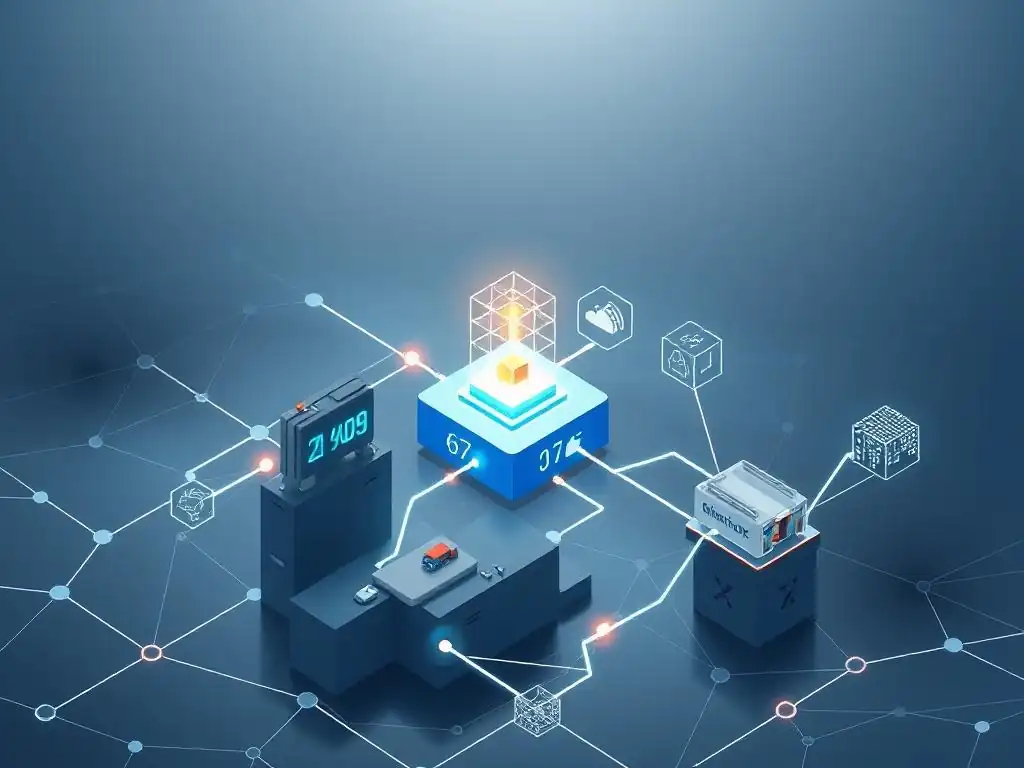
Connecting Blockchain to IoT Devices: A Transparent Ecosystem
The synergy between blockchain oracles and the Internet of Things (IoT) is creating a powerful ecosystem for real-world data integration and transparency. IoT devices generate vast amounts of data from the physical world, and blockchain, combined with oracles, provides a secure and transparent platform to manage and utilize this data. Oracles act as the crucial link, securely relaying data from IoT sensors to blockchain networks. Consider smart cities deploying IoT sensors to monitor traffic flow, air quality, and energy consumption. Oracles can transmit this data to a blockchain, creating a transparent and auditable record of city operations.
This integration enables the development of decentralized and transparent IoT applications. Data collected by IoT devices and secured on a blockchain through oracles can be used to automate processes, improve efficiency, and enhance accountability in various sectors. From smart homes and industrial automation to environmental monitoring and supply chain management, the combination of blockchain, oracles, and IoT is unlocking new possibilities for transparent and data-driven ecosystems that bridge the digital and physical worlds.
Data Provenance and Verification using Blockchain Oracles
Blockchain oracles are instrumental in establishing data provenance and verification, ensuring the authenticity and trustworthiness of real-world data integrated into blockchain systems. In many applications, knowing the origin and history of data is crucial for building trust and making informed decisions. Oracles can provide cryptographic proofs and verifiable audit trails for data, confirming its source and ensuring it has not been tampered with during transmission to the blockchain.
For example, in the food industry, oracles can verify the origin and processing history of food products, providing consumers with transparent information about the food they consume. By recording data provenance on the blockchain, using oracles to relay verified information from trusted sources, businesses and consumers can have greater confidence in the authenticity and integrity of the data. This capability is essential for building transparent and accountable systems that rely on real-world data for critical operations and decision-making.
Real-Time Data Updates: Enabling Dynamic Smart Contracts
Oracles enable dynamic smart contracts by providing real-time data updates, allowing smart contracts to react to changes in the real world in a timely and automated manner. Traditional contracts are static agreements, but smart contracts, when coupled with oracles, can be dynamic and responsive to evolving conditions. Oracles continuously monitor and relay real-time data to the blockchain, triggering smart contract execution based on predefined conditions and thresholds.
For instance, in decentralized insurance, weather oracles provide continuous updates on weather conditions. If a severe weather event occurs, the oracle immediately relays this information to the blockchain, triggering automatic payouts to policyholders. This real-time data integration is essential for creating smart contracts that are not only transparent and secure but also adaptive and responsive to the dynamic nature of the real world. Oracles empower smart contracts to become truly intelligent and automated agents, capable of reacting to real-time events and data.
Challenges and Future of Blockchain Oracles
Security Concerns and Oracle Manipulation Risks
Despite their crucial role, blockchain oracles face significant security concerns and are susceptible to manipulation risks. As the bridge connecting blockchains to the external world, oracles become a potential attack vector. If an oracle is compromised or manipulated, the data it provides to smart contracts can be corrupted, leading to unintended or malicious outcomes. Attacks can range from data injection, where false information is fed into the oracle, to collusion attacks, where multiple oracles conspire to provide biased data.
Mitigating these security risks is paramount for the widespread adoption of blockchain oracles. Current solutions focus on decentralization, data source diversification, reputation systems, and cryptographic verification techniques. However, ongoing research and development are crucial to continuously improve oracle security and resilience against evolving attack vectors, ensuring the trustworthiness of real-world data integration into blockchain systems.
Scalability Issues in Oracle Networks
Scalability presents a significant challenge for oracle networks, particularly as the demand for blockchain applications and real-world data integration grows. As more smart contracts require oracle services and more data points need to be relayed to the blockchain, oracle networks must be able to handle increasing transaction volumes and data throughput without compromising performance or security. Centralized oracles may face bottlenecks, while decentralized oracle networks need to efficiently manage consensus and data dissemination across a growing number of nodes.
Addressing scalability issues in oracle networks is crucial for supporting the long-term growth and adoption of blockchain technology. Research into more efficient consensus mechanisms, sharding techniques for oracle networks, and layer-2 scaling solutions for oracle data delivery are actively being explored to enhance the scalability and performance of oracle infrastructure, ensuring it can meet the demands of a rapidly expanding blockchain ecosystem.
The Future of Oracle Technology: Advancements in ZK-Proofs and Trusted Execution Environments (TEEs)
The future of oracle technology is being shaped by exciting advancements in areas like Zero-Knowledge Proofs (ZK-Proofs) and Trusted Execution Environments (TEEs). ZK-Proofs offer the potential to enhance oracle privacy and security by allowing oracles to prove the validity of data without revealing the underlying data itself. This is particularly valuable for sensitive data and applications requiring data confidentiality. For instance, an oracle could prove the accuracy of a credit score without revealing the actual score, preserving user privacy while enabling smart contract execution based on verified creditworthiness.
TEEs, on the other hand, provide secure and isolated environments for oracle computations, protecting oracle data and code from external interference. By running oracle processes within TEEs, the integrity and confidentiality of oracle operations can be significantly enhanced. These technologies, along with ongoing research into more robust and decentralized oracle architectures, promise to revolutionize oracle technology, making them more secure, private, and scalable, further solidifying their role as essential infrastructure for the future of blockchain and real-world data integration.
Choosing the Right Oracle Solution for Your Needs
Evaluating Oracle Reliability and Accuracy
When selecting an oracle solution, reliability and accuracy are paramount considerations. The chosen oracle must consistently provide accurate and up-to-date data to ensure the proper functioning of smart contracts. Evaluating an oracle's reliability involves examining its historical performance, uptime, data source diversity, and security measures. Accuracy can be assessed by reviewing the oracle's data validation methods, consensus mechanisms (in decentralized oracles), and reputation system.
Consider the specific data requirements of your application. Does it require real-time data updates? Does it rely on highly sensitive information? Understanding these needs will help you prioritize reliability and accuracy criteria when evaluating different oracle solutions. For critical applications, opting for decentralized oracle networks with strong reputation systems and verifiable data feeds is often advisable to minimize risks associated with data inaccuracies or oracle failures.
Cost Considerations for Oracle Integration
Cost is another significant factor to consider when choosing an oracle solution. Oracle services typically involve fees, which can vary depending on the complexity of the data requested, the frequency of updates, and the specific oracle provider. Centralized oracles may offer lower fees but potentially at the expense of decentralization and resilience. Decentralized oracle networks may have higher operational costs due to the distributed infrastructure and consensus mechanisms involved.
Carefully evaluate the cost structure of different oracle solutions and compare them against your project's budget and requirements. Consider factors like the volume of data requests, the frequency of updates needed, and the long-term scalability of the chosen oracle solution. Balancing cost-effectiveness with reliability and security is crucial for selecting the optimal oracle solution for your specific needs and ensuring the economic viability of your blockchain application.
Data Source Availability and Coverage
The availability and coverage of data sources supported by an oracle are critical factors in determining its suitability for your application. Ensure that the oracle you choose can access the specific data sources relevant to your smart contracts. For example, if your DeFi application requires price feeds for a wide range of cryptocurrencies, verify that the oracle network provides comprehensive coverage of these assets across various exchanges. Similarly, if your supply chain application needs location data from specific logistics providers, confirm that the oracle can integrate with those data sources.
Assess the breadth and depth of data source coverage offered by different oracles. Does the oracle rely on a single data source or aggregate data from multiple reputable providers? Diversification of data sources is generally preferred as it enhances data reliability and reduces the risk of relying on a potentially biased or inaccurate single source. Thoroughly investigate the data source availability and coverage of potential oracle solutions to ensure they meet your specific data requirements and provide the necessary breadth and depth of information for your blockchain application.
Conclusion: Blockchain Oracles - Catalysts for Transparency and Real-World Adoption
Blockchain oracles are not merely ancillary tools; they are fundamental catalysts driving the expansion of blockchain technology beyond its initial confines. By effectively bridging the gap between the deterministic world of blockchain and the dynamic, often unpredictable, real world, oracles unlock the true potential of smart contracts and decentralized applications. They are the enablers of transparency and accountability, extending these core blockchain principles to real-world interactions and agreements.
As oracle technology continues to evolve, with advancements in security, scalability, and privacy-enhancing techniques, their role in the blockchain ecosystem will only become more critical. From revolutionizing supply chains and transforming finance to automating insurance and powering transparent IoT ecosystems, blockchain oracles are paving the way for a future where blockchain's transformative power is fully realized, driving real-world adoption and establishing new paradigms of trust and transparency across industries and society.
Frequently Asked Questions
What is a blockchain oracle, and why is it necessary?
A blockchain oracle is a third-party service that connects blockchains to external data sources. They are necessary because blockchains cannot inherently access real-world data on their own, limiting their functionality.
How do blockchain oracles enhance transparency in blockchain systems?
Oracles enhance transparency by providing verified and auditable data feeds from the real world to the blockchain. This allows smart contracts to execute based on accurate and trustworthy information, fostering greater confidence.
What are some examples of real-world data that blockchain oracles can provide?
Oracles can provide a wide range of data, including price feeds, weather information, election results, and supply chain data. This data enables diverse applications of blockchain technology beyond just cryptocurrencies.
What are the potential risks associated with using blockchain oracles?
A key risk is the "oracle problem," where the reliability of the data depends on the oracle itself. Compromised or inaccurate data from an oracle can lead to incorrect smart contract execution.
How are blockchain oracles regulated, and what is the future of oracle regulation?
Currently, oracle regulation is still evolving and largely undefined. The future likely involves developing standards and best practices to ensure oracle reliability and prevent manipulation, boosting trust in blockchain systems.
Final Reflection: Embracing Truth in a Decentralized World
The exploration of blockchain oracles and their crucial role in connecting decentralized systems with real-world data underscores a fundamental truth: transparency and accuracy are paramount for the successful adoption of blockchain technology. Without reliable bridges to external information, the potential of blockchain remains limited, trapped within the confines of its own digital ecosystem. The integration of oracles is not merely a technical necessity; it's a commitment to building trust and ensuring the integrity of decentralized applications in a world increasingly reliant on verifiable data.
The impact of blockchain oracles extends far beyond the technical realm, influencing the very fabric of trust and accountability in various sectors. The ability to seamlessly integrate real-world data into blockchain systems opens up possibilities for more transparent supply chains, fairer financial instruments, and more reliable voting systems. Data is the new oil, but only if it's refined and used ethically.
This quote perfectly encapsulates the responsibility we have to ensure that the data fed into blockchain systems is accurate, unbiased, and serves the greater good. The future of decentralized applications hinges on our ability to build robust and trustworthy oracle networks.
As we move forward, let us not underestimate the power of informed decision-making in the blockchain space. Consider how you can contribute to the development and implementation of more secure and reliable oracle solutions. Reflect on the importance of data integrity in your own life and how you can advocate for greater transparency in the systems that govern our world. The future of blockchain, and indeed the future of trust, depends on our collective commitment to bridging the gap between the digital and the real.
Unveil the Power of Real-World Blockchain!
Thank you for exploring how oracles are transforming blockchain transparency. Now that you understand their vital role in connecting blockchains to real-world data, it's time to deepen your knowledge.
To get started, consider taking these practical steps:
- Explore decentralized applications that leverage oracles. Hands-on experience will help you appreciate their significance firsthand.
- Research different types of oracles, including decentralized solutions and off-chain computation, to expand your understanding.
- Share this article with your network to encourage discussions about the importance of transparent and accurate data within the blockchain space.
What innovative use of oracles excites you the most, and how do you think it could influence the future of decentralized applications?
Leave a Reply