
Secure and Verifiable: Blockchain's Promise for the Future of Public Documents

Welcome to Blockchain Trends, your compass in the rapidly evolving world of decentralized technologies!
Intrigued by the potential of blockchain beyond cryptocurrencies? Dive into our analysis of its transformative impact on various sectors. Today, we're focusing on a critical application: Blockchain public document verification security. Discover how this innovative approach is revolutionizing trust and transparency. Want to know how blockchain can secure your vital documents? Let's explore the possibilities...
Secure and Verifiable: Blockchain's Promise for the Future of Public Documents
- Blockchain and Governance: Revolutionizing Public Records Management
- The Current Landscape of Public Document Security: Challenges and Vulnerabilities
- Blockchain Public Document Verification Security: An Overview
- Enhancing Public Document Security with Blockchain Solutions
- Use Cases: Blockchain Applications for Public Documents
- Advantages of Blockchain for Public Document Management
- Addressing Challenges and Considerations for Blockchain Adoption in Public Sector
- The Future of Blockchain in Public Administration and Governance
- Conclusion: Blockchain's Transformative Potential for Public Document Security
-
Frequently Asked Questions
- How does blockchain enhance the security of public documents?
- Can blockchain be used to verify the authenticity of public documents?
- What are some potential applications of blockchain for public document management beyond security?
- What are the regulatory challenges surrounding the use of blockchain for public documents?
- Is blockchain a cost-effective solution for public document verification in the long run?
- Final Reflection: Embracing Trust in a Digital Age
- Unveil Your Blockchain Potential!
Blockchain and Governance: Revolutionizing Public Records Management
The intersection of blockchain technology and governance presents a paradigm shift in how public records are managed, secured, and accessed. Traditionally, government bodies and institutions have relied on centralized systems for storing and managing crucial public documents, ranging from land titles and birth certificates to academic credentials and legal contracts.
While these systems have served their purpose, they are increasingly facing challenges in the digital age, particularly in terms of security, transparency, and efficiency. Blockchain technology, with its inherent characteristics of decentralization, immutability, and transparency, offers a compelling alternative framework for revolutionizing public records management, promising enhanced security and verifiable authenticity for documents that underpin societal trust and legal frameworks.
This shift towards blockchain-based solutions within governance is not merely a technological upgrade, but a fundamental reimagining of public trust and data integrity. By leveraging distributed ledger technology, governments and public institutions can move towards systems that are less susceptible to fraud, manipulation, and single points of failure.
The potential impact extends across numerous sectors, including legal, education, property, and citizen identification, creating opportunities for more efficient, secure, and citizen-centric public services. This article will delve into the promise of blockchain for the future of public documents, exploring its mechanisms, benefits, use cases, and the challenges that must be addressed for its widespread adoption in the public sector.
The Current Landscape of Public Document Security: Challenges and Vulnerabilities
Limitations of Traditional Public Record Systems
Traditional public record systems, often reliant on paper-based archives and centralized digital databases, face significant limitations in the modern era. Paper-based systems are inherently vulnerable to physical damage, loss, and unauthorized alteration. Digitized centralized databases, while offering improvements in storage and accessibility, introduce new vulnerabilities related to cybersecurity. These systems often rely on single points of authority, making them susceptible to hacking, data breaches, and insider threats. Furthermore, the complexity and lack of interoperability between different government databases can lead to inefficiencies and hinder seamless access to public information.
Consider the example of land registries in many developing nations. Often, these registries are paper-based, leading to disputes over ownership, fraudulent claims, and lengthy legal battles. According to the World Bank, insecure property rights are a major impediment to economic development in many regions.
Even in developed countries, centralized digital systems for public records, while more sophisticated, are still vulnerable. For instance, a data breach in a government agency could compromise sensitive personal information contained within public documents, leading to identity theft and other serious consequences. These limitations highlight the need for more robust and secure solutions for managing public records in the digital age.
Risks of Fraud and Tampering with Official Documents
The risks of fraud and tampering with official documents are a persistent and costly problem within traditional public record systems. Whether through the forgery of signatures on physical documents or the manipulation of digital records in centralized databases, malicious actors can exploit vulnerabilities to alter or fabricate official documents for personal gain or to disrupt public processes. This can have severe consequences, ranging from financial losses due to fraudulent property transfers to undermining the integrity of legal and administrative proceedings.
Instances of document fraud are widespread and varied. In 2022, Europol reported a significant increase in the circulation of fake COVID-19 vaccination certificates, demonstrating the ease with which digital documents can be falsified in centralized systems. Similarly, academic credential fraud is a growing concern, with degree mills issuing fake diplomas that are difficult to verify through traditional channels.
The lack of transparency and auditability in many legacy systems makes it challenging to detect and prevent document tampering, highlighting the urgent need for more secure and verifiable methods for managing public documents. The economic and societal costs of document fraud underscore the importance of implementing solutions that enhance security and trust in official records.
Inefficiencies in Current Verification Processes
Current verification processes for public documents are often inefficient, time-consuming, and costly. Verifying the authenticity of a document, such as a birth certificate or academic transcript, typically involves contacting the issuing authority directly, which can be a lengthy and bureaucratic process. This reliance on manual verification methods creates bottlenecks, delays transactions, and adds administrative burden for both citizens and government agencies. The lack of standardized digital verification systems further exacerbates these inefficiencies, particularly in cross-border transactions and interactions.
For example, imagine a citizen applying for a job in a foreign country and needing to verify their academic qualifications. The traditional process may involve obtaining certified copies of diplomas, sending them through postal services, and waiting weeks or even months for verification from the issuing university. This process is not only slow but also prone to errors and delays.
Furthermore, the cost associated with obtaining certified copies and international postage can be significant. The inefficiencies in current verification processes not only impact individual citizens but also hinder the smooth functioning of public services and international collaborations. Streamlining and automating document verification is crucial for improving efficiency and reducing administrative burdens in the public sector.
Blockchain Public Document Verification Security: An Overview
What is Blockchain Technology and How Does it Work?
Blockchain technology, at its core, is a decentralized and distributed ledger system that records transactions across many computers. Instead of relying on a central authority to validate and store data, blockchain utilizes a network of participants, each holding a copy of the ledger. New transactions are grouped into "blocks" and cryptographically linked to the previous block, forming a "chain" that is virtually tamper-proof. This cryptographic linking ensures that any alteration to a block would require altering all subsequent blocks, which is computationally infeasible in a large, decentralized network.
The process begins with a transaction being initiated and broadcast to the network. Network participants, known as nodes, validate the transaction through consensus mechanisms, such as Proof-of-Work or Proof-of-Stake. Once validated, the transaction is added to a new block, which is then added to the existing blockchain.
This process ensures that the ledger is consistently updated across all nodes in the network. The decentralized nature of blockchain eliminates the need for intermediaries, enhancing security and transparency while reducing reliance on single points of failure. The cryptographic principles underpinning blockchain provide a robust framework for ensuring data integrity and authenticity, making it a promising technology for secure document verification.
Understanding the Immutable Ledger and its Benefits
The immutable ledger is a defining characteristic of blockchain technology and a key factor in its suitability for secure public document verification. Once a transaction or document record is written to the blockchain, it becomes virtually impossible to alter or delete. This immutability stems from the cryptographic hashing and distributed consensus mechanisms inherent in blockchain. Each block contains a hash of the previous block, creating a chain of blocks that are inextricably linked. Any attempt to modify a block would change its hash and invalidate all subsequent blocks, which would be immediately detected by the network nodes.
The benefits of an immutable ledger for public documents are profound. It provides a permanent and auditable record of document creation, modification, and ownership. This immutability ensures data integrity and prevents retroactive tampering, which is a significant vulnerability in traditional centralized systems.
For public records, immutability translates to enhanced trust and confidence in the authenticity and validity of official documents. Citizens can be assured that records stored on a blockchain are protected from unauthorized alterations, fostering greater transparency and accountability in public administration. The immutable nature of the blockchain ledger is a cornerstone of its promise for secure document verification.
Smart Contracts and Automated Document Verification
Smart contracts are self-executing contracts with the terms of the agreement directly written into code. Deployed on a blockchain, smart contracts automatically execute predefined actions when specific conditions are met, without the need for intermediaries. In the context of public document verification, smart contracts can automate various processes, such as document validation, access control, and notifications, enhancing efficiency and reducing manual intervention.
For instance, a smart contract could be designed to automatically verify the authenticity of an academic credential. When a request for verification is initiated, the smart contract can query the blockchain for the relevant credential record and compare it against the submitted document. If the information matches and the cryptographic signature is valid, the smart contract can automatically confirm the authenticity of the credential.
This automated process eliminates the need for manual verification by university staff, significantly reducing processing time and costs. Smart contracts can also be used to manage access permissions to public documents, ensuring that only authorized individuals or entities can view or modify sensitive information. The automation capabilities of smart contracts offer significant potential for streamlining and securing public document verification processes.
Enhancing Public Document Security with Blockchain Solutions
Blockchain-Based Document Authentication and Verification
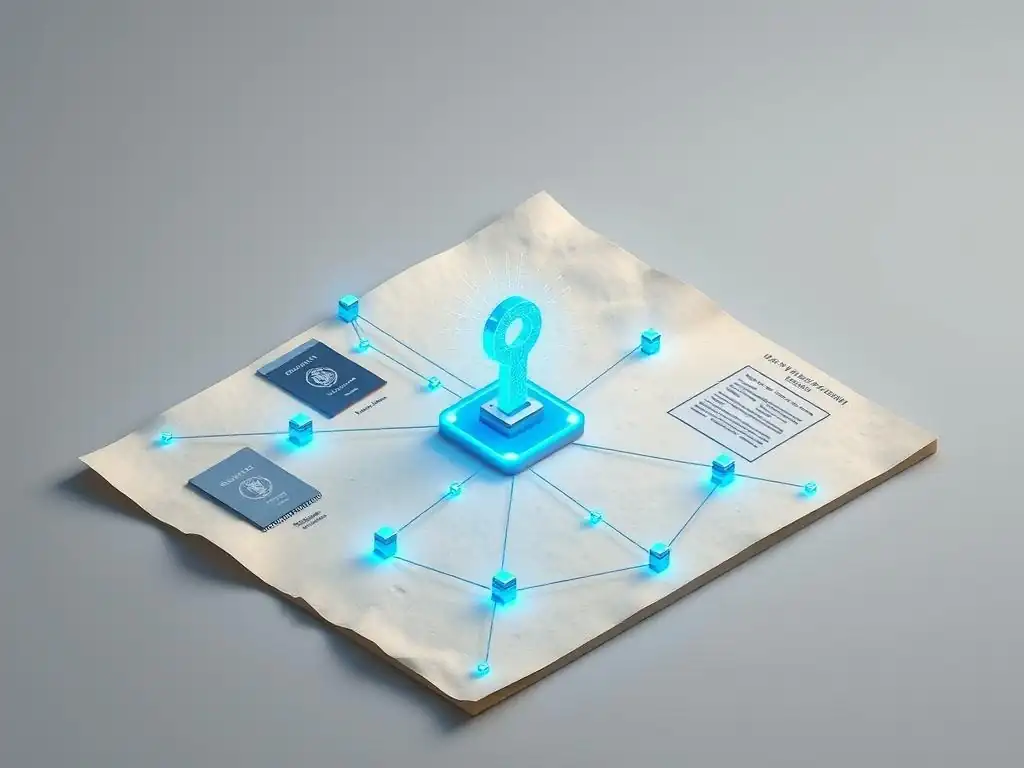
Blockchain technology offers robust solutions for document authentication and verification, addressing the shortcomings of traditional methods. By storing digital fingerprints or cryptographic hashes of public documents on a blockchain, their authenticity and integrity can be verified independently and transparently. When a document is created, its hash is generated and recorded on the blockchain, along with relevant metadata such as the issuer, timestamp, and document type.
To verify a document, its hash is recalculated and compared against the hash stored on the blockchain. If the hashes match, it confirms that the document is authentic and has not been tampered with since it was recorded.
This blockchain-based approach to document authentication eliminates the need to rely solely on centralized authorities for verification. Anyone with access to the blockchain can independently verify the authenticity of a document without contacting the original issuer. This enhances trust and transparency, particularly in situations where verifying the legitimacy of an issuing authority might be challenging. Furthermore, blockchain-based verification can be integrated into digital platforms and applications, enabling seamless and instant document authentication processes. The cryptographic security and decentralized nature of blockchain provide a strong foundation for reliable and trustworthy document authentication and verification systems.
Preventing Fraud and Counterfeiting Through Decentralization
Decentralization is a core principle of blockchain that plays a crucial role in preventing fraud and counterfeiting of public documents. In traditional centralized systems, a single point of failure or compromise can lead to widespread document fraud. For example, if a central database storing public records is hacked, or if an insider with privileged access manipulates the system, a large number of documents could be compromised or counterfeited. Blockchain's decentralized architecture mitigates this risk by distributing data across a network of nodes, making it significantly more difficult for malicious actors to tamper with or counterfeit documents at scale.
To successfully counterfeit a blockchain-verified document, an attacker would need to gain control of a majority of the network's computing power, which is computationally and economically prohibitive in most established blockchains. Moreover, the distributed consensus mechanisms inherent in blockchain ensure that any attempt to introduce fraudulent or altered records would be rejected by the network.
This inherent resistance to tampering and counterfeiting makes blockchain a powerful tool for safeguarding the integrity of public documents and reducing the incidence of fraud. By distributing trust across a network, blockchain creates a more resilient and secure system for managing and verifying official records.
Improving Transparency and Accountability in Public Records
Blockchain technology enhances transparency and accountability in public records management by creating an auditable and immutable record of all document-related activities. Every transaction, including document creation, modification, and verification, is recorded on the blockchain with a timestamp and associated user or entity. This transparent audit trail provides a complete history of document lifecycle, making it easy to track changes and identify responsible parties. This level of transparency is often lacking in traditional public record systems, where audit trails may be incomplete, difficult to access, or easily manipulated.
The increased transparency facilitated by blockchain fosters greater accountability among government agencies and public officials responsible for managing public records. The immutable and auditable nature of the blockchain ledger makes it more difficult to conceal errors, omissions, or fraudulent activities. This enhanced accountability can lead to improved governance, reduced corruption, and increased public trust in government institutions.
Furthermore, blockchain-based public record systems can be designed to provide citizens with greater access to information about their own records and the processes governing public document management, empowering them with greater control and oversight. The transparency and accountability features of blockchain are essential for building more trustworthy and citizen-centric public record systems.
Use Cases: Blockchain Applications for Public Documents
Land Registry and Property Ownership Records on Blockchain
Land registry and property ownership records are prime candidates for blockchain application due to their crucial importance and susceptibility to fraud and disputes in traditional systems. Many countries, particularly in developing regions, suffer from insecure land tenure systems, often characterized by paper-based records, overlapping claims, and corruption. Blockchain offers a solution by creating a transparent, immutable, and accessible digital land registry. By recording property ownership and transaction details on a blockchain, land titles become more secure, verifiable, and resistant to tampering.
Georgia, for example, has been a pioneer in using blockchain for land registry, partnering with Bitfury Group to secure property titles on a blockchain platform. This initiative aims to reduce land fraud, streamline property transactions, and improve transparency in land administration. Similarly, Sweden has been experimenting with blockchain for land registration, exploring its potential to simplify and secure property transactions. These real-world examples demonstrate the practical application of blockchain in creating more efficient, secure, and trustworthy land registry systems, contributing to economic development and social stability by securing property rights.
Academic Credentials and Education Verification via Blockchain
The verification of academic credentials, such as diplomas and degrees, is a significant challenge for educational institutions, employers, and individuals. Traditional verification processes are often manual, time-consuming, and vulnerable to fraud. Blockchain offers a secure and efficient solution for issuing and verifying academic credentials digitally. By issuing digital diplomas and transcripts on a blockchain, educational institutions can create tamper-proof records that can be easily verified by recipients and third parties.
MIT (Massachusetts Institute of Technology) has been a leader in exploring blockchain for academic credentials, launching a pilot program in 2017 to issue blockchain-based digital diplomas. These digital diplomas, known as Blockcerts, allow graduates to securely share their credentials with employers and other institutions, while enabling recipients to instantly verify their authenticity.
Many other universities and educational organizations are now exploring or implementing blockchain-based solutions for credential management, recognizing the potential to streamline verification processes, combat diploma fraud, and empower students with greater control over their academic records. Blockchain technology is transforming the landscape of education verification, making it more secure, efficient, and student-centric.
Government-Issued Identification and Digital Identity Management
Government-issued identification documents, such as national IDs, passports, and driver's licenses, are essential for accessing public services and participating in civic life. Traditional paper-based or centralized digital ID systems are vulnerable to fraud, theft, and identity theft. Blockchain offers a more secure and privacy-preserving approach to digital identity management. By leveraging self-sovereign identity (SSI) principles and blockchain technology, individuals can gain greater control over their digital identities and securely manage their personal data.
Estonia, a digital society pioneer, has explored blockchain for digital identity and e-governance initiatives. While not exclusively reliant on blockchain for national ID, Estonia's X-Road data exchange platform utilizes blockchain-inspired principles of data integrity and security. Several projects and initiatives are exploring blockchain-based SSI solutions for government-issued IDs, aiming to create more secure, user-centric, and privacy-respecting digital identity systems. These solutions empower individuals to control their personal data, reduce the risk of identity theft, and facilitate secure access to online services, paving the way for more efficient and citizen-centric digital government services.
Birth and Death Certificates on Blockchain
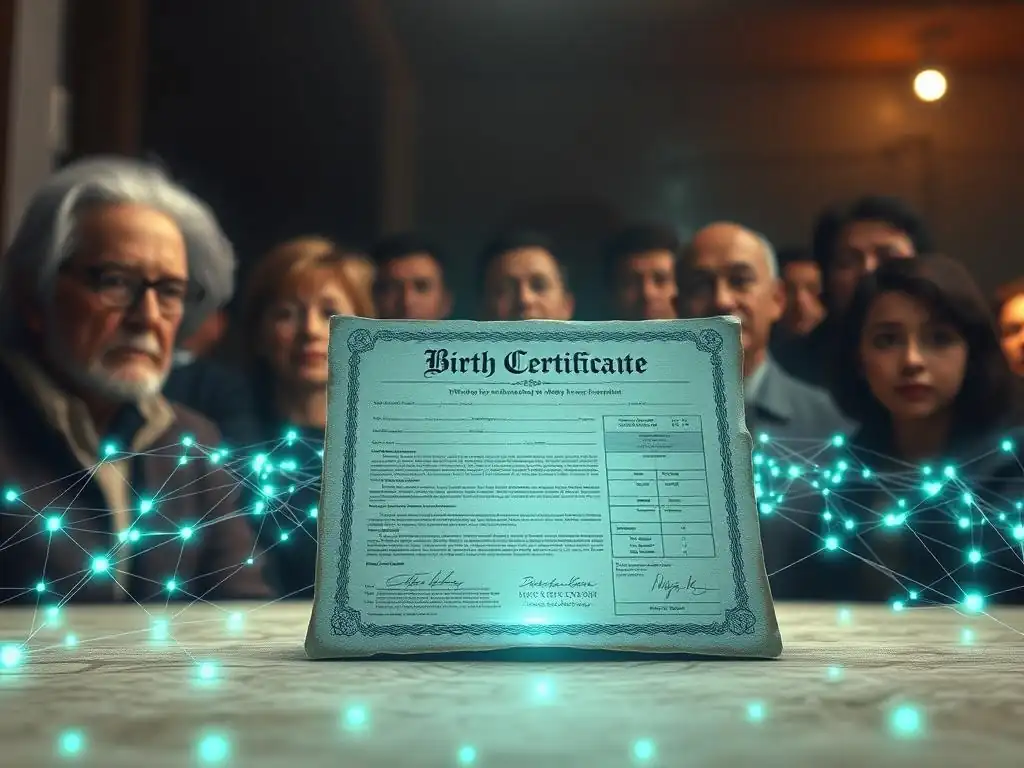
Birth and death certificates are fundamental public documents that record vital life events and are essential for legal, administrative, and statistical purposes. Traditional paper-based systems for managing birth and death certificates are often inefficient, prone to errors, and susceptible to fraud. Blockchain can enhance the security, efficiency, and accessibility of vital records management. By recording birth and death certificates on a blockchain, governments can create immutable and verifiable records that are resistant to tampering and easily accessible to authorized individuals and institutions.
Dubai, as part of its Smart Dubai initiative, has explored the use of blockchain for various government services, including health records and potentially vital records. While widespread implementation of blockchain for birth and death certificates is still in its early stages, pilot projects and conceptual frameworks are emerging. The potential benefits include reduced fraud in identity theft and inheritance claims, streamlined administrative processes for accessing vital records, and improved data accuracy for demographic statistics. Blockchain technology holds promise for modernizing vital records management, making it more secure, efficient, and citizen-friendly.
Advantages of Blockchain for Public Document Management
Increased Security and Data Integrity
The inherent security features of blockchain, including cryptography and decentralization, significantly enhance the security and data integrity of public document management systems. Traditional centralized systems are vulnerable to single points of failure and cyberattacks, which can compromise the integrity of vast amounts of sensitive data. Blockchain, with its distributed and immutable ledger, offers a more resilient and secure alternative. The cryptographic hashing and consensus mechanisms ensure that data recorded on the blockchain is tamper-proof and protected from unauthorized alterations.
This increased security and data integrity are paramount for public documents, which often contain sensitive personal information and underpin critical legal and administrative processes. By leveraging blockchain, governments and public institutions can build more trustworthy and reliable systems for managing official records, reducing the risk of data breaches, fraud, and manipulation. The robust security architecture of blockchain provides a strong foundation for safeguarding the confidentiality, integrity, and availability of public documents.
Enhanced Transparency and Auditability
Blockchain's transparent and auditable nature is a significant advantage for public document management, fostering greater accountability and trust in government operations. Every transaction and document record on a blockchain is visible to all participants in the network, creating a transparent audit trail. This transparency makes it easier to track changes, identify responsible parties, and detect any unauthorized modifications or fraudulent activities. Traditional public record systems often lack this level of transparency, making it difficult to audit processes and ensure accountability.
The enhanced auditability provided by blockchain empowers citizens, oversight bodies, and government agencies to monitor public document management processes and verify the integrity of official records. This increased transparency can help to reduce corruption, improve governance, and build greater public trust in government institutions. By making public document management more transparent and auditable, blockchain contributes to a more open and accountable public sector.
Reduced Costs and Streamlined Processes
Blockchain technology has the potential to reduce costs and streamline processes associated with public document management. Traditional paper-based systems and manual verification processes are often inefficient, labor-intensive, and costly. Blockchain can automate many of these processes, reducing administrative overhead, processing times, and the need for intermediaries. For example, smart contracts can automate document verification, access control, and notifications, eliminating manual steps and reducing delays.
Furthermore, the decentralized nature of blockchain can reduce reliance on centralized infrastructure and intermediaries, potentially lowering infrastructure and transaction costs. By streamlining processes and reducing administrative burdens, blockchain can lead to significant cost savings for government agencies and public institutions involved in managing public documents. These cost savings can be redirected to other public services or used to improve the efficiency and effectiveness of government operations.
Improved Accessibility and Citizen Empowerment
Blockchain can improve accessibility to public documents and empower citizens by providing them with greater control over their own records. Traditional public record systems often involve bureaucratic processes and physical access restrictions, making it difficult for citizens to access their own documents or verify their authenticity. Blockchain-based systems can provide citizens with secure digital access to their public documents, enabling them to view, share, and verify their records easily and conveniently.
Self-sovereign identity (SSI) solutions built on blockchain can further empower citizens by giving them control over their digital identities and personal data. Citizens can manage their own digital credentials and selectively share their information with authorized parties, enhancing privacy and control. Improved accessibility and citizen empowerment are key benefits of blockchain for public document management, contributing to more citizen-centric and user-friendly public services.
Addressing Challenges and Considerations for Blockchain Adoption in Public Sector
Scalability Issues and Potential Solutions
Scalability remains a significant challenge for blockchain technology, particularly in the context of large-scale public document management systems that may need to handle millions or billions of records and transactions. Traditional public blockchains, such as Bitcoin and Ethereum, can face limitations in transaction throughput and processing speed, which may not be sufficient for high-volume public sector applications. Scalability concerns need to be carefully addressed to ensure that blockchain-based public document systems can handle the demands of real-world deployments.
Several potential solutions are being explored to address blockchain scalability issues. Layer-2 scaling solutions, such as sidechains and rollups, can offload transaction processing from the main blockchain, improving throughput and reducing transaction fees. Consortium blockchains or private blockchains, which are permissioned networks with a limited number of participants, can also offer improved scalability and performance compared to public blockchains. Hybrid approaches that combine public and private blockchain elements may also be suitable for certain public sector applications. Careful consideration of scalability requirements and appropriate architectural choices are crucial for successful blockchain adoption in public document management.
Regulatory Frameworks and Compliance Requirements
The regulatory landscape for blockchain technology is still evolving, and clear regulatory frameworks are needed to facilitate the adoption of blockchain in the public sector, particularly for sensitive applications like public document management. Issues such as data privacy, data governance, legal validity of blockchain-based records, and cross-border interoperability need to be addressed through appropriate legal and regulatory frameworks. Compliance with existing regulations, such as GDPR (General Data Protection Regulation) in Europe and other data privacy laws, is also essential.
Governments and regulatory bodies need to develop clear guidelines and standards for the use of blockchain in public services, balancing innovation with risk management and consumer protection. Collaboration between technology developers, legal experts, and policymakers is crucial to create regulatory frameworks that are conducive to responsible blockchain adoption in the public sector. Addressing regulatory uncertainties and ensuring compliance with relevant laws are critical steps for fostering trust and enabling the widespread deployment of blockchain-based public document systems.
Data Privacy and Security Concerns
While blockchain offers enhanced security features, data privacy and security concerns still need to be carefully addressed in the context of public document management. Storing sensitive personal information directly on a public blockchain may raise privacy concerns, even if data is encrypted. While blockchain itself is secure, vulnerabilities may exist in smart contracts, applications built on top of blockchain, and user interfaces. Data privacy regulations, such as GDPR, require careful consideration of data minimization, data anonymization, and user consent when using blockchain for processing personal data.
Solutions such as zero-knowledge proofs and homomorphic encryption are being explored to enhance data privacy on blockchain. These cryptographic techniques allow for data verification and computation without revealing the underlying data itself. Private blockchains or permissioned blockchains may also be more suitable for applications requiring stricter data privacy controls. Thorough security audits, penetration testing, and robust security protocols are essential to mitigate potential security risks and ensure data privacy in blockchain-based public document systems.
Interoperability with Existing Systems
Interoperability with existing legacy systems is a significant challenge for blockchain adoption in the public sector. Many government agencies and public institutions have invested heavily in existing IT infrastructure and databases. Integrating blockchain-based solutions with these legacy systems can be complex and require careful planning and implementation. Lack of interoperability can create data silos, hinder data exchange, and limit the benefits of blockchain adoption.
Standards for blockchain interoperability are emerging, but widespread adoption and implementation are still needed. APIs (Application Programming Interfaces) and middleware solutions can facilitate data exchange and integration between blockchain-based systems and legacy systems. Open standards and collaborative efforts are crucial to promote interoperability and ensure seamless integration of blockchain with existing public sector IT infrastructure. Addressing interoperability challenges is essential for realizing the full potential of blockchain in transforming public document management and government services.
The Future of Blockchain in Public Administration and Governance
Blockchain as a Foundation for Digital Government
Blockchain technology has the potential to serve as a foundational infrastructure for digital government, enabling more secure, transparent, and efficient public services. Beyond public document management, blockchain can be applied to various government functions, including supply chain management, voting systems, social welfare distribution, and identity management. By leveraging blockchain's distributed ledger and smart contract capabilities, governments can build more resilient, citizen-centric, and trustworthy digital services.
The shift towards digital government is accelerating globally, and blockchain can play a key role in realizing the vision of seamless, secure, and transparent online public services. Blockchain can enhance data integrity, reduce fraud, automate processes, and improve citizen engagement in government operations. As governments increasingly embrace digital transformation, blockchain is poised to become a critical technology for building the next generation of digital government infrastructure.
Potential for Decentralized Identity and Secure Voting Systems
Decentralized identity (DID) and secure voting systems are two promising applications of blockchain technology that can significantly impact public administration and governance. DID solutions built on blockchain can empower individuals with greater control over their digital identities, enhancing privacy and security. Blockchain-based voting systems can improve the transparency, security, and auditability of elections, potentially increasing voter participation and public trust in democratic processes.
While both DID and blockchain-based voting are still in relatively early stages of development and adoption, pilot projects and research initiatives are demonstrating their potential. As technology matures and regulatory frameworks evolve, DID and secure voting systems powered by blockchain could become increasingly prevalent in public administration and governance, transforming citizen engagement and democratic processes.
Advancements in Zero-Knowledge Proofs for Enhanced Privacy
Advancements in zero-knowledge proofs (ZKPs) are enhancing the privacy capabilities of blockchain technology, making it more suitable for applications involving sensitive personal data, including public document management. ZKPs allow for the verification of information without revealing the information itself, enabling privacy-preserving data sharing and computation on blockchain. These cryptographic techniques have significant implications for protecting citizen privacy in blockchain-based public services.
As ZKP technology matures and becomes more efficient, it is expected to play an increasingly important role in enabling privacy-preserving blockchain applications in the public sector. The ability to verify information without revealing sensitive data opens up new possibilities for secure and privacy-respecting public services, fostering greater trust and confidence in blockchain adoption by governments and citizens alike.
Conclusion: Blockchain's Transformative Potential for Public Document Security
Blockchain technology offers a transformative potential for enhancing the security, verifiability, and efficiency of public document management. By leveraging its decentralized, immutable, and transparent ledger, blockchain addresses many of the limitations and vulnerabilities of traditional systems. From securing land registries and academic credentials to improving government-issued identification and vital records management, the use cases for blockchain in public document security are diverse and impactful. The advantages of increased security, enhanced transparency, reduced costs, and improved accessibility position blockchain as a compelling solution for modernizing public record systems.
While challenges related to scalability, regulation, data privacy, and interoperability need to be addressed, ongoing advancements in blockchain technology and evolving regulatory frameworks are paving the way for wider adoption in the public sector. As governments increasingly embrace digital transformation, blockchain is poised to play a crucial role in building more secure, transparent, and citizen-centric public services. The promise of "Blockchain public document verification security" is not just a technological aspiration, but a tangible pathway towards a future where public documents are more trustworthy, accessible, and secure for all.
Frequently Asked Questions
How does blockchain enhance the security of public documents?
Blockchain provides enhanced security through its immutable and decentralized nature. Each document's record is linked in a chain, making tampering extremely difficult and easily detectable, thus ensuring document integrity.
Can blockchain be used to verify the authenticity of public documents?
Yes, blockchain can be used to verify authenticity. By storing a hash of the document on the blockchain, anyone can compare the current document's hash to the one on the chain, confirming its authenticity and preventing fraudulent alterations.
What are some potential applications of blockchain for public document management beyond security?
Beyond security, blockchain enables improved transparency and accessibility. It can streamline processes like land registry, birth certificates, and academic credentials, making them easier to access and verify, reducing administrative overhead.
What are the regulatory challenges surrounding the use of blockchain for public documents?
Regulatory challenges include establishing legal frameworks for blockchain-based documents, ensuring data privacy compliance (like GDPR), and addressing issues of cross-border recognition and interoperability.
Is blockchain a cost-effective solution for public document verification in the long run?
While initial implementation may require investment, blockchain can offer cost savings in the long run by reducing fraudulent activities and streamlining processes. This leads to greater efficiency and trust in public document management.
Final Reflection: Embracing Trust in a Digital Age
The exploration of blockchain's potential for securing public documents culminates in a powerful realization: trust, once reliant on centralized authorities, can now be mathematically verified and immutably recorded. This shift is not merely technological; it represents a fundamental reimagining of how we interact with institutions and access critical information, offering a pathway towards enhanced transparency and accountability in an era increasingly defined by digital interactions.
The impact of secure and verifiable public documents extends far beyond bureaucratic efficiency. It touches upon the very fabric of our societies, influencing everything from electoral integrity to land ownership rights. The ability to independently verify the authenticity of crucial records empowers individuals and fosters a more equitable and just world. The blockchain is more than just a technology; it's a social and political movement towards decentralization and transparency.
This quote encapsulates the profound implications of blockchain's application in securing public documents, highlighting its potential to reshape power dynamics and build a more trustworthy future.
As we stand at the cusp of this technological revolution, I invite you to consider the role you can play in shaping its trajectory. Reflect on the importance of verifiable information in your own life, and explore how blockchain solutions can contribute to a more secure and transparent future for all. Let us embrace the promise of blockchain to build a world where trust is not blind faith, but a verifiable certainty.
Unveil Your Blockchain Potential!
Thank you for delving into the exciting possibilities of blockchain for securing public documents! We hope you've gained valuable insights into how this technology can revolutionize trust and transparency. Now, let's put that knowledge into action.
Here are a few ways you can explore blockchain's potential further:
- Start a conversation: Share this article with your network on social media and spark a discussion about the future of secure public records.
- Delve deeper: Research local or government initiatives already exploring blockchain solutions for document management and identify potential points of collaboration or improvement.
- Take the leap: Brainstorm a small-scale personal project where you can experiment with blockchain technology to secure a sensitive document or record.
What innovative blockchain application for public documents are you most eager to see implemented?
Leave a Reply