
Supply Chain Transparency Starts with Records: Blockchain for Ethical Sourcing


Welcome to Blockchain Trends, your compass in the rapidly evolving world of decentralized innovation!
Dive into the transformative power of blockchain beyond the headlines. Are you ready to uncover how this technology is reshaping industries and redefining trust? Our featured article, "Supply Chain Transparency Starts with Records: Blockchain for Ethical Sourcing," explores how blockchain supply chain ethics sourcing is revolutionizing how we track and verify the origins of goods. Discover how immutable records can ensure ethical practices and build a more transparent future. Intrigued? Let's explore how blockchain is transforming governance and building a more ethical and sustainable world, one block at a time.
Supply Chain Transparency Starts with Records: Blockchain for Ethical Sourcing
- The Need for Ethical Sourcing and Supply Chain Transparency
- Blockchain Technology: A Solution for Supply Chain Visibility
- Blockchain Supply Chain Ethics Sourcing: A Practical Approach
- Benefits of Blockchain-Based Ethical Sourcing
- Real-World Examples: Blockchain Ethical Sourcing in Action
- Overcoming Challenges in Blockchain Adoption for Supply Chains
- The Future of Blockchain and Ethical Sourcing
- Blockchain for Public Records: Enhancing Trust and Accountability
-
Frequently Asked Questions
- How can blockchain technology improve ethical sourcing in supply chains?
- What specific types of information can be tracked using blockchain in a supply chain?
- What are the benefits of using blockchain for supply chain transparency compared to traditional methods?
- How does blockchain help consumers make more informed purchasing decisions regarding ethical sourcing?
- What are some of the challenges in implementing blockchain solutions for ethical sourcing in supply chains?
- Final Reflection: Weaving Trust into the Supply Chain
- Unveil Your Supply Chain's Story: Take Action Now!
The Need for Ethical Sourcing and Supply Chain Transparency
Understanding the Challenges in Global Supply Chains
Global supply chains have become incredibly complex networks, often spanning multiple continents and involving a multitude of actors – from raw material providers to manufacturers, distributors, and retailers. This intricate web makes it exceedingly difficult to track the origin of products and ensure ethical practices are followed at every stage. Consider the fashion industry, for example.
A single garment might involve cotton from one country, dyes from another, manufacturing in a third, and final retail in yet another. This geographical dispersion, combined with varying labor laws and environmental regulations across regions, creates significant challenges in maintaining oversight and preventing unethical practices like forced labor, unsafe working conditions, or environmentally damaging production methods.
Furthermore, the pressure to reduce costs and increase efficiency in global supply chains can inadvertently incentivize unethical behavior. Companies may be tempted to cut corners by sourcing materials from suppliers with questionable labor practices or lax environmental standards, especially when operating in regions with weaker regulatory frameworks.
The lack of transparency in these extended supply chains means that unethical activities can often go undetected, shielded by layers of subcontractors and intermediaries. This opacity not only harms workers and the environment but also poses significant reputational risks for brands and businesses further down the supply chain, who may unknowingly be implicated in unethical practices.
The Role of Transparency in Building Consumer Trust
In today's world, consumers are increasingly conscious of the social and environmental impact of their purchasing decisions. They are no longer just interested in the price and quality of a product; they also want to know its story – where it comes from, how it was made, and whether it was produced ethically. A 2022 study by IBM and Nielsen found that 73% of consumers are willing to pay more for products from brands that are transparent about their supply chain. This highlights a growing demand for transparency as a key factor in building consumer trust and brand loyalty.
Transparency in supply chains empowers consumers to make informed choices that align with their values. When companies provide clear and accessible information about their sourcing and production processes, consumers can verify claims of ethical practices and hold brands accountable. This increased scrutiny incentivizes businesses to adopt more responsible sourcing strategies and to actively monitor their supply chains for ethical violations. Ultimately, supply chain transparency fosters a relationship of trust between brands and consumers, which is crucial for long-term business success in an increasingly ethically-minded marketplace.
Blockchain Technology: A Solution for Supply Chain Visibility
How Blockchain Enhances Traceability and Accountability
Blockchain technology, with its inherent characteristics of decentralization and immutability, offers a powerful solution to enhance traceability and accountability in complex supply chains. Imagine each step in a product's journey – from raw material sourcing to final delivery – being recorded as a transaction on a blockchain. This creates a permanent, auditable trail that can be accessed by authorized participants throughout the supply chain network. Unlike traditional centralized databases, blockchain's distributed nature makes it extremely difficult to tamper with or alter records, ensuring a high degree of data integrity and trust.
This enhanced traceability allows businesses to pinpoint the exact origin of products and track their movement through every stage of the supply chain. For example, in the food industry, blockchain can be used to track produce from farm to fork, providing consumers with information about its origin, processing, and transportation history.
This level of granularity not only improves product safety and quality control but also strengthens accountability by making it easier to identify and address any ethical or compliance issues that may arise along the way. Furthermore, the transparent nature of blockchain can empower stakeholders, including consumers and regulators, to verify claims of ethical sourcing and hold businesses accountable for their supply chain practices.
Immutable Records: Ensuring Data Integrity in Ethical Sourcing
One of the core strengths of blockchain technology is its immutability. Once data is recorded on a blockchain, it becomes virtually impossible to alter or delete it without the consensus of the network participants. This characteristic is particularly crucial for ethical sourcing, where maintaining the integrity and authenticity of data is paramount. In traditional supply chains, records can be easily manipulated or falsified, making it difficult to verify claims of ethical practices and increasing the risk of fraud.
Blockchain's immutable ledger provides a secure and tamper-proof record of all supply chain transactions, ensuring that data related to ethical sourcing – such as certifications, audit reports, and provenance information – remains trustworthy and verifiable. For instance, if a supplier claims to be using ethically sourced cotton, the relevant certifications and audit trails can be recorded on a blockchain, providing irrefutable evidence of their compliance. This immutable record-keeping significantly reduces the risk of fraudulent claims and strengthens the credibility of ethical sourcing initiatives, fostering greater trust among consumers and stakeholders.
Blockchain's Potential to Reduce Supply Chain Fraud
Supply chain fraud is a significant problem, costing businesses billions of dollars annually and undermining consumer trust. Common forms of fraud include counterfeiting, product adulteration, and misrepresentation of product origin or ethical sourcing claims. The lack of transparency and traceability in traditional supply chains makes them particularly vulnerable to these types of fraudulent activities.
Blockchain technology offers a robust defense against supply chain fraud by providing a transparent and auditable record of product provenance and transactions. By tracking products on a blockchain from origin to consumer, businesses can significantly reduce the risk of counterfeit goods entering the supply chain. The immutable nature of blockchain also makes it much harder for fraudsters to tamper with product information or falsify records.
For example, in the pharmaceutical industry, blockchain can be used to track medications from manufacturer to patient, combating the proliferation of counterfeit drugs and ensuring patient safety. This enhanced security and transparency, enabled by blockchain, can dramatically reduce supply chain fraud and protect both businesses and consumers.
Blockchain Supply Chain Ethics Sourcing: A Practical Approach
Implementing Blockchain for Ethical Sourcing: Key Considerations
Implementing blockchain for ethical sourcing requires careful planning and consideration of several key factors. Firstly, defining clear objectives and scope is crucial. Businesses need to identify specific ethical sourcing challenges they aim to address with blockchain, whether it's combating forced labor, ensuring fair wages, or promoting sustainable environmental practices. Secondly, stakeholder engagement is essential. Successfully implementing blockchain requires collaboration and buy-in from all relevant participants in the supply chain, including suppliers, manufacturers, distributors, and retailers. This collaborative approach ensures data sharing and interoperability across the network.
Furthermore, data standardization and governance protocols need to be established. Agreeing on common data formats and standards for recording information on the blockchain is vital for ensuring data consistency and interoperability. Clear governance frameworks are also necessary to define roles and responsibilities, manage access permissions, and resolve disputes within the blockchain network. Finally, scalability and cost-effectiveness are important practical considerations. Businesses need to choose a blockchain solution that can handle the volume of transactions and data generated by their supply chain, and that is financially viable to implement and maintain.
Choosing the Right Blockchain Platform for Supply Chain Management
Selecting the appropriate blockchain platform is a critical decision when implementing blockchain for supply chain management. Several types of blockchain platforms are available, each with its own strengths and weaknesses. Permissioned blockchains, also known as consortium blockchains, are often favored for supply chain applications due to their balance of transparency and control. In a permissioned blockchain, access to the network and data is restricted to authorized participants, such as members of a supply chain consortium. This ensures data privacy and security while still enabling transparency and collaboration among trusted partners.
Examples of permissioned blockchain platforms suitable for supply chains include Hyperledger Fabric and Corda. These platforms offer features specifically designed for enterprise use cases, such as scalability, data privacy controls, and integration capabilities. Public blockchains, like Ethereum or Bitcoin, while offering maximum transparency and decentralization, may be less suitable for certain supply chain applications due to their open and permissionless nature, which could raise concerns about data privacy and security for sensitive business information. The choice of blockchain platform should be carefully evaluated based on the specific needs and requirements of the supply chain and the ethical sourcing objectives.
Integrating Blockchain with Existing Supply Chain Systems
Successfully adopting blockchain for ethical sourcing often involves integrating it with existing supply chain systems and technologies. Most businesses already utilize various systems for inventory management, logistics, and enterprise resource planning (ERP). Blockchain implementation should not be seen as a replacement for these systems but rather as a complementary layer that enhances transparency and data integrity. Integration can be achieved through Application Programming Interfaces (APIs) that allow data to be seamlessly exchanged between blockchain platforms and existing systems.
For instance, a company using blockchain to track ethically sourced coffee beans might integrate it with their existing ERP system to automatically update inventory records and trigger payments based on blockchain-verified delivery confirmations. This integration streamlines operations and reduces manual data entry, making blockchain adoption more efficient and cost-effective.
Furthermore, integrating blockchain with other emerging technologies like the Internet of Things (IoT) can further enhance supply chain visibility. IoT sensors can be used to collect real-time data on product conditions, location, and environmental factors, which can then be recorded on the blockchain, providing an even more comprehensive and granular view of the supply chain.
Benefits of Blockchain-Based Ethical Sourcing
Improved Supply Chain Traceability and Provenance
Blockchain technology fundamentally enhances supply chain traceability, providing unprecedented visibility into a product's journey from origin to consumer. This improved traceability allows businesses to accurately track the provenance of their products, verifying their origin and the chain of custody at every stage. For example, in the apparel industry, blockchain can track cotton from the farm to the finished garment, providing consumers with verifiable information about the origin of the raw materials and the manufacturing processes involved.
This level of traceability is crucial for ethical sourcing as it enables businesses to demonstrate compliance with ethical and sustainability standards. By recording key data points on the blockchain – such as certifications, audit reports, and transaction records – companies can create an immutable and transparent record of their ethical sourcing practices. This not only strengthens accountability but also provides consumers with the assurance that the products they are purchasing are indeed ethically sourced and produced.
Enhanced Visibility for Consumers and Stakeholders
Blockchain empowers consumers and other stakeholders with enhanced visibility into supply chain operations, fostering greater trust and transparency. By leveraging blockchain-based platforms, businesses can share verifiable information about their ethical sourcing initiatives directly with consumers. This could include details about the origin of materials, labor practices, environmental impact, and certifications held by suppliers. This level of transparency goes beyond traditional labeling and marketing claims, providing consumers with concrete evidence of a brand's commitment to ethical sourcing.
This enhanced visibility also benefits other stakeholders, such as investors, regulators, and NGOs. Investors are increasingly considering ESG (Environmental, Social, and Governance) factors in their investment decisions, and blockchain can provide them with reliable data to assess a company's ethical and sustainable supply chain practices. Regulators can use blockchain-based data to monitor compliance with labor and environmental regulations, while NGOs can leverage this information to advocate for improved ethical standards and hold businesses accountable.
Reduced Risk of Counterfeit Goods and Unethical Practices
Blockchain's inherent security and transparency features significantly reduce the risk of counterfeit goods and unethical practices infiltrating supply chains. The immutable ledger and cryptographic security of blockchain make it extremely difficult to introduce counterfeit products or falsify records related to ethical sourcing. By tracking products on a blockchain, businesses can create a digital fingerprint for each item, making it easier to identify and prevent the entry of counterfeit goods into the supply chain.
Furthermore, the increased transparency enabled by blockchain acts as a deterrent to unethical practices. Suppliers and manufacturers are less likely to engage in unethical behavior if they know their actions are being recorded on a transparent and auditable blockchain. This can help to combat issues such as forced labor, child labor, and environmental violations in supply chains, promoting more ethical and responsible business practices.
Strengthening Brand Reputation through Ethical Supply Chain Practices
In today's socially conscious marketplace, ethical supply chain practices are increasingly becoming a key differentiator for brands. Consumers are more likely to support brands that demonstrate a commitment to ethical sourcing and transparency. Blockchain technology can play a crucial role in strengthening brand reputation by providing verifiable proof of ethical supply chain practices. By using blockchain to transparently track and communicate their ethical sourcing efforts, businesses can build trust with consumers and enhance their brand image.
A strong reputation for ethical sourcing can translate into a competitive advantage, attracting ethically minded consumers and enhancing brand loyalty. Conversely, brands that are perceived as having unethical supply chains risk reputational damage and consumer backlash. Therefore, investing in blockchain-based ethical sourcing solutions is not only a responsible business practice but also a strategic move to enhance brand reputation and build long-term business value.
Real-World Examples: Blockchain Ethical Sourcing in Action
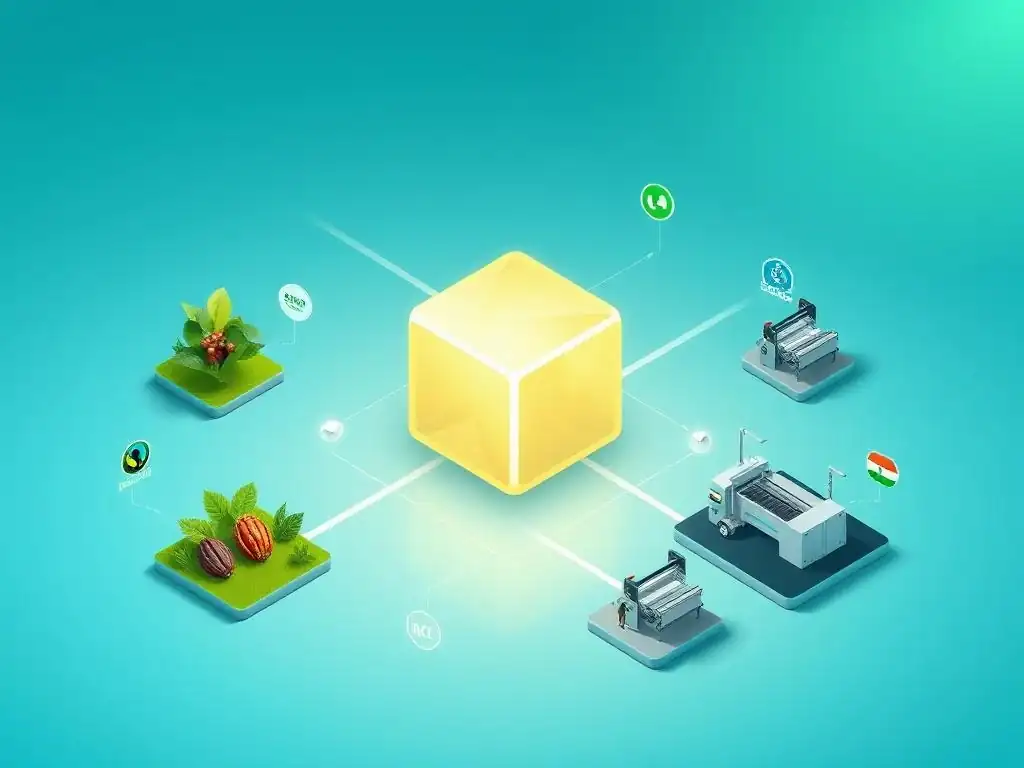
De Beers and Blockchain for Diamond Tracking: Tracr Platform
De Beers, a leading diamond company, has implemented blockchain technology through its Tracr platform to track diamonds from mine to retail. The diamond industry has long faced challenges related to conflict diamonds and ensuring ethical sourcing. Tracr uses blockchain to create a permanent and immutable record of each diamond's journey, starting from the moment it is mined. This record includes information about the diamond's origin, carat, color, and cut, as well as details about its ownership and transactions.
By leveraging blockchain, De Beers can provide consumers with verifiable assurance that their diamonds are ethically sourced and conflict-free. The Tracr platform enhances transparency and traceability throughout the diamond supply chain, from mining companies to jewelry retailers. As of 2023, Tracr is reportedly tracking hundreds of thousands of diamonds, representing a significant step towards greater transparency and ethical sourcing in the diamond industry.
Provenance and Tuna Tracking: Ensuring Sustainable Fishing Practices
Provenance, a technology company focused on supply chain transparency, has partnered with tuna fisheries to use blockchain for tracking tuna and ensuring sustainable fishing practices. Overfishing and illegal fishing are major concerns in the seafood industry, threatening marine ecosystems and livelihoods. Provenance's blockchain solution allows consumers to scan a QR code on tuna products to access information about the fish's origin, fishing method, and journey through the supply chain.
This transparency empowers consumers to make informed choices about the seafood they consume, supporting sustainable fishing practices and combating illegal fishing. By recording data on the blockchain, Provenance helps to verify claims of sustainability and traceability in the tuna supply chain. This initiative demonstrates how blockchain can be used to promote environmental sustainability and ethical sourcing in the seafood industry, contributing to the preservation of marine resources.
Walmart and Blockchain for Mango Traceability: Food Safety and Transparency
Walmart, one of the world's largest retailers, has implemented blockchain technology to improve food safety and traceability in its supply chains, including for mangoes. Foodborne illnesses and recalls are costly and damaging to consumer trust. Walmart's blockchain system allows them to track mangoes from farm to shelf, reducing the time it takes to trace the origin of contaminated produce from weeks to seconds. This rapid traceability is crucial for quickly identifying and removing affected products from shelves in the event of a food safety issue.
By using blockchain, Walmart enhances food safety and transparency for its customers. Consumers can scan a QR code on mangoes to access information about their origin, farm, and journey through the supply chain. This initiative not only improves food safety but also builds consumer confidence in the quality and origin of Walmart's produce. Walmart's adoption of blockchain for mango traceability showcases the technology's potential to enhance food safety and transparency in large-scale retail supply chains.
Overcoming Challenges in Blockchain Adoption for Supply Chains
Addressing Scalability Issues in Blockchain Supply Chains
Scalability is a significant challenge for blockchain adoption in supply chains, particularly for large, complex networks with high transaction volumes. Traditional blockchain platforms, like Bitcoin, are not designed to handle the massive throughput required by global supply chains. As more participants and transactions are added to a blockchain network, transaction processing speeds can slow down, and costs can increase.
To address scalability challenges, various solutions are being explored, including layer-2 scaling solutions, sharding, and the use of more scalable blockchain platforms. Layer-2 solutions, such as state channels and rollups, process transactions off-chain and then batch them onto the main blockchain, increasing throughput. Sharding involves dividing the blockchain into smaller, more manageable shards, allowing for parallel processing of transactions. Furthermore, newer blockchain platforms are being developed with scalability as a core design principle, offering higher transaction processing capacities. Overcoming scalability limitations is crucial for enabling widespread blockchain adoption in supply chain management.
Data Privacy and Security Considerations for Sensitive Information
While transparency is a key benefit of blockchain, data privacy and security are also critical considerations, especially when dealing with sensitive supply chain information. Businesses may be hesitant to share commercially sensitive data, such as pricing information or supplier relationships, on a public or even permissioned blockchain. Therefore, robust data privacy and security measures are essential for blockchain adoption in supply chains.
Techniques like zero-knowledge proofs and homomorphic encryption are being explored to enable data privacy on blockchain networks. Zero-knowledge proofs allow parties to verify information without revealing the underlying data itself. Homomorphic encryption enables computations to be performed on encrypted data without decrypting it first. These technologies can help to protect sensitive information while still leveraging the transparency and security benefits of blockchain. Furthermore, careful design of permissioned blockchain networks and access control mechanisms can ensure that data is only accessible to authorized participants, mitigating privacy risks.
The Importance of Interoperability Between Different Blockchain Systems
Interoperability between different blockchain systems is crucial for realizing the full potential of blockchain in supply chains. As different companies and industries adopt blockchain solutions, there is a risk of creating siloed blockchain networks that cannot communicate with each other. This lack of interoperability can hinder data sharing and collaboration across supply chains, limiting the overall benefits of blockchain adoption.
To address interoperability challenges, industry standards and protocols are needed to enable seamless communication and data exchange between different blockchain platforms. Initiatives like the InterWork Alliance and the Baseline Protocol are working to develop interoperability standards for enterprise blockchain solutions. Furthermore, technologies like cross-chain bridges are being developed to facilitate the transfer of assets and data between different blockchain networks. Achieving interoperability is essential for creating a truly interconnected and transparent supply chain ecosystem based on blockchain technology.
Cost and Complexity of Implementing Blockchain Solutions
The cost and complexity of implementing blockchain solutions can be a barrier to adoption, particularly for smaller businesses or those with limited resources. Developing and deploying blockchain applications requires specialized expertise in blockchain technology, cryptography, and software development. The initial investment in infrastructure, software development, and integration with existing systems can be significant. Furthermore, ongoing maintenance and operational costs need to be factored in.
To address cost and complexity challenges, businesses can explore various strategies. Utilizing blockchain-as-a-service (BaaS) platforms can reduce the upfront infrastructure costs and technical complexity of blockchain implementation. BaaS providers offer pre-built blockchain platforms and tools that simplify development and deployment. Furthermore, adopting a phased approach to blockchain implementation, starting with pilot projects and gradually scaling up, can help to manage costs and risks. Collaborating with industry consortia and sharing development costs can also make blockchain adoption more financially feasible for smaller businesses.
The Future of Blockchain and Ethical Sourcing
Emerging Trends in Blockchain Supply Chain Management
Several emerging trends are shaping the future of blockchain in supply chain management, particularly in the context of ethical sourcing. One key trend is the increasing adoption of blockchain for supply chain finance. Blockchain-based platforms are being developed to streamline trade finance processes, making it easier and faster for suppliers, especially smaller businesses in developing countries, to access financing. This can improve cash flow and incentivize ethical sourcing practices by providing financial incentives to compliant suppliers.
Another trend is the growing use of blockchain for digital identity and credentials verification. Blockchain can be used to create tamper-proof digital identities for suppliers and workers, verifying their credentials and certifications related to ethical and sustainability standards. This can simplify compliance verification and reduce the risk of fraudulent certifications. Furthermore, the integration of blockchain with decentralized identity solutions is emerging, giving individuals greater control over their data and enabling self-sovereign identity in supply chains.
The Convergence of Blockchain with IoT and AI for Enhanced Transparency
The convergence of blockchain with other technologies like the Internet of Things (IoT) and Artificial Intelligence (AI) is poised to further enhance supply chain transparency and ethical sourcing. IoT sensors can provide real-time data on product conditions, location, and environmental factors throughout the supply chain. This data can be recorded on a blockchain, creating a more comprehensive and granular view of supply chain operations.
AI can be used to analyze blockchain data and IoT sensor data to identify patterns, anomalies, and potential risks in supply chains, including ethical violations. AI-powered analytics can also be used to optimize supply chain processes and improve efficiency. The combination of blockchain, IoT, and AI offers powerful capabilities for creating more intelligent, transparent, and ethical supply chains, enabling proactive risk management and improved decision-making.
The Role of Blockchain in Promoting Sustainable Supply Chains
Blockchain technology is increasingly recognized for its potential to promote sustainable supply chains, encompassing both environmental and social sustainability. Beyond ethical sourcing, blockchain can be used to track and verify environmental impact data, such as carbon emissions, water usage, and waste generation, throughout the supply chain. This transparency can incentivize businesses to adopt more sustainable practices and reduce their environmental footprint.
Blockchain can also support circular economy initiatives by tracking materials and products throughout their lifecycle, facilitating reuse, recycling, and remanufacturing. By providing verifiable data on the sustainability attributes of products and materials, blockchain can empower consumers to make more environmentally conscious purchasing decisions and support brands committed to sustainability. The role of blockchain in promoting sustainable supply chains is expected to grow significantly as businesses and consumers increasingly prioritize environmental responsibility.
Blockchain and the Evolution of Consumer Expectations for Ethical Products
Blockchain is playing a key role in shaping and responding to evolving consumer expectations for ethical products. Consumers are increasingly demanding greater transparency and accountability from brands regarding their ethical and sustainability practices. Blockchain provides a technology solution to meet these demands by enabling verifiable transparency and building trust in ethical product claims.
As consumers become more aware of the potential of blockchain to enhance supply chain transparency, their expectations for ethical product information are likely to rise further. Brands that adopt blockchain to demonstrate their commitment to ethical sourcing and sustainability will be better positioned to meet these evolving consumer expectations and gain a competitive advantage in the marketplace. Blockchain is not just a technology solution but also a catalyst for a broader shift towards more ethical and transparent business practices, driven by consumer demand and enabled by technological innovation.
Blockchain for Public Records: Enhancing Trust and Accountability
The Synergy Between Blockchain and Public Records for Ethical Sourcing
The application of blockchain technology to public records has a powerful synergy with ethical sourcing initiatives. Public records, such as certifications, audit reports, and licenses, are crucial for verifying ethical claims and ensuring compliance in supply chains. However, traditional public record systems can be vulnerable to fraud, manipulation, and inefficiencies. Blockchain offers a solution by providing a secure, transparent, and immutable platform for managing and verifying public records related to ethical sourcing.
By recording ethical sourcing certifications and audit reports on a blockchain-based public record system, businesses, consumers, and regulators can access and verify this information with greater trust and confidence. The immutability of blockchain ensures that these records cannot be tampered with, while the transparency of the ledger enables public auditability. This synergy between blockchain and public records enhances the credibility and effectiveness of ethical sourcing efforts.
Verifying Certifications and Audits on the Blockchain
Blockchain technology provides a robust mechanism for verifying certifications and audits related to ethical sourcing. Traditional paper-based or centralized digital certification systems are prone to fraud and inefficiency. Blockchain-based certification systems can issue digital certificates that are cryptographically secured and recorded on an immutable ledger. These certificates can represent various ethical sourcing standards, such as fair trade certifications, organic certifications, or labor standards compliance.
Consumers and businesses can easily verify the authenticity of these digital certificates by checking the blockchain record. Similarly, audit reports related to ethical sourcing can be securely stored and verified on a blockchain. This enhanced verification process reduces the risk of fraudulent certifications and audit reports, strengthening the integrity of ethical sourcing claims and building trust in certification schemes.
Creating a Tamper-Proof Record of Supply Chain Activities
Blockchain's ability to create a tamper-proof record of supply chain activities is fundamental to enhancing trust and accountability in ethical sourcing. By recording key events and transactions throughout the supply chain on a blockchain, businesses can create an immutable audit trail that is resistant to manipulation or alteration. This tamper-proof record can include information about product origin, manufacturing processes, labor conditions, environmental impact, and compliance with ethical standards.
This level of transparency and data integrity empowers stakeholders to verify ethical claims and hold businesses accountable for their supply chain practices. Consumers can access blockchain-based records to trace the journey of products and verify their ethical sourcing attributes. Regulators can use blockchain data to monitor compliance and enforce ethical sourcing regulations. The creation of a tamper-proof record of supply chain activities through blockchain is a significant step towards building more ethical and accountable global supply chains.
Frequently Asked Questions
How can blockchain technology improve ethical sourcing in supply chains?
Blockchain creates an immutable and transparent record of a product's journey. This allows for verification of ethical practices at each stage, from raw material extraction to final delivery, ensuring accountability and reducing the risk of exploitation.
What specific types of information can be tracked using blockchain in a supply chain?
Blockchain can track a wide range of data, including the origin of materials, the labor conditions under which they were produced, and the environmental impact of each step. This provides comprehensive visibility into the entire process.
What are the benefits of using blockchain for supply chain transparency compared to traditional methods?
Traditional methods are often fragmented and prone to manipulation. Blockchain offers enhanced security, trust, and traceability due to its decentralized and immutable nature, making it far more reliable for verifying ethical sourcing claims.
How does blockchain help consumers make more informed purchasing decisions regarding ethical sourcing?
By providing readily accessible information about a product's journey and ethical credentials, blockchain empowers consumers to make choices aligned with their values. This drives demand for ethically sourced products and incentivizes companies to prioritize transparency.
What are some of the challenges in implementing blockchain solutions for ethical sourcing in supply chains?
Challenges include the complexity of integrating blockchain with existing systems, the need for industry-wide collaboration to establish standards, and the cost of implementation, particularly for smaller suppliers.
Final Reflection: Weaving Trust into the Supply Chain
The intricate web of global supply chains, often shrouded in opacity, demands a new paradigm of accountability. Blockchain technology offers a powerful tool to illuminate these hidden pathways, fostering ethical sourcing and building trust between consumers and producers. This isn't just about tracking goods; it's about ensuring fair labor practices, environmental sustainability, and a commitment to human dignity at every stage of production.
The potential of blockchain to revolutionize supply chain ethics is profound, and its impact is already being felt. Witnessing the growing demand for ethically sourced products underscores the power of informed consumers and the responsibility of businesses to meet that demand. Transparency is the new accountability,
as John Mackey, co-founder of Whole Foods Market, aptly stated. This quote encapsulates the shift towards a more conscious consumerism, where transparency is not just a buzzword, but a fundamental expectation.
As we move forward, let us all consider our role in shaping a more ethical future. By demanding transparency, supporting businesses committed to ethical sourcing, and embracing innovative technologies like blockchain, we can collectively weave trust into the fabric of global supply chains. Let us strive to create a world where every product tells a story of fairness, sustainability, and respect for all.
Unveil Your Supply Chain's Story: Take Action Now!
Thank you for exploring how blockchain can revolutionize ethical sourcing and transparency in your supply chain. Now that you understand the power of immutable records, it's time to turn this knowledge into real-world impact.
Here are some concrete steps you can take today:
- Start by mapping your supply chain's key touchpoints and identifying areas where blockchain technology could be integrated. Begin with a small pilot project to demonstrate its feasibility.
- Investigate innovative blockchain solutions beyond simple tracing and tracking. Consider implementing smart contracts for automated compliance checks and verifying supplier certifications directly on the blockchain.
- Share this article with your colleagues to encourage a conversation about how blockchain can enhance your organization's commitment to ethical sourcing and strengthen consumer trust.
What is the first step you'll take this week to bring blockchain transparency to your supply chain? Share your plans in the comments below!
Leave a Reply