
Transparency for the Unbanked: Blockchain's Potential for Financial Inclusion and Accountability

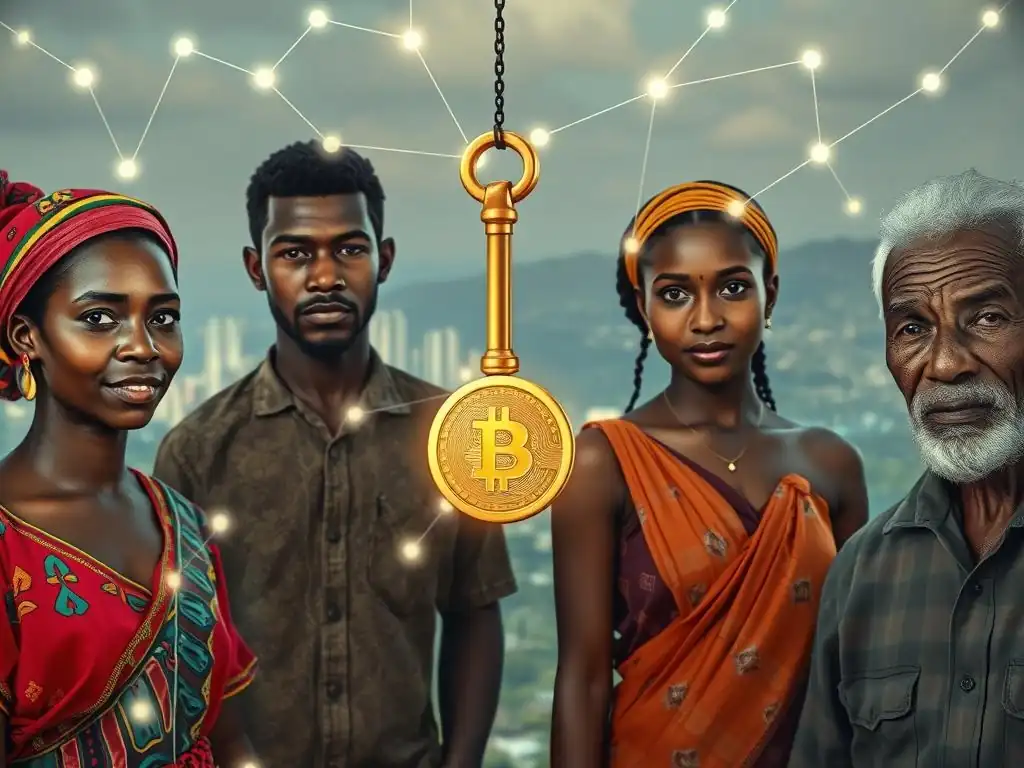
Welcome to Blockchain Trends, your compass in the rapidly evolving world of decentralized technologies. The potential of blockchain extends far beyond cryptocurrency, touching everything from supply chains to governance. But can it bridge the gap for the unbanked and underserved? Dive into our latest article, " Transparency for the Unbanked: Blockchain's Potential for Financial Inclusion and Accountability", where we explore blockchain financial inclusion opportunities and how this revolutionary technology can foster a more equitable and transparent financial future. What are the real-world implications, and what hurdles remain? Let's unlock the answers together.
- The Unbanked Population: A Global Challenge and the Need for Financial Inclusion
-
Frequently Asked Questions
- What are the key Blockchain financial inclusion opportunities highlighted in the article?
- How can blockchain technology promote financial inclusion for marginalized communities?
- What role does transparency play in fostering trust and accountability within the financial inclusion context?
- What are some potential challenges or regulatory hurdles that need to be addressed to fully realize Blockchain financial inclusion opportunities?
- Beyond cryptocurrencies, what other Blockchain financial inclusion opportunities exist according to the article?
- Final Reflection: Empowering Futures Through Transparent Finance
- Unveil Financial Freedom: Take Control Now!
The Unbanked Population: A Global Challenge and the Need for Financial Inclusion

Barriers to Traditional Banking: Cost, Documentation, and Infrastructure
Access to traditional banking services remains a significant hurdle for a large portion of the global population. Several interconnected barriers contribute to this exclusion, preventing individuals from participating fully in the formal financial system. One of the most prominent is cost. Many traditional banks impose minimum balance requirements, transaction fees, and account maintenance charges that are simply unaffordable for low-income individuals.
These costs, though seemingly small in developed economies, can represent a substantial portion of the limited income available to those living in poverty. Furthermore, the geographical distribution of bank branches often favors urban centers, leaving rural and remote communities underserved. Building and maintaining physical infrastructure in sparsely populated areas is expensive, making it less profitable for traditional banks to operate there.
Beyond cost and infrastructure, documentation requirements pose another significant obstacle. Opening a bank account typically necessitates proof of identity and address, documents that many unbanked individuals, particularly in developing nations, lack. This can be due to a lack of formal identification systems, displacement, or simply the absence of a fixed address.
For example, in many parts of Sub-Saharan Africa and South Asia, informal settlements often lack formal addresses, making it incredibly difficult for residents to comply with KYC (Know Your Customer) regulations mandated by traditional financial institutions. This creates a Catch-22 situation where individuals are excluded from the formal financial system precisely because they lack the documentation that the system requires to grant access.
Global Statistics: Percentage of Unbanked Adults by Region
The scale of global financial exclusion is substantial, affecting billions of adults worldwide. According to the World Bank's Global Findex database, in 2021, approximately 1.4 billion adults globally remained unbanked. While this represents a decrease from previous years, driven in part by increased mobile money adoption, the number is still staggering. Regional disparities are pronounced.
Sub-Saharan Africa has the highest percentage of unbanked adults, with around 57% lacking access to a bank account. South Asia follows closely, with approximately 32% of adults unbanked. In contrast, developed economies in North America and Europe have significantly lower unbanked rates, typically below 5%.
Latin America and the Caribbean also face considerable challenges, with roughly 30% of the adult population unbanked. Even within regions, disparities exist between countries and between urban and rural populations. For instance, within Southeast Asia, countries like Indonesia and the Philippines have much higher unbanked populations compared to Singapore or Malaysia.
These statistics underscore the urgent need for innovative solutions to address financial exclusion, particularly in developing regions where access to basic financial services could significantly improve livelihoods and drive economic growth. It is important to note that these figures represent adults, and the inclusion of children and youth would likely increase the overall number of financially excluded individuals globally.
Frequently Asked Questions
What are the key Blockchain financial inclusion opportunities highlighted in the article?
The article primarily focuses on how blockchain can provide greater transparency and accountability for the unbanked, enabling access to financial services they were previously excluded from. This includes opportunities in areas like microfinance and remittances.
How can blockchain technology promote financial inclusion for marginalized communities?
Blockchain facilitates secure and transparent transactions, lowering the barrier to entry for marginalized communities by reducing the need for traditional banking infrastructure and enabling peer-to-peer lending and other innovative solutions.
What role does transparency play in fostering trust and accountability within the financial inclusion context?
Transparency is crucial because it builds trust between lenders and borrowers. Immutable blockchain records enhance accountability by documenting transactions, reducing fraud, and promoting a fairer financial ecosystem.
What are some potential challenges or regulatory hurdles that need to be addressed to fully realize Blockchain financial inclusion opportunities?
Challenges include regulatory uncertainty, scalability issues, and the need for user education and accessible interfaces for individuals unfamiliar with blockchain technology. These hurdles need addressing to ensure equitable access.
Beyond cryptocurrencies, what other Blockchain financial inclusion opportunities exist according to the article?
The article highlights opportunities in Decentralized Finance (DeFi) applications, supply chain finance to help small businesses, and identity management solutions that allow the unbanked to prove their creditworthiness and access financial services.
Final Reflection: Empowering Futures Through Transparent Finance
The exploration of blockchain's potential for financial inclusion has revealed a powerful truth: access to transparent and accountable financial systems is not a privilege, but a fundamental right. The unbanked, often marginalized and excluded from traditional financial services, stand to gain immensely from the decentralized and immutable nature of blockchain technology. This isn't just about technological advancement; it's about leveling the playing field and empowering individuals to participate fully in the global economy.
The promise of blockchain in fostering financial inclusion extends far beyond mere transactions. It's about building trust, fostering economic growth, and creating opportunities for those who have been historically underserved. Witnessing the potential for blockchain to reshape financial landscapes, especially for vulnerable populations, reinforces the urgency of exploring and implementing these solutions responsibly. Financial inclusion is not just about access to banking services. It is about empowering people to participate fully in the economy and to improve their lives.
This quote encapsulates the core of our mission: to leverage technology for the betterment of humanity.
As we conclude this exploration of blockchain financial inclusion opportunities, let us not simply acknowledge the potential, but actively champion its realization. Consider how you, in your own sphere of influence, can contribute to a future where financial transparency and accessibility are not just ideals, but realities for all. Embrace the challenge, advocate for responsible innovation, and become a catalyst for change, ensuring that the transformative power of blockchain truly empowers the unbanked and unlocks their boundless potential.
Unveil Financial Freedom: Take Control Now!
Thanks for diving into the potential of blockchain for financial inclusion! We hope you found insightful the possibilities it unlocks for the unbanked and the path towards greater financial transparency. Now, let's put that knowledge into action and contribute to a more equitable future.
Here are some steps you can take to make a difference:
- Explore a blockchain-based microloan platform: Consider researching and supporting organizations that leverage blockchain to provide small loans to entrepreneurs in underserved communities. Understanding how these platforms work is the first step toward advocating for their wider adoption.
- Share this article: Use the social media buttons on this page to spread awareness about the potential of blockchain in promoting financial inclusion. Help us reach a wider audience!
- Start a discussion: What are some other innovative ways blockchain can empower the unbanked? Share your thoughts and ideas in the comments section below.
What specific questions do you have about blockchain-based financial solutions that you'd like answered in future articles?
Leave a Reply