
Verifiable Credentials (VCs): Trustworthy Digital Proofs on the Blockchain for a Credible Web


Welcome to Blockchain Trends, your source for understanding the revolutionary impact of blockchain technology!
Imagine a world where digital identities and qualifications are instantly verifiable and tamper-proof, streamlining processes and building unparalleled trust. Our latest article dives deep into Blockchain Verifiable Credentials for Business, exploring how this innovative technology is poised to reshape industries and usher in a new era of secure and efficient data exchange. Intrigued? Discover how VCs are transforming digital trust and paving the way for a more credible and decentralized web.
Digital Identity: Secure and Verifiable Credentials for a Trusted Ecosystem
- Introduction to Digital Identity and the Future of Trust
- What are Verifiable Credentials (VCs)? A Comprehensive Overview
- Blockchain's Role in Enhancing Security and Transparency
-
Use Cases of Verifiable Credentials Across Industries
- Streamlining Identity Verification Processes for Enhanced Security
- VCs in Supply Chain Management: Traceability and Provenance
- Secure and Efficient Employee Credential Management
- Educational Credentials: Verifying Degrees, Skills, and Certifications
- Healthcare Applications: Securely Sharing Medical Information
- The Technical Architecture of Verifiable Credentials
- Implementing Verifiable Credentials: A Practical Guide
- The Future of Verifiable Credentials: Trends and Predictions
- Challenges and Considerations for Widespread Adoption
- Conclusion: Embracing Verifiable Credentials for a More Trusted Future
-
Frequently Asked Questions
- What are Verifiable Credentials (VCs) and how do they relate to blockchain?
- How can businesses leverage Blockchain Verifiable Credentials (VCs)?
- What are the benefits of using VCs over traditional paper-based credentials?
- How does the regulation of blockchain affect the use of Blockchain Verifiable Credentials for Business?
- What is the future outlook for Blockchain Verifiable Credentials in the decentralized web?
- Final Reflection: Embracing Trust in the Digital Age
- Uncover the Power of Verifiable Credentials Now!
Introduction to Digital Identity and the Future of Trust
The Growing Need for Secure and Reliable Identity Verification
In today's hyper-connected digital world, the necessity for robust and dependable identity verification systems has never been more critical. Traditional methods, often reliant on usernames and passwords, are increasingly proving inadequate in the face of sophisticated cyber threats and the sheer scale of online interactions. Data breaches are becoming commonplace, with reports indicating a staggering increase in compromised personal information year after year.
For instance, in 2023 alone, data breaches exposed billions of records globally, according to cybersecurity reports. This highlights a fundamental weakness: current systems often centralize identity data, creating honeypots for malicious actors and leaving individuals vulnerable to identity theft and fraud. The lack of a universally accepted and secure digital identity framework is hindering the development of truly trustworthy online environments.
Furthermore, the reliance on siloed identity systems across different platforms creates a fragmented and cumbersome user experience. Users are forced to manage countless passwords and accounts, leading to password fatigue and risky security practices like password reuse. This complexity not only frustrates users but also undermines the security posture of organizations.
The need for a more user-centric, secure, and interoperable approach to identity verification is evident. Businesses are losing billions annually due to fraud and inefficient identity management processes. The demand for solutions that can enhance security, reduce fraud, and streamline user experience is driving the exploration and adoption of innovative technologies like blockchain verifiable credentials.
Digital Identity's Role in Establishing Trustworthy Online Interactions
Digital identity, particularly when built upon blockchain technology and verifiable credentials, offers a paradigm shift in how we establish and maintain trust in online interactions. Unlike traditional systems that often rely on centralized authorities and vulnerable databases, a robust digital identity framework empowers individuals with greater control over their personal information and how it is shared. This user-centric approach is fundamental to building trust. By leveraging cryptographic techniques and decentralized technologies, digital identity solutions can provide verifiable proof of claims about an individual or entity, without the need to constantly expose sensitive underlying data.
Imagine a world where proving your age, qualifications, or professional affiliations online is as seamless and secure as presenting a physical ID, but without the risks of physical document forgery or the privacy concerns of centralized data storage. This is the promise of digital identity enabled by blockchain verifiable credentials. These credentials act as digital passports, allowing individuals to assert specific attributes about themselves in a privacy-preserving and verifiable manner.
This technology can underpin a new era of trustworthy online interactions, fostering greater confidence in e-commerce, online services, and digital governance. By shifting from implicit trust based on fragile systems to explicit trust based on cryptographic proofs, we can pave the way for a more credible and secure web for everyone.
What are Verifiable Credentials (VCs)? A Comprehensive Overview
Defining Verifiable Credentials: Components, Standards, and Security
Verifiable Credentials (VCs) are digital credentials that are cryptographically secure, tamper-evident, and designed to be presented digitally as proof of claims. Think of them as the digital equivalent of physical documents like diplomas, licenses, or passports, but with enhanced security and privacy features. A VC is composed of several key components: the Issuer, the entity that creates and signs the credential attesting to certain information; the Holder, the individual or entity to whom the credential is issued and who controls it; and the Verifier, the party who needs to verify the claims made in the credential.
VCs adhere to open standards, primarily those defined by the World Wide Web Consortium (W3C). The W3C Verifiable Credentials Data Model 1.1 provides a standardized way to represent credentials, ensuring interoperability across different systems and platforms. Security in VCs is paramount and is achieved through cryptographic signatures.
When an issuer creates a VC, it digitally signs it using its private key. This signature allows verifiers to cryptographically confirm the authenticity and integrity of the credential, ensuring it has not been tampered with and that it was indeed issued by the claimed issuer. Furthermore, VCs can be anchored to a blockchain or other distributed ledger technology (DLT) to provide an immutable record of their issuance and revocation status, further enhancing trust and security.
VCs vs. Traditional Credentials: Advantages and Applications
Traditional credentials, such as physical documents and username/password combinations, face increasing limitations in the digital age. Physical credentials are easily forged, damaged, and inconvenient to manage in online contexts. Username/password systems are vulnerable to phishing, brute-force attacks, and data breaches. Verifiable Credentials offer significant advantages over these traditional methods, particularly in terms of security, privacy, and efficiency. VCs are cryptographically secured against forgery and tampering, making them far more secure than physical documents. They are also designed with privacy in mind, allowing holders to selectively disclose only the necessary information to verifiers, minimizing data exposure.
Moreover, VCs streamline verification processes. Instead of manually checking physical documents or relying on centralized databases, verifiers can instantly and automatically verify VCs using cryptographic proofs. This efficiency translates to reduced costs and faster processing times in various applications. Consider the application process for a professional license.
Traditionally, it involves submitting physical documents, waiting for manual verification, and potentially facing delays and bureaucratic hurdles. With VCs, a licensed professional could instantly present a verifiable digital license to a potential employer or client, streamlining the process and enhancing trust. Applications span across various sectors, from academic credentials and professional certifications to supply chain provenance and identity verification for online services, highlighting the versatility and transformative potential of VCs compared to traditional credentials.
Benefits of Using Verifiable Credentials: Efficiency, Security, and Privacy
The adoption of Verifiable Credentials brings a multitude of benefits, primarily centered around efficiency, security, and privacy. Efficiency gains are realized through the streamlined verification processes. Automated verification reduces manual effort, processing time, and administrative costs associated with traditional credential checks.
For businesses, this means faster onboarding of employees, quicker customer verification, and reduced operational overhead. For individuals, it translates to smoother access to services and reduced friction in online interactions. Imagine applying for a loan online – with VCs, your income verification, employment history, and credit score could be instantly and securely verified, significantly speeding up the application process.
Security is significantly enhanced through the cryptographic foundations of VCs and their potential anchoring to blockchain. The tamper-evident nature of VCs drastically reduces the risk of fraud associated with forged or altered credentials. Furthermore, the decentralized nature of many VC implementations minimizes reliance on vulnerable central databases, reducing the attack surface for data breaches. This robust security is crucial in sensitive sectors like finance, healthcare, and government, where data integrity and trust are paramount.
Privacy is another key advantage. VCs empower users with greater control over their personal data. Through selective disclosure, users can choose to share only the necessary attributes from their VC, rather than revealing their entire identity or credential details. This minimizes data exposure and aligns with privacy-preserving principles, giving individuals more agency over their digital identities and fostering a more privacy-respecting online environment.
Blockchain's Role in Enhancing Security and Transparency
Immutable Records: Ensuring Data Integrity with Blockchain Technology
Blockchain technology plays a crucial role in amplifying the security and transparency of Verifiable Credentials by providing an immutable and auditable record of credential issuance and status. The inherent characteristics of blockchain – decentralization, cryptographic security, and consensus mechanisms – make it an ideal foundation for establishing trust in digital identity systems. When a Verifiable Credential is issued, a cryptographic hash of the credential or metadata about it can be recorded on a blockchain.
This record serves as a permanent and tamper-proof audit trail, ensuring data integrity and non-repudiation. Once recorded on the blockchain, this information cannot be altered or deleted, providing verifiable proof of the credential's existence and history.
This immutability is critical for enhancing the trustworthiness of VCs. Verifiers can consult the blockchain to confirm that a credential was indeed issued by the claimed issuer and to check its current status, such as whether it has been revoked. This eliminates the reliance on potentially vulnerable centralized databases for revocation lists and provides a publicly auditable record of credential lifecycle events.
For instance, in the context of academic credentials, anchoring degree certificates to a blockchain provides a permanent and verifiable record of degree attainment, protecting against degree fraud and enabling employers or educational institutions to easily verify the authenticity of qualifications. Blockchain's immutable ledger ensures that the integrity of verifiable credentials remains intact over time, fostering greater confidence in their use.
Decentralized Identity (DID) and its Connection to Verifiable Credentials
Decentralized Identity (DID) is a revolutionary concept that puts individuals at the center of their digital identity management, aligning perfectly with the principles of verifiable credentials. A DID is a globally unique identifier that enables individuals or organizations to control their own identity without reliance on centralized authorities. Unlike traditional identifiers managed by domain registrars or social media platforms, DIDs are self-sovereign, meaning the DID controller has exclusive control over their DID and the associated identity data. DIDs are typically anchored on decentralized systems, such as blockchains, ensuring persistence and resistance to censorship.
The connection between DIDs and Verifiable Credentials is fundamental. DIDs provide the foundation for self-sovereign identity, while VCs are the mechanism for asserting verifiable claims about the DID controller. In a DID-based system, individuals use their DIDs to issue and manage their VCs.
Issuers of VCs can also use DIDs to establish their own verifiable identities, allowing verifiers to confirm the legitimacy of the issuer. This interconnected ecosystem of DIDs and VCs creates a powerful framework for decentralized and user-centric identity management. Imagine a scenario where you use your DID to receive a verifiable credential representing your professional certification.
You can then selectively present this VC to potential employers or clients, who can verify both the VC itself and your DID, establishing trust and authenticity in a decentralized and privacy-preserving manner. DIDs and VCs work synergistically to empower individuals with control over their digital identities and foster a more trustworthy and decentralized web.
Addressing Data Privacy Concerns with Secure Digital Identity Solutions
Secure digital identity solutions, particularly those leveraging blockchain and verifiable credentials, are designed to address growing data privacy concerns in the digital age. Traditional identity systems often involve centralized storage of sensitive personal data, creating privacy risks and vulnerabilities to data breaches. Blockchain-based digital identity solutions, in contrast, promote data minimization and user control.
Verifiable Credentials, by their very design, enable selective disclosure. Holders can choose to share only the specific attributes necessary for a particular interaction, rather than revealing their entire identity profile. This principle of least privilege is crucial for enhancing privacy and reducing the risk of data misuse.
Furthermore, decentralized identity (DID) frameworks, often used in conjunction with VCs, empower individuals with greater agency over their personal data. Individuals control their DIDs and the associated identity data, rather than relying on centralized identity providers. This self-sovereign approach reduces the risk of mass surveillance and data exploitation. Cryptographic techniques, such as zero-knowledge proofs, can be integrated with VCs to further enhance privacy.
Zero-knowledge proofs allow verifiers to confirm the validity of a claim without learning any additional information beyond the claim itself. For example, you could prove you are over 18 without revealing your actual birthdate. By combining blockchain's security, DID's self-sovereignty, and VC's privacy-preserving features, secure digital identity solutions offer a powerful approach to addressing data privacy concerns and building a more privacy-respecting digital ecosystem.
Use Cases of Verifiable Credentials Across Industries
Streamlining Identity Verification Processes for Enhanced Security
Verifiable Credentials are revolutionizing identity verification processes across various industries, offering enhanced security and significant streamlining of workflows. Traditionally, identity verification often involves cumbersome manual checks of physical documents or reliance on centralized databases prone to vulnerabilities. VCs offer a digital, secure, and efficient alternative. In the financial sector, for instance, Know Your Customer (KYC) and Anti-Money Laundering (AML) compliance are critical but often time-consuming and expensive.
VCs can enable individuals to obtain reusable, verifiable digital identities from trusted issuers, such as government agencies or banks. These VCs can then be presented to different financial institutions for KYC/AML compliance, eliminating redundant verification processes and significantly reducing onboarding times for new customers. Some financial institutions are already piloting VC-based KYC solutions, reporting potential cost reductions of up to 75% in customer onboarding processes.
In the travel industry, border control and airport security can be significantly enhanced with VCs. Travelers could hold verifiable digital passports or visas, allowing for faster and more secure border crossings. Airlines and airports could also use VCs for passenger verification, streamlining check-in and boarding procedures. Estimates suggest that VC-based digital travel documents could reduce airport processing times by up to 60%.
Online services and e-commerce platforms can also benefit immensely from VCs. Instead of relying solely on passwords, which are vulnerable to phishing and breaches, platforms can leverage VCs for stronger authentication and user verification. This can reduce account takeover fraud and enhance the security of online transactions, fostering greater trust and confidence in digital interactions.
VCs in Supply Chain Management: Traceability and Provenance
Verifiable Credentials are proving to be a powerful tool in supply chain management, enhancing traceability, ensuring provenance, and combating counterfeiting. In complex global supply chains, tracking products from origin to consumer can be challenging and opaque. VCs can provide a verifiable and auditable record of a product's journey, ensuring transparency and building trust among stakeholders.
Consider the food industry, where consumers increasingly demand information about the origin and quality of their food. VCs can be used to represent verifiable claims about the origin, processing, and certifications of food products. For example, a VC could attest to the organic certification of a particular batch of coffee beans, providing consumers with verifiable proof of its authenticity and ethical sourcing.
In the pharmaceutical industry, combating counterfeit drugs is a critical concern. VCs can be used to track pharmaceutical products throughout the supply chain, from manufacturing to dispensing, ensuring authenticity and preventing the introduction of counterfeit medications. Each step in the supply chain – from raw material sourcing to manufacturing, distribution, and retail – can be recorded and verified using VCs, creating an immutable and transparent audit trail.
This enhanced traceability not only helps combat counterfeiting but also improves supply chain efficiency and responsiveness to recalls or quality issues. Studies indicate that implementing VC-based traceability solutions in supply chains can reduce counterfeiting incidents by up to 80% in certain sectors. The ability to verifiably track products and their attributes throughout the supply chain is transforming supply chain management, fostering greater transparency, accountability, and trust.
Secure and Efficient Employee Credential Management
Verifiable Credentials offer a significant upgrade to traditional employee credential management systems, enhancing security, streamlining processes, and reducing administrative overhead. Traditional methods often rely on physical ID cards, paper-based certifications, and manual verification processes, which are inefficient, prone to errors, and vulnerable to fraud. VCs provide a digital, secure, and easily verifiable alternative. Companies can issue employees with VCs representing their roles, access privileges, certifications, and training records. These VCs can be securely stored on employees' devices and presented for verification when needed, such as for access control to buildings, systems, or sensitive data.
Onboarding new employees becomes significantly faster and more efficient with VCs. Instead of manually verifying paper-based documents and issuing physical ID cards, HR departments can issue digital VCs directly to new employees upon successful onboarding. Access control can be enhanced by integrating VC verification with physical and digital access control systems. Employees can present their VCs for secure and automated access to buildings, offices, or restricted areas.
Compliance and audit trails are also improved. VCs provide a verifiable and auditable record of employee credentials and access permissions, simplifying compliance reporting and audit processes. Companies are reporting reductions of up to 60% in administrative costs associated with employee credential management by adopting VC-based solutions. The efficiency, security, and auditability benefits of VCs are making them an increasingly attractive solution for modern employee credential management systems.
Educational Credentials: Verifying Degrees, Skills, and Certifications
The education sector is ripe for disruption with Verifiable Credentials, offering a more secure, efficient, and student-centric approach to managing and verifying academic achievements. Traditional paper-based diplomas and transcripts are susceptible to forgery, damage, and are cumbersome to share and verify in the digital age. VCs provide a digital alternative that is cryptographically secure, easily shareable, and instantly verifiable. Educational institutions can issue students with VCs representing their degrees, diplomas, certifications, and skills. These VCs can be securely stored by students and shared with employers, other educational institutions, or credentialing bodies as needed.
Verification of academic credentials becomes significantly streamlined. Employers and other institutions can instantly verify the authenticity of a VC directly with the issuing educational institution or through a decentralized verification network, eliminating the need for time-consuming manual transcript requests and verifications. This reduces administrative burden for both students and institutions and combats degree fraud, which is a significant problem globally. Lifelong learning and skills recognition are also enhanced by VCs.
Individuals can accumulate VCs representing various skills, micro-credentials, and professional certifications throughout their careers, creating a comprehensive and verifiable digital portfolio of their competencies. Some universities are already piloting VC-based diploma issuance, reporting significant reductions in administrative costs and enhanced security against credential fraud. The adoption of VCs in education is poised to transform how academic achievements are managed, verified, and recognized, benefiting students, educational institutions, and employers alike.
Healthcare Applications: Securely Sharing Medical Information
Verifiable Credentials hold immense potential in healthcare, offering a secure and patient-centric approach to managing and sharing medical information. Currently, healthcare data is often siloed and difficult to share securely between patients, providers, and healthcare organizations. VCs can empower patients with greater control over their medical records and facilitate secure and interoperable data exchange. Patients can hold VCs representing their medical history, allergies, medications, and immunizations. These VCs can be selectively shared with healthcare providers for treatment purposes, ensuring data privacy and patient consent.
Patient data portability is significantly enhanced. Patients can easily share their medical VCs with different healthcare providers, regardless of their affiliation, ensuring continuity of care and reducing the risk of medical errors due to incomplete information. Clinical trial recruitment can be streamlined and made more efficient using VCs. Researchers can use VCs to verify patient eligibility criteria in a privacy-preserving manner, speeding up the recruitment process and improving the quality of clinical research.
Insurance claims processing can also be accelerated and simplified. Patients can share relevant medical VCs with insurance providers to support their claims, reducing paperwork and processing times. Pilot projects in healthcare are exploring the use of VCs for patient-controlled medical records, demonstrating the potential to improve data privacy, interoperability, and patient empowerment in the healthcare ecosystem. The secure and patient-centric nature of VCs makes them a promising technology for transforming healthcare data management and exchange.
The Technical Architecture of Verifiable Credentials
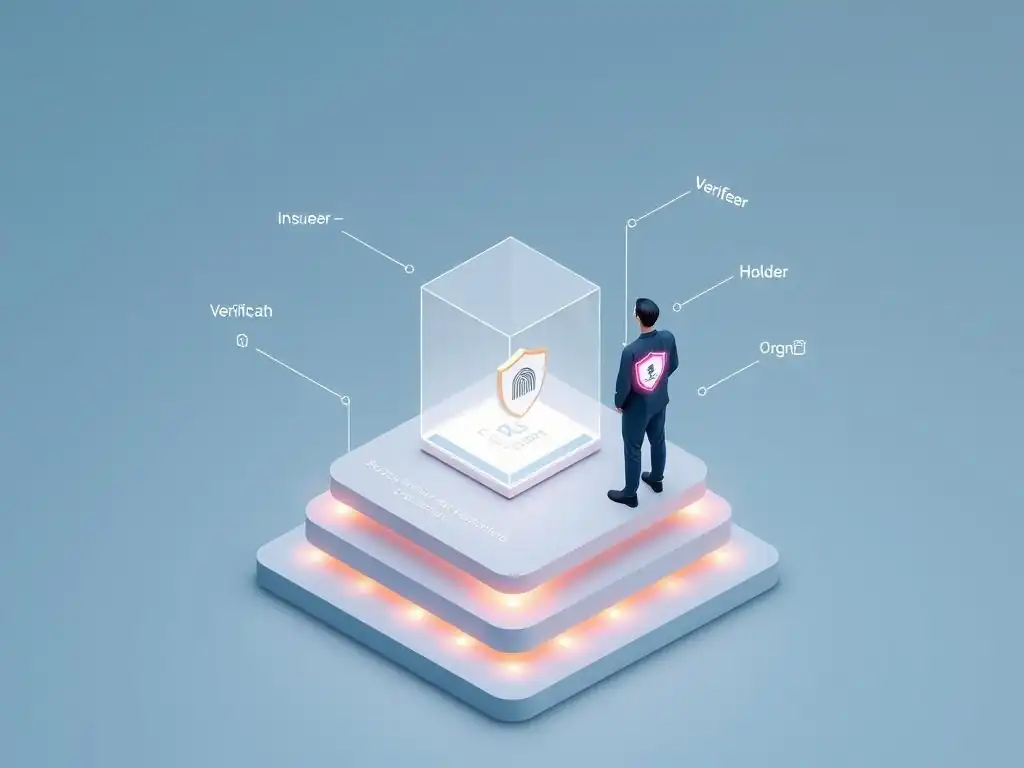
Issuers, Holders, and Verifiers: Roles and Responsibilities
The ecosystem of Verifiable Credentials is built upon three fundamental roles: Issuers, Holders, and Verifiers, each with distinct responsibilities crucial for the functioning of the system. Issuers are entities authorized to create and sign Verifiable Credentials. They are responsible for attesting to specific claims about a subject, which could be an individual, organization, or even a thing.
Issuers must have the authority and credibility to make these claims. Examples of issuers include universities issuing degrees, government agencies issuing licenses, and employers issuing professional certifications. Issuers are responsible for ensuring the accuracy and validity of the information contained in the VCs they issue and for managing the lifecycle of these credentials, including revocation when necessary.
Holders are the subjects to whom Verifiable Credentials are issued. They are individuals or entities who possess and control their VCs. Holders are responsible for securely storing their VCs and for selectively presenting them to verifiers when needed. Holders have agency over their credentials and decide when and with whom to share their verified information.
Verifiers are entities that need to verify the claims made in a Verifiable Credential. They rely on VCs to establish trust and make informed decisions. Verifiers receive VCs from holders and use cryptographic mechanisms to verify the authenticity, integrity, and validity of the credential.
Verification involves checking the issuer's digital signature and often consulting a revocation list or a blockchain to ensure the credential is still valid and has not been revoked. Verifiers rely on the assurance provided by VCs to establish trust in online interactions and processes. The interplay between issuers, holders, and verifiers forms the core of the VC ecosystem, enabling secure, private, and efficient exchange of verifiable information.
Understanding the Data Model and Schema for Interoperability
Interoperability is paramount for the widespread adoption and usability of Verifiable Credentials. To achieve interoperability, VCs rely on standardized data models and schemas that define the structure and meaning of the data contained within them. The W3C Verifiable Credentials Data Model 1.1 provides a foundational standard for representing VCs in a machine-readable format.
This data model defines the core properties of a VC, such as the issuer, holder, issuance date, expiration date, and the verifiable claims (assertions) being made. However, the data model itself is generic and needs to be complemented by schemas that define the specific types of claims being made in a particular context.
Schemas define the structure and vocabulary for the attributes within a VC. For example, a schema for an academic degree VC would define attributes such as "degreeName," "major," "institution," and "graduationDate," specifying the data type and meaning of each attribute. Schema.org is a widely used vocabulary that provides a rich set of schemas for describing various types of information, including people, organizations, events, and products.
VC schemas are often based on or aligned with Schema.org vocabularies to promote interoperability and semantic understanding across different systems. Using standardized data models and schemas ensures that VCs issued by different organizations and used in different applications can be understood and processed consistently. This interoperability is essential for creating a seamless and user-friendly VC ecosystem, enabling the exchange of verifiable information across diverse platforms and use cases.
Exploring Different Technologies for VC Implementation
Implementing Verifiable Credentials involves leveraging a range of technologies that support the creation, storage, and verification of these digital credentials. While blockchain is often associated with VCs, it's important to note that blockchain is not a prerequisite for VC implementation, although it can significantly enhance security and transparency. Blockchain technologies can be used as a decentralized and immutable ledger to anchor VCs, recording issuance and revocation status. Public blockchains like Ethereum or private/permissioned blockchains can be used depending on the specific requirements of the application. Anchoring VCs on a blockchain provides verifiable proof of issuance and enhances data integrity.
Decentralized Identifiers (DIDs) are a key technology for enabling self-sovereign identity and are often used in conjunction with VCs. DID methods define how DIDs are created, resolved, and updated on decentralized systems, including blockchains or distributed ledgers. Cryptographic libraries are essential for the security of VCs. Digital signatures, hash functions, and encryption algorithms are used to ensure the authenticity, integrity, and privacy of VCs.
Libraries like OpenSSL or libsodium provide robust cryptographic functions for VC implementations. Credential wallets are applications that allow holders to securely store and manage their VCs. These wallets provide user-friendly interfaces for presenting VCs to verifiers and managing privacy settings.
Various wallet implementations exist, ranging from mobile apps to browser extensions. The choice of technologies for VC implementation depends on factors such as security requirements, scalability needs, privacy considerations, and interoperability goals. A combination of these technologies is often used to build robust and functional VC systems.
Implementing Verifiable Credentials: A Practical Guide
Selecting the Appropriate Technology for Your VC Needs
Implementing Verifiable Credentials effectively requires careful consideration of the technology stack that best aligns with your specific needs and objectives. The choice of technology will depend on factors such as the scale of your VC deployment, security requirements, privacy considerations, interoperability goals, and existing infrastructure. For organizations prioritizing high security and transparency, leveraging blockchain technology to anchor VCs is often a preferred approach.
Public blockchains offer maximum transparency and immutability, while permissioned blockchains provide a balance between security and control. If privacy is paramount, solutions that incorporate Decentralized Identifiers (DIDs) and zero-knowledge proofs should be considered. DIDs empower users with self-sovereign identity, and zero-knowledge proofs enable privacy-preserving verification.
For large-scale deployments requiring high throughput and low latency, the scalability of the chosen technology is crucial. While public blockchains can face scalability limitations, Layer-2 scaling solutions or permissioned blockchains may offer better performance for high-volume VC transactions. Interoperability is essential for ensuring that your VC system can interact seamlessly with other systems and platforms. Adhering to W3C standards for VCs and using standardized data schemas are critical for interoperability.
Existing infrastructure and technical expertise within your organization should also influence technology selection. Choosing technologies that are compatible with your current systems and that your team is proficient in can reduce implementation complexity and costs. A thorough assessment of your specific requirements and a careful evaluation of different technology options are essential for selecting the most appropriate technology stack for your VC implementation.
Developing and Deploying VC Issuance Systems
Developing and deploying a Verifiable Credential issuance system involves several key steps, from planning and design to implementation and testing. Requirement gathering and design are crucial first steps. Clearly define the purpose of your VC issuance system, the types of credentials you will issue, the attributes to be included in each credential, and the intended use cases. Design the data schemas for your VCs, ensuring they align with relevant standards and meet your specific needs. Technology selection follows, as discussed in the previous section, choosing the appropriate technologies for your issuer infrastructure, credential storage, and communication protocols.
Development involves building the software components for your issuance system. This includes developing APIs for credential issuance, user interfaces for managing credentials, and integration with any necessary data sources for populating credential attributes. Security considerations must be integrated throughout the development process. Implement robust key management practices for issuer signing keys, ensure secure data storage, and conduct thorough security testing to identify and mitigate vulnerabilities.
Testing and quality assurance are essential before deployment. Conduct unit testing, integration testing, and user acceptance testing to ensure the system functions correctly and meets user requirements. Deployment involves setting up your issuance infrastructure, configuring servers, and deploying your software components. Consider using cloud-based services for scalability and reliability.
Ongoing maintenance and monitoring are crucial after deployment. Regularly monitor system performance, security logs, and user feedback to ensure smooth operation and address any issues that arise. A well-planned and executed development and deployment process is essential for creating a robust and reliable VC issuance system.
Integrating VC Verification into Existing Processes
Successfully integrating Verifiable Credential verification into existing processes is crucial for realizing the benefits of VCs in real-world applications. Integration requires careful planning and consideration of existing workflows, systems, and user experiences. Identify verification points within your existing processes where VC verification can add value. This could be at login stages, access control points, onboarding processes, or transaction confirmations. Design verification workflows that seamlessly incorporate VC verification. Consider the user experience for both holders presenting VCs and verifiers conducting verification. Aim for a smooth and intuitive process that minimizes friction.
Develop verification logic that specifies how VCs will be verified. This includes defining the required claims, validation rules, and revocation checks. Integrate with existing systems to enable VC verification. This may involve developing APIs to connect your verification system with existing databases, access control systems, or other applications. User training and onboarding are essential for successful integration.
Educate users about how to obtain, manage, and present VCs. Provide clear instructions and support to ensure smooth adoption. Iterative testing and refinement are crucial. Pilot test your VC verification integration in a limited environment, gather feedback, and refine your workflows and systems based on user experience and performance data. Successful integration of VC verification requires a user-centric approach and careful attention to detail, ensuring that VCs enhance existing processes without adding unnecessary complexity or friction.
Security Considerations for VC Implementations
Security is paramount in Verifiable Credential implementations, as VCs are designed to establish trust and verify sensitive information. Robust security measures must be implemented throughout the VC lifecycle, from issuance to verification and revocation. Key management is critical. Issuer signing keys must be securely generated, stored, and protected from unauthorized access. Hardware Security Modules (HSMs) or secure key management services can be used to enhance key security. Data protection is essential. Ensure that sensitive data within VCs is protected from unauthorized disclosure and modification. Encryption and access control mechanisms should be implemented to safeguard VC data.
Vulnerability assessments and penetration testing should be conducted regularly to identify and address potential security weaknesses in VC systems. Compliance with relevant security standards and regulations is important, particularly in regulated industries. Consider standards like ISO 27001 or industry-specific security frameworks. Revocation mechanisms are necessary to invalidate compromised or outdated VCs. Implement robust revocation processes and ensure that verifiers can effectively check the revocation status of VCs.
Secure communication channels should be used for VC exchange between holders and verifiers to prevent man-in-the-middle attacks. HTTPS and other secure protocols should be employed. Regular security audits and monitoring are crucial for maintaining a secure VC implementation. Continuously monitor security logs, track potential threats, and conduct periodic security audits to ensure ongoing security and resilience. A comprehensive and proactive approach to security is essential for building trust and confidence in VC-based systems.
The Future of Verifiable Credentials: Trends and Predictions
Interoperability and Standardization Across Different Systems
Interoperability and standardization are key drivers shaping the future of Verifiable Credentials. For VCs to achieve widespread adoption and realize their full potential, seamless interoperability across different systems, platforms, and industries is essential. Ongoing efforts are focused on further refining and promoting the W3C Verifiable Credentials standards to ensure broad industry consensus and adoption. Standardization efforts are extending beyond the core data model to include standardized schemas for various credential types, common protocols for VC exchange, and interoperable verification mechanisms.
Cross-industry collaboration is crucial for driving interoperability. Industry consortia, standards bodies, and open-source communities are working together to define common standards and best practices for VC implementation. Testing and certification programs are emerging to validate the interoperability of VC implementations and ensure compliance with standards.
These programs will help build confidence in VC solutions and accelerate adoption. Open-source implementations and libraries are playing a vital role in promoting interoperability by providing reusable components and reference architectures for VC development. The continued focus on interoperability and standardization will pave the way for a more seamless and user-friendly VC ecosystem, enabling the widespread exchange and verification of digital credentials across diverse domains.
The Role of VCs in Self-Sovereign Identity (SSI)
Verifiable Credentials are a cornerstone of the Self-Sovereign Identity (SSI) movement, empowering individuals with greater control over their digital identities. SSI envisions a future where individuals own and control their identity data, rather than relying on centralized identity providers. VCs are the mechanism through which individuals can assert verifiable claims about themselves in an SSI ecosystem.
In an SSI model, individuals use Decentralized Identifiers (DIDs) to establish their self-sovereign identities. VCs are then issued to these DIDs, representing verifiable attributes or credentials about the DID controller. Individuals control their DIDs and their associated VCs, deciding when, how, and with whom to share their verified information.
User-centricity and privacy are core principles of SSI, and VCs are designed to uphold these principles. VCs enable selective disclosure, allowing individuals to share only the necessary information for a specific interaction, minimizing data exposure. Decentralization and autonomy are also key aspects of SSI, and VC implementations often leverage decentralized technologies like blockchain and DIDs to enhance user control and reduce reliance on central authorities.
The convergence of VCs and SSI is driving the evolution of digital identity towards a more user-centric, privacy-preserving, and empowering model. As SSI adoption grows, VCs will become increasingly central to enabling individuals to control their digital identities and interact with online services in a more secure and privacy-respecting manner.
Verifiable Credentials and the Evolution of Trust Online
Verifiable Credentials are playing a transformative role in the evolution of trust online, moving away from implicit trust based on fragile systems towards explicit trust based on cryptographic proofs. Traditional online trust models often rely on centralized authorities, passwords, and reputation systems, which are vulnerable to breaches, manipulation, and fraud. VCs offer a more robust and verifiable foundation for establishing trust in digital interactions. By providing cryptographically secure and tamper-evident proof of claims, VCs enable verifiers to establish trust based on verifiable evidence rather than relying solely on assumptions or reputation.
Enhanced security and reduced fraud are key outcomes of VC adoption. The tamper-proof nature of VCs and the cryptographic verification mechanisms significantly reduce the risk of fraud associated with forged or altered credentials. Increased transparency and accountability are also fostered by VCs. The ability to verifiably trace the provenance and history of credentials enhances accountability and builds trust in the integrity of information.
User empowerment and privacy preservation are central to the evolution of online trust enabled by VCs. By giving individuals more control over their identity data and enabling selective disclosure, VCs foster a more privacy-respecting and user-centric online environment. As VCs become more widely adopted, they are contributing to a fundamental shift towards a more trustworthy, secure, and user-empowering digital ecosystem.
Challenges and Considerations for Widespread Adoption
Addressing Scalability and Performance Issues
While Verifiable Credentials offer numerous benefits, widespread adoption faces challenges, including scalability and performance considerations. As VC ecosystems grow and the volume of VC transactions increases, scalability becomes a critical factor. Traditional blockchain platforms, often used to anchor VCs, can face scalability limitations in terms of transaction throughput and processing speed. Layer-2 scaling solutions for blockchain, such as rollups and state channels, are being explored to enhance the scalability of VC systems. These solutions aim to offload transaction processing from the main blockchain layer, improving throughput and reducing latency.
Optimized data structures and algorithms for VC processing can also improve performance. Efficient data models, indexing techniques, and verification algorithms can reduce the computational overhead associated with VC operations. Hybrid architectures that combine blockchain with other technologies, such as distributed databases or cloud services, can offer a balance between security, scalability, and performance. Careful architectural design and technology selection are crucial for addressing scalability and performance challenges in VC implementations. Ongoing research and development efforts are focused on developing more scalable and performant VC technologies to support widespread adoption.
Navigating the complex and evolving regulatory landscapes and compliance requirements is a significant challenge for the widespread adoption of Verifiable Credentials. Regulations related to data privacy, identity verification, and cross-border data transfer vary across jurisdictions and industries, creating complexity for VC implementations. Data privacy regulations, such as GDPR in Europe and CCPA in California, impose strict requirements on the collection, processing, and storage of personal data, including identity information. VC implementations must be designed to comply with these regulations, ensuring data minimization, user consent, and data security.
Identity verification regulations, such as KYC/AML requirements in the financial sector, mandate specific procedures for verifying the identity of individuals and organizations. VCs can be used to streamline and enhance KYC/AML processes, but implementations must comply with regulatory requirements and ensure that verification methods are acceptable to regulators. Cross-border data transfer regulations can restrict the transfer of personal data across national borders, creating challenges for global VC deployments.
Solutions that leverage decentralized technologies and privacy-preserving techniques can help mitigate cross-border data transfer concerns. Engaging with regulators, participating in industry dialogues, and adopting privacy-enhancing technologies are crucial for navigating the regulatory landscape and ensuring compliance in VC implementations.
Educating Users and Organizations on the Benefits of VCs
A significant hurdle to the widespread adoption of Verifiable Credentials is the need to educate users and organizations about the benefits and functionalities of this technology. Many individuals and organizations are unfamiliar with VCs and their potential applications. User education is essential to promote understanding and adoption of VCs. Clear and concise educational materials, user-friendly interfaces, and intuitive user experiences are needed to make VCs accessible and understandable to a broad audience. Highlighting the benefits of VCs for users, such as enhanced privacy, security, and convenience, is crucial for driving user adoption.
Organizational education is equally important. Businesses and institutions need to understand the potential benefits of VCs for improving efficiency, reducing costs, enhancing security, and fostering trust. Demonstrating real-world use cases, providing case studies, and offering training programs can help organizations understand the value proposition of VCs and encourage adoption.
Industry collaboration and advocacy are crucial for raising awareness and promoting education about VCs. Industry associations, standards bodies, and government agencies can play a role in disseminating information, developing educational resources, and advocating for the adoption of VCs. Effective education and awareness campaigns are essential for overcoming the knowledge gap and fostering widespread adoption of Verifiable Credentials.
Conclusion: Embracing Verifiable Credentials for a More Trusted Future
The Transformative Potential of VCs for Secure and Efficient Identity Management
Verifiable Credentials stand at the forefront of a transformative shift in digital identity management, offering the potential to create a more secure, efficient, and user-centric online ecosystem. By leveraging cryptographic security, open standards, and decentralized principles, VCs address the limitations of traditional identity systems and pave the way for a more trustworthy digital future.
The ability to issue, hold, and verify digital credentials in a secure and privacy-preserving manner unlocks a wide range of applications across industries, from streamlining identity verification processes to enhancing supply chain traceability and empowering individuals with self-sovereign identity. The efficiency gains, security enhancements, and privacy benefits offered by VCs are compelling drivers for adoption, promising to revolutionize how we manage and interact with digital identities.
The transition to VC-based identity systems represents a fundamental shift from centralized, vulnerable models to decentralized, user-empowering frameworks. This shift has the potential to mitigate the risks of data breaches, identity theft, and online fraud, while simultaneously enhancing user experience and fostering greater trust in digital interactions. As interoperability standards mature, technology adoption increases, and user awareness grows, Verifiable Credentials are poised to become a ubiquitous component of the digital landscape, underpinning a more secure and trustworthy web for individuals, organizations, and societies alike.
Investing in Digital Identity Solutions for Long-Term Security and Growth
Investing in digital identity solutions based on Verifiable Credentials is not merely an incremental improvement but a strategic imperative for long-term security and growth in the digital economy. In an increasingly interconnected and data-driven world, robust and trustworthy digital identity is foundational for economic activity, social interactions, and digital governance.
Organizations that embrace VC technology early will gain a competitive advantage by enhancing security, streamlining operations, improving customer experience, and fostering trust. The efficiency gains from automated verification processes, the cost savings from reduced fraud, and the enhanced security posture offered by VCs translate to tangible business benefits and contribute to long-term sustainability.
Furthermore, investing in VC-based digital identity aligns with the growing societal demand for greater data privacy, user control, and transparency in digital interactions. By prioritizing user-centricity and privacy-preserving technologies, organizations can build stronger relationships with customers, enhance brand reputation, and foster a more ethical and responsible digital ecosystem.
Governments and policymakers also have a crucial role to play in fostering the adoption of VCs by supporting standardization efforts, developing regulatory frameworks that enable innovation, and promoting digital literacy. Embracing Verifiable Credentials is not just about adopting a new technology; it's about investing in a more secure, trustworthy, and equitable digital future, paving the way for long-term security, innovation, and growth in the digital age.
Frequently Asked Questions
What are Verifiable Credentials (VCs) and how do they relate to blockchain?
VCs are digital credentials that can be cryptographically verified, ensuring their authenticity and integrity. Blockchain technology can be used to securely store and manage the issuance and verification processes of these credentials.
How can businesses leverage Blockchain Verifiable Credentials (VCs)?
Businesses can use VCs to streamline processes like identity verification, access control, and supply chain management. This leads to increased efficiency and trust in business interactions.
What are the benefits of using VCs over traditional paper-based credentials?
VCs offer several advantages, including reduced fraud, improved data privacy, and lower administrative costs. They also provide a more efficient and secure way to share and verify information.
How does the regulation of blockchain affect the use of Blockchain Verifiable Credentials for Business?
Regulatory frameworks surrounding blockchain are still evolving, but it's crucial for businesses to understand and comply with relevant laws regarding data privacy and security. This ensures the legality and ethical use of VCs.
What is the future outlook for Blockchain Verifiable Credentials in the decentralized web?
VCs are poised to play a significant role in the future of the decentralized web by enabling trustworthy and interoperable digital identities. This will foster greater collaboration and innovation across various industries.
Final Reflection: Embracing Trust in the Digital Age
The journey through verifiable credentials and their blockchain foundation reveals a crucial truth: trust, once a given, must now be actively built and verified in the digital realm. As we've explored the potential of blockchain verifiable credentials for business, it becomes clear that they aren't just a technological advancement; they represent a fundamental shift towards a more credible and transparent web, where individuals and organizations can confidently assert their identities and qualifications.
The impact of VCs extends far beyond simple data verification. They are reshaping how we interact online, fostering a landscape where trust is earned through provable assertions, not blind faith. This transformation is deeply personal for me, as it underscores the importance of authenticity and integrity in an increasingly digital world. Trust is built with consistency.
This quote resonates profoundly, highlighting the need for reliable systems like blockchain-based VCs to ensure consistent and verifiable information across various platforms.
As we stand at the cusp of this new era, I invite you to consider the implications of verifiable credentials in your own life and work. How can you leverage these technologies to build stronger, more trustworthy relationships with your customers, partners, and employees? Embrace the power of verifiable credentials to create a future where trust is not a luxury, but a fundamental building block of a credible and thriving digital ecosystem.
Uncover the Power of Verifiable Credentials Now!
Thanks for exploring the world of Verifiable Credentials with us! We hope you now have a clearer understanding of how these digital proofs can revolutionize trust and identity online. Ready to take the next step?
Here are a few ways to dive deeper:
- Start Exploring: Dive into the standards behind Verifiable Credentials by visiting the W3C website and familiarizing yourself with the data model.
- Consider how VCs could improve trust and efficiency in your industry. Think about a specific use case within your organization or field of expertise where the adoption of VCs would provide tangible value.
- Share this article! Spread the word and let's work together to build a more credible web using VCs!
What's the first real-world application of Verifiable Credentials you'd like to see become a reality? Share your ideas in the comments below!
Leave a Reply