
Analyzing Different Interoperability Protocols for the Metaverse: A Comparative Study


Welcome to Blockchain Trends, your go-to source for understanding the real potential of blockchain technology. Forget just cryptocurrencies – we're diving deep into DeFi, enterprise solutions, regulatory landscapes, and the future of decentralized systems.
Ever wondered how different blockchains can seamlessly communicate, unlocking the true potential of the metaverse? Our latest article, a " Blockchain interoperability protocol comparison study," breaks down the key players and their approaches. Discover the strengths and weaknesses of each protocol and how they're shaping the future of interconnected digital worlds. Ready to explore?
- Introduction: The Need for Blockchain Interoperability in the Metaverse
- Blockchain Interoperability Protocol Comparison Study: A Deep Dive
- Examining Leading Blockchain Interoperability Solutions for the Metaverse
- Case Studies: Real-World Applications of Blockchain Interoperability in the Metaverse
- Challenges and Future Trends in Blockchain Interoperability for the Metaverse
- Conclusion: Choosing the Right Blockchain Interoperability Protocol for Your Metaverse Project
-
Frequently Asked Questions
- What is blockchain interoperability and why is it important for the Metaverse?
- What are some key challenges to achieving effective blockchain interoperability in the Metaverse?
- What are some examples of blockchain interoperability protocols currently being explored for Metaverse applications?
- How does the "Blockchain Interoperability Protocol Comparison Study" analyze these different protocols?
- What are the potential benefits of successful blockchain interoperability within the Metaverse for users and developers?
- Final Reflection: Bridging Worlds, Building Futures
- Unleash the Metaverse: Dive Deeper into Interoperability!
Introduction: The Need for Blockchain Interoperability in the Metaverse
Understanding the Metaverse's Fragmented Landscape
The metaverse, envisioned as a network of interconnected, immersive digital worlds, is currently far from a unified realm. Instead, it resembles a collection of disparate islands, each operating independently. Think of platforms like Decentraland, The Sandbox, and Cryptovoxels, each built upon different blockchain infrastructures, primarily Ethereum, but also increasingly branching out to others. Users within Decentraland, for example, cannot seamlessly transport their digital assets or avatars to The Sandbox, and vice versa.
This fragmentation extends beyond virtual land and avatars, encompassing digital currencies, in-game items, and even social identities. This siloed structure hinders the true potential of the metaverse, limiting user experience and stifling the development of a cohesive, interconnected digital ecosystem. Imagine owning a valuable digital artwork in one metaverse that holds no value or utility in another – this is the current reality of the fragmented metaverse landscape.
The technological underpinnings of these metaverses, often relying on distinct blockchain networks, contribute significantly to this fragmentation. While some platforms are exploring Layer-2 solutions or sidechains, the fundamental issue remains: these are largely isolated ecosystems. This isolation creates barriers for users seeking to navigate and interact across multiple metaverse experiences.
It's akin to having separate internet networks that cannot communicate with each other – a scenario that would severely limit the internet's utility. The lack of a standardized, interoperable framework is arguably the most significant hurdle preventing the metaverse from evolving into the seamless, expansive, and truly interconnected digital universe it promises to be.
The Critical Role of Interoperability for Metaverse Growth
Interoperability is not merely a desirable feature for the metaverse; it is a foundational necessity for its sustained growth and widespread adoption. Without the ability for different metaverse platforms and blockchain networks to communicate and interact seamlessly, the metaverse risks becoming a collection of walled gardens, limiting user experience and hindering innovation. Interoperability unlocks a multitude of benefits, starting with enhanced user experience. Imagine effortlessly moving your avatar and digital assets between different metaverse worlds, participating in diverse experiences without friction. This seamless transition is crucial for user engagement and retention, fostering a more dynamic and engaging metaverse experience.
Furthermore, interoperability catalyzes network effects. By breaking down silos, it allows for the creation of larger, more interconnected communities. Assets and functionalities developed within one metaverse can potentially benefit others, fostering a more collaborative and synergistic ecosystem. This interconnectedness also fuels innovation.
Developers can build applications and experiences that span multiple metaverses, unlocking new possibilities and use cases that are simply not feasible within isolated platforms. For instance, an interoperable NFT marketplace could allow users to trade assets across various metaverse platforms, increasing liquidity and accessibility. Ultimately, interoperability is the key to realizing the full potential of the metaverse as an open, decentralized, and truly interconnected digital frontier, fostering a more robust and thriving ecosystem for users, creators, and businesses alike.
Defining Blockchain Interoperability Protocols and Their Significance
Blockchain interoperability protocols are the technological bridges that enable different blockchain networks to communicate, share data, and transfer assets securely and efficiently. In the context of the metaverse, these protocols are crucial for breaking down the aforementioned silos and creating a more unified and interconnected digital world. These protocols come in various forms, including cross-chain bridges, sidechains, and more generalized interoperability frameworks. Their core function is to overcome the inherent isolation of individual blockchains, allowing for the seamless exchange of information and value between them.
The significance of blockchain interoperability protocols for the metaverse cannot be overstated. They are the foundational layer upon which a truly open and interconnected metaverse can be built. Without interoperability, the metaverse risks remaining fragmented, hindering user adoption, and limiting its transformative potential.
These protocols are essential for enabling key metaverse functionalities such as cross-platform asset portability, where users can move NFTs, digital currencies, and other assets across different metaverse environments. They also facilitate cross-metaverse application development, allowing developers to create experiences that leverage the strengths of multiple blockchain networks. Ultimately, blockchain interoperability protocols are the key enablers of a future metaverse that is not just a collection of isolated digital worlds, but a truly interconnected and collaborative digital universe.
Blockchain Interoperability Protocol Comparison Study: A Deep Dive
Key Criteria for Evaluating Interoperability Protocols
To effectively compare different blockchain interoperability protocols for metaverse applications, it's essential to establish a robust set of evaluation criteria. These criteria should encompass the critical aspects that determine the suitability and effectiveness of a protocol in facilitating seamless and secure cross-chain interactions within the metaverse environment. Several key factors need to be considered, ranging from technical specifications to practical implementation considerations.
These key criteria include security, which is paramount to protect assets and data during cross-chain transfers. Scalability and transaction throughput are crucial to handle the potentially high volume of interactions within the metaverse. Cost-effectiveness, particularly gas fees, impacts the accessibility and usability of the protocols.
Developer friendliness and ease of integration determine how readily metaverse developers can adopt and implement these solutions. Finally, governance and decentralization models are important for ensuring the long-term sustainability, security, and trustworthiness of the interoperability infrastructure. By evaluating protocols against these criteria, we can gain a comprehensive understanding of their strengths and weaknesses, and their respective suitability for different metaverse use cases.
Security Considerations in Blockchain Interoperability
Security stands as the paramount concern in blockchain interoperability, especially within the high-value and rapidly evolving metaverse landscape. Interoperability protocols, by their nature, introduce additional layers of complexity and potential vulnerabilities compared to isolated blockchain systems. A major area of concern is the security of cross-chain bridges, which often act as central points of value transfer between chains.
Historically, cross-chain bridges have been targeted by significant exploits. For example, the Wormhole bridge experienced a vulnerability in February 2022 resulting in the theft of approximately $325 million worth of cryptocurrency. This incident highlighted the inherent risks associated with bridge architectures, particularly those relying on centralized or semi-centralized validators or custodians.
Beyond bridge-specific vulnerabilities, the underlying security models of the interconnected blockchains themselves play a crucial role. If one blockchain in an interoperable system has weak security, it can potentially create vulnerabilities for the entire system. For instance, a compromised smart contract on one chain could be exploited to siphon assets from another chain through an interoperability protocol.
Therefore, a robust security assessment of any interoperability solution must consider not only the protocol itself but also the security characteristics of all participating blockchains. Furthermore, mechanisms like multi-signature schemes, fraud proofs, and sophisticated cryptographic techniques are vital to mitigate risks and ensure the secure transfer of assets and data across different metaverse ecosystems.
Scalability and Transaction Throughput
Scalability and transaction throughput are critical performance metrics for blockchain interoperability protocols in the metaverse, which is anticipated to be a high-transaction-volume environment. Metaverse interactions, from buying and selling virtual land to engaging in in-game activities and trading digital assets, will generate a substantial number of transactions. Interoperability protocols must be able to handle this demand efficiently without causing bottlenecks or significantly increasing transaction latency.
Different interoperability solutions offer varying levels of scalability. For example, sidechains are designed to enhance scalability by processing transactions off the main chain, typically achieving higher throughput than the main chain itself. Polygon, a popular Ethereum sidechain, claims to process thousands of transactions per second (TPS), significantly exceeding Ethereum's mainnet capacity, which is around 15-20 TPS.
Cross-chain bridges, while facilitating interoperability, can sometimes introduce scalability limitations. The throughput of a bridge is often constrained by the slower of the two connected chains. If one chain has low transaction throughput, it can become a bottleneck for cross-chain transfers. True interoperability protocols, like IBC and Polkadot's parachain model, are designed with scalability in mind.
IBC, for instance, enables efficient communication between Cosmos SDK-based chains, each capable of processing a significant number of transactions independently. Similarly, Polkadot's parachain architecture allows for parallel processing of transactions across multiple parachains, enhancing overall network throughput. The choice of interoperability protocol should therefore be carefully considered based on the anticipated transaction volume and scalability requirements of the specific metaverse application.
Cost-Effectiveness and Gas Fees
Cost-effectiveness, particularly in terms of gas fees, is a significant factor influencing the usability and adoption of blockchain interoperability protocols in the metaverse. High gas fees can deter users from engaging in cross-chain transactions, especially for smaller value transfers or frequent interactions. Different interoperability solutions exhibit varying cost structures.
Cross-chain bridges, for instance, typically involve gas fees on both the source and destination chains, as well as potential bridge-specific fees. The total cost can vary significantly depending on network congestion and the complexity of the bridging mechanism. In periods of high network activity on Ethereum, for example, bridging assets to or from Ethereum can become prohibitively expensive for some users.
Sidechains often offer lower transaction costs compared to main chains. Polygon, again as an example, is known for its significantly lower gas fees compared to Ethereum mainnet, making it an attractive option for metaverse applications requiring frequent and cost-effective transactions. Interoperability protocols like IBC and Polkadot aim to optimize cost-effectiveness by enabling efficient and streamlined cross-chain communication.
IBC, in the Cosmos ecosystem, is designed for low-cost inter-chain transfers. Polkadot's parachain model, while involving initial costs for parachain slots, aims to provide a cost-effective and scalable platform for interconnected blockchains in the long run. The choice of interoperability protocol should therefore consider the desired balance between cost, speed, and security, taking into account the specific economic model and transaction frequency of the metaverse project.
Developer Friendliness and Ease of Integration
Developer friendliness and ease of integration are crucial for the widespread adoption of blockchain interoperability protocols within the metaverse development community. If a protocol is complex to implement, poorly documented, or lacks adequate developer tools, it will likely face resistance from developers and hinder its adoption. Developer-friendly protocols typically offer well-structured SDKs (Software Development Kits), comprehensive documentation, and active community support. These resources simplify the integration process and reduce the learning curve for developers seeking to implement interoperability features in their metaverse applications.
For example, Polygon provides a robust SDK and extensive documentation that makes it relatively easy for developers familiar with Ethereum to deploy and manage applications on its sidechain. Similarly, projects within the Cosmos ecosystem benefit from the Cosmos SDK, a modular framework that simplifies the development of blockchain applications and their integration with IBC for interoperability.
In contrast, some interoperability solutions might require more specialized expertise or involve complex integration processes, potentially limiting their appeal to a broader range of developers. The availability of developer-friendly tools, clear documentation, and active community support are key indicators of a protocol's ease of integration and its potential for widespread adoption by metaverse developers.
Governance and Decentralization Models
Governance and decentralization models are critical considerations for the long-term sustainability, security, and trustworthiness of blockchain interoperability protocols in the metaverse. The governance model determines how decisions are made regarding protocol upgrades, parameter adjustments, and overall network management. Decentralization, on the other hand, addresses the distribution of control and power within the protocol, minimizing reliance on single points of failure or centralized authorities.
Different interoperability solutions employ varying governance and decentralization models. Some cross-chain bridges, particularly earlier implementations, may rely on more centralized governance structures, where a small set of validators or a single entity controls the bridge operations. This can introduce risks related to censorship, single points of failure, and lack of transparency.
More recent and advanced interoperability solutions often prioritize decentralized governance models, leveraging DAOs (Decentralized Autonomous Organizations) or on-chain governance mechanisms to involve the community in decision-making. Polkadot, for example, employs a sophisticated on-chain governance system that allows token holders to participate in protocol upgrades and network parameters. Similarly, projects within the Cosmos ecosystem often utilize decentralized governance models for their individual chains and the broader IBC network. A robust and decentralized governance model fosters greater trust, transparency, and resilience in the interoperability infrastructure, ensuring its long-term viability and alignment with the decentralized ethos of the blockchain and metaverse space.
Examining Leading Blockchain Interoperability Solutions for the Metaverse
Cross-Chain Bridges: Connecting Isolated Metaverse Worlds
Cross-chain bridges represent one of the most prevalent approaches to achieving blockchain interoperability, particularly in the context of connecting otherwise isolated metaverse worlds. These bridges act as conduits, enabling the transfer of assets and data between different blockchain networks. They are particularly relevant in the current metaverse landscape, where various platforms are built on distinct blockchain infrastructures, creating a need for mechanisms to facilitate cross-platform interactions.
Cross-chain bridges essentially function by locking assets on a source chain and minting equivalent representations of those assets on a destination chain. This process allows users to move value and data between different blockchain ecosystems, enabling functionalities like transferring NFTs between metaverse platforms or using tokens from one chain within an application on another chain. While bridges have played a crucial role in enabling early forms of metaverse interoperability, it's important to understand their various architectures, strengths, weaknesses, and specific examples to evaluate their suitability for different metaverse use cases.
Overview of Cross-Chain Bridge Technology
Cross-chain bridge technology broadly operates on the principle of "locking and minting" or similar mechanisms to facilitate asset transfer between blockchains. In a typical scenario, when a user wants to move an asset, say, from Blockchain A to Blockchain B, they first lock that asset in a smart contract on Blockchain A. This locked asset is then verified by the bridge mechanism, often involving validators or oracles.
Upon successful verification, an equivalent, "wrapped" version of the asset is minted on Blockchain B, representing the original asset locked on Blockchain A. This wrapped asset can then be used within the ecosystem of Blockchain B. To transfer the asset back to Blockchain A, the process is reversed: the wrapped asset on Blockchain B is burned, and the original asset on Blockchain A is unlocked and returned to the user.
Different types of cross-chain bridges exist, varying in their security models, efficiency, and complexity. Some bridges utilize centralized or federated validator sets, while others strive for more decentralized approaches. The security of a bridge heavily relies on the robustness of its validation mechanism and the security of the underlying smart contracts. Bridges can also differ in their supported blockchains, asset types, and the speed and cost of transactions. Understanding these technical nuances is essential for evaluating the suitability of different bridge solutions for specific metaverse interoperability requirements.
Analysis of Wormhole
Wormhole is a prominent example of a cross-chain bridge protocol designed to facilitate interoperability between various blockchain networks. It aims to provide a generic messaging layer that enables the transfer of not just assets but also arbitrary data between connected chains. Wormhole supports a wide range of blockchains, including Ethereum, Solana, Polygon, Avalanche, and Binance Smart Chain, making it relevant for connecting diverse metaverse ecosystems. It utilizes a network of guardian nodes that observe and verify events on connected chains, relaying messages and facilitating cross-chain transactions.
However, Wormhole has also faced significant security challenges. In February 2022, a major exploit occurred due to a vulnerability in its guardian node implementation, resulting in the loss of hundreds of millions of dollars. This incident underscored the inherent security risks associated with bridge architectures and highlighted the importance of robust security audits and rigorous testing.
Despite this incident, Wormhole remains a significant player in the cross-chain bridge space, and efforts have been made to enhance its security and resilience. Its broad blockchain support and generic messaging capabilities make it a potentially valuable tool for metaverse interoperability, provided that security concerns are adequately addressed.
Analysis of LayerZero
LayerZero is another notable cross-chain interoperability protocol that takes a different approach compared to traditional bridges. Instead of relying on a central intermediary or a federation of validators, LayerZero utilizes a combination of oracles and relayer nodes to facilitate cross-chain communication. It employs a "light node" on each connected chain, which verifies transaction validity without requiring the full overhead of a complete node. This architecture aims to enhance security and reduce reliance on centralized entities. LayerZero supports various blockchains, including Ethereum, Avalanche, Polygon, Arbitrum, and Optimism, making it relevant for metaverse projects spanning different Layer-1 and Layer-2 solutions.
LayerZero emphasizes security by relying on independent oracles and relayer networks, theoretically reducing the risk of single points of failure. It also claims to offer a more gas-efficient approach to cross-chain messaging compared to some traditional bridges. In the context of the metaverse, LayerZero's generic messaging capabilities can be leveraged for various interoperability use cases, including NFT transfers, cross-chain governance signaling, and enabling cross-platform application logic. Its security-focused architecture and growing adoption make it a noteworthy solution for metaverse interoperability, although it's still a relatively newer technology compared to more established bridges.
Pros and Cons of Cross-Chain Bridge Solutions for Metaverse Interoperability
Cross-chain bridges offer several advantages for metaverse interoperability. They provide a relatively straightforward mechanism for connecting disparate blockchain ecosystems, enabling asset transfers and data exchange. Bridges can facilitate cross-platform NFT marketplaces, allowing users to trade NFTs across different metaverse platforms built on different blockchains. They can also enable the use of tokens from one chain within applications on another chain, expanding the utility of digital assets within the metaverse. Furthermore, bridges have been instrumental in the early stages of metaverse interoperability, providing a readily available solution to address immediate connectivity needs.
However, cross-chain bridges also come with inherent drawbacks. Security remains a significant concern, as highlighted by past bridge exploits. Bridges often introduce centralized or federated elements, potentially creating single points of failure and security vulnerabilities. Transaction fees can sometimes be high, especially when bridging assets to and from congested networks. Furthermore, the complexity of bridge architectures can make them challenging to audit and secure comprehensively. While bridges offer a valuable solution for immediate metaverse interoperability needs, their security limitations and potential for centralization necessitate careful consideration and exploration of alternative, potentially more robust interoperability solutions for the long term.
Sidechains: Expanding Metaverse Functionality with Interoperable Chains
Sidechains represent another approach to blockchain interoperability, offering a way to expand the functionality and scalability of a main chain while maintaining a degree of interoperability. In the metaverse context, sidechains can be used to create separate, interconnected environments that are linked to a primary metaverse platform or blockchain network. They essentially act as independent blockchains that run parallel to and are connected to a main chain, typically through a two-way peg mechanism.
Sidechains can offer several benefits for metaverse applications, including enhanced scalability, lower transaction fees, and the ability to customize chain parameters for specific metaverse functionalities. They can be used to create specialized metaverse zones or experiences that require higher transaction throughput or different consensus mechanisms than the main chain. Understanding the architecture and characteristics of sidechains, along with examples like Polygon and SKALE, is crucial for evaluating their suitability for various metaverse interoperability needs.
Understanding the Sidechain Architecture
Sidechain architecture typically involves a main chain and one or more connected sidechains. The main chain often serves as the primary settlement layer and maintains overall security, while sidechains operate independently and handle specific functionalities or applications. The crucial element in sidechain architecture is the two-way peg, which enables the transfer of assets between the main chain and the sidechain. This peg mechanism allows users to move assets from the main chain to the sidechain for use within sidechain applications and then transfer them back to the main chain when needed.
The security of a sidechain can vary depending on its specific architecture and consensus mechanism. Some sidechains rely on their own validator sets, while others may inherit security from the main chain to varying degrees. Transaction fees on sidechains are often lower than on the main chain due to their optimized architecture and potentially different consensus mechanisms. Sidechains can be customized to suit specific application requirements, allowing for experimentation with different features and functionalities within the metaverse context.
Analysis of Polygon
Polygon (formerly Matic Network) is a prominent example of a sidechain solution that has gained significant traction in the blockchain space, particularly for Ethereum scalability. It operates as a Layer-2 scaling solution for Ethereum, providing a sidechain framework that is compatible with the Ethereum Virtual Machine (EVM). Polygon aims to address Ethereum's scalability limitations and high gas fees by offering a faster and more cost-effective environment for decentralized applications (dApps).
In the metaverse context, Polygon has become a popular choice for building metaverse platforms and applications due to its scalability and low transaction costs. Several metaverse projects have deployed on Polygon, leveraging its EVM compatibility and developer-friendly environment. Polygon utilizes a Proof-of-Stake (PoS) consensus mechanism and its own set of validators, providing a separate security model from Ethereum mainnet while still maintaining a degree of interoperability with Ethereum through the two-way peg. Its scalability, cost-effectiveness, and EVM compatibility make Polygon a compelling option for metaverse projects seeking to enhance performance and user experience.
Analysis of SKALE
SKALE Network is another example of a sidechain solution, but with a slightly different approach compared to Polygon. SKALE is designed as a network of interconnected blockchains, or "SKALE Chains," that are specifically optimized for scalability and performance. Unlike Polygon, which is primarily focused on Ethereum scaling, SKALE aims to provide a more general-purpose sidechain platform that can support a wider range of blockchain applications, including metaverse projects.
SKALE chains are highly configurable and can be customized to meet the specific needs of different applications. They offer high transaction throughput, low latency, and are designed to be elastic, scaling resources based on demand. SKALE utilizes a Proof-of-Stake consensus mechanism and a decentralized validator network. In the metaverse context, SKALE's scalability and customization options make it attractive for building complex and performance-intensive metaverse experiences. Its architecture allows for the creation of dedicated SKALE chains for specific metaverse zones or functionalities, providing a high-performance and scalable infrastructure for metaverse applications.
Benefits and Drawbacks of Sidechains for Metaverse Applications
Sidechains offer several benefits for metaverse applications. They provide enhanced scalability and higher transaction throughput compared to main chains, enabling metaverse platforms to handle a larger volume of user interactions and transactions. Sidechains typically offer lower transaction fees, making metaverse interactions more cost-effective for users. They also allow for customization of chain parameters and functionalities, enabling metaverse developers to tailor sidechains to specific application requirements. Sidechains can be used to create specialized metaverse zones or experiences that require different performance characteristics or features.
However, sidechains also have drawbacks. Security is a key consideration, as sidechain security models can vary, and some sidechains may be less secure than the main chain. Interoperability between sidechains and the main chain, while facilitated by the two-way peg, can still introduce complexity and potential vulnerabilities. The fragmentation of liquidity across multiple sidechains can also be a challenge. While sidechains offer scalability and customization benefits for metaverse applications, careful consideration of security, interoperability complexity, and liquidity fragmentation is necessary when evaluating their suitability.
Interoperability Protocols: Enabling Seamless Asset Transfer and Data Exchange
Beyond cross-chain bridges and sidechains, a broader category of interoperability protocols aims to enable more seamless and generalized communication and data exchange between different blockchain networks. These protocols go beyond simple asset transfers and focus on creating a more interconnected and collaborative blockchain ecosystem. In the metaverse context, these protocols are crucial for enabling complex cross-metaverse interactions, data sharing, and the development of truly interoperable applications.
Interoperability protocols aim to establish standardized communication layers and mechanisms that allow different blockchains to understand each other's data and interact in a meaningful way. This can involve protocols for cross-chain messaging, data oracles, and shared security models. Understanding the functionality of these protocols, along with examples like IBC and Polkadot, is essential for envisioning a future metaverse that is truly interconnected and interoperable at a deeper level than just asset bridging.
Exploring the Functionality of Interoperability Protocols
Interoperability protocols strive to achieve a more comprehensive form of blockchain connectivity than simple asset bridges. They aim to enable not just asset transfers but also arbitrary data exchange and cross-chain application logic. This can involve protocols for securely passing messages between blockchains, allowing smart contracts on different chains to communicate and coordinate actions.
Data oracles play a role in bringing real-world data or data from one blockchain to another in a verifiable manner, enhancing cross-chain application functionality. Shared security models, where multiple blockchains share a common security infrastructure, represent another approach to interoperability, enhancing security and trust across interconnected chains.
The functionality of interoperability protocols can extend to enabling cross-chain governance, where governance decisions on one blockchain can influence or be influenced by other connected chains. They can also facilitate the creation of cross-chain decentralized autonomous organizations (DAOs) that span multiple blockchain ecosystems. The goal is to move beyond isolated blockchains and create a more interconnected and collaborative blockchain landscape, which is crucial for realizing the full potential of a truly interoperable metaverse.
Analysis of IBC
IBC (Inter-Blockchain Communication protocol) is a prime example of an interoperability protocol focused on enabling secure and reliable communication between independent blockchains. Developed within the Cosmos ecosystem, IBC is designed to facilitate the transfer of assets and data between Cosmos SDK-based blockchains, which are designed for interoperability from the ground up. IBC establishes standardized communication channels between chains, allowing them to verify each other's transactions and exchange data securely.
IBC focuses on sovereignty, allowing each connected blockchain to maintain its own governance and security while still participating in the interoperable network. It utilizes light clients and relayers to facilitate cross-chain communication, ensuring security and efficiency. In the metaverse context, IBC is particularly relevant for metaverse projects built within the Cosmos ecosystem or those seeking to connect to Cosmos-based blockchains. It enables the creation of interconnected metaverse zones and applications that can seamlessly exchange assets and data, fostering a more unified and collaborative metaverse experience within the Cosmos ecosystem.
Analysis of Polkadot
Polkadot is another leading example of an interoperability protocol, taking a different architectural approach compared to IBC. Polkadot is designed as a heterogeneous multi-chain framework, allowing for the creation of interconnected blockchains called "parachains." These parachains are connected to a central "relay chain" that provides shared security and facilitates interoperability between parachains. Polkadot's architecture emphasizes shared security, scalability, and governance across its parachain network.
Polkadot parachains can be customized to suit specific application needs, allowing for diverse blockchain functionalities within the Polkadot ecosystem. The relay chain acts as a central hub, coordinating communication and security for all connected parachains. In the metaverse context, Polkadot offers a powerful platform for building interconnected metaverse platforms and applications. Parachains can represent different metaverse worlds or functionalities, leveraging Polkadot's shared security and interoperability to create a cohesive and scalable metaverse ecosystem. Polkadot's architecture is designed for complex cross-chain interactions and the development of highly interoperable metaverse experiences.
Assessing the Potential of Interoperability Protocols for Metaverse Environments
Interoperability protocols like IBC and Polkadot offer significant potential for creating truly interconnected and seamless metaverse environments. They go beyond basic asset bridging and enable more complex cross-chain interactions, data exchange, and application logic. These protocols can facilitate the development of cross-metaverse applications that span multiple blockchain ecosystems, unlocking new possibilities and use cases. They can also enable more sophisticated forms of cross-chain governance and decentralized collaboration within the metaverse.
However, interoperability protocols are often more complex to implement and require a deeper level of integration compared to simpler bridge solutions. Adoption of these protocols may require significant development effort and coordination across different metaverse platforms and blockchain ecosystems. The metaverse is still in its early stages of development, and the widespread adoption of advanced interoperability protocols may take time. Nevertheless, the potential of these protocols to create a truly interconnected and collaborative metaverse environment is substantial, and their continued development and adoption are crucial for the long-term evolution of the metaverse.
Case Studies: Real-World Applications of Blockchain Interoperability in the Metaverse
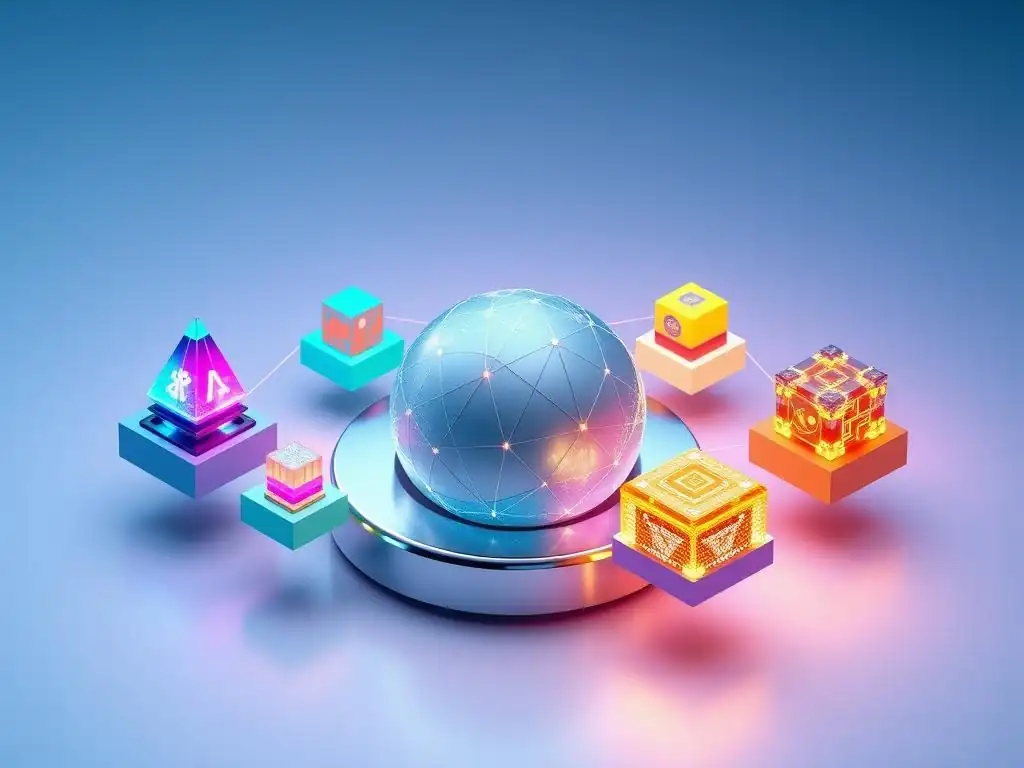
Interoperable NFTs Across Multiple Metaverse Platforms
Interoperable NFTs (Non-Fungible Tokens) represent a compelling use case for blockchain interoperability in the metaverse. NFTs are fundamental digital assets within metaverse environments, representing ownership of virtual land, avatars, in-game items, and digital collectibles. However, the current NFT landscape is fragmented, with NFTs often being locked within specific metaverse platforms or blockchain ecosystems. This fragmentation limits the utility and value of NFTs and hinders the development of a truly open and interoperable metaverse.
Interoperability protocols can provide solutions to enable NFT transfer and usage across multiple metaverse platforms, unlocking the full potential of NFTs as portable and universally accessible digital assets. Imagine owning a unique digital artwork NFT that you can display in your virtual home in Decentraland, use as your avatar in The Sandbox, and trade on an NFT marketplace connected to another metaverse platform. This vision of NFT interoperability is becoming increasingly possible with advancements in blockchain interoperability technologies.
The Challenge of NFT Fragmentation
The current NFT ecosystem is characterized by significant fragmentation. NFTs are typically minted and traded on specific blockchain platforms, primarily Ethereum, but also increasingly on other chains like Solana, Polygon, and Flow. Each metaverse platform often operates within its own blockchain ecosystem and supports only NFTs minted or compatible with that ecosystem. This creates silos, where NFTs purchased or earned in one metaverse are often unusable or have limited utility in others. This NFT fragmentation restricts user choice, reduces the liquidity of NFT markets, and hinders the development of a unified metaverse economy.
For example, a user who has invested in valuable NFTs within the Decentraland metaverse may find that these NFTs are not recognized or usable in The Sandbox, and vice versa. This lack of interoperability limits the overall value proposition of NFTs in the metaverse and creates friction for users seeking to navigate and interact across multiple metaverse platforms. Addressing NFT fragmentation is crucial for creating a more open, user-centric, and economically vibrant metaverse ecosystem.
The Solution: Utilizing LayerZero for NFT Interoperability
LayerZero, with its generic messaging capabilities, presents a potential solution for enabling NFT interoperability across multiple metaverse platforms. LayerZero can be used to build cross-chain NFT bridges that allow users to transfer their NFTs between different blockchains and metaverse environments. For example, a LayerZero-based NFT bridge could enable a user to transfer an NFT originally minted on Ethereum to Polygon and then use it within a metaverse platform built on Polygon.
The process would typically involve locking the original NFT on the source chain and minting a wrapped version of the NFT on the destination chain using LayerZero's messaging layer to ensure secure and verifiable cross-chain communication. This wrapped NFT would represent the original NFT and could be used within the destination metaverse platform.
When the user wants to transfer the NFT back or to another chain, the wrapped NFT can be burned, and the original NFT unlocked on the source chain. LayerZero's security-focused architecture and generic messaging capabilities make it a promising technology for building robust and secure NFT interoperability solutions for the metaverse.
Results and Impact on User Experience
Utilizing LayerZero or similar interoperability protocols for NFT interoperability can have a significant positive impact on user experience in the metaverse. It would eliminate the frustration of NFT fragmentation, allowing users to seamlessly move their digital assets between different metaverse platforms and use them across various experiences. This enhanced portability of NFTs would increase their utility and value, as they would no longer be confined to a single metaverse ecosystem.
Interoperable NFTs would also foster a more open and vibrant metaverse economy. NFT marketplaces could emerge that support trading NFTs across multiple blockchains and metaverse platforms, increasing liquidity and accessibility. Users would have greater freedom to choose metaverse platforms based on their preferences, knowing that their digital assets are not locked into a single ecosystem. Ultimately, NFT interoperability would contribute to a more user-centric, interconnected, and economically thriving metaverse experience, fostering wider adoption and greater user engagement.
Decentralized Governance Across Different Metaverse Ecosystems
Decentralized governance is a core principle of blockchain technology and is increasingly being adopted within metaverse platforms. However, as the metaverse evolves into a collection of interconnected ecosystems, the need for cross-metaverse governance mechanisms becomes apparent. Decentralized governance across different metaverse ecosystems can enable more unified decision-making, coordination, and community participation in shaping the future of the metaverse.
Interoperability protocols can play a crucial role in facilitating cross-chain governance, allowing governance proposals and voting from one metaverse platform to influence or interact with governance processes in other metaverse ecosystems. This can lead to more collaborative and community-driven governance models for the metaverse as a whole, rather than isolated governance structures within individual platforms.
The Need for Unified Governance Mechanisms
The current metaverse landscape is characterized by fragmented governance models, with each platform typically having its own decentralized governance structures, often based on DAOs. While decentralized governance within individual platforms is beneficial, the lack of coordination and communication between these governance structures can hinder the development of a unified and cohesive metaverse. Issues that require cross-metaverse coordination, such as interoperability standards, shared protocols, or cross-platform community initiatives, are difficult to address effectively with isolated governance models.
Unified governance mechanisms can provide a framework for addressing these cross-metaverse issues in a more coordinated and collaborative manner. They can facilitate dialogue and decision-making between different metaverse communities and governance bodies, leading to more aligned and synergistic development of the metaverse ecosystem as a whole. This can be particularly important for ensuring interoperability, establishing common standards, and addressing shared challenges in the evolving metaverse landscape.
The Solution: Implementing Polkadot for Cross-Chain Governance
Polkadot, with its parachain architecture and focus on interoperability, offers a potential solution for implementing cross-chain governance in the metaverse. Polkadot's parachain model allows for the creation of interconnected blockchains that can share security and communicate with each other through the relay chain. This architecture can be leveraged to create a cross-chain governance framework where different metaverse platforms can operate as parachains on Polkadot and participate in shared governance processes.
For example, a metaverse governance parachain could be established on Polkadot, allowing different metaverse platforms to connect as parachains and participate in cross-chain governance decisions. Governance proposals initiated on one metaverse parachain could be voted on by token holders across multiple metaverse parachains, with the results potentially influencing actions or parameters across the interconnected metaverse ecosystems. Polkadot's on-chain governance mechanisms and interoperability capabilities make it a suitable platform for building robust and decentralized cross-chain governance solutions for the metaverse.
Outcomes and Implications for Metaverse DAOs
Implementing cross-chain governance using Polkadot or similar interoperability protocols can have significant outcomes and implications for metaverse DAOs. It can enable the formation of larger, more influential metaverse DAOs that span multiple platforms and communities. These cross-metaverse DAOs would have a greater collective voice and decision-making power, allowing them to shape the future of the metaverse more effectively.
Cross-chain governance can also foster greater collaboration and cooperation between different metaverse communities. It can create mechanisms for shared decision-making on issues of common interest, leading to more aligned and synergistic development of the metaverse ecosystem. Furthermore, cross-chain governance can enhance the legitimacy and representativeness of metaverse governance processes by involving a wider range of stakeholders and communities. Ultimately, cross-chain governance can contribute to a more decentralized, community-driven, and collaboratively evolved metaverse landscape.
Challenges and Future Trends in Blockchain Interoperability for the Metaverse
Addressing Security Risks and Vulnerabilities
Security remains the most significant challenge in blockchain interoperability, particularly as it applies to the metaverse, which is expected to handle increasingly valuable digital assets and sensitive user data. Cross-chain bridges and interoperability protocols, while essential for connecting the metaverse, inherently introduce new attack vectors and potential vulnerabilities. Past bridge exploits, such as the Wormhole hack, underscore the critical need for robust security measures and ongoing vigilance in the interoperability space.
Future trends in addressing security risks will likely focus on developing more secure and decentralized interoperability architectures. This includes research into more robust cryptographic techniques, multi-signature schemes, and fraud proof mechanisms to enhance bridge security. Decentralized bridge designs that minimize reliance on centralized validators or custodians are also gaining traction. Formal verification of smart contracts and rigorous security audits will become even more crucial for ensuring the security of interoperability protocols. Furthermore, ongoing monitoring and incident response mechanisms are needed to quickly detect and mitigate potential security breaches in the evolving metaverse interoperability landscape.
Enhancing Scalability and Performance for Mass Adoption
Scalability and performance are critical for enabling mass adoption of blockchain interoperability in the metaverse. As the metaverse grows and user activity increases, interoperability solutions must be able to handle a massive volume of cross-chain transactions and data exchanges efficiently and cost-effectively. Current interoperability protocols and bridge technologies may face scalability limitations as metaverse adoption scales up.
Future trends will likely focus on developing more scalable interoperability solutions. This includes research into Layer-2 interoperability solutions that can leverage scaling technologies like rollups and state channels to enhance cross-chain throughput. Sharding techniques and parallel processing approaches may also be applied to improve the scalability of interoperability protocols. Optimizing transaction costs and gas fees will be crucial for making metaverse interoperability accessible and affordable for a wide range of users. Furthermore, improving the speed and latency of cross-chain transactions will enhance user experience and enable more seamless metaverse interactions.
Fostering Standardization and Collaboration Among Developers
Standardization and collaboration among developers are essential for the widespread adoption and seamless integration of blockchain interoperability in the metaverse. The lack of common standards and interoperability frameworks can lead to fragmentation, hindering the development of a truly interconnected metaverse. Fostering collaboration between different metaverse platforms, blockchain projects, and interoperability protocol developers is crucial for establishing shared standards and promoting interoperability best practices.
Future trends will likely involve increased efforts to develop and adopt interoperability standards within the metaverse and blockchain communities. This includes standardization of cross-chain messaging protocols, asset representation formats, and NFT interoperability frameworks. Industry consortia and open-source initiatives can play a key role in driving standardization and collaboration. Developer tooling and SDKs that simplify the integration of interoperability features into metaverse applications are also essential. Furthermore, promoting education and awareness about interoperability best practices within the metaverse development community will accelerate adoption and foster a more interconnected metaverse ecosystem.
The Future of Cross-Metaverse Communication and Data Sharing
The future of blockchain interoperability in the metaverse extends beyond asset transfers and basic data exchange. The vision is a truly interconnected metaverse where users can seamlessly communicate, interact, and share data across different virtual worlds and platforms. This involves enabling more sophisticated forms of cross-metaverse communication, such as cross-platform messaging, shared social identities, and unified user profiles.
Future trends will likely focus on developing protocols and frameworks for cross-metaverse communication and data sharing. This includes research into decentralized identity solutions that allow users to maintain a consistent identity across different metaverse platforms. Privacy-preserving data sharing mechanisms will be crucial for enabling users to control their data and share it selectively across metaverse environments.
Furthermore, advancements in semantic web technologies and decentralized knowledge graphs may facilitate more meaningful data exchange and interoperability between metaverse platforms. The ultimate goal is to create a metaverse where users can seamlessly navigate, interact, and collaborate across different virtual worlds, regardless of the underlying blockchain infrastructure.
Conclusion: Choosing the Right Blockchain Interoperability Protocol for Your Metaverse Project
Summarizing the Key Findings of the Interoperability Protocol Comparison Study
This comparative study has analyzed various blockchain interoperability protocols relevant to the metaverse, including cross-chain bridges, sidechains, and broader interoperability frameworks like IBC and Polkadot. Cross-chain bridges offer a readily available solution for connecting disparate metaverse ecosystems, enabling asset transfers and basic data exchange, but they often come with security and centralization trade-offs.
Sidechains provide scalability and customization benefits for metaverse applications, offering lower transaction costs and higher throughput, but they introduce security and interoperability complexities. Interoperability protocols like IBC and Polkadot aim for more comprehensive and secure cross-chain communication, enabling complex cross-metaverse interactions and data sharing, but they require more significant development effort and integration.
The key criteria for evaluating these protocols include security, scalability, cost-effectiveness, developer friendliness, and governance models. Security remains paramount, with past bridge exploits highlighting the need for robust security measures. Scalability and cost-effectiveness are crucial for handling the anticipated transaction volume and user activity in the metaverse. Developer friendliness and ease of integration are essential for widespread adoption by metaverse developers. Decentralized governance models contribute to the long-term sustainability and trustworthiness of interoperability solutions.
Recommendations for Selecting the Optimal Solution Based on Specific Needs
Choosing the right blockchain interoperability protocol for a metaverse project depends heavily on the specific needs and priorities of the project. For metaverse projects prioritizing rapid deployment and basic asset bridging between established blockchains, cross-chain bridges may offer a readily available solution. However, security considerations must be carefully addressed when selecting a bridge, and projects should opt for more robust and decentralized bridge architectures where possible.
For metaverse projects focused on scalability and cost-effectiveness, sidechains like Polygon or SKALE can provide a suitable infrastructure, offering enhanced performance and lower transaction fees. Sidechains are particularly relevant for metaverse platforms requiring high transaction throughput or custom chain parameters. For metaverse projects aiming for more complex cross-chain interactions, data sharing, and a truly interconnected ecosystem, interoperability protocols like IBC or Polkadot offer a more robust and future-proof solution. These protocols provide a framework for building highly interoperable and scalable metaverse platforms, although they may require more significant development effort and integration.
The Long-Term Vision for a Truly Interoperable and Decentralized Metaverse
The long-term vision for the metaverse is a truly interoperable and decentralized digital universe, where users can seamlessly navigate, interact, and transact across different virtual worlds and platforms, regardless of the underlying blockchain infrastructure. Blockchain interoperability protocols are the key enablers of this vision, breaking down silos and fostering a more connected and collaborative metaverse ecosystem. As interoperability technologies mature and become more widely adopted, the metaverse will evolve from a collection of isolated platforms into a more unified and expansive digital frontier.
The future of the metaverse hinges on the continued development and adoption of robust, secure, and scalable interoperability solutions. Standardization, collaboration, and a focus on user experience are crucial for realizing the full potential of an interoperable metaverse. By embracing interoperability, the metaverse can unlock new levels of user engagement, economic opportunity, and innovation, paving the way for a truly transformative digital future.
Frequently Asked Questions
What is blockchain interoperability and why is it important for the Metaverse?
Blockchain interoperability refers to the ability of different blockchains to communicate and share data with each other. It's crucial for the Metaverse because it allows for the seamless transfer of assets and information across different virtual worlds. This avoids the problem of isolated "silos" and creates a more unified user experience.
What are some key challenges to achieving effective blockchain interoperability in the Metaverse?
Some challenges include technical complexities in designing secure and efficient cross-chain communication protocols, the need for standardized data formats, and addressing security vulnerabilities that arise when bridging different blockchain systems. Different consensus mechanisms also present challenges.
What are some examples of blockchain interoperability protocols currently being explored for Metaverse applications?
Examples include protocols like Polkadot, Cosmos, and LayerZero. These protocols offer different approaches to facilitating cross-chain communication and data transfer, such as parachains, IBC, and unified messaging protocols, respectively.
How does the "Blockchain Interoperability Protocol Comparison Study" analyze these different protocols?
The study likely analyzes these protocols based on factors such as security, scalability, transaction speed, cost-effectiveness, and ease of integration. It likely compares their strengths and weaknesses in the context of specific Metaverse use cases.
What are the potential benefits of successful blockchain interoperability within the Metaverse for users and developers?
For users, it means seamless movement of avatars, assets, and data across different Metaverse platforms. For developers, it unlocks new possibilities for creating interconnected experiences and applications that can leverage data and functionality from multiple blockchains, fostering innovation and collaboration.
Final Reflection: Bridging Worlds, Building Futures
The exploration of blockchain interoperability protocols within the metaverse isn't just a technical exercise; it's a crucial step in shaping the future of digital interaction and ownership. The ability for different blockchain ecosystems to seamlessly communicate and share value is no longer a futuristic fantasy, but a present-day necessity for a truly interconnected and thriving metaverse.
This comparative study highlights the ongoing evolution of these protocols and their profound impact on the cultural and social landscape. The potential for decentralized identity, cross-chain asset transfer, and collaborative governance within the metaverse hinges on the success of these interoperability solutions. The metaverse is the next evolution of social connection. It's a 3D space where you can share immersive experiences with people, even when you can't be together in person – and interoperability is the key to unlocking its full potential.
- Mark Zuckerberg (adapted for the context of the article).
As we stand on the cusp of a more interconnected digital future, consider the role you can play in shaping it. Reflect on the possibilities that blockchain interoperability unlocks – the potential for greater accessibility, innovation, and user empowerment within the metaverse. How can you contribute to building a more seamless and inclusive digital world, one where value and experiences flow freely across different platforms? The future of the metaverse is not just built by developers and corporations, but by each individual who chooses to embrace and shape its potential.
Unleash the Metaverse: Dive Deeper into Interoperability!
Thank you for exploring the crucial world of metaverse interoperability protocols. You've gained valuable insights into the challenges and opportunities ahead. Are you ready to take action and help shape the future of the digital universe?
Here's how you can get involved:
- Research and experiment with the interoperability protocol that resonates most with you. Hands-on experience is essential to understanding its potential and limitations.
- Share this article with your network and spark a conversation about the importance of seamless metaverse experiences. Let's build a community committed to a connected digital future!
- Consider contributing your insights or experiences with interoperability protocols to relevant industry platforms. Help expand the collective knowledge of the blockchain community!
What innovative interoperability solutions do you envision for the future of the metaverse, and how can we work together to make them a reality? Share your thoughts in the comments below!
Leave a Reply