
Beyond Virtual Reality: Exploring the Full Potential of Blockchain in the Metaverse

Welcome to Blockchain Trends, your compass in the rapidly evolving world of decentralized technology!
Dive deep into the transformative power of blockchain, extending far beyond the realm of cryptocurrencies. Are you ready to unlock the future of the metaverse? This month, we're exploring the cutting-edge blockchain metaverse applications future trends, uncovering how this technology is reshaping virtual worlds and creating unprecedented opportunities. What possibilities lie ahead, and how can you be a part of this revolution? Let's find out!
Beyond Virtual Reality: Exploring the Full Potential of Blockchain in the Metaverse
- Introduction: The Convergence of Blockchain and the Metaverse
- Blockchain Metaverse Applications: A Deep Dive
- Addressing Key Challenges in the Metaverse with Blockchain Solutions
- Exploring the Future of Blockchain Integration in Metaverse Platforms
- Real-World Examples: Blockchain Metaverse Applications in Action
- The Regulatory Landscape: Navigating the Legal and Ethical Considerations
- Conclusion: Unlocking the Full Potential of the Metaverse with Blockchain
-
Frequently Asked Questions
- What are some key blockchain metaverse applications beyond virtual reality?
- How does blockchain enhance the future trends of user interaction within the metaverse?
- What role does DeFi play in the blockchain metaverse applications future trends?
- What are some of the regulatory challenges surrounding blockchain metaverse applications?
- What is the future outlook for blockchain-powered metaverses and their impact on society?
- Final Reflection: Embracing the Decentralized Future
- Unleash Your Metaverse Vision: Take Action Now!
Introduction: The Convergence of Blockchain and the Metaverse
Defining the Metaverse: Beyond the Hype
The metaverse, a term initially coined by Neal Stephenson in his 1992 novel Snow Crash, has transcended science fiction to become a rapidly evolving technological frontier. It is more than just virtual reality (VR) headsets and immersive gaming. At its core, the metaverse represents a persistent, shared, 3D virtual world or worlds, accessible via the internet.
These digital spaces are designed to feel real and allow users to interact with each other, digital objects, and experiences in a way that blurs the lines between the physical and digital realms. Initially, the hype surrounding the metaverse was heavily focused on VR and AR technologies as the primary gateways, but the true potential lies in its capacity to become a decentralized and user-owned digital ecosystem.
While visual immersion is a component, the metaverse's defining characteristic is its potential to create a parallel digital society and economy. Imagine a persistent online world where you can socialize, work, play, trade, and even own property, all within a virtual environment. This vision moves beyond simple gaming or social platforms to encompass a wide range of activities that mirror and augment real-world experiences. The metaverse is not a single, monolithic entity controlled by one company, but rather a constellation of interconnected and interoperable virtual worlds, each contributing to a larger, evolving digital landscape.
Understanding Blockchain Technology: A Foundation for Decentralization
Blockchain technology, the revolutionary innovation underpinning cryptocurrencies like Bitcoin and Ethereum, offers a powerful framework for building decentralized and secure systems. At its essence, a blockchain is a distributed, immutable ledger that records transactions across many computers. This distributed nature eliminates the need for a central authority, making the system more resilient and transparent. Each block in the chain contains a set of transactions, and once a block is added, it cannot be altered or deleted, ensuring the integrity and security of the recorded data.
The key features of blockchain – decentralization, transparency, and immutability – are crucial for establishing trust and security in digital environments. Decentralization distributes control and reduces the risk of single points of failure or censorship. Transparency allows participants to verify transactions and data, fostering accountability. Immutability ensures data integrity and prevents tampering, creating a reliable foundation for digital ownership and governance. Beyond cryptocurrencies, blockchain's capabilities extend to various applications, including supply chain management, digital identity verification, and, crucially, the development of metaverse infrastructure.
The Synergistic Relationship: How Blockchain Enhances the Metaverse Experience
The convergence of blockchain and the metaverse is not merely coincidental; it's a synergistic relationship where each technology amplifies the potential of the other. Blockchain provides the foundational infrastructure necessary to realize the vision of a truly decentralized, user-owned, and economically vibrant metaverse. While the metaverse offers the immersive environment and use cases, blockchain provides the mechanisms for digital ownership, secure transactions, and decentralized governance that are essential for its long-term success and widespread adoption.
Consider the limitations of current centralized metaverse platforms. User data and digital assets are often controlled by the platform provider, leading to concerns about privacy, censorship, and lack of true ownership. Blockchain addresses these issues by enabling users to own their digital identities, virtual land, in-game items, and other assets as NFTs (Non-Fungible Tokens). This ownership is verifiable on the blockchain, independent of any single platform, granting users greater control and autonomy within the metaverse. Furthermore, blockchain facilitates secure and transparent peer-to-peer transactions, fostering robust digital economies within these virtual worlds.
Blockchain Metaverse Applications: A Deep Dive
Decentralized Land Ownership: NFTs and Virtual Real Estate
One of the most prominent blockchain metaverse applications is decentralized land ownership, often facilitated through Non-Fungible Tokens (NFTs). In traditional virtual worlds, users might "own" virtual land, but this ownership is typically controlled by the platform provider. Blockchain revolutionizes this concept by allowing users to truly own digital land as NFTs, recorded on a blockchain ledger. These NFTs represent unique parcels of virtual real estate within metaverse platforms like Decentraland and The Sandbox.
The implications of decentralized land ownership are significant. Users have genuine control over their virtual land, enabling them to build structures, host events, or monetize their digital properties as they see fit. The scarcity and unique identifiers of NFTs ensure verifiable ownership and provenance, mirroring real-world property rights in the digital realm. For example, in Decentraland, virtual land parcels have sold for hundreds of thousands of dollars in cryptocurrency, demonstrating the real economic value and growing demand for decentralized virtual real estate. This model empowers users and fosters a more open and user-driven metaverse ecosystem.
Blockchain-Based Identity and Avatars: Secure and Portable Identities
In the burgeoning metaverse, establishing a secure and portable digital identity is paramount. Blockchain technology offers solutions for creating self-sovereign identities that are controlled by the user, not by centralized platforms. Blockchain-based identity systems can leverage cryptographic keys and decentralized identifiers (DIDs) to give users verifiable control over their personal data and online personas. This contrasts sharply with current web 2.0 models where identity is often fragmented across various platforms and vulnerable to data breaches.
Furthermore, blockchain can enhance the portability of avatars across different metaverse environments. Imagine creating a unique avatar that represents you in various virtual worlds without needing to recreate it for each platform. NFTs can be used to represent avatars and their associated digital assets, allowing users to carry their digital identities and possessions seamlessly between interoperable metaverse platforms. Projects are emerging that focus on building open standards for avatars and digital identities, aiming to create a more unified and user-centric metaverse experience. This focus on user-controlled identity is a key differentiator for blockchain-enabled metaverses.
Metaverse Commerce and Economies: Cryptocurrencies and Digital Assets
Enabling Seamless Transactions: The Role of Blockchain in Metaverse Commerce
The metaverse is poised to become a thriving hub for commerce, and blockchain technology is foundational for enabling seamless and secure transactions within these virtual economies. Cryptocurrencies, built on blockchain, serve as the native currencies of many metaverse platforms, facilitating the buying, selling, and trading of digital goods and services. Unlike traditional payment systems that often involve intermediaries and transaction fees, blockchain-based transactions can be faster, cheaper, and more transparent within the metaverse.
Smart contracts, self-executing agreements coded on the blockchain, further automate and secure metaverse commerce. For example, when a user purchases a virtual item in a blockchain-based metaverse, a smart contract can automatically execute the transaction, transfer ownership of the digital asset via an NFT, and distribute payments to the seller, all without the need for intermediaries. This efficiency and security are crucial for fostering a robust and trustless digital marketplace within the metaverse. Platforms like Decentraland and The Sandbox heavily rely on cryptocurrencies and NFTs for all in-world economic activities, showcasing the practical application of blockchain in metaverse commerce.
Creating New Economic Models: Play-to-Earn and Creator Economies
Blockchain is not just facilitating existing economic models within the metaverse; it's also enabling entirely new forms of digital economies, notably play-to-earn (P2E) and creator economies. Play-to-earn models, popularized by games like Axie Infinity, empower players to earn cryptocurrency and NFTs by participating in gameplay. This shifts the paradigm from players simply consuming content to becoming active participants in the game's economy, generating real-world value through their in-game efforts.
Creator economies within the metaverse are also being revolutionized by blockchain. NFTs empower digital artists, creators, and developers to directly monetize their creations and retain control over their intellectual property. By tokenizing digital art, virtual items, and experiences as NFTs, creators can sell them directly to users, bypassing traditional gatekeepers and marketplaces that often take significant commissions.
This direct-to-consumer model fosters a more equitable and vibrant creator ecosystem within the metaverse, incentivizing innovation and rewarding creators for their contributions. The rise of NFT marketplaces and decentralized autonomous organizations (DAOs) further supports these new economic models, creating a more democratic and user-driven metaverse economy.
Interoperability and Data Portability: Connecting Virtual Worlds with Blockchain
A key challenge for the metaverse's long-term vision is interoperability – the ability for users, assets, and data to seamlessly move between different virtual worlds. Currently, many metaverse platforms operate in silos, hindering the creation of a truly interconnected and unified digital space. Blockchain technology offers potential solutions for fostering interoperability and data portability across metaverse platforms.
By establishing open standards and protocols based on blockchain, different metaverse platforms can begin to communicate and interact with each other. NFTs can play a crucial role in asset portability, allowing users to use their digital assets, such as avatars or virtual items, across multiple compatible metaverse environments. Furthermore, blockchain-based decentralized identity solutions can facilitate seamless user authentication and data sharing across platforms, while respecting user privacy and control. Initiatives focused on building metaverse interoperability standards, often leveraging blockchain, are gaining momentum, aiming to break down silos and create a more interconnected and open metaverse ecosystem.
Addressing Key Challenges in the Metaverse with Blockchain Solutions
Security and Privacy Concerns: Mitigating Risks with Blockchain's Immutability
Security and privacy are paramount concerns in the metaverse, given the increasing amount of personal data and digital assets being exchanged and stored within these virtual environments. Traditional centralized metaverse platforms are vulnerable to data breaches, hacks, and privacy violations. Blockchain's inherent security features, particularly immutability and cryptography, offer robust solutions to mitigate these risks and enhance user privacy.
Blockchain's immutable ledger ensures that once data is recorded, it cannot be tampered with or altered, reducing the risk of data manipulation and fraud. Cryptographic techniques, such as hashing and digital signatures, secure transactions and protect user data from unauthorized access. Furthermore, decentralized blockchain architectures reduce reliance on central servers, minimizing single points of failure and making the system more resilient to cyberattacks. By leveraging blockchain's security capabilities, metaverse platforms can build more secure and trustworthy environments for users, fostering greater confidence and adoption.
Scalability Issues: Exploring Blockchain Solutions for High-Traffic Metaverse Environments
Scalability is a significant challenge for blockchain technology in general, and it's particularly relevant to metaverse applications that demand high transaction throughput and low latency to support large numbers of concurrent users and interactions. Traditional blockchain networks, like Bitcoin and Ethereum, can face limitations in transaction processing speed and network congestion, which could hinder the performance of high-traffic metaverse environments.
However, ongoing research and development efforts are exploring various blockchain scaling solutions, such as layer-2 scaling solutions (e.g., Polygon, Optimism) and sharding, to address these limitations. Layer-2 solutions operate on top of a main blockchain to process transactions off-chain, significantly increasing transaction throughput and reducing fees. Sharding involves dividing a blockchain network into smaller, more manageable shards, allowing for parallel processing and improved scalability. As these scaling solutions mature and are implemented in metaverse platforms, blockchain's capacity to support large-scale, high-performance metaverse environments will significantly improve.
Centralized Control: Fostering Decentralization Through Blockchain Governance
Many existing metaverse platforms are controlled by centralized corporations, raising concerns about censorship, data exploitation, and lack of user agency. Blockchain offers a pathway to foster decentralization and user governance within the metaverse, shifting control away from single entities and empowering users to participate in decision-making processes.
Decentralized Autonomous Organizations (DAOs) are emerging as a key mechanism for blockchain-based metaverse governance. DAOs are community-led organizations governed by smart contracts and token holders. In a metaverse DAO, users who hold platform tokens can vote on proposals related to platform development, content moderation, and resource allocation. This decentralized governance model empowers users to shape the future of the metaverse they participate in, fostering a more democratic and community-driven ecosystem. Projects like Decentraland utilize DAOs for governance, demonstrating the practical implementation of blockchain-based decentralized control in metaverse platforms.
Exploring the Future of Blockchain Integration in Metaverse Platforms
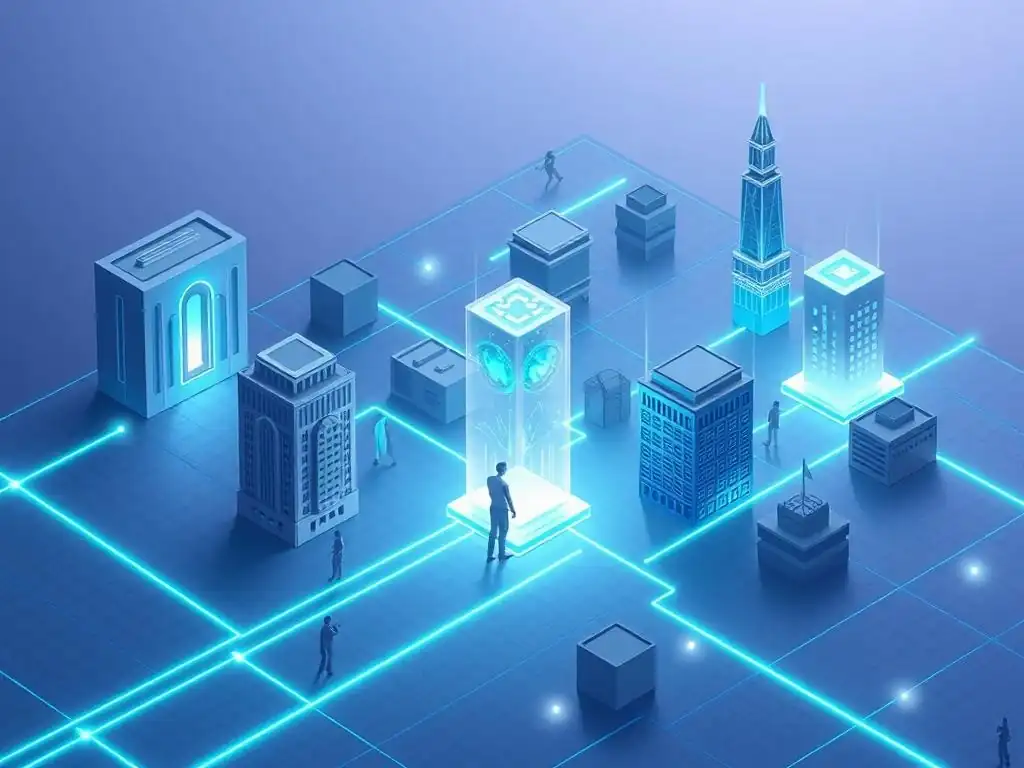
The Evolution of Metaverse Experiences: From VR to AR and Beyond
The metaverse experience is continuously evolving, moving beyond virtual reality (VR) to encompass augmented reality (AR) and other immersive technologies. While VR provides fully immersive virtual environments, AR overlays digital information and experiences onto the real world, blurring the lines between the physical and digital. The future of the metaverse likely involves a convergence of VR, AR, and other technologies, creating a spectrum of immersive experiences accessible through various devices, including smartphones, wearables, and smart glasses.
Blockchain's role in this evolution is crucial. As metaverse experiences become more diverse and interconnected, blockchain's ability to facilitate interoperability, data portability, and secure digital ownership becomes even more critical. Whether users are engaging with fully immersive VR worlds or interacting with AR overlays in their physical surroundings, blockchain can provide the underlying infrastructure for managing digital identities, assets, and transactions across these diverse metaverse modalities. The seamless integration of blockchain across different metaverse access points will be essential for creating a truly unified and pervasive metaverse experience.
Several emerging trends are shaping the future of blockchain integration in metaverse platforms, including the rise of decentralized social media and immersive learning environments. Decentralized social media platforms, built on blockchain, aim to address the limitations of current centralized social networks by giving users greater control over their data, content, and online interactions. In the metaverse context, decentralized social media can create more user-centric and community-driven social experiences, fostering greater freedom of expression and reducing censorship risks.
Immersive learning environments within the metaverse are also gaining traction, offering new opportunities for education and training. Blockchain can enhance these environments by enabling verifiable credentials, personalized learning paths, and new models for educational content creation and monetization. Imagine learning a new language or skill in an interactive metaverse environment, with your progress and achievements recorded on a blockchain, creating verifiable and portable digital credentials. These emerging trends highlight the diverse applications of blockchain in shaping the future of the metaverse beyond gaming and entertainment.
The Impact of Blockchain on Metaverse User Engagement and Retention
Blockchain integration is poised to significantly impact user engagement and retention within metaverse platforms. By empowering users with true digital ownership, decentralized governance, and new economic opportunities like play-to-earn, blockchain can foster a greater sense of ownership, agency, and community within the metaverse. When users feel they have a stake in the metaverse's success and can benefit directly from their participation, they are more likely to be engaged and invested in the platform over the long term.
The introduction of play-to-earn mechanics, creator economies, and decentralized governance models, all enabled by blockchain, creates powerful incentives for user participation and contribution. Users are not just consumers of metaverse content; they become active participants in the metaverse economy and governance, leading to increased engagement and stronger community bonds. This shift towards user-centricity, driven by blockchain, is crucial for the long-term sustainability and growth of the metaverse ecosystem.
Real-World Examples: Blockchain Metaverse Applications in Action
Case Study 1: Decentraland and its User-Owned Virtual World
Decentraland stands as a prominent example of a blockchain-based metaverse, showcasing the potential of decentralized land ownership and user-governance. Built on the Ethereum blockchain, Decentraland is a virtual world where users can buy, sell, and develop virtual land as NFTs. Landowners have complete control over their parcels, allowing them to create experiences, host events, and monetize their digital real estate.
The platform's governance is managed by a Decentralized Autonomous Organization (DAO), empowering LAND and MANA token holders to vote on proposals related to platform development, content moderation, and treasury management. Decentraland's economy is driven by its native cryptocurrency, MANA, which is used for transactions within the virtual world. With a market capitalization that has reached billions of dollars, Decentraland demonstrates the real economic value and growing user interest in blockchain-based metaverses and user-owned digital worlds.
Case Study 2: Axie Infinity Transforming Digital Ownership Through Play-to-Earn
Axie Infinity is a play-to-earn online game that exemplifies how blockchain is transforming digital ownership and creating new economic models within the metaverse. Players in Axie Infinity collect, breed, and battle digital creatures called Axies, which are represented as NFTs on the blockchain. Players can earn cryptocurrency, SLP (Smooth Love Potion), by playing the game, which can then be traded on cryptocurrency exchanges or used to breed more Axies.
Axie Infinity's play-to-earn model has created significant economic opportunities, particularly in developing countries, where players can earn a living by playing the game. The game's success demonstrates the power of blockchain to create new economic models within the metaverse, empowering users to earn real-world value through their participation in digital worlds and transforming the concept of digital ownership. At its peak, Axie Infinity boasted millions of daily active users, highlighting the scalability and appeal of blockchain-based P2E gaming.
Lessons Learned: Key Takeaways from Successful Blockchain Metaverse Implementations
Analyzing successful blockchain metaverse implementations like Decentraland and Axie Infinity offers valuable lessons for the future development of this space. Firstly, true digital ownership through NFTs is a key driver of user engagement and economic activity. Users are more invested in metaverse platforms when they genuinely own their digital assets and have control over their virtual experiences. Secondly, decentralized governance models, such as DAOs, empower users and foster a sense of community ownership, leading to more sustainable and user-centric metaverse ecosystems.
Thirdly, play-to-earn and creator economies built on blockchain can unlock new economic opportunities and incentivize user participation and content creation. These models transform the metaverse from a purely entertainment platform into a space where users can create, contribute, and earn real-world value. Finally, interoperability and scalability remain crucial challenges. Future blockchain metaverse projects need to prioritize interoperability to create a more unified digital landscape and address scalability limitations to support mass adoption and high-performance virtual environments.
Understanding Data Privacy Regulations in the Metaverse
As the metaverse evolves, navigating data privacy regulations becomes increasingly critical. The metaverse collects and processes vast amounts of user data, including personal information, biometric data, and behavioral patterns. Existing data privacy regulations, such as GDPR (General Data Protection Regulation) in Europe and CCPA (California Consumer Privacy Act) in the United States, extend to the metaverse and impose obligations on metaverse platforms to protect user data.
Metaverse developers and operators must understand and comply with these regulations, implementing measures to ensure data minimization, user consent, data security, and data subject rights. Blockchain can play a role in enhancing data privacy by enabling decentralized identity solutions and privacy-preserving technologies. However, the decentralized nature of blockchain also presents regulatory challenges, as it can be difficult to assign responsibility and jurisdiction in decentralized metaverse environments. A proactive and privacy-centric approach is essential for building trustworthy and compliant metaverse platforms.
Addressing Intellectual Property Rights in Decentralized Environments
Intellectual property (IP) rights are a complex issue in the metaverse, particularly in decentralized environments. The ease of creating and distributing digital content in the metaverse raises concerns about copyright infringement, trademark violations, and the protection of digital assets. Traditional IP laws may not fully address the unique challenges posed by decentralized metaverse platforms and user-generated content.
Blockchain technology, particularly NFTs, offers potential solutions for managing and protecting IP rights in the metaverse. NFTs can serve as proof of ownership and provenance for digital assets, making it easier to track and enforce IP rights. However, legal frameworks and enforcement mechanisms need to adapt to the decentralized nature of the metaverse to effectively address IP infringement and protect creators' rights in these virtual environments. The development of clear legal guidelines and industry best practices is crucial for fostering a thriving and legally sound metaverse ecosystem.
Compliance and Security Standards for Blockchain Metaverse Applications
Ensuring compliance and security is paramount for the widespread adoption of blockchain metaverse applications. Regulatory bodies are increasingly focusing on the metaverse and blockchain space, seeking to establish clear guidelines and standards for consumer protection, financial regulations, and security. Metaverse platforms and developers must proactively address compliance requirements and adhere to security best practices to build trustworthy and sustainable metaverse environments.
Compliance areas include anti-money laundering (AML) regulations, know-your-customer (KYC) procedures, and securities laws, particularly in relation to metaverse economies and digital assets. Security standards involve implementing robust cybersecurity measures to protect user data, digital assets, and platform infrastructure from cyber threats. Industry collaborations and the development of self-regulatory frameworks can play a crucial role in establishing compliance and security standards for the blockchain metaverse, fostering greater trust and confidence among users and regulators.
Conclusion: Unlocking the Full Potential of the Metaverse with Blockchain
Key Takeaways: The Transformative Power of Blockchain in the Metaverse
Blockchain technology is not just a supporting element of the metaverse; it's a transformative force that unlocks its full potential. By providing the foundation for decentralization, digital ownership, secure transactions, and user governance, blockchain addresses key limitations of centralized metaverse platforms and paves the way for a more open, equitable, and user-centric digital future. The convergence of blockchain and the metaverse is creating new economic models, empowering creators and users, and fostering innovation across various sectors.
The key takeaways are clear: blockchain enables true digital ownership through NFTs, facilitates decentralized governance through DAOs, and fosters new economic models like play-to-earn and creator economies. These advancements are not just theoretical; they are being implemented in real-world metaverse platforms like Decentraland and Axie Infinity, demonstrating the practical viability and transformative power of blockchain in shaping the metaverse.
Future Outlook: Predictions for the Evolution of Blockchain Metaverse Applications
The future of blockchain metaverse applications is bright and full of potential. We can expect to see further advancements in interoperability and scalability solutions, enabling seamless connections between different virtual worlds and supporting mass adoption. Decentralized social media and immersive learning environments will continue to emerge and gain traction, showcasing the diverse applications of blockchain in the metaverse beyond gaming and entertainment.
Augmented reality (AR) integration will become increasingly important, blurring the lines between the physical and digital realms and creating new metaverse experiences accessible through everyday devices. Regulatory frameworks will evolve to address the unique challenges and opportunities of the blockchain metaverse, fostering a more secure and compliant ecosystem. Overall, the future points towards a more interconnected, user-owned, and economically vibrant metaverse, with blockchain at its core.
Call to Action: Embracing the Decentralized Future of the Metaverse
The convergence of blockchain and the metaverse represents a paradigm shift in how we interact with technology and the digital world. Embracing the decentralized future of the metaverse requires a collective effort from developers, creators, users, and regulators. Developers should continue to innovate and build blockchain-based metaverse platforms that prioritize user ownership, interoperability, and security. Creators should explore new opportunities to monetize their creations and engage with audiences in decentralized metaverse environments.
Users should actively participate in and contribute to the growth of the blockchain metaverse, embracing the new possibilities for digital ownership, economic empowerment, and community governance. Regulators should engage with the industry to develop clear and balanced frameworks that foster innovation while protecting users and promoting responsible development. By working together, we can unlock the full potential of the metaverse with blockchain, creating a more open, decentralized, and user-centric digital future for all.
Frequently Asked Questions
What are some key blockchain metaverse applications beyond virtual reality?
Beyond VR, blockchain enables digital ownership of assets, decentralized governance within metaverse spaces, and secure, transparent digital identity management. These are crucial for a truly immersive and functional metaverse.
How does blockchain enhance the future trends of user interaction within the metaverse?
Blockchain facilitates interoperability between different metaverse platforms, allowing users to seamlessly move their assets and identities. This fosters a more open and connected metaverse experience.
What role does DeFi play in the blockchain metaverse applications future trends?
DeFi (Decentralized Finance) enables new economic models within the metaverse, such as play-to-earn games and virtual land ownership. These create incentives for participation and innovation.
What are some of the regulatory challenges surrounding blockchain metaverse applications?
Regulating virtual assets, protecting user data, and addressing issues of jurisdiction and cross-border transactions pose significant regulatory hurdles. Clarity is needed to foster responsible growth.
What is the future outlook for blockchain-powered metaverses and their impact on society?
The future points to a more decentralized, user-owned internet, with blockchain providing the foundation for secure and transparent metaverse experiences. However, ethical considerations are paramount.
Final Reflection: Embracing the Decentralized Future
The journey through the potential of blockchain in the metaverse reveals a landscape ripe with innovation, yet also fraught with challenges. The fusion of these technologies promises a paradigm shift in how we interact, transact, and even define reality itself, but realizing this vision demands careful consideration of ethical implications and technological hurdles that lie ahead. The potential for decentralized ownership, secure identity management, and truly immersive experiences is undeniable, making this exploration more relevant than ever in our increasingly digital world.
This exploration has underscored the profound influence blockchain and the metaverse are having on the cultural and social fabric. Witnessing the emergence of decentralized autonomous organizations (DAOs) and the burgeoning creator economy within these virtual spaces highlights the potential for a more equitable and participatory future. The metaverse is not just a place to play games or socialize; it's a new frontier for economic opportunity and social innovation, powered by the trust and transparency of blockchain.
This quote encapsulates the transformative power at our fingertips, urging us to consider the long-term impact of these technologies on our lives and communities.
As we stand on the cusp of this decentralized future, let us not be passive observers but active participants in shaping its trajectory. Reflect on the possibilities presented by blockchain metaverse applications and consider how you can contribute to a future where technology empowers individuals, fosters creativity, and builds a more inclusive and interconnected world. The future of the metaverse is not predetermined; it is being written now, and your voice matters.
Unleash Your Metaverse Vision: Take Action Now!
Thank you for exploring the exciting intersection of blockchain and the metaverse! We hope you've discovered new possibilities and feel inspired by the potential that lies ahead. Now, it's time to turn that inspiration into tangible results.
Here are some ways you can engage with the future of the metaverse and blockchain technology:
- Learn and Create: Start developing your own decentralized application (dApp) for the metaverse with a free tutorial. Experiment with smart contracts and digital assets to bring your ideas to life.
- Share the Inspiration: Pass this article along to friends or colleagues who are passionate about blockchain or virtual worlds—let's expand the conversation!
- Join the Community: Participate in discussions on our Blockchain Trends forum and share your insights on the most promising blockchain applications in virtual spaces.
What innovative project in the metaverse will you create using blockchain technology? Share your ideas in the comments below!
Leave a Reply