
Blockchain Governance and the Metaverse Creator Economy: Empowering Artists


Welcome to Blockchain Trends, your insightful guide to the expanding world of blockchain technology!
Ever wondered how blockchain is reshaping not just finance, but the very fabric of the metaverse and the creator economy? Dive in as we explore the pivotal role of blockchain governance in empowering artists and shaping the future of decentralized digital ownership. Curious about how these seemingly disparate fields are converging? Keep reading to uncover the exciting possibilities!
Blockchain Governance and the Metaverse Creator Economy: Empowering Artists
- Introduction: The Convergence of Blockchain, Metaverse, and the Creator Economy
- Understanding Blockchain Governance in the Metaverse Context
- Empowering Artists Through Blockchain-Based Governance
- Use Cases: Blockchain Governance Models Supporting Artists in the Metaverse
- The Benefits of Decentralized Governance for Metaverse Artists
- Challenges and Considerations for Blockchain Governance in the Metaverse
- The Future of Blockchain Governance and the Metaverse Creator Economy
- Conclusion: Blockchain Governance as a Catalyst for Artist Empowerment in the Metaverse
-
Frequently Asked Questions
- What role does blockchain governance play in empowering creators in the Metaverse?
- How can blockchain technology facilitate fairer revenue distribution for artists in the Metaverse creator economy?
- What are the key challenges in implementing effective blockchain governance within the Metaverse?
- How does blockchain contribute to the authenticity and ownership of digital assets in the Metaverse?
- What is the future outlook for the intersection of blockchain governance, the Metaverse, and the creator economy?
- Final Reflection: Decentralizing Creation's Future
- Unlock Your Metaverse Potential!
Introduction: The Convergence of Blockchain, Metaverse, and the Creator Economy
Defining the Metaverse Creator Economy and its Challenges
The metaverse creator economy represents a burgeoning digital landscape where artists, designers, developers, and content creators can build, monetize, and distribute their creations within immersive virtual worlds. This economy is characterized by the production and exchange of digital assets, experiences, and services, fueled by the promise of new forms of engagement and ownership. However, this nascent economy faces significant challenges, mirroring those in the traditional creator economy, but often amplified in the digital realm.
These include issues of fair compensation for creators, centralized platform control, lack of transparency in revenue sharing, and the difficulty in protecting intellectual property rights in a space where digital assets can be easily replicated or misappropriated. Furthermore, the nascent nature of the metaverse itself brings challenges related to interoperability, standardization, and the very definition of digital ownership and governance.
One of the core challenges is the dependence on centralized platforms that often dictate terms, take significant cuts of revenue, and lack transparency in their algorithms and operations. Creators often find themselves at the mercy of these platforms, with limited control over their work, distribution, and monetization strategies. This centralized control can stifle innovation and limit the potential for creators to build sustainable and equitable careers within the metaverse.
Moreover, the lack of clear governance frameworks in many metaverse platforms creates uncertainty and risk for creators, especially concerning intellectual property and dispute resolution. These challenges highlight the urgent need for alternative models that empower creators and foster a more decentralized, transparent, and equitable metaverse creator economy.
The Role of Blockchain in Addressing Creator Economy Challenges
Blockchain technology offers a powerful suite of tools to address the fundamental challenges plaguing the metaverse creator economy. Its inherent characteristics of decentralization, transparency, and immutability can revolutionize how creators interact with platforms and their audiences. By leveraging blockchain, creators can bypass traditional intermediaries, directly engage with their communities, and establish transparent and verifiable ownership of their digital assets. Smart contracts, enabled by blockchain, can automate royalty payments, enforce intellectual property rights, and ensure fair compensation for creators based on pre-defined terms, fostering trust and accountability within the ecosystem.
Furthermore, blockchain facilitates the creation of decentralized platforms and marketplaces where creators have greater control over their work and revenue streams. Non-Fungible Tokens (NFTs), built on blockchain, provide a mechanism for creators to tokenize their digital creations, establishing provable scarcity and ownership. This allows artists to sell their digital art, music, virtual real estate, and other metaverse assets directly to collectors and fans, cutting out intermediaries and capturing a larger share of the value they generate.
Beyond NFTs, blockchain enables the development of Decentralized Autonomous Organizations (DAOs) to govern metaverse platforms and creator ecosystems, empowering communities to collectively make decisions, allocate resources, and shape the future of these virtual worlds in a transparent and democratic manner. This shift towards decentralization and community governance promises to create a more equitable and empowering environment for metaverse creators.
Understanding Blockchain Governance in the Metaverse Context
What is Blockchain Governance? Principles and Mechanisms
Blockchain governance refers to the systems and processes used to manage and evolve blockchain networks. It encompasses decision-making regarding protocol upgrades, resource allocation, dispute resolution, and the overall direction of the blockchain ecosystem. Unlike traditional centralized systems with hierarchical structures, blockchain governance often aims for decentralization, distributing decision-making power among network participants. Key principles of blockchain governance include transparency, where all governance processes and decisions are publicly auditable on the blockchain; immutability, ensuring that governance rules and decisions are tamper-proof once implemented; and community participation, encouraging stakeholders to actively engage in shaping the network's future.
Mechanisms for blockchain governance vary but often involve on-chain and off-chain processes. On-chain governance refers to directly encoding governance rules and voting mechanisms into the blockchain protocol itself. This can include token-based voting, where token holders can vote on proposals using their tokens, or delegated proof-of-stake (DPoS) models where token holders elect delegates to make governance decisions on their behalf.
Off-chain governance involves discussions, proposals, and decision-making processes that occur outside the blockchain, often through forums, social media, or dedicated governance platforms. These off-chain processes can inform and influence on-chain governance decisions, creating a hybrid approach to network management. Effective blockchain governance is crucial for the long-term sustainability, security, and adaptability of blockchain networks, especially as they are applied to complex environments like the metaverse.
Decentralized Autonomous Organizations (DAOs) for Metaverse Governance: A Deep Dive
Decentralized Autonomous Organizations (DAOs) represent a revolutionary model for governance, particularly relevant in the metaverse context. A DAO is essentially an organization governed by rules encoded in smart contracts on a blockchain, operating autonomously without traditional hierarchical management.
In the metaverse, DAOs can be utilized to govern virtual worlds, creator platforms, and digital asset marketplaces, shifting power from centralized entities to the community of users and creators. DAOs operate based on proposals and voting mechanisms, where token holders or community members can propose changes, vote on them, and have the outcomes automatically executed by the smart contracts if a quorum and consensus are reached.
The potential of DAOs for metaverse governance is immense. They can empower creators by giving them a direct voice in platform policies, revenue sharing models, and content moderation. For example, a metaverse art platform governed by a DAO could allow artists to vote on commission structures, curation policies, and the allocation of platform resources. DAOs can also foster transparency and accountability in metaverse operations.
All governance decisions and financial transactions within a DAO are recorded on the blockchain, making them publicly auditable and verifiable. This contrasts sharply with traditional centralized platforms where decision-making processes are often opaque. Examples like Decentraland's DAO showcase the practical application of DAOs in governing virtual worlds, demonstrating their capacity to facilitate community-driven development and management of metaverse ecosystems.
The Importance of Transparent and Equitable Governance Models
Transparent and equitable governance models are paramount for the healthy development and long-term success of the metaverse creator economy. Transparency in governance builds trust among creators and users, fostering a sense of fairness and accountability. When governance processes are transparent, creators can understand how decisions are made, participate in shaping the rules, and have confidence that their voices are heard.
This is crucial for attracting and retaining creators who are increasingly discerning about the platforms they choose to engage with. Equitable governance, on the other hand, ensures that the benefits of the metaverse creator economy are distributed fairly among all participants, not just platform operators or a select few.
Equitable governance models address the power imbalances inherent in traditional centralized platforms. By distributing decision-making power and revenue sharing more equitably, these models empower creators to capture a fairer share of the value they generate and participate more meaningfully in the metaverse ecosystem. This can be achieved through mechanisms like DAOs, community voting, and transparent algorithms that determine content distribution and compensation.
Furthermore, equitable governance should consider inclusivity, ensuring that diverse voices and perspectives are represented in decision-making processes. This includes actively working to overcome barriers to participation and creating governance structures that are accessible and responsive to the needs of all creators, regardless of their background or location. Ultimately, transparent and equitable governance is not just a matter of fairness; it is a fundamental requirement for building a thriving and sustainable metaverse creator economy that benefits all stakeholders.
Empowering Artists Through Blockchain-Based Governance
How Blockchain Governance Fosters Fair Compensation for Metaverse Creators
Blockchain governance mechanisms are instrumental in establishing fairer compensation models for metaverse creators, directly addressing a major pain point in the traditional creator economy. Smart contracts, a cornerstone of blockchain technology, can automate royalty payments and enforce predefined revenue-sharing agreements transparently and immutably.
For instance, when an NFT artwork is resold in the metaverse, a smart contract can automatically distribute a percentage of the sale price to the original creator, ensuring they continuously benefit from the appreciation of their work. This contrasts with traditional systems where creators often lose control and future earnings after the initial sale of their creations.
Moreover, DAOs can play a crucial role in defining and implementing fair compensation policies within metaverse platforms. Creator communities, through DAO governance, can collectively decide on revenue splits, commission structures, and funding mechanisms for supporting creators. For example, a DAO-governed metaverse music platform could allow musicians to vote on royalty rates for streaming and downloads, ensuring that these rates are fair and sustainable.
Furthermore, blockchain-based micro-payment systems can enable fans to directly support their favorite metaverse creators through small, frequent contributions, bypassing traditional intermediaries and fostering a more direct and rewarding relationship between creators and their audience. These blockchain-enabled mechanisms collectively contribute to a more equitable and transparent compensation landscape for metaverse artists.
Protecting Intellectual Property Rights in the Metaverse with Blockchain
Protecting intellectual property (IP) rights in the metaverse, a space characterized by digital reproduction and distribution, is a critical concern for creators. Blockchain technology offers robust tools to address this challenge and empower artists to safeguard their creations. NFTs serve as digital certificates of authenticity and ownership, immutably recorded on the blockchain. When an artist mints an NFT for their digital artwork, music, or virtual asset, they establish verifiable proof of ownership and provenance. This makes it significantly harder to counterfeit or falsely claim ownership of digital creations in the metaverse.
Beyond NFTs, blockchain-based governance systems can implement policies and mechanisms for IP protection within metaverse platforms. DAOs can establish clear guidelines on copyright and usage rights for digital assets, and enforce these rules through smart contracts and community moderation. For example, a DAO-governed virtual world could implement a system where creators can register their IP assets on-chain and automatically flag any unauthorized use or replication of their work.
Furthermore, blockchain technology can facilitate the creation of decentralized IP registries and licensing platforms, making it easier for creators to manage and monetize their IP rights in the metaverse while maintaining control and transparency. These blockchain-powered solutions offer a significant step forward in protecting creators' IP and fostering a more secure and trustworthy metaverse environment.
Building Trust and Transparency in Metaverse Creator Collaborations
Trust and transparency are essential for fostering thriving collaborations among creators in the metaverse. Blockchain governance mechanisms can significantly enhance both, facilitating more productive and equitable partnerships. Smart contracts can define the terms of collaboration between metaverse creators, outlining responsibilities, deliverables, and revenue sharing arrangements in a transparent and immutable manner.
This reduces the risk of disputes and misunderstandings, as all terms are clearly defined and automatically enforceable. For example, if two artists collaborate on a metaverse artwork, a smart contract can specify the ownership percentages and revenue splits for each artist, ensuring fair compensation and recognition for their respective contributions.
Moreover, blockchain's inherent transparency builds trust by making all collaborative agreements and transactions publicly auditable. This allows creators to verify the terms of their collaborations and track the flow of funds, reducing opacity and fostering accountability. DAOs can further enhance trust and transparency in creator collaborations by providing a framework for collective decision-making and dispute resolution.
In a DAO-governed metaverse platform, creators can participate in setting collaboration guidelines, resolving conflicts, and ensuring that all collaborations are conducted fairly and ethically. This shift towards transparent and decentralized governance fosters a more collaborative and trustworthy environment for metaverse creators to build, innovate, and thrive together.
Use Cases: Blockchain Governance Models Supporting Artists in the Metaverse
Case Study 1: Art Blocks: Curated Generative Art on the Blockchain
Art Blocks stands as a pioneering example of blockchain governance empowering generative artists. It is a platform built on the Ethereum blockchain dedicated to programmable, on-demand generative art. Artists upload algorithms that, when executed on the blockchain, create unique and unpredictable art pieces. Art Blocks employs a curated approach, where a curation committee of artists and experts reviews project proposals, ensuring a high standard of artistic quality and innovation. This curation process, while not fully decentralized, is transparent and aims to maintain the platform's reputation and value for both artists and collectors.
The governance of Art Blocks, while evolving, leverages blockchain principles to empower artists. Artists retain significant control over their project parameters and receive primary and secondary market royalties for their NFT artworks. The platform's smart contracts automatically handle minting, distribution, and royalty payments, ensuring transparency and fairness.
Furthermore, the Art Blocks community, composed of artists, collectors, and enthusiasts, plays an increasingly important role in shaping the platform's direction through discussions and feedback. While not a DAO in the strict sense, Art Blocks represents a successful model where blockchain technology and a curated governance approach empower generative artists, fostering a thriving market for their unique digital creations and demonstrating the potential for blockchain to support artistic innovation.
Case Study 2: Decentraland's DAO: Community Governance of a Virtual World
Decentraland is a fully decentralized, user-owned virtual world built on the Ethereum blockchain, and its DAO represents a leading example of blockchain governance in the metaverse. The Decentraland DAO governs the key aspects of the virtual world, including LAND ownership, marketplace policies, content moderation, and development grants. Holders of MANA, Decentraland's native cryptocurrency, and LAND NFTs can participate in governance by voting on proposals submitted through the DAO. This empowers the community to collectively shape the future of Decentraland, moving away from centralized control and towards user-driven development.
The Decentraland DAO operates through a transparent and democratic voting process. Proposals are submitted, discussed in community forums, and then put to a vote. The voting power is weighted based on the amount of MANA and LAND held by each participant, ensuring that stakeholders with a greater investment in the platform have a proportionally larger voice.
The DAO has been instrumental in implementing significant changes and initiatives within Decentraland, such as allocating grants for content creation, adjusting LAND pricing mechanisms, and establishing community guidelines. Decentraland's DAO serves as a powerful demonstration of how blockchain governance can empower users and creators in the metaverse, fostering a truly decentralized and community-owned virtual world.
Analyzing the Success Factors and Challenges of These Models
Both Art Blocks and Decentraland exemplify different approaches to blockchain governance in supporting metaverse creators, each with its own success factors and challenges. Art Blocks' success stems from its curated approach, which ensures high-quality art and maintains platform prestige, attracting both artists and collectors. Its transparent royalty system and artist-centric focus are key factors in its appeal to generative artists.
However, its curation model can also be seen as a point of centralization and potential bottleneck, limiting the number of artists who can participate. Decentraland's success lies in its fully decentralized DAO governance, empowering its community to shape the virtual world and fostering a sense of ownership. Its challenges include managing the complexities of decentralized decision-making, ensuring broad participation in governance, and balancing diverse community interests.
Analyzing these models reveals several key success factors for blockchain governance in the metaverse creator economy. Transparency, fairness, and community empowerment are crucial for building trust and attracting creators. Balancing decentralization with effective decision-making mechanisms is essential for efficient governance.
Clear communication and accessible participation tools are necessary to ensure broad community involvement. Challenges include scalability of governance processes as communities grow, addressing potential governance attacks or manipulation, and navigating regulatory uncertainties. These case studies highlight that while blockchain governance offers immense potential for empowering metaverse artists, its successful implementation requires careful consideration of governance design, community engagement, and ongoing adaptation to the evolving metaverse landscape.
The Benefits of Decentralized Governance for Metaverse Artists
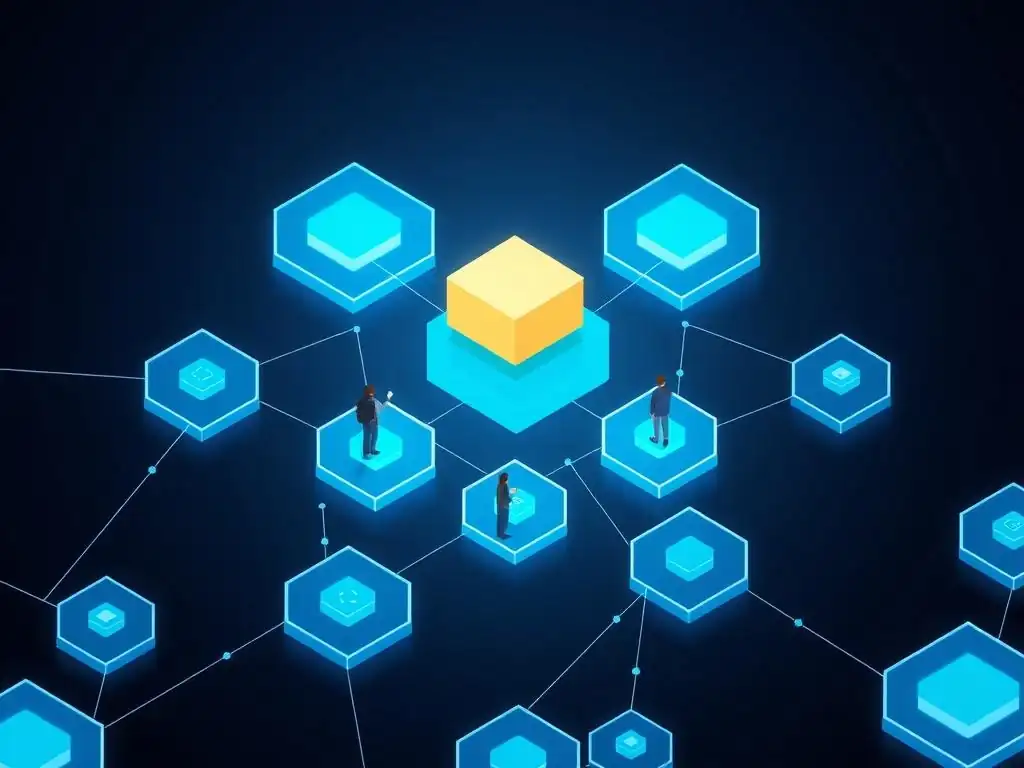
Increased Autonomy and Control Over Creations
Decentralized governance, particularly through DAOs, offers metaverse artists a significant increase in autonomy and control over their creations, a stark contrast to the often restrictive environments of centralized platforms. In DAO-governed metaverse platforms, artists are not subject to the arbitrary rules or decisions of a single entity. Instead, they participate in shaping the policies and guidelines of the platform through community voting and proposal processes. This direct involvement in governance empowers artists to influence decisions that directly affect their work, their revenue, and their overall experience within the metaverse.
Furthermore, blockchain-based ownership through NFTs grants artists greater control over their digital assets. They can decide how their creations are distributed, licensed, and monetized, without relying on intermediaries or facing platform restrictions. Smart contracts automate these processes, ensuring that artists retain control over their IP and receive fair compensation based on predefined terms.
This increased autonomy and control fosters a more empowering and equitable environment for metaverse artists, enabling them to build sustainable careers and express their creativity without undue constraints. The shift towards decentralized governance represents a fundamental change in the power dynamic between platforms and creators, placing more agency and control in the hands of the artists themselves.
Enhanced Revenue Opportunities and Fair Value Capture
Decentralized governance models unlock enhanced revenue opportunities and ensure fairer value capture for metaverse artists. By bypassing traditional centralized platforms, artists can reduce or eliminate platform fees and commissions, capturing a larger share of the revenue generated from their creations.
NFTs facilitate direct sales to collectors and fans, allowing artists to set their own prices and engage directly with their audience, fostering stronger creator-fan relationships and more sustainable income streams. Smart contracts automate royalty payments, ensuring that artists continue to earn from secondary market sales of their NFTs, creating a long-term revenue stream that is often absent in traditional creator economy models.
DAOs can further enhance revenue opportunities by implementing community-driven funding mechanisms and resource allocation strategies. For example, a DAO-governed metaverse art platform could allocate grants to emerging artists, provide funding for community projects, or establish revenue-sharing models that benefit all active creators. Transparent and equitable governance ensures that revenue distribution is fair and that artists are appropriately rewarded for their contributions to the metaverse ecosystem. This shift towards decentralized revenue models empowers artists to build more financially sustainable careers in the metaverse, fostering a thriving and vibrant creator economy where value is distributed more equitably.
Fostering a More Collaborative and Innovative Metaverse Ecosystem
Decentralized governance is not just about individual artist empowerment; it also fosters a more collaborative and innovative metaverse ecosystem. DAOs provide a framework for creators to collaborate, share resources, and collectively shape the future of metaverse platforms. Community-driven governance encourages open communication, idea sharing, and collaborative projects, leading to greater innovation and creativity within the metaverse. Artists can work together to develop new tools, create shared virtual spaces, and build collaborative experiences, fostering a more dynamic and interconnected metaverse environment.
Transparent and equitable governance builds trust and reduces competition, encouraging creators to collaborate rather than compete. When artists feel that the system is fair and that their contributions are valued, they are more likely to engage in collaborative projects and share their knowledge and expertise with the community.
This collaborative spirit fosters a more vibrant and innovative metaverse ecosystem where creators can learn from each other, build upon each other's work, and collectively push the boundaries of digital art and creative expression. Decentralized governance, therefore, acts as a catalyst for collaboration and innovation, driving the growth and evolution of the metaverse creator economy.
Challenges and Considerations for Blockchain Governance in the Metaverse
Scalability and Interoperability Issues
While blockchain governance offers numerous benefits for the metaverse creator economy, scalability and interoperability issues present significant challenges. Many blockchain networks, especially those used for NFTs and DAOs, face scalability limitations, struggling to handle a large volume of transactions and governance interactions. As the metaverse grows and the number of creators and users increases, these scalability challenges can lead to slow transaction times, high gas fees, and bottlenecks in governance processes, hindering the efficient operation of decentralized metaverse platforms.
Interoperability is another critical challenge. The metaverse is currently fragmented, with various virtual worlds and platforms operating in silos. Lack of interoperability between different blockchain networks and metaverse platforms makes it difficult for creators to seamlessly move their assets and identities across different virtual environments. This fragmentation also complicates governance, as DAOs and governance mechanisms are often specific to individual platforms, limiting cross-platform collaboration and coordination. Addressing scalability and interoperability issues is crucial for the long-term success of blockchain governance in the metaverse, requiring ongoing technological development and standardization efforts across different blockchain ecosystems and metaverse platforms.
Regulatory Uncertainty and Legal Frameworks
Regulatory uncertainty and the lack of clear legal frameworks pose significant challenges to blockchain governance in the metaverse. The legal status of DAOs, NFTs, and virtual assets is still evolving in many jurisdictions, creating uncertainty and potential risks for creators and platforms operating in the metaverse. Regulatory ambiguity surrounding issues such as taxation, securities laws, and intellectual property rights can hinder the adoption and growth of blockchain-based governance models in the metaverse.
Furthermore, the cross-border nature of the metaverse and blockchain technology complicates regulatory compliance. Different jurisdictions have varying regulations and approaches to digital assets and decentralized governance, creating a complex legal landscape for metaverse creators and platforms operating globally. Establishing clear and consistent regulatory frameworks for blockchain governance in the metaverse is essential for fostering legal certainty, protecting creators and users, and enabling the responsible development of this emerging ecosystem. This requires proactive engagement between regulators, industry stakeholders, and legal experts to develop appropriate and adaptable legal frameworks that support innovation while mitigating potential risks.
Ensuring Accessibility and Inclusivity for All Creators
Ensuring accessibility and inclusivity for all creators is a crucial consideration for blockchain governance in the metaverse. While blockchain aims for decentralization and democratization, there is a risk that governance mechanisms and platforms could become inaccessible or exclusionary to certain groups of creators. Technical barriers, such as the complexity of blockchain technology and the need for specialized knowledge, can deter some creators from participating in governance or utilizing blockchain-based tools. Economic barriers, such as the cost of minting NFTs or participating in DAO governance, can also exclude creators from less privileged backgrounds.
Addressing accessibility and inclusivity requires proactive efforts to lower technical and economic barriers to entry. This includes developing user-friendly tools and interfaces for interacting with blockchain technology, providing educational resources and support for creators, and exploring alternative governance models that are more inclusive and accessible to a wider range of participants.
Furthermore, governance mechanisms should be designed to ensure representation and participation from diverse creator communities, addressing potential biases and ensuring that the voices of all creators are heard and considered in decision-making processes. Creating a truly inclusive and accessible metaverse creator economy requires ongoing attention to these challenges and a commitment to building governance systems that are equitable and empowering for all.
The Future of Blockchain Governance and the Metaverse Creator Economy
Trends and Predictions for Decentralized Creator Platforms
The future of the metaverse creator economy is increasingly intertwined with the evolution of decentralized creator platforms and blockchain governance. A key trend is the rise of more sophisticated and user-friendly DAO tools and platforms, making it easier for creators to launch and manage their own decentralized communities and platforms. We can expect to see a proliferation of specialized DAOs tailored to different creator niches, such as music DAOs, art DAOs, and gaming DAOs, each with its own unique governance mechanisms and community focus.
Another trend is the increasing adoption of Layer-2 scaling solutions for blockchain networks, which will address scalability challenges and reduce transaction costs, making blockchain technology more accessible and efficient for metaverse applications. Interoperability solutions, such as cross-chain bridges and standardized protocols, will also become increasingly important, enabling seamless asset transfer and governance interactions across different metaverse platforms. These technological advancements will pave the way for a more interconnected and scalable decentralized metaverse creator economy, fostering greater innovation and collaboration.
The Evolution of DAOs and Governance Mechanisms
DAOs and governance mechanisms are expected to evolve significantly in the coming years, becoming more sophisticated, adaptable, and user-centric. We can anticipate the development of more nuanced voting mechanisms beyond simple token-weighted voting, incorporating quadratic voting, conviction voting, and other advanced models to enhance fairness and prevent governance attacks. Hybrid governance models, combining on-chain and off-chain processes, will likely become more common, balancing the need for transparency and automation with the flexibility and adaptability of off-chain decision-making.
Furthermore, DAOs will likely become more modular and composable, allowing creators to easily customize and integrate different governance components to suit their specific needs and communities. Legal frameworks for DAOs are also expected to mature, providing greater legal clarity and protection for DAO participants. The evolution of DAOs and governance mechanisms will be crucial for addressing the challenges of scalability, security, and inclusivity, and for realizing the full potential of decentralized governance in the metaverse creator economy.
The Potential for a More Equitable and Sustainable Metaverse Ecosystem
The convergence of blockchain governance and the metaverse creator economy holds immense potential for creating a more equitable and sustainable digital ecosystem for artists and creators. Decentralized governance models empower creators, giving them greater control over their work, revenue, and the platforms they use. Fairer compensation mechanisms, enabled by blockchain and smart contracts, ensure that creators capture a larger share of the value they generate, fostering more sustainable income streams. Transparency and accountability in governance build trust and reduce exploitation, creating a more ethical and equitable environment for creators to thrive.
A more equitable and sustainable metaverse ecosystem, driven by decentralized governance, can unlock new forms of creativity, innovation, and collaboration. By empowering creators and fostering a more democratic and inclusive digital space, blockchain governance can contribute to a more vibrant and prosperous metaverse creator economy that benefits all stakeholders, artists, users, and the broader digital community. The future of the metaverse creator economy is not just about technology; it is about building a more just and equitable digital world, and blockchain governance plays a crucial role in realizing this vision.
Conclusion: Blockchain Governance as a Catalyst for Artist Empowerment in the Metaverse
Key Takeaways and Recommendations
Blockchain governance is emerging as a powerful catalyst for artist empowerment in the metaverse creator economy. Decentralized governance models, particularly DAOs, offer a compelling alternative to centralized platforms, providing creators with increased autonomy, fairer compensation, and greater control over their creations. NFTs and smart contracts are essential tools for establishing ownership, protecting IP, and automating revenue distribution, fostering transparency and trust in creator-platform interactions and creator collaborations. Case studies like Art Blocks and Decentraland demonstrate the practical application and potential of blockchain governance in supporting artists and building thriving metaverse ecosystems.
However, challenges remain, including scalability and interoperability issues, regulatory uncertainty, and the need to ensure accessibility and inclusivity. Addressing these challenges requires ongoing technological innovation, proactive regulatory engagement, and a commitment to building governance systems that are both effective and equitable.
For metaverse platforms and creator communities, adopting decentralized governance principles and exploring DAO models can be a strategic move to attract and retain creators, foster innovation, and build more sustainable and equitable ecosystems. For artists entering the metaverse, understanding blockchain governance and exploring platforms that embrace decentralized principles can be key to maximizing their creative potential and achieving fair compensation for their work.
Call to Action: Exploring the Potential of Blockchain Governance in the Metaverse Creator Economy
The potential of blockchain governance to revolutionize the metaverse creator economy is significant and still largely untapped. We are at the early stages of this transformative journey, and there is a call to action for creators, developers, platforms, and policymakers to actively explore and shape the future of decentralized governance in the metaverse. Creators are encouraged to engage with blockchain-based platforms, participate in DAO governance, and experiment with new models of ownership and monetization.
Developers are challenged to build more user-friendly and scalable DAO tools and platforms, addressing accessibility and interoperability issues. Platforms are urged to embrace decentralized governance principles, prioritize creator empowerment, and foster transparent and equitable ecosystems.
Policymakers are called upon to engage with the blockchain and metaverse communities, develop clear and adaptable regulatory frameworks, and support responsible innovation in this rapidly evolving space. By collectively exploring and embracing the potential of blockchain governance, we can build a more equitable, sustainable, and empowering metaverse creator economy for artists and creators worldwide.
Frequently Asked Questions
What role does blockchain governance play in empowering creators in the Metaverse?
Blockchain governance provides a decentralized and transparent system for creators to have a direct say in the rules and policies that affect their work and income within the Metaverse. This fosters greater autonomy and control.
How can blockchain technology facilitate fairer revenue distribution for artists in the Metaverse creator economy?
Blockchain enables smart contracts that automatically distribute revenue based on pre-defined agreements, ensuring transparent and equitable compensation for creators, bypassing traditional intermediaries. This reduces exploitation and ensures fair pay.
What are the key challenges in implementing effective blockchain governance within the Metaverse?
Challenges include ensuring scalability of blockchain networks, addressing regulatory uncertainties surrounding digital assets, and fostering user adoption of decentralized governance mechanisms. These are important hurdles to overcome.
How does blockchain contribute to the authenticity and ownership of digital assets in the Metaverse?
Blockchain's immutable ledger creates a verifiable record of ownership for digital assets like artwork or virtual land, ensuring provenance and preventing counterfeiting. This promotes trust and value in the digital realm.
What is the future outlook for the intersection of blockchain governance, the Metaverse, and the creator economy?
The future likely involves a more decentralized and user-centric Metaverse, where blockchain governance empowers creators to own and control their creations and revenue streams, fostering a thriving and equitable digital economy.
Okay, here's a final reflection tailored for your article "Blockchain Governance and the Metaverse Creator Economy: Empowering Artists," designed to resonate with readers and reinforce the key themes while targeting the keyword "Blockchain governance metaverse creator economy":
Final Reflection: Decentralizing Creation's Future
The exploration of blockchain governance within the metaverse creator economy reveals a powerful potential shift in how artists are valued and empowered. No longer are creators solely reliant on centralized platforms; instead, blockchain offers a pathway towards decentralized ownership, transparent revenue models, and direct engagement with their audiences, fundamentally reshaping the landscape of digital creation.
The promise of true ownership and equitable compensation for artists within the metaverse is a compelling vision, one that challenges the traditional power structures of the art world. This shift is not just about technology; it's about fostering a more just and sustainable ecosystem for creators. The future of art is not just about creating beautiful things, but about creating a beautiful system for artists to thrive.
This sentiment underscores the profound impact blockchain governance can have on the cultural and social fabric of the metaverse.
As we stand on the cusp of this decentralized revolution, let us consider how we can actively participate in shaping a metaverse that truly empowers artists. Reflect on the ways you can support creators who are embracing blockchain governance, whether through direct patronage, engagement with decentralized platforms, or simply advocating for a more equitable and transparent creator economy. The future of creation is in our hands; let's build a future where artists are not just surviving, but thriving.
Unlock Your Metaverse Potential!
Thank you for exploring how blockchain governance is transforming the creator economy in the metaverse and supporting artists. Now, it's time to take action and be part of the movement!
Here's how you can get involved:
- Start developing your own decentralized organization framework tailored for metaverse artists. This is your chance to influence the future of creative collaboration and fair compensation.
- Explore decentralized platforms that actively support artists with blockchain governance tools. Try out different platforms to find the one that best aligns with your creative goals.
- Share this article with a fellow creator and discuss how you can work together to leverage blockchain technology for a more equitable metaverse for artists.
What innovative governance model will you adopt to empower artists in the metaverse? Share your ideas in the comments below!
Leave a Reply