
Blockchain Governance for Metaverse Events and Experiences: Decentralized Organization

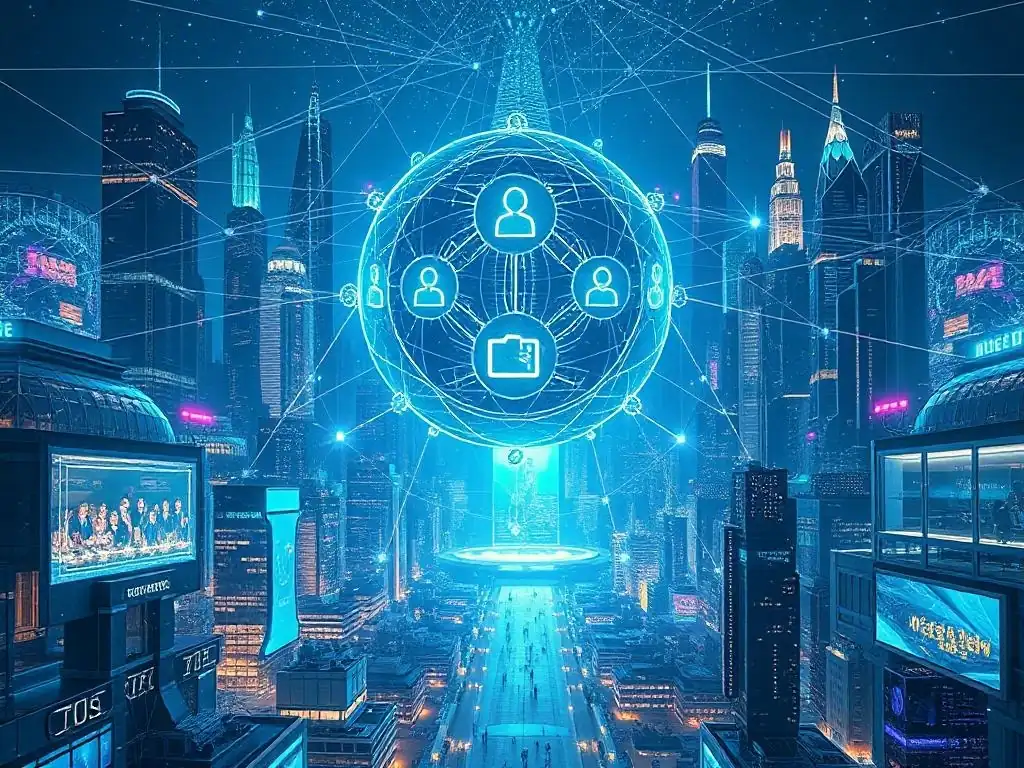
Welcome to Blockchain Trends, your compass in the ever-evolving world of decentralized technologies. Prepare to look beyond the hype and dive deep into the transformative power of blockchain. Ever wondered how to build a truly democratic and engaging metaverse experience? Our latest article explores the fascinating intersection of blockchain governance and virtual worlds, specifically focusing on decentralized metaverse event governance. Discover how blockchain can revolutionize event organization within the metaverse, empowering users and creating truly immersive and equitable experiences. Intrigued? Read on to unlock the potential of decentralized ownership and control in the future of virtual events.
Blockchain Governance for Metaverse Events: A DAO Approach
- Introduction: Why Decentralized Governance is Essential for Metaverse Events
- Blockchain and DAOs: The Foundation for Decentralized Event Governance
- Core Elements of a Decentralized Metaverse Event Governance DAO
- Application of DAOs Across Different Metaverse Event Types
- Advantages of DAO-Based Metaverse Event Governance
- Case Studies: Real-World Examples of Metaverse Event DAOs
- Addressing Challenges in Implementing Metaverse Event DAOs
- The Future of DAOs in Metaverse Event Management
- Conclusion: Embracing Decentralization for the Future of Metaverse Events
-
Frequently Asked Questions
- What is decentralized governance in the context of metaverse events?
- How can blockchain technology enhance metaverse event governance?
- What are the key benefits of using a decentralized autonomous organization (DAO) to govern metaverse events?
- What are some potential challenges of implementing decentralized metaverse event governance?
- How does decentralized metaverse event governance differ from traditional event management?
- Final Reflection: Embracing Decentralized Metaverse Event Governance
- Unleash the Future: Build Your Decentralized Metaverse Event!
Introduction: Why Decentralized Governance is Essential for Metaverse Events
The Growing Importance of Immersive Experiences in the Metaverse
The metaverse is rapidly evolving from a futuristic concept to a tangible reality, with immersive experiences becoming increasingly central to how individuals interact, socialize, and conduct business online. Events within these virtual worlds are mirroring real-world gatherings, ranging from concerts and conferences to art exhibitions and social meetups. This surge in metaverse events reflects a fundamental shift in digital engagement, where users seek richer, more interactive, and community-driven experiences.
Industry analysts predict the metaverse event market will see exponential growth, with some estimates projecting it to reach tens of billions of dollars within the next few years, highlighting its significant economic and social impact. As more individuals and organizations invest time and resources in these virtual environments, the need for robust and fair governance mechanisms becomes paramount to ensure their long-term viability and user satisfaction.
The proliferation of metaverse platforms and the increasing sophistication of virtual event technologies are driving this trend. Platforms like Decentraland, The Sandbox, and Horizon Worlds are becoming hubs for diverse events, attracting global audiences. These events are no longer simple webinars or video conferences; they are complex, interactive environments offering unique opportunities for engagement and participation.
Consider the example of virtual music festivals in platforms like Decentraland, which have drawn hundreds of thousands of attendees, showcasing the potential scale and appeal of metaverse events. This growth underscores the necessity for governance structures that can effectively manage these complex ecosystems and ensure equitable participation for all stakeholders involved.
Limitations of Centralized Control in Metaverse Event Platforms
Current metaverse event platforms often operate under centralized control, mirroring traditional web2 models. This centralized approach presents several limitations that can hinder the growth, fairness, and long-term sustainability of metaverse events. Centralized platforms typically dictate the rules of engagement, content moderation policies, and revenue distribution models, often with limited input from the community or event organizers.
This lack of transparency and community involvement can lead to concerns about censorship, biased decision-making, and a lack of ownership among participants. For instance, platform owners might unilaterally alter event terms, impose fees, or even remove content without clear justification, undermining trust and potentially alienating users and creators.
Furthermore, centralized control can stifle innovation and experimentation in event formats. Platforms might be slow to adapt to community needs or new technological advancements, as decision-making power rests with a small, centralized entity. This can lead to a homogenous event landscape, lacking the diversity and dynamism that a decentralized approach could foster.
Consider the early days of the internet, where open protocols and decentralized networks spurred rapid innovation and the emergence of diverse online services. A similar paradigm shift towards decentralization in metaverse event governance could unlock a new wave of creativity and user-centric event experiences, moving beyond the limitations imposed by top-down control.
The Benefits of Decentralization for Trust and Community Ownership
Decentralization offers a compelling alternative to centralized control in metaverse event governance, promising enhanced trust, community ownership, and greater resilience. By distributing decision-making power across a network of participants, decentralized systems foster transparency and accountability. In the context of metaverse events, this can translate to community-driven content curation, transparent resource allocation, and fair dispute resolution mechanisms. For example, a decentralized governance model could empower event attendees to vote on proposed changes to event rules, suggest improvements to the platform, or even participate in the selection of future event themes and performers.
Moreover, decentralization cultivates a sense of ownership and shared responsibility among community members. When users feel they have a genuine stake in the metaverse event ecosystem, they are more likely to actively participate, contribute, and invest in its long-term success. This sense of ownership can be particularly crucial for fostering vibrant and engaged metaverse communities.
Imagine a virtual art gallery governed by a DAO, where artists and collectors collectively decide on exhibition themes, select featured artists, and manage the gallery's treasury. This collaborative approach not only enhances the quality and relevance of the exhibitions but also strengthens the bonds within the art community, creating a more resilient and thriving metaverse space. Decentralized governance, therefore, is not just about technology; it's about fostering a more democratic and participatory metaverse experience.
Blockchain and DAOs: The Foundation for Decentralized Event Governance
Leveraging Blockchain for Transparent and Immutable Event Data
Blockchain technology provides the bedrock for decentralized metaverse event governance by offering a transparent and immutable ledger for storing critical event data. This data can range from event schedules and ticket sales to voting records and treasury transactions. The inherent characteristics of blockchain, such as its distributed nature and cryptographic security, ensure that this information is tamper-proof and publicly auditable. For instance, event organizers could utilize blockchain to record ticket purchases, ensuring transparency and preventing fraud. Each ticket transaction can be recorded on the blockchain, creating an immutable record of ownership and preventing counterfeiting or double-selling.
Furthermore, blockchain's transparency extends to the governance processes themselves. Voting records, proposal submissions, and treasury allocations can all be immutably recorded on the blockchain, providing a clear and verifiable audit trail. This level of transparency is crucial for building trust and accountability within a decentralized metaverse event ecosystem.
Consider a scenario where a DAO is governing a virtual music festival. All decisions regarding artist selection, budget allocation, and rule changes can be voted on by DAO members and recorded on the blockchain. This ensures that all participants can verify the integrity of the governance process and that decisions are made fairly and transparently, fostering confidence and participation within the community.
Smart Contracts: Automating Event Rules and Agreements
Smart contracts, self-executing agreements written in code and deployed on a blockchain, are instrumental in automating event rules and agreements within a decentralized metaverse governance framework. These contracts automatically enforce predefined rules and actions when specific conditions are met, eliminating the need for intermediaries and reducing the potential for human error or manipulation.
For metaverse events, smart contracts can automate various processes, such as ticket distribution, royalty payments to artists, and the execution of governance decisions based on DAO votes. For example, a smart contract could automatically distribute revenue from virtual merchandise sales to participating artists based on pre-agreed percentages, ensuring timely and transparent payouts without the need for manual intervention.
Moreover, smart contracts can be used to implement complex governance mechanisms within a metaverse event DAO. Voting rules, quorum requirements, and proposal timelines can all be encoded into smart contracts, ensuring that the governance process is executed fairly and consistently. This automation not only streamlines event operations but also enhances the security and reliability of the governance system.
Imagine a DAO governing a virtual conference. Smart contracts could be used to automatically execute the outcomes of DAO votes, such as approving budget proposals, scheduling speaker sessions, or implementing changes to the conference agenda, ensuring that governance decisions are swiftly and efficiently translated into action.
DAOs: Enabling Community-Driven Decision-Making for Metaverse Events
Decentralized Autonomous Organizations (DAOs) are the organizational structures that leverage blockchain and smart contracts to enable community-driven decision-making for metaverse events. A DAO is essentially a community-led entity with rules encoded in smart contracts and financial transactions recorded on a blockchain. In the context of metaverse events, DAOs empower participants to collectively govern the event ecosystem, making decisions on key aspects such as event formats, content curation, resource allocation, and platform development. This shift towards DAO-based governance represents a move away from top-down control towards a more democratic and participatory model for managing metaverse experiences.
DAOs facilitate a more inclusive and representative governance model compared to traditional centralized structures. By distributing voting rights among stakeholders, often through token-based mechanisms, DAOs ensure that decisions are made with broader community input. This can lead to metaverse events that are more aligned with the needs and preferences of their participants, fostering greater engagement and satisfaction.
Consider a DAO governing a virtual world platform hosting various events. Token holders within the DAO could vote on proposals to allocate land parcels for specific event types, fund community-led event initiatives, or implement new features to enhance the event experience within the platform, directly influencing the direction and evolution of the metaverse event ecosystem.
Core Elements of a Decentralized Metaverse Event Governance DAO
Membership and Tokenomics: Defining Stakeholder Rights and Incentives
Defining membership and tokenomics is crucial for establishing a functional and equitable decentralized metaverse event governance DAO. Membership models can vary, ranging from open and permissionless to gated and permissioned, depending on the specific goals and context of the event. Open DAOs allow anyone to participate, often by simply holding a governance token, while gated DAOs might require specific qualifications or invitations to ensure a curated and focused community.
Tokenomics, the economic system governing the DAO's token, plays a vital role in incentivizing participation, distributing governance rights, and managing the DAO's treasury. For example, a DAO governing a virtual music festival might issue governance tokens to ticket holders, artists, and sponsors, granting them voting rights proportional to their token holdings and aligning their incentives with the festival's success.
The design of the governance token is critical. It can serve multiple purposes, including granting voting rights, providing access to exclusive event features, and acting as a medium for distributing rewards or revenue within the DAO ecosystem. Token distribution mechanisms also need careful consideration to ensure fairness and prevent centralization of power.
Common methods include initial token sales, airdrops to early adopters, and ongoing token rewards for active participation and contributions to the DAO. For instance, a metaverse conference DAO could airdrop governance tokens to early registrants and speakers, rewarding their early commitment and contribution, while also offering ongoing token rewards for active participation in DAO governance discussions and proposal submissions.
Proposal Submission and Voting Mechanisms: Ensuring Fair Participation
Robust proposal submission and voting mechanisms are essential for ensuring fair participation and effective decision-making within a decentralized metaverse event governance DAO. Proposal submission processes should be clearly defined and accessible to all DAO members, allowing them to suggest changes, initiatives, or improvements to the event ecosystem.
This might involve using a dedicated DAO platform or forum where members can submit proposals, outlining the rationale, proposed actions, and potential impact. For instance, in a DAO governing a virtual art exhibition, members could submit proposals for new exhibition themes, artist selection processes, or marketing strategies, contributing to the overall direction and quality of the event.
Voting mechanisms need to be secure, transparent, and designed to reflect the will of the community. Common voting methods include token-weighted voting, where voting power is proportional to token holdings, and quadratic voting, which aims to mitigate the influence of large token holders by making voting progressively more expensive. Voting periods need to be clearly defined, and the results should be transparently recorded on the blockchain for auditability.
Consider a DAO managing a metaverse gaming event. Members could vote on proposals to adjust game rules, introduce new game modes, or allocate prize pools, using a token-weighted voting system to ensure that stakeholders with a larger investment in the game ecosystem have a proportionally greater say in its governance.
Treasury Management: Transparent Allocation of Event Resources
Transparent treasury management is paramount for maintaining trust and accountability within a decentralized metaverse event governance DAO. The DAO treasury, typically funded through event revenue, token sales, or grants, holds the financial resources that are used to fund event operations, development initiatives, and community rewards. Transparency in how these funds are managed and allocated is crucial for ensuring that DAO members have confidence in the governance process.
Treasury transactions should be recorded on the blockchain and publicly accessible, allowing anyone to verify how funds are being spent. For example, a DAO governing a virtual land platform's events could have its treasury funded by land sales and event ticket revenue, with all treasury transactions transparently recorded on the blockchain for community scrutiny.
DAO treasuries often utilize multisignature wallets, requiring multiple DAO members to authorize transactions, further enhancing security and preventing unauthorized access or misuse of funds. Proposal-based spending mechanisms ensure that treasury funds are allocated according to community-approved proposals. DAO members can submit proposals for funding specific initiatives, such as marketing campaigns, platform development, or community events, and these proposals are then voted on by the DAO.
Successful proposals trigger the release of funds from the treasury, ensuring that resource allocation is aligned with community priorities and is conducted in a transparent and accountable manner. Imagine a metaverse conference DAO using its treasury to fund speaker fees, platform development, and marketing efforts, with all spending decisions subject to DAO member votes and treasury transactions publicly auditable on the blockchain.
Application of DAOs Across Different Metaverse Event Types
Governance Models for Virtual Music Festivals and Concerts
DAOs offer innovative governance models for virtual music festivals and concerts in the metaverse, shifting control from centralized organizers to a community of artists, attendees, and stakeholders. A DAO-governed virtual music festival can empower token holders to vote on artist lineups, stage designs, ticket pricing, and even the selection of virtual venues within the metaverse.
This community-driven approach can lead to festivals that are more attuned to the preferences of their audience and more representative of diverse musical tastes. For example, a DAO could allow token holders to submit and vote on proposals for emerging artists to be featured at the festival, giving a platform to new talent and diversifying the musical offerings beyond established headliners.
Tokenomics can play a crucial role in incentivizing participation and engagement within a virtual music festival DAO. Ticket holders could receive governance tokens upon purchase, granting them voting rights and potentially access to exclusive festival features or merchandise. Artists performing at the festival could also receive DAO tokens, aligning their incentives with the festival's success and giving them a stake in its future governance.
Furthermore, a portion of festival revenue could be allocated to the DAO treasury, funding future events and community initiatives. Consider a virtual music festival DAO that uses its treasury to invest in developing interactive stage elements, enhancing the virtual concert experience for attendees, or to commission original metaverse-native music content, enriching the festival's offerings and attracting a wider audience.
Decentralized Management of Metaverse Conferences and Educational Events
DAOs can revolutionize the management of metaverse conferences and educational events by fostering decentralized decision-making and community ownership. In a DAO-governed metaverse conference, participants can collectively shape the conference agenda, speaker selection, and content curation. Token holders could vote on proposals for session topics, keynote speakers, and workshop formats, ensuring that the conference program is relevant and engaging for the community.
This decentralized approach can lead to conferences that are more responsive to the evolving needs of the industry or field and less reliant on the biases or agendas of centralized organizers. For instance, a metaverse technology conference DAO could allow token holders to propose and vote on emerging technology topics to be featured in the conference program, ensuring the content remains cutting-edge and relevant to the rapidly evolving metaverse landscape.
DAOs can also enhance the accessibility and inclusivity of metaverse educational events. By decentralizing content creation and curation, DAOs can tap into the collective expertise of the community, leading to a wider range of perspectives and learning materials. Tokenized incentive systems can reward contributors for creating educational content, moderating discussions, and providing support to learners.
This collaborative approach can democratize access to education and create more engaging and effective learning experiences within the metaverse. Imagine a metaverse education platform governed by a DAO, where educators and learners collectively curate course content, peer-review materials, and award credentials, fostering a decentralized and community-driven learning ecosystem.
DAOs for Virtual Art Exhibitions and NFT Galleries
Virtual art exhibitions and NFT galleries in the metaverse are ideally suited for DAO governance, enabling artists, collectors, and art enthusiasts to collectively curate and manage these digital art spaces. A DAO-governed virtual art exhibition can empower token holders to vote on artwork selection, exhibition themes, gallery design, and marketing strategies.
This decentralized curation process can lead to exhibitions that are more diverse, inclusive, and representative of the broader art community, moving beyond the often-limited perspectives of traditional centralized galleries. For example, a DAO could organize a themed NFT art exhibition, allowing token holders to nominate and vote on NFT artworks to be featured, creating a community-curated showcase of digital art.
DAOs can also facilitate new forms of art patronage and revenue sharing within virtual art exhibitions and NFT galleries. Smart contracts can automate royalty payments to artists for secondary sales of their NFTs, ensuring they continue to benefit from the appreciation of their work in the metaverse.
DAO treasuries can be used to fund acquisitions of NFT art for the gallery's collection, support emerging artists through grants or commissions, and organize community events within the virtual art space. Consider a metaverse NFT gallery DAO that uses its treasury to acquire NFTs from promising emerging artists, providing them with financial support and exposure within the virtual art world, while also building a valuable and community-owned collection of digital art.
Advantages of DAO-Based Metaverse Event Governance

Increased Transparency and Accountability in Event Operations
DAO-based governance brings a significant increase in transparency and accountability to metaverse event operations compared to traditional centralized models. All governance decisions, voting records, and financial transactions within a DAO are typically recorded on a public blockchain, creating an immutable and auditable record.
This transparency allows community members to verify the integrity of the governance process and track how event resources are being managed. For instance, in a DAO-governed virtual conference, the budget allocation, speaker selection process, and sponsorship agreements could all be transparently recorded on the blockchain, allowing attendees and stakeholders to verify the fairness and accountability of the event organization.
This enhanced transparency fosters trust and confidence within the metaverse event community. When participants can clearly see how decisions are made and resources are allocated, they are more likely to trust the governance system and actively engage in the event ecosystem. Accountability is also strengthened as DAO members can hold event organizers and decision-makers accountable for their actions, knowing that all actions are publicly auditable.
Imagine a virtual music festival DAO where the financial performance of the festival, including ticket sales, sponsorship revenue, and artist payouts, is transparently recorded on the blockchain. This level of transparency builds trust among attendees, artists, and sponsors, fostering a more sustainable and collaborative event ecosystem.
Enhanced Community Participation and Co-Creation of Experiences
DAO governance inherently fosters enhanced community participation and co-creation of metaverse event experiences. By distributing decision-making power to token holders, DAOs empower community members to actively shape the direction and evolution of events. This participatory approach can lead to events that are more aligned with the needs and preferences of the community, resulting in greater engagement and satisfaction. For example, a DAO-governed virtual gaming event could allow players to vote on new game features, rule changes, and prize pool distributions, directly influencing the game's development and fostering a sense of ownership and co-creation among the player community.
Community participation in governance can also lead to more innovative and creative event formats. By tapping into the collective intelligence and diverse perspectives of the community, DAOs can unlock new ideas and approaches to metaverse event design and execution.
Co-creation becomes a central element, as community members actively contribute to shaping the event experience, moving beyond passive consumption to active participation. Consider a metaverse art exhibition DAO that encourages community members to submit proposals for interactive art installations or virtual performances, fostering a collaborative and co-creative environment where the event experience is shaped by the collective imagination of the community.
Reduced Centralized Control and Mitigation of Censorship Risks
One of the key advantages of DAO-based metaverse event governance is the reduction of centralized control and the mitigation of censorship risks. Traditional centralized platforms often have the power to unilaterally alter event rules, censor content, or even shut down events without community input or recourse.
DAOs, by their decentralized nature, distribute control and decision-making power across a network of participants, making it significantly more difficult for any single entity to exert undue influence or censorship. For instance, in a DAO-governed virtual world platform hosting various events, no single entity can unilaterally decide to remove an event or censor content without the consensus of the DAO community.
This decentralization of control provides greater resilience against censorship and ensures that metaverse events are more resistant to the whims or biases of centralized authorities. Content moderation policies and event rules are typically determined through community consensus within a DAO, rather than being dictated by a centralized platform owner.
This fosters a more open and censorship-resistant environment for metaverse events, promoting freedom of expression and diverse perspectives. Imagine a metaverse social gathering space governed by a DAO where content moderation policies are determined through community votes, ensuring a balance between freedom of expression and community safety, and mitigating the risk of arbitrary censorship by a centralized authority.
Fostering Innovation and Experimentation in Event Formats
DAO-based governance can foster innovation and experimentation in metaverse event formats by creating a more flexible and adaptable environment. Traditional centralized platforms can be slow to adapt to new trends or incorporate community feedback, as decision-making processes are often bureaucratic and top-down. DAOs, with their decentralized and community-driven nature, can be more agile and responsive to change, allowing for rapid experimentation and iteration in event formats. For example, a DAO-governed metaverse conference could quickly adapt its program or introduce new interactive elements based on real-time feedback from attendees and community proposals, fostering a dynamic and evolving event experience.
The open and collaborative nature of DAOs encourages experimentation and the exploration of new event formats. Community members are empowered to propose and implement innovative ideas, and the decentralized governance structure allows for rapid testing and iteration.
This can lead to the emergence of novel and engaging metaverse event experiences that might not be possible within a more rigid centralized system. Consider a virtual music festival DAO that encourages community members to propose and experiment with new forms of interactive stage designs, virtual reality integrations, or gamified event elements, pushing the boundaries of what's possible in metaverse music experiences and fostering a culture of innovation and creativity.
Case Studies: Real-World Examples of Metaverse Event DAOs
Decentralized Management of a Virtual Land Platform's Events
Virtual land platforms like Decentraland and The Sandbox are increasingly exploring DAO governance to manage events and experiences within their ecosystems. These platforms, often built on blockchain technology, lend themselves naturally to decentralized management, allowing land owners and users to collectively govern aspects of the virtual world, including event organization.
For example, a virtual land platform DAO could be responsible for allocating land parcels for event spaces, setting guidelines for event formats, and managing a community fund to support event initiatives. This decentralized management empowers land owners and users to shape the event landscape of the virtual world, moving away from centralized control by the platform developers.
One real-world example is the Decentraland DAO, which governs various aspects of the Decentraland platform, including its LAND marketplace and content policies. While not solely focused on event governance, the Decentraland DAO provides a model for how a virtual world platform can decentralize control and empower its community. Specifically related to events, the DAO could be involved in decisions regarding large-scale platform-wide events, resource allocation for community-organized events, and the enforcement of event-related policies within Decentraland. This case study demonstrates the feasibility and potential benefits of DAO-based governance for managing events within a virtual land metaverse.
Community-Driven Curation of an NFT Art Exhibition Through a DAO
NFT art exhibitions are emerging as a popular use case for DAO governance, enabling artists, collectors, and art enthusiasts to collectively curate and manage virtual art spaces. A DAO can be formed specifically to curate an NFT art exhibition, with token holders voting on artwork selection, exhibition themes, and gallery design.
This community-driven curation process can lead to exhibitions that are more diverse and representative of the broader NFT art community compared to exhibitions curated by traditional centralized galleries. For instance, a DAO could organize a themed NFT photography exhibition, allowing token holders to nominate and vote on NFT photographs to be included, creating a truly community-curated digital art showcase.
A notable example is PleasrDAO, while not solely focused on exhibitions, it embodies the concept of community-driven curation and art ownership. PleasrDAO is a collective that acquires culturally significant NFTs. The principles of PleasrDAO could be applied to creating DAOs specifically for curating NFT art exhibitions.
Imagine a "Metaverse Masters" NFT exhibition DAO where token holders are collectors, artists, and art critics. This DAO could vote on submissions, select pieces for the virtual exhibition, and even manage the virtual gallery space where the exhibition is hosted, showcasing the power of DAOs in democratizing art curation and exhibition within the metaverse.
Token-Gated Access and Governance in a Metaverse Music Venue
Metaverse music venues are exploring token-gated access and DAO governance to create exclusive and community-driven music experiences. Token-gated access means that only holders of specific tokens can enter the virtual venue or participate in certain events. Combining this with DAO governance allows token holders to not only access exclusive events but also to participate in the governance of the venue itself.
For example, a metaverse music venue DAO could issue governance tokens to venue patrons, artists, and investors, granting them voting rights on decisions such as artist bookings, event scheduling, and venue design. This creates a community-owned and community-governed music venue in the metaverse, fostering a stronger connection between artists, fans, and the venue itself.
An example, though still nascent in fully decentralized form, can be seen in projects like Audius, a decentralized music streaming platform. While Audius is primarily focused on music streaming, its governance model and community-driven approach offer insights into how a metaverse music venue DAO could function.
Imagine a "Metaverse Beats" venue DAO where token holders gain access to exclusive concerts and DJ sets, and also vote on which artists to feature, what genres to highlight, and even the visual aesthetic of the virtual venue. This token-gated access and DAO governance model creates a more exclusive and community-centric metaverse music experience, rewarding loyal fans and empowering them to shape the venue's direction.
Addressing Challenges in Implementing Metaverse Event DAOs
Ensuring Scalability and Security of On-Chain Voting Systems
Ensuring the scalability and security of on-chain voting systems is a critical challenge for implementing metaverse event DAOs. As metaverse events grow in popularity and DAOs scale to accommodate larger communities, the underlying blockchain infrastructure needs to be able to handle a high volume of voting transactions efficiently and securely. Scalability issues can lead to slow voting processes and high transaction fees, hindering participation and potentially undermining the effectiveness of DAO governance.
Security vulnerabilities in on-chain voting systems can be exploited to manipulate vote outcomes, compromising the integrity of the DAO and eroding community trust. For example, if a metaverse conference DAO with thousands of members uses a voting system that is slow and expensive, participation rates might decrease, and the governance process could become less representative.
To address scalability, Layer-2 scaling solutions like optimistic rollups or zk-rollups are being explored to offload voting transactions from the main blockchain, improving throughput and reducing costs. For security, robust smart contract auditing and formal verification methods are essential to identify and mitigate potential vulnerabilities in voting contracts.
Furthermore, decentralized identity solutions and Sybil resistance mechanisms are needed to prevent malicious actors from creating multiple fake identities to manipulate voting outcomes. Consider a virtual music festival DAO using a Layer-2 scaling solution for its on-chain voting system to handle thousands of votes efficiently and cost-effectively, while also implementing robust security measures to prevent vote manipulation and ensure the integrity of the governance process.
Handling Disputes and Conflicts Within the DAO Community
Managing disputes and conflicts within a DAO community is an inherent challenge in any decentralized governance system, including metaverse event DAOs. Disagreements and conflicts are inevitable in any community, and DAOs need effective mechanisms to resolve these disputes fairly and efficiently. Without clear dispute resolution processes, conflicts can escalate, disrupt DAO operations, and damage community cohesion. For instance, in a DAO-governed virtual art exhibition, disagreements might arise over artwork selection, budget allocation, or content moderation policies, requiring a structured process for resolution.
DAO dispute resolution mechanisms can range from informal community forums and mediation processes to more formal on-chain arbitration systems. Some DAOs utilize community moderators or mediators to facilitate discussions and help resolve disagreements informally. Others incorporate on-chain dispute resolution protocols, where disputes can be submitted to a panel of arbitrators or jurors for a binding decision.
These on-chain systems often utilize token-based incentive mechanisms to ensure that arbitrators are impartial and make fair decisions. Imagine a metaverse conference DAO implementing a multi-tiered dispute resolution system, starting with community forums and mediation, and escalating to on-chain arbitration if informal methods fail, providing a layered approach to managing conflicts and ensuring fair resolution within the DAO community.
Maintaining Accessibility and Inclusivity for All Participants
Ensuring accessibility and inclusivity for all participants is a crucial ethical and practical challenge for metaverse event DAOs. While DAOs aim to democratize governance, there is a risk that certain groups or individuals might be excluded or marginalized due to technical barriers, lack of resources, or biases in the governance process. Technical barriers, such as the need for cryptocurrency wallets and blockchain knowledge, can deter less tech-savvy individuals from participating in DAO governance.
Economic barriers, such as the cost of acquiring governance tokens, can exclude individuals with limited financial resources, leading to unequal representation and influence within the DAO. For example, a metaverse music festival DAO that relies heavily on token-based voting might inadvertently exclude attendees who are less familiar with crypto or cannot afford to purchase governance tokens.
To address accessibility and inclusivity, DAOs need to implement strategies to lower barriers to participation. This can include providing user-friendly interfaces for DAO platforms, offering educational resources on blockchain and DAO governance, and exploring alternative governance models that are less reliant on token ownership. Community outreach and education initiatives can help onboard new users and ensure that diverse voices are represented within the DAO.
Furthermore, DAOs can explore mechanisms to mitigate economic barriers, such as grant programs to subsidize token acquisition for underrepresented groups or alternative voting mechanisms that are less reliant on token-weighted voting. Consider a virtual art exhibition DAO implementing accessibility initiatives such as multilingual interfaces for its DAO platform, providing educational workshops on DAO governance, and offering community grants to artists from underrepresented backgrounds to participate in exhibitions and DAO governance.
The Future of DAOs in Metaverse Event Management
The Convergence of Web3 Technologies and the Metaverse Event Industry
The future of metaverse event management is inextricably linked to the convergence of Web3 technologies and the metaverse event industry. Web3, with its focus on decentralization, blockchain, and tokenization, provides the technological infrastructure for building more transparent, community-owned, and user-centric metaverse event experiences. DAOs, as a core Web3 organizational model, are poised to play a central role in shaping the future of metaverse event governance.
The integration of blockchain, NFTs, and decentralized finance (DeFi) with metaverse platforms will unlock new possibilities for event ticketing, revenue sharing, community engagement, and governance. For example, NFTs can be used for event tickets, providing provable ownership and enabling secondary market trading, while DeFi protocols can facilitate transparent and automated revenue distribution to event stakeholders within a DAO ecosystem.
This convergence is driving a paradigm shift in how metaverse events are organized and experienced. Moving away from centralized platforms and traditional event management models, the future envisions metaverse events that are increasingly owned and governed by their communities, leveraging Web3 technologies to create more immersive, engaging, and equitable experiences.
The rise of metaverse-native DAOs dedicated to event management signals this evolving landscape, with projects emerging to build DAO tooling, event platforms, and governance frameworks specifically tailored for the metaverse event industry. This trend suggests a future where decentralized metaverse event governance becomes the norm, empowering creators, attendees, and communities to collectively shape the future of virtual experiences.
Emerging Governance Models: Liquid Democracy and Quadratic Voting
Emerging governance models like liquid democracy and quadratic voting are likely to play an increasingly important role in the future of metaverse event DAOs, offering more nuanced and efficient mechanisms for community decision-making. Liquid democracy, also known as delegative democracy, allows token holders to either vote directly on proposals or delegate their voting power to trusted experts or community leaders.
This model combines the benefits of direct democracy with the efficiency of representative democracy, allowing for both broad community participation and informed decision-making. For example, in a metaverse conference DAO using liquid democracy, token holders could choose to vote directly on session proposals or delegate their votes to individuals with expertise in specific conference topics, ensuring both community input and expert guidance in shaping the conference agenda.
Quadratic voting is another promising governance model that aims to address the limitations of simple token-weighted voting, where large token holders can disproportionately influence vote outcomes. Quadratic voting makes voting progressively more expensive, meaning that while every vote still costs, casting more votes on a single proposal becomes exponentially more costly.
This mechanism helps to mitigate the influence of whales and encourages more nuanced voting patterns, better reflecting the intensity of voter preferences. Consider a virtual music festival DAO using quadratic voting for artist selection.
While token holders with larger holdings still have more voting power, quadratic voting would make it more expensive for them to dominate the voting process, allowing for broader community input and potentially leading to a more diverse and representative artist lineup. These advanced governance models can enhance the fairness, efficiency, and representativeness of metaverse event DAOs, paving the way for more sophisticated and community-driven governance systems.
Predictions for the Growth and Impact of DAO-Governed Metaverse Events
Predictions for the future of metaverse events overwhelmingly point towards significant growth and a transformative impact of DAO-governed models. Analysts forecast exponential growth in the metaverse event market, driven by increasing adoption of immersive technologies and the desire for more engaging and interactive online experiences. DAO governance is expected to become a key differentiator for successful metaverse event platforms, attracting users and creators who value transparency, community ownership, and decentralized control.
The rise of metaverse-native DAOs and specialized DAO tooling for event management suggests a growing ecosystem dedicated to supporting and scaling DAO-governed metaverse events. Predictions indicate that within the next decade, a significant portion of metaverse events, ranging from virtual concerts and conferences to art exhibitions and social gatherings, will be governed by DAOs.
The impact of DAO-governed metaverse events will extend beyond just event organization. It will foster stronger community bonds, empower creators and attendees, and drive innovation in event formats and experiences. Decentralized governance will likely lead to more diverse, inclusive, and user-centric metaverse events, better reflecting the needs and preferences of their communities.
Furthermore, the transparency and accountability inherent in DAO governance will build trust and sustainability within the metaverse event ecosystem, paving the way for a more vibrant and equitable future for virtual experiences. As Web3 technologies mature and metaverse adoption accelerates, DAO-governed events are poised to become a dominant force in shaping the future of entertainment, education, and social interaction in the digital realm.
Conclusion: Embracing Decentralization for the Future of Metaverse Events
The Transformative Potential of DAOs in Shaping Metaverse Experiences
DAOs possess transformative potential in shaping metaverse experiences, particularly within the burgeoning realm of metaverse events. By shifting governance from centralized entities to decentralized communities, DAOs are poised to unlock a new era of creativity, inclusivity, and user ownership within virtual worlds.
This shift is not merely about technological innovation; it represents a fundamental change in how we organize and participate in digital experiences. The principles of decentralization, transparency, and community empowerment, embodied by DAOs, align perfectly with the open and collaborative ethos of the metaverse, promising to create more engaging, equitable, and sustainable virtual environments for events of all kinds.
The impact of DAOs will be felt across various aspects of metaverse events, from content curation and resource allocation to community building and dispute resolution. By empowering participants to collectively shape event experiences, DAOs can foster a sense of ownership and shared responsibility, leading to more vibrant and engaged metaverse communities. This transformative potential extends beyond individual events, contributing to the overall evolution of the metaverse as a more democratic and participatory digital space, where users are not just consumers but active co-creators and governors of their virtual worlds.
Call to Action: Fostering Collaboration and Experimentation with DAO Governance
Embracing DAO governance for metaverse events requires a collaborative and experimental approach. Event organizers, platform developers, and community members need to actively explore and experiment with different DAO models, governance mechanisms, and tokenomics to identify best practices and tailor solutions to specific event types and community needs.
This experimentation should be guided by a commitment to inclusivity, accessibility, and community empowerment, ensuring that DAO governance benefits all stakeholders and contributes to a more equitable and thriving metaverse ecosystem. The metaverse event industry is still in its early stages, offering ample opportunity for innovation and the development of novel DAO governance models that can shape the future of virtual experiences.
Fostering collaboration between traditional event organizers and Web3 developers is crucial for bridging the gap between existing event management expertise and the potential of decentralized technologies. Sharing knowledge, resources, and best practices will accelerate the adoption of DAO governance in the metaverse event space and pave the way for more sophisticated and user-friendly DAO solutions. This collaborative effort should also extend to research and development, exploring emerging governance models, scalability solutions, and security protocols to address the challenges and unlock the full potential of DAO-governed metaverse events.
Decentralized Metaverse Event Governance: A New Era of Community Ownership
Decentralized metaverse event governance, powered by DAOs, marks a new era of community ownership and participation in virtual experiences. This paradigm shift moves away from top-down control and towards a more democratic and collaborative model, empowering communities to collectively shape the future of metaverse events.
By embracing decentralization, the metaverse event industry can unlock unprecedented levels of transparency, accountability, and community engagement, creating more vibrant, inclusive, and sustainable virtual ecosystems. This new era is characterized by shared ownership, community-driven innovation, and a more equitable distribution of value and influence within the metaverse, paving the way for a more user-centric and empowering future for virtual experiences.
The journey towards decentralized metaverse event governance is an ongoing evolution, requiring continuous learning, adaptation, and collaboration. However, the potential rewards – a more democratic, engaging, and innovative metaverse event landscape – are significant. By embracing the principles of decentralization and empowering communities through DAO governance, we can collectively build a future for metaverse events that is truly owned and shaped by its participants, ushering in a new era of virtual experiences that are more inclusive, equitable, and transformative.
Frequently Asked Questions
What is decentralized governance in the context of metaverse events?
It refers to a system where decision-making power regarding event organization, rules, and resource allocation is distributed among participants rather than concentrated in a single entity, often leveraging blockchain for transparency.
How can blockchain technology enhance metaverse event governance?
Blockchain enables transparent voting mechanisms, secure management of event resources, and verifiable tracking of participant contributions, fostering trust and accountability within the metaverse community.
What are the key benefits of using a decentralized autonomous organization (DAO) to govern metaverse events?
DAOs offer increased community participation, reduced central control, and automated enforcement of agreed-upon rules, leading to more democratic and engaging event experiences.
What are some potential challenges of implementing decentralized metaverse event governance?
Challenges include managing community consensus, dealing with malicious actors, and ensuring scalability and accessibility of the governance system for all participants.
How does decentralized metaverse event governance differ from traditional event management?
Traditional event management is typically centralized, with a single organizer or team making all decisions. Decentralized governance empowers the community to collectively shape the event and its rules through transparent and verifiable processes.
Okay, here's a final reflection designed to close your article "Blockchain Governance for Metaverse Events and Experiences: Decentralized Organization," optimized for the keyword "Decentralized metaverse event governance" and following your specified structure:
Final Reflection: Embracing Decentralized Metaverse Event Governance
The exploration of blockchain governance within metaverse events and experiences underscores a critical shift: the power of community-driven decision-making in shaping our digital futures. As we've seen, decentralized autonomous organizations (DAOs) offer a compelling framework for ensuring transparency, inclusivity, and equitable participation in these emerging virtual worlds, moving beyond centralized control and fostering a more democratic and engaging event landscape.
The impact of this paradigm shift extends far beyond mere event planning. It touches upon the very essence of ownership, identity, and community within the metaverse. The potential for truly immersive and collaborative experiences, governed by the participants themselves, is transformative. The metaverse is not just a place; it's a moment in time. It's a moment when we can redefine our relationship with technology and with each other.
- Cathy Hackl. This quote encapsulates the profound opportunity we have to build a metaverse that reflects our collective values, and decentralized governance is a key enabler.
As you navigate the evolving landscape of the metaverse, consider the principles of decentralized governance. How can you contribute to building more inclusive and empowering digital experiences? Embrace the potential of DAOs, explore new models of participation, and champion the values of transparency and community ownership. The future of metaverse events, and indeed the metaverse itself, is being co-created right now. Let us all strive to build a future where everyone has a voice and a stake in shaping the digital worlds we inhabit.
Unleash the Future: Build Your Decentralized Metaverse Event!
Thank you for exploring the potential of blockchain governance in shaping the metaverse. We hope this article shed light on how decentralized organizations can transform event experiences. Now, it's time to turn knowledge into action.
Here are a few ways to get started:
- Develop a governance proposal for your upcoming metaverse event, emphasizing community voting on important decisions. Envision the possibilities of truly democratic experiences.
- Investigate existing DAO frameworks. Research and experiment with different tools to see how they can be tailored for metaverse events. Find the best solution for your community.
- Share this article with your network and start a conversation about the future of decentralized metaverse governance. Let’s build this future together.
What is one small change you could make today to incorporate more community governance into your next online or virtual event? Share your ideas in the comments below!
Leave a Reply