
What is Blockchain Interoperability and Why Does the Metaverse Need It?

Welcome to Blockchain Trends, your guide to understanding the real-world impact of blockchain technology.
Dive into how blockchain is evolving beyond cryptocurrencies, shaping industries through DeFi, enterprise solutions, and groundbreaking regulatory frameworks. In this article, we unravel a critical piece of the puzzle: blockchain interoperability. Discover how blockchain interoperability metaverse benefits unlock a future where decentralized systems connect seamlessly, powering the next generation of immersive experiences. Ready to explore the interconnected metaverse? Let's begin...
What is Blockchain Interoperability and Why Does the Metaverse Need It?
- Understanding Blockchain Interoperability: The Key to a Seamless Metaverse Experience
- The Metaverse: A Vision Requiring Interoperable Blockchains
- Blockchain Interoperability Metaverse Benefits: Unlocking the Potential
- Technologies Enabling Blockchain Interoperability for the Metaverse
- Use Cases: Blockchain Interoperability in the Metaverse
- Overcoming Challenges to Blockchain Interoperability in the Metaverse
- The Future of Blockchain Interoperability and the Metaverse
- Conclusion: Embracing Blockchain Interoperability for a Thriving Metaverse
-
Frequently Asked Questions
- How does blockchain interoperability benefit the metaverse?
- What are some key challenges in achieving blockchain interoperability within the metaverse?
- What role does blockchain interoperability play in the development of decentralized finance (DeFi) within the metaverse?
- Besides DeFi, what other enterprise applications benefit from blockchain interoperability in the metaverse?
- How might regulations impact the development and adoption of blockchain interoperability solutions for the metaverse?
- Final Reflection: Bridging Worlds with Blockchain Interoperability
- Unlock the Metaverse: Start Exploring Interoperable Chains!
Understanding Blockchain Interoperability: The Key to a Seamless Metaverse Experience
Defining Blockchain Interoperability: Connecting Isolated Blockchains
Blockchain interoperability refers to the ability of different blockchain networks to communicate, share data, and transact with each other seamlessly. In essence, it's about breaking down the walls between isolated blockchains, allowing them to function as a unified, interconnected ecosystem. Imagine the internet if websites built on different servers couldn't communicate – it would be a fragmented and largely unusable system. Blockchain interoperability aims to prevent a similar scenario within the blockchain space. It's about creating bridges and pathways that enable the flow of information and assets across various blockchain platforms.
This concept is crucial because, in reality, the blockchain landscape is highly fragmented. We have numerous blockchains, each with its own architecture, consensus mechanisms, and functionalities. For instance, Ethereum, known for its smart contract capabilities, operates distinctly from Bitcoin, primarily used as a digital store of value. Similarly, blockchains like Solana, Polkadot, and Cardano offer unique features and cater to different needs. Blockchain interoperability seeks to harmonize this diversity, allowing these disparate networks to work together, enhancing the overall utility and potential of blockchain technology.
Why is Blockchain Interoperability Important? Breaking Down the Silos
The importance of blockchain interoperability stems from the limitations imposed by isolated blockchain networks, often referred to as "blockchain silos." Without interoperability, each blockchain operates as its own independent island, unable to effectively interact with others. This fragmentation hinders the widespread adoption and full potential of blockchain technology. Imagine having different mobile phone networks that cannot communicate with each other; users would be confined to communicating only with others on the same network, severely limiting connectivity and usefulness.
Interoperability is essential for creating a more efficient, scalable, and user-friendly blockchain ecosystem. It unlocks several key benefits. Firstly, it enables the transfer of assets and data across different blockchains, allowing users to leverage the strengths of various platforms. For example, a user might want to utilize the fast transaction speeds of Solana while benefiting from the established DeFi ecosystem on Ethereum.
Interoperability makes such cross-chain interactions possible. Secondly, it fosters innovation by allowing developers to build applications that can tap into the functionalities of multiple blockchains, leading to more complex and powerful decentralized applications (dApps). Finally, it promotes a more unified and accessible blockchain space, reducing fragmentation and simplifying the user experience.
The Current State of Blockchain Silos and Their Limitations
Currently, the blockchain ecosystem is characterized by a significant degree of siloing. Major blockchains like Ethereum, Bitcoin, Binance Smart Chain (now BNB Chain), and others operate largely independently. While this diversity has fostered innovation and competition, it has also created barriers to seamless interaction and value transfer. For instance, moving assets between different blockchains often requires complex and sometimes risky processes, such as using centralized exchanges as intermediaries or relying on nascent bridge technologies which can be vulnerable.
These silos impose several limitations. Users are often forced to choose and commit to a single blockchain ecosystem, limiting their access to the full range of services and applications available across the entire blockchain space. Developers face challenges in building dApps that can leverage the functionalities of multiple blockchains, hindering the creation of truly interconnected and comprehensive solutions.
Furthermore, the lack of interoperability can lead to liquidity fragmentation, where assets are locked up in different blockchain ecosystems, reducing overall market efficiency and hindering the growth of the decentralized economy. For example, the total value locked (TVL) in DeFi is distributed across various blockchains, with Ethereum dominating, but significant amounts also residing on chains like BNB Chain, Avalanche, and Solana. Without seamless interoperability, accessing and managing these assets across different chains becomes cumbersome and inefficient.
The Metaverse: A Vision Requiring Interoperable Blockchains
Defining the Metaverse: A Decentralized, Interconnected Digital Realm
The metaverse, in its envisioned form, is a persistent, shared, 3D virtual world or worlds. It’s conceived as an immersive digital realm where users can interact with each other, digital objects, and experiences in a way that blurs the lines between the physical and digital worlds. Crucially, the metaverse is not intended to be a single, monolithic entity controlled by one corporation. Instead, the ideal metaverse is envisioned as a decentralized and interconnected network of virtual environments, fostering user ownership, open standards, and a thriving digital economy.
This decentralized vision of the metaverse aligns fundamentally with the principles of blockchain technology. Blockchain’s inherent properties of decentralization, security, and transparency make it a foundational technology for building the metaverse. Within the metaverse, blockchain can underpin digital identity, ownership of virtual assets (through NFTs), governance mechanisms, and the creation of decentralized economies. However, realizing this decentralized, interconnected metaverse requires overcoming the challenge of blockchain silos and embracing interoperability.
Why the Metaverse Needs Blockchain Interoperability for True Potential
For the metaverse to reach its full potential as a seamless and immersive digital realm, blockchain interoperability is not just beneficial – it's essential. Imagine a metaverse where your avatar, digital assets, and identity are confined to a single virtual world or platform. This would severely limit the user experience and contradict the core vision of an interconnected and expansive metaverse. Users should be able to seamlessly move their digital identities and assets across different metaverse platforms and experiences, just as they can navigate the internet today.
Blockchain interoperability is the key to enabling this seamless movement and interaction within the metaverse. It allows for the transfer of digital assets like NFTs representing virtual land, avatars, or in-game items across different metaverse platforms built on different blockchains. For example, a user might purchase a virtual artwork on a metaverse platform built on Ethereum and want to display it in their virtual home in a metaverse built on Solana.
Interoperability makes this kind of cross-platform asset portability possible. Furthermore, interoperability facilitates the creation of a unified metaverse economy, where digital currencies and assets can flow freely across different virtual worlds, fostering a more vibrant and interconnected digital marketplace.
Challenges of Building a Metaverse on Isolated Blockchains
Building a metaverse on isolated blockchains presents significant challenges that hinder its potential for widespread adoption and a truly interconnected experience. If different metaverse platforms are built on separate, non-interoperable blockchains, users will face fragmented experiences and limited asset portability. Imagine purchasing virtual land in one metaverse, only to find that your avatar and digital possessions cannot be used in another, equally appealing metaverse. This lack of interoperability creates walled gardens and prevents the emergence of a unified and seamless metaverse experience.
These limitations extend beyond user experience. For developers, building across isolated blockchains adds complexity and restricts the potential reach of their applications. Creating experiences that span multiple metaverse platforms becomes significantly more difficult and less appealing if users cannot seamlessly bring their identities and assets with them.
Moreover, the lack of interoperability can lead to market fragmentation and reduced network effects within the metaverse. Instead of a cohesive and interconnected digital economy, we risk creating a series of isolated virtual economies, each with limited liquidity and user participation. For example, if popular metaverse platforms like Decentraland and The Sandbox remain on separate, non-interoperable blockchains, users invested in one platform will be largely excluded from the experiences and economies of the other, hindering the overall growth and vibrancy of the metaverse ecosystem.
Blockchain Interoperability Metaverse Benefits: Unlocking the Potential
Enhanced User Experience Through Seamless Asset Transfer
Blockchain interoperability significantly enhances the user experience within the metaverse by enabling seamless asset transfer across different platforms and virtual worlds. Imagine owning a unique digital avatar or a valuable piece of virtual land represented as an NFT. With interoperability, you can effortlessly move these assets between various metaverse environments, showcasing your identity and possessions wherever you go. This eliminates the frustration of being confined to a single platform and allows users to truly own and control their digital assets within the metaverse.
This seamless asset transfer fosters a more fluid and engaging metaverse experience. Users can participate in diverse virtual worlds and economies without being restricted by blockchain boundaries. For instance, a user could earn in-game currency in a play-to-earn metaverse game built on one blockchain and then use those earnings to purchase virtual goods or services in a different metaverse platform built on another blockchain. This level of interoperability creates a more unified and user-centric metaverse, where digital assets have true portability and utility across the entire ecosystem, enhancing user freedom and control.
Increased Innovation and Development in a Unified Metaverse
Interoperability fuels innovation and development within the metaverse by creating a more open and interconnected ecosystem. When developers are not constrained by blockchain silos, they can build more ambitious and complex metaverse experiences that leverage the strengths of multiple blockchain platforms. This fosters a more collaborative and competitive environment, driving innovation and accelerating the development of the metaverse.
A unified, interoperable metaverse allows developers to focus on creating compelling experiences rather than grappling with the technical complexities of cross-chain compatibility. They can seamlessly integrate functionalities and assets from different blockchain ecosystems into their metaverse platforms, leading to richer and more diverse user experiences. For example, a metaverse platform could leverage the security and scalability of one blockchain for asset management while utilizing the fast transaction speeds of another blockchain for in-world interactions. This ability to combine the best features of different blockchains fosters innovation and ultimately leads to a more robust and feature-rich metaverse.
Improved Security and Scalability via Interoperable Solutions
While often perceived as a challenge, blockchain interoperability can actually contribute to improved security and scalability within the metaverse when implemented correctly. By distributing functionalities and assets across multiple blockchains, interoperable solutions can reduce the risk of single points of failure and enhance the overall resilience of the metaverse ecosystem. Instead of relying on a single blockchain to handle all metaverse operations, interoperability allows for the distribution of workload and risk across multiple networks.
Furthermore, interoperability can address scalability limitations often faced by individual blockchains. By leveraging multiple blockchains, the metaverse can potentially achieve greater transaction throughput and handle a larger number of users and interactions compared to a metaverse built on a single, potentially congested blockchain. For instance, different aspects of a metaverse platform, such as asset storage, transaction processing, and identity management, could be distributed across different blockchains optimized for specific tasks. This distributed approach to security and scalability, enabled by interoperability, can contribute to a more robust and future-proof metaverse infrastructure.
Fostering a More Decentralized and Open Metaverse Ecosystem
Blockchain interoperability is fundamental to fostering a truly decentralized and open metaverse ecosystem, resisting the centralization tendencies that can arise when platforms are built on isolated and proprietary systems. By enabling different blockchains to communicate and interact, interoperability prevents the creation of walled gardens controlled by single entities and promotes a more democratic and user-owned metaverse.
An interoperable metaverse empowers users by giving them greater control over their digital assets and identities, as they are not locked into a single platform or ecosystem. It also encourages competition and innovation by allowing new metaverse platforms and experiences to emerge and seamlessly integrate with the existing ecosystem. This open and decentralized approach, facilitated by blockchain interoperability, is crucial for realizing the full potential of the metaverse as a public good, fostering a more equitable and accessible digital future for all.
Technologies Enabling Blockchain Interoperability for the Metaverse
Cross-Chain Bridges: Connecting Different Blockchain Networks
Cross-chain bridges are a prominent technology for enabling blockchain interoperability. They function as connections that allow the transfer of assets and data between two or more distinct blockchain networks. Think of them as virtual bridges spanning different blockchain islands, facilitating the flow of value and information between them. Bridges typically work by locking assets on the source chain and minting equivalent wrapped assets on the destination chain, or through more complex mechanisms involving validators and relayers.
For example, the Polygon Bridge allows users to transfer assets between the Ethereum mainnet and the Polygon network, a layer-2 scaling solution for Ethereum. Similarly, bridges like Wormhole and Ren Protocol facilitate cross-chain transfers between various blockchains including Ethereum, Solana, and Binance Smart Chain. While bridges offer a practical solution for interoperability, they also present certain security challenges, as they can become targets for exploits if not designed and implemented robustly. Several high-profile bridge hacks in recent years have highlighted the importance of security considerations in cross-chain bridge technology.
Atomic Swaps: Facilitating Direct Asset Exchange
Atomic swaps offer a more direct and decentralized approach to interoperability, enabling the peer-to-peer exchange of cryptocurrencies across different blockchains without the need for intermediaries. An atomic swap is essentially a smart contract-based mechanism that ensures that either both parties in a transaction receive their agreed-upon assets, or neither does. This "all-or-nothing" nature eliminates the risk of one party fulfilling their side of the exchange while the other party fails to deliver.
Atomic swaps are particularly relevant for decentralized exchanges (DEXs) operating in a multi-chain environment. They allow users to trade cryptocurrencies from different blockchains directly from their wallets, without relying on centralized exchanges or wrapped assets. While atomic swaps offer a secure and trustless way to exchange assets across chains, their implementation can be technically complex, and they may not be suitable for all types of blockchain interactions, particularly those involving complex data or smart contract calls beyond simple asset transfers. Technologies like Hash Time-Locked Contracts (HTLCs) are often used to implement atomic swaps.
Interoperability Protocols: Standardizing Communication Between Blockchains
Interoperability protocols aim to establish standardized communication languages and frameworks that allow different blockchains to understand and interact with each other more easily. These protocols go beyond simple asset transfers and seek to enable more complex cross-chain interactions, such as smart contract calls and data sharing. Think of them as creating a common set of rules and standards for blockchain communication, similar to how internet protocols like TCP/IP enable communication between different computer networks.
Examples of interoperability protocols include Polkadot, Cosmos, and LayerZero. Polkadot, for instance, is a heterogeneous multi-chain architecture that allows different blockchains (parachains) to connect and interoperate through a central Relay Chain. Cosmos focuses on creating an "Internet of Blockchains" through its Inter-Blockchain Communication (IBC) protocol, enabling sovereign blockchains (zones) to transfer tokens and data between each other. LayerZero is an omnichain interoperability protocol designed to facilitate secure and efficient message passing between different blockchains. These protocols are crucial for building a more seamlessly interconnected and programmable blockchain ecosystem, paving the way for more advanced metaverse applications.
Layer-0 Solutions: Building a Foundation for Interconnected Blockchains
Layer-0 solutions represent a more foundational approach to blockchain interoperability. Instead of focusing on bridging existing layer-1 blockchains, layer-0 protocols aim to create a base infrastructure upon which multiple interconnected layer-1 blockchains can be built. They provide the underlying framework for interoperability from the ground up, enabling seamless communication and interaction between blockchains built on top of them.
Polkadot and Cosmos can also be considered Layer-0 solutions as they provide a foundational network for building interconnected blockchains. Avalanche Subnets also exemplify a Layer-0 approach, allowing developers to create custom blockchains tailored to specific needs, all interoperable within the Avalanche ecosystem. Layer-0 solutions offer the potential for greater scalability and customization compared to bridging existing layer-1 blockchains, as they are designed for interoperability from their inception. However, they often require building new blockchain ecosystems from scratch, which can be a more long-term and complex undertaking compared to implementing bridge solutions for existing blockchains.
Use Cases: Blockchain Interoperability in the Metaverse
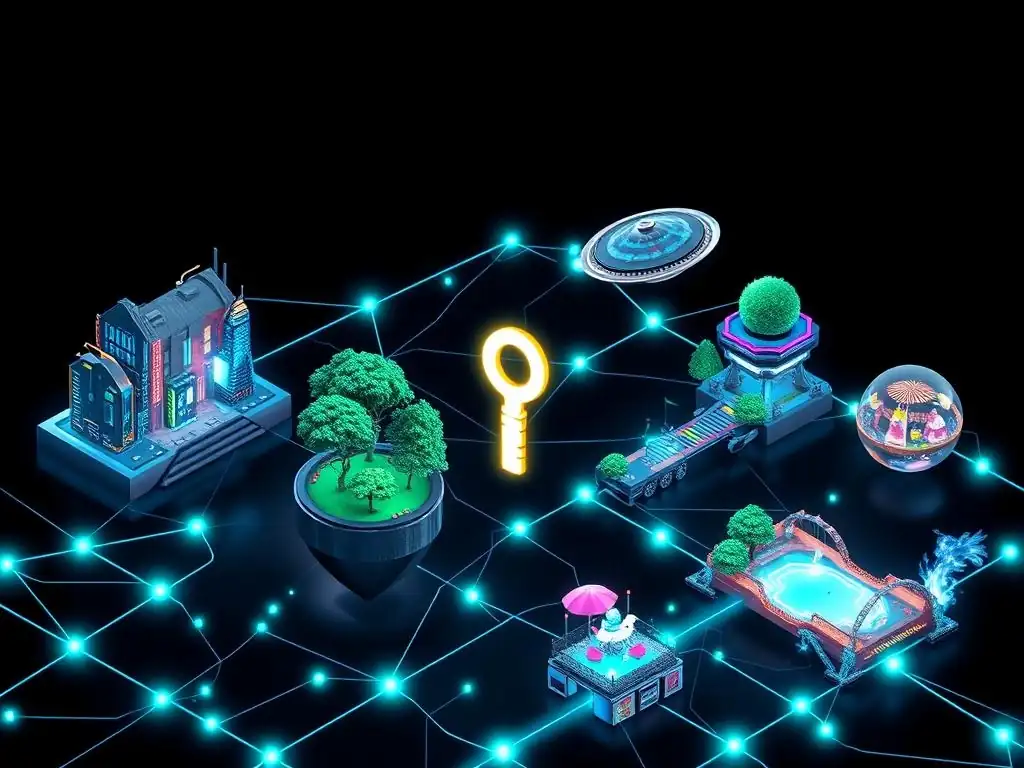
Metaverse Avatars: Seamless Identity Across Platforms
Blockchain interoperability enables users to have a single, persistent digital avatar that can be used across different metaverse platforms and virtual worlds. Imagine creating a unique avatar that represents your digital identity and being able to seamlessly transport this avatar between various metaverse experiences, regardless of the underlying blockchain technology powering each platform. This seamless avatar portability enhances user immersion and identity continuity within the metaverse.
For example, a user could customize their avatar with unique NFTs representing clothing, accessories, or even virtual body modifications. With interoperability, these avatar customizations, stored as NFTs on one blockchain, could be recognized and displayed on a metaverse platform built on a different blockchain. This cross-platform avatar identity promotes a more unified and personal metaverse experience, allowing users to build and maintain their digital identities across the entire virtual realm, rather than being fragmented across isolated platforms.
Digital Asset Ownership: Transferring NFTs and Virtual Goods
Interoperability is crucial for enabling true digital asset ownership and portability within the metaverse. NFTs (Non-Fungible Tokens) are key to representing ownership of virtual assets like land, items, and collectibles. Blockchain interoperability allows users to transfer these NFTs and other virtual goods seamlessly between different metaverse platforms, regardless of the blockchain on which they were originally created or purchased.
For instance, a user might purchase a virtual plot of land represented by an NFT in a metaverse built on Ethereum. With interoperability, they could then transfer this land NFT to a different metaverse platform built on Solana, and their ownership would be recognized and respected in the new environment.
This cross-platform NFT portability unlocks the true potential of digital asset ownership in the metaverse, empowering users to control and utilize their virtual possessions across the entire interconnected virtual world. Without interoperability, NFTs and virtual goods would be largely confined to the platforms where they were created, significantly limiting their utility and value.
Decentralized Finance (DeFi) Integration: Accessing Financial Services in the Metaverse
Blockchain interoperability facilitates the seamless integration of Decentralized Finance (DeFi) services within the metaverse. DeFi offers a range of financial tools and services, such as lending, borrowing, and trading, all operating on blockchain technology. Interoperability allows metaverse users to access and utilize these DeFi services directly within virtual worlds, regardless of the blockchain powering the DeFi protocols and the metaverse platform.
For example, a user in a metaverse could earn in-world currency or rewards represented as tokens on one blockchain. With interoperability, they could then seamlessly access a DeFi platform built on a different blockchain to lend these tokens and earn interest, or use them as collateral for borrowing other assets, all without leaving the metaverse environment. This integration of DeFi into the metaverse, enabled by interoperability, creates new economic opportunities and functionalities within virtual worlds, fostering a more vibrant and financially empowered metaverse ecosystem.
Metaverse Gaming: Interoperable Game Assets and Economies
The gaming sector within the metaverse stands to benefit significantly from blockchain interoperability. Interoperability allows for the creation of interoperable game assets, meaning in-game items, characters, and currencies can be used across different games and gaming platforms, even if they are built on different blockchains. This breaks down the traditional silos of game ecosystems and creates a more interconnected and rewarding gaming experience for players.
Imagine earning a rare sword in one metaverse game, represented as an NFT, and being able to use that same sword in another completely different metaverse game, or even trade it with players across different gaming platforms. Interoperability makes this cross-game asset portability possible, enhancing the value and utility of in-game assets and fostering a more interconnected metaverse gaming economy. It also encourages game developers to collaborate and create more expansive and interconnected gaming universes, benefiting both players and the gaming industry as a whole.
Overcoming Challenges to Blockchain Interoperability in the Metaverse
Security Risks and Vulnerabilities in Cross-Chain Solutions
While essential, blockchain interoperability technologies, particularly cross-chain bridges, introduce new security risks and vulnerabilities. Bridges often act as central points of value transfer between blockchains, making them attractive targets for hackers. If a bridge is compromised, it can lead to significant losses of assets locked within the bridge or transferred across it. Several high-profile bridge exploits, such as the Ronin Bridge hack and the Wormhole hack, have demonstrated the real and substantial security risks associated with cross-chain solutions.
These vulnerabilities arise from the complexity of bridge architectures and the inherent challenges of securing cross-chain communication. Ensuring the security of cross-chain solutions requires robust cryptographic protocols, thorough security audits, and ongoing monitoring to detect and mitigate potential threats. Developing more secure and resilient interoperability technologies is crucial for fostering trust and widespread adoption of cross-chain solutions within the metaverse and the broader blockchain ecosystem. Research and development efforts are continuously focused on improving the security of bridges and exploring alternative interoperability approaches with enhanced security features.
Scalability Limitations of Current Interoperability Technologies
Current blockchain interoperability technologies, especially bridges, can also face scalability limitations. As the volume of cross-chain transactions increases, bridges can become bottlenecks, leading to slower transaction processing times and higher fees. This can hinder the seamless and efficient flow of assets and data within the metaverse, especially as metaverse activity and user adoption grow.
Scalability limitations arise from the underlying architecture of some interoperability solutions and the inherent constraints of the blockchains they connect. For instance, if a bridge connects two blockchains with different transaction processing capacities, the bridge's throughput may be limited by the slower blockchain. Addressing scalability challenges in interoperability requires developing more efficient bridging technologies, exploring layer-0 solutions that are inherently more scalable, and optimizing the performance of underlying blockchain networks. Layer-2 scaling solutions and sharding techniques are also being explored to enhance the scalability of interoperable blockchain systems.
Standardization and Governance Challenges in a Decentralized Environment
Achieving widespread blockchain interoperability in the metaverse also faces standardization and governance challenges. In a decentralized environment with numerous independent blockchain projects, establishing common standards for communication, data formats, and asset representation can be complex. Lack of standardization can hinder interoperability efforts and create friction for developers and users seeking to build and utilize cross-chain applications.
Furthermore, governing interoperability protocols and solutions in a decentralized and permissionless manner is a significant challenge. Deciding on upgrades, resolving disputes, and ensuring the long-term sustainability of interoperability infrastructure requires effective governance mechanisms that are transparent, community-driven, and resistant to manipulation. Establishing industry-wide standards and developing robust governance frameworks for interoperability are crucial steps towards realizing a truly seamless and interconnected metaverse ecosystem. Collaboration between different blockchain projects and stakeholders is essential to overcome these standardization and governance challenges.
The Future of Blockchain Interoperability and the Metaverse
Advancements in Interoperability Technologies
The future of blockchain interoperability is poised for significant advancements, with ongoing research and development focused on creating more secure, scalable, and user-friendly interoperability technologies. Innovations in areas like zero-knowledge proofs, multi-party computation, and secure hardware enclaves are being explored to enhance the security and privacy of cross-chain solutions. Researchers are also working on developing more efficient bridging architectures and exploring alternative interoperability approaches that minimize reliance on centralized intermediaries.
Layer-0 solutions and interoperability protocols like Polkadot, Cosmos, and LayerZero are expected to play a crucial role in shaping the future of blockchain interoperability. These technologies offer more foundational and scalable approaches to interconnected blockchains, potentially overcoming some of the limitations of bridge-centric solutions. The development of standardized interoperability protocols and frameworks will also be critical for fostering a more seamless and developer-friendly environment for building cross-chain applications and metaverse experiences.
The Role of Regulation and Standardization
Regulation and standardization will play an increasingly important role in shaping the future of blockchain interoperability and its integration with the metaverse. As cross-chain technologies become more prevalent and critical to the functioning of the metaverse ecosystem, regulatory clarity and industry-wide standards will be needed to ensure security, consumer protection, and responsible innovation. Regulators are beginning to pay closer attention to cross-chain bridges and other interoperability solutions, recognizing their systemic importance and potential risks.
Standardization efforts, driven by industry consortia and open-source initiatives, will be crucial for establishing common protocols and frameworks for blockchain communication, asset representation, and data exchange. These standards will facilitate interoperability across different blockchain platforms and metaverse environments, reducing fragmentation and fostering a more cohesive and user-friendly ecosystem. Collaboration between regulators, industry stakeholders, and the blockchain community is essential to develop appropriate regulatory frameworks and promote effective standardization for blockchain interoperability.
The Evolution of the Metaverse with Increased Blockchain Interoperability
Increased blockchain interoperability will be a major catalyst for the evolution of the metaverse, enabling a more seamless, interconnected, and user-centric virtual world. As interoperability technologies mature and become more widely adopted, we can expect to see a more fluid and integrated metaverse experience, where users can effortlessly move between different virtual worlds, bring their digital identities and assets with them, and participate in a unified metaverse economy.
Interoperability will unlock new possibilities for metaverse applications, such as cross-platform gaming, decentralized social interactions, and seamless integration of DeFi services. It will also foster greater innovation and competition within the metaverse ecosystem, as developers can build more ambitious and interconnected experiences that leverage the strengths of multiple blockchain platforms. The metaverse of the future, powered by blockchain interoperability, promises to be a more expansive, engaging, and empowering digital realm, truly blurring the lines between the physical and virtual worlds.
Conclusion: Embracing Blockchain Interoperability for a Thriving Metaverse
Blockchain interoperability is not merely a technical feature; it is a fundamental requirement for realizing the full potential of the metaverse. Without seamless communication and asset transfer between different blockchain networks, the metaverse risks becoming a fragmented collection of isolated virtual worlds, failing to deliver on its promise of a truly interconnected and immersive digital realm. Embracing and actively developing blockchain interoperability solutions is crucial for building a thriving and user-centric metaverse.
The benefits of interoperability, ranging from enhanced user experience and increased innovation to improved security and decentralization, are essential for creating a metaverse that is both robust and accessible. Overcoming the existing challenges related to security, scalability, and standardization is paramount to unlocking the transformative power of blockchain interoperability.
As interoperability technologies continue to advance and mature, and as the metaverse continues to evolve, the synergy between these two transformative forces will shape the future of the digital world, creating new opportunities and experiences for users and developers alike. The path forward lies in embracing collaboration, innovation, and a commitment to building an interoperable and open metaverse for all.
Frequently Asked Questions
How does blockchain interoperability benefit the metaverse?
Blockchain interoperability allows different blockchains to seamlessly communicate and share data, enabling the transfer of assets and information within the metaverse. This creates a more unified and dynamic user experience.
What are some key challenges in achieving blockchain interoperability within the metaverse?
Challenges include technical complexities in bridging different blockchain architectures, security risks associated with cross-chain transactions, and lack of standardized protocols for interoperability.
What role does blockchain interoperability play in the development of decentralized finance (DeFi) within the metaverse?
Interoperability enables DeFi applications to operate across multiple blockchains, allowing users to access a wider range of financial services and assets within the metaverse's virtual economy.
Besides DeFi, what other enterprise applications benefit from blockchain interoperability in the metaverse?
Interoperability supports supply chain management, digital identity verification, and secure data sharing across various virtual worlds and platforms within the metaverse, fostering more efficient and transparent operations.
How might regulations impact the development and adoption of blockchain interoperability solutions for the metaverse?
Regulations may focus on data privacy, security standards, and cross-border transactions, potentially influencing the design and implementation of interoperable blockchain solutions to ensure compliance and protect users within the metaverse.
Final Reflection: Bridging Worlds with Blockchain Interoperability
The exploration of blockchain interoperability and its crucial role in shaping the metaverse reveals a fundamental truth: connectedness is the key to unlocking the full potential of decentralized technologies. As we stand on the cusp of a truly immersive digital future, the ability for different blockchains to communicate and share data seamlessly is no longer a luxury, but a necessity for realizing the metaverse's promise of a unified and vibrant ecosystem.
The lack of interoperability would leave us with fragmented digital islands, hindering innovation and limiting user experiences. The vision of a truly interconnected metaverse, where digital assets and identities can flow freely across different platforms, is what fuels the ongoing efforts to achieve true blockchain interoperability. The future of the metaverse depends on the ability to create a seamless and interconnected experience for users, regardless of the underlying blockchain technology.
This quote underscores the urgency and importance of fostering collaboration and standardization within the blockchain space.
Now, as you consider the implications of blockchain interoperability for the metaverse, I invite you to reflect on your own role in shaping this future. How can you contribute to building a more connected and inclusive digital world? Embrace the possibilities, explore the potential, and actively participate in the evolution of the metaverse. The future is not just coming; it's being built, block by block, connection by connection, and your contribution matters.
Unlock the Metaverse: Start Exploring Interoperable Chains!
Thank you for exploring the world of blockchain interoperability and its crucial role in shaping the future of the metaverse. Now that you recognize its potential, it's time to take action and become part of this exciting revolution.
Here’s how you can get involved:
- Learn More: Investigate an interoperable blockchain network to see how different chains communicate and work together. Gaining hands-on experience will deepen your understanding.
- Share Your Knowledge: Talk about this topic with friends and colleagues who are interested in blockchain and the metaverse. Helping spread awareness of interoperability’s importance is vital.
- Reflect on Challenges: Look into how interoperability can address existing issues on popular blockchain networks. Understanding these challenges and potential solutions is essential.
Are you ready to explore the expanding possibilities of an interconnected metaverse? Which blockchain projects do you think are leading the way in bridging virtual worlds?
Leave a Reply