
Breaking Down Metaverse Silos: The Power of Interoperable Blockchains

Welcome to Blockchain Trends, your guide to navigating the revolutionary world of blockchain technology!
Ever wondered how the metaverse will truly connect? Dive into our exploration of Interoperable Blockchain Metaverse Applications and discover how these innovative solutions are poised to break down silos, creating a seamless and truly decentralized digital experience. Prepare to unlock the transformative potential that lies beyond the hype and explore the future of interconnected virtual worlds.
- Breaking Down Metaverse Silos: The Power of Interoperable Blockchains
- Understanding Interoperable Blockchains for the Metaverse
-
Use Cases: Interoperable Blockchain Metaverse Applications in Action
- Cross-Platform Asset Transfer: Seamlessly Moving NFTs and Digital Assets
- Decentralized Identity Management: A Unified Metaverse Persona
- Interoperable Gaming Experiences: Avatar Customization Across Multiple Games
- Enhanced Social Interactions Across Virtual Worlds: Unified Communication and Social Profiles
- The Role of Different Blockchains in Metaverse Interoperability
- Overcoming Challenges to Achieve True Metaverse Interoperability
- The Future of Interoperable Blockchain Metaverse Applications
- Conclusion: Embracing Interoperability for a Thriving Metaverse Ecosystem
-
Frequently Asked Questions
- How does blockchain interoperability enhance metaverse experiences?
- What are some examples of interoperable blockchain metaverse applications?
- What role does DeFi play in an interoperable blockchain metaverse?
- What are the regulatory challenges surrounding interoperable blockchain metaverse applications?
- What is the future outlook for interoperable blockchain metaverse applications?
- Final Reflection: Embracing the Boundless Metaverse
- Unleash the Metaverse: Start Building Bridges Today!
Breaking Down Metaverse Silos: The Power of Interoperable Blockchains
Defining the Metaverse: A Fragmented Landscape
The metaverse, envisioned as a persistent, shared, 3D virtual universe, is rapidly evolving from a futuristic concept to a tangible, albeit nascent, reality. Currently, the metaverse isn't a singular, unified entity but rather a collection of distinct platforms and virtual worlds. These range from immersive gaming environments like Fortnite and Roblox to social platforms such as Meta's Horizon Worlds and decentralized virtual lands like Decentraland and The Sandbox.
Each of these spaces operates largely in isolation, with its own set of rules, currencies, and digital assets. This fragmented nature presents a significant challenge to the metaverse's potential for widespread adoption and seamless user experience.
Imagine the internet in its early days, with separate intranets that couldn't communicate with each other. Information would be confined, and the network's overall value would be severely limited. The metaverse, in its current state, faces a similar predicament. While individual platforms offer compelling experiences, the lack of seamless connectivity between them hinders the creation of a truly interconnected and expansive digital world. Users are forced to create separate avatars, accumulate assets within each platform's walled garden, and experience fragmented social interactions, ultimately limiting the immersive and transformative potential of the metaverse.
The Problem of Siloed Metaverse Experiences
The current landscape of the metaverse is characterized by "silos" – individual platforms that function independently, much like separate applications on your smartphone before the advent of app stores and cross-app functionality. This siloed approach creates several significant problems for users and the overall growth of the metaverse ecosystem. For instance, digital assets purchased or earned in one metaverse platform, such as NFTs representing virtual land or in-game items, are typically locked within that platform.
Users cannot easily transfer these assets to other virtual worlds or utilize them across different experiences. This lack of portability diminishes the value proposition of digital ownership in the metaverse.
Furthermore, siloed metaverses lead to fragmented user identities and social experiences. Users need to create separate avatars and social profiles for each platform they engage with, leading to a disjointed sense of self in the digital realm. Imagine having different online identities for each social media platform, unable to connect with friends across networks.
This fragmentation hinders the development of persistent social connections and limits the potential for rich, interconnected social interactions within the metaverse. The lack of interoperability also stifles innovation, as developers are incentivized to build within existing walled gardens rather than contributing to a more open and collaborative metaverse ecosystem.
Why Interoperability is Crucial for Metaverse Growth
Interoperability is the key to unlocking the true potential of the metaverse and fostering its widespread adoption. Just as the internet flourished due to open protocols that enabled seamless communication and data exchange, the metaverse needs interoperability to evolve from a collection of isolated platforms into a cohesive and interconnected digital universe. Interoperability, in the context of the metaverse, refers to the ability of different virtual worlds and platforms to seamlessly interact and share data, assets, and user identities. This seamless interaction is crucial for several reasons.
Firstly, interoperability enhances user experience by providing a more fluid and unified metaverse journey. Users should be able to move between different virtual worlds with their avatars, digital assets, and social connections intact. This seamless transition eliminates friction and allows users to explore the vast expanse of the metaverse without being confined to individual platforms. Secondly, interoperability fosters a more robust and dynamic metaverse economy.
By enabling the free flow of digital assets and value across platforms, interoperability creates new economic opportunities for creators, users, and businesses. Finally, interoperability promotes innovation and competition. An open and interoperable metaverse encourages developers to build innovative experiences that can leverage the collective resources and user base of the entire ecosystem, rather than being limited to the constraints of a single platform. Interoperable blockchain metaverse applications are at the forefront of enabling this crucial aspect of the metaverse's evolution.
Understanding Interoperable Blockchains for the Metaverse
What are Interoperable Blockchains? Connecting Digital Worlds
Interoperable blockchains are essentially blockchain networks designed to communicate and share information with each other. In the context of the metaverse, these blockchains act as the foundational infrastructure to connect disparate virtual worlds and platforms, enabling the seamless transfer of assets and data across them. Imagine different countries with separate railway systems; interoperable blockchains are like building connecting railway tracks that allow trains to travel seamlessly between countries, facilitating trade and movement. Without interoperability, each blockchain and the metaverse platforms built upon them remain isolated islands, unable to interact with the broader digital ecosystem.
Interoperable blockchains achieve this connectivity through various technological mechanisms, allowing for the exchange of value and data between otherwise independent blockchain networks. This is crucial for the metaverse because it allows for the creation of a more unified and user-centric experience. Instead of digital assets being locked within specific metaverse platforms, interoperable blockchains enable users to truly own their digital possessions and utilize them across different virtual environments.
This concept of "digital portability" is a cornerstone of the open metaverse vision, and interoperable blockchains are the technological enablers that make it possible. The rise of interoperable blockchain metaverse applications signifies a shift towards a more connected and user-empowering digital future.
Key Technologies Enabling Blockchain Interoperability: Cross-Chain Bridges, Atomic Swaps, and Sidechains
Several key technologies are driving the development of blockchain interoperability, each with its own approach and set of trade-offs. Cross-chain bridges are perhaps the most prominent, acting as conduits that allow for the transfer of assets and data between two distinct blockchains. Think of them as physical bridges connecting two separate lands, enabling the flow of traffic and resources.
For example, a bridge might allow you to move Ethereum-based NFTs to a Solana-based metaverse platform, unlocking cross-platform utility for your digital assets. However, bridges can also introduce security complexities, as they represent a point of vulnerability that hackers might target.
Atomic swaps offer another approach, enabling the direct exchange of cryptocurrencies between two different blockchains without the need for intermediaries. Imagine a direct currency exchange between two individuals from different countries, without needing a bank or exchange service. While primarily focused on cryptocurrency exchange, atomic swaps demonstrate the potential for trustless and direct interoperability between blockchains. Sidechains, on the other hand, are essentially separate blockchains that run parallel to a main blockchain (like Ethereum or Bitcoin) and are connected to it through a two-way bridge.
Sidechains can offer increased scalability and customizability while still benefiting from the security of the main chain. Think of sidechains as local roads branching off a major highway, providing faster and more tailored routes within a specific area while still being connected to the larger transportation network. These technologies are crucial for building robust interoperable blockchain metaverse applications.
Benefits of Blockchain Interoperability for Metaverse Applications
The benefits of blockchain interoperability for metaverse applications are manifold, extending to users, developers, and the overall metaverse ecosystem. For users, interoperability translates to greater freedom and control over their digital assets and online identities. Imagine buying a virtual outfit as an NFT and being able to wear it in multiple metaverse games and social platforms, regardless of which blockchain they are built upon.
This portability enhances the value and utility of digital assets, making them more than just in-game items or platform-specific collectibles. Interoperability empowers users to build a persistent digital identity that transcends individual platforms, fostering a more cohesive and unified metaverse experience.
For developers, interoperability opens up new possibilities for innovation and collaboration. Developers can build metaverse experiences that leverage assets and functionalities from different blockchain ecosystems, creating richer and more engaging applications. Imagine a metaverse game that incorporates NFTs from various collections, creating a diverse and dynamic in-game economy. Interoperability also reduces vendor lock-in, allowing developers to choose the best blockchain infrastructure for their specific needs without being confined to a single ecosystem.
For the metaverse ecosystem as a whole, interoperability fosters greater network effects and accelerates growth. A more interconnected metaverse attracts more users, developers, and businesses, creating a virtuous cycle of innovation and adoption. Interoperable blockchain metaverse applications are therefore critical for realizing the full potential of the metaverse as a vibrant and thriving digital frontier.
Use Cases: Interoperable Blockchain Metaverse Applications in Action
Cross-Platform Asset Transfer: Seamlessly Moving NFTs and Digital Assets
One of the most compelling use cases for interoperable blockchain metaverse applications is the seamless transfer of NFTs and other digital assets across different virtual worlds. Currently, if you own an NFT avatar in one metaverse platform, you are typically limited to using it within that specific environment.
Interoperability breaks down these barriers, allowing users to move their digital assets freely between compatible platforms. Imagine owning a unique piece of digital art as an NFT and being able to display it in your virtual home in Decentraland, then move it to your avatar's inventory in The Sandbox, and finally showcase it in a virtual gallery in another metaverse platform.
This cross-platform asset transfer not only enhances the utility and value of NFTs but also empowers users with true digital ownership. According to a report by NonFungible.com, the NFT market saw over \$25 billion in trading volume in 2021, highlighting the growing significance of digital ownership.
Interoperability allows users to fully realize the potential of these assets by extending their usability beyond the confines of single platforms. For example, a user could purchase virtual land in one metaverse and then use resources earned in a different metaverse game to develop that land, creating a truly interconnected metaverse economy powered by interoperable blockchain technology.
Decentralized Identity Management: A Unified Metaverse Persona
Interoperable blockchains can also facilitate decentralized identity management in the metaverse, allowing users to create and control a unified digital persona that persists across different virtual worlds. Currently, users are often required to create separate accounts and avatars for each metaverse platform, leading to fragmented online identities and a lack of continuity.
Imagine having to re-introduce yourself and rebuild your social network every time you enter a new virtual world. Decentralized identity solutions built on interoperable blockchains can solve this problem by enabling users to create a single, portable digital identity that they control and can use across multiple metaverse platforms.
This unified metaverse persona can encompass various aspects of a user's digital identity, including their avatar, reputation, social connections, and even digital credentials. For example, a user could earn a certification in a virtual learning environment built on one blockchain and then have that credential recognized and verifiable in another metaverse platform built on a different blockchain.
This seamless identity management not only simplifies the user experience but also enhances trust and security in the metaverse. Projects like ENS (Ethereum Name Service) and SpruceID are working towards creating decentralized identity solutions that can be leveraged in interoperable blockchain metaverse applications, paving the way for a more user-centric and unified digital identity ecosystem.
Interoperable Gaming Experiences: Avatar Customization Across Multiple Games
The gaming industry is poised to be significantly impacted by interoperable blockchain metaverse applications, particularly in the realm of avatar customization and cross-game asset utilization. Imagine purchasing avatar skins, accessories, or even entire avatars as NFTs and being able to use them across multiple games, regardless of which game or blockchain they originated from. Currently, in-game assets are typically locked within the specific game they are designed for, limiting their utility and value outside of that particular gaming environment. Interoperability breaks down these limitations, enabling a new era of cross-game avatar customization and asset portability.
For example, a player could purchase a limited-edition avatar skin in one metaverse game and then use that same skin in another game, even if the two games are developed by different companies and operate on different blockchains. This cross-game compatibility enhances the value proposition for players who invest in digital assets and fosters a more connected and engaging gaming experience.
Furthermore, interoperability can enable new forms of gameplay and player interaction, such as cross-game tournaments and collaborative events where players from different virtual worlds can compete or cooperate using their interoperable avatars and assets. The integration of interoperable blockchain metaverse applications into gaming is expected to revolutionize the industry, creating more player-centric and interconnected gaming ecosystems.
Interoperability is crucial for fostering enhanced social interactions across different virtual worlds within the metaverse. Currently, social interactions are largely confined to individual metaverse platforms, limiting the potential for broad and interconnected social communities. Imagine having separate social media profiles for each virtual world you visit, unable to easily connect with friends who are active in different platforms. Interoperable blockchain metaverse applications can address this limitation by enabling unified communication and social profiles that span across multiple virtual worlds.
This could involve creating interoperable social graphs that allow users to maintain a single network of friends and connections across different metaverse platforms. Users could then seamlessly communicate with their friends, regardless of which virtual world they are currently in, fostering a more cohesive and interconnected social experience. Furthermore, interoperability can enable the creation of cross-platform social events and communities, where users from different virtual worlds can gather and interact in shared virtual spaces.
For example, a virtual concert could be hosted in a metaverse platform and be accessible to users from various other platforms through interoperable blockchain technology, creating a truly expansive and inclusive social event. The development of interoperable social infrastructure is essential for realizing the metaverse's potential as a vibrant and interconnected social space.
The Role of Different Blockchains in Metaverse Interoperability
Ethereum and its Role in Metaverse Development
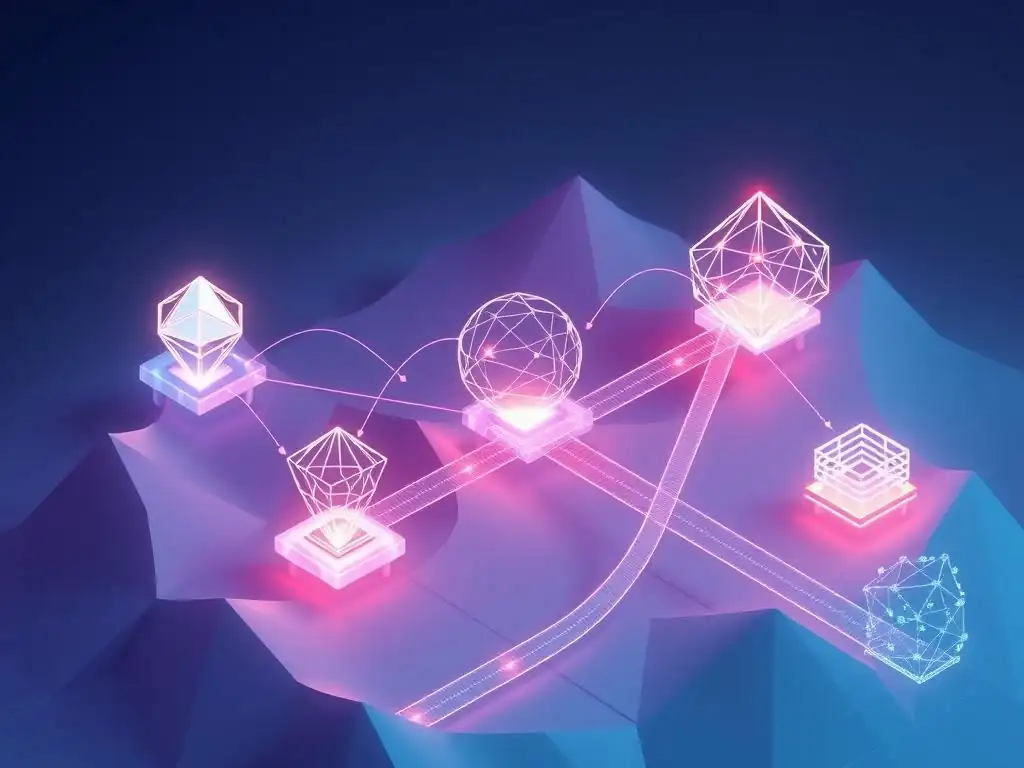
Ethereum has emerged as a foundational blockchain for metaverse development, playing a significant role in shaping the current landscape and future of interoperable blockchain metaverse applications. Its robust smart contract capabilities, large developer community, and established ecosystem of tools and infrastructure have made it a preferred platform for building decentralized metaverse platforms and applications.
Many prominent metaverse projects, such as Decentraland, The Sandbox, and Somnium Space, are built on Ethereum, leveraging its ERC-721 and ERC-1155 standards for NFTs and digital asset management. Ethereum's role in pioneering the concept of programmable and composable digital assets has been instrumental in the growth of the metaverse ecosystem.
However, Ethereum's mainnet has also faced challenges related to scalability and high transaction fees, particularly during periods of network congestion. These limitations have prompted the exploration of layer-2 scaling solutions and alternative blockchains for metaverse applications. Despite these challenges, Ethereum's established ecosystem and ongoing development efforts, including the transition to Ethereum 2.0, continue to position it as a central player in the metaverse space. Its vast network effects and developer resources make it a crucial component of the interoperable blockchain metaverse ecosystem, particularly as layer-2 solutions and cross-chain bridges enhance its interoperability capabilities.
Layer-2 Solutions and Scalability for Interoperable Metaverse Applications
Layer-2 solutions are playing an increasingly vital role in addressing the scalability challenges of blockchains like Ethereum and enabling the development of more efficient and interoperable metaverse applications. These solutions, such as rollups (Optimistic and ZK-Rollups) and sidechains, operate on top of the main layer-1 blockchain, processing transactions off-chain and then periodically settling them on the main chain.
This approach significantly increases transaction throughput and reduces transaction fees, making blockchain technology more viable for high-volume metaverse applications. For example, platforms like Polygon (Matic) and Arbitrum, which are layer-2 scaling solutions for Ethereum, are gaining traction in the metaverse space due to their ability to provide faster and cheaper transactions.
Layer-2 solutions are not only enhancing scalability but also contributing to interoperability. Some layer-2 solutions are designed to be inherently interoperable with each other and with the main layer-1 chain, facilitating the seamless transfer of assets and data within the broader Ethereum ecosystem. Furthermore, cross-chain bridges are being developed to connect layer-2 solutions on Ethereum with other blockchains, further expanding the interoperability landscape.
As metaverse applications become more complex and demand higher transaction volumes, layer-2 solutions will become increasingly crucial for ensuring scalability and enabling seamless interoperability within the blockchain-based metaverse. The development and adoption of robust layer-2 solutions are essential for the widespread adoption of interoperable blockchain metaverse applications.
Emerging Blockchains Focused on Interoperability: Polkadot, Cosmos, and Avalanche
Beyond Ethereum and its layer-2 ecosystem, several emerging blockchains are specifically designed with interoperability as a core feature, positioning them as potentially significant players in the future of interoperable blockchain metaverse applications. Polkadot is a heterogeneous multi-chain network that allows different blockchains (parachains) to connect and interoperate with each other through a central relay chain.
This architecture is designed to facilitate seamless cross-chain communication and asset transfer, making Polkadot a strong contender for building interoperable metaverse platforms. Projects like Moonbeam and Acala, which are parachains on Polkadot, are focused on bringing Ethereum compatibility and DeFi functionalities to the Polkadot ecosystem, further enhancing its potential for metaverse applications.
Cosmos is another interoperability-focused blockchain network that utilizes the Inter-Blockchain Communication (IBC) protocol to enable seamless communication and asset transfer between independent blockchains (zones). Cosmos emphasizes sovereignty and customizability, allowing developers to build application-specific blockchains that can interoperate within the Cosmos ecosystem. Projects like Osmosis and Akash Network within the Cosmos ecosystem are exploring metaverse-related use cases and leveraging IBC for interoperability.
Avalanche is a high-throughput blockchain platform that also emphasizes interoperability through its subnet architecture, allowing for the creation of custom blockchains that can interoperate with each other and the main Avalanche chain. These emerging blockchains, with their focus on interoperability, are expanding the landscape of possibilities for building interconnected and scalable blockchain metaverse applications, offering alternatives and complements to the Ethereum ecosystem.
Overcoming Challenges to Achieve True Metaverse Interoperability
Security Concerns and Cross-Chain Vulnerabilities
While interoperability offers numerous benefits for the metaverse, it also introduces new security challenges and potential vulnerabilities that must be addressed to ensure a robust and trustworthy ecosystem. Cross-chain bridges, in particular, have become a major target for exploits, as they represent a central point of failure in the interoperability infrastructure.
Several high-profile bridge hacks in recent years, such as the Ronin Bridge hack in March 2022 which resulted in the theft of over \$600 million, highlight the significant security risks associated with cross-chain interoperability. These vulnerabilities often stem from complexities in bridge design, smart contract flaws, and centralized components within bridge architectures.
Securing cross-chain interactions requires a multi-faceted approach, including robust smart contract auditing, decentralized bridge architectures, and advanced security monitoring and response mechanisms. Furthermore, research and development are needed to explore novel interoperability technologies that minimize security risks, such as light clients and zero-knowledge proofs. As the metaverse becomes increasingly interconnected, addressing security concerns and mitigating cross-chain vulnerabilities will be paramount for building user trust and ensuring the long-term viability of interoperable blockchain metaverse applications. The industry needs to prioritize security best practices and collaborative efforts to strengthen the resilience of interoperability infrastructure.
Standardization and Governance Issues
Achieving true metaverse interoperability also requires addressing standardization and governance issues across different blockchain platforms and metaverse ecosystems. Currently, there is a lack of common standards for digital assets, avatars, identities, and communication protocols in the metaverse. This lack of standardization hinders interoperability and creates friction for users and developers seeking to build cross-platform experiences. For example, different metaverse platforms may use different NFT standards or avatar formats, making it difficult to seamlessly transfer assets or avatars between them.
Establishing industry-wide standards for key metaverse components is crucial for fostering interoperability and reducing fragmentation. These standards should be developed through collaborative efforts involving blockchain projects, metaverse platforms, and industry stakeholders. Furthermore, governance mechanisms are needed to manage and evolve these standards over time, ensuring they remain relevant and adaptable to the rapidly evolving metaverse landscape. Decentralized governance models, where communities and stakeholders participate in decision-making processes, may be particularly well-suited for governing interoperability standards in the decentralized metaverse. Addressing standardization and governance issues is essential for creating a truly open and interoperable metaverse ecosystem that benefits all participants.
Regulatory Landscape and Compliance
The regulatory landscape surrounding blockchain and the metaverse is still evolving, and regulatory clarity is needed to foster innovation and ensure compliance for interoperable blockchain metaverse applications. Different jurisdictions are taking varying approaches to regulating cryptocurrencies, NFTs, and metaverse-related activities, creating a complex and fragmented regulatory environment. Interoperability adds another layer of complexity, as cross-chain interactions may involve traversing different regulatory jurisdictions and compliance requirements. For example, transferring digital assets across borders using interoperable blockchains may trigger different tax implications or anti-money laundering regulations in different countries.
Navigating this complex regulatory landscape requires proactive engagement with regulators, industry collaboration, and the development of compliance frameworks that are adaptable to the evolving regulatory environment. Projects building interoperable blockchain metaverse applications need to prioritize regulatory compliance and implement measures to mitigate regulatory risks.
Furthermore, industry advocacy and education are needed to help policymakers understand the benefits and challenges of interoperability and develop appropriate regulatory frameworks that foster innovation while protecting users and ensuring responsible development of the metaverse. Clarity and harmonization in the regulatory landscape are crucial for the sustainable growth and widespread adoption of interoperable blockchain metaverse applications.
The Future of Interoperable Blockchain Metaverse Applications
Predictions for Metaverse Interoperability in the Next 5 Years
Looking ahead to the next 5 years, significant advancements in metaverse interoperability are anticipated, driven by ongoing technological developments and increasing industry demand for seamless cross-platform experiences. It is predicted that cross-chain bridges will become more secure and efficient, enabling smoother asset transfers and data exchange between different blockchains. Layer-2 scaling solutions will further mature, providing the scalability needed to support high-volume interoperable metaverse applications. Emerging interoperability-focused blockchains like Polkadot, Cosmos, and Avalanche are expected to gain wider adoption and contribute to a more diverse and interconnected metaverse ecosystem.
Furthermore, standardization efforts are likely to gain momentum, with industry consortia and open-source initiatives working towards establishing common standards for digital assets, avatars, and communication protocols. Decentralized identity solutions will become more prevalent, empowering users with greater control over their digital personas across different metaverse platforms.
In the next 5 years, we can expect to see a gradual shift from siloed metaverse experiences towards a more interconnected and interoperable metaverse, where users can seamlessly navigate between virtual worlds, utilize their digital assets across platforms, and enjoy unified social interactions. Interoperable blockchain metaverse applications will be at the forefront of this evolution, shaping the future of the metaverse as a more open and accessible digital frontier.
The Impact of Interoperability on the Metaverse Economy
Interoperability is poised to have a profound impact on the metaverse economy, fostering greater economic activity, innovation, and opportunities for creators and users. By enabling the free flow of digital assets and value across platforms, interoperability will unlock new economic models and use cases. The portability of NFTs and digital assets will enhance their liquidity and value, creating more robust and dynamic digital economies within and across metaverse platforms. Interoperability will also facilitate the emergence of new cross-platform marketplaces and decentralized exchanges, where users can trade and utilize their digital assets across different virtual worlds.
Furthermore, interoperability will empower creators by enabling them to reach wider audiences and monetize their creations across multiple metaverse platforms. Developers will be able to build metaverse experiences that leverage assets and functionalities from different blockchain ecosystems, creating richer and more engaging applications and economies.
The increased economic activity and innovation driven by interoperability are expected to accelerate the growth of the metaverse economy and create new opportunities for businesses and individuals to participate in this emerging digital frontier. Interoperable blockchain metaverse applications are thus not only enhancing user experience but also driving significant economic value and innovation within the metaverse ecosystem.
Building a More Open and Accessible Metaverse with Interoperable Blockchains
Ultimately, the vision of interoperable blockchain metaverse applications is to build a more open and accessible metaverse for everyone. By breaking down platform silos and enabling seamless cross-platform interactions, interoperability democratizes access to the metaverse and empowers users with greater control over their digital experiences. An open and interoperable metaverse fosters innovation, competition, and inclusivity, creating a more vibrant and dynamic digital ecosystem. It allows users to choose the metaverse platforms and experiences that best suit their needs and preferences, without being locked into specific walled gardens.
Interoperability also promotes decentralization and user ownership in the metaverse. By leveraging blockchain technology and decentralized interoperability solutions, users can truly own their digital assets and identities, reducing reliance on centralized platforms and intermediaries. The open and accessible metaverse, enabled by interoperable blockchains, aligns with the core principles of Web3 and the vision of a user-centric and decentralized internet. As interoperability technologies mature and gain wider adoption, the metaverse is expected to evolve into a more open, accessible, and user-empowering digital space, driven by the transformative potential of interoperable blockchain metaverse applications.
Conclusion: Embracing Interoperability for a Thriving Metaverse Ecosystem
Interoperability is not merely a technical feature but a fundamental requirement for the metaverse to reach its full potential. Breaking down metaverse silos through interoperable blockchain technologies is crucial for creating a seamless, user-centric, and economically vibrant digital universe. Interoperable blockchain metaverse applications are paving the way for a future where users can freely navigate between virtual worlds, utilize their digital assets across platforms, and enjoy unified social experiences. Addressing the challenges related to security, standardization, and regulation is essential to ensure the robust and sustainable development of interoperable metaverse ecosystems.
Embracing interoperability is not just about technological advancements; it is about fostering a more open, accessible, and inclusive metaverse that benefits all participants. By prioritizing interoperability, the metaverse can evolve from a collection of fragmented platforms into a truly interconnected and transformative digital frontier, unlocking new opportunities for innovation, economic growth, and human connection in the digital age. The future of the metaverse hinges on the widespread adoption and continued development of interoperable blockchain solutions, making it a critical area of focus for the blockchain and metaverse industries alike.
Frequently Asked Questions
How does blockchain interoperability enhance metaverse experiences?
Blockchain interoperability allows for the seamless transfer of assets and data between different metaverse platforms, creating a more unified and engaging user experience. This eliminates the limitations of walled gardens.
What are some examples of interoperable blockchain metaverse applications?
Examples include platforms allowing users to use the same digital avatars and items across multiple games, decentralized marketplaces for cross-metaverse assets, and shared virtual spaces built on multiple blockchain networks.
What role does DeFi play in an interoperable blockchain metaverse?
DeFi protocols can facilitate cross-chain transactions and provide financial infrastructure for the metaverse, enabling things like lending, borrowing, and trading of metaverse assets across different blockchain ecosystems. This creates a more robust and decentralized economy.
What are the regulatory challenges surrounding interoperable blockchain metaverse applications?
Regulatory challenges include navigating differing jurisdictional laws regarding virtual assets, ensuring user data privacy across multiple platforms, and establishing standards for cross-chain compliance.
What is the future outlook for interoperable blockchain metaverse applications?
The future involves increased adoption of interoperability standards, the development of more sophisticated cross-chain infrastructure, and the emergence of entirely new decentralized metaverse experiences that transcend individual blockchain networks.
Final Reflection: Embracing the Boundless Metaverse
The exploration of interoperable blockchains within the metaverse reveals a profound truth: the future of digital interaction hinges on connectivity and collaboration. What began as fragmented virtual realms is now poised to coalesce into a unified, dynamic ecosystem, driven by the seamless exchange of assets and experiences across disparate platforms. The potential for innovation and economic growth within this interconnected metaverse is truly staggering, promising a future where digital boundaries are blurred and creativity knows no limits.
The shift towards interoperability isn't just a technological advancement; it's a cultural evolution. It represents a move away from walled gardens and towards a more open, democratic, and user-centric digital landscape. This transition resonates deeply with the core values of the blockchain community, emphasizing decentralization and empowerment. The metaverse is not a single place, it's a collection of places. And the key to unlocking its potential is ensuring these places can connect and communicate with each other.
This quote encapsulates the essence of our journey towards a truly interconnected metaverse, one where users can freely navigate and contribute to a diverse range of virtual experiences.
As we stand on the cusp of this transformative era, let us embrace the spirit of collaboration and innovation. Consider how you can contribute to building a more interoperable and accessible metaverse. Reflect on the potential for your own creativity and skills to shape this emerging digital frontier. The future of the metaverse is not predetermined; it is being co-created by each of us. Let us strive to build a metaverse that is not only technologically advanced but also inclusive, equitable, and empowering for all.
Unleash the Metaverse: Start Building Bridges Today!
Thank you for exploring the possibilities of interoperable blockchains with us. Now that you understand how breaking down silos can enable a truly connected digital world, it's time to take action and help shape that future.
Here's how you can contribute:
- Experiment with cross-chain transfers using a testnet interoperability protocol. Get hands-on and experience the future of blockchain connectivity firsthand.
- Share this article with your network! Help spread awareness about the importance of interoperability in creating a vibrant and open metaverse.
- Contribute to an open-source interoperability project on GitHub. Every contribution brings us closer to a seamless, interconnected metaverse experience for everyone.
What specific challenges do you anticipate in implementing truly interoperable blockchains, and how can our community work together to overcome them?
Leave a Reply