
Decentralization Across Metaverses: Blockchain's Vision of an Open and Interconnected World

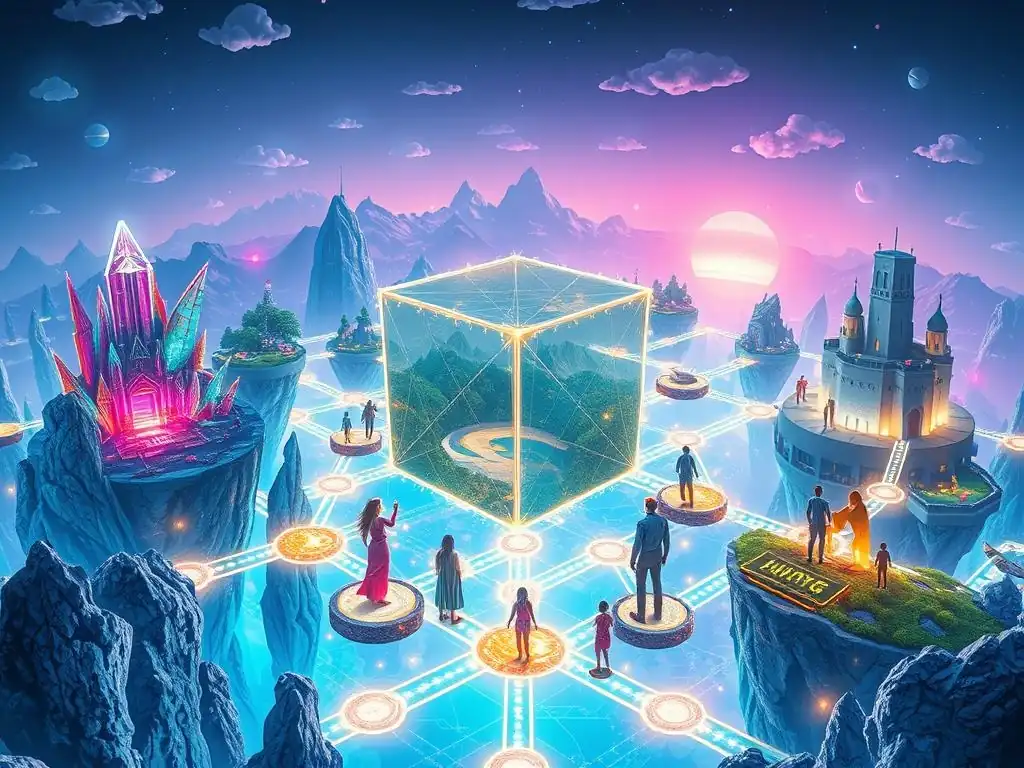
Welcome to Blockchain Trends, your guide to navigating the revolutionary landscape of blockchain technology. Beyond the hype of cryptocurrencies, discover how blockchain is reshaping industries from finance to supply chains.
Dive into our latest exploration of Blockchain Metaverse Interoperability Solutions and uncover how these groundbreaking advancements are laying the foundation for a truly open and interconnected metaverse world. Ready to explore the future of decentralized virtual experiences?
Decentralization Across Metaverses: Blockchain's Vision of an Open and Interconnected World
- Introduction: The Promise of a Decentralized Metaverse
- Blockchain Metaverse Interoperability Solutions: Connecting Virtual Worlds
- The Benefits of Blockchain-Based Interoperability for Metaverses
- Use Cases: Real-World Applications of Blockchain Metaverse Interoperability
- Overcoming the Challenges to Blockchain Metaverse Interoperability
- The Future of Decentralized Metaverses: A Blockchain-Driven Vision
- Conclusion: Embracing Blockchain for a More Open and Accessible Metaverse
-
Frequently Asked Questions
- What are Blockchain metaverse interoperability solutions and why are they important?
- How does blockchain contribute to decentralization within the metaverse?
- What are some potential challenges in achieving seamless Blockchain metaverse interoperability?
- Besides asset ownership, what other applications of blockchain are relevant to the metaverse?
- How might regulation impact the development and adoption of Blockchain metaverse interoperability solutions?
- Final Reflection: Embracing the Decentralized Metaverse
- Unleash the Metaverse Architect Within You!
Introduction: The Promise of a Decentralized Metaverse
Defining the Metaverse and Its Current Limitations
The metaverse, envisioned as a persistent, shared, 3D virtual world, is rapidly evolving from a futuristic concept to a tangible, albeit fragmented, reality. Currently, various platforms offer metaverse-like experiences, ranging from immersive gaming environments to virtual social spaces. However, these early iterations often operate as siloed ecosystems. Users are typically confined to a single platform, with avatars, digital assets, and social connections locked within that specific virtual world.
This lack of interoperability creates significant limitations. Imagine acquiring a unique digital artwork or a customized avatar skin within one metaverse but being unable to use or showcase it in another. This fragmentation hinders the seamless flow of users, assets, and experiences across different virtual realms, effectively limiting the true potential of a unified and expansive metaverse.
These limitations are further exacerbated by the centralized nature of many existing metaverse platforms. Often controlled by single corporations, these platforms dictate the rules of engagement, data policies, and economic models within their virtual spaces. This centralized control can lead to concerns about censorship, data privacy, and the potential for monopolistic practices. Users are essentially tenants within these digital worlds, lacking true ownership and control over their digital identities and creations. This centralized model contrasts sharply with the vision of a truly open and user-centric metaverse where individuals have agency and autonomy within the digital landscape.
The Role of Blockchain in Shaping a Decentralized Future
Blockchain technology emerges as a pivotal solution to overcome the limitations of centralized and siloed metaverses, paving the way for a decentralized and interconnected digital future. At its core, blockchain provides a transparent, secure, and immutable ledger system, ideal for establishing trust and enabling decentralized ownership in virtual environments. By leveraging blockchain, metaverses can transition from closed ecosystems controlled by single entities to open platforms governed by communities and users themselves. This shift towards decentralization is crucial for unlocking the full potential of the metaverse, fostering innovation, and ensuring equitable access and participation.
Blockchain's inherent characteristics are particularly well-suited for addressing key challenges in metaverse development. Its decentralized nature eliminates single points of failure and control, reducing the risk of censorship and manipulation. The cryptographic security of blockchain ensures the integrity and provenance of digital assets, providing users with verifiable ownership and control.
Furthermore, smart contracts, self-executing agreements encoded on the blockchain, can automate complex processes within the metaverse, such as asset transfers, governance mechanisms, and economic interactions, all in a transparent and auditable manner. This technology forms the bedrock for building a metaverse that is not only immersive and engaging but also fundamentally fair, secure, and user-empowering.
Why Decentralization is Crucial for Metaverse Evolution
Decentralization is not merely a technical preference for the metaverse; it is a fundamental prerequisite for its evolution into a truly open, accessible, and empowering digital realm. A decentralized metaverse promises to break down the walls between existing virtual worlds, enabling seamless interoperability and fostering a unified digital experience. This interconnectedness is vital for realizing the metaverse's potential to become a pervasive layer of our daily lives, impacting how we work, socialize, learn, and transact. Without decentralization, the metaverse risks becoming a collection of isolated digital islands, limiting its transformative impact and hindering its widespread adoption.
Moreover, decentralization empowers users by granting them greater control over their digital identities, assets, and data within the metaverse. In a decentralized system, users are not simply consumers but active participants and stakeholders. They can contribute to the governance of virtual worlds, participate in decentralized economies, and truly own their digital creations. This shift in power dynamics is crucial for fostering a vibrant and innovative metaverse ecosystem. By distributing control and ownership, decentralization unlocks creativity, encourages competition, and ultimately leads to a more dynamic, resilient, and user-centric metaverse experience.
Blockchain Metaverse Interoperability Solutions: Connecting Virtual Worlds
Understanding Blockchain Interoperability in the Metaverse Context
Blockchain interoperability in the metaverse context refers to the ability of different blockchain-based metaverses and applications to seamlessly communicate and interact with each other. This is paramount for creating a truly interconnected metaverse where users can move freely between virtual worlds, utilize their digital assets across platforms, and engage in cross-metaverse experiences. Without interoperability, the metaverse will remain fragmented, with isolated islands of virtual experiences, hindering its potential for widespread adoption and transformative impact. Achieving interoperability is not just about technical connections; it's about creating a cohesive and unified user experience across the diverse landscape of virtual worlds.
In the metaverse, interoperability spans various dimensions, including asset transfer, identity management, and data sharing. Users should be able to seamlessly transfer digital assets, such as NFTs representing virtual land, avatars, or in-game items, between different metaverses without friction or limitations. Furthermore, a unified identity system is crucial, allowing users to maintain a consistent digital persona across multiple virtual environments, eliminating the need to create separate accounts and profiles for each metaverse.
Finally, secure and controlled data sharing between metaverses can enable richer and more interconnected experiences, fostering innovation and collaboration across virtual worlds. Blockchain metaverse interoperability solutions are designed to address these multifaceted challenges, paving the way for a truly unified and interconnected metaverse.
Key Blockchain Technologies Enabling Metaverse Interconnection
Several key blockchain technologies are emerging as crucial enablers of metaverse interoperability, each addressing different facets of cross-metaverse communication and interaction. These technologies aim to bridge the gaps between disparate blockchain networks and virtual environments, fostering a more unified and interconnected metaverse experience.
Cross-Chain Bridges for Asset Transfer
Cross-chain bridges are fundamental infrastructure components that facilitate the transfer of digital assets, particularly tokens and NFTs, between different blockchain networks. In the context of metaverse interoperability, these bridges allow users to seamlessly move their virtual assets, such as in-game items or virtual land represented as NFTs, from one metaverse built on one blockchain to another metaverse built on a different blockchain. For example, a user who owns a virtual pet NFT in a game built on Ethereum could potentially transfer that pet to a different metaverse platform operating on Solana using a cross-chain bridge.
These bridges operate through various mechanisms, often involving locking assets on one chain and minting equivalent representations of those assets on another chain. While still under active development and refinement, cross-chain bridges are becoming increasingly sophisticated and secure, playing a vital role in breaking down asset silos between metaverses.
Projects like Wormhole and LayerZero are actively developing and deploying cross-chain bridge solutions that aim to support a wide range of blockchain networks, enabling more fluid asset movement within the expanding metaverse landscape. The effectiveness and security of these bridges are critical for user adoption and trust in cross-metaverse asset ownership.
Decentralized Identifiers (DIDs) for Seamless User Experience
Decentralized Identifiers (DIDs) are another crucial technology for achieving metaverse interoperability, focusing on user identity and experience. DIDs are self-sovereign digital identities that are not controlled by any central authority. In the metaverse context, DIDs offer a solution to the fragmented identity landscape, allowing users to establish a single, portable digital identity that can be used across multiple virtual worlds and platforms. This eliminates the need for users to create and manage separate accounts for each metaverse they interact with, streamlining the user experience and reducing friction.
DIDs are anchored on blockchain, ensuring immutability and user control. Users have full ownership and control over their DID and the associated data, deciding what information to share and with whom. This user-centric approach to identity is essential for a decentralized metaverse, empowering individuals and fostering trust. Organizations like the Decentralized Identity Foundation (DIF) are actively working on DID standards and frameworks, promoting interoperability and adoption across various applications, including metaverse platforms. The widespread adoption of DIDs promises to significantly enhance user experience and simplify navigation within the interconnected metaverse.
Smart Contracts for Inter-Metaverse Applications
Smart contracts, self-executing agreements written in code and deployed on blockchain, play a crucial role in enabling complex inter-metaverse applications and interactions. They can automate processes and enforce agreements in a transparent and trustless manner, facilitating a wide range of cross-metaverse functionalities. For instance, smart contracts can be used to create decentralized marketplaces that operate across multiple metaverses, allowing users to buy, sell, and trade digital assets regardless of the originating virtual world.
Furthermore, smart contracts can power inter-metaverse governance mechanisms, enabling users from different virtual worlds to participate in shared decision-making processes related to interconnected metaverse ecosystems. They can also facilitate the creation of cross-metaverse applications, such as virtual events or collaborative projects that span multiple virtual environments, orchestrating complex interactions and data exchanges between different metaverse platforms. The programmability and automation capabilities of smart contracts are fundamental for building sophisticated and interconnected experiences within the decentralized metaverse, enabling functionalities that would be cumbersome or impossible to achieve in centralized systems.
Addressing the Challenges of Cross-Metaverse Communication and Data Sharing
While blockchain technologies offer promising solutions for metaverse interoperability, significant challenges remain in achieving seamless cross-metaverse communication and data sharing. These challenges span technical, security, and standardization domains, requiring collaborative efforts and ongoing innovation to overcome. Ensuring secure and efficient data exchange between disparate blockchain networks and metaverse platforms is a complex undertaking.
One major challenge is managing data consistency and integrity across different blockchains. When data is shared between metaverses built on different blockchains, ensuring that the data remains synchronized and accurate is crucial. This requires robust mechanisms for data verification and validation across chains. Furthermore, privacy considerations are paramount.
Users need to have control over their data and ensure that their personal information is not exposed or misused when interacting across different metaverses. Developing privacy-preserving data sharing solutions that are compatible with diverse blockchain architectures is a key area of focus. Addressing these challenges requires ongoing research and development in areas such as zero-knowledge proofs, secure multi-party computation, and decentralized data governance frameworks.
The Benefits of Blockchain-Based Interoperability for Metaverses
Enhanced User Experience Through Unified Identities and Assets
Blockchain-based interoperability dramatically enhances the user experience within the metaverse by enabling unified identities and assets across virtual worlds. Imagine a future where your digital avatar, carefully crafted and personalized, can seamlessly travel with you between different metaverse platforms, from gaming worlds to virtual social spaces and even enterprise collaboration environments. This portability of identity eliminates the current friction of creating separate avatars and profiles for each platform, streamlining the user experience and fostering a sense of digital continuity. Furthermore, interoperability allows users to accumulate and utilize digital assets across the entire metaverse ecosystem, maximizing their value and utility.
For example, a unique virtual garment purchased in a fashion-focused metaverse could be worn by the same avatar in a virtual concert hosted in a different gaming metaverse, showcasing personal style and digital ownership across various contexts. This unified asset layer not only enhances user expression and creativity but also fosters a more robust and interconnected digital economy.
Users are no longer confined to the asset marketplaces of individual metaverses but can access a broader and more diverse range of digital goods and experiences, leading to a richer and more engaging metaverse user experience. This seamless integration of identities and assets is a key driver for widespread metaverse adoption and user satisfaction.
Increased Innovation and Creativity in Interconnected Virtual Environments
Interoperability fueled by blockchain unlocks unprecedented levels of innovation and creativity within interconnected virtual environments. By breaking down the silos between metaverses, developers and creators gain access to a larger and more diverse user base, fostering collaboration and cross-pollination of ideas. Imagine game developers being able to integrate assets and characters from different virtual worlds into their games, creating richer and more immersive experiences. Or artists being able to showcase their digital art across multiple metaverse platforms, reaching a wider audience and maximizing their creative impact.
This interconnected ecosystem fosters a more dynamic and competitive landscape, encouraging innovation and pushing the boundaries of what's possible within the metaverse. Developers can leverage existing assets and functionalities from other metaverses, reducing development costs and time, and focusing on creating unique and novel experiences. The open and collaborative nature of an interoperable metaverse environment fosters a vibrant ecosystem where creativity flourishes, leading to a more diverse, engaging, and ultimately more valuable metaverse for users and creators alike. This collaborative potential is a key differentiator for blockchain-based interoperability compared to closed and proprietary metaverse models.
Fostering Economic Growth Through Inter-Metaverse Commerce
Blockchain-based interoperability is a catalyst for significant economic growth within the metaverse by enabling seamless inter-metaverse commerce. By allowing digital assets to flow freely between virtual worlds, interoperability creates a unified and expansive metaverse economy, unlocking new opportunities for trade, investment, and value creation. Imagine a virtual marketplace where users can buy, sell, and trade digital goods and services across all interconnected metaverses, regardless of the platform or blockchain they originate from. This creates a larger and more liquid market for digital assets, increasing their value and utility.
Furthermore, interoperability facilitates new business models and economic opportunities within the metaverse. Creators can monetize their digital creations across multiple platforms, reaching a wider customer base and diversifying their revenue streams. Businesses can establish virtual storefronts and services that operate across different metaverses, expanding their reach and engaging with customers in new and immersive ways.
The enhanced economic activity driven by interoperability not only benefits individual users and creators but also contributes to the overall growth and sustainability of the metaverse ecosystem, making it a more attractive and economically viable space for participation and investment. This economic empowerment is a core value proposition of a blockchain-enabled, interoperable metaverse.
Greater User Control and Data Ownership in a Decentralized Metaverse
A decentralized metaverse, underpinned by blockchain interoperability solutions, empowers users with greater control and ownership over their digital assets and data. Unlike centralized metaverse platforms where user data and assets are often controlled by a single entity, a decentralized model distributes ownership and control among users themselves. Blockchain's inherent properties of transparency, immutability, and decentralized governance ensure that users have verifiable ownership of their digital assets, represented as NFTs, and greater control over their personal data.
In an interoperable decentralized metaverse, users are not locked into a single platform's ecosystem but can freely move their assets and identities between different virtual worlds. This freedom of movement and portability of digital ownership is a fundamental shift in power dynamics, empowering users and reducing their dependence on centralized gatekeepers.
Furthermore, decentralized governance mechanisms, often facilitated by DAOs (Decentralized Autonomous Organizations), allow users to participate in the decision-making processes that shape the evolution of the metaverse, ensuring that it remains user-centric and aligned with community interests. This user empowerment and data sovereignty are core tenets of the decentralized metaverse vision, enabled by blockchain interoperability.
Use Cases: Real-World Applications of Blockchain Metaverse Interoperability

Interoperable Gaming Ecosystems: Axie Infinity
Axie Infinity, a popular play-to-earn blockchain game, provides an early example of interoperability within a gaming ecosystem, albeit currently limited in its cross-metaverse reach. While Axie Infinity primarily operates within its own ecosystem built on Ronin, a sidechain of Ethereum, it demonstrates the potential of blockchain to create portable in-game assets. Axie NFTs, representing digital creatures, can be traded and used within the Axie Infinity game environment. While not fully interoperable with completely separate metaverses yet, Axie Infinity showcases the foundational concept of user-owned, portable game assets enabled by blockchain technology.
The success of Axie Infinity has spurred further development in interoperable gaming ecosystems. Projects are now emerging that aim to create more broadly interoperable gaming experiences, allowing assets and characters to be used across multiple game worlds. These initiatives often leverage cross-chain bridges and standardized NFT formats to facilitate asset transfer between different game platforms.
The vision is to create a more interconnected gaming metaverse where players can build up their digital collections and identities across multiple games, maximizing the value and utility of their in-game assets. Axie Infinity serves as a stepping stone towards this more expansive and interoperable gaming future.
Decentraland, a virtual world built on the Ethereum blockchain, exemplifies a decentralized social platform that aims to be inherently open and interoperable within the broader metaverse ecosystem. Decentraland's architecture, based on blockchain and open standards, is designed to be accessible and extensible, fostering integration with other metaverse platforms and applications. While direct, seamless interoperability with all metaverses is still under development, Decentraland's open design philosophy and commitment to decentralization position it as a potential hub for cross-metaverse social interactions and experiences.
Decentraland's use of NFTs for land ownership and in-world assets creates a foundation for portability and interoperability. Users own their virtual land and assets as NFTs, granting them greater control and the potential to utilize these assets across different platforms in the future as interoperability solutions mature. Furthermore, Decentraland's open APIs and SDKs encourage developers to build upon the platform and create integrations with other metaverse environments. This open and decentralized approach is crucial for fostering a more interconnected and user-centric metaverse, and Decentraland serves as a prominent example of a platform striving towards this vision.
Cross-Metaverse Commerce and NFT Marketplaces: OpenSea
OpenSea, a leading NFT marketplace, demonstrates cross-metaverse commerce by supporting NFTs from various blockchain networks and metaverse projects. While not a metaverse itself, OpenSea acts as a crucial infrastructure component for the interoperable metaverse, facilitating the trading and exchange of digital assets across different virtual worlds. OpenSea supports NFTs from blockchains like Ethereum, Solana, and Polygon, representing assets from diverse metaverse projects, including virtual land, avatars, and in-game items. This cross-chain support enables users to discover, buy, and sell NFTs from across the metaverse landscape in a single platform.
OpenSea's role highlights the importance of platform-agnostic marketplaces in fostering metaverse interoperability. By providing a centralized hub for trading NFTs from various metaverses, OpenSea contributes to the liquidity and accessibility of digital assets within the broader metaverse ecosystem. As interoperability solutions mature and asset transfer between metaverses becomes more seamless, platforms like OpenSea will likely evolve to further facilitate cross-metaverse commerce and asset management, playing a vital role in the growth and interconnectedness of the metaverse economy. The success of OpenSea underscores the demand and potential for cross-metaverse marketplaces in the evolving digital landscape.
Enterprise Metaverse Solutions with Blockchain-Based Interoperability: Microsoft Mesh
Microsoft Mesh, an enterprise-focused metaverse platform, is exploring blockchain-based interoperability to enhance collaboration and data sharing across different organizational metaverse environments. While specific blockchain integration details are still evolving, Microsoft's vision for Mesh includes the potential to leverage blockchain for secure identity management, data provenance, and interoperability with other enterprise systems and metaverse platforms. This focus on interoperability is crucial for enterprise adoption of metaverse technologies, as organizations often operate across diverse technology stacks and require seamless data exchange and collaboration capabilities.
Microsoft's exploration of blockchain within Mesh signals a growing recognition of the importance of interoperability for enterprise metaverse applications. Imagine employees being able to use their corporate digital identities across different virtual collaboration spaces, regardless of the underlying platform. Or organizations being able to securely share data and collaborate on projects within interconnected metaverse environments, enhancing efficiency and innovation.
While still in early stages, Microsoft Mesh's focus on interoperability highlights the potential of blockchain to address enterprise-specific challenges and unlock the transformative benefits of metaverse technologies for businesses of all sizes. This enterprise adoption will be a significant driver of metaverse growth and maturity.
Overcoming the Challenges to Blockchain Metaverse Interoperability
Scalability Issues in Interconnected Blockchain Networks
Scalability remains a significant hurdle for achieving seamless blockchain metaverse interoperability. As more metaverses and applications connect and interact, the underlying blockchain networks need to handle increasing transaction volumes and data processing demands. Many existing blockchain networks, particularly Layer-1 blockchains like Ethereum, face scalability limitations that can lead to network congestion and high transaction fees, hindering the performance and usability of interoperable metaverse applications. Addressing these scalability challenges is crucial for ensuring a smooth and efficient user experience in an interconnected metaverse.
Solutions to scalability issues are being actively developed, including Layer-2 scaling solutions like rollups and sidechains, as well as advancements in Layer-1 blockchain technology itself, such as sharding and improved consensus mechanisms. Layer-2 solutions, in particular, offer promising approaches to offload transaction processing from the main Layer-1 chain, improving throughput and reducing costs. For example, Optimistic Rollups and zk-Rollups are gaining traction as scaling solutions for Ethereum, potentially enabling more scalable and cost-effective interoperability solutions. Continued innovation and adoption of these scaling technologies are essential for building a truly scalable and interoperable metaverse ecosystem.
Security Concerns and Vulnerabilities in Cross-Chain Communication
Security is paramount in blockchain metaverse interoperability, especially when dealing with cross-chain communication and asset transfers. Cross-chain bridges, while essential for interoperability, introduce potential security vulnerabilities that need to be carefully addressed. These bridges often involve complex mechanisms for locking and unlocking assets across different chains, creating potential attack vectors that malicious actors could exploit. Recent incidents of bridge exploits and hacks underscore the importance of robust security measures and rigorous auditing of cross-chain interoperability solutions.
Ensuring the security of cross-chain communication requires a multi-faceted approach, including robust cryptographic protocols, secure smart contract development practices, and thorough security audits. Furthermore, decentralized bridge architectures and multi-signature schemes can enhance security by reducing reliance on single points of failure. Ongoing research and development in secure cross-chain communication protocols are crucial for building trust and confidence in interoperable metaverse applications. Security cannot be an afterthought but must be a core consideration in the design and implementation of blockchain metaverse interoperability solutions.
Standardization Challenges for Seamless Inter-Metaverse Interactions
Standardization is a critical, yet often overlooked, challenge in achieving truly seamless inter-metaverse interactions. Without common standards for avatars, assets, protocols, and data formats, interoperability efforts can be fragmented and inefficient. Imagine trying to use your avatar in a different metaverse only to find that it's incompatible with the platform's avatar system or that your digital assets are not recognized. Lack of standardization can create friction and hinder the user experience, limiting the potential of a truly interconnected metaverse.
Addressing standardization challenges requires collaborative efforts across the metaverse industry, involving blockchain developers, metaverse platform providers, and standards organizations. Developing open standards for avatar representations, asset formats (NFT standards), communication protocols, and data exchange is essential for fostering interoperability. Initiatives like the Metaverse Standards Forum are emerging to address these challenges and promote industry-wide collaboration on standardization efforts. Adopting and adhering to open standards will be crucial for ensuring seamless inter-metaverse interactions and unlocking the full potential of a unified digital world.
Regulatory Hurdles and Compliance in a Decentralized Environment
Regulatory hurdles and compliance requirements present significant challenges for the development and adoption of blockchain metaverse interoperability solutions. The decentralized and cross-border nature of the metaverse and blockchain technologies poses complexities for existing regulatory frameworks. Issues such as cross-border asset transfers, data privacy, intellectual property rights, and user protection need to be addressed in a consistent and globally harmonized manner. Navigating these regulatory uncertainties and ensuring compliance with evolving regulations is crucial for the long-term sustainability and growth of the decentralized metaverse.
Collaboration between industry stakeholders, regulators, and policymakers is essential to develop appropriate regulatory frameworks that foster innovation while addressing potential risks and ensuring user protection. Finding a balance between promoting innovation and mitigating risks is key. Overly restrictive regulations could stifle innovation and hinder the development of the metaverse, while a lack of regulation could lead to consumer protection issues and illicit activities. Open dialogue and proactive engagement with regulatory bodies are crucial for shaping a regulatory landscape that supports the responsible and sustainable growth of the decentralized and interoperable metaverse.
The Future of Decentralized Metaverses: A Blockchain-Driven Vision
Emerging Trends in Blockchain Metaverse Interoperability
Several exciting trends are emerging in the realm of blockchain metaverse interoperability, pointing towards a more interconnected and user-centric digital future. One prominent trend is the increasing focus on user-owned and portable digital identities, powered by Decentralized Identifiers (DIDs). DIDs are gaining traction as a fundamental building block for interoperable metaverse experiences, empowering users with greater control over their digital personas and data across virtual worlds. Another key trend is the development of more sophisticated and secure cross-chain bridge technologies, enabling seamless asset transfers between diverse blockchain networks and metaverse platforms.
Furthermore, we are witnessing the rise of metaverse-as-a-service (MaaS) platforms that are incorporating interoperability features from the outset. These platforms aim to provide developers and creators with tools and infrastructure to build interoperable metaverse experiences, simplifying the process of creating interconnected virtual worlds. The convergence of these trends – DIDs, advanced cross-chain bridges, and interoperability-focused platforms – signals a significant acceleration towards a more unified and accessible metaverse, driven by blockchain technology and a user-centric vision. These emerging trends are shaping the future trajectory of metaverse development and adoption.
The Potential Impact of DAOs on Metaverse Governance
Decentralized Autonomous Organizations (DAOs) are poised to play a transformative role in the governance of decentralized metaverses and interoperability initiatives. DAOs, as community-governed organizations powered by blockchain technology, offer a mechanism for decentralized decision-making and resource allocation within metaverse ecosystems. In the context of interoperability, DAOs can be instrumental in governing cross-chain bridges, setting standards for inter-metaverse communication, and managing shared infrastructure components. By distributing governance power among stakeholders, DAOs can foster greater transparency, fairness, and community ownership in the development and evolution of the interoperable metaverse.
Imagine DAOs governing the evolution of cross-chain bridge protocols, ensuring security and efficiency through community-driven upgrades and decision-making. Or DAOs setting and enforcing standards for avatar interoperability, ensuring consistent user experiences across different virtual worlds. The potential impact of DAOs on metaverse governance is significant, promising to create more democratic and user-centric virtual environments. As the metaverse matures, DAOs are likely to become increasingly prevalent in shaping its governance structures and ensuring that it remains aligned with the interests of its users and communities.
The Role of Layer-2 Solutions in Scaling Interoperable Metaverses
Layer-2 scaling solutions are not only crucial for addressing scalability challenges but also play a vital role in enabling the seamless operation of interoperable metaverses. By offloading transaction processing and data storage from Layer-1 blockchains, Layer-2 solutions enhance the performance and efficiency of metaverse applications, making them more responsive and user-friendly. This improved scalability is particularly important for interoperable metaverses, which involve complex interactions and data exchanges across multiple platforms and blockchain networks. Layer-2 technologies like rollups and sidechains are becoming increasingly essential infrastructure components for building scalable and interoperable metaverse experiences.
The adoption of Layer-2 solutions allows metaverse developers to create richer and more complex virtual worlds without being constrained by the limitations of Layer-1 scalability. For example, Layer-2 solutions can enable faster and cheaper asset transfers across metaverses, enhancing the user experience and facilitating inter-metaverse commerce. They can also support more complex smart contract interactions and decentralized applications within interoperable metaverse environments. As Layer-2 technologies continue to mature and become more widely adopted, they will unlock new possibilities for building scalable, performant, and truly interoperable metaverses.
The Long-Term Vision: A Truly Open and Interconnected Digital World
The long-term vision for decentralized metaverses is a truly open and interconnected digital world, where users can seamlessly traverse virtual environments, interact with diverse communities, and access a vast universe of digital experiences, all powered by blockchain technology. This vision goes beyond simply connecting existing metaverse platforms; it envisions a fundamental shift towards a more open, user-centric, and democratized digital landscape. In this future, the metaverse becomes a pervasive layer of our lives, seamlessly integrated with the physical world and empowering individuals with greater agency and control over their digital existence.
This interconnected digital world will be characterized by seamless interoperability, unified digital identities, and decentralized governance. Users will be able to move freely between virtual worlds, carrying their digital assets and identities with them, and participate in shared economies and communities that transcend platform boundaries. Blockchain technology will underpin this open metaverse, ensuring security, transparency, and user ownership. While still a long-term vision, the progress being made in blockchain metaverse interoperability solutions is steadily bringing this interconnected digital future closer to reality, promising a transformative impact on how we live, work, and interact in the digital age.
Conclusion: Embracing Blockchain for a More Open and Accessible Metaverse
Key Takeaways on Blockchain Metaverse Interoperability Solutions
Blockchain metaverse interoperability solutions are essential for realizing the full potential of the metaverse as an open, interconnected, and user-centric digital realm. Key takeaways include the crucial role of blockchain in enabling decentralization and user ownership within the metaverse, the importance of cross-chain bridges, DIDs, and smart contracts as foundational interoperability technologies, and the significant benefits of interoperability in enhancing user experience, fostering innovation, and driving economic growth. Furthermore, addressing challenges related to scalability, security, standardization, and regulation is paramount for the successful implementation and widespread adoption of blockchain metaverse interoperability solutions.
The development of interoperable metaverses is not merely a technical undertaking but a paradigm shift towards a more democratized and user-empowering digital future. Blockchain technology is the key enabler of this transformation, providing the tools and infrastructure to build virtual worlds that are not only immersive and engaging but also fundamentally open, accessible, and owned by their users. Embracing blockchain and prioritizing interoperability are essential steps towards realizing the true promise of the metaverse as a transformative force in the digital age.
The Importance of Collaboration in Building a Decentralized Future
Collaboration is paramount for building a decentralized and interoperable metaverse future. Achieving seamless interoperability requires collective effort and cooperation across diverse stakeholders, including blockchain developers, metaverse platform providers, standards organizations, regulators, and the broader community. No single entity can build an interoperable metaverse in isolation; it requires a shared vision and a commitment to open standards, collaborative development, and knowledge sharing. Fostering a collaborative ecosystem is crucial for overcoming the technical, regulatory, and social challenges associated with building a truly interconnected digital world.
Open-source development, industry consortia, and public-private partnerships are vital mechanisms for promoting collaboration and driving progress in metaverse interoperability. Sharing knowledge, resources, and best practices accelerates innovation and ensures that interoperability solutions are developed in a transparent and inclusive manner. The success of the decentralized metaverse hinges on the ability of different stakeholders to work together towards a common goal: creating a more open, accessible, and user-empowering digital future for all. This collaborative spirit is the foundation upon which the interoperable metaverse will be built.
The Potential for Blockchain to Revolutionize the Metaverse Landscape
Blockchain technology holds immense potential to revolutionize the metaverse landscape, transforming it from a collection of isolated virtual worlds into a truly interconnected and user-centric digital realm. By enabling decentralization, interoperability, and user ownership, blockchain empowers individuals, fosters innovation, and creates new economic opportunities within the metaverse. From secure digital identities and portable assets to decentralized governance and cross-metaverse commerce, blockchain is the foundational technology that underpins the vision of a truly open and accessible metaverse.
As blockchain technology continues to evolve and mature, its impact on the metaverse will only deepen. Advancements in scalability, security, and interoperability solutions will unlock new possibilities for creating richer, more complex, and more interconnected virtual experiences. The decentralized and user-empowering nature of blockchain aligns perfectly with the aspirations for a metaverse that is not controlled by centralized entities but rather governed by its users and communities. Embracing blockchain is not just about adopting a technology; it's about embracing a new paradigm for the digital future, one that is more open, equitable, and empowering for all.
Frequently Asked Questions
What are Blockchain metaverse interoperability solutions and why are they important?
These solutions aim to connect different metaverse platforms, allowing users to seamlessly move assets and identities between virtual worlds. This is crucial for creating a unified and open metaverse experience.
How does blockchain contribute to decentralization within the metaverse?
Blockchain enables decentralized ownership of digital assets like land and avatars, removing control from centralized entities. This fosters a more equitable and user-centric metaverse experience.
What are some potential challenges in achieving seamless Blockchain metaverse interoperability?
Challenges include differing technical standards, security concerns regarding asset transfers, and the need for robust governance models to manage cross-metaverse interactions.
Besides asset ownership, what other applications of blockchain are relevant to the metaverse?
Beyond ownership, blockchain can provide secure and transparent identity management, provenance tracking for digital collectibles (NFTs), and facilitate decentralized governance systems within metaverses.
How might regulation impact the development and adoption of Blockchain metaverse interoperability solutions?
Regulation could either hinder or foster adoption. Clear guidelines are needed to address issues like data privacy, security, and cross-border transactions, while avoiding stifling innovation in the decentralized metaverse space.
Final Reflection: Embracing the Decentralized Metaverse
The exploration of blockchain metaverse interoperability solutions reveals more than just technological advancements; it unveils a fundamental shift in how we perceive digital ownership, identity, and community. The promise of a truly open and interconnected metaverse, powered by decentralization, is no longer a distant dream, but a tangible goal shaping the future of digital interaction and economic opportunity.
This vision resonates deeply because it challenges the centralized control that has historically defined the internet. The potential for individuals to own their digital assets, seamlessly traverse virtual worlds, and participate in decentralized economies is a powerful force for empowerment and innovation. The future is already here – it's just not evenly distributed.
- William Gibson. This quote perfectly encapsulates the current state of the metaverse, with pockets of innovation hinting at the transformative potential that lies ahead.
As we stand on the cusp of this decentralized revolution, let us consider the role we each play in shaping its trajectory. Embrace the principles of openness, collaboration, and community. Explore the possibilities offered by blockchain metaverse interoperability solutions, and actively contribute to building a digital world that is truly inclusive, equitable, and empowering for all. The future of the metaverse is not predetermined; it is being written by us, today.
Unleash the Metaverse Architect Within You!
Thank you for exploring the potential of blockchain in creating a truly decentralized and interconnected metaverse. We hope this article has inspired your imagination and provided a glimpse into the future of digital ownership and collaboration. Ready to take the next step?
Here's how you can contribute to shaping the metaverse:
- Start experimenting! Begin exploring blockchain-based metaverse platforms like Decentraland or The Sandbox. Even small projects can have a meaningful impact.
- Share your ideas! Discuss the challenges and opportunities of metaverse decentralization on social media and relevant online communities. Your insights matter.
- Explore emerging DAOs! Look into decentralized autonomous organizations focused on metaverse governance and consider how you can contribute your expertise.
What small step will you take today to help build a more open and decentralized metaverse? Share your thoughts in the comments below!
Leave a Reply