
Decentralized Metaverses vs. Centralized Worlds: A Paradigm Shift in Virtual Reality

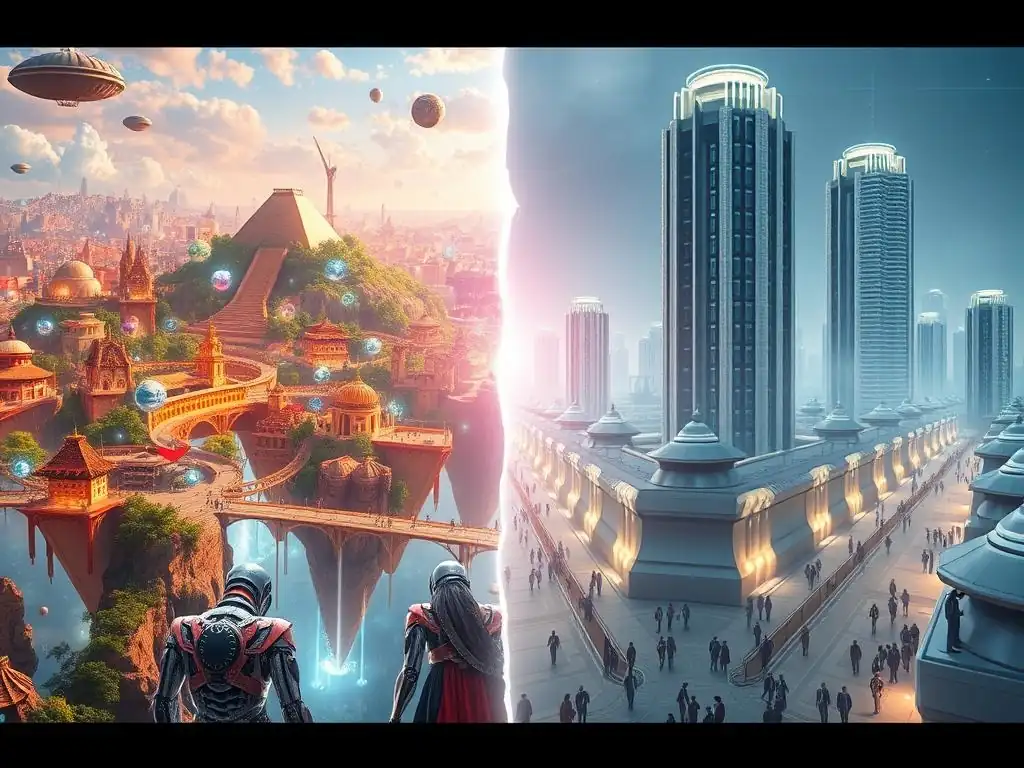
Welcome to Blockchain Trends, your trusted source for unraveling the revolutionary impact of blockchain technology.
Are you ready to explore how blockchain is reshaping virtual reality? Dive into " Decentralized Metaverses vs. Centralized Worlds: A Paradigm Shift in Virtual Reality" and discover cutting-edge blockchain metaverse investment strategies. But that's just the beginning... What does the future hold for these decentralized realms, and how can you navigate the complexities of investing in this emerging landscape? Let's unlock the potential together.
- Decentralized Metaverses vs. Centralized Worlds: A Paradigm Shift in Virtual Reality
- The Rise of Blockchain Metaverses: A Deep Dive
- Blockchain Metaverse Investment Strategies: Opportunities and Risks
- Comparing Leading Decentralized Metaverse Platforms
- The Future of Virtual Reality: Decentralization as the Norm?
- Navigating the Decentralized Metaverse: A Guide for Investors
- Conclusion: Embracing the Paradigm Shift in Virtual Reality
-
Frequently Asked Questions
- What is the key difference between a decentralized and centralized metaverse?
- How can blockchain technology enhance the metaverse experience?
- What are some potential blockchain metaverse investment strategies?
- What are the main regulatory challenges facing blockchain-based metaverses?
- Beyond gaming, what other enterprise applications are emerging in blockchain metaverses?
- Final Reflection: Embracing the Decentralized Future
- Unleash Your Metaverse Potential!
Decentralized Metaverses vs. Centralized Worlds: A Paradigm Shift in Virtual Reality
Defining Centralized Metaverse Platforms: Control and Limitations
Centralized metaverse platforms are akin to traditional online gaming and social media environments, where a single entity or corporation exercises complete control over the virtual world, its assets, and its governance. These platforms, often developed by large tech companies, operate on proprietary servers and databases, meaning user data, virtual assets, and platform rules are dictated by the central authority. This model offers a streamlined user experience and often robust technical infrastructure due to centralized management.
However, this control comes at the cost of user autonomy and potential limitations. Users are essentially tenants in these digital worlds, subject to the platform's terms of service, which can be altered at any time. Content moderation, asset ownership, and platform evolution are all centrally managed, potentially leading to censorship, arbitrary rule changes, and a lack of true digital ownership for users. Examples of centralized platforms include early iterations of virtual worlds and some current social VR experiences where user agency is limited by the platform provider's decisions.
Exploring Decentralized Metaverse Platforms: Blockchain's Role
Decentralized metaverse platforms, in contrast, leverage blockchain technology to distribute control and empower users. These platforms utilize blockchain to record ownership of digital assets, govern platform rules through smart contracts, and often distribute platform governance among token holders. This fundamental shift aims to create more open, transparent, and user-centric virtual worlds where participants have greater agency and ownership.
Blockchain's role is multifaceted in decentralized metaverses. It provides the infrastructure for verifiable digital ownership through NFTs (Non-Fungible Tokens), enabling users to truly own and control their virtual land, avatars, and items. Smart contracts automate platform rules and governance mechanisms, reducing reliance on central authorities and fostering trust through transparent and immutable code. Furthermore, blockchain can facilitate interoperability between different decentralized metaverses, creating a more interconnected and open metaverse ecosystem.
Key Differences: Ownership, Governance, and Interoperability
The core distinctions between centralized and decentralized metaverses lie in ownership, governance, and interoperability. In centralized platforms, ownership of virtual assets is often conditional and resides with the platform provider. Governance is top-down, dictated by the central entity, and interoperability is typically limited to within the platform's ecosystem. Users are consumers within a walled garden.
Decentralized metaverses, on the other hand, offer true digital ownership through NFTs, empowering users to control and trade their assets freely. Governance is often community-driven, using decentralized autonomous organizations (DAOs) or similar mechanisms to allow token holders to vote on platform decisions. Interoperability is a key objective, with many decentralized platforms striving to create open standards and bridges that allow assets and identities to move between different virtual worlds, fostering a more interconnected and user-centric metaverse experience.
The Rise of Blockchain Metaverses: A Deep Dive
How Blockchain Technology Powers Decentralized Virtual Worlds
Blockchain technology serves as the bedrock for decentralized virtual worlds, providing the essential infrastructure for trust, security, and user empowerment. Its distributed ledger system ensures transparency and immutability, critical for recording transactions and verifying digital ownership within the metaverse. This foundation allows for the creation of economies where users can confidently buy, sell, and trade digital assets, knowing their ownership is securely recorded on the blockchain.
Furthermore, blockchain enables the implementation of smart contracts, self-executing agreements coded directly onto the blockchain. These contracts automate various metaverse functions, from land ownership transfers to in-world transactions and governance mechanisms. By removing intermediaries and automating processes, blockchain enhances efficiency, reduces costs, and fosters a more trustless environment within decentralized metaverses, attracting both creators and users seeking greater control and economic opportunities.
NFTs and Digital Asset Ownership in the Metaverse
Non-Fungible Tokens (NFTs) are revolutionizing digital asset ownership within the metaverse. NFTs are unique cryptographic tokens that represent ownership of a specific digital item, such as virtual land, avatars, wearables, or in-game items. Because NFTs are recorded on the blockchain, their ownership is verifiable, transparent, and immutable, providing users with true digital scarcity and ownership rights previously unattainable in centralized virtual worlds.
The implications of NFT-based ownership are profound. Users can freely trade, sell, or transfer their metaverse assets on open marketplaces, creating secondary markets and new economic opportunities. Creators can monetize their digital creations directly, bypassing traditional intermediaries and retaining greater control over their work. This shift towards true digital ownership is a cornerstone of the decentralized metaverse, empowering users and fostering a more vibrant and creator-centric virtual economy.
Decentralized Governance and Community-Driven Development
Decentralized governance models are emerging as a key feature of blockchain metaverses, shifting control away from central authorities and into the hands of the community. Often implemented through Decentralized Autonomous Organizations (DAOs), these governance systems empower token holders to participate in decision-making processes related to platform development, rule changes, and resource allocation. This community-driven approach fosters a sense of ownership and shared responsibility among users.
DAOs and similar decentralized governance mechanisms typically operate through voting systems, where token holders can propose and vote on changes to the metaverse platform. This ensures that the platform evolves in a manner that reflects the collective will of its users, rather than the dictates of a central entity. Decentralized governance promotes transparency, inclusivity, and resilience, making blockchain metaverses potentially more sustainable and adaptable to the evolving needs of their communities.
Blockchain Metaverse Investment Strategies: Opportunities and Risks
Identifying Promising Decentralized Metaverse Projects
Investing in the blockchain metaverse requires careful consideration and due diligence. Identifying promising projects involves evaluating several key factors. Firstly, the project's team and their track record are crucial. A strong, experienced team with a clear vision and technical expertise is more likely to navigate the challenges of metaverse development and execution. Secondly, the project's whitepaper and roadmap should be thoroughly analyzed to understand its goals, technology, and development plan.
Furthermore, community engagement and platform activity are important indicators of a project's potential. A vibrant and active community suggests user interest and adoption, while high platform activity demonstrates real-world usage and utility. Analyzing metrics like land sales volume, active users, and in-world transactions can provide valuable insights. Finally, understanding the project's partnerships and integrations within the broader blockchain and metaverse ecosystem can signal its potential for growth and long-term sustainability in the competitive landscape of blockchain metaverse investment strategies.
Analyzing the Tokenomics of Metaverse Platforms
Tokenomics, the economic model of a cryptocurrency or token, is a critical factor in evaluating blockchain metaverse investment strategies. Understanding the token's utility, distribution, and supply dynamics is essential for assessing its potential value and long-term viability. Many metaverse platforms utilize native tokens for in-world transactions, governance, and access to exclusive features. Analyzing the token's use cases and demand drivers is crucial.
The token's distribution mechanism, such as initial coin offerings (ICOs), airdrops, or staking rewards, can impact its initial and future supply. Inflationary or deflationary token models, and mechanisms for token burning or buybacks, also influence its long-term price dynamics. A well-designed tokenomic model should incentivize user participation, platform growth, and long-term token value appreciation, making tokenomics a key area of focus for any blockchain metaverse investment strategies.
Risk Assessment: Volatility, Regulation, and Security Concerns
Investing in the blockchain metaverse, while offering significant potential, also carries inherent risks. Volatility is a major concern in the cryptocurrency and NFT markets, which directly impacts metaverse assets. The value of metaverse tokens and virtual land can fluctuate dramatically, influenced by market sentiment, broader crypto market trends, and project-specific news. Investors must be prepared for potential price swings and understand the volatile nature of this nascent asset class.
Regulatory uncertainty is another significant risk. The legal and regulatory landscape for cryptocurrencies, NFTs, and metaverses is still evolving globally. Changes in regulations could impact the operation, legality, and value of metaverse platforms and assets. Furthermore, security risks, including hacking, smart contract vulnerabilities, and scams, are prevalent in the blockchain space. Investors must exercise caution, conduct thorough due diligence, and be aware of the potential risks associated with blockchain metaverse investment strategies.
Comparing Leading Decentralized Metaverse Platforms
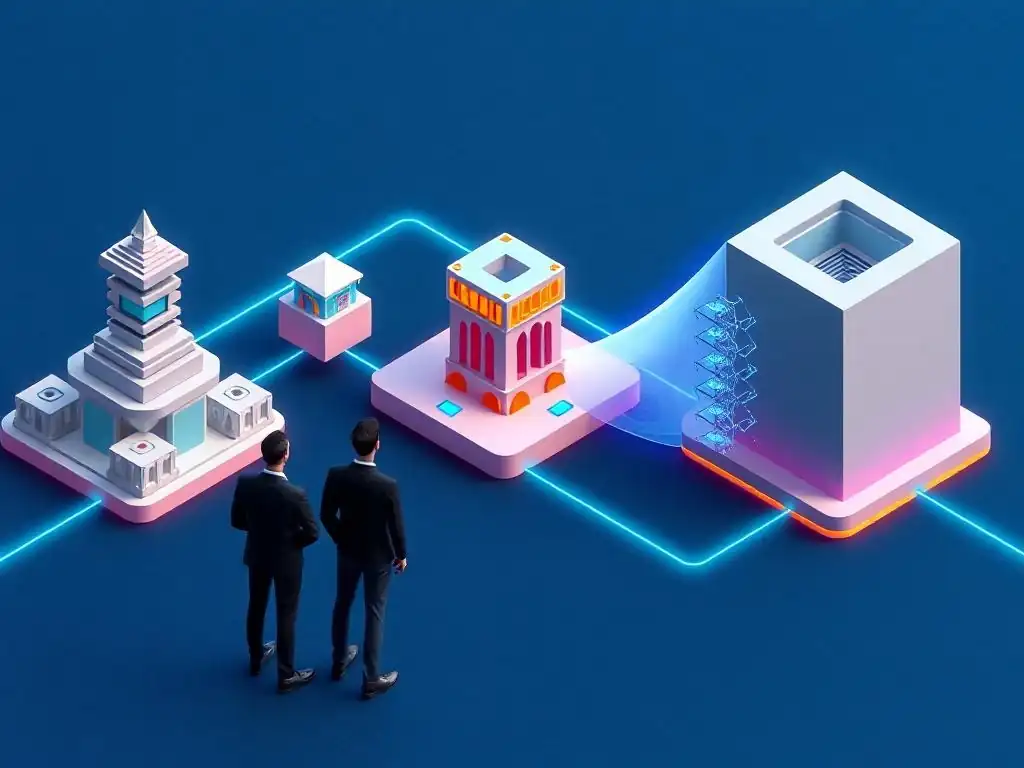
Decentraland: Features, Use Cases, and Investment Potential
Decentraland is one of the pioneering decentralized metaverse platforms, built on the Ethereum blockchain. It offers users a virtual world where they can buy, sell, and develop virtual land represented as NFTs. Users can explore, interact with others, play games, attend virtual events, and create and monetize content within Decentraland. Its open and decentralized nature has attracted a diverse community of creators, developers, and users.
Use cases in Decentraland range from virtual art galleries and casinos to educational spaces and virtual storefronts. The platform's native token, MANA, is used for land purchases, in-world transactions, and governance voting. Investment potential in Decentraland lies in its established presence, active community, and ongoing development of new features and experiences. However, like all metaverse investments, it carries risks associated with market volatility and competition within the decentralized metaverse space.
The Sandbox: Features, Use Cases, and Investment Potential
The Sandbox is another prominent decentralized metaverse platform, known for its voxel-based art style and focus on user-generated content and gaming. Built on the Ethereum blockchain, The Sandbox allows users to create, own, and monetize their gaming experiences and digital assets using NFTs. Its intuitive tools and play-to-earn mechanics have attracted a large community of creators, gamers, and brands.
Use cases in The Sandbox are heavily focused on gaming and interactive experiences. Users can create and share games, build virtual experiences, and participate in play-to-earn activities. The platform's native token, SAND, is used for land purchases, asset transactions, and governance. Investment potential in The Sandbox is driven by its strong gaming focus, brand partnerships, and growing ecosystem of user-generated content. Its success hinges on continued user adoption and the development of compelling gaming experiences within its metaverse.
Somnium Space: Features, Use Cases, and Investment Potential
Somnium Space distinguishes itself with its emphasis on virtual land ownership and immersive VR experiences. Built on the Ethereum and Solana blockchains, Somnium Space offers users a persistent and interconnected virtual world with a focus on realistic graphics and VR compatibility. Land parcels in Somnium Space are NFTs, allowing users to own, develop, and monetize their virtual real estate.
Use cases in Somnium Space include virtual events, social gatherings, virtual businesses, and immersive VR experiences. The platform's native token, CUBE, is used for land purchases, in-world transactions, and access to premium features. Investment potential in Somnium Space lies in its focus on VR and high-fidelity graphics, attracting users seeking more immersive and visually rich metaverse experiences. Its success depends on the wider adoption of VR technology and its ability to deliver on its promise of a truly immersive and interconnected virtual world.
The Future of Virtual Reality: Decentralization as the Norm?
The Evolution of User Experiences in Decentralized Worlds
Decentralized metaverses are poised to revolutionize user experiences in virtual reality. By empowering users with true digital ownership and community-driven governance, these platforms are fostering a more participatory and engaging metaverse ecosystem. User experiences are evolving from passive consumption to active creation, ownership, and governance. This shift towards user agency is driving innovation and creativity within decentralized virtual worlds.
Future user experiences in decentralized metaverses are likely to be characterized by greater personalization, interoperability, and economic opportunities. Users will have more control over their avatars, digital identities, and virtual environments. Play-to-earn mechanics and creator economies will further incentivize participation and contribution. The evolution of user experiences in decentralized worlds is moving towards a more immersive, empowering, and economically rewarding metaverse for all participants.
Interoperability and the Creation of a Unified Metaverse
Interoperability is a crucial factor in the long-term vision of a unified metaverse. The ability for users, assets, and data to seamlessly move between different virtual worlds is essential for creating a truly interconnected and open metaverse ecosystem. Decentralized platforms are actively working towards interoperability through open standards, cross-chain bridges, and collaborative initiatives.
Achieving interoperability will unlock significant benefits for users and the metaverse as a whole. Users will be able to carry their avatars, digital assets, and social connections across different platforms, creating a more cohesive and persistent metaverse identity. Interoperability will also foster greater competition and innovation, as platforms strive to offer unique and compelling experiences within a more interconnected ecosystem. The creation of a unified metaverse through interoperability is a key goal for the future of virtual reality and decentralized platforms.
Regulatory Landscape and the Challenges of Decentralization
The regulatory landscape for decentralized metaverses presents both opportunities and challenges. The decentralized nature of these platforms, with their distributed governance and borderless operations, poses unique challenges for traditional regulatory frameworks. Governments and regulatory bodies are grappling with how to address issues such as digital asset ownership, taxation, data privacy, and consumer protection within decentralized virtual worlds.
While regulatory uncertainty presents risks, it also creates opportunities for innovation and the development of new regulatory approaches tailored to the unique characteristics of decentralized metaverses. Proactive engagement between metaverse platforms, regulators, and policymakers is crucial for shaping a regulatory environment that fosters innovation while mitigating potential risks. Navigating the regulatory landscape effectively will be essential for the long-term growth and sustainability of decentralized metaverses.
Due Diligence: Researching Metaverse Projects and Teams
For investors venturing into the decentralized metaverse, thorough due diligence is paramount. This involves in-depth research into the specific metaverse projects and the teams behind them. Investors should scrutinize the project's whitepaper, roadmap, and technology to understand its vision, technical feasibility, and development plan. Analyzing the team's experience, expertise, and track record is crucial for assessing their ability to execute the project successfully.
Beyond project documentation, investors should actively engage with the metaverse community, participate in online forums, and seek out independent reviews and analyses. Evaluating the project's community sentiment, user adoption metrics, and platform activity can provide valuable insights into its real-world traction and potential for growth. Comprehensive due diligence is the cornerstone of informed blockchain metaverse investment strategies, mitigating risks and identifying promising opportunities.
Portfolio Diversification: Spreading Risk Across Multiple Platforms
Portfolio diversification is a fundamental risk management strategy in any investment domain, and it is particularly relevant in the volatile and emerging blockchain metaverse space. Instead of concentrating investments in a single metaverse project, investors should consider diversifying their portfolio across multiple platforms with varying focuses, technologies, and risk profiles. This approach helps to mitigate the impact of potential failures or downturns in any single project.
Diversification can involve investing in different types of metaverse assets, such as virtual land NFTs, metaverse tokens, and in-world collectibles. It can also include spreading investments across different metaverse platforms focused on gaming, social experiences, virtual real estate, or other niches. A well-diversified portfolio reduces overall risk exposure and increases the likelihood of capturing potential gains across the broader decentralized metaverse ecosystem, a key consideration for blockchain metaverse investment strategies.
Long-Term Vision: Investing in the Future of Decentralized Virtual Reality
Investing in the decentralized metaverse should be approached with a long-term vision. While short-term speculative opportunities may arise, the true potential of decentralized virtual reality lies in its transformative impact over the coming years and decades. The metaverse is still in its early stages of development, and its long-term success will depend on continued technological advancements, user adoption, and the evolution of the digital economy.
Investors with a long-term perspective should focus on projects with strong fundamentals, innovative technologies, and dedicated teams that are building for the future of the metaverse. This includes projects focused on interoperability, scalability, and user-centric design. By adopting a long-term investment horizon, investors can position themselves to benefit from the anticipated growth and evolution of the decentralized metaverse, aligning their blockchain metaverse investment strategies with the long-term potential of this emerging paradigm shift in virtual reality.
Conclusion: Embracing the Paradigm Shift in Virtual Reality
Frequently Asked Questions
What is the key difference between a decentralized and centralized metaverse?
A decentralized metaverse leverages blockchain technology to grant users ownership and control over their digital assets and experiences. Conversely, a centralized metaverse is typically controlled by a single entity or company.
How can blockchain technology enhance the metaverse experience?
Blockchain enables verifiable scarcity of digital assets (NFTs), secure and transparent peer-to-peer transactions, and decentralized governance, fostering a more user-centric environment.
What are some potential blockchain metaverse investment strategies?
Consider investing in early-stage metaverse projects, NFTs representing virtual land or assets, or tokens of established decentralized platforms. Due diligence is crucial.
What are the main regulatory challenges facing blockchain-based metaverses?
Regulatory uncertainty surrounding NFTs, virtual land ownership, and decentralized autonomous organizations (DAOs) poses significant challenges. Clear legal frameworks are needed for mass adoption.
Beyond gaming, what other enterprise applications are emerging in blockchain metaverses?
Enterprises are exploring blockchain metaverses for virtual collaboration, training simulations, and customer engagement. Supply chain management and digital identity verification are also promising areas.
Final Reflection: Embracing the Decentralized Future
The exploration of decentralized metaverses versus centralized worlds reveals a fundamental shift in how we perceive and interact with virtual reality. This transition represents more than just technological advancement; it signifies a power redistribution, placing control back into the hands of creators and users. The potential for blockchain metaverse investment strategies is not merely about financial gain, but about participating in the construction of a more equitable and innovative digital future.
This paradigm shift profoundly impacts the cultural and social landscape, offering unprecedented opportunities for self-expression, community building, and economic empowerment. The promise of true ownership and interoperability within decentralized metaverses resonates deeply with the desire for autonomy and creative freedom. The best way to predict the future is to create it.
- Peter Drucker. This quote encapsulates the spirit of the decentralized metaverse movement, urging us to actively shape the virtual worlds we inhabit.
As we stand at the cusp of this new era, let us reflect on the principles of decentralization and the potential for blockchain metaverse investment strategies to foster a more inclusive and vibrant digital ecosystem. Consider how you can contribute to this evolution, not just as an investor, but as a participant, a creator, and a steward of this emerging virtual frontier. The future of the metaverse is not predetermined; it is being built, brick by digital brick, by each and every one of us.
Unleash Your Metaverse Potential!
Thank you for exploring the fascinating world of decentralized metaverses. We hope this article clarified the key differences and revealed the exciting opportunities this paradigm shift offers. Now, it’s time to put your knowledge into action.
Here are some ways to get involved:
- Try out different decentralized metaverse platforms and share your experiences. Gaining firsthand insights is the best way to understand their unique features and potential.
- Share this article with friends or colleagues interested in virtual reality or blockchain technology. Help spread awareness and spark meaningful conversations about the future of decentralized virtual worlds.
- Join discussions on social media or community forums to share your thoughts, ask questions, and learn from others about the evolving landscape of decentralized metaverses.
What innovative application of decentralized virtual worlds excites you the most? Share your ideas in the comments below!
Leave a Reply