
Enterprise Metaverse: Blockchain Solutions for Business in Immersive Worlds


Welcome to Blockchain Trends, your compass in the rapidly evolving world of decentralized technology! Ever wondered how the metaverse can revolutionize your enterprise while maintaining robust security? Dive in as we explore innovative blockchain enterprise metaverse solutions security, uncovering the crucial role blockchain plays in shaping secure, scalable, and transformative business experiences within immersive worlds. Discover the future of enterprise interaction and unlock the potential of blockchain beyond the hype. The journey starts now...
Enterprise Metaverse: Blockchain Solutions for Business in Immersive Worlds
- Understanding the Enterprise Metaverse and its Potential
- Blockchain Solutions for Enterprise Metaverse Challenges
- Enhancing Enterprise Metaverse Security with Blockchain
- Blockchain-Driven Interoperability and Scalability
- Real-World Applications of Blockchain in the Enterprise Metaverse
- The Future of Blockchain and the Enterprise Metaverse
-
Frequently Asked Questions
- How can blockchain enhance security within an enterprise metaverse?
- What are some potential enterprise applications for blockchain-integrated metaverse solutions?
- How does blockchain support the development of DeFi (Decentralized Finance) within the enterprise metaverse?
- What regulatory considerations should businesses be aware of when implementing blockchain enterprise metaverse solutions?
- What is the future outlook for blockchain enterprise metaverse solutions security?
- Final Reflection: Securing the Future of Immersive Business
- Unleash Your Enterprise Metaverse Potential!
Understanding the Enterprise Metaverse and its Potential
Defining Immersive Business Environments: The Enterprise Metaverse
The enterprise metaverse represents a significant evolution in how businesses operate and interact, moving beyond traditional web interfaces into persistent, shared, and immersive 3D virtual worlds. Imagine a future where architects collaborate on building designs in a virtual model, allowing for real-time modifications and walk-throughs regardless of their physical locations. This is the promise of the enterprise metaverse: to create digital environments that mirror and enhance real-world business processes.
Unlike consumer-focused metaverses primarily geared towards gaming and social interaction, the enterprise metaverse is tailored for professional applications, aiming to improve efficiency, collaboration, and innovation within organizations. It leverages technologies like virtual reality (VR), augmented reality (AR), and mixed reality (MR) to create these immersive experiences, fostering new ways for employees, customers, and partners to engage.
These immersive business environments are not just about fancy visuals; they are about creating functional and productive spaces. For example, a manufacturing company could utilize an enterprise metaverse to simulate factory operations, train employees on complex machinery in a safe and controlled virtual environment, or conduct remote equipment maintenance using AR overlays. According to a recent report by Gartner, 25% of people will spend at least one hour a day in the metaverse for work, shopping, education, social media and/or entertainment by 2026.
This shift underscores the growing importance of understanding and preparing for the integration of metaverse technologies into business strategies. The enterprise metaverse is poised to become a core component of future business operations, offering new avenues for growth and competitive advantage.
Key Benefits: Enhanced Collaboration and Innovation in the Metaverse
The enterprise metaverse unlocks a plethora of benefits for businesses, primarily centered around enhanced collaboration and fostering innovation. Geographic barriers become virtually non-existent as teams can collaborate in shared virtual spaces, regardless of their physical location. Imagine a global product development team meeting in a virtual design studio, manipulating 3D prototypes together in real-time, accelerating the design process and reducing the need for costly physical mockups. This enhanced collaboration translates to faster decision-making, improved communication, and more efficient project execution, all contributing to significant cost savings and increased productivity.
Furthermore, the immersive nature of the metaverse fosters innovation by providing a sandbox environment for experimentation and creative problem-solving. Businesses can simulate various scenarios, test new products or services in virtual markets, and gather immediate feedback from virtual focus groups. For instance, a retail company could test new store layouts and product placements in a metaverse environment, analyzing customer behavior and optimizing the real-world store design based on virtual insights.
This ability to iterate and innovate rapidly in a low-risk virtual setting can lead to breakthroughs and competitive advantages. A study by PwC indicated that companies using virtual reality for training saw employees learn up to 4 times faster than in classroom settings, highlighting the metaverse's potential for accelerating learning and development, a crucial driver of innovation.
Securing and Scaling the Enterprise Metaverse: The Role of Blockchain
While the enterprise metaverse offers transformative potential, its widespread adoption hinges on addressing critical challenges related to security and scalability. As businesses increasingly rely on these virtual environments for sensitive operations and data, ensuring robust security becomes paramount. Traditional security models may fall short in the decentralized and immersive nature of the metaverse.
This is where blockchain technology emerges as a crucial enabler, providing inherent security features and scalability solutions that are vital for the enterprise metaverse to thrive. Blockchain's decentralized and immutable nature offers a foundation for secure identity management, data integrity, and transparent transactions within these virtual worlds.
Moreover, scaling the enterprise metaverse to accommodate a growing number of users, applications, and data requires robust and efficient infrastructure. Blockchain-based solutions, particularly layer-2 scaling solutions, are being developed to address these scalability concerns. These solutions can handle a high volume of transactions and data processing without compromising security or decentralization, paving the way for the widespread adoption of enterprise metaverse applications.
By leveraging blockchain, businesses can build secure, scalable, and interoperable metaverse environments that are conducive to growth and innovation. The convergence of blockchain and metaverse technologies is not just a trend but a necessity for building a trustworthy and functional enterprise metaverse.
Blockchain Solutions for Enterprise Metaverse Challenges
Blockchain-Based Identity Management and Authentication
One of the most pressing challenges in the enterprise metaverse is establishing secure and reliable identity management and authentication systems. In virtual worlds where individuals and organizations interact digitally, verifying identities and granting appropriate access is crucial for maintaining security and trust. Blockchain technology offers a decentralized and tamper-proof solution to identity management.
Imagine employees accessing the enterprise metaverse using blockchain-based digital identities, eliminating the need for traditional usernames and passwords that are vulnerable to phishing and hacking. These digital identities, often linked to Self-Sovereign Identity (SSI) frameworks, give individuals control over their personal data and how it is shared within the metaverse.
Furthermore, blockchain-based authentication mechanisms can enhance security by implementing multi-factor authentication and biometric verification. For instance, employees could use their digital identity, secured by blockchain, combined with biometric authentication like fingerprint or facial recognition to access sensitive areas within the enterprise metaverse. This layered security approach significantly reduces the risk of unauthorized access and data breaches.
Companies like IBM are exploring blockchain-based identity solutions for enterprise applications, demonstrating the growing recognition of blockchain's potential in securing digital identities in the metaverse and beyond. This robust identity infrastructure is fundamental to building trust and enabling secure transactions and interactions within enterprise metaverse environments.
Secure Digital Asset Ownership with NFTs
The enterprise metaverse will be populated with a vast array of digital assets, ranging from virtual land and buildings to digital avatars, tools, and intellectual property. Ensuring secure ownership and provenance of these digital assets is critical for establishing a functioning and trustworthy virtual economy. Non-Fungible Tokens (NFTs), powered by blockchain technology, provide a unique and verifiable way to represent ownership of digital assets. Imagine a company owning virtual real estate in the metaverse, represented by an NFT on a blockchain, providing irrefutable proof of ownership and allowing for secure transfer and trading of this digital asset.
NFTs not only secure ownership but also enable new business models and revenue streams within the enterprise metaverse. Companies can create and sell digital products and services as NFTs, providing verifiable scarcity and authenticity. For example, a fashion brand could release limited-edition virtual clothing items as NFTs for avatars in the metaverse, creating digital collectibles and generating new revenue streams.
The transparent and immutable nature of blockchain ensures that the ownership history of each NFT is permanently recorded, preventing fraud and counterfeiting of digital assets. Major brands like Nike and Adidas are already leveraging NFTs to establish their presence in the metaverse, demonstrating the real-world applicability of blockchain-based digital asset ownership in enterprise contexts.
Decentralized Governance for Virtual Organizations
As enterprises expand their operations into the metaverse, the need for effective and transparent governance mechanisms becomes increasingly important. Decentralized Autonomous Organizations (DAOs), enabled by blockchain technology, offer a novel approach to governance in virtual organizations. Imagine a virtual branch of a multinational corporation operating as a DAO in the metaverse, where decision-making is distributed among stakeholders based on predefined rules encoded on a blockchain. This decentralized governance model promotes transparency, fairness, and community participation in managing virtual operations.
DAOs utilize smart contracts on the blockchain to automate governance processes, such as voting, resource allocation, and rule enforcement. This reduces reliance on centralized authorities and fosters a more democratic and participatory environment. For example, a DAO could govern a virtual marketplace within the enterprise metaverse, allowing users to vote on platform rules, fee structures, and development priorities.
The transparency and immutability of blockchain ensure that all governance decisions are auditable and verifiable, building trust and accountability within virtual organizations. While DAOs are still in their early stages of adoption, their potential to revolutionize governance in the enterprise metaverse is significant, offering a more decentralized and democratic alternative to traditional hierarchical structures.
Enhancing Enterprise Metaverse Security with Blockchain
Addressing Security Concerns in Immersive Worlds
The immersive nature of the metaverse introduces unique security concerns that go beyond traditional cybersecurity challenges. In these virtual worlds, users interact through avatars, and data is generated through immersive experiences, creating new attack vectors and vulnerabilities. Imagine scenarios like avatar impersonation, where malicious actors could steal or mimic avatars to gain unauthorized access or conduct fraudulent activities.
Furthermore, the vast amounts of personal and business data generated within the metaverse require robust security measures to protect privacy and prevent data breaches. Traditional security approaches may struggle to address these novel threats in the decentralized and persistent environment of the metaverse.
Moreover, the interoperability of different metaverse platforms, while desirable, can also create security risks if not properly managed. Data and assets moving between different platforms could be vulnerable to attacks if security protocols are not consistent and robust across the entire metaverse ecosystem. Addressing these security concerns requires a multi-layered approach, combining advanced cybersecurity practices with blockchain-based solutions. Blockchain's inherent security features, such as decentralization, cryptography, and immutability, make it a powerful tool for enhancing the security of enterprise metaverse environments and mitigating these emerging risks.
Blockchain-Based Data Security and Privacy
Protecting sensitive data and ensuring user privacy are paramount in the enterprise metaverse. Blockchain technology offers several mechanisms to enhance data security and privacy in these immersive environments. Imagine sensitive business data, such as design blueprints or financial records, being stored on a private, permissioned blockchain within the enterprise metaverse. This ensures that data is encrypted, tamper-proof, and accessible only to authorized personnel. Blockchain's cryptographic hashing and distributed ledger technology make it extremely difficult for malicious actors to alter or access data without detection.
Furthermore, blockchain can facilitate privacy-preserving data management through techniques like zero-knowledge proofs and differential privacy. These techniques allow for data analysis and processing without revealing the underlying sensitive information. For example, a company could analyze user behavior in the metaverse to improve product design without collecting or storing personally identifiable information. By leveraging blockchain's data security and privacy features, enterprises can build trustworthy and compliant metaverse environments that protect sensitive business information and user data, fostering greater adoption and confidence. The integration of blockchain into metaverse infrastructure is crucial for building a secure and privacy-respecting virtual world for businesses.
Combating Fraud and Counterfeiting with Blockchain
Fraud and counterfeiting are significant concerns in both the physical and digital worlds, and the enterprise metaverse is no exception. The ease of creating and distributing digital assets in virtual environments makes them susceptible to counterfeiting and intellectual property theft. Blockchain technology provides powerful tools to combat fraud and counterfeiting in the metaverse by establishing verifiable authenticity and provenance of digital assets. Imagine luxury brands verifying the authenticity of virtual goods using blockchain-based certificates of authenticity, preventing the sale of counterfeit items in the metaverse marketplace.
NFTs, as previously discussed, play a key role in establishing digital asset ownership and authenticity. By representing digital assets as NFTs on a blockchain, businesses can create a transparent and immutable record of ownership and origin. This makes it easy to verify the authenticity of digital goods and track their provenance throughout their lifecycle.
Moreover, blockchain-based supply chain solutions can be extended to the metaverse, enabling businesses to track the journey of digital assets from creation to consumption, further enhancing transparency and combating counterfeiting. The use of blockchain for combating fraud and counterfeiting in the metaverse is crucial for protecting intellectual property, building trust in virtual marketplaces, and fostering a legitimate digital economy.
Blockchain-Driven Interoperability and Scalability
Achieving Interoperability Between Metaverse Platforms
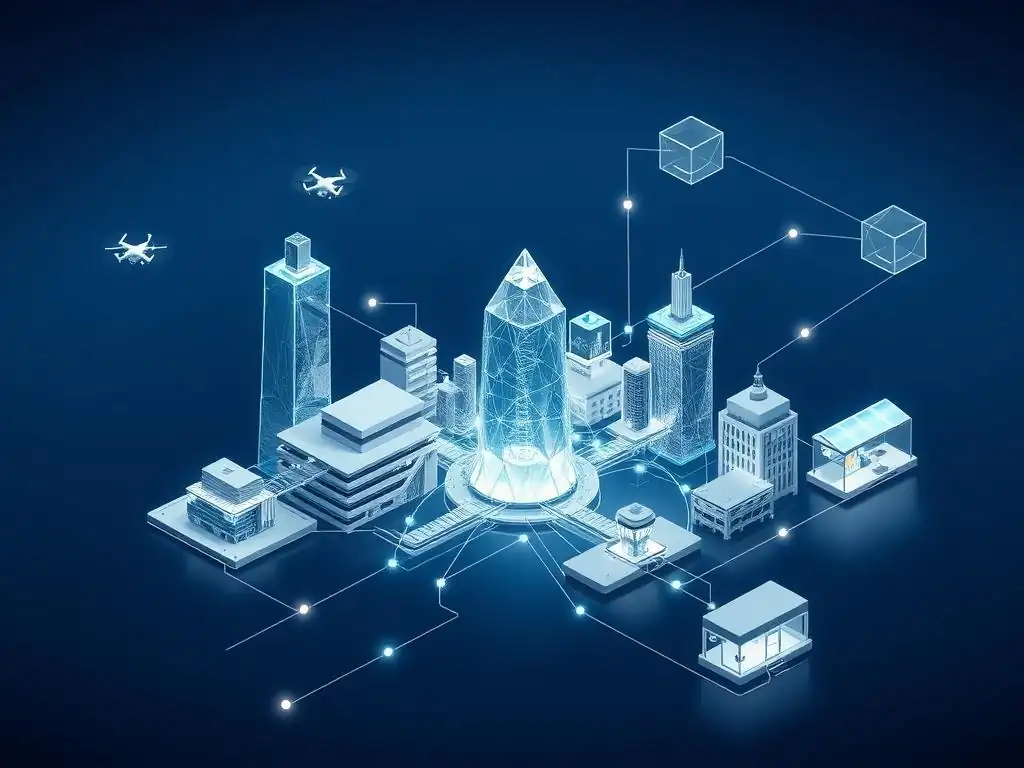
For the enterprise metaverse to reach its full potential, interoperability between different metaverse platforms is essential. Imagine a seamless flow of digital assets and identities between various virtual worlds, allowing users to move freely and conduct business across different platforms without friction. However, currently, many metaverse platforms operate in silos, hindering interoperability and limiting the user experience. Blockchain technology offers a pathway to achieving greater interoperability by providing a shared and decentralized infrastructure for identity, asset management, and data exchange.
Blockchain-based standards and protocols are being developed to facilitate interoperability between metaverse platforms. For example, initiatives like the Metaverse Standards Forum are working to establish common standards for avatars, digital assets, and data formats, paving the way for seamless interoperability. Furthermore, blockchain-based bridges and cross-chain solutions can enable the transfer of digital assets and data between different blockchains and metaverse platforms.
Achieving interoperability is crucial for creating a truly open and interconnected enterprise metaverse, fostering greater collaboration, and unlocking new business opportunities. Blockchain's decentralized nature and its ability to facilitate secure and transparent data exchange make it a key enabler of metaverse interoperability.
Scaling Enterprise Metaverse Applications with Layer-2 Solutions
The enterprise metaverse will require robust and scalable infrastructure to support a massive number of users, applications, and transactions. Traditional blockchain networks, while secure, can face scalability limitations when handling high transaction volumes. Layer-2 scaling solutions, built on top of existing blockchains, offer a promising approach to scaling enterprise metaverse applications. Imagine metaverse platforms utilizing layer-2 solutions like Polygon or Optimism to process transactions off-chain, significantly increasing transaction throughput and reducing gas fees while still benefiting from the security of the underlying blockchain.
Layer-2 solutions employ various techniques, such as rollups and sidechains, to handle transactions more efficiently. These solutions can process thousands of transactions per second, compared to the limitations of layer-1 blockchains, making them suitable for the high-demand environment of the enterprise metaverse. Furthermore, layer-2 solutions often offer lower transaction fees, making metaverse applications more affordable and accessible to businesses and users.
The adoption of layer-2 scaling solutions is crucial for enabling the widespread deployment of enterprise metaverse applications and ensuring a smooth and efficient user experience. Blockchain's scalability challenges are being actively addressed through these innovative layer-2 technologies, paving the way for a future of scalable metaverse applications.
Decentralized Storage for Metaverse Assets
The enterprise metaverse will generate and store vast amounts of data, including 3D models, textures, user-generated content, and transactional data. Centralized storage solutions can be vulnerable to single points of failure, censorship, and data breaches. Decentralized storage solutions, powered by blockchain technology, offer a more secure, resilient, and censorship-resistant alternative for storing metaverse assets. Imagine metaverse platforms utilizing decentralized storage networks like IPFS or Filecoin to store digital assets, ensuring data availability, integrity, and user control.
Decentralized storage distributes data across a network of nodes, eliminating single points of failure and making data more resistant to censorship and attacks. This enhances data security and resilience, crucial for the long-term viability of the enterprise metaverse. Furthermore, decentralized storage can empower users by giving them greater control over their data.
Users can own and control their data storage, rather than relying on centralized platforms. The integration of decentralized storage solutions into the enterprise metaverse is essential for building a more secure, resilient, and user-centric virtual world. Blockchain-based decentralized storage offers a compelling alternative to traditional centralized storage, addressing key challenges in metaverse data management.
Real-World Applications of Blockchain in the Enterprise Metaverse
Case Study: Nike's .Swoosh Platform for Virtual Creations
Nike's .Swoosh platform provides a compelling real-world case study of how blockchain is being utilized in the enterprise metaverse. .Swoosh is a Web3 platform built by Nike that allows users to collect and trade virtual creations, including digital sneakers and apparel. These virtual creations are represented as NFTs on the blockchain, ensuring verifiable ownership and authenticity. This initiative demonstrates how a major brand is leveraging blockchain to establish a presence in the metaverse and create new digital product lines.
The .Swoosh platform not only allows users to collect and trade virtual Nike products but also fosters a community around digital creativity and ownership. Users can showcase their virtual collections and participate in challenges and events within the .Swoosh ecosystem. This example highlights how blockchain-based NFTs can create new forms of customer engagement and brand loyalty in the metaverse.
Moreover, the platform allows creators to co-create virtual Nike products and share in the royalties, demonstrating a new model for creator empowerment in the digital economy. Nike's .Swoosh platform serves as a leading example of how established enterprises are utilizing blockchain to innovate and expand their reach in the emerging metaverse landscape.
Supply Chain Transparency and Traceability in the Metaverse
Blockchain's capabilities in supply chain transparency and traceability can be extended to the metaverse, creating virtual representations of real-world supply chains. Imagine a company tracking the journey of physical products in the real world and simultaneously mirroring this information in a metaverse environment using blockchain. This allows for enhanced visibility and traceability of products throughout the supply chain, both physically and virtually. For example, consumers could scan a product in the real world and access its digital twin in the metaverse, verifying its authenticity and tracking its origin and journey through the supply chain, all powered by blockchain.
This enhanced supply chain transparency in the metaverse can build greater trust with consumers and partners. It can also improve efficiency in supply chain management by providing real-time visibility and reducing fraud and counterfeiting. Companies can use blockchain-based metaverse supply chain representations to optimize logistics, track inventory, and ensure product quality and authenticity.
For instance, the luxury goods industry, plagued by counterfeiting, can leverage blockchain-based metaverse supply chains to provide verifiable proof of authenticity for products sold both physically and virtually. The application of blockchain for supply chain transparency in the metaverse offers significant benefits for businesses seeking to enhance trust, efficiency, and security in their operations.
Transforming Customer Engagement with Blockchain-Based Metaverse Experiences
Blockchain is enabling new and transformative forms of customer engagement within the metaverse. By leveraging blockchain-based technologies, businesses can create more immersive, personalized, and rewarding experiences for their customers in virtual worlds. Imagine brands offering loyalty programs in the metaverse powered by blockchain-based tokens, rewarding customers for engagement and purchases with verifiable and tradable digital assets. These loyalty tokens can unlock exclusive virtual experiences, digital collectibles, or even real-world benefits, fostering stronger customer relationships and brand loyalty.
Furthermore, blockchain enables new forms of community building and co-creation in the metaverse. Brands can create DAOs to govern virtual communities and empower customers to participate in decision-making and shape the brand experience. Customers can earn governance tokens by contributing to the community and participating in virtual events, giving them a real stake in the brand's metaverse presence.
These blockchain-based metaverse experiences foster a sense of ownership and community among customers, leading to deeper engagement and brand advocacy. The transformative potential of blockchain in customer engagement within the metaverse is vast, offering new avenues for brands to connect with their audiences in more meaningful and impactful ways.
The Future of Blockchain and the Enterprise Metaverse
Emerging Trends in Blockchain-Enabled Metaverse Solutions
Several emerging trends are shaping the future of blockchain-enabled metaverse solutions for enterprises. One key trend is the increasing focus on interoperability, with ongoing efforts to establish standards and protocols for seamless interaction between different metaverse platforms and blockchain networks. This will pave the way for a more interconnected and user-friendly enterprise metaverse. Another trend is the growth of decentralized finance (DeFi) applications within the metaverse, enabling new financial services and economic models in virtual worlds. Imagine businesses accessing DeFi lending and borrowing platforms directly within the metaverse to finance virtual operations or manage digital assets.
Furthermore, the development of more user-friendly and accessible metaverse platforms and blockchain tools is accelerating adoption. No-code and low-code platforms are making it easier for businesses to build and deploy metaverse experiences and integrate blockchain solutions without requiring deep technical expertise. The convergence of AI and blockchain in the metaverse is also an emerging trend, with AI being used to enhance metaverse experiences, personalize interactions, and automate blockchain-based processes. These emerging trends indicate a dynamic and rapidly evolving landscape for blockchain-enabled metaverse solutions, promising significant advancements and wider adoption in the coming years.
Regulatory Considerations and Compliance
As the enterprise metaverse and blockchain technologies mature, regulatory considerations and compliance are becoming increasingly important. Governments and regulatory bodies worldwide are beginning to grapple with the implications of these technologies and are developing frameworks to address issues such as data privacy, digital asset regulation, and cross-border transactions in the metaverse. Businesses operating in the enterprise metaverse need to be aware of and comply with evolving regulations in different jurisdictions. For example, data privacy regulations like GDPR and CCPA have implications for how personal data is collected, stored, and processed in metaverse environments.
Furthermore, the regulatory landscape for digital assets, including cryptocurrencies and NFTs, is still evolving. Businesses need to navigate these regulations carefully to ensure compliance and avoid legal risks. Anti-money laundering (AML) and know-your-customer (KYC) regulations are also relevant for metaverse platforms and blockchain-based financial services. Proactive engagement with regulatory bodies and industry associations is crucial for businesses to shape the regulatory landscape and ensure a responsible and compliant development of the enterprise metaverse. Navigating these regulatory considerations will be essential for the long-term success and sustainability of blockchain-powered metaverse solutions.
Preparing for the Blockchain-Powered Immersive Future
Preparing for the blockchain-powered immersive future requires businesses to take proactive steps to understand and adopt these transformative technologies. Firstly, businesses should invest in educating their workforce about blockchain and metaverse technologies, fostering a culture of innovation and experimentation. This includes training employees on metaverse platforms, blockchain concepts, and potential applications for their respective roles. Secondly, businesses should explore pilot projects and use cases to test and validate blockchain-based metaverse solutions within their organizations. Starting with small-scale initiatives can help businesses gain practical experience and identify opportunities for larger-scale deployments.
Furthermore, businesses should actively engage with the blockchain and metaverse ecosystem, participating in industry forums, collaborating with technology providers, and monitoring emerging trends. Building strategic partnerships with blockchain and metaverse companies can provide access to expertise, resources, and innovative solutions. Finally, businesses need to develop a long-term strategy for integrating blockchain and metaverse technologies into their overall business operations.
This includes identifying key areas where these technologies can drive value, developing a roadmap for adoption, and allocating resources accordingly. By taking these proactive steps, businesses can position themselves to thrive in the blockchain-powered immersive future and unlock the full potential of the enterprise metaverse.
Frequently Asked Questions
How can blockchain enhance security within an enterprise metaverse?
Blockchain provides immutable record keeping and decentralized authentication, making it harder for unauthorized users to access or alter data within the metaverse. This boosts security significantly.
What are some potential enterprise applications for blockchain-integrated metaverse solutions?
Applications include supply chain tracking, digital asset management, and secure virtual collaboration. Blockchain ensures transparency and trust in these metaverse environments.
How does blockchain support the development of DeFi (Decentralized Finance) within the enterprise metaverse?
Blockchain enables secure and transparent financial transactions within the metaverse, facilitating DeFi applications. This allows for new business models and efficient capital allocation.
What regulatory considerations should businesses be aware of when implementing blockchain enterprise metaverse solutions?
Businesses must consider data privacy regulations, securities laws, and intellectual property rights when operating in the blockchain-powered metaverse. Compliance is crucial.
What is the future outlook for blockchain enterprise metaverse solutions security?
The future involves enhanced interoperability between different blockchain networks and metaverse platforms, leading to more secure and scalable enterprise solutions. Security will be paramount.
Final Reflection: Securing the Future of Immersive Business
The exploration of blockchain enterprise metaverse solutions security has revealed not just technological possibilities, but a fundamental shift in how businesses will operate and interact in the future. The potential for immersive, decentralized environments to revolutionize industries is undeniable, but only if security and trust are prioritized from the outset. The insights shared throughout this article are not merely theoretical; they represent the critical foundations upon which a secure and thriving enterprise metaverse can be built.
The ongoing development of the metaverse and the integration of blockchain technology are profoundly shaping the digital landscape. This convergence presents both immense opportunities and significant challenges, demanding a proactive and informed approach to security. As we venture further into these immersive worlds, the need for robust and transparent systems becomes paramount. The future of business is immersive, but its success hinges on our ability to build trust and security into the very fabric of the metaverse.
This quote encapsulates the essence of our journey, highlighting the enduring importance of secure blockchain solutions in this evolving space.
Now, as you consider the potential of the enterprise metaverse, I invite you to reflect on your own role in shaping its future. How can you contribute to building secure, transparent, and trustworthy immersive environments? Embrace the principles of decentralization, prioritize security in your development processes, and champion the ethical use of blockchain technology. The future of the enterprise metaverse is not predetermined; it is a future we are building together, one secure block at a time.
Unleash Your Enterprise Metaverse Potential!
Thank you for exploring the intersection of blockchain technology and the enterprise metaverse with us. We hope this article has shed light on how blockchain can transform the way businesses operate within immersive digital environments. Are you ready to take the next step?
Here are some actions you can consider right now:
- Develop a tailored blockchain strategy aligned with your enterprise metaverse objectives, focusing on specific use cases and desired outcomes.
- Investigate decentralized identity solutions to enhance security and user data protection within your metaverse initiatives.
- Share this article with your colleagues and network to ignite discussions about how blockchain can shape the future of enterprise engagement in the metaverse.
What blockchain-powered solution will you explore first for your enterprise's metaverse strategy? Share your thoughts in the comments below!
Leave a Reply