
Gaming in the Metaverse: Blockchain Governance for PlaytoEarn Economies


Welcome to Blockchain Trends, your compass in the rapidly evolving world of decentralized innovation!
Intrigued by how blockchain is reshaping industries beyond cryptocurrency? Dive in! Today, we're exploring the fascinating intersection of gaming and blockchain, specifically unpacking crucial " Blockchain gaming governance strategies" within play-to-earn economies. Understand how these strategies are shaping the metaverse and empowering players. Curious to learn more? Let's unlock the future of gaming together...
Gaming in the Metaverse: Blockchain Governance for Play-to-Earn Economies
- Introduction: The Convergence of Metaverse Gaming and Blockchain Governance
- Understanding Blockchain Gaming Governance Strategies
- Challenges in Governing Play-to-Earn Metaverse Economies
- Implementing Effective Blockchain Gaming Governance Strategies
- Types of Governance Mechanisms in Blockchain Games
- Case Studies: Successful Blockchain Gaming Governance Models
- The Future of Blockchain Gaming Governance: Trends and Predictions
- Optimizing P2E Economies Through Effective Governance
- Conclusion: Embracing Blockchain Governance for the Future of Metaverse Gaming
-
Frequently Asked Questions
- What are the main challenges in governing blockchain gaming economies, particularly in Play-to-Earn (P2E) games?
- How can Decentralized Autonomous Organizations (DAOs) be effectively utilized in blockchain gaming governance?
- What types of voting mechanisms are commonly used in blockchain gaming governance, and what are their strengths and weaknesses?
- What role does regulation play in shaping the future of blockchain gaming governance strategies?
- What are some emerging trends in blockchain gaming governance beyond DAOs, and how might they impact the player experience?
- Final Reflection: Shaping the Future of Play
- Unlock the Future of Metaverse Gaming!
Introduction: The Convergence of Metaverse Gaming and Blockchain Governance
The Rise of Play-to-Earn (P2E) Gaming in Metaverse Environments
The metaverse, a persistent, shared, 3D virtual world, is rapidly becoming a fertile ground for innovation across various sectors, and gaming is at the forefront of this evolution. Within this digital frontier, Play-to-Earn (P2E) gaming has emerged as a groundbreaking model, fundamentally altering the relationship between players and games. Unlike traditional gaming models where players invest time and money with limited financial returns, P2E games, often leveraging blockchain technology, empower players to earn cryptocurrency and NFTs (Non-Fungible Tokens) through gameplay.
This paradigm shift has created vibrant in-game economies, attracting millions worldwide and transforming gaming from a purely leisure activity into a potential source of income. Early examples like Axie Infinity demonstrated the immense potential of P2E, reaching a peak of over 2.7 million daily active users in late 2021, showcasing the allure of earning while playing.
The integration of blockchain technology is the bedrock of this P2E revolution. Blockchain provides the infrastructure for secure and transparent ownership of in-game assets, enabling players to truly own their digital items and trade them freely outside the game environment. This ownership aspect is a core differentiator of P2E games.
Furthermore, blockchain enables the creation of native tokens that fuel in-game economies, rewarding players for their contributions and participation. This convergence of metaverse environments with blockchain-based P2E mechanics has opened up new avenues for player engagement and economic opportunities, but it also introduces complex challenges, particularly in the realm of governance.
Why Blockchain Governance is Crucial for Sustainable Metaverse Economies
The sustainability of these burgeoning metaverse economies, driven by P2E gaming, hinges critically on effective governance. Without robust governance mechanisms, P2E ecosystems are susceptible to imbalances, manipulation, and ultimately, collapse. Imagine a P2E game where a small group of players can unilaterally alter the rules of the game economy, or where developers can arbitrarily inflate the in-game token supply. Such scenarios would erode player trust, destabilize the economy, and lead to the demise of the game. Blockchain governance offers a solution by enabling decentralized and transparent decision-making processes, distributing power among stakeholders, including players, developers, and token holders.
Effective blockchain gaming governance is not merely about maintaining order; it's about fostering a thriving and equitable ecosystem. It ensures that the rules of the game are fair, transparent, and adaptable to the evolving needs of the community. Good governance can address critical issues such as balancing in-game inflation, preventing exploitation, and fairly distributing rewards.
By implementing robust governance frameworks, P2E metaverse games can build trust within their communities, attract and retain players, and pave the way for long-term economic sustainability. This is essential because the long-term value of in-game assets and tokens is directly tied to the perceived stability and fairness of the game's governance.
Understanding Blockchain Gaming Governance Strategies
Defining Blockchain Gaming Governance: Key Principles and Objectives
Blockchain gaming governance, in the context of P2E metaverse economies, refers to the systems and processes used to manage and control various aspects of the game, its economy, and community interactions, leveraging blockchain technology for transparency and decentralization. The core principles of blockchain gaming governance are rooted in decentralization, transparency, and community empowerment. Decentralization aims to distribute decision-making power away from a central authority, typically the game developer, towards a broader community of stakeholders.
Transparency is achieved through the inherent immutability of blockchain, ensuring that all governance actions, rules, and changes are publicly auditable and verifiable. Community empowerment aims to give players and token holders a voice in shaping the game's future.
The primary objectives of blockchain gaming governance are multifaceted. Firstly, it seeks to ensure the long-term economic stability and sustainability of the P2E ecosystem. This involves managing tokenomics, inflation, and reward distribution in a balanced and predictable manner.
Secondly, it aims to foster a fair and equitable playing environment, preventing exploitation, cheating, and manipulation. Thirdly, effective governance strives to empower the community, allowing players to actively participate in shaping the game's direction and evolution. Ultimately, robust blockchain gaming governance is about creating a self-sustaining and thriving metaverse economy where players are not just consumers but also active participants and stakeholders in the game's success.
The Role of Decentralized Autonomous Organizations (DAOs) in Metaverse Gaming
Decentralized Autonomous Organizations (DAOs) are emerging as a pivotal tool in blockchain gaming governance within metaverse environments. DAOs are essentially community-led entities, governed by rules encoded in smart contracts on a blockchain, rather than by a traditional hierarchical structure. In the context of P2E games, DAOs can be used to decentralize decision-making processes related to game development, economic parameters, and community management.
Imagine a DAO controlling the treasury of a P2E game, where token holders vote on proposals for allocating funds for game development, marketing, or community initiatives. This shifts control away from the game developer alone and into the hands of the community.
The integration of DAOs into metaverse gaming offers several compelling advantages. They promote transparency, as all DAO operations and decisions are recorded on the blockchain and accessible to everyone. They enhance community participation by providing a structured mechanism for players and token holders to voice their opinions and influence game development.
They foster decentralization, reducing the risk of centralized control and potential abuse of power. For example, some P2E games are exploring using DAOs to manage in-game asset upgrades, introduce new game features based on community proposals, or adjust token emission rates based on economic conditions. While still in their early stages of adoption in gaming, DAOs represent a powerful paradigm shift towards more democratic and community-driven metaverse gaming ecosystems.
Exploring On-Chain vs. Off-Chain Governance Models for P2E Games
When implementing blockchain gaming governance, developers face a crucial decision: whether to adopt on-chain or off-chain governance models, or a hybrid approach. On-chain governance refers to governance processes that are entirely executed and enforced on the blockchain, typically through smart contracts.
This approach offers the highest level of transparency and immutability, as all proposals, voting, and execution of decisions occur directly on the blockchain, leaving an auditable trail. For example, a fully on-chain governance system might involve token holders voting on proposals directly through smart contracts, and the outcome of the vote automatically triggering changes in the game's smart contracts, such as adjusting tokenomics or game rules.
Off-chain governance, conversely, involves governance processes that occur outside of the blockchain, often relying on traditional methods like forums, Discord channels, or centralized voting platforms. While the final decisions might be implemented on-chain, the deliberation, proposal creation, and voting phases occur off-chain. Off-chain governance is often favored for its flexibility and lower gas fees associated with blockchain transactions.
It can also be more user-friendly for players less familiar with blockchain interactions. Many P2E games utilize a hybrid approach, combining elements of both on-chain and off-chain governance.
For instance, community discussions and proposal drafting might occur off-chain, while the final voting on critical decisions, such as major economic changes, could be conducted on-chain to ensure transparency and immutability for the most impactful aspects of governance. The choice between these models, or a hybrid approach, often depends on the specific needs and priorities of the game and its community, balancing decentralization, efficiency, and user experience.
Challenges in Governing Play-to-Earn Metaverse Economies
Balancing Player Incentives and Economic Stability in P2E Games
One of the most significant challenges in governing P2E metaverse economies is striking a delicate balance between player incentives and long-term economic stability. P2E games are designed to reward players for their participation, often through the issuance of in-game tokens. However, excessive token issuance to incentivize early adoption and gameplay can lead to inflationary pressures, devaluing the token and eroding player earnings over time.
This is a common pitfall in many early P2E games, where rapid token inflation undermined the perceived value of rewards and led to economic instability. Conversely, overly restrictive token issuance or reduced rewards can disincentivize players, leading to decreased engagement and a decline in the game's ecosystem.
Finding the optimal balance requires careful tokenomics design and adaptive governance mechanisms. Effective blockchain gaming governance strategies must incorporate mechanisms to manage token supply, potentially through burning mechanisms, staking rewards, or adjusting emission rates based on player activity and economic indicators. Furthermore, dynamically adjusting reward structures based on the game's economic health is crucial.
For example, if token prices are declining due to inflationary pressures, governance mechanisms might be implemented to temporarily reduce token rewards or introduce deflationary measures. Balancing player incentives with economic stability is an ongoing challenge that requires continuous monitoring, data analysis, and adaptive governance frameworks to ensure the long-term health of P2E metaverse economies.
Addressing Sybil Attacks and Botting in Blockchain Gaming Ecosystems
Sybil attacks and botting pose significant threats to the fairness and integrity of blockchain gaming ecosystems, demanding robust governance solutions. Sybil attacks involve a single entity creating multiple fake accounts to gain an unfair advantage, such as accumulating disproportionate rewards or manipulating voting power within a DAO. Botting, the use of automated software to play the game, can similarly disrupt the economy by artificially inflating in-game resource supply, manipulating markets, and diminishing the value of genuine player effort. These malicious activities can undermine the P2E model, create an uneven playing field, and erode the trust of legitimate players.
Effective blockchain gaming governance strategies must incorporate mechanisms to detect and mitigate Sybil attacks and botting. This can involve implementing robust KYC (Know Your Customer) or proof-of-humanity verification processes to limit the creation of fake accounts. Advanced anti-botting measures, including in-game monitoring, behavioral analysis, and CAPTCHA challenges, are also crucial.
Furthermore, decentralized governance can play a role in combating these issues. For instance, community-driven moderation and reporting systems, potentially incentivized through token rewards, can help identify and flag suspicious activities for further investigation and action. Addressing Sybil attacks and botting requires a multi-layered approach, combining technical solutions with community-driven governance mechanisms to maintain a fair and secure P2E gaming environment.
Managing Inflation and Tokenomics in Metaverse Gaming Economies
Managing inflation and tokenomics is paramount for the long-term viability of metaverse gaming economies. As mentioned earlier, unchecked token inflation can rapidly devalue in-game currencies, rendering P2E models unsustainable. Effective blockchain gaming governance must proactively address inflationary pressures and implement sound tokenomic models. This involves carefully designing token emission schedules, considering factors like player growth, game activity, and overall economic health. Many P2E games initially struggle with overly generous token emission rates, leading to rapid inflation as the supply of tokens outpaces demand.
To combat inflation, governance mechanisms can introduce deflationary measures. Token burning mechanisms, where a portion of tokens are permanently removed from circulation, are a common approach. These burns can be triggered by in-game activities, such as item upgrades or marketplace fees, effectively reducing the overall token supply.
Staking mechanisms, where players lock up their tokens to earn rewards, can also help reduce circulating supply and incentivize long-term token holding. Furthermore, dynamic token emission adjustments, guided by on-chain data and community governance proposals, allow for adaptive responses to changing economic conditions. Effective management of inflation and tokenomics requires a data-driven approach, coupled with transparent and community-involved governance, ensuring the longevity and stability of the metaverse gaming economy.
Implementing Effective Blockchain Gaming Governance Strategies
Defining Clear Rules and Guidelines for Metaverse Gaming Communities
Implementing effective blockchain gaming governance starts with defining clear rules and guidelines for metaverse gaming communities. Ambiguity and lack of clarity can lead to confusion, disputes, and ultimately, erosion of trust within the player base. These rules should encompass various aspects of the game, including acceptable player behavior, in-game economic policies, dispute resolution mechanisms, and governance participation guidelines. For instance, clear rules regarding fair play, anti-cheating policies, and community conduct are essential to maintain a positive and inclusive gaming environment.
These rules and guidelines should be readily accessible and easily understandable to all players. Publishing them in a transparent and centralized location, such as a dedicated section on the game's website or within the game itself, is crucial. Furthermore, the governance process for amending these rules should also be clearly defined and communicated.
Ideally, rule changes should not be arbitrary but rather proposed, discussed, and voted upon by the community, reflecting the principles of decentralized governance. Clear and well-communicated rules and guidelines form the foundation of a well-governed metaverse gaming community, fostering trust, predictability, and a sense of shared understanding.
Utilizing Smart Contracts for Automated Governance Processes
Smart contracts are the cornerstone of automated governance processes in blockchain gaming. These self-executing contracts, written in code and deployed on the blockchain, can automate various governance functions, ensuring transparency, efficiency, and impartiality. For example, smart contracts can be used to automate token distribution, reward payouts, and the enforcement of game rules.
Instead of relying on manual processes, which are prone to errors and potential bias, smart contracts execute predefined actions automatically when certain conditions are met. Imagine a smart contract that automatically distributes in-game rewards to players based on their leaderboard rankings at the end of each season. This eliminates the need for manual reward distribution and ensures fairness and transparency.
Beyond automated actions, smart contracts can also facilitate complex governance mechanisms. They can be used to implement voting systems, where token holders can vote on proposals directly through smart contract interactions. The voting results can then be automatically tallied and, if a proposal passes, the smart contract can automatically execute the proposed changes, such as adjusting game parameters or allocating treasury funds.
Utilizing smart contracts for governance processes reduces the reliance on centralized intermediaries, enhances transparency by making governance logic auditable on the blockchain, and increases efficiency by automating repetitive tasks. Smart contracts are therefore indispensable tools for building robust and decentralized blockchain gaming governance systems.
Implementing Voting Mechanisms and Proposal Systems for Player Input
To truly empower players and foster community-driven governance, P2E metaverse games need to implement robust voting mechanisms and proposal systems. These systems provide structured channels for players to voice their opinions, propose changes, and participate in shaping the game's future. A well-designed proposal system allows players to submit ideas for game improvements, economic adjustments, or community initiatives in a clear and organized manner. These proposals can then be reviewed by the community and subjected to a voting process.
Voting mechanisms can take various forms, depending on the game's governance model and objectives. Token-based voting, where voting power is proportional to the number of tokens held, is a common approach, aligning governance influence with economic stake in the game. Reputation-based voting, where voting power is influenced by a player's reputation and activity within the game, can also be incorporated to give more weight to engaged and experienced players.
Regardless of the specific mechanism, the voting process should be transparent, secure, and easily accessible to all eligible players. Implementing effective voting mechanisms and proposal systems is crucial for fostering a sense of ownership and participation within the player community, leading to a more engaged and sustainable metaverse gaming ecosystem.
Types of Governance Mechanisms in Blockchain Games
Token-Based Voting: Empowering Token Holders in Game Governance
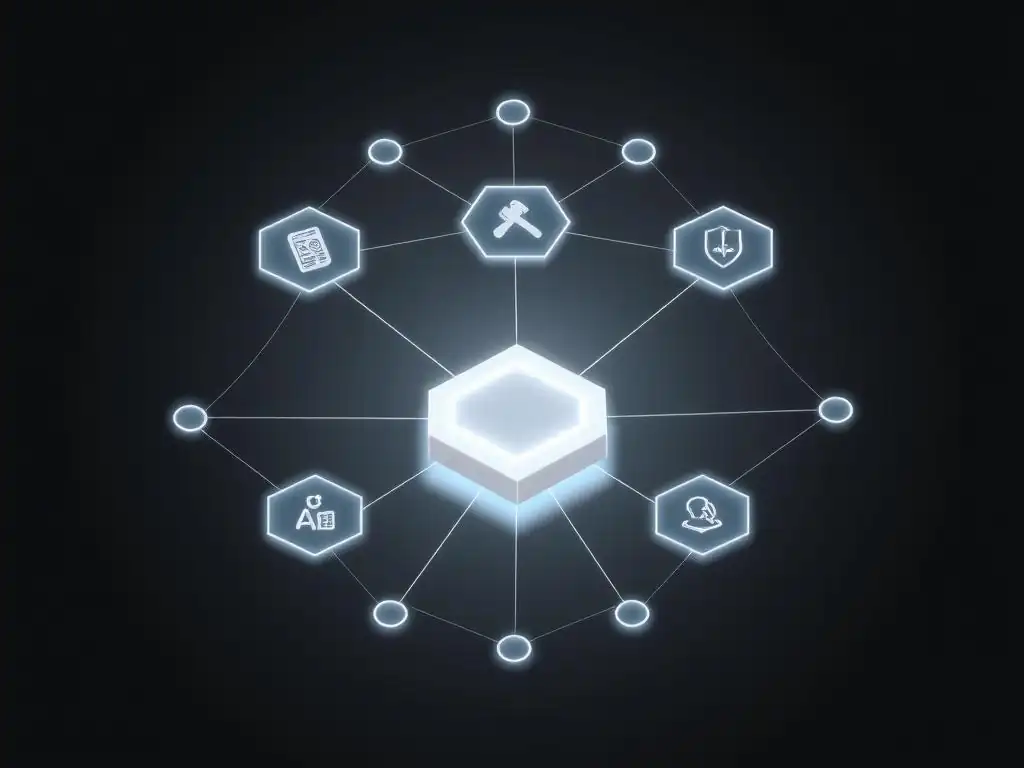
Token-based voting is a prevalent governance mechanism in blockchain games, directly empowering token holders to participate in decision-making processes. In this model, the number of tokens a player holds typically translates to their voting power. This approach aligns governance influence with economic stake, as those who have invested more in the game's ecosystem have a proportionally larger say in its direction.
Token-based voting is often used in DAOs associated with P2E games to govern treasury management, game development priorities, and economic policy adjustments. For example, token holders might vote on proposals to allocate funds from the game's treasury for marketing campaigns, new feature development, or community events.
The strength of token-based voting lies in its simplicity and direct link between economic stake and governance influence. It encourages token holders to actively participate in governance, as their decisions directly impact the value and success of their investment. However, token-based voting also has potential drawbacks.
It can be susceptible to "whale" dominance, where a small number of large token holders can disproportionately control governance outcomes, potentially marginalizing smaller players. To mitigate this, some games implement mechanisms to prevent excessive concentration of voting power, such as quadratic voting, which makes it more expensive for large token holders to exert undue influence. Despite these potential challenges, token-based voting remains a widely adopted and effective mechanism for decentralizing governance and empowering token holders in blockchain gaming.
Reputation-Based Systems: Rewarding Active and Responsible Players
Reputation-based systems offer an alternative or complementary approach to token-based voting in blockchain gaming governance. These systems reward players based on their positive contributions, activity, and responsible behavior within the game ecosystem, granting them increased governance influence. Reputation can be earned through various actions, such as actively participating in community events, contributing to in-game content, providing helpful support to other players, or consistently adhering to game rules and guidelines. Players with higher reputation scores might receive increased voting weight, access to exclusive governance forums, or even the ability to propose governance changes directly.
Reputation-based systems aim to recognize and empower dedicated and constructive members of the community, rather than solely focusing on economic stake. This can help balance the potential for "whale" dominance in token-based voting and ensure that governance decisions are influenced by players who are deeply invested in the game's long-term health and community well-being.
Implementing a robust reputation system requires careful design to prevent manipulation and ensure that reputation is earned through genuine contributions. However, when implemented effectively, reputation-based systems can foster a more inclusive and meritocratic governance environment, rewarding active and responsible players and promoting a positive community culture.
Delegated Proof-of-Stake (DPoS) for Efficient Decision-Making in Metaverse Games
Delegated Proof-of-Stake (DPoS) is a consensus mechanism originally developed for blockchains, but it can also be adapted for efficient decision-making within metaverse games, particularly in governance contexts. In a DPoS system, token holders vote to elect a smaller set of delegates, often called "witnesses" or "block producers," who are responsible for validating transactions and, in the gaming context, potentially for proposing and implementing governance changes.
Token holders delegate their voting power to these representatives, entrusting them to act in the best interests of the community. DPoS systems are designed to be more efficient and faster than traditional Proof-of-Stake (PoS) mechanisms, as only a limited number of delegates are involved in decision-making.
In the context of blockchain gaming governance, DPoS can be used to streamline decision-making processes, particularly for frequent or time-sensitive governance actions. Instead of requiring all token holders to vote on every proposal, a smaller group of elected delegates can deliberate and vote on proposals more efficiently. This can be particularly useful for games with large player bases and frequent governance needs.
However, DPoS systems also introduce a degree of centralization, as power is concentrated in the hands of elected delegates. To mitigate this, it is crucial to ensure that the delegate election process is fair, transparent, and competitive, and that delegates are accountable to the token holders who elected them. DPoS can be a valuable tool for achieving efficient decision-making in metaverse games, but it requires careful implementation to balance efficiency with decentralization and accountability.
Case Studies: Successful Blockchain Gaming Governance Models
Case Study 1: Axie Infinity - A Model for Decentralized Game Development
Axie Infinity, a pioneering P2E game, initially showcased a strong emphasis on decentralized game development and governance, though its model has evolved over time. Early on, Axie Infinity aimed to transition towards a DAO-led governance model, with plans for AXS token holders to eventually control the game's treasury and development roadmap. The initial vision was to empower the community to directly influence the game's direction and evolution, fostering a truly decentralized gaming ecosystem. While Axie Infinity experienced significant economic challenges in 2022, partially attributed to unsustainable tokenomics, its early governance aspirations provided valuable lessons for the P2E space.
Axie Infinity's initial governance model included features like token-based voting on game updates and treasury allocations. Proposals were submitted by the community, and AXS token holders could vote to approve or reject them. This approach, while not fully realized in practice due to the game's rapid growth and subsequent economic adjustments, demonstrated the potential for community-driven development in P2E games. Axie Infinity's case highlights the complexities of implementing decentralized governance in rapidly evolving metaverse economies and underscores the importance of robust tokenomics design alongside governance mechanisms for long-term sustainability.
Case Study 2: Decentraland - Balancing Community Input and Developer Control
Decentraland, a decentralized virtual world platform, offers a compelling case study in balancing community input with developer control in metaverse governance. Decentraland operates with a DAO, which governs key aspects of the platform, including land policies, content moderation, and treasury management. LAND token holders have voting power within the Decentraland DAO, allowing them to participate in decisions that shape the virtual world. This empowers the community to influence the platform's direction and evolution, fostering a sense of ownership and shared governance.
Decentraland's governance model strikes a balance by delegating specific governance domains to the DAO while maintaining a degree of developer control over core platform infrastructure and technical development. The Decentraland Foundation, while still influential, operates within the framework established by the DAO, ensuring that community input is a significant factor in platform governance.
Decentraland's case exemplifies a model where blockchain governance is used to empower users and decentralize control, while still acknowledging the need for expert development teams to maintain and evolve the underlying technology. This balanced approach offers valuable insights for other metaverse projects seeking to implement effective and sustainable governance models.
Case Study 3: The Sandbox - Innovative Approaches to Economic Stability
The Sandbox, another prominent metaverse platform, is exploring innovative approaches to economic stability and governance within its ecosystem. While The Sandbox is not solely governed by a DAO in the same way as Decentraland, it incorporates elements of decentralized governance and community participation in its economic and platform management. The Sandbox utilizes its SAND token for various in-game transactions and governance purposes, and it has implemented mechanisms to manage token supply and promote economic stability.
One notable aspect of The Sandbox's approach is its focus on empowering creators and land owners within the metaverse. Land owners in The Sandbox have significant autonomy over their virtual land and the experiences they create, fostering a decentralized ecosystem of user-generated content.
While formal DAO-led governance might be less prominent compared to Decentraland, The Sandbox's emphasis on user empowerment and economic incentives for creators contributes to a form of distributed governance, where the community plays a significant role in shaping the metaverse through their creations and economic activities. The Sandbox's case highlights the diverse ways in which blockchain principles and decentralized mechanisms can be applied to govern metaverse economies, even beyond traditional DAO structures.
The Future of Blockchain Gaming Governance: Trends and Predictions
The Integration of AI and Machine Learning in Governance Processes
The future of blockchain gaming governance is likely to witness increasing integration of Artificial Intelligence (AI) and Machine Learning (ML) technologies. AI and ML can enhance governance processes in various ways, from automating moderation and fraud detection to providing data-driven insights for governance decisions. For example, AI algorithms can be trained to identify and flag suspicious player behavior indicative of botting or cheating, automating moderation tasks and freeing up human moderators to focus on more complex issues. ML models can analyze vast amounts of in-game data to identify economic imbalances, predict inflationary trends, and inform tokenomic adjustments.
AI and ML can also personalize governance experiences for players. For instance, AI-powered reputation systems could dynamically adjust player reputation scores based on a wider range of behavioral data, providing a more nuanced and accurate assessment of player contributions and responsibility. Furthermore, AI could assist in analyzing community sentiment and feedback, helping governance bodies understand player preferences and make more informed decisions. While the integration of AI and ML in blockchain gaming governance is still in its early stages, its potential to enhance efficiency, fairness, and data-driven decision-making is significant.
The Evolution of DAO Structures for Enhanced Decentralization
DAO structures in blockchain gaming governance are expected to evolve towards enhanced decentralization and greater community participation. Early DAOs in the P2E space have often faced challenges related to low voter turnout, "whale" dominance, and complex governance processes. Future DAO iterations are likely to address these issues through innovations in governance mechanisms and DAO design. For example, Liquid Democracy models, where token holders can delegate their voting power to trusted representatives, could increase voter participation and efficiency. Optimized voting interfaces and user-friendly governance platforms can lower the barrier to entry for players to participate in DAO governance.
Furthermore, DAOs may evolve towards more specialized and modular structures, with different DAOs governing specific aspects of the game or metaverse ecosystem. This could allow for more focused and efficient governance in different domains, such as economic policy, content moderation, or game development. The ongoing experimentation and innovation in DAO design within the wider blockchain space will likely influence the evolution of DAOs in blockchain gaming, leading to more robust, decentralized, and community-driven governance models.
Regulatory Considerations for Blockchain Gaming and Metaverse Economies
Regulatory considerations are poised to play an increasingly significant role in the future of blockchain gaming and metaverse economies. As P2E games and metaverse platforms gain mainstream adoption, regulatory bodies worldwide are beginning to scrutinize these nascent industries. Issues such as the legal classification of in-game assets, taxation of P2E earnings, and consumer protection in virtual worlds are coming under regulatory attention. The regulatory landscape for blockchain gaming is currently fragmented and evolving, with different jurisdictions taking varying approaches.
Future blockchain gaming governance strategies will need to proactively address regulatory compliance. This includes implementing KYC/AML (Know Your Customer/Anti-Money Laundering) procedures where necessary, ensuring compliance with data privacy regulations, and adapting governance models to align with evolving legal frameworks. Collaboration between blockchain gaming projects and regulatory bodies will be crucial to establish clear guidelines and foster responsible innovation in the space. Navigating the evolving regulatory landscape will be a key challenge and opportunity for the future of blockchain gaming governance, shaping the long-term sustainability and legitimacy of metaverse economies.
Optimizing P2E Economies Through Effective Governance
Enhancing Player Trust and Engagement through Transparent Governance
Effective blockchain gaming governance is paramount for enhancing player trust and engagement within P2E metaverse economies. Transparency is a cornerstone of blockchain governance, and by making governance processes open, auditable, and community-driven, P2E games can build trust with their player base. Players are more likely to engage with a game where they understand the rules, know how decisions are made, and feel that their voice matters. Transparent governance reduces the perception of centralized control and potential for manipulation, fostering a sense of fairness and equity.
When players trust the governance system, they are more likely to invest their time and resources into the game, contributing to a more vibrant and sustainable ecosystem. Transparent communication about governance decisions, rationale, and outcomes is crucial for building and maintaining trust. Regular community updates, open forums for discussion, and easily accessible governance documentation all contribute to fostering a transparent and trustworthy governance environment. Enhanced player trust, in turn, translates to increased player retention, higher engagement levels, and a more thriving P2E metaverse economy.
Fostering Long-Term Sustainability in Metaverse Gaming Ecosystems
Effective blockchain gaming governance is a critical factor in fostering the long-term sustainability of metaverse gaming ecosystems. Sustainable P2E economies require robust governance mechanisms to manage economic parameters, adapt to changing conditions, and maintain a healthy balance between player incentives and economic stability. Governance systems that can effectively address inflationary pressures, prevent exploitation, and adapt to evolving player needs are essential for long-term viability. Without sound governance, P2E games are susceptible to economic instability, player attrition, and eventual decline.
Long-term sustainability also requires community involvement and a sense of shared ownership. Blockchain gaming governance, particularly through DAOs and community voting mechanisms, empowers players to participate in shaping the game's future, fostering a stronger sense of ownership and commitment to the ecosystem. This community-driven governance contributes to resilience and adaptability, allowing the game to evolve and thrive over time. By prioritizing effective governance, P2E metaverse games can build ecosystems that are not only engaging and rewarding but also sustainable and resilient in the long run.
The Impact of Improved Governance on the Valuation of In-Game Assets and Tokens
Improved blockchain gaming governance has a direct and positive impact on the valuation of in-game assets and tokens within metaverse economies. When a P2E game demonstrates robust and transparent governance, it signals stability, long-term vision, and community empowerment to potential investors and players. This increased confidence translates to higher perceived value for in-game assets and tokens. Investors are more likely to invest in games with sound governance, as it reduces the risk of economic instability or arbitrary rule changes that could devalue their assets.
Players are also more willing to acquire and hold in-game assets and tokens in games with strong governance, as they have greater assurance that the game's economy is well-managed and that their investments are protected. Conversely, games with weak or opaque governance often suffer from lower asset valuations and token prices, as players and investors are hesitant to commit to ecosystems perceived as unstable or lacking long-term vision.
Therefore, investing in effective blockchain gaming governance is not just about fairness and community empowerment; it is also a strategic imperative for enhancing the economic value and long-term success of P2E metaverse economies.
Conclusion: Embracing Blockchain Governance for the Future of Metaverse Gaming
Key Takeaways: Blockchain Gaming Governance Strategies for Success
Effective blockchain gaming governance strategies are crucial for the success and sustainability of Play-to-Earn metaverse economies. Key takeaways include the importance of transparency, decentralization, and community empowerment. Implementing robust voting mechanisms, utilizing smart contracts for automation, and defining clear rules and guidelines are essential components of a successful governance framework. Balancing player incentives with economic stability, addressing Sybil attacks and botting, and managing tokenomics are critical challenges that effective governance must address. Different governance mechanisms, such as token-based voting, reputation systems, and DPoS, offer various approaches to achieving decentralization and community participation.
Case studies of games like Axie Infinity, Decentraland, and The Sandbox highlight different approaches to blockchain gaming governance, showcasing both successes and challenges. The future of blockchain gaming governance is likely to see increased integration of AI and ML, evolution of DAO structures, and greater attention to regulatory considerations. Ultimately, embracing blockchain governance principles is not just a technical implementation; it is a fundamental shift towards more democratic, community-driven, and sustainable metaverse gaming ecosystems.
The Potential for Blockchain Governance to Revolutionize the Gaming Industry
Blockchain governance has the transformative potential to revolutionize the gaming industry, moving beyond traditional centralized models towards more player-centric and community-owned ecosystems. By empowering players with ownership, governance rights, and economic opportunities, blockchain gaming is reshaping the relationship between players and games. Blockchain governance fosters greater transparency, fairness, and accountability within gaming ecosystems, addressing many of the limitations of traditional gaming models. The shift towards decentralized governance can lead to more engaging, sustainable, and ultimately, more rewarding gaming experiences for players worldwide.
As metaverse gaming continues to evolve and mature, blockchain governance will become an increasingly critical differentiator between successful and unsuccessful projects. Games that embrace robust and community-driven governance models are more likely to attract and retain players, build thriving economies, and achieve long-term success in the burgeoning metaverse landscape. The revolution in gaming is not just about new technologies or play-to-earn mechanics; it is fundamentally about empowering players and building a future where gaming is more equitable, community-owned, and truly decentralized, driven by the principles of blockchain governance.
Frequently Asked Questions
What are the main challenges in governing blockchain gaming economies, particularly in Play-to-Earn (P2E) games?
The main challenges revolve around maintaining economic stability within the game, ensuring fair distribution of rewards, and managing player influence on game development and rules.
How can Decentralized Autonomous Organizations (DAOs) be effectively utilized in blockchain gaming governance?
DAOs offer a mechanism for players to participate in key decision-making processes, such as tokenomics adjustments and content updates, fostering a more democratic and transparent governance model.
What types of voting mechanisms are commonly used in blockchain gaming governance, and what are their strengths and weaknesses?
Common mechanisms include token-weighted voting, where voting power is proportional to token holdings, and quadratic voting, aiming to mitigate the influence of large token holders. Token-weighted voting can be susceptible to whale influence while quadratic voting balances this.
What role does regulation play in shaping the future of blockchain gaming governance strategies?
Regulatory clarity surrounding digital assets, securities laws, and gambling regulations will significantly impact how blockchain games are structured and governed, ensuring compliance and player protection.
What are some emerging trends in blockchain gaming governance beyond DAOs, and how might they impact the player experience?
Trends include reputation-based systems that reward positive contributions and dynamic governance models that adapt to changing game conditions. These can enhance player engagement and foster a more sustainable gaming ecosystem.
Final Reflection: Shaping the Future of Play
The exploration of blockchain gaming governance strategies within the metaverse isn't just an academic exercise; it's a crucial undertaking that directly impacts the viability and sustainability of play-to-earn economies. As we've seen, the success of these virtual worlds hinges on establishing fair, transparent, and community-driven systems that empower players and foster long-term engagement. Without robust governance, the promise of decentralized gaming risks collapsing under the weight of centralized control or unsustainable economic models.
The rise of blockchain gaming has profoundly influenced the cultural landscape, blurring the lines between entertainment, investment, and community. This intersection demands a careful consideration of ethical implications and the need for equitable distribution of power and resources. The metaverse is not just a technology; it's a new social contract. We must ensure that this contract is built on principles of fairness, transparency, and inclusivity.
This quote encapsulates the responsibility we have to shape the metaverse into a space where everyone can thrive, not just a select few.
Now, as you step away from this exploration of blockchain gaming governance, consider your own role in shaping the future of play. How can you contribute to building more equitable and sustainable metaverse economies? Whether you're a developer, a gamer, or simply an interested observer, your voice matters. Let's work together to ensure that the metaverse becomes a truly decentralized and empowering space for all.
Unlock the Future of Metaverse Gaming!
Thank you for exploring the exciting intersection of gaming and blockchain governance! Now that you understand the potential of Play-to-Earn economies, it's time to take the leap and help shape the future of the metaverse.
Here are a few ways to get involved:
- Try a Play-to-Earn Game with Governance Tokens: Experience a metaverse game that incorporates blockchain governance by participating in voting on in-game decisions. This hands-on approach lets you see the power of decentralized control in action.
- Explore Innovative DAOs in Gaming: Learn about decentralized autonomous organizations that are influencing Play-to-Earn gaming. Discover the innovations they are bringing to community-driven game development.
- Share This Article and Start a Conversation: Spread the word about how blockchain governance is transforming metaverse gaming. Engage with friends and colleagues to brainstorm future developments.
What specific governance improvements would you like to see in your favorite Play-to-Earn game? Share your thoughts in the comments below!
Leave a Reply