
The Infrastructure Behind Decentralized Metaverses: Blockchain and Beyond


Welcome to Blockchain Trends, your go-to source for understanding the revolutionary impact of blockchain technology.
Imagine a world where metaverses are truly decentralized, owned by their users and powered by secure, transparent infrastructure. In this article, we delve into the crucial role of blockchain infrastructure for metaverses, exploring the key technologies and challenges that will shape the future of these immersive digital worlds. Ready to uncover the building blocks of the metaverse revolution?
The Infrastructure Behind Decentralized Metaverses: Blockchain and Beyond
- Introduction: Understanding the Foundation of Decentralized Metaverses
- Core Blockchain Technologies Powering Metaverses
- Beyond Blockchain: Key Infrastructure Components
- Blockchain Interoperability: Connecting Different Metaverses
- Challenges and Future Trends in Metaverse Blockchain Infrastructure
- Conclusion: The Future of Decentralized Metaverses Built on Robust Infrastructure
-
Frequently Asked Questions
- What role does blockchain play in building metaverse infrastructure?
- How does blockchain infrastructure support digital ownership within metaverses?
- What are some of the challenges in scaling blockchain infrastructure for metaverses?
- Beyond blockchain, what other technologies are essential for metaverse infrastructure?
- How are regulations impacting the development and adoption of blockchain infrastructure for metaverses?
- Final Reflection: Building Tomorrow's Worlds Today
- Ignite Your Metaverse Journey!
Introduction: Understanding the Foundation of Decentralized Metaverses
Defining the Decentralized Metaverse: A New Paradigm
The concept of a metaverse has rapidly evolved from science fiction to a tangible vision for the future of digital interaction. At its core, a metaverse is a persistent, shared, 3D virtual world where users can interact with each other, digital objects, and environments in a seamless and immersive manner. Decentralization adds a critical layer to this concept, shifting the control and ownership of the metaverse away from centralized corporations and towards its users.
A decentralized metaverse aims to be community-driven, transparent, and resistant to censorship, much like the principles underpinning blockchain technology itself. This paradigm shift promises to empower creators and users, fostering a more equitable and open digital future compared to traditional, centrally controlled online platforms.
Decentralized metaverses are distinct from their centralized counterparts by virtue of their underlying architecture. Instead of relying on a single company's servers and databases, these metaverses leverage distributed ledger technology to manage assets, identities, and governance. This foundational difference leads to significant advantages, including enhanced user privacy, greater control over digital assets, and reduced risk of single points of failure.
Imagine a virtual world where your digital identity and possessions are not controlled by a corporation but are securely held by you, verifiable on a public ledger. This is the promise of the decentralized metaverse, built upon a robust and distributed infrastructure.
The Role of Blockchain Infrastructure in Metaverse Development
Blockchain infrastructure is not merely a component of decentralized metaverses; it is the very bedrock upon which they are built. It provides the essential tools and mechanisms for establishing trust, security, and transparency within these virtual environments. Think of blockchain as the underlying operating system for decentralized metaverses, enabling functionalities that are simply not achievable with traditional centralized systems. From managing digital ownership of virtual land and avatars to facilitating peer-to-peer transactions and governing virtual economies, blockchain's capabilities are integral to the decentralized metaverse vision.
Specifically, blockchain infrastructure addresses critical challenges inherent in creating and maintaining large-scale, interactive virtual worlds. It provides a secure and immutable record of all transactions and interactions within the metaverse, ensuring transparency and preventing fraud. Furthermore, blockchain facilitates the creation of truly digital scarcity for virtual assets, making them unique, verifiable, and tradable.
This digital scarcity, enabled by Non-Fungible Tokens (NFTs) on the blockchain, is fundamental to building thriving virtual economies within metaverses, allowing users to own, trade, and monetize their digital creations and experiences. The efficiency and security of the blockchain infrastructure are therefore paramount to the success and widespread adoption of decentralized metaverses.
Core Blockchain Technologies Powering Metaverses
Blockchain as the Foundation for Metaverse Assets and Ownership
At the heart of decentralized metaverses lies the power of blockchain to establish and manage digital ownership. This is primarily achieved through the use of Non-Fungible Tokens (NFTs). NFTs, secured on a blockchain, represent unique digital assets within the metaverse, be it virtual land, avatars, in-game items, or digital art. Each NFT is distinct and verifiably scarce, providing users with true ownership and control over their digital possessions, unlike traditional in-game assets that are typically owned by the game developers.
Consider Decentraland, a pioneering decentralized metaverse platform. Land within Decentraland is represented by NFTs on the Ethereum blockchain. Owners of these LAND NFTs have complete control over their virtual plots, able to build experiences, host events, or even rent them out to other users. This model of ownership, powered by blockchain infrastructure, creates a user-centric economy where value is generated and exchanged directly between participants, fostering a sense of digital property rights and investment in the metaverse. The very concept of a user-owned metaverse hinges on this blockchain-based asset ownership system.
Smart Contracts: Automating Interactions and Governance in Virtual Worlds
Smart contracts are self-executing contracts with the terms of the agreement directly written into code. These contracts, deployed on a blockchain, play a crucial role in automating various interactions and governance mechanisms within decentralized metaverses. They eliminate the need for intermediaries, ensuring transparent and trustless execution of agreements and processes within the virtual world. From automated marketplaces for trading NFTs to decentralized autonomous organizations (DAOs) governing metaverse communities, smart contracts are the engines of automation and decentralization.
For example, consider a virtual real estate marketplace within a metaverse. Smart contracts can automate the entire process of buying, selling, or renting virtual land NFTs. Once the conditions of the smart contract are met (e.g., buyer sends payment), the ownership of the LAND NFT is automatically transferred to the buyer without the need for manual intervention or escrow services.
Furthermore, smart contracts can be used to implement decentralized governance models, allowing metaverse users to vote on proposals, manage community funds, and shape the future direction of the virtual world in a transparent and democratic manner. This automation and decentralization of governance are key differentiators of blockchain-based metaverses.
Scalability Solutions for High-Performance Metaverse Experiences
A significant challenge for blockchain infrastructure in supporting metaverses is scalability. Metaverses, especially those aiming for mass adoption, require high transaction throughput and low latency to handle the vast number of interactions and transactions that occur within these virtual worlds. Traditional blockchains, particularly older Layer-1 blockchains, often struggle to meet these demands. Therefore, scalability solutions are crucial for enabling seamless and high-performance metaverse experiences.
For instance, imagine thousands of users simultaneously interacting in a metaverse concert venue, each performing actions that need to be recorded on the blockchain. If the underlying blockchain infrastructure cannot handle this volume of transactions efficiently, users will experience lag, delays, and a poor overall experience. To address this, various scalability solutions are being developed and implemented to enhance the performance of blockchain infrastructure for metaverses. These solutions aim to increase transaction speeds and reduce costs, making metaverses more accessible and user-friendly.
Layer-2 Scaling Solutions: Optimizing Metaverse Transaction Speeds
Layer-2 scaling solutions are protocols built on top of existing Layer-1 blockchains (like Ethereum) to increase transaction throughput without altering the base layer itself. These solutions, such as rollups and sidechains, process transactions off-chain and then periodically batch and finalize them on the main Layer-1 blockchain. This approach significantly reduces congestion on the main chain, leading to faster transaction speeds and lower gas fees, which are critical for metaverse applications requiring frequent and cost-effective transactions.
Polygon, for example, is a popular Layer-2 scaling solution for Ethereum that is being widely adopted by metaverse projects. By processing transactions on its sidechain, Polygon can achieve significantly higher transaction speeds and lower fees compared to transacting directly on Ethereum. This enables metaverse platforms built on Polygon to offer smoother and more affordable experiences for users, particularly in scenarios involving frequent NFT trading or in-world interactions. Layer-2 solutions are essential for making blockchain infrastructure practical and efficient for the demands of dynamic and interactive metaverses.
Sharding: Distributing Data and Processing Across Multiple Nodes
Sharding is a database partitioning technique that is being adapted for blockchain technology to enhance scalability. In the context of blockchain, sharding involves dividing the blockchain network into multiple smaller partitions called "shards." Each shard processes only a subset of transactions, distributing the workload across the network and allowing for parallel processing. This dramatically increases the overall transaction throughput of the blockchain network, making it more capable of handling the high demands of metaverse environments.
Ethereum 2.0, for instance, is implementing sharding as a core component of its scalability upgrade. By sharding the Ethereum blockchain into multiple shards, it aims to significantly increase its transaction processing capacity. This upgrade is expected to be crucial for supporting the growth and scalability of decentralized metaverses built on the Ethereum ecosystem. Sharding represents a fundamental architectural change to blockchain infrastructure, designed to address scalability limitations and pave the way for mass adoption of blockchain-based applications, including metaverses.
Beyond Blockchain: Key Infrastructure Components
Decentralized Storage Solutions for Metaverse Content
While blockchain excels at managing assets and transactions, storing the vast amounts of data required for rich metaverse experiences presents a different challenge. Metaverse environments are filled with 3D models, textures, audio, and other multimedia content. Storing all this data directly on a blockchain is impractical and inefficient. Decentralized storage solutions offer a compelling alternative, providing a distributed and resilient infrastructure for hosting metaverse content.
These decentralized storage networks distribute data across a network of nodes, rather than relying on centralized servers. This approach offers several advantages for metaverses, including increased data availability, censorship resistance, and potentially lower storage costs compared to centralized solutions. By leveraging decentralized storage, metaverses can ensure that their content remains accessible and secure, even in the face of network disruptions or censorship attempts. This distributed storage infrastructure is crucial for the long-term viability and openness of decentralized metaverses.
IPFS (InterPlanetary File System): Storing and Sharing Metaverse Assets
IPFS, or the InterPlanetary File System, is a peer-to-peer distributed file system that aims to create a decentralized and permanent web. It is designed to address the limitations of the traditional HTTP-based web by using content-addressing instead of location-addressing. In IPFS, files are identified by their content hash, meaning that if the content changes, the address changes. This ensures content integrity and prevents content tampering. For metaverses, IPFS offers a robust solution for storing and distributing metaverse assets like 3D models, textures, and avatars.
Many metaverse projects utilize IPFS to store NFT metadata and associated content. Instead of storing the actual image or 3D model of an NFT on the blockchain (which would be prohibitively expensive), the NFT smart contract on the blockchain points to the content hash of the asset stored on IPFS. This allows users to verify the authenticity and integrity of the NFT's associated content. IPFS provides a decentralized and censorship-resistant storage layer for metaverses, ensuring that metaverse assets remain accessible and verifiable over time.
Arweave: Permanent and Decentralized Data Storage
Arweave is another decentralized storage network that focuses on providing permanent data storage. Unlike IPFS, which is designed for content addressing and distribution, Arweave is specifically built for long-term archival and immutability. Data stored on Arweave is designed to be permanently accessible, with a one-time upfront payment for storage. This "permaweb" approach is particularly relevant for metaverse content that needs to be preserved and accessible indefinitely.
For metaverse projects, Arweave can be used to store critical data that needs to be permanently available, such as historical records of metaverse events, governance decisions, or foundational metaverse assets. The permanence offered by Arweave ensures that this data remains accessible and tamper-proof, contributing to the long-term preservation and integrity of the metaverse. While IPFS focuses on content distribution and availability, Arweave addresses the need for permanent and immutable storage, both playing complementary roles in the decentralized metaverse infrastructure ecosystem.
Decentralized Identity Management for Metaverse Avatars and Data
In a decentralized metaverse, users should have control over their digital identities and data. Traditional centralized platforms often control user identities and data, raising privacy concerns and limiting user autonomy. Decentralized identity management solutions aim to empower users with self-sovereign identity, allowing them to control their identity information and how it is used within the metaverse and across different platforms.
Decentralized identity solutions leverage blockchain technology to create secure, verifiable, and user-controlled digital identities. These solutions typically involve cryptographic techniques and decentralized identifiers to give users ownership and control over their personal data, including their metaverse avatars, profiles, and interactions. This shift towards user-centric identity management is crucial for building privacy-respecting and empowering decentralized metaverses.
Self-Sovereign Identity (SSI) and Metaverse User Authentication
Self-Sovereign Identity (SSI) is a concept that puts individuals in control of their digital identities. In an SSI model, users own and manage their identity data, rather than relying on centralized identity providers. For metaverses, SSI offers a way for users to control their avatars, profiles, and metaverse data without being dependent on a single platform. SSI principles are being implemented using blockchain-based technologies to create user-centric identity solutions.
Within a metaverse context, SSI can enable users to seamlessly move their avatars and digital identities across different metaverse platforms. Imagine using the same avatar and digital persona across multiple virtual worlds, maintaining consistent identity and reputation. SSI solutions facilitate this interoperability of identities, providing users with a unified and portable digital presence in the metaverse. This is a significant departure from siloed, platform-specific identities prevalent in current online environments.
Decentralized Identifiers (DIDs) for Secure Metaverse Profiles
Decentralized Identifiers (DIDs) are a key component of SSI. DIDs are globally unique identifiers that do not rely on centralized registries. They are cryptographically verifiable and controlled by the DID subject (the user). In the context of metaverses, DIDs can be used to create secure and user-controlled metaverse profiles. These profiles can store user data, preferences, and avatar information, all managed and controlled by the user.
Using DIDs, users can create metaverse profiles that are not tied to a specific platform. They can grant selective access to their profile data to different metaverse applications and services, controlling what information is shared and with whom. This granular control over data sharing enhances user privacy and security within the metaverse. DIDs are foundational for building user-centric and privacy-preserving identity management systems in decentralized metaverses.
Oracles: Bridging the Gap Between the Real World and the Metaverse
Metaverses, while virtual, often need to interact with real-world data to create dynamic and relevant experiences. Oracles are crucial infrastructure components that bridge the gap between blockchains and the external world. They provide a secure and reliable way to bring off-chain data onto the blockchain, making it accessible to smart contracts and metaverse applications. This real-world data can enrich metaverse experiences and enable new functionalities.
Oracles act as data feeds, retrieving information from external sources and relaying it to blockchain networks. This data can range from price feeds for virtual assets to real-world weather conditions. For metaverses, oracles can enable dynamic environments that react to real-world events, create more immersive and realistic experiences, and unlock new use cases that require integration with off-chain data.
Feeding Real-World Data into Metaverse Applications
Oracles enable metaverse applications to access a wide range of real-world data. This data can be used to create dynamic and responsive metaverse environments. For example, real-world weather data, financial market data, or even data from IoT devices can be integrated into metaverse experiences through oracles. This integration of real-world data enhances the realism and functionality of metaverses.
Consider a metaverse game that simulates a real-world city. By using oracles to feed in real-time weather data, the game environment can dynamically reflect the actual weather conditions in that city. This could affect gameplay, visual elements, and even in-game events. Oracles allow metaverses to move beyond static virtual worlds and become more dynamic and interconnected with the real world.
Oracle-Based Weather Data Integration for Dynamic Metaverse Environments
Integrating weather data into metaverses through oracles can create truly dynamic and immersive environments. Imagine a virtual world where the weather inside the metaverse mirrors the real-time weather outside your window. This can add a layer of realism and dynamism to metaverse experiences. Oracle services like Chainlink provide decentralized weather data feeds that can be readily integrated into metaverse applications.
For instance, a metaverse designed for virtual tourism could use oracle-based weather data to accurately represent the current weather conditions at virtual tourist destinations. This could enhance the realism of virtual tours and provide users with a more informative and engaging experience. Furthermore, dynamic weather conditions could be integrated into metaverse games, creating challenges and opportunities based on changing virtual weather patterns. Oracle-based weather data integration is just one example of how real-world data can enrich and enhance metaverse environments.
Blockchain Interoperability: Connecting Different Metaverses
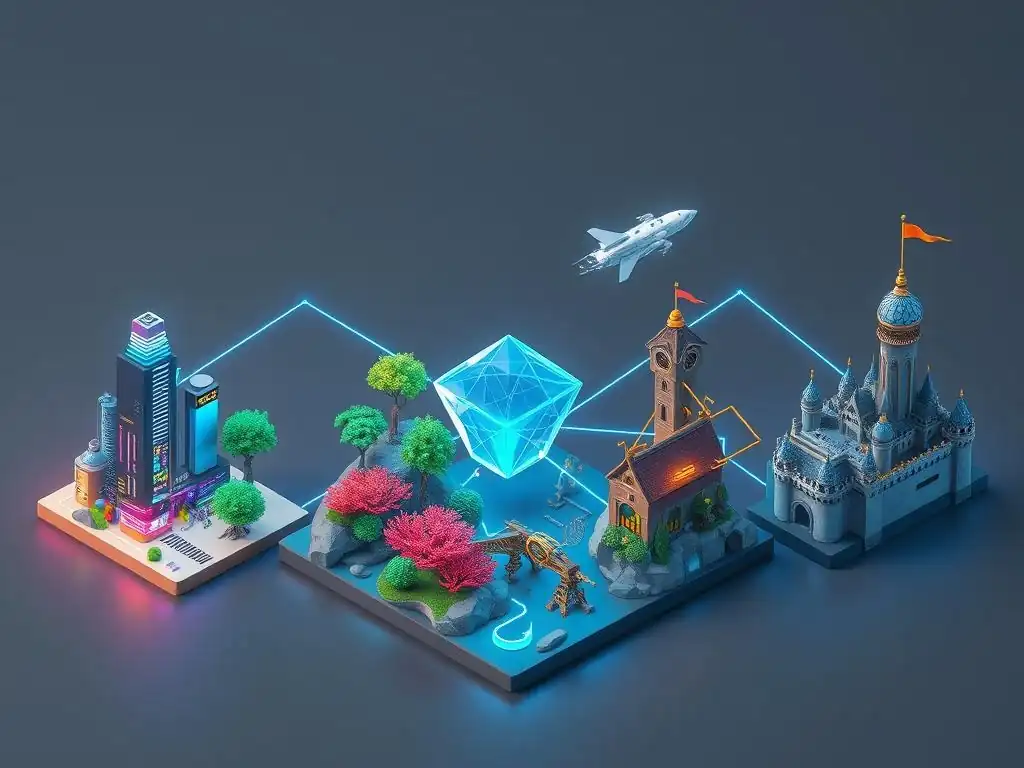
The Need for Interoperability in a Fragmented Metaverse Landscape
As the metaverse space evolves, multiple independent metaverse platforms are emerging, each potentially built on different blockchain infrastructures. This fragmentation can lead to siloed experiences and limit the potential for a truly interconnected metaverse. Interoperability, the ability for different metaverses to communicate and interact with each other, is crucial for creating a more unified and user-friendly metaverse ecosystem.
Imagine a future where users have avatars and assets locked within specific metaverse platforms, unable to easily move them between different virtual worlds. This lack of interoperability would hinder the development of a truly open and interconnected metaverse. Blockchain interoperability solutions are being developed to address this challenge, aiming to bridge the gaps between different blockchain networks and enable seamless asset transfer and communication between metaverses.
Cross-Chain Protocols for Asset Transfer Between Metaverses
Cross-chain protocols are technologies that enable the transfer of assets and data between different blockchain networks. These protocols are essential for achieving interoperability between metaverses built on different blockchains. They allow users to move their NFTs, tokens, and other digital assets from one metaverse to another, fostering a more fluid and interconnected metaverse experience.
For example, a user who owns a virtual land NFT in a metaverse built on Ethereum might want to transfer that NFT to a different metaverse built on a different blockchain, such as Solana. Cross-chain protocols facilitate this asset transfer, allowing users to maintain ownership of their digital assets across different virtual worlds. These protocols are crucial for breaking down silos between metaverses and creating a more unified and open metaverse ecosystem.
Polkadot and Cosmos: Interoperability Solutions for Metaverses
Polkadot and Cosmos are blockchain platforms specifically designed to address interoperability. They provide frameworks and tools for building interconnected blockchain networks, often referred to as "internet of blockchains." These platforms offer solutions for cross-chain communication and asset transfer, making them well-suited for enabling interoperability between metaverses.
Polkadot, for example, allows for the creation of "parachains," which are independent blockchains that connect to the Polkadot Relay Chain. These parachains can communicate with each other and share security through the Relay Chain, facilitating interoperability. Cosmos, on the other hand, uses the Inter-Blockchain Communication (IBC) protocol to enable communication between independent blockchains built using the Cosmos SDK. Both Polkadot and Cosmos offer promising infrastructure solutions for building interoperable metaverses and fostering a more connected metaverse ecosystem.
Challenges and Future Trends in Metaverse Blockchain Infrastructure
Addressing Scalability Limitations for Mass Adoption
Despite advancements in scalability solutions, addressing the scalability limitations of blockchain infrastructure remains a significant challenge for achieving mass adoption of metaverses. As metaverses grow in popularity and user numbers, the demand for transaction throughput and low latency will only increase. Further innovation and development in scalability solutions are crucial to ensure that blockchain infrastructure can support the needs of a truly massive metaverse user base.
Future scalability solutions may involve further advancements in Layer-2 technologies, the development of more efficient Layer-1 blockchains, and potentially the exploration of entirely new scaling paradigms. Research and development in areas like zero-knowledge proofs, optimistic rollups, and advanced sharding techniques are crucial for pushing the boundaries of blockchain scalability and enabling metaverses to handle millions or even billions of users. Overcoming scalability limitations is paramount for the long-term success and widespread adoption of decentralized metaverses.
Enhancing Security and Privacy within Decentralized Metaverses
Security and privacy are paramount concerns in any digital environment, and metaverses are no exception. Decentralized metaverses, while offering advantages in terms of user control and transparency, also present unique security and privacy challenges. Enhancing the security and privacy of blockchain infrastructure and metaverse applications is critical for building trust and ensuring user safety in these virtual worlds.
Future trends in metaverse security and privacy may include advancements in cryptographic techniques for data protection, the development of privacy-preserving smart contracts, and the implementation of robust decentralized identity management systems. Furthermore, user education and awareness about security best practices in the metaverse will be crucial. Striking a balance between transparency, decentralization, and robust security and privacy measures is essential for creating safe and trustworthy metaverse environments.
The Evolution of Blockchain Infrastructure to Support Immersive Experiences
The metaverse is not just about transactions and digital assets; it's about creating immersive and engaging experiences. Blockchain infrastructure needs to evolve to better support these immersive aspects of metaverses. This includes optimizing blockchain performance for real-time interactions, enhancing support for complex 3D graphics and multimedia, and enabling new forms of metaverse experiences that are not yet fully imagined.
Future evolution of blockchain infrastructure for metaverses may involve integrating technologies like decentralized streaming services, advanced virtual reality (VR) and augmented reality (AR) support, and new protocols for handling real-time data and interactions within virtual worlds. The focus will be on creating blockchain infrastructure that is not only secure and scalable but also optimized for delivering seamless, immersive, and highly engaging metaverse experiences. This evolution is key to unlocking the full potential of decentralized metaverses as truly transformative digital environments.
Conclusion: The Future of Decentralized Metaverses Built on Robust Infrastructure
The Transformative Potential of Blockchain-Powered Metaverses
Decentralized metaverses, built upon robust blockchain infrastructure, hold immense transformative potential. They offer a vision of a more open, user-centric, and equitable digital future, where individuals have greater control over their digital lives and assets. Blockchain technology provides the foundational tools for creating these virtual worlds, enabling digital ownership, secure transactions, decentralized governance, and enhanced user privacy. The convergence of metaverse concepts with blockchain infrastructure is poised to reshape how we interact with the digital world and each other.
As blockchain technology continues to mature and scalability solutions advance, the potential of decentralized metaverses will only grow. These virtual worlds could revolutionize various industries, from entertainment and gaming to commerce, education, and social interaction. The transformative power of blockchain-powered metaverses lies in their ability to create new forms of digital ownership, empower creators and users, and foster more open and inclusive online communities.
Key Takeaways: Building a Sustainable and Interoperable Metaverse Ecosystem
Building a sustainable and interoperable metaverse ecosystem requires a multifaceted approach. It necessitates continued innovation in blockchain infrastructure, particularly in scalability, security, and interoperability solutions. Decentralized storage, identity management, and oracle services are also crucial components of this infrastructure. Furthermore, fostering collaboration and standardization within the metaverse and blockchain communities is essential for achieving interoperability and creating a unified metaverse experience.
Ultimately, the success of decentralized metaverses hinges on building a robust and user-friendly infrastructure that prioritizes scalability, security, privacy, and interoperability. By addressing the challenges and embracing the future trends in metaverse blockchain infrastructure, we can unlock the full potential of these transformative virtual worlds and pave the way for a more open, decentralized, and engaging digital future.
Frequently Asked Questions
What role does blockchain play in building metaverse infrastructure?
Blockchain provides the decentralized foundation necessary for metaverses, enabling ownership of digital assets through NFTs and secure, transparent transactions. It also facilitates interoperability between different metaverse platforms.
How does blockchain infrastructure support digital ownership within metaverses?
Blockchain's NFT technology allows users to verifiably own in-game items, virtual land, and other digital assets. This ownership is immutable and recorded on the blockchain, fostering a true digital economy.
What are some of the challenges in scaling blockchain infrastructure for metaverses?
Scaling blockchain to handle the high transaction volume and low latency requirements of metaverses is a significant challenge. Solutions include layer-2 scaling solutions and alternative consensus mechanisms.
Beyond blockchain, what other technologies are essential for metaverse infrastructure?
Beyond blockchain, technologies like cloud computing, artificial intelligence, virtual reality/augmented reality (VR/AR), and edge computing are crucial for rendering, processing, and delivering immersive metaverse experiences.
How are regulations impacting the development and adoption of blockchain infrastructure for metaverses?
Regulatory uncertainty surrounding digital assets, data privacy, and cross-border transactions poses a significant challenge. Clear and consistent regulations are needed to foster innovation and protect users within the metaverse.
Final Reflection: Building Tomorrow's Worlds Today
The exploration of blockchain infrastructure for metaverses reveals more than just technological advancements; it unveils a fundamental shift in how we interact, create, and own digital experiences. The convergence of these technologies is not merely a trend, but a foundational element shaping the future of online interaction and digital ownership, impacting everything from gaming and entertainment to commerce and social connection.
This intricate dance between blockchain and the metaverse is profoundly shaping the cultural landscape, fostering a sense of decentralized ownership and community-driven innovation that was previously unimaginable. The potential for individuals to directly benefit from their creations and contributions within these virtual worlds is revolutionary. The metaverse is not just a place; it's a time. It's the next chapter of the internet, and it's being written now.
This quote encapsulates the urgency and importance of understanding and shaping this nascent digital frontier.
As we stand on the cusp of this new era, let us consider the power we hold to build metaverses that are inclusive, equitable, and truly representative of the diverse tapestry of human creativity. Reflect on how you can contribute to this evolving landscape, not just as a consumer, but as a builder, a creator, and a steward of a more decentralized and empowering digital future.
Ignite Your Metaverse Journey!
Thank you for exploring the complex infrastructure that supports decentralized virtual worlds. We hope this article provided valuable insights into the role of blockchain and other essential technologies. Now, it's time to turn that knowledge into action!
Here are some ways to deepen your involvement in the metaverse:
- Stake your claim! Research and purchase a plot of virtual land in a metaverse platform that interests you. Getting involved directly is the best way to truly understand how everything works.
- Join the community! Attend a virtual event or participate in a decentralized autonomous organization focused on metaverse development. You'll find new opportunities and connect with like-minded enthusiasts.
- Share your ideas! Write a blog, create a video, or start an online conversation about what excites you most regarding the future of decentralized virtual worlds.
What innovative use of blockchain in the metaverse are you most excited to see realized? Share your thoughts in the comments below!
Leave a Reply