
Interoperability Protocols: Building the Foundation for a Connected Metaverse on Blockchain


Welcome to Blockchain Trends, your guide to navigating the exciting world beyond cryptocurrencies.
Are you ready to unlock the true potential of blockchain technology? Dive into our exploration of blockchain interoperability protocols future applications. Discover how these groundbreaking solutions are forging connections between disparate blockchains, paving the way for a truly interconnected metaverse and revolutionizing industries across the board. Curious how these protocols will shape the future? Read on to find out!
Interoperability Protocols: Building the Foundation for a Connected Metaverse on Blockchain
- Introduction: The Need for Blockchain Interoperability in the Metaverse
- Understanding Blockchain Interoperability Protocols
-
Key Blockchain Interoperability Protocols Shaping the Metaverse
- LayerZero: Omnichain Interoperability Protocol for the Metaverse
- Polkadot: Enabling Parallel Chains for Metaverse Applications
- Cosmos: The Internet of Blockchains and its Role in Metaverse Connectivity
- Axelar Network: Secure Cross-Chain Communication for Web3
- Wormhole: A Generic Messaging Protocol Connecting High-Value Blockchains
- Use Cases: Blockchain Interoperability Applications in the Metaverse
- The Future of Blockchain Interoperability Protocols and the Metaverse
- Overcoming the Challenges of Blockchain Interoperability
- Conclusion: Blockchain Interoperability as the Cornerstone of the Metaverse
-
Frequently Asked Questions
- What are blockchain interoperability protocols and why are they important?
- How do interoperability protocols facilitate the building of a metaverse on blockchain?
- What are some examples of future applications enabled by blockchain interoperability?
- What are some of the challenges associated with developing and implementing blockchain interoperability protocols?
- How might regulation impact the future development and adoption of blockchain interoperability protocols?
- Final Reflection: Weaving the Threads of a Decentralized Future
- Unlock the Metaverse: Start Building Bridges Today!
Introduction: The Need for Blockchain Interoperability in the Metaverse
Defining the Metaverse and its Reliance on Interconnected Blockchains
The metaverse, envisioned as the next evolution of the internet, represents a persistent, shared, 3D virtual universe. It is characterized by immersive experiences, digital ownership, and social interactions that mirror, and in some cases, extend beyond the physical world. Crucially, many metaverse visions are being built upon blockchain technology, leveraging its inherent properties of decentralization, security, and transparency to underpin digital economies and asset ownership within these virtual realms. This reliance on blockchain is not merely a technological choice, but a philosophical one, aiming to create open, user-centric metaverses, rather than walled gardens controlled by centralized entities.
However, the blockchain landscape itself is fragmented. Numerous blockchains exist, each with its own architecture, consensus mechanisms, and communities. To realize the full potential of a truly interconnected metaverse, these disparate blockchain ecosystems must be able to communicate and interact seamlessly.
Imagine a metaverse user owning a digital asset on one blockchain-based platform and wanting to utilize it in a different metaverse experience built on another blockchain. Without interoperability, this becomes a cumbersome, if not impossible, task, hindering the fluidity and interconnectedness that defines the metaverse concept. Therefore, the very definition of a truly realized metaverse inherently necessitates a foundation built upon interoperable blockchain networks.
The Challenges of Isolated Blockchain Ecosystems in the Metaverse
The current blockchain landscape, often described as a collection of "siloed" ecosystems, presents significant challenges for the development of a unified metaverse. Each blockchain, while potentially robust and functional in isolation, operates independently, creating barriers to asset and data flow between them. For metaverse users, this fragmentation translates into a disjointed experience. Digital assets, such as NFTs representing virtual land or avatars, become locked within specific metaverse platforms, limiting their utility and potentially diminishing their value due to restricted portability.
Consider the example of a user who purchases a unique digital artwork as an NFT on a metaverse built on Ethereum. If they then wish to showcase this artwork in a different metaverse environment constructed on Solana, the lack of inherent interoperability between these blockchains prevents a direct transfer. This necessitates complex and often risky workarounds, potentially involving centralized exchanges or convoluted bridging mechanisms.
This lack of seamless interaction not only frustrates users but also stifles innovation and network effects within the nascent metaverse space. The vision of a fluid and interconnected metaverse is fundamentally undermined by these isolated blockchain ecosystems, hindering the realization of a truly unified and expansive digital world.
Why Blockchain Interoperability Protocols are Crucial for the Future Metaverse
Blockchain interoperability protocols are not merely a technical nicety; they are a fundamental requirement for the future metaverse to achieve its envisioned potential. These protocols act as bridges and translators between different blockchain networks, enabling the seamless flow of information and assets across previously isolated ecosystems. Without robust blockchain interoperability protocols, the metaverse risks becoming a fragmented collection of incompatible virtual worlds, each operating independently and limiting user experience and the overall scale of the metaverse vision.
The future applications of blockchain interoperability protocols within the metaverse are vast and transformative. They pave the way for true digital asset portability, allowing users to freely move NFTs, metaverse currencies, and other digital possessions between different virtual environments. This fosters a more open and user-centric metaverse, empowering individuals with greater control over their digital identities and assets.
Furthermore, interoperability unlocks composability across metaverse platforms, enabling developers to build innovative applications and experiences that leverage functionalities and assets from multiple blockchains. Ultimately, blockchain interoperability protocols are the key to unlocking the network effects necessary for a thriving, interconnected, and expansive metaverse, transforming it from a collection of isolated platforms into a truly unified digital universe.
Understanding Blockchain Interoperability Protocols
What are Blockchain Interoperability Protocols? A Deep Dive
Blockchain interoperability protocols are technologies and frameworks designed to enable communication, data exchange, and asset transfers between different blockchain networks. In essence, they act as translators and bridges, allowing blockchains that were originally designed to operate independently to interact with each other. These protocols address the inherent challenge of blockchain isolation, where different networks utilize varying consensus mechanisms, data structures, and programming languages, making direct communication virtually impossible without specialized intermediary solutions.
At their core, blockchain interoperability protocols aim to create a system where information or value can be securely and efficiently moved between distinct blockchain ecosystems. This involves overcoming technical hurdles related to consensus differences, transaction validation, and data format compatibility. A successful interoperability protocol must maintain the security and integrity of the underlying blockchains while facilitating cross-chain interactions.
This is not a trivial task, as it requires sophisticated cryptographic techniques and carefully designed architectures to prevent vulnerabilities and ensure trust in cross-chain operations. The development of robust blockchain interoperability protocols is a complex and ongoing endeavor, critical for realizing the potential of a truly interconnected blockchain ecosystem and its applications, particularly within the metaverse.
Types of Interoperability Protocols: Bridges, Sidechains, and Cross-Chain Messaging
Blockchain interoperability protocols can be broadly categorized into several types, each with its own approach to facilitating cross-chain interaction. The most prominent categories include bridges, sidechains, and cross-chain messaging protocols. While these categories are not always mutually exclusive and can sometimes overlap, they represent distinct methodologies in achieving blockchain interoperability, each with its own strengths and trade-offs in terms of security, scalability, and functionality. Understanding these different types is crucial for comprehending the diverse landscape of blockchain interoperability solutions and their suitability for various metaverse applications.
Blockchain Bridges: Connecting Chains via Token Transfers
Blockchain bridges are perhaps the most widely recognized type of interoperability protocol, primarily focused on enabling the transfer of tokens or assets between different blockchains. These bridges essentially lock assets on one blockchain (the source chain) and mint equivalent representations of those assets on another blockchain (the destination chain). This process allows users to utilize assets from one blockchain ecosystem within another, effectively "bridging" the gap between them for token transfers.
Consider a scenario where a user wants to use Ethereum-based ETH on a metaverse platform built on Polygon. A bridge would facilitate this by locking the ETH on the Ethereum network and minting an equivalent amount of "wrapped ETH" (often denoted as WETH or similar) on Polygon. This wrapped ETH can then be used within the Polygon metaverse.
Blockchain bridges can employ various mechanisms, including centralized custodians, decentralized validator sets, or cryptographic techniques like hash-locking, each with different security and trust assumptions. While bridges have been instrumental in enabling cross-chain asset movement, they have also been targets of significant exploits, highlighting the ongoing need for robust security measures and advancements in bridge technology.
Sidechains: Scalability and Customization through Independent Blockchains
Sidechains represent a different approach to interoperability, focusing on creating independent blockchains that are connected to and work in conjunction with a main blockchain (often referred to as the "parent chain"). Sidechains offer a way to extend the functionality and scalability of the parent chain by offloading certain types of transactions or applications to a separate, yet interconnected, blockchain. They typically operate with their own consensus mechanisms and block parameters, allowing for customization and optimization for specific use cases, while still benefiting from the security and interoperability features provided by the parent chain.
In the context of the metaverse, sidechains can be utilized to create specialized environments or zones that are tailored for specific types of interactions or applications. For instance, a metaverse platform built on Ethereum might utilize a sidechain to handle high-volume microtransactions related to in-world purchases, reducing congestion on the main Ethereum network.
Assets can be moved between the main chain and the sidechain through a two-way peg mechanism, enabling interoperability while maintaining a degree of separation and scalability. Examples of sidechain technologies include Polygon (formerly Matic Network), which acts as a sidechain to Ethereum, providing scalability and lower transaction fees for applications built on top of it.
Cross-Chain Messaging: General-Purpose Communication Between Blockchains
Cross-chain messaging protocols represent a more generalized form of interoperability, aiming to enable arbitrary data and message passing between different blockchains, rather than solely focusing on asset transfers. These protocols allow for richer and more complex interactions between blockchains, going beyond simple token bridging. They facilitate the development of cross-chain applications that can leverage functionalities and data from multiple blockchain networks in a coordinated manner.
Imagine a metaverse application that requires accessing decentralized identity information stored on one blockchain and combining it with user activity data recorded on another blockchain. Cross-chain messaging protocols make this type of complex interaction possible. They typically involve mechanisms for securely verifying messages originating from one blockchain on another, ensuring the integrity and authenticity of cross-chain communication.
Technologies like LayerZero and Cosmos' Inter-Blockchain Communication (IBC) protocol fall under this category, providing frameworks for building truly interconnected decentralized applications that span multiple blockchain ecosystems. Cross-chain messaging represents a significant step towards realizing the full potential of blockchain interoperability, enabling a more dynamic and composable metaverse environment.
Key Blockchain Interoperability Protocols Shaping the Metaverse
LayerZero: Omnichain Interoperability Protocol for the Metaverse
LayerZero is an omnichain interoperability protocol designed to facilitate secure and efficient communication across various blockchain networks. Unlike some protocols that focus on specific types of interoperability, LayerZero aims to provide a general-purpose messaging layer that can connect any blockchain, enabling a wide range of cross-chain applications relevant to the metaverse. Its architecture emphasizes security and cost-effectiveness, utilizing a combination of on-chain light nodes and off-chain oracles to verify cross-chain transactions.
For metaverse development, LayerZero's omnichain capabilities are particularly compelling. It allows developers to build applications that can seamlessly interact with users and assets across multiple blockchain-based metaverse platforms. For example, a decentralized autonomous organization (DAO) governing a metaverse could utilize LayerZero to enable voting participation and governance decisions across different blockchains where its community members hold assets or identities.
LayerZero's focus on efficient messaging also translates to lower transaction costs for cross-chain interactions, which is crucial for metaverse applications requiring frequent and potentially high-volume cross-chain communication. With significant funding rounds, including a \$120 million Series B at a \$3 billion valuation as reported by Forbes in April 2023, LayerZero is positioned as a key player in shaping the interoperable metaverse landscape.
Polkadot: Enabling Parallel Chains for Metaverse Applications
Polkadot is a multi-chain network that facilitates interoperability by connecting multiple specialized blockchains, known as parachains, to a central relay chain. This architecture allows parachains to operate independently with their own customized features and governance models, while still benefiting from the shared security and interoperability provided by the Polkadot relay chain. Polkadot's approach to interoperability is built upon the concept of shared security, where parachains leverage the relay chain's validators for transaction finality and security, reducing the need for each parachain to establish its own independent security infrastructure.
In the context of the metaverse, Polkadot's parachain architecture offers a powerful framework for creating interconnected metaverse experiences. Different metaverse platforms or components could be built as parachains on Polkadot, allowing them to seamlessly interact with each other and share assets and data through the relay chain. For instance, a metaverse focused on gaming could operate as one parachain, while a metaverse dedicated to social interaction could be another, both interconnected through Polkadot.
Polkadot's substrate framework also simplifies the process of building and deploying parachains, making it easier for developers to create customized blockchain solutions tailored for specific metaverse use cases. With a robust ecosystem and significant developer activity, Polkadot is actively contributing to the development of an interoperable and scalable metaverse.
Cosmos: The Internet of Blockchains and its Role in Metaverse Connectivity
Cosmos is another prominent interoperability ecosystem, often referred to as the "Internet of Blockchains." It takes a different approach compared to Polkadot, focusing on enabling interoperability between independent blockchains, known as zones, through the Inter-Blockchain Communication (IBC) protocol. Cosmos emphasizes sovereignty, allowing each zone to maintain its own governance and security model, while IBC facilitates secure and reliable communication and asset transfers between these zones. Cosmos is built upon the Tendermint consensus engine, which provides fast finality and scalability, making it well-suited for building high-performance blockchain applications.
For metaverse connectivity, Cosmos and IBC offer a flexible and decentralized framework. Metaverse platforms built as Cosmos zones can interoperate with other zones within the Cosmos ecosystem, creating a network of interconnected virtual worlds. IBC enables the seamless transfer of assets and data between these metaverse zones, fostering a more fluid and unified user experience.
The Cosmos ecosystem boasts a wide range of zones, including decentralized exchanges, DeFi platforms, and application-specific blockchains, creating a rich environment for building composable metaverse applications. Projects like Osmosis, a decentralized exchange built on Cosmos, demonstrate the potential for cross-chain DeFi integration within the metaverse through IBC, enabling users to trade assets from different blockchain ecosystems within a single platform.
Axelar Network: Secure Cross-Chain Communication for Web3
Axelar Network is designed as a decentralized network that provides secure cross-chain communication for Web3 applications, including those within the metaverse. It functions as a universal interoperability layer, connecting various blockchains and enabling developers to build applications that can seamlessly interact with assets and functionalities across different ecosystems. Axelar emphasizes security through its decentralized validator set and robust cryptographic mechanisms, aiming to provide a reliable and trustworthy infrastructure for cross-chain interactions.
Axelar's approach to interoperability is particularly relevant for metaverse applications that require secure and programmable cross-chain communication. It allows developers to build smart contracts that can trigger actions or access data on different blockchains, enabling complex cross-chain functionalities within the metaverse. For instance, a metaverse game could utilize Axelar to allow players to use NFTs from different blockchain collections as in-game assets, or to participate in cross-chain tournaments with rewards distributed across multiple blockchains.
Axelar's network also focuses on developer-friendliness, providing tools and SDKs that simplify the process of building cross-chain applications. With its focus on security and programmability, Axelar is contributing to the development of more sophisticated and interconnected metaverse experiences.
Wormhole: A Generic Messaging Protocol Connecting High-Value Blockchains
Wormhole is a generic cross-chain messaging protocol designed to facilitate communication between high-value blockchains, including Ethereum, Solana, Polygon, and others. It operates as a decentralized bridge, allowing for the transfer of tokens and arbitrary data between connected chains. Wormhole utilizes a guardian network of validators to verify cross-chain messages, aiming to provide a secure and efficient mechanism for interoperability. Its architecture is designed to be extensible, allowing for the addition of new blockchain connections and functionalities over time.
In the metaverse context, Wormhole's generic messaging capabilities are valuable for enabling a wide range of cross-chain interactions. It can be used to facilitate cross-chain asset transfers, enabling users to move NFTs and metaverse currencies between different platforms.
Furthermore, Wormhole's ability to transmit arbitrary data allows for more complex cross-chain functionalities, such as cross-chain governance or the coordination of metaverse events across multiple blockchain ecosystems. While Wormhole has experienced security incidents in the past, resulting in significant financial losses as reported by sources like CoinDesk in February 2022, the team has since implemented security enhancements and continues to be a significant protocol in the cross-chain interoperability space, particularly for connecting major blockchain networks relevant to metaverse development.
Use Cases: Blockchain Interoperability Applications in the Metaverse
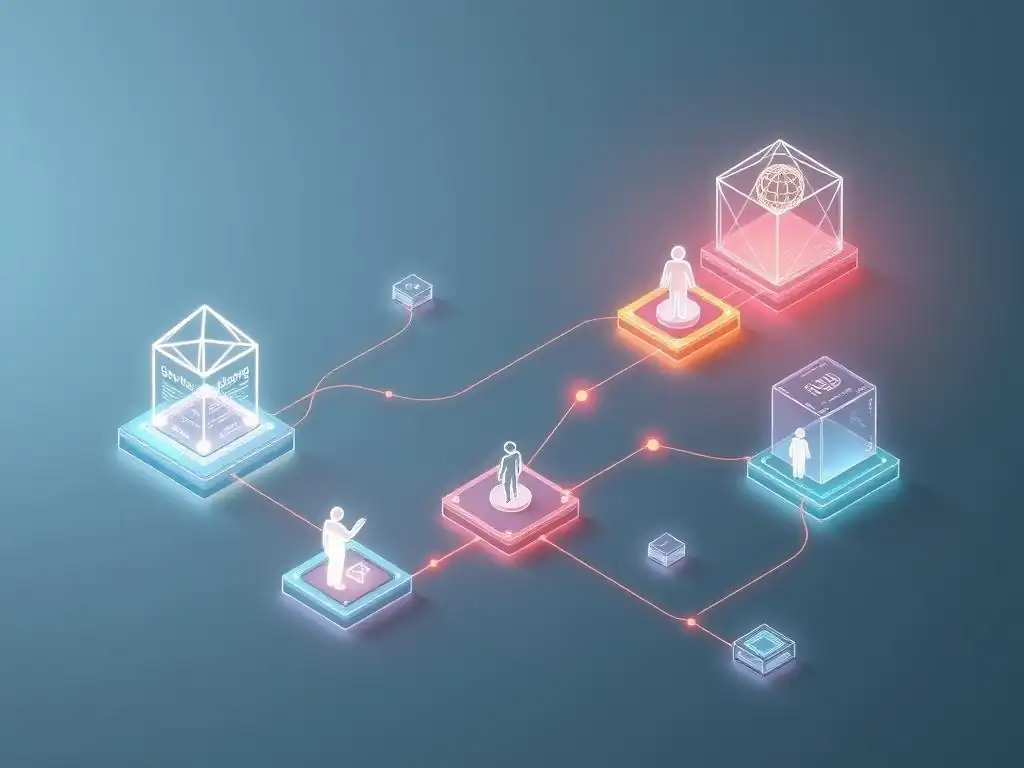
Cross-Platform Asset Transfers: Seamlessly Moving NFTs and Digital Assets
One of the most immediate and impactful use cases for blockchain interoperability protocols in the metaverse is enabling seamless cross-platform asset transfers, particularly for NFTs and other digital assets. Currently, NFTs are often confined to the blockchain on which they were minted, limiting their utility and portability across different metaverse platforms. Interoperability protocols break down these barriers, allowing users to freely move their digital assets between various metaverse environments, regardless of the underlying blockchain technology.
Imagine a user who owns a rare digital avatar NFT on a metaverse built on Ethereum. With interoperability, they could seamlessly transfer this avatar to a different metaverse platform built on Solana or Polygon and utilize it within that new virtual world. This cross-platform portability enhances the utility and value of digital assets, as they are no longer locked within a single ecosystem.
Interoperability protocols facilitate this by enabling secure and efficient bridging of NFTs and other digital assets between different blockchains, opening up a more fluid and user-centric metaverse experience where digital ownership transcends platform boundaries. This is a foundational element for building a truly open and interconnected metaverse economy.
Decentralized Finance (DeFi) Integration Across Multiple Metaverse Worlds
Blockchain interoperability protocols are crucial for facilitating the integration of Decentralized Finance (DeFi) across multiple metaverse worlds. DeFi offers a range of financial services, such as lending, borrowing, and trading, in a decentralized and transparent manner. Integrating DeFi within the metaverse can enhance user experiences and create new economic opportunities within these virtual environments. However, the fragmented nature of the blockchain landscape currently limits the seamless flow of DeFi functionalities across different metaverse platforms built on separate blockchains.
Interoperability protocols bridge this gap by enabling users to access DeFi services from various blockchain ecosystems directly within their preferred metaverse environments. For example, a user in a metaverse built on one blockchain could utilize a DeFi lending protocol operating on a different blockchain to borrow assets or earn yield on their metaverse holdings, all without leaving their immersive experience.
This cross-chain DeFi integration expands the economic possibilities within the metaverse, creating richer and more interconnected financial ecosystems within these virtual worlds. It also empowers users with greater control over their metaverse assets and financial activities, fostering a more decentralized and user-owned metaverse economy.
Governance and Voting Across Different Blockchain-Based Metaverse Platforms
Governance and voting are essential components of decentralized metaverse platforms, allowing users to participate in decision-making processes that shape the evolution and direction of these virtual worlds. However, when metaverse platforms are built on different blockchains, coordinating governance and voting across these disparate ecosystems becomes a significant challenge. Blockchain interoperability protocols offer solutions to enable cross-chain governance and voting mechanisms, fostering more inclusive and representative decision-making processes within the broader metaverse.
Interoperability can facilitate cross-chain governance by allowing users who hold governance tokens or NFTs on different blockchains to participate in voting processes across multiple metaverse platforms. For instance, a user holding governance tokens on a metaverse built on Ethereum could utilize an interoperability protocol to cast votes in governance proposals for a different metaverse platform built on Polkadot.
This cross-chain governance functionality ensures that users who are invested in multiple metaverse ecosystems have a voice in shaping the future of these virtual worlds, promoting a more decentralized and community-driven metaverse governance landscape. It also encourages greater participation and engagement in metaverse governance by removing blockchain-specific barriers to entry.
Enhanced User Experience Through Interoperable Identities and Data
Blockchain interoperability protocols can significantly enhance user experience within the metaverse by enabling interoperable identities and data management across different platforms. Currently, users often need to create separate identities and profiles for each metaverse platform they interact with, leading to fragmented user experiences and data silos. Interoperability can facilitate the creation of portable digital identities that users can utilize across multiple metaverse environments, streamlining onboarding processes and providing a more consistent and unified user experience.
Furthermore, interoperability protocols can enable users to control and manage their data across different metaverse platforms in a more cohesive manner. For example, a user could choose to share certain data preferences or profile information across multiple metaverse environments, while keeping other data private.
This interoperable data management empowers users with greater control over their personal information within the metaverse and reduces the friction associated with navigating multiple isolated platforms. By facilitating interoperable identities and data, these protocols contribute to a more seamless, user-centric, and interconnected metaverse experience, moving away from fragmented platform-specific silos towards a more unified digital world.
The Future of Blockchain Interoperability Protocols and the Metaverse
Scalability Solutions for Metaverse Interoperability
As the metaverse expands and user adoption grows, scalability becomes a critical consideration for blockchain interoperability protocols. The increasing volume of cross-chain transactions and data exchanges within a thriving metaverse will demand interoperability solutions that can handle significant throughput and maintain low latency. Future developments in blockchain interoperability will likely focus on enhancing scalability to accommodate the demands of a mass-scale metaverse.
One promising area is the development of more efficient and scalable bridging technologies. This includes research into optimistic rollups and zero-knowledge proofs for cross-chain communication, which can potentially reduce transaction costs and increase throughput compared to traditional bridge mechanisms. Furthermore, advancements in sharding and parallel processing techniques within interoperability protocols can enable them to handle a larger volume of cross-chain interactions concurrently. Addressing scalability challenges is paramount for ensuring that blockchain interoperability protocols can effectively support the growth and widespread adoption of the metaverse.
Security Considerations for Cross-Chain Metaverse Interactions
Security remains a paramount concern for blockchain interoperability protocols, especially as they facilitate interactions within the high-value metaverse ecosystem. Cross-chain transactions and data exchanges involve inherent security risks, and vulnerabilities in interoperability protocols can have significant consequences, potentially leading to asset losses and disruptions to metaverse operations. The future of blockchain interoperability will necessitate a continued focus on robust security measures and the development of protocols that are resilient to attacks and exploits.
This includes advancements in cryptographic techniques for cross-chain verification and consensus, as well as the implementation of rigorous security audits and testing procedures for interoperability protocols. Furthermore, research into formal verification methods can help to mathematically prove the security properties of these protocols, enhancing confidence in their robustness. As the metaverse evolves and becomes increasingly integrated with blockchain technology, ensuring the security of cross-chain interactions through robust interoperability protocols will be crucial for maintaining user trust and the overall stability of the metaverse ecosystem.
The Role of Standards and Governance in Fostering Blockchain Interoperability
Standardization and governance play a crucial role in fostering the widespread adoption and effectiveness of blockchain interoperability protocols within the metaverse. Establishing common standards for cross-chain communication, data formats, and asset representations can significantly simplify the development and integration of interoperability solutions across different metaverse platforms. Standardization can reduce fragmentation and promote greater compatibility between different blockchain ecosystems within the metaverse.
Furthermore, governance frameworks are essential for managing the evolution and maintenance of interoperability protocols, as well as for resolving disputes and ensuring fair and transparent cross-chain interactions. Decentralized governance models, involving stakeholders from various metaverse platforms and blockchain ecosystems, can promote greater trust and collaboration in the development and adoption of interoperability standards. The establishment of industry-wide standards and effective governance mechanisms will be instrumental in realizing the full potential of blockchain interoperability to create a truly interconnected and seamless metaverse.
Emerging Trends: Account Abstraction and Intent-Based Interoperability
Emerging trends in blockchain technology, such as account abstraction and intent-based interoperability, are poised to further enhance the user experience and functionality of cross-chain interactions within the metaverse. Account abstraction aims to simplify user onboarding and interaction with blockchain by decoupling accounts from specific key management schemes, allowing for more flexible and user-friendly wallet experiences. In the context of interoperability, account abstraction can streamline cross-chain transactions and simplify the management of assets across multiple blockchains.
Intent-based interoperability represents a paradigm shift in how cross-chain interactions are initiated and executed. Instead of users having to manually specify the technical details of cross-chain transactions, intent-based systems allow users to express their desired outcome or "intent," and the underlying infrastructure automatically handles the complexities of routing and executing the cross-chain operation. This can significantly simplify cross-chain interactions for metaverse users, making them more intuitive and accessible to a wider audience. These emerging trends have the potential to revolutionize blockchain interoperability and further pave the way for a seamless and user-friendly metaverse experience.
Overcoming the Challenges of Blockchain Interoperability
Addressing Security Vulnerabilities in Interoperability Protocols
Addressing security vulnerabilities in interoperability protocols is paramount to ensuring the safety and reliability of cross-chain interactions within the metaverse. As highlighted by past exploits and attacks on bridges and other interoperability solutions, security weaknesses can lead to significant financial losses and undermine user trust. Overcoming these challenges requires a multi-faceted approach focused on robust protocol design, rigorous security audits, and ongoing monitoring and incident response capabilities.
Developing interoperability protocols with provable security properties is crucial. This involves leveraging advanced cryptographic techniques and formal verification methods to mathematically demonstrate the resilience of these protocols to various attack vectors. Furthermore, comprehensive security audits conducted by independent experts are essential to identify and mitigate potential vulnerabilities before deployment. Ongoing monitoring of interoperability protocols and rapid incident response mechanisms are also necessary to detect and address security breaches in a timely manner, minimizing potential damage and maintaining the integrity of cross-chain operations within the metaverse.
Mitigating Risks Associated with Centralized Bridges
Centralized bridges, while sometimes offering faster and simpler cross-chain asset transfers, introduce inherent risks associated with reliance on a central entity. These centralized entities can become single points of failure or targets for malicious actors, potentially leading to censorship, asset freezes, or even complete bridge collapses. Mitigating these risks requires a shift towards more decentralized and trust-minimized bridging solutions for metaverse interoperability.
Decentralized bridges, which utilize distributed validator sets and on-chain governance mechanisms, reduce reliance on central intermediaries and enhance the security and resilience of cross-chain asset transfers. Furthermore, research into trustless bridging techniques, such as those based on zero-knowledge proofs and secure multi-party computation, aims to eliminate the need for trust in any intermediary entity altogether. Promoting the adoption of decentralized and trust-minimized bridging solutions is crucial for mitigating the risks associated with centralized bridges and fostering a more secure and robust interoperable metaverse ecosystem.
Fostering Trust and Transparency in Cross-Chain Transactions
Fostering trust and transparency in cross-chain transactions is essential for building user confidence and driving the widespread adoption of blockchain interoperability within the metaverse. Users need to have assurance that cross-chain interactions are secure, reliable, and transparent, without hidden fees or opaque processes. Achieving this requires a focus on clear communication, auditable transactions, and the implementation of mechanisms that enhance transparency throughout the cross-chain process.
Providing users with clear and accessible information about the mechanics of interoperability protocols, including the security measures in place and the associated risks, is crucial for building trust. Furthermore, ensuring that cross-chain transactions are auditable on-chain, allowing users to verify the integrity of these operations, enhances transparency. The adoption of open-source interoperability protocols and the implementation of decentralized governance mechanisms can also contribute to greater transparency and trust within the cross-chain metaverse ecosystem, fostering a more user-centric and reliable environment for cross-chain interactions.
Conclusion: Blockchain Interoperability as the Cornerstone of the Metaverse
The Transformative Potential of a Connected Blockchain Metaverse
The transformative potential of a connected blockchain metaverse hinges significantly on the success and widespread adoption of robust blockchain interoperability protocols. By breaking down the silos between isolated blockchain ecosystems, interoperability unlocks a new era of possibilities for the metaverse, enabling seamless asset portability, cross-platform experiences, and a more unified and user-centric digital world. A connected blockchain metaverse, powered by interoperability, transcends the limitations of fragmented platforms and paves the way for a truly expansive and immersive digital universe.
This interconnected metaverse has the potential to revolutionize various aspects of our digital lives, from entertainment and social interaction to commerce and governance. Imagine a metaverse where digital identities and assets are universally recognized and portable across different virtual environments, where users can seamlessly interact with applications and services built on diverse blockchain platforms, and where value and information flow freely across the digital landscape. This vision of a connected blockchain metaverse represents a significant leap forward in the evolution of the internet and digital interaction, driven by the foundational principles of blockchain interoperability.
The Importance of Continued Innovation in Blockchain Interoperability Protocols
Continued innovation in blockchain interoperability protocols is not just desirable; it is essential for realizing the full potential of the metaverse. As the metaverse evolves and user demands become more sophisticated, interoperability protocols must adapt and advance to meet these evolving needs. This requires ongoing research and development in areas such as scalability, security, efficiency, and user-friendliness of cross-chain solutions. Innovation in interoperability is the engine that will drive the continued growth and maturation of the metaverse ecosystem.
Future innovations may include more advanced cryptographic techniques for cross-chain communication, more efficient and scalable bridging mechanisms, and user-friendly interfaces that abstract away the complexities of cross-chain interactions. Furthermore, the emergence of new blockchain technologies and paradigms will necessitate continuous adaptation and innovation in interoperability protocols to maintain connectivity and seamless interaction across the ever-evolving blockchain landscape. The commitment to ongoing innovation in blockchain interoperability is a commitment to unlocking the full potential of the metaverse and shaping its future trajectory.
Embracing a Multi-Chain Future: Building a Seamless Metaverse Experience
Embracing a multi-chain future is crucial for building a truly seamless and expansive metaverse experience. The reality is that no single blockchain is likely to dominate the metaverse landscape entirely. Instead, a diverse ecosystem of specialized blockchains, each optimized for specific use cases and functionalities, is more probable. Blockchain interoperability protocols are the key to harnessing the strengths of this multi-chain environment and creating a cohesive and interconnected metaverse experience for users.
By fostering interoperability between different blockchains, we can move beyond the limitations of isolated platforms and create a metaverse that is greater than the sum of its parts. This multi-chain metaverse will be characterized by greater flexibility, scalability, and resilience, allowing for a wider range of applications and experiences to flourish. Embracing a multi-chain future, underpinned by robust blockchain interoperability, is the path towards building a truly seamless, open, and user-centric metaverse that fulfills its transformative potential.
Frequently Asked Questions
What are blockchain interoperability protocols and why are they important?
Blockchain interoperability protocols are technologies that enable different blockchains to communicate and share data and assets with each other. They are crucial for creating a more connected and efficient blockchain ecosystem.
How do interoperability protocols facilitate the building of a metaverse on blockchain?
These protocols allow for the seamless transfer of assets and data between different blockchain-based metaverse platforms. This enables users to interact across different virtual worlds and create a unified metaverse experience.
What are some examples of future applications enabled by blockchain interoperability?
Beyond the metaverse, interoperability unlocks possibilities like cross-chain DeFi applications, supply chain management across different blockchains, and streamlined data sharing between organizations.
What are some of the challenges associated with developing and implementing blockchain interoperability protocols?
Challenges include security concerns related to cross-chain transactions, scalability limitations as network usage increases, and the complexity of establishing standardized protocols.
How might regulation impact the future development and adoption of blockchain interoperability protocols?
Clear and consistent regulation can provide legal certainty and foster innovation in the space. Ambiguous or restrictive regulations could hinder the development and adoption of these vital technologies.
Final Reflection: Weaving the Threads of a Decentralized Future
The exploration of blockchain interoperability protocols reveals more than just technical solutions; it unveils a vision of a truly interconnected digital future. The ability for blockchains to communicate and share data seamlessly is no longer a futuristic fantasy, but a rapidly approaching reality, poised to revolutionize industries and redefine the very fabric of the internet. The potential impact on everything from decentralized finance to supply chain management is immense, making this a pivotal moment in the evolution of blockchain technology.
The promise of a connected metaverse, powered by these interoperable protocols, resonates deeply. It speaks to a future where digital assets and identities can transcend the limitations of individual blockchains, fostering a more fluid and inclusive digital economy. This vision is not just about technological advancement; it's about empowering individuals and communities to participate in a decentralized ecosystem. The future of the internet is not about walled gardens, but about open standards and interoperability.
This quote encapsulates the spirit of collaboration and innovation that drives the development of these crucial protocols.
As we stand on the cusp of this new era, let us consider the role we each play in shaping its trajectory. How can we contribute to the development and adoption of interoperable solutions? How can we ensure that this technology is used to build a more equitable and accessible digital world? Let us embrace the potential of blockchain interoperability protocols and work together to build a truly connected and decentralized future for all.
Unlock the Metaverse: Start Building Bridges Today!
Thank you for exploring the importance of interoperability in shaping the future of the digital world. You've gained valuable insights into how these protocols are laying the foundation for a truly connected metaverse. Ready to take the next step?
Here are a few ways you can contribute to building that future:
- Explore Specific Protocols: Investigate interoperability solutions like Polkadot, Cosmos, or LayerZero. Learn about their architecture and potential applications within the metaverse. This is your chance to become a knowledgeable contributor!
- Join the Conversation: Participate in blockchain and metaverse-related forums and communities. Share your insights on the significance of interoperability and learn from others' experiences.
- Share the Vision: Did this article inspire new ideas? Share it on your social media with a brief explanation of why interoperability is essential for creating a vibrant and accessible metaverse.
What interoperability challenges excite you the most, and which projects do you believe are leading the way? Share your thoughts in the comments below!
Leave a Reply