
How LayerZero is Revolutionizing Metaverse Interoperability with Blockchain


Welcome to Blockchain Trends, your compass in the rapidly evolving world of decentralized technology.
Dive into the groundbreaking advancements reshaping industries beyond just crypto. In this article, we unravel how LayerZero is revolutionizing Metaverse interoperability with blockchain security, unlocking seamless experiences across virtual worlds. Curious about the future of interconnected metaverses and the role of LayerZero in securing them? Read on to discover the transformative potential and the challenges that lie ahead.
How LayerZero is Revolutionizing Metaverse Interoperability with Blockchain
- Understanding Metaverse Interoperability Challenges and the Role of Blockchain
- LayerZero: A Deep Dive into the Omnichain Interoperability Protocol
-
LayerZero's Impact on Metaverse Interoperability: Use Cases and Examples
- Cross-Chain Asset Transfers in the Metaverse: Seamlessly Moving NFTs and Tokens
- Decentralized Governance Across Metaverses: Enabling Community Participation
- Shared Virtual Experiences: Building Interoperable Games and Social Platforms
- Avanti: Enabling Cross-Chain NFT Lending and Borrowing in the Metaverse
- Holograph: Facilitating Omnichain NFT Minting and Bridging for Metaverse Avatars
- LayerZero vs. Traditional Blockchain Bridges: A Comparative Analysis
- The Future of Metaverse Interoperability with LayerZero
- Addressing Key Concerns: LayerZero Security and Decentralization
- Conclusion: LayerZero and the Dawn of a Truly Interoperable Metaverse
-
Frequently Asked Questions
- What is LayerZero and why is it important for the Metaverse?
- How does LayerZero enhance blockchain security in Metaverse applications?
- How does LayerZero contribute to Metaverse interoperability?
- What are some potential enterprise applications of LayerZero in the Metaverse beyond gaming?
- What are the regulatory considerations surrounding LayerZero and its impact on the Metaverse?
- Final Reflection: Bridging Worlds with Secure Interoperability
- Unleash the Metaverse Potential: Explore LayerZero Now!
Understanding Metaverse Interoperability Challenges and the Role of Blockchain
The Fragmented Metaverse: Challenges of Isolated Virtual Worlds
The current metaverse landscape is largely characterized by fragmentation. Imagine a collection of walled gardens, each virtual world operating independently, with its own set of rules, assets, and user bases. This siloed approach presents significant challenges for users and developers alike. For instance, a digital avatar created and customized in one metaverse platform cannot typically be transferred or used in another.
Similarly, virtual assets, such as in-game items or virtual land purchased within one metaverse, are often locked within that specific environment, lacking utility or value beyond its borders. This isolation hinders user experience and limits the potential for a truly interconnected and expansive metaverse. The lack of LayerZero Metaverse interoperability blockchain security solutions exacerbates this issue, making it difficult to envision a future where digital identities and assets can seamlessly traverse these virtual realms.
This fragmentation also stifles innovation and economic growth within the metaverse space. Developers are forced to build for specific platforms, limiting their reach and potential audience. Users, on the other hand, are constrained by the limitations of each individual metaverse, unable to fully leverage their digital identities and assets across the broader virtual landscape.
This creates inefficiencies and reduces the overall appeal of the metaverse concept, hindering its potential to become a truly ubiquitous and immersive digital frontier. The need for solutions that foster LayerZero Metaverse interoperability is becoming increasingly critical to unlock the full potential of these virtual worlds.
The Promise of a Connected Metaverse: Why Interoperability Matters
The vision of a truly connected metaverse hinges on the concept of interoperability – the ability for different virtual worlds and platforms to seamlessly interact and exchange information and assets. Interoperability promises to break down the existing silos, creating a more unified and expansive digital universe. Imagine being able to use your avatar, customized with digital wearables and accessories, across various metaverse platforms, from gaming environments to virtual social spaces and even digital workspaces. This seamless transition of digital identity and assets across different virtual worlds is the core promise of metaverse interoperability.
The benefits extend beyond user convenience. A connected metaverse fosters a more vibrant and dynamic digital economy. Interoperable virtual assets gain broader utility and value as they can be used across multiple platforms, increasing their demand and liquidity.
Developers can reach a wider audience and create more integrated experiences, fostering innovation and collaboration. Furthermore, interoperability can lead to the emergence of new business models and opportunities within the metaverse, creating a more robust and sustainable ecosystem. Achieving this level of interconnectedness requires robust solutions focused on LayerZero Metaverse interoperability blockchain security, ensuring secure and seamless interactions between different virtual worlds.
Blockchain's Role in Enabling Seamless Metaverse Experiences
Blockchain technology emerges as a foundational layer for enabling seamless metaverse experiences through interoperability. Its inherent properties of decentralization, security, and transparency make it ideally suited to address the challenges of fragmented virtual worlds. Blockchain provides a shared, immutable ledger that can track ownership and transfer of digital assets across different platforms, ensuring trust and verifiability. Smart contracts, self-executing agreements coded on the blockchain, automate and secure cross-platform interactions, facilitating the seamless exchange of assets and data between various metaverses.
Moreover, blockchain-based solutions can establish a universal standard for digital identity and asset representation, allowing for consistent user experiences across different virtual environments. By leveraging blockchain, metaverses can move beyond isolated silos towards a more interconnected and collaborative ecosystem. This shift requires protocols specifically designed for cross-chain communication and asset transfer, emphasizing LayerZero Metaverse interoperability blockchain security. Solutions like LayerZero are pivotal in realizing this vision by providing the necessary infrastructure for secure and efficient communication between different blockchain networks that underpin various metaverse platforms.
LayerZero: A Deep Dive into the Omnichain Interoperability Protocol
What is LayerZero and How Does it Work?
LayerZero is an innovative omnichain interoperability protocol designed to facilitate secure and efficient communication between different blockchain networks. Unlike traditional blockchain bridges that often rely on intermediaries and centralized mechanisms, LayerZero adopts a novel approach to achieve trustless cross-chain communication. It aims to solve the "bridging trilemma," which highlights the challenges of achieving security, speed, and cost-effectiveness simultaneously in cross-chain solutions. LayerZero positions itself as an "omnichain" protocol, meaning it is designed to connect all blockchains, enabling seamless data and asset transfer across diverse ecosystems.
At its core, LayerZero operates by transmitting messages between blockchains using a combination of off-chain oracles and relayers. When a message is sent from one blockchain to another, LayerZero utilizes two independent entities: an Oracle, which fetches block headers from the source chain, and a Relayer, which submits the transaction proof to the destination chain.
This separation of duties, known as the Decentralized Verifier Network (DVN), enhances security by reducing reliance on a single point of failure. By leveraging this architecture, LayerZero strives to provide a more secure, efficient, and cost-effective solution for LayerZero Metaverse interoperability blockchain security, crucial for the interconnected metaverse.
LayerZero's Architecture: Ultra Light Node (ULN) and Decentralized Oracles
LayerZero's architecture is built upon the concept of an Ultra Light Node (ULN). Traditional light nodes in blockchain networks verify transactions by downloading block headers, requiring significant computational resources. In contrast, LayerZero's ULN operates more efficiently by only requiring block headers on demand, specifically when cross-chain communication is initiated. This significantly reduces the computational overhead and makes cross-chain communication faster and more scalable.
Furthermore, LayerZero employs decentralized oracles and relayers to enhance security and decentralization. Instead of relying on a single oracle, LayerZero allows developers to choose their preferred oracle network and relayer. This customizable security model allows applications built on LayerZero to tailor their security measures based on their specific needs and risk tolerance. For instance, applications requiring high security can opt for more robust and decentralized oracle networks. This flexible architecture, centered around the ULN and decentralized components, is fundamental to LayerZero's approach to achieving secure and efficient LayerZero Metaverse interoperability blockchain security.
Trustless Interoperability: Enhancing Blockchain Security with LayerZero
LayerZero distinguishes itself from many traditional blockchain bridges by aiming for "trustless interoperability." Traditional bridges often require users to trust a centralized intermediary or a multi-signature setup to facilitate cross-chain transactions. These approaches introduce potential security vulnerabilities and points of failure. In contrast, LayerZero's architecture, with its decentralized verifier network and separation of oracle and relayer functions, is designed to minimize trust assumptions.
The security of LayerZero relies on the economic security of the chosen oracle and relayer networks. As long as these networks remain decentralized and secure, LayerZero can facilitate trustless cross-chain communication. This approach significantly enhances blockchain security for metaverse interoperability by reducing reliance on centralized entities and mitigating the risks associated with traditional bridging mechanisms. By focusing on cryptographic verification and decentralized infrastructure, LayerZero provides a more robust and secure foundation for building an interconnected metaverse where users can confidently move assets and data across different virtual worlds.
LayerZero's Impact on Metaverse Interoperability: Use Cases and Examples
Cross-Chain Asset Transfers in the Metaverse: Seamlessly Moving NFTs and Tokens
One of the most significant applications of LayerZero in the metaverse is enabling seamless cross-chain asset transfers. In the fragmented metaverse landscape, users often find their digital assets, particularly NFTs and tokens, locked within specific blockchain ecosystems. LayerZero breaks down these barriers, allowing users to move their assets freely between different metaverse platforms built on various blockchains. For example, a user who owns a virtual land NFT on a metaverse built on Ethereum could, using LayerZero, transfer that NFT to a metaverse operating on Solana, and vice versa.
This capability unlocks significant utility for metaverse assets. Imagine owning a unique digital artwork as an NFT that you can display in your virtual home in one metaverse, and then seamlessly transfer it to another metaverse to showcase it in a different virtual gallery. Similarly, in-game items acquired in one metaverse game could be utilized or traded in another game built on a different blockchain.
This seamless transferability enhances the value and utility of metaverse assets, fostering a more dynamic and interconnected digital economy. LayerZero's role in facilitating these cross-chain transfers is crucial for realizing the vision of a truly interoperable metaverse with enhanced LayerZero Metaverse interoperability blockchain security.
Decentralized Governance Across Metaverses: Enabling Community Participation
LayerZero can also facilitate decentralized governance across different metaverses. Many metaverse platforms are increasingly adopting decentralized autonomous organizations (DAOs) for community governance. However, these DAOs are often confined to a single blockchain ecosystem, limiting their reach and influence. LayerZero enables cross-chain communication for DAOs, allowing for more inclusive and participatory governance models across multiple metaverses.
For instance, a DAO governing a metaverse built on Polygon could, through LayerZero, extend its governance mechanisms to another metaverse operating on Avalanche. This could involve cross-chain voting, proposal sharing, and coordinated decision-making, fostering a more unified and collaborative governance structure across the broader metaverse. This cross-chain governance capability empowers metaverse communities and promotes greater decentralization and user participation in shaping the future of these virtual worlds. By enabling decentralized governance across metaverses, LayerZero contributes to a more democratic and community-driven evolution of the metaverse ecosystem, underpinned by LayerZero Metaverse interoperability blockchain security.
The potential for shared virtual experiences across different metaverse platforms is significantly enhanced by LayerZero. Currently, users are often confined to individual metaverse environments, unable to interact with users and experiences from other platforms. LayerZero enables the development of interoperable games and social platforms that span multiple blockchains, creating more expansive and unified virtual worlds.
Imagine a massively multiplayer online role-playing game (MMORPG) that leverages LayerZero to connect different game servers operating on various blockchains. Players from different blockchain ecosystems could interact with each other, participate in shared quests, and contribute to a unified game world. Similarly, social platforms could leverage LayerZero to create interoperable virtual spaces where users from different metaverses can seamlessly connect, socialize, and collaborate. This vision of shared virtual experiences, powered by LayerZero Metaverse interoperability blockchain security, promises to create a more immersive and interconnected metaverse, transcending the limitations of isolated virtual worlds.
Avanti: Enabling Cross-Chain NFT Lending and Borrowing in the Metaverse
Avanti is a protocol built on LayerZero that specifically focuses on enabling cross-chain NFT lending and borrowing within the metaverse context. NFTs, representing unique digital assets in the metaverse, often lack sufficient liquidity and utility due to their fragmented nature across different blockchains. Avanti leverages LayerZero to create a cross-chain NFT lending and borrowing marketplace, unlocking liquidity and financial utility for metaverse NFTs.
Through Avanti, users can lend their NFTs as collateral to borrow other assets, or borrow NFTs by providing collateral. This functionality is extended across different blockchains via LayerZero, allowing users to access a wider pool of lenders and borrowers and utilize their NFTs for financial activities across the metaverse.
For example, a user holding a valuable virtual land NFT on Ethereum could use Avanti to lend it out and borrow stablecoins on Avalanche, or vice versa. Avanti demonstrates the practical application of LayerZero Metaverse interoperability blockchain security in enhancing the financial ecosystem of the metaverse by unlocking new possibilities for NFT utility and liquidity.
Holograph: Facilitating Omnichain NFT Minting and Bridging for Metaverse Avatars
Holograph is another notable project built on LayerZero, focusing on omnichain NFT minting and bridging, particularly relevant for metaverse avatars. In the current metaverse landscape, creating and managing avatars across different platforms can be cumbersome. Holograph simplifies this process by enabling creators to mint NFTs that are natively omnichain, meaning they exist seamlessly across multiple blockchains.
With Holograph, a metaverse avatar NFT minted on the platform can be easily bridged and utilized across different metaverses operating on various blockchains without the need for complex wrapping or bridging processes. This streamlines the user experience and enhances the portability of metaverse avatars. Furthermore, Holograph leverages LayerZero's security and efficiency to ensure secure and cost-effective omnichain NFT operations. Holograph showcases how LayerZero Metaverse interoperability blockchain security can be leveraged to improve the user experience and simplify the management of digital identities within the interconnected metaverse.
LayerZero vs. Traditional Blockchain Bridges: A Comparative Analysis
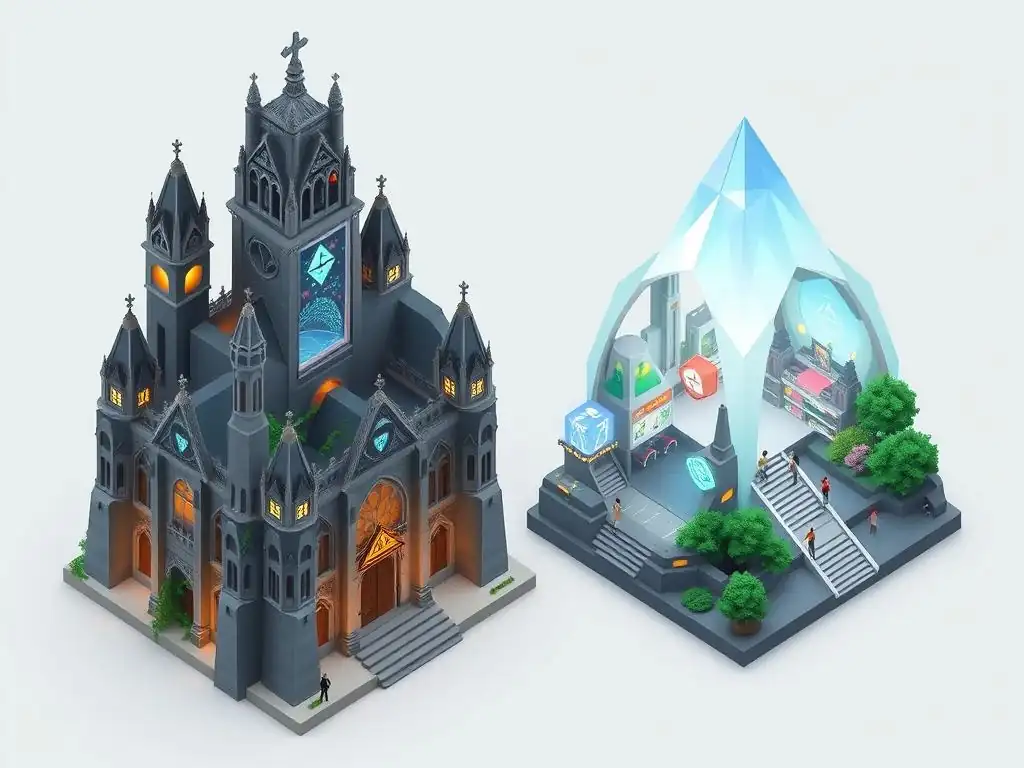
Security Considerations: Addressing the Risks of Blockchain Bridges
Traditional blockchain bridges, while serving the purpose of cross-chain communication, have often been identified as a significant source of security vulnerabilities in the blockchain ecosystem. Many bridges operate using "lock-and-mint" mechanisms, where assets are locked on one chain and a wrapped version is minted on another. These bridges often rely on centralized or federated custodians to manage the locked assets, creating single points of failure and potential targets for exploits. Several high-profile bridge hacks have demonstrated the inherent security risks associated with these traditional approaches, resulting in significant financial losses.
LayerZero, in contrast, aims to address these security concerns through its decentralized architecture and trustless interoperability model. By separating the oracle and relayer functions and allowing for customizable security parameters, LayerZero reduces reliance on centralized intermediaries and enhances the overall security of cross-chain communication. While no system is entirely immune to risks, LayerZero's design principles prioritize blockchain security for metaverse interoperability, offering a more robust and less vulnerable alternative compared to many traditional bridge designs. The emphasis on decentralization and cryptographic verification makes LayerZero a more secure foundation for building an interconnected metaverse.
Scalability and Efficiency: Comparing LayerZero to Existing Solutions
Scalability and efficiency are crucial considerations for any interoperability solution, especially in the context of the metaverse, which demands high transaction throughput and low latency. Traditional blockchain bridges can often suffer from scalability bottlenecks and inefficiencies due to their architectural limitations and reliance on intermediaries. Transaction processing can be slow and costly, hindering the seamless flow of assets and data across different blockchains.
LayerZero's Ultra Light Node (ULN) architecture is designed to enhance scalability and efficiency. By only requiring block headers on demand, LayerZero reduces the computational overhead associated with cross-chain communication, leading to faster transaction processing and improved scalability. Furthermore, the decentralized nature of LayerZero and the ability to customize oracle and relayer networks can contribute to greater efficiency by optimizing resource utilization. Compared to many existing bridging solutions, LayerZero offers a more scalable and efficient approach to LayerZero Metaverse interoperability blockchain security, better suited to meet the demands of a growing and dynamic metaverse.
Cost-Effectiveness: Analyzing the Transaction Fees of LayerZero
Transaction fees are another important factor to consider when evaluating interoperability solutions. Traditional blockchain bridges can sometimes incur high transaction fees due to gas costs on multiple chains, intermediary fees, and complex operational processes. These high fees can become a barrier to entry for users and developers, especially for frequent cross-chain interactions within the metaverse.
LayerZero aims to provide a more cost-effective solution for cross-chain communication. The efficiency of its ULN architecture and the decentralized operational model contribute to lower transaction costs compared to many traditional bridges. While transaction fees will still be incurred on the source and destination chains, LayerZero's design minimizes unnecessary overhead and intermediary fees. This cost-effectiveness makes LayerZero a more accessible and attractive option for enabling LayerZero Metaverse interoperability blockchain security, particularly for applications requiring frequent and low-cost cross-chain interactions within the metaverse ecosystem.
The Future of Metaverse Interoperability with LayerZero
LayerZero's Roadmap: Upcoming Features and Developments
LayerZero is continuously evolving and expanding its capabilities to further enhance metaverse interoperability. The project's roadmap includes ongoing development and integration with more blockchain networks, broadening the scope of its omnichain connectivity. Future developments are likely to focus on optimizing performance, enhancing security features, and expanding the range of functionalities supported by the protocol. Specific features under development may include more advanced cross-chain messaging capabilities, enhanced support for complex smart contract interactions across chains, and further decentralization of the oracle and relayer networks.
These ongoing developments indicate a commitment to solidifying LayerZero's position as a leading interoperability solution for the metaverse and beyond. The roadmap reflects a focus on continuous improvement and adaptation to the evolving needs of the blockchain and metaverse ecosystems. By consistently enhancing its features and expanding its network support, LayerZero aims to further solidify its role in enabling seamless and secure LayerZero Metaverse interoperability blockchain security in the future.
The Potential for Mass Adoption: Scaling Metaverse Interoperability
The potential for mass adoption of metaverse interoperability hinges on the availability of reliable, secure, and user-friendly solutions. LayerZero, with its focus on trustless interoperability, scalability, and cost-effectiveness, is well-positioned to contribute to the mass adoption of metaverse interoperability. As more metaverse platforms and applications integrate LayerZero, users will experience increasingly seamless and interconnected virtual worlds. This enhanced user experience can drive wider adoption of metaverse technologies and accelerate the growth of the overall metaverse ecosystem.
The ease of use and security offered by LayerZero can encourage developers to build more interoperable applications and experiences, further expanding the possibilities within the metaverse. As the metaverse continues to evolve, solutions like LayerZero that prioritize LayerZero Metaverse interoperability blockchain security will be crucial in facilitating its mainstream adoption and realizing its full potential as a transformative digital frontier.
LayerZero's Role in Building a Composable and Permissionless Metaverse
LayerZero's architecture and design principles align with the vision of a composable and permissionless metaverse. "Composable" refers to the ability to easily combine and integrate different metaverse components and applications, creating more complex and interconnected experiences. "Permissionless" implies an open and accessible ecosystem where anyone can participate and contribute without requiring centralized authorization.
LayerZero facilitates composability by enabling seamless communication and asset transfer between different blockchain networks, allowing developers to build applications that leverage functionalities and assets across multiple metaverse platforms. Its decentralized and trustless nature contributes to a permissionless environment by reducing reliance on centralized intermediaries and fostering an open and accessible ecosystem. By promoting composability and permissionless access, LayerZero plays a vital role in building a more open, innovative, and user-centric metaverse, underpinned by robust LayerZero Metaverse interoperability blockchain security.
Addressing Key Concerns: LayerZero Security and Decentralization
LayerZero’s Security Model: Mitigating Potential Attacks
While LayerZero aims for trustless interoperability, it's essential to understand its security model and how it mitigates potential attacks. LayerZero's security relies on the Decentralized Verifier Network (DVN), composed of oracles and relayers. The security assumption is that the chosen oracle and relayer networks are sufficiently decentralized and economically incentivized to act honestly. If both the oracle and relayer collude, they could potentially validate fraudulent transactions. However, the probability of such collusion is mitigated by the decentralization of these networks and the economic disincentives for malicious behavior.
Furthermore, LayerZero allows developers to customize their security settings by choosing different oracle and relayer pairs. Applications requiring higher security can opt for more robust and decentralized oracle networks, further reducing the risk of collusion. LayerZero's security model is continuously being audited and refined to address potential vulnerabilities and enhance its resilience against attacks. Ongoing audits and community scrutiny are crucial for maintaining and improving the LayerZero Metaverse interoperability blockchain security framework.
Decentralization and Governance: Ensuring Trustlessness in LayerZero
Decentralization is a core principle of blockchain technology and a key aspect of LayerZero's design. While the current implementation of LayerZero relies on selected oracle and relayer networks, efforts are underway to further decentralize these components and transition towards a more community-driven governance model. Progressive decentralization is essential for ensuring the long-term trustlessness and security of the protocol.
Future developments may include expanding the number of oracle and relayer providers, implementing mechanisms for community governance over protocol upgrades and parameters, and fostering greater transparency in the operational aspects of the network. Increased decentralization and community governance are crucial for solidifying LayerZero's position as a truly trustless and secure interoperability solution, enhancing its long-term viability and contributing to robust LayerZero Metaverse interoperability blockchain security.
Audits and Transparency: Verifying the Integrity of the LayerZero Protocol
Audits and transparency are paramount for building trust and confidence in any blockchain protocol, especially one as critical as LayerZero for metaverse interoperability. Independent security audits conducted by reputable firms are essential to identify potential vulnerabilities and verify the integrity of the protocol's code and architecture. LayerZero has undergone and continues to undergo security audits to ensure its robustness and resilience against attacks.
Transparency in the protocol's operations, development roadmap, and governance processes is also crucial for building community trust and fostering accountability. Open-source code, publicly available documentation, and clear communication channels contribute to greater transparency and allow for community scrutiny and feedback. Ongoing audits and a commitment to transparency are vital for verifying the integrity of the LayerZero protocol and maintaining confidence in its LayerZero Metaverse interoperability blockchain security.
Conclusion: LayerZero and the Dawn of a Truly Interoperable Metaverse
Key Takeaways: The Significance of LayerZero for Metaverse Development
LayerZero represents a significant leap forward in enabling metaverse interoperability through blockchain technology. Its innovative architecture, focused on trustless interoperability, scalability, and cost-effectiveness, addresses key challenges in connecting fragmented virtual worlds. By facilitating seamless cross-chain asset transfers, decentralized governance, and shared virtual experiences, LayerZero unlocks new possibilities for metaverse development and user engagement. Projects like Avanti and Holograph, built on LayerZero, demonstrate the practical applications of this technology in enhancing NFT utility and simplifying metaverse avatar management.
LayerZero's emphasis on LayerZero Metaverse interoperability blockchain security distinguishes it from many traditional bridging solutions, offering a more robust and secure foundation for building an interconnected metaverse. As the metaverse continues to evolve, LayerZero's role in fostering interoperability will become increasingly critical for realizing the vision of a truly unified and expansive digital universe.
The Future of Blockchain-Based Metaverse Interoperability: A Vision
The future of the metaverse is inextricably linked to blockchain-based interoperability solutions like LayerZero. Imagine a metaverse where users can seamlessly traverse different virtual worlds, carrying their digital identities and assets with them, participating in shared experiences, and contributing to a unified digital economy. This vision of a truly interoperable metaverse, powered by secure and efficient cross-chain communication protocols, is becoming increasingly tangible with the advancements offered by LayerZero.
As LayerZero continues to evolve and expand its reach, it paves the way for a more open, interconnected, and user-centric metaverse. The promise of LayerZero Metaverse interoperability blockchain security is not just about technical advancements; it's about creating a more inclusive, dynamic, and engaging digital future where virtual worlds are seamlessly connected, and users are empowered to explore and interact without boundaries.
Frequently Asked Questions
What is LayerZero and why is it important for the Metaverse?
LayerZero is a blockchain interoperability protocol designed to facilitate seamless communication between different blockchains. It's important for the Metaverse because it enables asset and data transfer across various virtual worlds, creating a more unified and interconnected experience.
How does LayerZero enhance blockchain security in Metaverse applications?
LayerZero employs a unique security model relying on independent oracles and relayer networks. This distributed approach reduces the risk of a single point of failure, enhancing security compared to traditional bridging solutions in the Metaverse.
How does LayerZero contribute to Metaverse interoperability?
LayerZero allows for the seamless transfer of assets like NFTs and currency between different Metaverse environments. This creates a more fluid and integrated user experience, eliminating the limitations of walled-garden ecosystems.
What are some potential enterprise applications of LayerZero in the Metaverse beyond gaming?
Beyond gaming, LayerZero can facilitate secure data sharing between different virtual business environments. This could include applications in virtual real estate, supply chain management, and decentralized identity verification within the Metaverse.
What are the regulatory considerations surrounding LayerZero and its impact on the Metaverse?
Regulatory bodies are still developing frameworks for blockchain interoperability. LayerZero's ability to facilitate cross-chain transactions requires careful consideration of KYC/AML compliance and data privacy regulations within the evolving Metaverse landscape.
Final Reflection: Bridging Worlds with Secure Interoperability
The promise of a truly interconnected metaverse, once a distant dream, is rapidly becoming a tangible reality thanks to innovations like LayerZero. The ability to seamlessly transfer assets and data across different blockchain ecosystems is no longer a futuristic concept, but a present-day necessity for the metaverse to reach its full potential. This article has explored how LayerZero is tackling the complex challenges of metaverse interoperability while prioritizing blockchain security, paving the way for a more unified and user-friendly digital experience.
The impact of secure interoperability on the metaverse is profound, shaping not only the technical infrastructure but also the very fabric of our digital interactions. The ability to move freely between virtual worlds, carrying our identities and assets with us, fosters a sense of ownership and agency that is crucial for the long-term success of the metaverse. This paradigm shift demands a robust and secure foundation, and LayerZero's commitment to blockchain security is paramount. The metaverse is not just about virtual reality; it's about creating a persistent, shared digital world. Interoperability is the key to unlocking that potential, but it must be built on a foundation of trust and security.
As we stand on the cusp of this new era, let us consider the implications of a truly interconnected metaverse. What new opportunities will arise when the barriers between virtual worlds are dissolved? How can we ensure that this digital frontier remains open, accessible, and secure for all? Embrace the potential of LayerZero and similar technologies, and actively participate in shaping a metaverse where interoperability and security are not just features, but fundamental rights. The future of the metaverse is in our hands; let us build it together, responsibly and with vision.
Unleash the Metaverse Potential: Explore LayerZero Now!
Thank you for exploring how LayerZero is transforming metaverse interoperability. Now that you understand the importance of seamless connections between virtual worlds, it's time to take the next step.
Here's how you can dive deeper into the future of the metaverse:
- Join the LayerZero community: Participate in their forums, Discord channels, and review governance proposals to stay informed about ongoing developments and influence the project's direction.
- Discover projects utilizing LayerZero’s interoperability: Explore innovative applications and experiences being built on this technology and identify potential opportunities for collaboration or investment.
- Share this article with your network and ignite conversations about the future of interoperability in the metaverse. Let’s spread awareness of this groundbreaking technology.
What exciting possibilities do you envision with truly interconnected virtual worlds? Share your thoughts in the comments below!
Leave a Reply