
The Metaverse and Data Privacy: Can Blockchain Secure Our Virtual Lives?


Welcome to Blockchain Trends, your compass in the rapidly evolving world of decentralized technologies!
Imagine a metaverse where your digital identity is truly yours, secured by the very technology that powers it. That's the promise – and the challenge – we're diving into. In this article, we explore the crucial intersection of blockchain, secure metaverse privacy, and the future of data protection in virtual worlds. Can blockchain truly safeguard our virtual lives, or are there unforeseen risks lurking beneath the surface? Join us as we unravel the complexities and explore the potential for a privacy-respecting metaverse. Ready to unlock the secrets?
The Metaverse and Data Privacy: Can Blockchain Secure Our Virtual Lives?
- Introduction: Metaverse Privacy Concerns and the Role of Blockchain
- Understanding the Metaverse: A New Frontier for Data Security
- Blockchain Technology: A Foundation for Metaverse Privacy
- Blockchain-Based Solutions for Metaverse Data Privacy
- Challenges and Limitations of Blockchain in Metaverse Privacy
- Use Cases: Blockchain Securing Metaverse Environments
- The Future of Blockchain and Metaverse Privacy
- Conclusion: Blockchain's Potential to Shape a More Private Metaverse
-
Frequently Asked Questions
- How can blockchain technology help enhance privacy within the metaverse?
- What are the main data privacy concerns arising from increased metaverse adoption?
- Does blockchain offer any solutions for these privacy concerns in the metaverse?
- How does blockchain contribute to a more secure and trustworthy metaverse environment?
- What role does regulation play in ensuring blockchain secure metaverse privacy is maintained?
- Final Reflection: Securing Our Digital Selves
- Unveil Your Metaverse Privacy Power!
Introduction: Metaverse Privacy Concerns and the Role of Blockchain
Exploring the Growing Importance of Data Privacy in Metaverse Environments
As we increasingly spend time in digital realms, the metaverse emerges as the next evolution of online interaction, promising immersive and persistent virtual worlds. This shift, however, brings forth critical concerns about data privacy.
In these interconnected digital spaces, users will generate vast amounts of personal data, including biometric information from VR/AR devices, social interactions, transaction histories, and even emotional responses tracked through advanced sensors. For example, market research firm Gartner projects that by 2026, 25% of people will spend at least one hour a day in the metaverse, engaging in activities ranging from work and shopping to entertainment and social interactions.
This level of engagement implies a significant increase in the volume and sensitivity of personal data being created, processed, and potentially exploited within these virtual ecosystems. The potential for misuse, unauthorized access, and surveillance in these immersive environments is amplified compared to current internet experiences, making data privacy not just a concern, but a fundamental requirement for a trustworthy and user-centric metaverse.
How Blockchain Technology Can Address Metaverse Privacy Challenges
Blockchain technology, with its inherent characteristics of decentralization, transparency, and security, offers a compelling framework to address the burgeoning privacy challenges within the metaverse. Unlike traditional centralized systems where user data is often controlled by a single entity, blockchain provides a distributed ledger system that can empower individuals with greater control over their personal information.
By leveraging cryptographic techniques and consensus mechanisms, blockchain can ensure data integrity and immutability, making it significantly harder for malicious actors to tamper with or steal sensitive user data. Furthermore, blockchain facilitates the development of decentralized identity solutions, enabling users to manage and control their digital identities across various metaverse platforms without relying on centralized intermediaries.
For instance, the concept of self-sovereign identity (SSI) powered by blockchain is gaining traction as a means to give users complete ownership and authority over their identity data, deciding who has access and for what purpose. This paradigm shift from centralized data silos to user-centric data management is crucial for building a metaverse where privacy is not an afterthought but a core design principle, and blockchain stands as a powerful tool to realize this vision.
Understanding the Metaverse: A New Frontier for Data Security
Defining the Metaverse: Key Features and Characteristics
The metaverse, while still evolving, can be broadly defined as a persistent, shared, 3D virtual world or worlds. It is characterized by several key features that distinguish it from the current internet. Firstly, immersion is central; users experience the metaverse through technologies like virtual reality (VR) and augmented reality (AR), creating a sense of presence and embodiment within the digital space.
Secondly, it is interactive, allowing users to engage with each other and the virtual environment in real-time. Thirdly, the metaverse is intended to be persistent, meaning it continues to exist and evolve even when individual users are not actively participating. Furthermore, it is envisioned to be interoperable, allowing users to move seamlessly between different virtual worlds and platforms with their digital identities and assets.
Examples of early metaverse platforms include Decentraland and The Sandbox, which offer virtual land ownership and user-created experiences, and platforms like Meta's Horizon Worlds, aiming to create more social and interactive virtual spaces. These platforms, although nascent, illustrate the core characteristics of the metaverse and hint at its transformative potential and the associated data security challenges.
Current Data Privacy Risks and Vulnerabilities in the Metaverse
The immersive and data-rich nature of the metaverse amplifies existing online privacy risks and introduces new vulnerabilities. Current metaverse platforms often rely on centralized data collection models, mirroring Web 2.0 practices. This means user data, ranging from avatars and preferences to interaction logs and potentially biometric data, is often stored and managed by the platform providers.
This centralized approach creates several privacy risks. Firstly, it presents a single point of failure, making vast amounts of sensitive data vulnerable to breaches and hacks. Secondly, it raises concerns about data exploitation, as platform providers may monetize user data through targeted advertising or data sharing, often without transparent user consent or control.
Furthermore, the lack of interoperability between platforms can lead to fragmented digital identities and data silos, hindering user control and portability. For instance, a study by the XR Safety Initiative (XRSI) highlighted potential privacy risks associated with VR headsets collecting biometric data like eye-tracking and facial expressions, which could be used to infer sensitive information about users' emotions and intentions. These vulnerabilities underscore the urgent need for robust privacy-preserving mechanisms in the metaverse to protect users from potential harms.
The Need for Robust Security Measures in Virtual Worlds
Robust security measures are not merely desirable but fundamentally necessary for the metaverse to achieve widespread adoption and user trust. Without strong privacy protections, users are likely to be hesitant to fully engage in metaverse experiences, fearing data breaches, surveillance, and misuse of their personal information. The potential consequences of privacy failures in the metaverse are significant, ranging from identity theft and financial fraud to psychological manipulation and social engineering.
Imagine a scenario where biometric data collected in the metaverse is used to discriminate against individuals based on their emotional responses or physical characteristics. Or consider the implications of persistent surveillance within virtual worlds, eroding user autonomy and chilling freedom of expression.
Therefore, establishing a secure and privacy-respecting metaverse is not just a technical challenge but also a crucial ethical and societal imperative. Building trust through robust security and privacy measures is essential to unlock the full potential of the metaverse as a positive and empowering space for human interaction, creativity, and commerce.
Blockchain Technology: A Foundation for Metaverse Privacy
Blockchain Basics: Decentralization, Transparency, and Security
Blockchain technology, at its core, is a decentralized, distributed, and immutable ledger. Decentralization means that data is not stored in a single location but distributed across a network of computers, eliminating single points of failure and control. Transparency is achieved through the public nature of many blockchains, where transaction records are visible to all participants in the network, although the identities of participants can be pseudonymized. Security is ensured through cryptographic techniques, such as hashing and digital signatures, and consensus mechanisms that require multiple network participants to validate transactions.
These features collectively contribute to the robustness and security of blockchain networks. For example, Bitcoin, the first widely adopted cryptocurrency, utilizes blockchain to securely record and verify transactions without the need for a central authority. This underlying technology can be adapted and applied beyond cryptocurrencies to address data privacy and security challenges in various contexts, including the metaverse.
How Blockchain Can Enhance Data Ownership and Control in the Metaverse
Blockchain's decentralized and user-centric nature directly addresses the limitations of centralized data models prevalent in current online platforms and emerging metaverse environments. By leveraging blockchain, metaverse users can gain greater ownership and control over their data. Decentralized Identity (DID) solutions built on blockchain allow individuals to create and manage their digital identities independently, without relying on platform-specific accounts or centralized identity providers.
Users can control which aspects of their identity are shared and with whom, granting granular access permissions. Furthermore, blockchain can facilitate data sovereignty, empowering users to own and control their data generated within the metaverse.
Instead of data being stored in platform-controlled silos, blockchain-based systems can enable users to store their data securely and grant access to metaverse applications and services on a need-to-know basis. This shift towards user-centric data ownership and control is fundamental to building a privacy-respecting metaverse, moving away from the data extractive practices of Web 2.0 towards a more empowering and equitable digital future.
Smart Contracts and Automated Privacy Enforcement
Smart contracts, self-executing contracts with the terms of the agreement directly written into code, represent another powerful tool blockchain offers for enhancing metaverse privacy. These contracts can automate privacy enforcement and ensure that data is handled according to pre-defined rules and user consent. For example, smart contracts can be used to manage data access permissions, automatically revoking access after a specified period or under certain conditions.
They can also be used to enforce data minimization principles, ensuring that only necessary data is collected and processed for specific metaverse interactions. Furthermore, smart contracts can facilitate secure and transparent data sharing, enabling users to monetize their data while maintaining control over its usage.
Imagine a metaverse marketplace where users can rent out their virtual assets or data in a privacy-preserving manner, with smart contracts automatically managing access, payments, and data usage restrictions. This automated and transparent enforcement of privacy policies through smart contracts can significantly enhance user trust and contribute to a more privacy-conscious metaverse ecosystem.
Blockchain-Based Solutions for Metaverse Data Privacy
Decentralized Identity Management (DID) in the Metaverse
Decentralized Identity Management (DID) is a cornerstone of blockchain-based privacy solutions for the metaverse. DIDs empower users to create and control their own digital identities, independent of centralized authorities or platform providers. In the metaverse context, DIDs enable users to navigate across different virtual worlds and applications using a single, verifiable digital identity, without the need to create separate accounts and share their personal information repeatedly with each platform.
Standards like the W3C Decentralized Identifiers (DIDs) specification provide a framework for creating and managing these self-sovereign identities. For instance, projects like SpruceID's Kepler Network are building infrastructure to support DIDs and verifiable credentials in decentralized applications, including metaverse platforms.
By using DIDs, users can selectively disclose only the necessary information required for each interaction in the metaverse, minimizing data exposure and enhancing privacy. This user-centric approach to identity management is crucial for fostering a metaverse where individuals have agency over their digital selves and their associated data.
Secure Data Storage and Sharing Using Blockchain
Blockchain can also provide secure and transparent mechanisms for data storage and sharing within the metaverse. While storing large volumes of metaverse data directly on the main blockchain might be inefficient due to scalability limitations, blockchain can be used to manage access control and verify data integrity for off-chain storage solutions. For example, InterPlanetary File System (IPFS) is a decentralized storage network that can be integrated with blockchain to provide secure and censorship-resistant data storage.
Blockchain can store cryptographic hashes of data stored on IPFS, ensuring data immutability and verifiability. Furthermore, blockchain-based access control mechanisms can be implemented to regulate who can access and modify metaverse data. This combination of decentralized storage and blockchain-based access control can create a more secure and privacy-preserving data infrastructure for the metaverse, reducing reliance on centralized data silos and mitigating the risks of data breaches and unauthorized access.
Privacy-Preserving Computation (PPC) for Metaverse Interactions
Privacy-Preserving Computation (PPC) technologies, including techniques like secure multi-party computation (MPC), homomorphic encryption, and zero-knowledge proofs (ZKPs), can further enhance data privacy in the metaverse by enabling computation on encrypted data. These technologies allow for valuable data processing and analysis to be performed without revealing the underlying sensitive data itself.
In the metaverse, PPC can be applied to various scenarios, such as enabling personalized experiences without exposing user preferences, conducting secure data analytics for metaverse platform improvements while protecting user privacy, and facilitating private transactions and interactions. For example, zero-knowledge proofs can be used to verify user credentials or attributes without revealing the actual credential data, enabling privacy-preserving authentication and authorization in metaverse environments.
Enigma and its Privacy Features
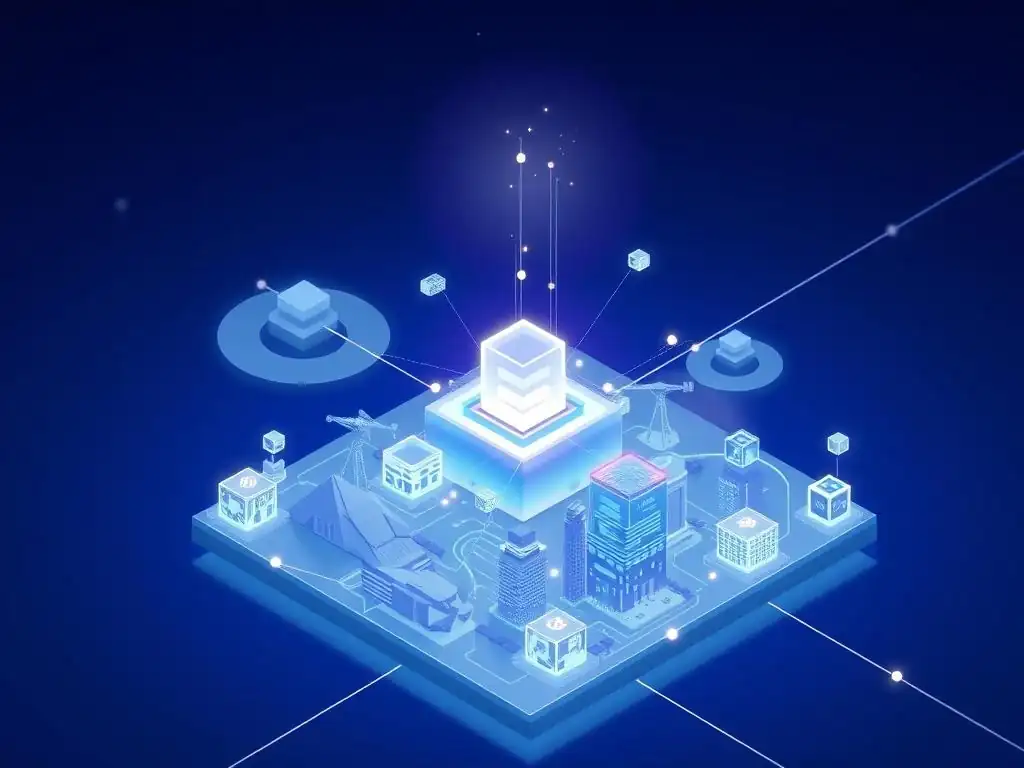
Secret Network (formerly Enigma) is a blockchain specifically designed for privacy-preserving computation. It utilizes trusted execution environments (TEEs) to enable smart contracts to process encrypted data. This means that sensitive data can be used within smart contracts without being revealed to the nodes running the blockchain or the public network.
In the metaverse context, Secret Network's privacy features can be leveraged to build applications that require processing sensitive user data while maintaining confidentiality. For instance, a metaverse game could use Secret Network to implement private in-game transactions or to personalize gameplay based on user data without exposing that data to other players or the game developers. Secret Network exemplifies how specialized privacy-focused blockchains can contribute to building more privacy-respecting and secure metaverse experiences.
Oasis Network and its Approach to Metaverse Security
Oasis Network is another blockchain platform that prioritizes data privacy and scalability, making it relevant for metaverse applications. Oasis Network uses a unique architecture separating consensus and computation, allowing for greater scalability and support for privacy-preserving computation. It offers features like confidential smart contracts and secure enclaves, enabling developers to build metaverse applications that handle sensitive data securely.
Oasis Network's focus on data privacy and its ability to handle complex computations makes it a potential foundation for building secure and scalable metaverse platforms and applications. For example, Oasis Labs, the core development team behind Oasis Network, has explored use cases in data privacy and security, including applications in healthcare and finance, which can be adapted and applied to the metaverse context to address its unique privacy challenges.
Challenges and Limitations of Blockchain in Metaverse Privacy
Scalability Issues of Blockchain in High-Volume Metaverse Transactions
One of the primary challenges for widespread blockchain adoption in the metaverse is scalability. Current blockchain networks, particularly those using proof-of-work consensus mechanisms, often struggle to handle high transaction volumes and low latency requirements necessary for seamless metaverse experiences. The metaverse is envisioned to support millions of concurrent users and interactions, generating a massive volume of transactions related to asset ownership, social interactions, and in-world activities.
While layer-2 scaling solutions, such as rollups and sidechains, are being developed to address blockchain scalability issues, their effectiveness in handling the potentially immense scale of metaverse transactions is still under evaluation. For instance, Ethereum, a popular blockchain platform for decentralized applications, is actively working on scaling solutions like sharding and rollups to improve its transaction throughput. However, ensuring these solutions can meet the demands of a fully realized, highly interactive metaverse remains a significant challenge.
Regulatory Landscape and Compliance Concerns for Blockchain-Based Metaverse Applications
The regulatory landscape surrounding blockchain and metaverse technologies is still nascent and evolving, creating uncertainties and compliance concerns for blockchain-based metaverse applications. Governments and regulatory bodies worldwide are grappling with how to regulate cryptocurrencies, NFTs, and decentralized technologies, and the metaverse adds another layer of complexity. Issues such as data privacy regulations (like GDPR and CCPA), anti-money laundering (AML) compliance, and intellectual property rights in virtual worlds need to be addressed in the context of blockchain-based metaverse platforms.
The lack of clear and consistent regulations can create legal risks and hinder the adoption of blockchain solutions for metaverse privacy. For example, the use of decentralized autonomous organizations (DAOs) for metaverse governance raises questions about legal liability and regulatory oversight. Navigating this evolving regulatory landscape and ensuring compliance with relevant laws and regulations is crucial for the sustainable development and adoption of blockchain-based metaverse privacy solutions.
User Adoption and Education: Bridging the Gap for Blockchain Privacy Solutions
User adoption and education represent another significant hurdle for widespread blockchain-based privacy solutions in the metaverse. Blockchain technology can be complex and unfamiliar to the average user. Many metaverse users may not understand the benefits of blockchain for privacy or how to use blockchain-based tools and applications. Bridging this knowledge gap and making blockchain privacy solutions user-friendly and accessible is essential for driving adoption.
This requires simplifying user interfaces, providing clear and concise educational resources, and demonstrating the tangible benefits of blockchain privacy in a way that resonates with non-technical users. For instance, user-friendly wallets and identity management tools are needed to make DIDs and blockchain-based data ownership accessible to mainstream metaverse users. Overcoming this user adoption challenge is crucial for realizing the potential of blockchain to create a more private and user-empowering metaverse.
Use Cases: Blockchain Securing Metaverse Environments
Blockchain for Secure Digital Asset Ownership and Trading
Blockchain technology is particularly well-suited for securing digital asset ownership and facilitating transparent and secure trading within the metaverse. Non-Fungible Tokens (NFTs), powered by blockchain, provide a mechanism to represent unique digital assets, such as virtual land, avatars, in-game items, and digital art, with verifiable ownership and provenance. NFTs ensure that users truly own their digital assets in the metaverse, unlike traditional in-game items or virtual currencies that are often controlled by game developers or platform providers.
Blockchain-based marketplaces for NFTs enable secure and transparent trading of these digital assets, with transaction history immutably recorded on the blockchain. Platforms like OpenSea and Rarible are examples of NFT marketplaces that facilitate the trading of digital assets in the metaverse and beyond. This secure and transparent ownership and trading of digital assets through blockchain is a foundational use case for building a robust and user-centric metaverse economy.
Protecting User Data in Metaverse Gaming and Entertainment
Metaverse gaming and entertainment experiences generate vast amounts of user data, including gameplay data, social interactions, and potentially biometric data. Blockchain can enhance privacy in these environments by providing users with greater control over their data and by enabling privacy-preserving gaming mechanics. For example, blockchain-based games can allow players to own their in-game assets as NFTs, giving them control over their digital possessions and enabling cross-game interoperability.
Privacy-preserving computation techniques can be used to personalize gameplay based on user preferences without revealing sensitive data to game developers or other players. Furthermore, blockchain can facilitate secure and transparent in-game economies, enabling players to earn and trade digital assets in a decentralized and verifiable manner. Games like Axie Infinity and The Sandbox demonstrate the potential of blockchain to create more user-centric and privacy-conscious gaming experiences in the metaverse.
Metaverse social interactions and communities can benefit significantly from blockchain-based privacy solutions. Decentralized identity (DID) can empower users to control their digital identities and selectively disclose information during social interactions in the metaverse. Blockchain-based messaging and communication platforms can provide end-to-end encryption and data ownership, ensuring private and secure communication within metaverse communities.
Furthermore, decentralized social media platforms built on blockchain can offer alternatives to centralized social networks, giving users more control over their data and content moderation. These blockchain-based solutions can foster more private and secure social interactions and community building in the metaverse, mitigating the privacy risks associated with centralized social platforms.
Blockchain for Secure Virtual Real Estate Transactions
Virtual real estate within the metaverse is becoming increasingly valuable, and blockchain provides a secure and transparent infrastructure for virtual land ownership and transactions. NFTs are used to represent ownership of virtual land parcels, providing verifiable and immutable proof of ownership. Smart contracts can automate and secure virtual real estate transactions, ensuring transparent and efficient transfer of ownership.
Blockchain-based virtual land registries can create a public and auditable record of virtual land ownership, reducing fraud and disputes. Platforms like Decentraland and The Sandbox utilize blockchain to enable users to own, trade, and develop virtual land in their respective metaverse environments. This secure and transparent system for virtual real estate transactions, powered by blockchain, mirrors and potentially improves upon traditional real-world real estate systems, fostering trust and efficiency in the metaverse economy.
The Future of Blockchain and Metaverse Privacy
Emerging Trends in Blockchain Privacy Technologies
The field of blockchain privacy is rapidly evolving, with several emerging trends poised to shape the future of metaverse privacy. Advancements in zero-knowledge proofs (ZKPs) are making them more efficient and practical for real-world applications, enabling increasingly complex privacy-preserving computations. Homomorphic encryption, allowing computation on encrypted data without decryption, is also progressing, offering another powerful tool for data privacy.
Furthermore, layer-2 scaling solutions are becoming more sophisticated, addressing blockchain scalability limitations and making blockchain more suitable for high-volume metaverse applications. Interoperability solutions are also gaining traction, aiming to connect different blockchain networks and enable seamless data and asset transfer across metaverse platforms. These emerging trends in blockchain privacy technologies promise to enhance the capabilities and applicability of blockchain for securing metaverse environments in the years to come.
Potential Impact of Blockchain on Metaverse Governance and Regulation
Blockchain technology has the potential to significantly impact metaverse governance and regulation. Decentralized Autonomous Organizations (DAOs) built on blockchain offer a new model for community-driven governance in the metaverse, empowering users to participate in decision-making processes and shape the rules and policies of virtual worlds. Blockchain-based voting mechanisms can ensure transparent and auditable governance processes.
Furthermore, blockchain can enhance transparency and accountability in metaverse platforms, making it easier to track data usage and enforce privacy policies. As the metaverse evolves, blockchain-based governance models could play a crucial role in creating more democratic, user-centric, and accountable virtual environments. However, the regulatory implications of DAOs and decentralized governance models are still being explored and debated.
Predictions for the Evolution of Data Privacy in Virtual Worlds
The evolution of data privacy in virtual worlds is likely to be shaped by a combination of technological advancements, regulatory pressures, and user demand for privacy. As metaverse experiences become more immersive and data-rich, user awareness of privacy risks is expected to increase, driving demand for privacy-preserving solutions. Regulatory bodies are likely to pay closer attention to data privacy in the metaverse, potentially introducing specific regulations to protect user data in virtual environments.
Blockchain technology, with its inherent privacy-enhancing capabilities and ongoing advancements, is poised to play a central role in shaping a more private metaverse. The future of data privacy in virtual worlds will likely involve a multi-layered approach, combining technological solutions like blockchain and PPC, regulatory frameworks, and user education to create a metaverse where privacy is not just a feature but a fundamental right.
Conclusion: Blockchain's Potential to Shape a More Private Metaverse
Recap of Blockchain's Role in Securing Metaverse Data
Blockchain technology offers a powerful and multifaceted approach to securing data privacy in the metaverse. Its decentralized nature empowers users with greater control over their digital identities and data. Decentralized Identity (DID) solutions built on blockchain provide users with self-sovereign identities, enabling them to navigate the metaverse with more privacy and control.
Blockchain-based secure data storage and sharing mechanisms enhance data integrity and reduce reliance on centralized data silos. Privacy-Preserving Computation (PPC) technologies, integrated with blockchain, enable computation on sensitive data without revealing it, opening up new possibilities for privacy-preserving metaverse applications. From securing digital asset ownership to enhancing privacy in social interactions and virtual real estate transactions, blockchain provides a robust foundation for building a more private and user-centric metaverse.
The Importance of Continued Innovation and Collaboration
Realizing the full potential of blockchain for metaverse privacy requires continued innovation and collaboration across various stakeholders, including technology developers, researchers, policymakers, and metaverse platform providers. Ongoing research and development are needed to address scalability challenges, improve the usability of blockchain privacy solutions, and explore new applications of blockchain and PPC in the metaverse context. Collaboration between technology developers and policymakers is crucial to establish clear and supportive regulatory frameworks that promote innovation while protecting user privacy.
Furthermore, collaboration between blockchain developers and metaverse platform providers is essential to integrate blockchain privacy solutions into existing and emerging metaverse platforms and applications. This collaborative and innovative approach is vital for building a metaverse where privacy is a core design principle and a fundamental user right.
Call to Action: Exploring and Implementing Blockchain Solutions for Metaverse Privacy
The metaverse is rapidly evolving, and now is the time to actively explore and implement blockchain solutions for metaverse privacy. Developers should prioritize building blockchain-based privacy-enhancing features into metaverse platforms and applications. Businesses entering the metaverse should consider adopting blockchain-based solutions to demonstrate their commitment to user privacy and build trust.
Users should demand privacy-preserving features and support metaverse platforms that prioritize data privacy. Policymakers should engage with the blockchain and metaverse communities to develop informed and balanced regulations that foster innovation while protecting user privacy. By collectively exploring and implementing blockchain solutions, we can shape a metaverse that is not only immersive and engaging but also private, secure, and empowering for all users, ensuring that our virtual lives are as deserving of privacy as our physical ones.
Frequently Asked Questions
How can blockchain technology help enhance privacy within the metaverse?
Blockchain can provide decentralized identity management, allowing users to control their data and reduce reliance on centralized authorities. This enhanced control empowers users to manage their digital identities more securely.
What are the main data privacy concerns arising from increased metaverse adoption?
Concerns include data collection and surveillance by metaverse platforms, potential for identity theft and fraud, and the lack of clear data protection regulations within these virtual spaces.
Does blockchain offer any solutions for these privacy concerns in the metaverse?
Yes, blockchain offers solutions such as zero-knowledge proofs, allowing users to verify information without revealing the data itself, and secure data storage, protecting user information from unauthorized access.
How does blockchain contribute to a more secure and trustworthy metaverse environment?
Blockchain's immutable ledger ensures data integrity and transparency, reducing the risk of fraud and manipulation. This builds trust among users and fosters a more secure virtual environment.
What role does regulation play in ensuring blockchain secure metaverse privacy is maintained?
Effective regulation is crucial for establishing clear guidelines on data collection, usage, and storage within the metaverse. This ensures that privacy rights are protected and that businesses are held accountable for their data privacy practices.
Final Reflection: Securing Our Digital Selves
The exploration of the metaverse and its inherent data privacy challenges, as illuminated throughout this article, underscores a critical reality: our digital identities are increasingly vulnerable, demanding innovative solutions like blockchain to safeguard our virtual lives. The promise of immersive experiences within the metaverse hinges on establishing trust and security, and the integration of blockchain technology offers a compelling path toward achieving this crucial balance.
The ongoing debate surrounding data ownership and control within the metaverse profoundly influences the cultural and social landscape. The ability to navigate virtual worlds without fear of exploitation or surveillance is paramount to fostering genuine connection and creativity. Privacy is not an option, and it shouldn't come with the price tag of accepting the 'terms and conditions' of a service,
- Gary Kovacs. This quote encapsulates the urgent need for robust privacy measures, particularly as we increasingly inhabit digital spaces.
As we stand on the cusp of a more deeply integrated virtual future, let us all consider the role we play in shaping the metaverse's ethical framework. What steps can you take to advocate for data privacy and security in these emerging digital realms? The future of the metaverse, and indeed our digital selves, depends on our collective commitment to building a secure and empowering virtual world for all.
Unveil Your Metaverse Privacy Power!
Thanks for exploring the crucial intersection of the metaverse and data privacy with us. We hope you've gained a deeper understanding of the challenges and potential solutions blockchain offers. Now, let's put that knowledge into action!
Here are a few steps you can take to shape your metaverse experience and contribute to a more secure virtual future:
- Dig deeper into decentralized identity (DID) solutions. Research different DID providers and consider how they can empower you to control your personal data within virtual worlds.
- Share this article with your network to spark a vital conversation about data privacy in the metaverse. The more informed we are, the better we can shape its future.
- Experiment with a blockchain-based metaverse platform. Discover firsthand how decentralized technologies can impact your data security and overall experience.
What specific privacy features would you prioritize in your ideal metaverse experience? Share your thoughts in the comments below!
Leave a Reply