
Solving the Asset Portability Problem in Metaverses with Blockchain Interoperability

Welcome to Blockchain Trends, your premier source for understanding the revolutionary impact of blockchain technology.
Dive deep into the burgeoning world where blockchain transcends cryptocurrency, reshaping industries and redefining the future. Ever wondered how to seamlessly move your digital assets between metaverses? Our latest article unravels the complexities of blockchain interoperability and its pivotal role in enabling metaverse asset portability. Discover the innovative solutions being developed to break down the walled gardens of virtual worlds and unlock the true potential of decentralized ownership. Read on to explore how this groundbreaking technology is poised to revolutionize the way we interact with the digital realm!
Solving the Asset Portability Problem in Metaverses with Blockchain Interoperability
- Understanding the Asset Portability Challenge in Metaverses
- Blockchain Interoperability: A Key to Metaverse Asset Portability
- How Blockchain Interoperability Enables Metaverse Asset Portability
- Benefits of Blockchain-Enabled Asset Portability in Metaverses
- Case Studies: Blockchain Interoperability Solutions for Metaverse Asset Transfer
- Overcoming Challenges and Future Trends in Blockchain Interoperability for the Metaverse
- Conclusion: Blockchain Interoperability as the Foundation for Metaverse Asset Portability
-
Frequently Asked Questions
- What is blockchain interoperability, and why is it crucial for the metaverse?
- How does blockchain interoperability facilitate asset portability in metaverses?
- What are some of the challenges in achieving blockchain interoperability for metaverse assets?
- What are the potential benefits of enabling asset portability across metaverses?
- How might regulations impact the development and adoption of blockchain interoperability solutions for the metaverse?
- Final Reflection: Embracing a Borderless Metaverse
- Unleash Your Metaverse Assets!
Understanding the Asset Portability Challenge in Metaverses
The Fragmented Metaverse Landscape and its Limitations
The current metaverse landscape is characterized by a high degree of fragmentation. Imagine a sprawling digital metropolis composed of distinct, walled gardens. Each metaverse platform, from Decentraland to The Sandbox and Horizon Worlds, operates largely in isolation, with its own unique virtual world, economy, and set of rules.
This siloed structure presents significant limitations for users. Digital assets acquired or created in one metaverse, such as virtual land, avatars, clothing, or in-game items, are typically confined to that specific environment. Users investing time and resources into building their digital identities and collections within one platform find themselves unable to leverage these assets in other metaverses, effectively locking them into a single ecosystem.
This lack of interconnectedness hinders the true potential of the metaverse. It restricts user mobility and choice, forcing individuals to rebuild their digital presence and asset portfolios from scratch each time they engage with a new metaverse.
From a broader perspective, this fragmentation inhibits the formation of a unified and truly open metaverse, akin to the internet itself, where information and value can flow freely across different platforms and applications. The current situation resembles the early days of the internet, where disparate online services operated independently before the advent of common protocols and standards enabled seamless communication and data exchange.
Why Asset Portability Matters for Metaverse Users
Asset portability is paramount for metaverse users because it directly impacts their digital ownership, experience, and economic opportunities. In the physical world, we expect to own our belongings and use them freely across different contexts. Similarly, metaverse users desire the ability to own their digital assets and move them between different virtual environments. Imagine purchasing a unique digital artwork or a powerful in-game weapon; users naturally expect to be able to showcase or utilize these assets across various metaverses they participate in, rather than being confined to a single platform.
Beyond simple convenience, asset portability fosters a more user-centric and empowering metaverse experience. It grants users greater control over their digital identities and investments. If a user decides to migrate from one metaverse to another, they should be able to bring their accumulated assets and progress with them, rather than losing everything and starting over.
This freedom of movement not only enhances user satisfaction but also promotes a more competitive and innovative metaverse ecosystem. When users are not locked into specific platforms, metaverse providers are incentivized to offer superior experiences and features to attract and retain users, knowing that users can easily switch platforms without losing their digital investments.
Current Barriers to Seamless Asset Transfer Between Metaverses
Several barriers currently impede seamless asset transfer between metaverses. A primary obstacle is the lack of standardized protocols and technologies for cross-platform asset recognition and transfer. Metaverse platforms often utilize different blockchain networks, token standards, and data formats for representing digital assets. For instance, one metaverse might use ERC-721 NFTs on Ethereum, while another might employ a different token standard on a separate blockchain like Solana or Polygon. This heterogeneity makes it technically challenging to directly transfer assets between these disparate systems.
Furthermore, proprietary platform designs and business models often discourage interoperability. Metaverse platforms may intentionally create walled gardens to maintain control over their ecosystems and prevent users from easily migrating to competitor platforms. This approach, while understandable from a business perspective, directly conflicts with the vision of an open and interoperable metaverse.
Security considerations also present a barrier. Ensuring the secure and trustless transfer of digital assets across different blockchain networks requires robust interoperability solutions that can mitigate the risks of fraud, double-spending, and other security vulnerabilities. Overcoming these technical, economic, and security hurdles is crucial for realizing true asset portability in the metaverse.
Blockchain Interoperability: A Key to Metaverse Asset Portability
What is Blockchain Interoperability and How Does it Work?
Blockchain interoperability refers to the ability of different blockchain networks to communicate, share data, and transact with each other seamlessly. In essence, it breaks down the silos between isolated blockchains, enabling the flow of information and value across previously distinct ecosystems. This concept is crucial for unlocking the full potential of blockchain technology, as it allows for the creation of interconnected and collaborative decentralized applications and networks. Without interoperability, blockchains remain fragmented, limiting their scope and utility.
Interoperability is achieved through various technical mechanisms, broadly categorized into different approaches. These approaches often involve the use of intermediary protocols, bridges, or relay chains that act as translators and connectors between different blockchains.
For example, a blockchain bridge might facilitate the transfer of tokens from an Ethereum-based metaverse to a metaverse built on Polkadot by locking tokens on the source chain and minting equivalent wrapped tokens on the destination chain. The underlying principle is to establish secure and verifiable communication channels between blockchains, allowing them to exchange information about asset ownership, transactions, and smart contract executions, thereby enabling cross-chain functionality.
Different Approaches to Achieving Blockchain Interoperability: LayerZero, Polkadot, Cosmos
Several innovative projects are pioneering different approaches to blockchain interoperability, each with its own architectural design and strengths. LayerZero is an omnichain interoperability protocol designed for lightweight message passing across different blockchains. It utilizes a novel combination of oracles and relayers to achieve secure and efficient cross-chain communication, focusing on minimizing trust assumptions and enhancing security. LayerZero aims to be a foundational infrastructure for building cross-chain applications, including those relevant to metaverse asset portability.
Polkadot takes a different approach, employing a "parachain" architecture. Polkadot is a relay chain that connects and secures multiple independent blockchains called parachains. These parachains can have their own customized functionalities and governance models but benefit from the shared security and interoperability provided by the Polkadot relay chain. This architecture allows for the creation of a network of interconnected blockchains that can seamlessly exchange data and assets, making it suitable for building interoperable metaverse platforms. Currently, Polkadot boasts over 40 parachains live on its network, showcasing its growing ecosystem.
Cosmos is another prominent interoperability project, often referred to as the "Internet of Blockchains." Cosmos focuses on creating a network of independent blockchains, called "zones," that can interoperate using the Inter-Blockchain Communication Protocol (IBC). IBC is a standardized protocol that enables secure and reliable communication between heterogeneous blockchains. Cosmos emphasizes sovereignty and scalability, allowing blockchains to maintain their independence while still benefiting from interoperability. Several projects are leveraging Cosmos and IBC to build interoperable metaverse applications, recognizing its potential for creating a connected metaverse ecosystem.
The Role of Interoperability Protocols in Enabling Cross-Metaverse Asset Movement
Interoperability protocols are the linchpin for enabling seamless asset movement across different metaverse platforms. These protocols provide the necessary infrastructure to bridge the technical gaps between disparate blockchain networks and metaverse ecosystems. By facilitating cross-chain communication and asset transfer, interoperability protocols address the core challenges of metaverse fragmentation and asset lock-in. They act as conduits, allowing users to move their digital assets, such as NFTs representing virtual land or in-game items, from one metaverse to another without needing to rely on centralized intermediaries or complex manual processes.
The implementation of interoperability protocols within the metaverse context unlocks a more fluid and user-centric experience. Imagine a user owning a unique digital avatar represented as an NFT on Ethereum. With interoperability, this user could potentially use the same avatar in a metaverse built on Solana, thanks to a bridge or protocol that facilitates the cross-chain transfer and recognition of the NFT.
This cross-metaverse asset movement is not just about moving tokens; it's about transferring value, identity, and experiences across different virtual worlds, paving the way for a truly interconnected and open metaverse. The development and adoption of robust interoperability solutions are therefore crucial for realizing the vision of a unified and portable metaverse experience.
How Blockchain Interoperability Enables Metaverse Asset Portability
Token Standards and Interoperable Smart Contracts for Assets
Token standards play a foundational role in enabling metaverse asset portability through blockchain interoperability. Standards like ERC-721 and ERC-1155 on Ethereum have become widely adopted for representing non-fungible tokens (NFTs) and semi-fungible tokens, respectively. These standards provide a common framework for defining the properties, ownership, and transfer mechanisms of digital assets. When multiple metaverse platforms adopt similar token standards, it simplifies the process of asset recognition and potential transfer, laying the groundwork for interoperability.
Interoperable smart contracts further enhance asset portability by enabling cross-chain functionality. Smart contracts are self-executing agreements written in code and deployed on blockchains. Interoperable smart contracts can be designed to interact with smart contracts on other blockchains via interoperability protocols. For example, a smart contract on metaverse A could communicate with a smart contract on metaverse B to verify ownership of an NFT and initiate a cross-chain transfer. This programmatic approach to asset transfer, facilitated by interoperable smart contracts built upon standardized token formats, provides a secure and automated mechanism for metaverse asset portability.
Decentralized Bridges for Cross-Chain Asset Transfers in the Metaverse
Decentralized bridges are crucial infrastructure components for facilitating cross-chain asset transfers in the metaverse. These bridges act as connectors between different blockchain networks, enabling users to move their assets from one chain to another. In the context of metaverses, bridges allow users to transfer NFTs, fungible tokens, and potentially other forms of digital assets between metaverse platforms built on different blockchains. Decentralized bridges are designed to operate in a trustless manner, relying on cryptographic mechanisms and smart contracts to ensure the security and integrity of cross-chain transfers.
The mechanism of a bridge typically involves locking assets on the source chain and minting representative assets (often "wrapped" versions) on the destination chain. For example, to transfer an NFT from an Ethereum-based metaverse to a Polygon-based metaverse, a user might lock their NFT in a smart contract on the Ethereum side of the bridge. The bridge then verifies this lock event and mints a wrapped version of the NFT on the Polygon side, representing the original asset.
When the user wants to retrieve their original NFT, the wrapped version is burned on Polygon, and the original NFT is unlocked on Ethereum. This process, while simplified, illustrates the fundamental principles of how decentralized bridges enable cross-chain asset movement, crucial for metaverse interoperability and asset portability.
Using NFTs to Represent and Transfer Assets Across Different Metaverse Platforms
Non-Fungible Tokens (NFTs) are instrumental in representing and transferring assets across different metaverse platforms, primarily due to their unique properties of provable ownership and scarcity. NFTs, by their very nature, represent unique digital items, making them ideal for representing metaverse assets like virtual land, avatars, collectibles, and in-game items. The blockchain-based nature of NFTs ensures transparent and immutable records of ownership, which is critical for establishing trust and facilitating secure transfers in a decentralized environment.
When NFTs are used to represent metaverse assets, they become portable digital property rights. If a metaverse platform supports NFT standards and interoperability protocols, users can potentially transfer their NFT-based assets to other compatible metaverse platforms. For instance, a user owning a virtual plot of land represented as an NFT could, in theory, move that NFT to a different metaverse that recognizes the same NFT standard and interoperability framework.
This capability transforms digital assets from being platform-specific in-game items to becoming truly owned and portable digital assets, enhancing user empowerment and the overall value proposition of metaverse experiences. The widespread adoption of NFT standards and interoperability solutions is therefore paramount for realizing the vision of a user-centric and asset-portable metaverse.
Benefits of Blockchain-Enabled Asset Portability in Metaverses
Enhanced User Experience and Freedom of Choice
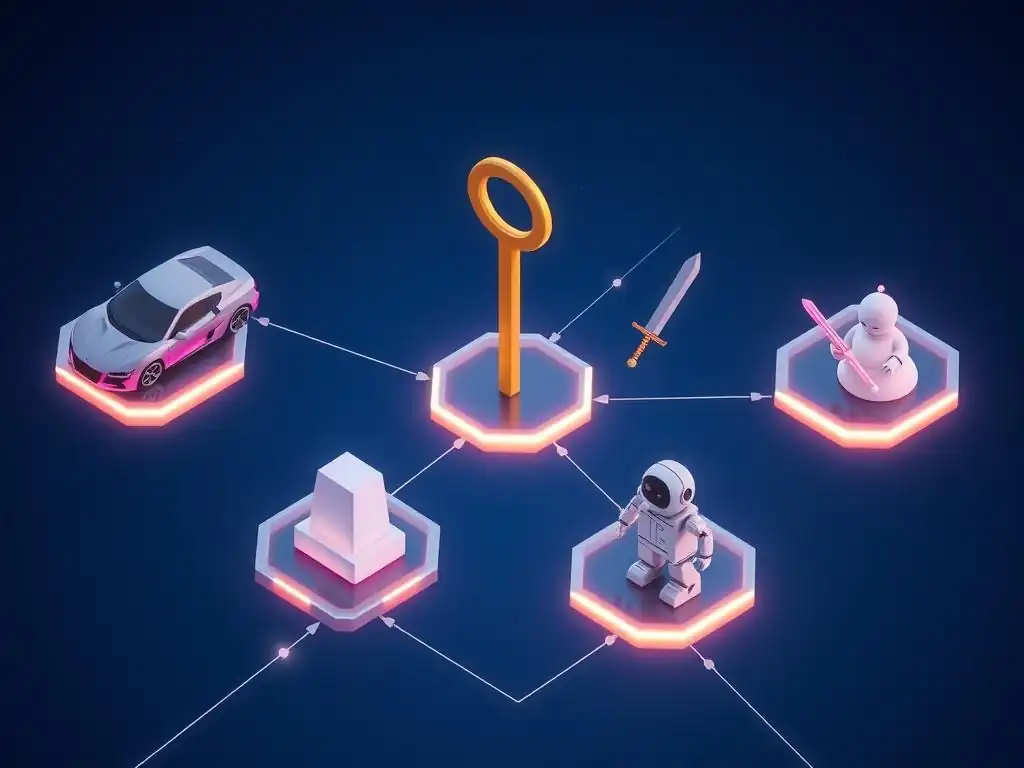
Blockchain-enabled asset portability significantly enhances the user experience within metaverses by providing greater freedom of choice and control over their digital assets. Users are no longer confined to a single metaverse ecosystem and can explore different virtual worlds without fear of losing their accumulated digital possessions.
This freedom empowers users to choose metaverse platforms based on their preferred experiences, communities, or features, rather than being locked into a platform due to their asset investments. Imagine users freely moving their avatars, digital clothing, and virtual collectibles between different metaverses, seamlessly carrying their digital identities and personalized experiences across various virtual environments.
This enhanced user experience also translates to greater flexibility and convenience. Users can participate in different metaverse economies and communities without needing to rebuild their digital presence from scratch each time. They can leverage their existing assets to engage in new experiences and opportunities across the metaverse landscape. This seamless portability reduces friction and enhances the overall enjoyment and utility of metaverse experiences, fostering a more open and user-friendly digital world. Ultimately, asset portability contributes to a more empowering and engaging metaverse experience, where users are at the center of their digital journeys.
Increased Liquidity and Trading Opportunities for Metaverse Assets
Asset portability, facilitated by blockchain interoperability, is poised to significantly increase the liquidity and trading opportunities for metaverse assets. When assets are confined to individual metaverse platforms, their trading markets are fragmented and liquidity is limited. However, when assets become portable across metaverses, it creates a larger and more interconnected market for these digital goods. This increased interconnectedness can lead to higher trading volumes, more efficient price discovery, and greater liquidity for metaverse assets.
Consider the example of virtual land NFTs. If virtual land from different metaverses can be traded on common decentralized marketplaces thanks to interoperability, it would create a more robust and liquid market for virtual real estate. Users would have more opportunities to buy, sell, and trade their virtual land assets, regardless of the specific metaverse platform.
This enhanced liquidity benefits both asset holders and potential buyers, creating a more dynamic and vibrant metaverse economy. Furthermore, increased trading opportunities can attract more participants to the metaverse ecosystem, fostering growth and innovation in the digital asset space. Blockchain-enabled asset portability is therefore a key driver for unlocking the economic potential of metaverse assets.
Fostering Innovation and Competition Among Metaverse Platforms
Blockchain-enabled asset portability fosters innovation and healthy competition among metaverse platforms. When users are not locked into specific ecosystems due to their assets, metaverse platforms are incentivized to compete on the quality of their experiences, features, and communities. Platforms that offer superior user experiences and functionalities will be more attractive to users, as users can freely choose and migrate between platforms without losing their digital investments. This competitive pressure drives metaverse platforms to innovate and continuously improve their offerings to attract and retain users.
This competitive environment benefits the entire metaverse ecosystem. Metaverse platforms are encouraged to develop more engaging and immersive experiences, implement innovative features, and build stronger communities to differentiate themselves from competitors. This drive for innovation can lead to the development of more advanced metaverse technologies, richer virtual worlds, and more diverse and engaging user experiences.
Ultimately, asset portability, by fostering competition and innovation, contributes to the evolution of a more vibrant, dynamic, and user-centric metaverse landscape. The ability for users to move their assets freely encourages platforms to focus on providing genuine value and superior experiences, driving the overall quality and evolution of the metaverse.
Case Studies: Blockchain Interoperability Solutions for Metaverse Asset Transfer
Animoca Brands and Their Cross-Game Asset Integration
Animoca Brands, a prominent player in the blockchain gaming and metaverse space, has been actively exploring and implementing cross-game asset integration, showcasing a real-world example of metaverse asset portability. Animoca Brands owns and invests in a portfolio of metaverse and blockchain gaming projects, including The Sandbox and REVV Motorsport ecosystem. They have been working towards enabling users to utilize assets acquired in one game or metaverse within other games and metaverses within their ecosystem. For instance, certain NFTs obtained in a REVV Motorsport game might have utility or cosmetic value within The Sandbox metaverse, or vice versa.
This cross-game asset integration within the Animoca Brands ecosystem, while primarily within their own portfolio of projects, demonstrates the potential of asset portability. It provides users with increased utility and value for their digital assets, as they are no longer confined to a single game or metaverse.
While not fully interoperable with metaverses outside of their ecosystem, Animoca Brands' initiatives serve as a valuable case study illustrating the practical benefits and technical feasibility of enabling asset portability within a network of interconnected metaverse experiences. Their approach highlights the user engagement and economic advantages of allowing users to leverage their digital assets across multiple virtual worlds.
WAX Blockchain's NFT Interoperability Initiatives
The WAX (Worldwide Asset eXchange) blockchain has been a strong advocate for NFT interoperability and has implemented initiatives to facilitate cross-platform NFT usage, offering another relevant case study. WAX is specifically designed for NFTs and gaming, and its ecosystem includes a variety of NFT marketplaces and games. WAX has focused on making it easier for NFTs minted on the WAX blockchain to be used and traded on different platforms and marketplaces, even those outside of the immediate WAX ecosystem. This includes efforts to improve NFT portability to other blockchains and platforms that support NFT standards.
WAX has actively supported projects and tools that facilitate cross-chain NFT transfers and interoperability. While specific examples of seamless cross-metaverse asset transfer between WAX-based metaverses and metaverses on other blockchains might be still developing, WAX's focus on NFT interoperability showcases a commitment to breaking down silos and promoting a more open NFT ecosystem. Their initiatives highlight the importance of blockchain infrastructure and platform design in fostering interoperability and enabling asset portability. WAX's approach demonstrates the proactive steps being taken within the blockchain space to address the challenges of metaverse fragmentation and asset lock-in at the infrastructure level.
Analyzing the Results and Lessons Learned
Analyzing the examples of Animoca Brands and WAX Blockchain provides valuable insights into the results and lessons learned from early attempts at metaverse asset portability. Animoca Brands’ internal cross-game asset integration demonstrates the user engagement and economic benefits of asset portability within a controlled ecosystem. Users appreciate the increased utility and value of their digital assets when they can be used across multiple games and metaverses. However, this approach is limited by its scope, as it primarily operates within a single company's portfolio of projects.
WAX Blockchain’s focus on NFT interoperability initiatives highlights the importance of blockchain infrastructure and platform-level support for portability. Creating blockchains and tools specifically designed for interoperability is crucial for enabling broader cross-platform asset movement. However, achieving true cross-metaverse asset portability remains a complex challenge requiring industry-wide collaboration, standardization, and technological advancements.
These case studies underscore that while progress is being made, significant work remains to fully realize the vision of a seamlessly interoperable metaverse where assets can be freely moved and utilized across different virtual worlds. The key lessons learned are the importance of user-centric design, platform-level interoperability support, and the need for continued innovation and collaboration within the blockchain and metaverse space.
Overcoming Challenges and Future Trends in Blockchain Interoperability for the Metaverse
Addressing Scalability and Security Concerns in Cross-Chain Transfers
Scalability and security are paramount concerns that need to be addressed to ensure the viability of blockchain interoperability for metaverse asset transfers. Cross-chain transfers can introduce complexities and potential vulnerabilities. Scalability challenges arise when interoperability solutions need to handle a large volume of cross-chain transactions efficiently without compromising speed or increasing transaction costs. As the metaverse ecosystem grows and the demand for asset portability increases, interoperability solutions must be able to scale accordingly to handle the increasing transaction load.
Security concerns are equally critical. Cross-chain bridges and interoperability protocols are potential attack vectors if not designed and implemented with robust security measures. Vulnerabilities in bridge smart contracts or relay mechanisms could be exploited to compromise asset transfers or even drain funds.
Recent bridge exploits in the cryptocurrency space, resulting in significant financial losses, underscore the importance of prioritizing security in interoperability solutions. Future developments in blockchain interoperability must focus on enhancing both scalability and security through advanced cryptographic techniques, robust protocol designs, and rigorous security audits to ensure the safe and efficient transfer of metaverse assets across different blockchain networks.
The Evolution of Interoperability Standards and Protocols
The evolution of interoperability standards and protocols is crucial for the widespread adoption of metaverse asset portability. Currently, the interoperability landscape is still fragmented, with various projects and protocols employing different approaches. The lack of universal standards can hinder seamless interoperability and create complexities for developers and users. The development and adoption of industry-wide standards for cross-chain communication, asset representation, and interoperability protocols are essential for fostering a more unified and interoperable metaverse ecosystem.
Future trends point towards the emergence of more standardized interoperability protocols that are widely adopted across different blockchain networks and metaverse platforms. Efforts to standardize cross-chain messaging formats, asset transfer mechanisms, and security protocols will be crucial for reducing fragmentation and simplifying interoperability implementation.
Industry consortia and open-source initiatives are likely to play a key role in driving the development and adoption of these standards. As interoperability standards mature and gain wider acceptance, it will become easier and more efficient to build cross-metaverse applications and enable seamless asset portability, paving the way for a more interconnected and user-friendly metaverse experience.
The Future of a Unified and Interoperable Metaverse Ecosystem
The future of the metaverse hinges on the development of a unified and interoperable ecosystem. While the current metaverse landscape is fragmented, the trend is clearly moving towards greater interconnectedness. Blockchain interoperability is the foundational technology that will enable this unification, allowing different metaverse platforms to communicate and share data and assets seamlessly. The vision of a truly open metaverse, where users can move freely between different virtual worlds while retaining ownership and utility of their digital assets, is becoming increasingly attainable with advancements in interoperability technologies.
In the future, we can expect to see a more interconnected metaverse ecosystem where users can seamlessly transition between different virtual environments, carrying their avatars, assets, and social connections with them. This unified metaverse will be characterized by increased user mobility, enhanced digital ownership, and greater economic opportunities. Interoperability will not only enable asset portability but also facilitate cross-metaverse communication, social interactions, and collaborative experiences. The development of robust and standardized blockchain interoperability solutions is therefore paramount for realizing the full potential of the metaverse as a unified and interconnected digital realm.
Conclusion: Blockchain Interoperability as the Foundation for Metaverse Asset Portability
Blockchain interoperability is not merely a technical feature; it is the foundational cornerstone upon which true metaverse asset portability rests. Solving the asset portability problem through interoperability is critical for unlocking the full potential of metaverses and creating a user-centric, open, and interconnected digital future. By breaking down the silos between disparate metaverse platforms, interoperability empowers users with greater control over their digital assets, enhances user experience, and fosters innovation and competition within the metaverse ecosystem.
As interoperability technologies continue to mature and standards emerge, the vision of a seamlessly interconnected metaverse, where assets can move freely and users can explore diverse virtual worlds without friction, is becoming increasingly tangible. Overcoming the remaining challenges of scalability, security, and standardization is crucial for realizing this vision. The future of the metaverse is intrinsically linked to the success of blockchain interoperability, making it a vital area of focus and development for the continued growth and evolution of the metaverse and the broader digital landscape.
Frequently Asked Questions
What is blockchain interoperability, and why is it crucial for the metaverse?
Blockchain interoperability refers to the ability of different blockchains to communicate and share data with each other. It's crucial for the metaverse to enable seamless asset portability across different virtual worlds.
How does blockchain interoperability facilitate asset portability in metaverses?
It allows users to move digital assets, like avatars or virtual land, between different metaverse platforms built on different blockchains. This eliminates the "walled garden" effect and promotes a more unified metaverse experience.
What are some of the challenges in achieving blockchain interoperability for metaverse assets?
Challenges include varying blockchain standards, security vulnerabilities during cross-chain transfers, and the need for reliable and decentralized bridges. These require careful consideration and innovative solutions.
What are the potential benefits of enabling asset portability across metaverses?
Users gain greater control over their digital assets, fostering a more engaging and personalized metaverse experience. It also unlocks new economic opportunities and promotes innovation within the metaverse ecosystem.
How might regulations impact the development and adoption of blockchain interoperability solutions for the metaverse?
Regulations could either facilitate or hinder interoperability depending on their focus. Clear and consistent standards could encourage development, while overly restrictive rules could stifle innovation and adoption.
Final Reflection: Embracing a Borderless Metaverse
The journey through understanding blockchain interoperability for metaverse asset portability reveals a crucial truth: the future of digital ownership hinges on seamless movement and utility. No longer can we accept walled gardens that restrict our digital identities and investments. The potential for a truly interconnected metaverse, where assets flow freely and enhance user experiences across platforms, is within our grasp, demanding immediate attention and collaborative action.
This vision of a unified metaverse profoundly impacts how we perceive digital ownership and identity. The ability to carry our digital belongings, our avatars, our creations, from one world to another, fundamentally alters the relationship we have with virtual spaces. It empowers users, fosters innovation, and unlocks unprecedented economic opportunities. The metaverse is not just a place, it's a time. It's the next chapter of the internet, and it's going to be built on interoperability.
- Matthew Ball, Metaverse Expert. This quote underscores the urgency and importance of building bridges between these nascent digital realms.
As we stand on the cusp of this transformative era, I invite you to consider your own role in shaping the metaverse. How can you advocate for open standards and interoperable solutions? How can you contribute to a future where digital ownership is truly decentralized and empowering? Let us embrace the challenge of building a borderless metaverse, a space where creativity flourishes, and digital assets transcend the limitations of individual platforms, creating a richer, more connected digital experience for all.
Unleash Your Metaverse Assets!
Thank you for exploring how blockchain interoperability can revolutionize asset portability in the Metaverse. We hope this article has inspired you to think about how you can truly own and utilize your digital assets across different virtual worlds. Now, it's time to turn that knowledge into action!
Here’s how you can take the next step:
- Explore Interoperable Protocols: Research and experiment with existing interoperability solutions to understand their capabilities and limitations.
- Engage with Metaverse Communities: Share this article with your favorite Metaverse groups and start a conversation about the future of asset portability.
- Brainstorm Innovative Use Cases: Consider how blockchain interoperability can enable unique and engaging experiences within the Metaverse.
What exciting new possibilities do you see with truly portable Metaverse assets? Share your thoughts in the comments below!
Leave a Reply