
The Tokenomics of Decentralized Metaverses: Understanding Virtual Currencies


Welcome to Blockchain Trends, your compass in the rapidly evolving world of decentralized technologies. Intrigued by the potential of blockchain beyond Bitcoin? Dive in to explore how this groundbreaking technology is reshaping industries, from finance to supply chains. This week, we unravel the complexities of Decentralized Metaverse Token Economics, offering a deep dive into how virtual currencies are powering the next generation of digital experiences. What are the incentives driving these economies, and how will they shape the future of virtual worlds? Let's explore.
- Introduction: Exploring the Intersection of Blockchain and Metaverse Token Economics
- What is Tokenomics in the Context of Decentralized Metaverses?
- Core Concepts of Decentralized Metaverse Token Economics
- Analyzing Different Decentralized Metaverse Token Economic Models
- The Role of NFTs in Decentralized Metaverse Token Economics
- Challenges and Considerations in Designing Effective Metaverse Tokenomics
- The Future of Decentralized Metaverse Token Economics
- Conclusion: Optimizing Tokenomics for a Thriving Decentralized Metaverse Ecosystem
-
Frequently Asked Questions
- What are the key economic principles driving decentralized metaverse token economics?
- How does blockchain technology contribute to the tokenomics of decentralized metaverses?
- What role do decentralized finance (DeFi) protocols play in the tokenomics of metaverses?
- How does the concept of "Decentralized Metaverse Token Economics" relate to traditional economic models?
- What are some of the challenges and opportunities associated with regulating the tokenomics of decentralized metaverses?
- Final Reflection: Navigating the Future of Virtual Economies
- Unlock the Metaverse: Start Building Your Virtual Future!
Introduction: Exploring the Intersection of Blockchain and Metaverse Token Economics
The convergence of blockchain technology and metaverse platforms is birthing a new paradigm of digital interaction and economic activity. Decentralized metaverses, built upon blockchain infrastructure, are not just immersive virtual worlds; they are evolving ecosystems with intricate economies powered by virtual currencies. Understanding the token economics of these metaverses is paramount to grasping their potential, sustainability, and the opportunities they present for users and investors alike. This article delves into the core principles of decentralized metaverse token economics, exploring its key components, analyzing different models, and discussing the challenges and future directions of this burgeoning field.
The Rise of Decentralized Metaverses and Virtual Economies
The concept of a metaverse, a persistent, shared, 3D virtual space, has rapidly moved from science fiction to a tangible reality. While centralized platforms have offered virtual worlds for years, the advent of blockchain technology has paved the way for decentralized metaverses. These platforms differentiate themselves by leveraging blockchain's inherent characteristics: decentralization, transparency, and immutability. Decentralized metaverses empower users with true ownership of digital assets, often represented as Non-Fungible Tokens (NFTs), and participate in governance through tokens.
This shift towards decentralization is fostering virtual economies that mirror, and in some cases, surpass traditional economies in complexity and scale. Early examples, like Decentraland and The Sandbox, have showcased the potential for user-generated content, virtual real estate markets, and play-to-earn mechanisms, all underpinned by their native tokens. These platforms are not merely games; they are evolving into digital nations with their own economic rules and opportunities.
Why Understanding Tokenomics is Crucial for Metaverse Success
Tokenomics, a portmanteau of "token" and "economics," is the study of the economic principles governing a cryptocurrency or token. In the context of decentralized metaverses, understanding tokenomics is not just an academic exercise; it is critical for assessing the long-term viability and success of these virtual worlds. A well-designed tokenomic model can incentivize user participation, foster a thriving virtual economy, and ensure the sustainable growth of the metaverse platform.
Conversely, flawed tokenomics can lead to inflation, economic instability, and ultimately, the failure of the metaverse. For users, understanding tokenomics is essential for making informed decisions about participating in a metaverse, investing in its virtual assets, and navigating its economic landscape. For developers and platform creators, robust tokenomics is the bedrock upon which a successful and engaging decentralized metaverse is built.
What is Tokenomics in the Context of Decentralized Metaverses?
Tokenomics, in the setting of decentralized metaverses, refers to the economic system designed around the platform's native tokens. It encompasses the rules and mechanisms that govern the creation, distribution, and utilization of these virtual currencies within the metaverse ecosystem.
This includes everything from the initial token supply and distribution methods to the utility of the token within the virtual world, the governance mechanisms it empowers, and the incentive structures designed to encourage desired user behaviors. Unlike traditional economies controlled by central banks, decentralized metaverse economies are often governed by smart contracts and community consensus, making tokenomics a transparent and, ideally, equitable system.
Defining Tokenomics: The Economic Principles Behind Virtual Currencies
At its core, tokenomics is the application of economic principles to the design and management of virtual currencies. It's about creating a sustainable and balanced economy within a digital environment. This involves considering factors such as supply and demand, inflation and deflation, incentives, and governance.
For instance, a metaverse with a limited token supply might aim to create scarcity, potentially driving up the value of the token as demand increases. Conversely, a metaverse with an inflationary token model might prioritize accessibility and usage, distributing tokens more readily to incentivize activity within the ecosystem. Tokenomics also borrows concepts from behavioral economics, designing incentive mechanisms to encourage users to contribute to the metaverse's growth, whether through content creation, participation in events, or simply holding tokens to support the economy.
Key Components of Decentralized Metaverse Tokenomics: [Governance, Utility, Incentives, and Distribution]
Decentralized metaverse tokenomics is built upon several key components, each playing a crucial role in the overall economic health and functionality of the platform. Governance is often a central tenet, where token holders are granted voting rights to influence decisions about the metaverse's development, features, and economic policies. This decentralizes control and empowers the community. Utility defines the practical applications of the token within the metaverse.
This could include purchasing virtual land, avatars, in-game items, accessing exclusive experiences, or participating in play-to-earn activities. The more utility a token possesses, the greater its demand is likely to be. Incentives are mechanisms designed to reward users for contributing to the metaverse ecosystem. These can range from staking rewards for holding tokens and securing the network, to earning tokens for creating content, participating in events, or contributing to the community.
Distribution refers to how tokens are initially allocated and subsequently released into circulation. Fair and transparent distribution is crucial for establishing trust and preventing early concentration of wealth, which could undermine the decentralized ethos. Methods like Initial Coin Offerings (ICOs), airdrops to early adopters, and ongoing community rewards are common distribution strategies.
Core Concepts of Decentralized Metaverse Token Economics
Understanding the core concepts underpinning decentralized metaverse token economics is essential for navigating this novel digital landscape. These concepts dictate how virtual economies function and influence the value and utility of metaverse tokens.
Token Supply and Distribution: [Initial Coin Offerings, Airdrops, and Community Rewards]
Token supply and distribution are foundational elements of any cryptocurrency's tokenomics, and they are equally critical in decentralized metaverses. Token supply refers to the total number of tokens that will ever exist for a particular metaverse. This can be fixed, like Bitcoin's 21 million cap, or inflationary, with a predetermined rate of new token creation.
The supply mechanism significantly impacts token scarcity and potential value. Distribution strategies determine how these tokens are initially allocated and released over time. Initial Coin Offerings (ICOs), although less prevalent now than in the 2017 boom, were a common method for early metaverse projects to raise capital and distribute tokens to early investors.
Airdrops involve distributing free tokens to existing cryptocurrency holders or early adopters of the metaverse, often as a marketing strategy to build community and awareness. Community rewards are ongoing programs designed to incentivize participation and contribution to the metaverse ecosystem, distributing tokens to users for activities like content creation, participation in governance, or achieving in-game milestones. A balanced distribution strategy aims to prevent excessive concentration of tokens in the hands of a few, fostering a more equitable and decentralized economy.
Utility Tokens vs. Governance Tokens in the Metaverse
Within decentralized metaverses, tokens often serve distinct functions, broadly categorized as utility and governance tokens. Utility tokens are designed to be used within the metaverse platform for specific purposes. As mentioned earlier, this could encompass purchasing virtual assets, accessing experiences, participating in games, or transacting within the virtual economy.
The value of utility tokens is directly tied to their usefulness and demand within the metaverse. Governance tokens, on the other hand, grant holders the right to participate in the decision-making processes of the metaverse. Holding governance tokens often translates to voting power on proposals related to platform upgrades, economic policy changes, or the allocation of community resources.
Some metaverse projects utilize a hybrid model, where a single token serves both utility and governance functions, while others employ separate tokens for each purpose, creating more specialized and potentially complex economic models. For example, in Star Atlas, ATLAS serves as the primary utility token for in-game transactions, while POLIS is the governance token, granting holders influence over the metaverse's direction.
Staking and Yield Farming Mechanisms in Virtual Worlds
Staking and yield farming, concepts borrowed from the broader DeFi (Decentralized Finance) space, are increasingly being integrated into decentralized metaverse tokenomics to incentivize token holding and participation in the network's security. Staking typically involves locking up tokens in a smart contract to support the operation of the blockchain network underlying the metaverse. In return for staking, users earn rewards, often in the form of additional tokens.
This mechanism encourages long-term token holding and reduces circulating supply, potentially increasing token value. Yield farming is a more complex strategy that involves lending or staking tokens across different DeFi platforms or protocols to generate yield.
In the metaverse context, yield farming might involve providing liquidity to decentralized exchanges (DEXs) that facilitate the trading of metaverse tokens or virtual assets, or participating in more intricate DeFi strategies within the metaverse ecosystem itself. These mechanisms not only incentivize token holding but also contribute to the overall liquidity and stability of the metaverse economy.
Burning Mechanisms and Deflationary Token Models
To counteract inflation and potentially increase token value over time, some decentralized metaverses incorporate token burning mechanisms, leading to deflationary token models. Token burning is the process of permanently removing tokens from circulation, effectively reducing the total supply. This is typically achieved by sending tokens to a publicly verifiable "burn address" from which they can never be recovered.
Burning mechanisms can be triggered by various events, such as transaction fees, marketplace activity, or reaching specific milestones within the metaverse. For instance, a percentage of transaction fees from in-world marketplaces could be automatically burned, reducing the token supply with each transaction.
A deflationary token model, where the supply gradually decreases over time, can create scarcity and potentially drive up the value of the remaining tokens, rewarding long-term holders and contributing to a more robust and stable metaverse economy. However, it's crucial to carefully balance deflation with the need for sufficient token supply to fuel economic activity within the metaverse.
Analyzing Different Decentralized Metaverse Token Economic Models
Examining the token economics of existing decentralized metaverses provides valuable insights into the practical application of these concepts and the diverse approaches being taken. By analyzing specific case studies and comparing different models, we can gain a deeper understanding of what works, what challenges exist, and the potential future directions of metaverse tokenomics.
Case Study: [Axie Infinity (AXS) Tokenomics Analysis]
Axie Infinity, a play-to-earn NFT-based game built on blockchain, offers a compelling case study in metaverse tokenomics. Its dual-token system, featuring AXS and SLP (Smooth Love Potion), is central to its economic model. AXS is the governance token and also serves as a staking token, allowing holders to earn rewards and participate in governance decisions. It has a fixed supply of 270 million tokens.
AXS is also used to pay for breeding fees within the game, creating a utility sink. SLP is the in-game utility token earned by players through gameplay. It is inflationary and primarily used for breeding Axies (NFT creatures). The Axie Infinity economy is designed to be player-owned, with players earning SLP and potentially AXS through gameplay, and then able to trade these tokens on exchanges.
A key aspect of Axie Infinity's tokenomics is the "Scholarship" system, where Axie owners lend their NFTs to players (scholars) who can then earn SLP and share a percentage of their earnings with the owner. This system has facilitated broader participation in the game and its economy. However, Axie Infinity has also faced challenges with inflation of SLP, requiring adjustments to its earning and burning mechanisms to maintain economic balance.
Case Study: [Star Atlas (ATLAS) and (POLIS) Tokenomics Analysis]
Star Atlas, a space-themed metaverse built on Solana, employs a dual-token system with ATLAS and POLIS, each serving distinct roles in its vast and complex virtual economy. ATLAS is the primary utility token, used as the in-game currency for almost all transactions within the Star Atlas metaverse. Players use ATLAS to purchase spaceships, resources, land, and other NFTs, as well as to pay for services and participate in various in-game activities.
ATLAS has an inflationary supply, designed to accommodate the growing needs of the expanding metaverse economy. POLIS, on the other hand, is the governance token of Star Atlas, with a fixed supply. POLIS holders have voting rights over the decentralized autonomous organization (DAO) that governs the Star Atlas metaverse, influencing key decisions about its development and direction.
POLIS is designed to be scarce and valuable, reflecting its importance in shaping the future of the metaverse. The dual-token model in Star Atlas aims to balance the need for a readily available utility token (ATLAS) for in-game transactions with the need for a scarce governance token (POLIS) to empower community control and long-term vision.
Comparing and Contrasting Token Models Across Different Metaverse Platforms
Comparing token models across different metaverse platforms reveals a spectrum of approaches to virtual economy design. Platforms like Decentraland (MANA) utilize a single token for both utility and governance, simplifying the economic model but potentially limiting specialization of token functions. The Sandbox (SAND) also uses a single token with utility across land purchases, asset creation, and governance, but with a focus on user-generated content and creator economy incentives.
In contrast, dual-token systems like Axie Infinity and Star Atlas offer more granular control over economic levers, allowing for separate management of utility and governance. Some platforms are experimenting with more complex models, incorporating NFTs as integral components of their token economics, blurring the lines between fungible and non-fungible assets within their virtual economies.
The choice of token model depends heavily on the specific goals and design philosophy of each metaverse platform. Factors such as the desired level of decentralization, the complexity of the virtual economy, and the target audience influence the optimal tokenomic structure.
The Role of NFTs in Decentralized Metaverse Token Economics
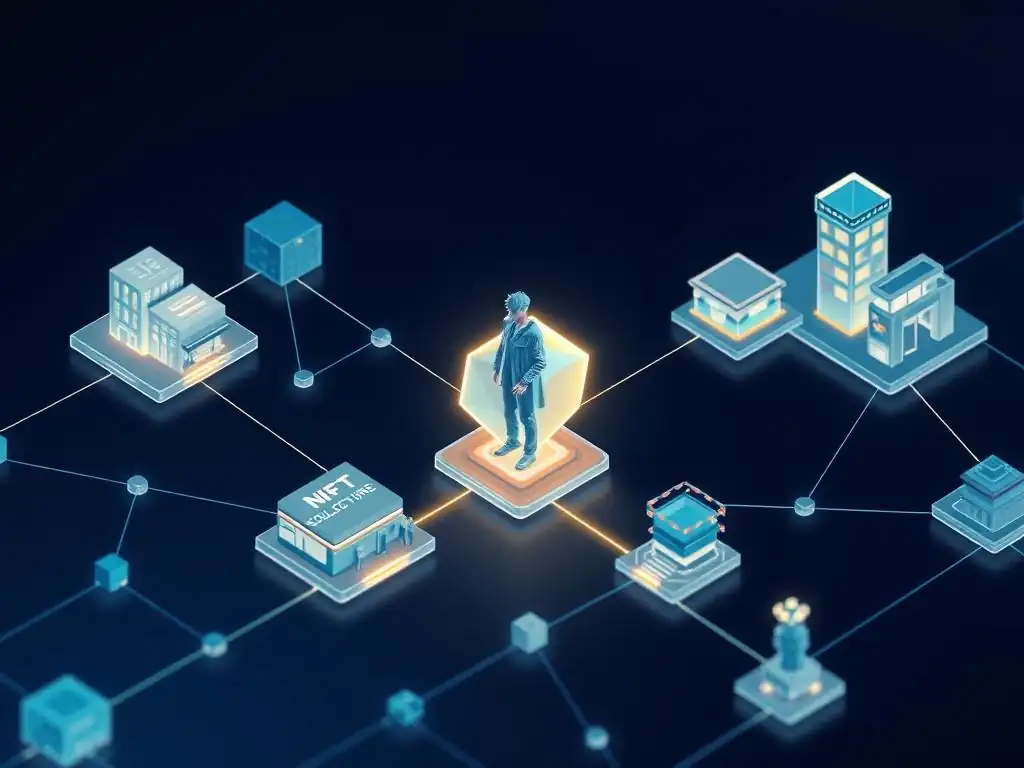
Non-Fungible Tokens (NFTs) are not merely digital collectibles within decentralized metaverses; they are increasingly becoming integral components of their token economics, adding layers of complexity and innovation to virtual economies.
NFTs as Digital Assets and Their Integration with Tokens
NFTs represent unique digital assets, proving ownership and authenticity on the blockchain. In metaverses, NFTs are used to represent a wide array of virtual items, including land parcels, avatars, in-game items, virtual art, and collectibles. Their integration with metaverse tokens creates a dynamic interplay where NFTs can be bought, sold, traded, and utilized within the metaverse economy, often using the platform's native tokens.
This integration allows for true digital ownership and scarcity, which are fundamental to creating robust virtual economies. For example, virtual land NFTs in Decentraland or The Sandbox are purchased and traded using MANA and SAND tokens respectively, creating a direct link between the utility of the NFTs and the value of the platform's tokens. This interconnectedness enhances the utility of both NFTs and tokens, driving demand and contributing to the overall economic activity within the metaverse.
NFT Utility and Scarcity Driving Token Value
The utility and scarcity of NFTs within a metaverse ecosystem can significantly influence the value of the platform's native tokens. If NFTs representing valuable in-world assets or experiences are in high demand, this demand translates to increased demand for the tokens required to acquire these NFTs. Limited edition or rare NFTs, due to their scarcity, can command premium prices in the metaverse marketplace, further driving up token value.
For instance, if a metaverse offers limited plots of virtual land as NFTs, and these plots are essential for building experiences or businesses within the metaverse, the demand for these land NFTs will be high, consequently increasing the demand for the tokens needed to purchase them. This creates a positive feedback loop where the perceived value and utility of NFTs directly contribute to the economic strength of the metaverse's token ecosystem.
Fractionalized NFTs and Their Impact on Metaverse Economies
Fractionalized NFTs are emerging as a novel concept within metaverse token economics, potentially democratizing ownership of high-value digital assets and further integrating NFTs into virtual economies. Fractionalization involves dividing ownership of a single NFT into multiple fungible tokens. This allows for shared ownership of expensive NFTs, such as virtual land or rare in-game items, making them more accessible to a wider range of users.
Fractionalized NFTs can be traded on decentralized exchanges, similar to regular tokens, increasing their liquidity and accessibility. This innovation can have a significant impact on metaverse economies by lowering the barrier to entry for participation in high-value asset markets and fostering a more inclusive and dynamic virtual economy.
For example, a highly valuable plot of virtual land NFT, fractionalized into smaller tokens, can be owned collectively by a group of users, enabling shared development and monetization of that virtual space. This further blurs the lines between traditional tokens and NFTs and expands the possibilities for economic interaction within decentralized metaverses.
Challenges and Considerations in Designing Effective Metaverse Tokenomics
Designing effective tokenomics for decentralized metaverses is a complex undertaking fraught with challenges and considerations. Balancing economic incentives, ensuring fairness, and navigating regulatory landscapes are crucial for long-term sustainability and user adoption.
Balancing Inflation and Deflation in Virtual Economies
One of the primary challenges in metaverse tokenomics design is striking the right balance between inflation and deflation. Inflationary models, where the token supply increases over time, can incentivize early adoption and reward ongoing participation by distributing new tokens. However, excessive inflation can devalue existing tokens, eroding user wealth and potentially destabilizing the economy. Deflationary models, with decreasing token supply, aim to create scarcity and potentially increase token value over time.
However, excessive deflation can stifle economic activity if tokens become too scarce and expensive to transact with. The ideal approach often involves a carefully managed inflationary model, perhaps with token burning mechanisms to counteract inflation and maintain a relatively stable token value over the long term. Finding this equilibrium is a continuous process, requiring ongoing monitoring and adjustments to the tokenomic model based on the metaverse's economic activity and user behavior.
Ensuring Fair Distribution and Preventing Centralization
Fair token distribution is crucial for establishing a truly decentralized metaverse and preventing the concentration of wealth and power in the hands of a few. Initial token distribution methods, such as ICOs or airdrops, can be susceptible to manipulation and uneven distribution. Ongoing token distribution mechanisms, like community rewards or staking incentives, need to be designed to be accessible and equitable to all users, regardless of their initial investment or participation level.
Preventing centralization of token ownership and governance power is an ongoing challenge. Mechanisms like decentralized governance structures, quadratic voting, or progressive decentralization approaches can help to mitigate centralization risks and ensure that the metaverse remains community-driven and equitable.
Addressing Regulatory Compliance and Legal Considerations
The regulatory landscape surrounding cryptocurrencies and digital assets is constantly evolving, and decentralized metaverses are not immune to these regulatory pressures. Depending on the jurisdiction and the specific tokenomic model, metaverse tokens may be classified as securities, commodities, or other financial instruments, subjecting them to various regulatory requirements. Compliance with anti-money laundering (AML) and know-your-customer (KYC) regulations may be necessary, especially for platforms that facilitate token trading or fiat currency on-ramps and off-ramps.
Legal considerations also extend to intellectual property rights, virtual land ownership, and the enforceability of smart contracts within the metaverse. Navigating this complex and evolving regulatory and legal environment is a significant challenge for metaverse developers and requires careful planning and proactive engagement with legal experts and regulatory bodies.
Mitigating Risks of Token Manipulation and Exploitation
Decentralized metaverse economies, like any financial system, are susceptible to risks of token manipulation and exploitation. "Whales," or individuals holding large amounts of tokens, can potentially manipulate token prices or governance decisions. Smart contract vulnerabilities can be exploited to drain funds or manipulate token supply.
"Pump and dump" schemes and other forms of market manipulation can harm users and destabilize the metaverse economy. Mitigating these risks requires robust security measures, including thorough smart contract audits, transparent governance mechanisms, and community education about potential scams and risks. Implementing mechanisms to detect and prevent market manipulation, such as circuit breakers or alerts for unusual trading activity, can also contribute to a safer and more trustworthy metaverse environment.
The Future of Decentralized Metaverse Token Economics
The field of decentralized metaverse token economics is still in its nascent stages, with significant innovation and evolution expected in the coming years. Emerging trends, user adoption, and sustainability considerations will shape the future of virtual currency models in these immersive digital worlds.
Emerging Trends in Metaverse Token Design
Several emerging trends are shaping the future of metaverse token design. Dynamic tokenomics, where tokenomic parameters are adjusted algorithmically or through governance votes based on real-time economic data and user behavior, are gaining traction. This allows for more adaptive and responsive virtual economies.
Composable tokenomics, where different tokenomic models can be combined and integrated across different metaverse platforms and protocols, is also emerging, fostering interoperability and network effects. Reputation-based tokenomics, where users earn tokens or enhanced privileges based on their contributions and positive behavior within the metaverse, is another trend, aiming to incentivize positive community engagement and deter malicious activity. Furthermore, the integration of DeFi primitives deeper into metaverse economies, such as decentralized lending and borrowing platforms within virtual worlds, is expected to create more sophisticated and interconnected financial ecosystems within metaverses.
The Impact of Tokenomics on User Adoption and Engagement
Well-designed tokenomics plays a crucial role in driving user adoption and engagement in decentralized metaverses. Attractive incentive structures, such as play-to-earn mechanisms or staking rewards, can incentivize users to join and actively participate in the metaverse economy. Clear and transparent tokenomic models build trust and confidence among users, encouraging long-term engagement.
Utility-rich tokens, with diverse applications within the metaverse, provide tangible value to users and drive demand for the platform's virtual currency. Conversely, poorly designed tokenomics, characterized by inflation, unfair distribution, or lack of utility, can deter user adoption and lead to the decline of the metaverse. Therefore, prioritizing user experience and designing tokenomics that genuinely benefits participants is paramount for the long-term success of decentralized metaverses.
Tokenomics and the Sustainability of Decentralized Metaverses
Ultimately, the sustainability of decentralized metaverses hinges on the robustness and long-term viability of their token economies. Sustainable tokenomics should incentivize continuous development and innovation within the metaverse, ensuring that the platform remains engaging and competitive over time. It should also foster a healthy and balanced virtual economy, preventing boom-and-bust cycles and ensuring equitable distribution of value among participants.
Tokenomics must also be adaptable to evolving user needs and technological advancements, allowing for adjustments and upgrades to maintain its effectiveness and relevance. Metaverses with well-designed and sustainable tokenomics are more likely to attract and retain users, foster thriving virtual economies, and ultimately realize their full potential as transformative digital platforms.
Conclusion: Optimizing Tokenomics for a Thriving Decentralized Metaverse Ecosystem
The tokenomics of decentralized metaverses is a critical determinant of their success, shaping their economies, driving user behavior, and influencing their long-term viability. Understanding the principles, components, and challenges of metaverse token economics is essential for anyone seeking to participate in or build these emerging digital worlds.
Key Takeaways on Decentralized Metaverse Token Economics
Decentralized metaverse token economics is a multifaceted field encompassing governance, utility, incentives, distribution, and the integration of NFTs. Effective tokenomics balances inflation and deflation, ensures fair distribution, addresses regulatory considerations, and mitigates risks of manipulation. Different metaverse platforms employ diverse token models, ranging from single-token to dual-token systems, each with its own strengths and weaknesses. NFTs are becoming increasingly intertwined with metaverse token economics, enhancing digital ownership and driving token value through utility and scarcity. Emerging trends like dynamic tokenomics, composable tokenomics, and reputation-based systems are shaping the future of virtual currency models in metaverses.
The Importance of Continuous Innovation in Virtual Currency Models
The decentralized metaverse space is rapidly evolving, and continuous innovation in virtual currency models is crucial for unlocking the full potential of these platforms. Experimentation with new tokenomic mechanisms, adaptation to changing user needs, and proactive engagement with regulatory developments are essential for building thriving and sustainable metaverse ecosystems. As metaverses mature and user bases expand, ongoing refinement and optimization of tokenomics will be key to ensuring their long-term success and their transformative impact on digital interaction and economic activity. The future of decentralized metaverses is inextricably linked to the evolution and innovation within their token economies.
Frequently Asked Questions
What are the key economic principles driving decentralized metaverse token economics?
The core principles often revolve around scarcity, utility, and governance. These factors influence the value and distribution of virtual currencies within the metaverse.
How does blockchain technology contribute to the tokenomics of decentralized metaverses?
Blockchain provides the underlying infrastructure for secure and transparent transactions. This ensures the verifiability of ownership and facilitates the creation of scarce, tradable metaverse assets.
What role do decentralized finance (DeFi) protocols play in the tokenomics of metaverses?
DeFi protocols enable new financial mechanisms within metaverses, such as lending, borrowing, and yield farming. These create opportunities for users to earn and manage their virtual assets.
How does the concept of "Decentralized Metaverse Token Economics" relate to traditional economic models?
While sharing some similarities, decentralized metaverse token economics introduce new elements like digital scarcity and community governance. This leads to more user-driven economic systems than traditional models.
What are some of the challenges and opportunities associated with regulating the tokenomics of decentralized metaverses?
Regulation is complex, as it needs to balance innovation with consumer protection and financial stability. Finding the right approach is crucial for the long-term sustainability of these virtual economies.
The exploration of decentralized metaverse token economics reveals more than just the mechanics of virtual currencies; it unveils the potential for entirely new economic paradigms. In a world increasingly intertwined with digital realities, understanding these tokenomics is no longer a niche interest but a crucial skill for navigating the future of work, play, and social interaction.
The impact of these virtual economies is already being felt, shaping how we value digital assets and interact within online communities. The rise of decentralized metaverses challenges traditional notions of ownership and value, forcing us to reconsider the very foundations of our economic systems. The metaverse is coming, and it will affect every product, company, and person that we touch.
- Matthew Ball. This quote underscores the pervasive influence these virtual worlds will have, making a deep understanding of their tokenomics essential.
As we stand at the cusp of this digital revolution, let us not be passive observers. Consider how you can leverage the principles of decentralized metaverse token economics to build, create, and participate in these emerging digital landscapes. The future is not just being built; it is being tokenized. Embrace the opportunity to shape it.
Unlock the Metaverse: Start Building Your Virtual Future!
Thank you for exploring the intricacies of metaverse tokenomics with us! We hope this article has provided you with a clear understanding of how virtual currencies are shaping the future of digital worlds. Now, it's time to take action and become an active participant in this exciting revolution.
- Get involved in decentralized metaverses by acquiring your first virtual currency. Research a project that interests you and invest a small amount to gain practical experience. This will help you understand the dynamics we discussed.
- Explore different metaverse platforms and try out their native tokens. Learn how they operate within their ecosystems, providing valuable insights into real-world applications.
- Share this article with your network and join the conversation! Help others understand the significance of metaverse tokenomics and contribute to building a more informed community.
What are your initial thoughts on investing in virtual currencies, and which project are you most excited to explore? Let us know in the comments below!
Leave a Reply