
Virtual Events Without Borders: Blockchain Interoperability and the Future of Metaverse Experiences


Welcome to Blockchain Trends, your compass in the ever-evolving world of decentralized innovation.
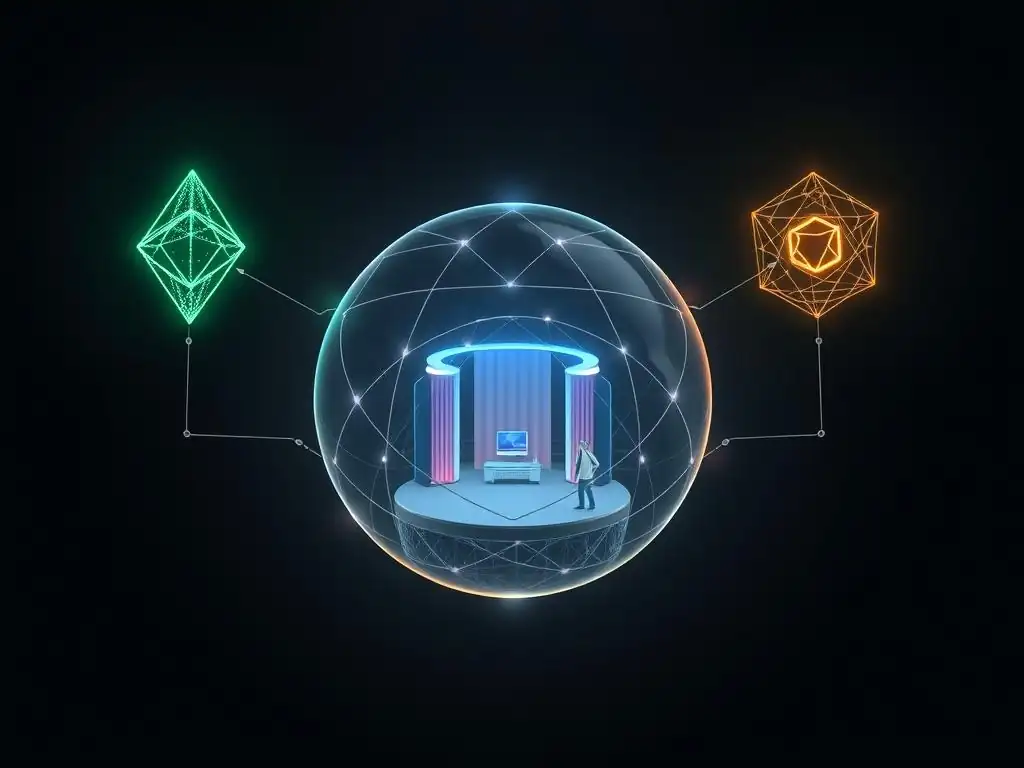
Ever wondered how the metaverse can truly unlock its potential? Prepare to delve into the fascinating realm of blockchain interoperability metaverse experiences future, as we explore how seamless communication between blockchains is paving the way for virtual events without borders. Discover the groundbreaking technologies and exciting possibilities that await, and get ready to envision the future of immersive, interconnected digital worlds. Read on to learn more!
Decentralized Finance (DeFi) and the Evolution of Investment Strategies
- Introduction: Redefining Investment in the Age of Decentralization
- Understanding DeFi Investment Strategies
- Benefits of DeFi Investment Strategies
- Use Cases: DeFi Investment Strategies in Action
- Overcoming Challenges to DeFi Investment
- The Future of Investment: Powered by DeFi
- Conclusion: Embracing DeFi for a More Efficient and Accessible Investment Future
-
Frequently Asked Questions
- What is blockchain interoperability and why is it important for metaverse experiences?
- How can blockchain interoperability enhance virtual events in the metaverse?
- What are some potential regulatory challenges surrounding blockchain interoperability in the metaverse?
- Beyond virtual events, what other future applications of blockchain interoperability exist in the metaverse?
- How does blockchain interoperability contribute to the overall future of decentralized systems and the metaverse?
- Final Reflection: Bridging Realities with Blockchain
- Reimagine Your Metaverse Connection: Start Building Today!
Introduction: Redefining Investment in the Age of Decentralization
The Rise of Decentralized Finance (DeFi)
Decentralized Finance, or DeFi, represents a paradigm shift in the financial industry, leveraging blockchain technology to create a system that operates independently of traditional intermediaries like banks and brokers. Born from the principles of transparency, immutability, and permissionless access inherent in blockchain, DeFi applications offer a wide array of financial services, from lending and borrowing to trading and asset management, all executed through smart contracts. This burgeoning ecosystem, primarily built on networks like Ethereum, has grown exponentially since its inception, attracting significant capital and innovation by offering alternatives to conventional financial products and services.
The rapid expansion of DeFi is evidenced by the dramatic increase in its Total Value Locked (TVL), a metric representing the aggregate value of crypto assets deposited in DeFi protocols. While figures fluctuate with market conditions, TVL has historically surged from mere millions in 2019 to peaks exceeding $100 billion across various chains, indicating robust user adoption and confidence. This growth underscores a fundamental demand for more open, accessible, and programmable financial infrastructure that bypasses the gatekeepers of traditional finance, enabling anyone with an internet connection to participate in global financial markets.
Traditional Investment Strategies vs. DeFi Investment Strategies
Traditional investment strategies typically involve working through established financial institutions, relying on instruments like stocks, bonds, mutual funds, and real estate. These strategies are often characterized by centralized control, defined trading hours, geographical limitations, and layers of intermediaries that can add costs and complexity. Access might be restricted based on jurisdiction, accreditation status, or minimum investment thresholds, creating barriers for many potential investors worldwide.
DeFi investment strategies, in contrast, operate on decentralized networks, offering 24/7 access to global markets and a diverse range of crypto-native assets and financial primitives. Instead of buying shares in a company, investors might provide liquidity to a decentralized exchange, stake tokens to earn yield, or lend crypto assets directly to borrowers via smart contracts. This shift empowers individuals with greater direct control over their assets and participation in novel investment opportunities, though it also introduces unique risks like smart contract vulnerabilities and impermanent loss not typically encountered in traditional markets.
Why DeFi is Revolutionizing the Investment Landscape
DeFi is revolutionizing the investment landscape by fundamentally altering how value is exchanged, stored, and grown. It introduces concepts like automated market makers (AMMs) for trading without order books, yield farming for earning passive income on crypto holdings, and flash loans for uncollateralized borrowing under specific conditions. These innovations create new avenues for generating returns and managing risk that are simply not possible within the confines of traditional finance, opening up possibilities for greater capital efficiency and financial innovation.
Furthermore, DeFi promotes financial inclusion on a global scale. For individuals in regions with underdeveloped financial infrastructure or limited access to banking services, DeFi provides a gateway to participate in global financial markets, access credit, and earn returns on their savings. This democratizing effect, coupled with the potential for higher yields compared to traditional low-interest environments, makes DeFi an increasingly attractive, albeit complex, alternative for investors seeking to diversify and explore the frontiers of blockchain-based finance.
Understanding DeFi Investment Strategies
What are DeFi Investment Strategies? A Definition
DeFi investment strategies encompass various methods and techniques employed by individuals and institutions to utilize decentralized financial protocols for the purpose of generating returns, managing risk, or participating in the growth of the DeFi ecosystem. These strategies leverage the unique capabilities of blockchain technology and smart contracts to engage in activities such as lending, borrowing, trading, staking, liquidity provision, and yield farming, often earning rewards in the form of cryptocurrency.
Unlike traditional investing which often relies on appreciation of asset value or dividends from corporate profits, many DeFi strategies focus on earning yield from providing utility to the network or protocol itself.
At its core, a DeFi investment strategy involves interacting with a specific protocol or a combination of protocols to achieve a financial objective. For example, a simple strategy might be staking stablecoins on a lending platform to earn interest, while a more complex one could involve providing liquidity to a decentralized exchange pool, farming the exchange's governance token, and then staking that token elsewhere. The defining characteristic is the direct interaction with blockchain-based applications, eliminating the need for traditional financial intermediaries for execution and settlement.
Key DeFi Protocols and Platforms for Investment [e.g., Lending Platforms, Decentralized Exchanges]
The DeFi ecosystem is built upon a foundation of diverse protocols, each offering distinct investment opportunities. Decentralized Exchanges (DEXs) like Uniswap, SushiSwap, and PancakeSwap are fundamental, allowing users to trade cryptocurrencies directly from their wallets using automated market maker (AMM) models, often rewarding liquidity providers with a share of trading fees and governance tokens. Providing liquidity to these platforms is a common DeFi investment strategy, enabling users to earn passive income on their crypto holdings.
Lending and borrowing platforms such as Aave and Compound are another cornerstone of DeFi investment. These protocols allow users to deposit crypto assets to earn interest (lending) or borrow assets by providing collateral.
Investors can earn yield by supplying assets to these platforms or engage in strategies like leveraged yield farming by borrowing assets to increase their position in yield-generating activities. Staking platforms, which are often integrated into other protocols or exist independently, allow token holders to lock up their assets to support network operations (like validating transactions in Proof-of-Stake systems) and earn rewards in return, representing another popular DeFi investment approach.
How DeFi Enhances Investment Opportunities
DeFi significantly enhances investment opportunities by providing unparalleled accessibility, transparency, and innovation. Global reach is a major advantage; anyone with internet access can participate in DeFi markets and strategies, breaking down geographical barriers inherent in traditional finance. This opens up investment possibilities for billions previously excluded from global capital markets.
Furthermore, DeFi introduces entirely new asset classes and yield-generating mechanisms. Beyond simple asset appreciation, investors can earn income from providing liquidity, staking, lending, and participating in novel activities like yield farming or structured products built on DeFi primitives. The composability of DeFi protocols – the ability for different applications to interact and build upon each other – fosters rapid innovation, leading to the continuous development of new and complex investment strategies. This dynamic environment, while requiring careful navigation, offers sophisticated investors the potential for high returns and diversification beyond traditional asset classes.
Benefits of DeFi Investment Strategies
Increased Accessibility: Opening Investment to a Global Audience
One of the most significant benefits of DeFi investment strategies is the dramatic increase in accessibility they provide. Unlike traditional financial systems that often require extensive documentation, minimum balance requirements, and operate within specific geographical boundaries, DeFi is largely permissionless and borderless. Anyone with a cryptocurrency wallet and an internet connection can interact with DeFi protocols from virtually anywhere in the world, 24/7.
This global accessibility empowers individuals in developing nations with limited access to traditional banking services to participate in global financial markets, earn yield on their savings, and access credit. It democratizes finance by removing the gatekeepers and lowering the barrier to entry for a wide range of investment activities previously reserved for accredited investors or those in specific jurisdictions. For instance, providing liquidity on a DEX or staking assets on a lending protocol requires no background checks or minimum income verification, only the necessary digital assets.
Higher Yields and Returns: Leveraging DeFi's Innovative Mechanisms
DeFi protocols have the potential to offer significantly higher yields compared to traditional savings accounts or fixed-income instruments, particularly in low-interest-rate environments. These higher returns are often generated through innovative mechanisms such as yield farming, liquidity mining, and efficient capital allocation facilitated by smart contracts. Protocols can offer attractive annual percentage yields (APYs) by distributing a portion of transaction fees to liquidity providers or issuing governance tokens as incentives for participating in the network.
For example, while traditional savings accounts might offer negligible interest rates, stablecoin lending protocols in DeFi have historically offered APYs ranging from low single digits to sometimes double digits, depending on market demand and protocol mechanics. Yield farming strategies, which involve moving assets between different protocols to maximize returns, can potentially offer even higher, albeit more volatile, yields. This potential for enhanced returns is a major draw for investors exploring DeFi investment strategies.
Enhanced Transparency and Control: Managing Assets Directly on the Blockchain
DeFi investment strategies offer unparalleled transparency and direct control over assets. Since transactions and protocol logic are recorded on public blockchains, users can verify every transaction and the rules governing the protocol's operation. This eliminates the opacity often associated with traditional financial intermediaries, where investors must trust the institution's internal processes and reporting.
Furthermore, in DeFi, assets remain under the user's control via their non-custodial wallet. Unlike depositing funds into a bank account or brokerage where the institution holds the assets, DeFi users retain direct control over their private keys and, therefore, their funds. This self-custody mitigates counterparty risk associated with centralized entities and provides investors with immediate access to their capital, allowing for greater flexibility and autonomy in managing their DeFi investment strategies.
Reduced Intermediary Fees: Eliminating Traditional Financial Institutions
One of the core tenets of DeFi is the reduction or elimination of intermediaries, which translates directly into lower fees for investors engaging in various financial activities. Traditional finance involves multiple layers of banks, brokers, clearinghouses, and payment processors, each adding costs through fees, commissions, or spreads.
In DeFi, many of these functions are automated by smart contracts. Trading on a DEX, for instance, might involve a small transaction fee distributed among liquidity providers and the protocol, significantly lower than brokerage commissions. Lending and borrowing often involve minimal platform fees compared to the overheads of traditional banks. While network transaction fees (gas fees) exist, particularly on busy blockchains like Ethereum, the overall fee structure for many DeFi activities can be more cost-effective, allowing investors to retain a larger portion of their returns when executing their DeFi investment strategies.
Use Cases: DeFi Investment Strategies in Action
Yield Farming and Liquidity Provision on Decentralized Exchanges (DEXs)
Yield farming and liquidity provision are cornerstone DeFi investment strategies, particularly prevalent on Decentralized Exchanges (DEXs). Protocols like Uniswap and SushiSwap rely on liquidity pools funded by users who deposit pairs of tokens (e.g., ETH and DAI). In return for providing this liquidity, users earn a portion of the trading fees generated by swaps within that pool. This is known as liquidity provision.
Yield farming extends this by often distributing the protocol's native governance token as an additional incentive to liquidity providers. For example, a user providing liquidity to the ETH-DAI pool on a DEX might earn a percentage of the trading fees plus a certain amount of the DEX's native token per day. This allows investors to earn passive income on their idle crypto assets, leveraging the demand for efficient decentralized trading, and is a widely adopted approach within the realm of DeFi investment strategies.
Lending and Borrowing Cryptocurrencies on DeFi Platforms
Lending and borrowing are fundamental financial activities reimagined in DeFi. Platforms like Aave and Compound enable users to deposit cryptocurrencies as lenders to earn interest, or deposit collateral to borrow other cryptocurrencies. Lenders earn passive income from the interest paid by borrowers, with interest rates automatically adjusted based on supply and demand within the protocol's pools.
Borrowers typically deposit collateral exceeding the value of the loan (overcollateralization) to mitigate risk for lenders. This system allows crypto holders to earn yield on assets they plan to hold long-term or to access liquidity without selling their underlying assets. It also enables more complex DeFi investment strategies, such as borrowing stablecoins against volatile crypto collateral to invest in other yield-generating opportunities, effectively creating leveraged positions within the DeFi ecosystem.
Staking and Governance Participation in DeFi Projects
Staking is a process integral to many Proof-of-Stake (PoS) blockchains and specific DeFi protocols, offering another avenue for DeFi investment. By staking, users lock up their tokens to support the network's operations, such as validating transactions or securing the protocol. In return, they earn staking rewards, often in the form of newly minted tokens or transaction fees. This provides a way to earn passive income while contributing to the security and decentralization of the underlying network or protocol.
Beyond earning rewards, staking often grants participants governance rights within the protocol or network. Holding and staking governance tokens allows users to vote on proposals related to the protocol's future development, fee structures, and parameter changes. This participation in decentralized governance is a unique aspect of many DeFi investment strategies, allowing investors to have a direct say in the evolution of the projects they support and potentially influencing the future value of their investments.
Investing in Decentralized Autonomous Organizations (DAOs)
Decentralized Autonomous Organizations (DAOs) represent a new form of collective organization governed by code and community consensus, often facilitated by governance tokens. Investing in DAOs typically involves acquiring their governance tokens, which grant holders voting power on proposals that shape the DAO's direction, treasury management, and protocol upgrades.
This form of DeFi investment is less about direct yield generation (though some DAOs distribute profits) and more about investing in the potential growth and success of a decentralized project or community. By holding DAO tokens, investors are betting on the community's ability to effectively manage the project and create value. Participation might involve voting on how the DAO's treasury funds are used, approving new initiatives, or proposing changes themselves, making it a blend of investment and active participation in decentralized governance structures.
Overcoming Challenges to DeFi Investment
Smart Contract Risks and Vulnerabilities
One of the most significant challenges in DeFi investment is the inherent risk associated with smart contracts. DeFi protocols are built on code, and despite audits, smart contracts can contain bugs or vulnerabilities that malicious actors can exploit. Such exploits have led to substantial losses for users, with millions, and sometimes hundreds of millions, of dollars being drained from protocols due to code flaws or economic exploits targeting the interaction between different protocols.
Mitigating this risk involves rigorous code audits by reputable firms, bug bounty programs to incentivize security researchers, and decentralized insurance protocols like Nexus Mutual that allow users to purchase coverage against smart contract failures. However, residual risk remains, and investors must understand that depositing funds into a DeFi protocol means entrusting their assets to code, which is never entirely immune to unforeseen issues. Due diligence in researching a protocol's security history and audit reports is crucial before engaging in any DeFi investment strategy.
Impermanent Loss and Market Volatility
Impermanent loss is a unique risk primarily faced by liquidity providers on Automated Market Maker (AMM) DEXs. It occurs when the price of deposited assets changes relative to when they were deposited. If the price divergence is significant, the value of assets withdrawn from the pool can be less than the value they would have had if simply held in a wallet. This loss is "impermanent" because it only materializes upon withdrawal and could theoretically reverse if prices return to their original ratio.
The volatility of cryptocurrency markets exacerbates impermanent loss. Assets can experience rapid and dramatic price swings, increasing the likelihood and magnitude of this risk for liquidity providers. While trading fees and yield farming rewards can often outweigh impermanent loss, particularly in stable or trending markets, sharp price movements can lead to significant losses. Investors engaging in liquidity provision must understand this risk and consider strategies to mitigate it, such as providing liquidity to stablecoin pools or using protocols designed to reduce impermanent loss exposure.
Regulatory Uncertainty and Compliance Challenges
The regulatory landscape surrounding DeFi is still evolving and poses a significant challenge for investors. Governments and financial regulators worldwide are grappling with how to classify and oversee decentralized protocols, which lack traditional legal entities and operate across borders. This uncertainty creates potential risks, including the possibility of specific protocols being deemed illegal, tokens being classified as securities, or new compliance requirements being imposed that could impact accessibility or functionality.
Regulatory actions in one jurisdiction could have ripple effects globally, impacting user access, liquidity, and the viability of certain DeFi investment strategies. For example, increased scrutiny on stablecoins or specific types of yield-generating activities could necessitate changes in how protocols operate. Investors must stay informed about potential regulatory developments and understand that participating in DeFi carries the risk of future regulatory action that could affect the value or accessibility of their investments.
User Experience and Accessibility Barriers
Despite the promise of increased accessibility, DeFi still faces significant challenges in terms of user experience and technical complexity, creating barriers for mainstream adoption. Interacting with DeFi protocols often requires a degree of technical proficiency, including managing private keys, understanding gas fees, navigating complex user interfaces, and comprehending the mechanics of various protocols.
The risk of user error, such as sending funds to the wrong address or interacting incorrectly with a smart contract, is high and can result in irreversible loss of funds. High gas fees on busy networks can also make small transactions or frequent interactions prohibitively expensive. While efforts are being made to improve user interfaces, integrate with traditional financial services, and develop more scalable blockchain solutions, the current user experience remains a hurdle for many potential investors accustomed to the simplicity of traditional online banking and brokerage platforms.
The Future of Investment: Powered by DeFi
The Evolution of Investment Portfolios: Integrating DeFi Assets
The future of investment portfolios is likely to involve the increasing integration of DeFi assets and strategies alongside traditional holdings. As the DeFi ecosystem matures and becomes more robust, investors will look to allocate capital to decentralized protocols not just speculatively, but as a means of diversification, yield generation, and accessing uncorrelated returns. This could involve dedicated allocations to governance tokens, participation in diversified yield farming strategies, or utilizing DeFi lending platforms as part of a broader asset management approach.
Portfolio managers and financial advisors are beginning to explore how to incorporate DeFi exposure for their clients, potentially through regulated products like crypto funds or by directly interacting with protocols for sophisticated investors. The evolution will see DeFi shift from a niche, high-risk area to a recognized asset class within diversified investment portfolios, offering opportunities that complement traditional stocks, bonds, and real estate. The development of institutional-grade DeFi infrastructure and compliance solutions will accelerate this trend.
The Role of DeFi in Building a More Inclusive Financial System
DeFi holds immense potential to build a more inclusive global financial system. By removing traditional barriers to entry, such as geographical location, income level, or credit history, DeFi protocols can provide financial services to the unbanked and underbanked populations worldwide. This includes access to savings accounts yielding competitive interest rates, credit facilities without relying on traditional credit scores (e.g., through collateralized loans), and participation in global capital markets.
The transparency and immutability of blockchain can also help build trust in regions where traditional financial institutions may be less reliable. As the technology becomes more user-friendly and scalable, DeFi can serve as a foundational layer for local financial innovation, enabling communities to build tailored financial tools and services that meet their specific needs. This vision positions DeFi not just as an alternative investment avenue but as a crucial tool for economic empowerment and global financial inclusion.
Predictions for the Future of DeFi Investment [e.g., Institutional Adoption, New Investment Products]
Looking ahead, several key trends are likely to shape the future of DeFi investment. Institutional adoption is a significant prediction; as regulatory clarity improves and infrastructure develops, more large financial institutions, asset managers, and corporations are expected to participate in DeFi, bringing substantial capital and expertise. This could manifest through direct participation in protocols, offering DeFi products to clients, or building their own decentralized applications.
Another prediction is the proliferation of new and more complex DeFi investment products. We can anticipate the development of sophisticated derivatives, structured products, and automated investment strategies built on DeFi primitives, potentially offering tailored risk-return profiles. Cross-chain interoperability, while still developing, will also become increasingly important, allowing capital and strategies to flow seamlessly across different blockchains, expanding the universe of potential DeFi investment opportunities and increasing overall market efficiency.
Conclusion: Embracing DeFi for a More Efficient and Accessible Investment Future
Key Takeaways: The Power of DeFi for Investment Strategies
Decentralized Finance represents a powerful evolution in investment strategies, offering a compelling alternative and complement to traditional finance. Key takeaways include DeFi's ability to provide unprecedented accessibility to global markets, enabling anyone with internet access to participate. It unlocks innovative yield-generating opportunities like liquidity provision, yield farming, and staking, potentially offering higher returns than traditional instruments. Furthermore, DeFi empowers investors with enhanced transparency and direct control over their assets on the blockchain, reducing reliance on intermediaries and often lowering associated fees.
While challenges such as smart contract risk, impermanent loss, and regulatory uncertainty exist, the continuous innovation and maturation of the ecosystem are addressing these issues. The potential for a more efficient, inclusive, and dynamic financial system powered by blockchain technology makes exploring DeFi investment strategies an increasingly relevant consideration for both individual and institutional investors looking towards the future of finance.
Call to Action: Exploring the Possibilities of DeFi-Enabled Investment
The world of decentralized finance is rapidly expanding, presenting a wealth of new possibilities for investment and wealth management. If you are interested in exploring these frontiers, begin by educating yourself on the core concepts of blockchain, smart contracts, and the specific mechanics of different DeFi protocols. Consider starting with simpler strategies like staking or stablecoin lending to gain familiarity before exploring more complex avenues like yield farming.
Dive deeper into understanding the risks involved and how to mitigate them, including researching protocol security and considering decentralized insurance options. Engage with the vibrant DeFi community to learn from others' experiences. By carefully researching, understanding the technology, and starting with a measured approach, you can begin to unlock the potential of DeFi-enabled investment and position yourself at the forefront of the evolving financial landscape.
Frequently Asked Questions
What is blockchain interoperability and why is it important for metaverse experiences?
Blockchain interoperability refers to the ability of different blockchain networks to communicate and share data with each other. This is crucial for seamless metaverse experiences, enabling the transfer of assets and identities across different virtual worlds.
How can blockchain interoperability enhance virtual events in the metaverse?
Interoperability allows attendees to use their digital identities and assets, like tickets or avatars, across different metaverse event platforms. This creates a more unified and personalized experience, regardless of the hosting platform.
What are some potential regulatory challenges surrounding blockchain interoperability in the metaverse?
Regulatory hurdles include defining jurisdiction, ensuring data privacy across different blockchains, and establishing standards for cross-chain transactions. These issues need addressing to foster a safe and compliant metaverse ecosystem.
Beyond virtual events, what other future applications of blockchain interoperability exist in the metaverse?
Interoperability can facilitate decentralized finance (DeFi) integration, allowing users to access financial services within the metaverse. It also enables the creation of complex, interconnected virtual economies and personalized digital experiences.
How does blockchain interoperability contribute to the overall future of decentralized systems and the metaverse?
Interoperability is a foundational element for a truly decentralized metaverse, fostering innovation and user ownership. By connecting disparate systems, it unlocks the full potential of blockchain technology and the metaverse experience.
Final Reflection: Bridging Realities with Blockchain
The journey through virtual events, powered by blockchain interoperability, reveals a landscape ripe with potential, yet still fragmented. The promise of seamless metaverse experiences hinges on overcoming the current limitations of isolated blockchain ecosystems. This isn't just about technology; it's about creating a unified digital world where users can truly own their experiences and assets, regardless of the platform they choose.
The impact of blockchain interoperability on metaverse experiences is profound, shaping how we connect, collaborate, and transact in the digital realm. Witnessing the nascent stages of this evolution underscores the importance of fostering collaboration and standardization within the blockchain community. This is more than just a technological advancement; it's a cultural shift towards a more decentralized and user-centric internet. The metaverse is not a single platform, but a constellation of experiences, each with its own unique value proposition. Interoperability is the key to unlocking the full potential of this constellation.
As we stand at the cusp of this new era, the call to action is clear: embrace the principles of interoperability, advocate for open standards, and contribute to building a metaverse that truly transcends borders. Let us not simply be passive observers, but active participants in shaping a future where virtual experiences are not confined by technological silos, but are instead seamlessly woven into the fabric of our lives.
Consider how you can contribute, even in small ways, to fostering a more connected and interoperable digital world. The future of the metaverse, and indeed the future of digital interaction, depends on it.
Reimagine Your Metaverse Connection: Start Building Today!
Thank you for exploring the exciting possibilities of interoperable metaverses! You now have valuable insights into how blockchain technology can enable seamless and borderless virtual experiences. It's time to turn that knowledge into action and help shape the future of the metaverse.
Here are some ways to get started:
- Begin exploring potential interoperability solutions by researching existing blockchain bridges and layer-2 scaling options compatible with your preferred metaverse platforms. Take the first step now!
- Join online forums and communities dedicated to metaverse development and blockchain interoperability to exchange ideas and collaborate.
- Share this article with your network to spark conversations and encourage more people to consider the potential of interoperable metaverse events.
Which interoperability feature do you believe will have the most significant impact on the future of virtual events? Share your thoughts in the comments below!
Leave a Reply