
Beyond Banks: How Blockchain is Revolutionizing Access to Finance for the Underserved


Welcome to Blockchain Trends, your go-to source for understanding the real-world impact of blockchain technology. Prepare to be amazed as we delve beyond the hype and explore how blockchain is reshaping industries and empowering communities.
Ever wondered how blockchain can bridge the financial gap for those left behind by traditional institutions? In this article, we uncover the groundbreaking ways blockchain finance is revolutionizing access to finance for underserved communities, offering a glimpse into a future where financial inclusion is not just a dream, but a tangible reality. Dive in to discover the innovative solutions and the transformative potential that lies within.
Beyond Banks: How Blockchain is Revolutionizing Access to Finance for the Underserved
- Introduction: Blockchain's Potential for Financial Inclusion
- Understanding the Landscape: Financial Inclusion Challenges
- Blockchain Finance for Underserved Communities: A Transformative Approach
- Key Benefits of Blockchain in Financial Inclusion
- Real-World Examples: Blockchain Projects Empowering Underserved Communities
- Overcoming the Challenges: Adoption of Blockchain in Underserved Areas
- The Future of Blockchain and Financial Inclusion
- Conclusion: Empowering the Underserved Through Decentralized Finance
-
Frequently Asked Questions
- What specific financial services are particularly impacted by blockchain technology in underserved communities?
- How can blockchain technology help overcome the lack of traditional banking infrastructure in underserved communities?
- What are the main regulatory challenges associated with implementing blockchain-based financial solutions in underserved communities?
- What are some real-world examples of successful blockchain initiatives that are benefiting underserved communities through blockchain finance?
- How does blockchain technology improve transparency and trust in financial transactions for underserved communities, especially in the context of blockchain finance?
- Final Reflection: Empowering Futures Through Decentralization
- Empower Change: Join the Blockchain Finance Revolution!
Introduction: Blockchain's Potential for Financial Inclusion
The Limitations of Traditional Banking for Underserved Populations
Traditional banking systems, while cornerstones of modern economies, often fall short in serving marginalized and underserved populations. A significant portion of the global population lacks access to basic financial services like bank accounts, credit, and insurance. According to the World Bank's Global Findex database, approximately 1.7 billion adults worldwide remain unbanked.
This exclusion is often due to factors inherent in the traditional banking model, which relies on physical infrastructure, stringent KYC (Know Your Customer) requirements, and credit history assessments that can be exclusionary. For many living in remote areas, the sheer distance to a bank branch presents a significant barrier. Furthermore, individuals without formal identification or a documented credit history, common among refugees, migrants, and those in informal economies, are frequently denied access, perpetuating a cycle of financial exclusion.
The operational costs associated with maintaining physical branches and complex legacy systems also contribute to the problem. Traditional banks often prioritize serving wealthier segments of the population where profitability is higher, making it less economically viable to cater to low-income or geographically dispersed communities. This economic reality, combined with regulatory burdens and risk aversion, leads to a systemic neglect of those who are most in need of financial inclusion. The result is a financial ecosystem that, despite its advancements, leaves billions behind, hindering economic growth and exacerbating global inequalities.
Exploring Blockchain Technology as a Solution for Financial Exclusion
Blockchain technology presents a compelling alternative paradigm that can potentially dismantle many of the barriers inherent in traditional financial systems, offering a pathway to greater financial inclusion for underserved communities. Its decentralized nature eliminates the need for intermediaries, reducing costs and increasing efficiency. By leveraging cryptographic security and distributed ledgers, blockchain can facilitate secure and transparent transactions without relying on centralized institutions.
This is particularly relevant for populations lacking trust in traditional banks or living in regions with unstable financial infrastructure. Furthermore, blockchain's inherent transparency and immutability can enhance accountability and reduce fraud, fostering greater trust in financial systems, especially in areas where corruption is prevalent.
The technology's ability to operate on a peer-to-peer basis, bypassing geographical limitations and infrastructural dependencies, is particularly transformative. Mobile devices and internet access, increasingly prevalent even in developing regions, become gateways to a suite of financial services powered by blockchain. This accessibility, coupled with the potential for lower transaction fees and faster processing times, makes blockchain a powerful tool for extending financial inclusion to remote and marginalized populations. The innovative applications built on blockchain, such as decentralized finance (DeFi) and cryptocurrency-based remittances, are already demonstrating the technology's potential to reshape financial access and empower underserved communities globally.
Understanding the Landscape: Financial Inclusion Challenges
Barriers to Traditional Banking Access: Lack of Identification, Insufficient Credit History, Geographic Isolation
Several interconnected barriers prevent underserved populations from accessing traditional banking services, creating a complex web of financial exclusion. Lack of formal identification is a significant hurdle. Globally, hundreds of millions of people, particularly in developing countries, do not possess government-recognized ID, a prerequisite for opening a bank account in most jurisdictions. This lack of identification disproportionately affects refugees, internally displaced persons, and marginalized communities.
Furthermore, traditional banks heavily rely on credit history to assess risk and grant loans. Individuals new to the formal financial system or those operating in informal economies often lack a documented credit history, rendering them ineligible for credit and other essential financial products. This creates a vicious cycle where individuals cannot build credit because they are denied access to credit in the first place.
Geographic isolation presents another formidable barrier. Many underserved communities reside in remote rural areas where bank branches are scarce or nonexistent. The cost of establishing and maintaining physical infrastructure in these regions often outweighs the potential profitability for traditional banks.
This geographical disparity leaves millions without convenient access to financial institutions, forcing them to rely on informal and often exploitative financial mechanisms. These three factors – lack of identification, insufficient credit history, and geographic isolation – are not mutually exclusive but rather compound each other, creating significant obstacles for financial inclusion and hindering economic empowerment for vast segments of the global population.
The Impact of Financial Exclusion on Underserved Communities
Financial exclusion has profound and far-reaching negative consequences for individuals and communities, perpetuating poverty and hindering overall development. Without access to basic financial services, individuals are forced to rely on cash-based economies, which are inherently less secure, less efficient, and more vulnerable to theft and loss. The inability to save securely limits the capacity to build assets and weather financial shocks, trapping individuals in cycles of vulnerability.
Access to credit is crucial for starting and expanding small businesses, investing in education, and improving living standards. Without it, entrepreneurial potential is stifled, and opportunities for economic advancement are severely limited. Furthermore, the lack of access to insurance leaves vulnerable populations exposed to catastrophic risks like illness, natural disasters, and crop failures, potentially pushing them further into poverty.
At a community level, financial exclusion undermines economic growth and social development. It hinders the flow of capital within local economies, limiting investment and job creation. The inability to access formal financial systems also makes communities more susceptible to predatory lending practices and informal financial mechanisms that often charge exorbitant interest rates. This exploitation further drains resources from already vulnerable populations, hindering community resilience and sustainable development. Addressing financial exclusion is therefore not just a matter of individual empowerment but a critical imperative for fostering inclusive economic growth, reducing inequality, and achieving broader societal progress.
Blockchain Finance for Underserved Communities: A Transformative Approach
Decentralized Finance (DeFi) and its Role in Expanding Access
Decentralized Finance (DeFi) represents a paradigm shift in financial services, leveraging blockchain technology to create open, permissionless, and transparent financial systems. DeFi protocols operate without intermediaries, relying on smart contracts to automate financial transactions and services. This disintermediation has the potential to significantly reduce costs and increase efficiency, making financial services more accessible to underserved populations.
For instance, DeFi lending platforms can offer loans without requiring traditional credit checks, instead utilizing collateral in the form of cryptocurrencies or other digital assets. This opens up access to credit for individuals who lack a credit history or formal identification, addressing a key barrier to financial inclusion.
Furthermore, DeFi platforms are globally accessible, operating 24/7 without geographical limitations. This removes the barrier of physical distance to bank branches, allowing individuals in remote areas to access financial services through internet-enabled devices. The transparency of DeFi protocols, with all transactions recorded on a public blockchain, enhances accountability and reduces the risk of corruption and fraud. While still nascent and evolving, DeFi offers a compelling vision of a more inclusive financial system where access is determined by code and technology rather than traditional gatekeepers, potentially democratizing finance for billions of underserved individuals worldwide.
Blockchain-Based Microfinance Platforms: Kiva Protocol, Teller Finance
Blockchain technology is being actively deployed in the microfinance sector to enhance efficiency, transparency, and reach, specifically targeting underserved communities. The Kiva Protocol, for example, is a blockchain-based platform designed to facilitate peer-to-peer lending in developing countries. By leveraging blockchain, Kiva Protocol aims to reduce transaction costs, improve transparency in loan disbursement and repayment, and expand access to microloans for entrepreneurs and small businesses in underserved regions. The protocol utilizes blockchain to create a secure and immutable record of loan transactions, fostering trust and accountability among lenders and borrowers.
Teller Finance is another example of a blockchain-based platform focused on expanding financial access. Teller utilizes DeFi principles to offer undercollateralized loans, meaning borrowers may not need to provide the full value of the loan in collateral, potentially making credit more accessible to those with limited assets. By leveraging blockchain and alternative data sources for credit scoring, Teller aims to provide financial services to individuals who are excluded from traditional banking systems. These platforms demonstrate how blockchain can be used to create more efficient, transparent, and inclusive microfinance ecosystems, empowering underserved communities with access to essential financial resources.
Cryptocurrency and Remittances: Lowering Transaction Costs for Migrant Workers
Cryptocurrencies offer a powerful tool for reducing the cost and increasing the speed of remittances, particularly benefiting migrant workers who frequently send money back home to support their families. Traditional remittance channels often involve high fees and lengthy processing times, especially for cross-border transfers, significantly eroding the value of remittances for recipients. Blockchain-based cryptocurrencies offer a more efficient and cost-effective alternative.
Transactions can be processed directly between individuals, bypassing intermediaries like banks and money transfer operators, resulting in significantly lower fees. Furthermore, cryptocurrency transactions are typically much faster, often completing within minutes or hours compared to days for traditional bank transfers.
For migrant workers in underserved communities, these reduced costs and faster processing times translate directly into more money reaching their families. In regions where access to traditional banking is limited or expensive, cryptocurrencies can provide a more accessible and affordable way to send and receive funds across borders.
Several cryptocurrency projects are specifically focused on facilitating remittances, leveraging stablecoins to mitigate price volatility and creating user-friendly mobile wallets to simplify the process for users with limited technical expertise. By streamlining and reducing the cost of remittances, cryptocurrencies are empowering migrant workers and their families, contributing to financial inclusion and economic well-being in underserved communities.
Key Benefits of Blockchain in Financial Inclusion
Increased Transparency and Accountability in Financial Transactions
Blockchain technology inherently enhances transparency and accountability in financial transactions, addressing critical concerns in underserved communities often plagued by opaque and potentially corrupt financial systems. Every transaction on a blockchain is recorded on a publicly distributed ledger, making it auditable and verifiable by anyone. This transparency contrasts sharply with traditional financial systems where transaction records are often centralized and less accessible, potentially masking inefficiencies or illicit activities. For underserved populations, this increased transparency can build trust in financial systems and reduce the risk of exploitation.
The immutability of blockchain records further strengthens accountability. Once a transaction is recorded on the blockchain, it cannot be altered or deleted, creating a permanent and tamper-proof audit trail. This immutability ensures that financial transactions are accurately recorded and cannot be manipulated, fostering greater trust and reducing the potential for fraud and corruption. In contexts where financial institutions may lack credibility or oversight, blockchain's inherent transparency and immutability can provide a much-needed layer of accountability, empowering underserved communities with greater confidence in the financial services they utilize.
Reduced Costs and Fees Associated with Traditional Banking
One of the most significant advantages of blockchain technology in financial inclusion is its potential to drastically reduce costs and fees associated with traditional banking services. Traditional financial institutions incur substantial overhead costs related to physical infrastructure, staffing, and legacy systems, which are often passed on to customers in the form of fees.
Blockchain-based systems, particularly decentralized platforms, operate with significantly lower overhead, as they eliminate the need for intermediaries and rely on automated smart contracts for many functions. This cost efficiency can translate into lower transaction fees, reduced lending rates, and more affordable access to a range of financial services for underserved populations.
For individuals in low-income communities, even small reductions in fees can have a significant impact. High transaction costs can erode savings and diminish the value of remittances, hindering financial progress. Blockchain's ability to minimize these costs makes financial services more economically viable and accessible for those who are most price-sensitive. By bypassing traditional intermediaries and leveraging the efficiency of blockchain technology, financial inclusion initiatives can reach more people and deliver greater value with limited resources, maximizing their impact on underserved communities.
Enhanced Security and Accessibility of Financial Services
Blockchain technology offers enhanced security and accessibility for financial services, particularly beneficial for underserved communities where traditional banking infrastructure may be unreliable or insecure. Cryptographic security is at the core of blockchain, ensuring the integrity and confidentiality of financial transactions. Decentralized networks are inherently more resilient to single points of failure, reducing the risk of system-wide outages or data breaches that can disrupt traditional financial systems. For populations in regions with unstable infrastructure or high levels of cybercrime, blockchain-based financial services can provide a more secure and reliable alternative.
Furthermore, blockchain enhances accessibility by enabling financial services to be delivered directly to individuals through mobile devices and internet connections, bypassing the need for physical bank branches. This is particularly transformative for geographically isolated communities or those lacking access to traditional banking infrastructure. Blockchain-based mobile wallets and applications can provide a gateway to a range of financial services, including payments, savings, lending, and remittances, directly empowering individuals with control over their finances and expanding financial inclusion to previously unreachable populations.
Empowering Individuals with Greater Control over their Finances
Ultimately, blockchain technology empowers individuals with greater control over their finances, a crucial aspect of financial inclusion and economic empowerment for underserved communities. Traditional financial systems often operate in a top-down manner, with individuals having limited control over their data and financial transactions. Blockchain, with its decentralized and permissionless nature, shifts this power dynamic. Individuals have direct control over their digital assets and can transact peer-to-peer without relying on intermediaries. This increased autonomy fosters financial agency and self-determination.
The transparency and accessibility of blockchain-based systems further empower individuals by providing them with greater visibility into financial transactions and processes. This transparency reduces information asymmetry and allows individuals to make more informed financial decisions. By giving individuals greater control, security, and transparency in their financial lives, blockchain technology fosters financial literacy, promotes responsible financial behavior, and ultimately empowers underserved communities to participate more fully in the formal economy and improve their economic well-being.
Real-World Examples: Blockchain Projects Empowering Underserved Communities
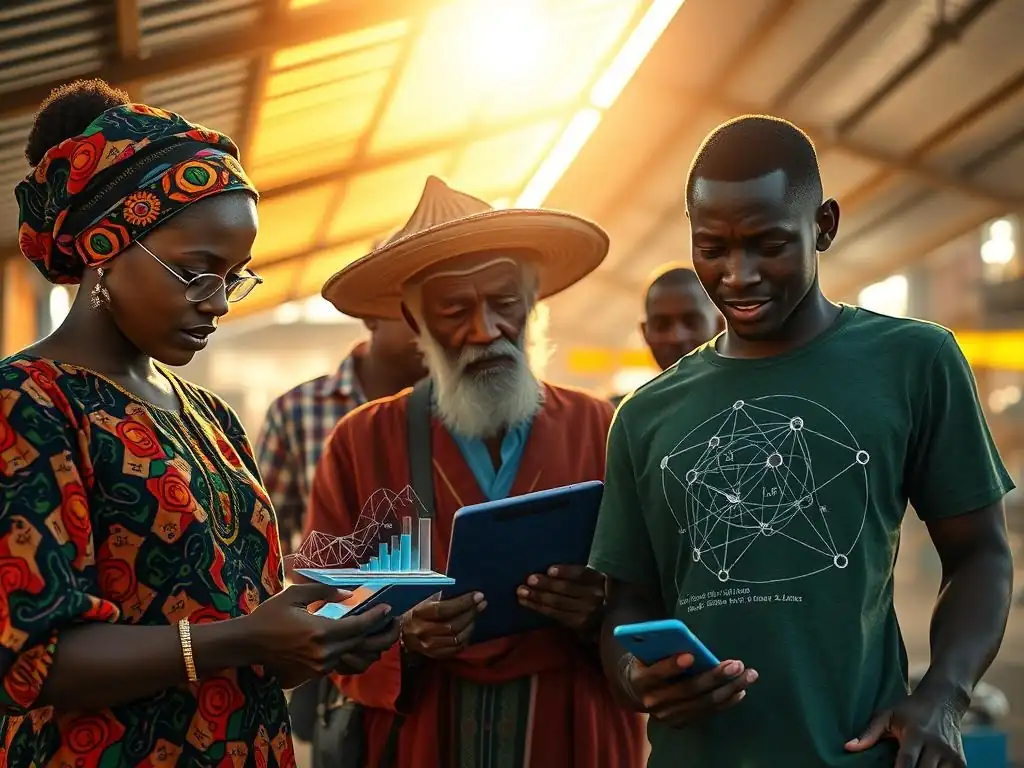
Case Study 1: Celo - Providing Access to Loans and Credit
Celo is a blockchain platform specifically designed to increase financial inclusion and prosperity for everyone. It focuses on making decentralized financial (DeFi) tools accessible via mobile phones, targeting the billions of people globally who primarily access the internet through mobile devices. Celo's ecosystem includes a stablecoin pegged to the US dollar (cUSD) and other assets, facilitating low-cost and fast transactions.
One of Celo's key initiatives is providing access to loans and credit to underserved communities. Through partnerships with microfinance institutions and DeFi lending platforms built on Celo, individuals in developing countries can access small loans for business development, education, and other essential needs.
For example, in regions of Africa and Latin America, Celo-based platforms are enabling farmers to access credit to purchase seeds and equipment, improving agricultural productivity and income. These loans are often provided without requiring traditional credit scores, relying instead on alternative credit scoring mechanisms or community-based lending models facilitated by blockchain. Celo's focus on mobile-first accessibility and stablecoins makes DeFi more user-friendly and practical for underserved populations, demonstrating the real-world impact of blockchain in expanding financial inclusion.
Case Study 2: BitPesa (now AZA Finance) - Facilitating Cross-Border Payments
BitPesa, now rebranded as AZA Finance, was an early pioneer in using blockchain technology to revolutionize cross-border payments, particularly in Africa. Traditional cross-border payment systems in Africa were often slow, expensive, and unreliable, hindering trade and remittances. BitPesa leveraged blockchain and cryptocurrencies to create a faster, cheaper, and more transparent payment network. By using cryptocurrencies as a bridge currency, BitPesa significantly reduced transaction costs and processing times for cross-border transfers between African countries and globally.
For businesses and individuals in Africa engaged in international trade or receiving remittances, BitPesa offered a significant improvement over traditional banking channels. The platform facilitated faster and more affordable payments, boosting trade and economic activity. While AZA Finance has since evolved and expanded its services beyond pure cryptocurrency-based payments, its early success demonstrated the transformative potential of blockchain in streamlining cross-border payments and fostering financial inclusion in regions with limited access to efficient financial infrastructure. It serves as a compelling example of how blockchain can address real-world financial challenges in underserved markets.
Case Study 3: Provenance - Supporting Supply Chain Transparency
Provenance is a blockchain platform focused on enhancing transparency and traceability in supply chains, which indirectly contributes to financial inclusion and empowerment for producers in developing countries. In many industries, particularly agriculture and manufacturing, producers in developing countries often lack visibility and fair compensation within complex global supply chains. Provenance uses blockchain to create a transparent and immutable record of product journeys, from origin to consumer. This allows consumers and businesses to verify the authenticity, origin, and ethical sourcing of products.
By increasing supply chain transparency, Provenance empowers producers by enabling them to demonstrate the quality and ethical practices associated with their products. This enhanced transparency can translate into better market access and fairer prices for producers, particularly smallholder farmers and artisans in underserved communities. Furthermore, transparent supply chains can build trust between producers and consumers, fostering more sustainable and equitable trading relationships. While not directly a financial inclusion platform, Provenance exemplifies how blockchain can indirectly contribute to economic empowerment and fairer financial outcomes for underserved communities by promoting transparency and accountability within global supply chains.
Overcoming the Challenges: Adoption of Blockchain in Underserved Areas
Addressing Regulatory Uncertainty and Compliance Issues
Regulatory uncertainty and compliance issues pose significant challenges to the widespread adoption of blockchain in underserved areas. The regulatory landscape for cryptocurrencies and blockchain technology is still evolving globally, with varying approaches across different jurisdictions. This lack of clarity can create uncertainty for blockchain-based financial inclusion initiatives, hindering investment and adoption. Furthermore, compliance with existing financial regulations, such as KYC/AML (Know Your Customer/Anti-Money Laundering) requirements, can be complex and costly for blockchain platforms operating in underserved regions.
Addressing these challenges requires proactive engagement with regulators to develop clear and appropriate regulatory frameworks that foster innovation while mitigating risks. This includes promoting regulatory sandboxes and pilot programs to test blockchain solutions in a controlled environment and inform policy development. Simplifying KYC/AML compliance for blockchain-based financial inclusion initiatives, perhaps through tiered approaches or alternative identification methods, is also crucial. Collaboration between blockchain developers, regulators, and financial inclusion advocates is essential to navigate the regulatory landscape and ensure responsible and sustainable adoption of blockchain in underserved areas.
Bridging the Digital Divide: Ensuring Access to Technology and Education
Bridging the digital divide is a critical prerequisite for realizing the full potential of blockchain for financial inclusion in underserved areas. While mobile phone penetration is increasing, access to reliable internet connectivity and digital literacy remains unevenly distributed, particularly in developing countries and remote communities. Blockchain-based financial services rely on digital infrastructure and user proficiency, creating a barrier for those lacking access to technology or digital skills. Closing this digital gap is essential to ensure that blockchain benefits reach those who are most in need.
Addressing the digital divide requires multifaceted strategies. This includes investing in infrastructure to expand internet access in underserved areas, promoting affordable mobile data plans, and developing user-friendly blockchain applications that are accessible even with limited bandwidth. Crucially, digital literacy programs are needed to equip individuals with the skills and knowledge to effectively and safely utilize blockchain-based financial services. These programs should be culturally appropriate and tailored to the specific needs of underserved communities, ensuring that technology empowers rather than excludes.
Building Trust and Awareness of Blockchain Technology
Building trust and awareness of blockchain technology is crucial for its successful adoption in underserved communities. Blockchain is a relatively new and complex technology, and misconceptions and skepticism are common, particularly among populations who may have limited exposure to digital finance. Overcoming these barriers requires targeted education and awareness campaigns that clearly communicate the benefits and risks of blockchain-based financial services in a culturally sensitive and accessible manner. Building trust also requires demonstrating the reliability and security of blockchain platforms through transparent operations and robust security measures.
Community engagement is essential in building trust and awareness. Working with local leaders, community organizations, and trusted intermediaries can help disseminate information effectively and address concerns. Showcasing real-world examples of successful blockchain applications in similar contexts can also build confidence and encourage adoption. Transparency in the development and operation of blockchain platforms, coupled with clear and accessible communication, is key to fostering trust and ensuring that underserved communities embrace blockchain as a tool for financial empowerment.
Ensuring Data Privacy and Security in Blockchain-Based Systems
Ensuring data privacy and security in blockchain-based systems is paramount, particularly when dealing with sensitive financial information in underserved communities. While blockchain offers enhanced security in transaction processing, data privacy considerations must be carefully addressed. Public blockchains, by their nature, are transparent and publicly auditable, raising concerns about the privacy of personal and financial data. Balancing transparency with privacy requires careful design and implementation of blockchain solutions.
Strategies for enhancing data privacy in blockchain systems include utilizing privacy-preserving technologies like zero-knowledge proofs and secure multi-party computation. Implementing robust data encryption and access control mechanisms is also crucial. Furthermore, clear data governance frameworks and user consent mechanisms are needed to ensure that individuals are informed about how their data is being used and have control over their personal information. Addressing data privacy concerns effectively is essential for building trust and ensuring the ethical and responsible deployment of blockchain for financial inclusion in underserved areas.
The Future of Blockchain and Financial Inclusion
Emerging Trends and Innovations in Blockchain Finance
The future of blockchain and financial inclusion is marked by exciting emerging trends and innovations that promise to further expand access and improve financial services for underserved communities. One key trend is the increasing integration of blockchain with other technologies, such as artificial intelligence (AI) and the Internet of Things (IoT). AI can enhance credit scoring and risk assessment in DeFi platforms, making lending more efficient and inclusive. IoT devices can enable new forms of collateral and micro-insurance in agriculture and other sectors, further expanding financial access.
Another trend is the development of more user-friendly and accessible blockchain applications. Mobile-first solutions, simplified user interfaces, and multilingual support are making blockchain technology more approachable for users with limited technical expertise. The rise of layer-2 scaling solutions and interoperability protocols is also addressing scalability challenges and enabling seamless interaction between different blockchain networks, paving the way for more robust and integrated financial ecosystems. These emerging trends and innovations are poised to accelerate the impact of blockchain on financial inclusion in the years to come.
The Role of Blockchain in Achieving Sustainable Development Goals (SDGs)
Blockchain technology has a significant role to play in achieving the United Nations Sustainable Development Goals (SDGs), particularly those related to poverty reduction, economic growth, and reduced inequalities. Financial inclusion is recognized as a key enabler for achieving many SDGs, and blockchain's potential to expand financial access to underserved populations directly contributes to SDG targets. By facilitating access to credit, savings, and remittances, blockchain empowers individuals and communities to improve their livelihoods, invest in education and healthcare, and build more resilient economies.
Furthermore, blockchain's transparency and accountability features can contribute to SDG goals related to good governance and reduced corruption. Transparent supply chains enabled by blockchain can promote ethical sourcing and fair trade, supporting sustainable consumption and production patterns (SDG 12). Blockchain's potential to streamline aid distribution and improve transparency in development projects can also enhance the effectiveness of development assistance and contribute to achieving broader SDG targets. By leveraging its unique capabilities, blockchain technology can be a powerful tool for accelerating progress towards a more sustainable and equitable future for all.
Scaling Blockchain Solutions for Global Impact
Scaling blockchain solutions for global impact is the ultimate goal for realizing the transformative potential of this technology in financial inclusion. While numerous pilot projects and initiatives have demonstrated the effectiveness of blockchain in expanding financial access, scaling these solutions to reach millions or billions of underserved individuals requires overcoming several challenges. Interoperability between different blockchain platforms and traditional financial systems is crucial for seamless integration and wider adoption. Developing robust and scalable infrastructure, including reliable internet connectivity and energy-efficient blockchain networks, is also essential.
Collaboration and partnerships are key to scaling blockchain solutions. This includes collaboration between blockchain developers, financial institutions, governments, NGOs, and community organizations. Sharing best practices, developing open-source platforms, and fostering interoperability standards can accelerate the scaling process. Furthermore, attracting investment and building sustainable business models for blockchain-based financial inclusion initiatives are crucial for long-term viability and widespread impact. By addressing these scaling challenges collaboratively and strategically, the global community can unlock the full potential of blockchain to revolutionize financial inclusion and empower underserved populations worldwide.
Conclusion: Empowering the Underserved Through Decentralized Finance
Blockchain as a Catalyst for Financial Empowerment
Blockchain technology stands as a powerful catalyst for financial empowerment, offering a pathway to extend financial inclusion to billions of underserved individuals globally. By dismantling traditional barriers related to access, cost, and security, blockchain is democratizing finance and putting greater control in the hands of individuals. Decentralized finance (DeFi) applications, built on blockchain, are creating open, permissionless, and transparent financial systems that bypass intermediaries and reduce costs. Cryptocurrencies are streamlining remittances and cross-border payments, empowering migrant workers and their families. Blockchain-based microfinance platforms are expanding access to credit and savings for entrepreneurs and small businesses in underserved communities.
The inherent transparency and accountability of blockchain build trust in financial systems, while enhanced security protects users from fraud and exploitation. By empowering individuals with greater control over their finances, blockchain fosters financial literacy, promotes economic participation, and contributes to poverty reduction. While challenges remain in terms of regulation, digital access, and trust-building, the potential of blockchain to revolutionize financial inclusion is undeniable.
The Potential for a More Inclusive and Equitable Financial System
The widespread adoption of blockchain technology in financial services holds the transformative potential to create a more inclusive and equitable financial system for all. By reaching underserved populations currently excluded from traditional banking, blockchain can unlock economic opportunities, reduce inequalities, and drive sustainable development. Imagine a future where financial access is no longer determined by geography, income level, or social status, but by secure and accessible digital infrastructure. This future, powered by blockchain, is within reach.
Realizing this vision requires continued innovation, collaboration, and commitment from stakeholders across the globe. By addressing the challenges and harnessing the opportunities presented by blockchain, we can build a financial system that is truly inclusive, equitable, and empowers everyone to participate in and benefit from the global economy. Blockchain finance for underserved communities is not just a technological advancement; it is a step towards a more just and prosperous world for all.
Frequently Asked Questions
What specific financial services are particularly impacted by blockchain technology in underserved communities?
Blockchain is making waves by providing access to microloans, facilitating cross-border remittances with lower fees, and enabling decentralized insurance options that are otherwise unavailable.
How can blockchain technology help overcome the lack of traditional banking infrastructure in underserved communities?
Blockchain allows for peer-to-peer transactions without intermediaries, creating a digital ledger that requires no physical bank branch and provides a transparent record of all transactions.
What are the main regulatory challenges associated with implementing blockchain-based financial solutions in underserved communities?
Navigating diverse and often unclear regulatory landscapes is a major hurdle, along with ensuring compliance with existing financial laws and addressing concerns around data privacy and security.
What are some real-world examples of successful blockchain initiatives that are benefiting underserved communities through blockchain finance?
Projects are emerging that leverage blockchain for land registry, enabling secure property rights, and facilitating agricultural finance through tokenization, empowering local farmers and improving access to capital.
How does blockchain technology improve transparency and trust in financial transactions for underserved communities, especially in the context of blockchain finance?
The immutable and transparent nature of blockchain eliminates the risk of fraud and corruption, creating a trustless system where participants can verify transactions independently, leading to increased confidence in the financial system.
Final Reflection: Empowering Futures Through Decentralization
The journey we've explored, tracing the transformative power of blockchain in democratizing finance, culminates in a stark realization: financial inclusion is no longer a utopian dream, but a tangible possibility. The barriers that once confined underserved communities to the fringes of the economic landscape are beginning to crumble, thanks to the innovative and decentralized nature of blockchain technology.
This revolution is not merely theoretical; it's a lived reality for countless individuals gaining access to credit, savings, and investment opportunities previously beyond their reach. Witnessing this shift firsthand underscores the profound impact of technology when harnessed for social good. The future of finance is decentralized, and the future of development is inclusive. Blockchain is the bridge between the two.
This quote encapsulates the hope and potential that blockchain holds for creating a more equitable world, one transaction at a time.
As we conclude this exploration, I invite you to consider your own role in this unfolding narrative. How can you leverage your knowledge, skills, or resources to further empower underserved communities through blockchain finance? Let us all strive to be architects of a more inclusive and equitable financial future, where opportunity knows no boundaries and everyone has the chance to thrive.
Empower Change: Join the Blockchain Finance Revolution!
Thank you for exploring how blockchain is reshaping financial inclusion. You've gained valuable insights into its potential to empower underserved communities, and now it's time to take action. Let's work together to build a more equitable financial future.
Here's how you can get involved:
- Become a Blockchain Advocate: Share this article with your network to spark conversations about the transformative power of blockchain in finance.
- Discover emerging blockchain finance projects: Research and identify initiatives that use blockchain technology to provide financial access to underserved populations. Consider donating or volunteering your skills to support these efforts.
- Delve deeper into the technology: Explore online courses and resources to enhance your understanding of blockchain and its applications in promoting financial inclusion.
What immediate step will you take to support blockchain's role in democratizing finance? Share your thoughts and ideas in the comments below!
Leave a Reply