
Blockchain for Financial Inclusion: Transforming Lives at the Bottom of the Pyramid


Welcome to Blockchain Trends, your compass in the rapidly evolving world of decentralized innovation. Dive into the transformative potential of blockchain, moving beyond the hype to explore its real-world applications. Are you ready to discover how this technology can reshape industries and improve lives?
This week, we're focusing on a critical area: blockchain financial inclusion opportunities. Uncover how blockchain is breaking down barriers and extending essential financial services to those at the bottom of the pyramid. Intrigued? Let's explore how this revolutionary technology is transforming lives, one transaction at a time...
Blockchain for Financial Inclusion: Transforming Lives at the Bottom of the Pyramid
- Introduction: Unlocking Financial Opportunities with Blockchain Technology
- The Challenges of Traditional Financial Systems for the Unbanked
- Blockchain Financial Inclusion Opportunities: A Deep Dive
-
Key Blockchain Use Cases for Financial Inclusion
- Blockchain-Based Microfinance: Empowering Small Businesses
- Remittances and Cross-Border Payments: Reducing Costs and Increasing Speed
- Digital Identity Solutions: Enabling Access to Financial Services
- Smart Contracts for Automated and Transparent Agreements
- Decentralized Insurance: Protecting Vulnerable Populations
- Real-World Examples: Blockchain Impacting Financial Inclusion
- Overcoming Challenges and Ensuring Responsible Implementation
- The Future of Blockchain and Financial Inclusion: A Vision for Tomorrow
- Conclusion: Blockchain as a Catalyst for Economic Empowerment
-
Frequently Asked Questions
- What are the main Blockchain Financial Inclusion Opportunities discussed in the article?
- How can blockchain help those at the bottom of the pyramid access financial services?
- What role does regulation play in Blockchain Financial Inclusion Opportunities?
- Beyond cryptocurrencies, what other enterprise applications of blockchain are relevant to financial inclusion?
- What is the future outlook for decentralized systems in fostering Blockchain Financial Inclusion Opportunities?
- Final Reflection: Embracing Blockchain's Promise for Inclusive Finance
- Empower Communities: Unlock Financial Freedom!
Introduction: Unlocking Financial Opportunities with Blockchain Technology
The Promise of Blockchain in Bridging the Financial Inclusion Gap
Financial inclusion, the concept of providing access to affordable and useful financial services to all individuals and businesses, is a critical driver of economic development and poverty reduction. Globally, an estimated 1.7 billion adults remain unbanked, largely excluded from the formal financial system. This exclusion disproportionately affects vulnerable populations, particularly those at the bottom of the pyramid (BoP).
Blockchain technology, with its decentralized, transparent, and secure nature, presents a groundbreaking opportunity to address this challenge. Its potential to reduce costs, enhance security, and improve accessibility is revolutionizing how we approach financial inclusion, offering innovative solutions to reach those previously underserved.
The traditional financial infrastructure often struggles to efficiently and affordably serve the BoP. High operational costs, complex regulatory frameworks, and a lack of trust in established institutions create significant barriers. Blockchain, however, circumvents many of these obstacles.
By leveraging distributed ledger technology, it can facilitate peer-to-peer transactions, reduce reliance on intermediaries, and create more transparent and accountable systems. This paradigm shift is not just about extending existing financial models; it's about fundamentally rethinking how financial services are designed and delivered, particularly to those who need them most. The promise of blockchain lies in its ability to create truly inclusive financial ecosystems.
Understanding the Bottom of the Pyramid (BoP) and its Financial Needs
The term "Bottom of the Pyramid" (BoP), coined by C.K. Prahalad, refers to the largest, but poorest socio-economic group, encompassing billions of people living on less than a few dollars a day. This demographic, often residing in developing countries and remote areas, faces unique financial challenges and needs that are often overlooked by traditional financial institutions.
Their financial needs are diverse and complex, ranging from basic savings and access to credit for small businesses, to secure and affordable remittance services and insurance against unforeseen risks. Ignoring this significant segment of the global population not only perpetuates inequality but also represents a missed opportunity for economic growth and innovation.
For individuals at the BoP, access to formal financial services is not just about convenience; it's about survival and upward mobility. Without bank accounts, they are forced to rely on informal and often exploitative financial mechanisms, such as predatory lenders and informal savings groups, which offer little security and high costs. Small business owners in this segment often lack access to even microloans, hindering their ability to grow and contribute to the local economy.
Furthermore, the lack of formal financial identities prevents them from accessing essential services, including healthcare, education, and social safety nets. Understanding the specific financial needs of the BoP is crucial for designing effective and impactful blockchain-based financial inclusion opportunities.
The Challenges of Traditional Financial Systems for the Unbanked
High Costs and Limited Access: Barriers to Financial Inclusion
Traditional financial systems, while serving a significant portion of the global population, often prove inefficient and inaccessible for those at the bottom of the pyramid. The operational costs associated with maintaining brick-and-mortar branches, coupled with stringent regulatory compliance requirements, make it economically unviable for many financial institutions to serve low-income populations, especially in remote or sparsely populated areas. For instance, opening and maintaining a traditional bank account often requires minimum balances and charges transaction fees that are prohibitive for individuals with limited income.
Moreover, the geographic reach of traditional banking infrastructure is often limited. In many developing countries, particularly in rural regions, bank branches are scarce, forcing individuals to travel long distances and incur significant time and transportation costs simply to access basic financial services. This lack of physical access creates a significant barrier, effectively excluding a large segment of the population from the formal financial system.
Studies by the World Bank have consistently shown a strong correlation between access to financial services and proximity to financial institutions, highlighting the geographical limitations of traditional banking models in achieving widespread financial inclusion. These high costs and limited physical access are fundamental challenges that blockchain-based solutions are designed to overcome.
Lack of Identification and Credit History: Exclusion Factors
A significant hurdle for individuals seeking to access formal financial services is the lack of recognized identification and credit history. Traditional financial institutions rely heavily on these factors to assess risk and ensure compliance with Know Your Customer (KYC) and Anti-Money Laundering (AML) regulations. However, a large portion of the unbanked population, particularly in developing nations, lacks formal identification documents, such as passports or government-issued IDs. This is often due to complex bureaucratic processes, lack of awareness, or the sheer cost of obtaining these documents.
Furthermore, without a history of engaging with formal financial institutions, individuals at the BoP lack a credit history that is essential for accessing loans and other credit products. This creates a vicious cycle: without access to financial services, they cannot build a credit history, and without a credit history, they are denied access to financial services.
Traditional credit scoring models often fail to capture the financial behavior and creditworthiness of individuals who operate primarily within the informal economy. Blockchain-based digital identity solutions and alternative credit scoring mechanisms are emerging as promising tools to address these exclusion factors and unlock financial inclusion opportunities for those currently left behind.
Geographical Limitations and Infrastructure Deficiencies
The traditional financial system's reliance on physical infrastructure, such as bank branches and ATMs, presents significant geographical limitations, particularly in regions with poor infrastructure. Many developing countries lack reliable transportation networks, communication infrastructure, and consistent electricity supply, making it challenging and expensive to establish and maintain traditional banking operations in remote areas. This infrastructure gap disproportionately affects rural communities and marginalized populations, exacerbating financial exclusion.
In addition to physical infrastructure, the digital infrastructure required for modern financial services, such as internet connectivity and mobile networks, is also unevenly distributed globally. While mobile phone penetration is increasing rapidly in many developing countries, access to affordable and reliable internet remains a challenge for many at the BoP.
This digital divide further limits the reach of traditional digital financial services and underscores the need for innovative solutions that can operate effectively even in infrastructure-constrained environments. Blockchain's potential to operate in a decentralized and distributed manner, reducing reliance on centralized infrastructure, makes it a particularly relevant technology for overcoming these geographical limitations and infrastructure deficiencies in the pursuit of financial inclusion.
Blockchain Financial Inclusion Opportunities: A Deep Dive
Lowering Transaction Costs with Blockchain Solutions
One of the most significant advantages of blockchain technology in the context of financial inclusion is its ability to drastically reduce transaction costs. Traditional financial systems rely on numerous intermediaries, each adding to the overall cost of a transaction. For example, cross-border remittances through traditional channels can incur fees ranging from 5% to as high as 20% of the transaction value, a substantial burden, especially for low-income individuals sending money back home. Blockchain, by enabling peer-to-peer transactions and eliminating intermediaries, can significantly lower these costs.
Blockchain-based remittance platforms, for instance, can bypass traditional correspondent banking networks, reducing fees and increasing the speed of transactions. Furthermore, the efficiency of blockchain smart contracts can automate many processes, such as loan disbursement and repayment, further reducing operational costs. This cost-effectiveness is particularly crucial for serving the BoP, where even small transaction fees can be a significant deterrent to accessing formal financial services. By minimizing transaction costs, blockchain unlocks new financial inclusion opportunities and makes financial services more accessible and affordable for underserved populations.
Expanding Access to Financial Services through Decentralized Platforms
Blockchain's decentralized nature fundamentally alters the landscape of financial service delivery, expanding access to populations previously excluded by traditional centralized systems. Decentralized platforms built on blockchain operate without the need for central authorities or intermediaries, removing geographical barriers and reducing reliance on physical infrastructure. This is particularly beneficial in remote or underserved areas where establishing traditional bank branches is not economically feasible.
Mobile-first blockchain applications can bring financial services directly to individuals through their smartphones, bypassing the need for physical branches altogether. These platforms can offer a range of services, including digital wallets, savings accounts, lending platforms, and insurance products, all accessible through a mobile device and an internet connection. The decentralized and permissionless nature of many blockchain networks also fosters innovation and competition, leading to the development of tailored financial solutions designed specifically for the needs of the BoP. By democratizing access to financial services, decentralized blockchain platforms are creating unprecedented financial inclusion opportunities.
Enhancing Transparency and Security in Financial Transactions
Transparency and security are paramount in building trust and fostering adoption of financial services, especially among vulnerable populations. Traditional financial systems, while regulated, are often opaque, with complex fee structures and limited visibility into transaction processes. Blockchain technology, with its inherent transparency and cryptographic security, offers a compelling alternative. All transactions on a blockchain are recorded on a public and immutable ledger, providing a verifiable audit trail and enhancing accountability.
This transparency can build trust in the system, particularly in regions where trust in traditional financial institutions is low. Furthermore, blockchain's cryptographic security features, such as encryption and hashing, make transactions highly secure and resistant to fraud and tampering. This enhanced security is crucial in protecting the assets of vulnerable populations and fostering confidence in digital financial services. By providing a transparent and secure platform for financial transactions, blockchain addresses key concerns and creates a more trustworthy environment, paving the way for greater financial inclusion and broader adoption of digital finance among the BoP.
Key Blockchain Use Cases for Financial Inclusion
Blockchain-Based Microfinance: Empowering Small Businesses
Microfinance institutions (MFIs) play a crucial role in providing small loans and financial services to entrepreneurs and small businesses in developing countries. However, traditional microfinance models often face challenges related to high operational costs, inefficient loan disbursement processes, and limited scalability. Blockchain technology offers innovative solutions to address these challenges and enhance the efficiency and reach of microfinance.
Blockchain-based microfinance platforms can automate loan origination, disbursement, and repayment processes through smart contracts, reducing administrative overhead and transaction costs. Furthermore, blockchain's transparent ledger can improve loan tracking and reduce fraud, enhancing accountability and trust within the microfinance ecosystem. By leveraging blockchain, MFIs can reach more entrepreneurs, offer more affordable loans, and empower small businesses to grow and contribute to economic development. This creates significant blockchain financial inclusion opportunities by making microfinance more accessible and efficient.
Remittances and Cross-Border Payments: Reducing Costs and Increasing Speed
As mentioned earlier, remittances are a vital source of income for many families in developing countries, but traditional remittance channels are often expensive and slow. Blockchain technology offers a transformative solution by enabling faster, cheaper, and more transparent cross-border payments. Blockchain-based remittance platforms can bypass traditional correspondent banking networks and intermediaries, significantly reducing transaction fees and processing times.
For example, companies like BitPesa (now MFS Africa) have utilized blockchain to facilitate cross-border payments in Africa, reducing remittance costs and enabling faster transactions. These platforms often leverage cryptocurrencies or stablecoins to facilitate cross-border transfers, converting local currency into cryptocurrency for transfer and then back into local currency at the destination. By streamlining the remittance process and reducing costs, blockchain is making a tangible difference in the lives of millions who rely on cross-border payments, creating significant blockchain financial inclusion opportunities in the remittance sector.
Digital Identity Solutions: Enabling Access to Financial Services
The lack of formal identification is a major barrier to financial inclusion. Blockchain-based digital identity solutions offer a secure, verifiable, and portable way to establish and manage digital identities, particularly for individuals who lack traditional forms of identification. These solutions leverage blockchain's security and immutability to create tamper-proof digital identities that can be used to access a range of financial and other services.
Self-sovereign identity (SSI) solutions built on blockchain empower individuals to control their own digital identities and share only necessary information with service providers, enhancing privacy and security. Projects like Bloom are using blockchain to build decentralized credit scoring systems that leverage alternative data sources and digital identities to assess creditworthiness for individuals with limited or no traditional credit history. By providing a secure and accessible means of digital identification, blockchain unlocks access to financial services and addresses a critical exclusion factor, creating crucial blockchain financial inclusion opportunities in the digital identity space.
Smart Contracts for Automated and Transparent Agreements
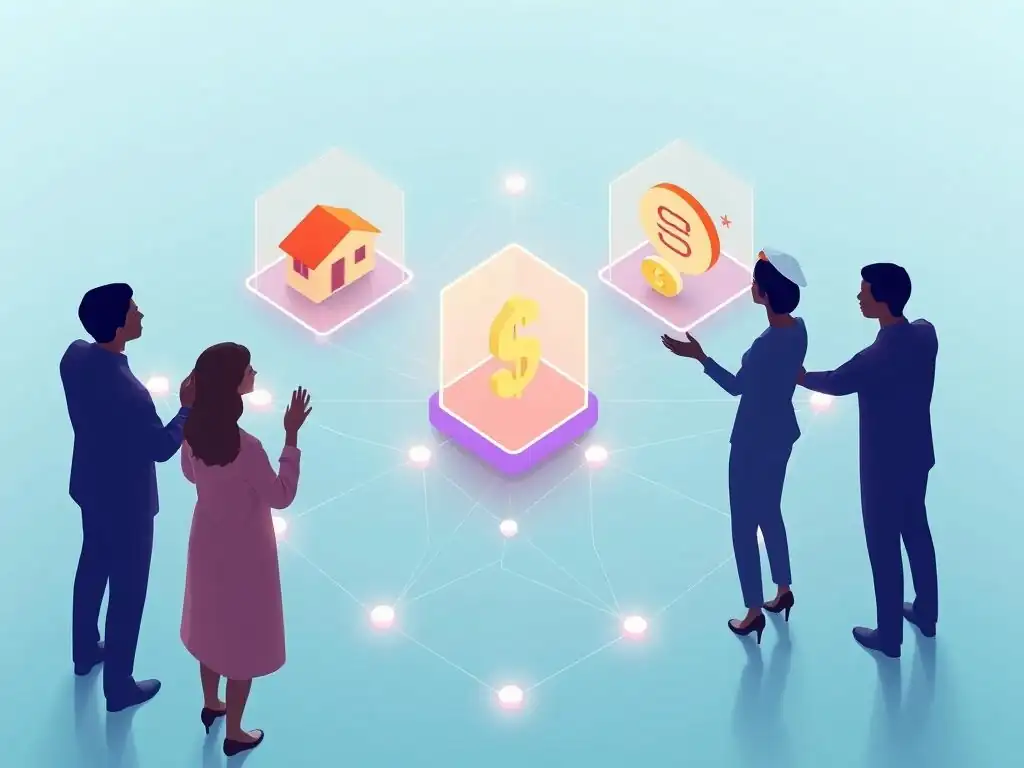
Smart contracts, self-executing contracts with the terms of the agreement directly written into code, are a powerful application of blockchain technology with significant potential for financial inclusion. Smart contracts can automate a wide range of financial processes, making them more efficient, transparent, and secure. For example, smart contracts can be used to automate loan disbursement and repayment, insurance claims processing, and escrow services, reducing administrative overhead and minimizing the risk of fraud or human error.
In the context of microfinance, smart contracts can automate loan disbursement and repayment schedules, ensuring timely payments and reducing the need for manual intervention. In insurance, smart contracts can automatically trigger payouts based on pre-defined conditions, such as weather events or crop failures, providing faster and more reliable insurance protection for vulnerable populations. By automating and streamlining financial processes, smart contracts enhance efficiency, reduce costs, and increase transparency, creating new blockchain financial inclusion opportunities across various sectors.
Decentralized Insurance: Protecting Vulnerable Populations
Insurance is a crucial financial tool for mitigating risks and protecting vulnerable populations from unexpected shocks, such as illness, natural disasters, or crop failures. However, traditional insurance models often face challenges in reaching low-income populations due to high administrative costs, complex policy terms, and lack of trust. Decentralized insurance platforms built on blockchain offer a more accessible, affordable, and transparent alternative.
Blockchain-based insurance platforms can leverage smart contracts to automate claims processing and payouts, reducing administrative costs and increasing efficiency. Parametric insurance, which triggers payouts based on pre-defined parameters like rainfall levels or earthquake intensity, can be particularly effective for protecting against climate-related risks in developing countries. By offering more affordable, accessible, and transparent insurance products, blockchain-based solutions can help protect vulnerable populations and build resilience, creating vital blockchain financial inclusion opportunities in the insurance sector.
Real-World Examples: Blockchain Impacting Financial Inclusion
BanQu: Tracking Supply Chains to Empower Farmers
BanQu is a blockchain-based platform focused on creating economic opportunities for marginalized populations by providing them with a digital identity and a verifiable record of their contributions to global supply chains. Specifically targeting farmers and waste pickers, BanQu uses blockchain to track their participation in supply chains, creating a transparent and auditable record of their work. This verifiable record can then be used to establish a digital identity and build a financial history, enabling access to financial services that were previously unavailable.
By tracking agricultural products from farm to consumer, BanQu provides farmers with verifiable proof of their production, which can be used to access loans, insurance, and fair prices for their goods. For example, BanQu has partnered with major corporations to track cocoa beans from smallholder farmers in West Africa, ensuring fair compensation and providing farmers with a pathway to financial inclusion. BanQu exemplifies how blockchain can be used to empower marginalized communities and create blockchain financial inclusion opportunities by leveraging supply chain transparency.
BitPesa (now MFS Africa): Facilitating Cross-Border Payments for Businesses
BitPesa, now rebranded as MFS Africa, was a pioneering blockchain-based payment platform that revolutionized cross-border payments in Africa. Recognizing the high costs and inefficiencies of traditional remittance channels, BitPesa leveraged blockchain technology and cryptocurrencies to facilitate faster and cheaper cross-border transactions for businesses and individuals across the continent. By bypassing traditional correspondent banking networks, BitPesa significantly reduced transaction fees and processing times, making cross-border payments more accessible and affordable.
BitPesa enabled businesses to send and receive payments across borders in multiple African currencies, facilitating trade and economic activity within the region. The platform's success demonstrated the viability of blockchain for cross-border payments and paved the way for other blockchain-based remittance solutions. MFS Africa continues to expand its services, further solidifying the impact of blockchain in creating blockchain financial inclusion opportunities in the cross-border payments sector.
Bloom: Building Credit Scores for the Unbanked
Bloom is a blockchain-based protocol focused on building decentralized credit scoring and identity systems for the unbanked. Recognizing the lack of credit history as a major barrier to financial inclusion, Bloom leverages blockchain to create a more inclusive and accessible credit ecosystem. Bloom allows individuals to build a portable credit history using alternative data sources and decentralized identity solutions. This credit history is stored on the blockchain and can be securely shared with lenders, enabling access to credit for those who lack traditional credit scores.
Bloom's protocol empowers individuals to control their own credit data and provides lenders with a more comprehensive and reliable assessment of creditworthiness. By leveraging blockchain's transparency and security, Bloom is building a more equitable and inclusive credit system, creating significant blockchain financial inclusion opportunities by addressing the credit history gap. Bloom's approach exemplifies how blockchain can be used to reimagine traditional financial infrastructure and expand access to credit for underserved populations.
Overcoming Challenges and Ensuring Responsible Implementation
Regulatory Uncertainty and Compliance Issues
Despite its transformative potential, blockchain technology faces regulatory uncertainty and compliance challenges in the financial sector. The decentralized and borderless nature of blockchain poses unique challenges for regulators who are accustomed to overseeing centralized financial institutions within national jurisdictions. Lack of clear regulatory frameworks for blockchain-based financial services can create uncertainty for businesses and hinder innovation.
Furthermore, compliance with existing regulations, such as KYC and AML requirements, can be complex for decentralized platforms. Balancing innovation with regulatory compliance is crucial for the responsible implementation of blockchain for financial inclusion. Industry stakeholders and regulators need to collaborate to develop clear and appropriate regulatory frameworks that foster innovation while mitigating risks and ensuring consumer protection. Addressing regulatory uncertainty and navigating compliance issues are essential for realizing the full potential of blockchain financial inclusion opportunities.
Scalability and Interoperability Concerns
Scalability and interoperability are critical technical challenges that need to be addressed for widespread adoption of blockchain in financial inclusion. Many existing blockchain networks face scalability limitations, struggling to handle a large volume of transactions efficiently and cost-effectively. As financial inclusion initiatives scale to reach millions of users, blockchain platforms need to be able to handle increased transaction loads without compromising performance or increasing costs.
Interoperability between different blockchain networks and traditional financial systems is also crucial. Seamless integration between blockchain-based solutions and existing financial infrastructure is necessary for widespread adoption and impact. Efforts are underway to develop more scalable blockchain technologies and interoperability standards to overcome these challenges. Addressing scalability and interoperability concerns is essential for ensuring that blockchain solutions can effectively support large-scale financial inclusion initiatives and realize their full potential.
Digital Literacy and Education Requirements
For blockchain-based financial inclusion initiatives to be successful, addressing digital literacy and education requirements is paramount. Many individuals at the BoP lack the digital literacy skills necessary to effectively use smartphone-based applications and navigate digital financial services. Bridging the digital literacy gap is crucial for ensuring that blockchain solutions are accessible and user-friendly for their intended beneficiaries.
Education and training programs are needed to empower individuals with the digital skills and financial literacy necessary to utilize blockchain-based financial services effectively and safely. These programs should be tailored to the specific needs and contexts of different communities, taking into account language barriers and cultural nuances. Investing in digital literacy and education is essential for ensuring that blockchain financial inclusion opportunities are truly inclusive and empower individuals to participate fully in the digital economy.
Addressing Privacy and Data Security Considerations
Privacy and data security are paramount concerns in the implementation of blockchain for financial inclusion, particularly when dealing with sensitive financial data of vulnerable populations. While blockchain offers enhanced security features, careful consideration must be given to data privacy and protection. Balancing transparency with privacy is crucial, ensuring that sensitive personal and financial data is protected while maintaining the transparency and auditability benefits of blockchain.
Data minimization principles should be applied, collecting only necessary data and ensuring secure storage and access controls. Privacy-enhancing technologies, such as zero-knowledge proofs and homomorphic encryption, can be explored to further enhance data privacy on blockchain platforms. Robust data security protocols and user consent mechanisms are essential for building trust and ensuring the responsible and ethical implementation of blockchain for financial inclusion. Addressing privacy and data security considerations is critical for safeguarding the interests of users and fostering long-term sustainability of blockchain-based financial inclusion initiatives.
The Future of Blockchain and Financial Inclusion: A Vision for Tomorrow
Potential for Further Innovation and Disruption
The future of blockchain and financial inclusion is brimming with potential for further innovation and disruption. As blockchain technology matures and adoption increases, we can expect to see even more innovative applications emerging that address specific financial inclusion challenges. Advancements in areas like decentralized finance (DeFi) and stablecoins could further enhance the efficiency and accessibility of blockchain-based financial services for the BoP.
The convergence of blockchain with other emerging technologies, such as artificial intelligence (AI) and the Internet of Things (IoT), could unlock new possibilities for personalized and proactive financial services tailored to the needs of individuals at the BoP. For example, AI-powered credit scoring algorithms combined with blockchain-based identity solutions could enable more accurate and inclusive credit assessments. The ongoing innovation in the blockchain space promises to further revolutionize financial inclusion and create even more impactful blockchain financial inclusion opportunities in the years to come.
Collaboration and Partnerships for Sustainable Impact
Realizing the full potential of blockchain for financial inclusion requires strong collaboration and partnerships between various stakeholders. Technology providers, financial institutions, governments, non-governmental organizations (NGOs), and community organizations need to work together to build sustainable and impactful blockchain-based solutions. Collaboration is essential for addressing regulatory challenges, ensuring interoperability, and promoting digital literacy and education.
Public-private partnerships can leverage the strengths of both sectors, combining the innovation and agility of the private sector with the reach and resources of the public sector. Partnerships with NGOs and community organizations are crucial for understanding the specific needs of the BoP and ensuring that blockchain solutions are culturally appropriate and effectively address local challenges. Collaboration and partnerships are the cornerstones for building a robust and sustainable blockchain-based financial inclusion ecosystem and maximizing its positive impact on the lives of millions.
Measuring and Evaluating the Effectiveness of Blockchain Solutions
Measuring and evaluating the effectiveness of blockchain solutions for financial inclusion is crucial for demonstrating impact, ensuring accountability, and guiding future development. Rigorous impact assessments are needed to determine whether blockchain-based initiatives are achieving their intended outcomes and making a tangible difference in the lives of the unbanked. Key metrics for evaluation may include increased access to financial services, reduced transaction costs, improved financial literacy, and positive impacts on livelihoods and poverty reduction.
Data collection and analysis methodologies need to be adapted to the unique characteristics of blockchain-based solutions and the contexts in which they are implemented. Transparency and accountability are inherent features of blockchain, and these principles should be applied to impact measurement and reporting as well. By rigorously measuring and evaluating the effectiveness of blockchain solutions, we can learn what works best, refine our approaches, and ensure that blockchain is used effectively as a catalyst for financial inclusion and economic empowerment.
Conclusion: Blockchain as a Catalyst for Economic Empowerment
Reaching the Unbanked and Fostering Financial Inclusion Opportunities
Blockchain technology presents a powerful catalyst for reaching the unbanked and fostering financial inclusion opportunities on a global scale. Its decentralized, transparent, and secure nature overcomes many of the limitations of traditional financial systems, making financial services more accessible, affordable, and user-friendly for those at the bottom of the pyramid. From reducing transaction costs and expanding access to credit, to enabling digital identities and streamlining cross-border payments, blockchain offers a wide array of solutions to address the multifaceted challenges of financial exclusion.
The real-world examples of BanQu, BitPesa (MFS Africa), and Bloom demonstrate the tangible impact of blockchain in transforming lives and creating economic opportunities for marginalized populations. While challenges remain, including regulatory uncertainty, scalability concerns, and digital literacy gaps, the potential of blockchain to revolutionize financial inclusion is undeniable. By embracing innovation, fostering collaboration, and ensuring responsible implementation, we can harness the transformative power of blockchain to build a more inclusive and equitable financial system for all.
Building a More Equitable and Inclusive Financial System with Blockchain
Blockchain is not merely a technological solution; it represents a paradigm shift in how we approach financial inclusion. It offers the opportunity to build a more equitable and inclusive financial system that is accessible to everyone, regardless of their income level, location, or background. By democratizing access to financial services and empowering individuals with greater control over their financial lives, blockchain can contribute to broader economic empowerment and social progress.
The journey towards a truly inclusive financial system is ongoing, but blockchain provides a powerful set of tools and a compelling vision for the future. By continuing to innovate, collaborate, and address the challenges responsibly, we can unlock the full potential of blockchain to transform lives at the bottom of the pyramid and build a more just and prosperous world for all. The promise of blockchain financial inclusion opportunities lies in its ability to create a financial system that truly serves everyone, leaving no one behind.
Frequently Asked Questions
What are the main Blockchain Financial Inclusion Opportunities discussed in the article?
The article highlights opportunities like decentralized finance (DeFi) providing access to financial services, secure digital identities enabling access to banking, and efficient cross-border payments reducing remittance costs.
How can blockchain help those at the bottom of the pyramid access financial services?
Blockchain offers avenues such as microfinance platforms that bypass traditional institutions, smart contracts automating loan processes, and stablecoins providing a stable digital currency alternative.
What role does regulation play in Blockchain Financial Inclusion Opportunities?
Regulation is crucial for establishing trust and security in blockchain systems, protecting vulnerable users, and fostering a sustainable and responsible adoption of blockchain technology.
Beyond cryptocurrencies, what other enterprise applications of blockchain are relevant to financial inclusion?
Supply chain finance, digital identity management, and transparent land registries are examples of enterprise blockchain applications that can promote financial inclusion and economic empowerment.
What is the future outlook for decentralized systems in fostering Blockchain Financial Inclusion Opportunities?
The future involves greater interoperability between blockchain networks, development of user-friendly interfaces, and increased collaboration between stakeholders to address the challenges and maximize the benefits for the underserved.
Final Reflection: Embracing Blockchain's Promise for Inclusive Finance
The journey through the potential of blockchain technology to foster financial inclusion reveals a powerful truth: access to financial services is not a privilege, but a fundamental human right. The challenges faced by those at the bottom of the pyramid are immense, yet blockchain offers tangible solutions to overcome barriers of cost, accessibility, and trust that have historically excluded them from the formal financial system. This is more than just technological innovation; it's a pathway to empowerment.
The transformative potential of blockchain in this context is undeniable, and its impact is already being felt in communities around the world. Witnessing firsthand the stories of individuals empowered by decentralized finance (DeFi) and secure digital identities underscores the profound importance of this work. As Nelson Mandela so eloquently stated: Overcoming poverty is not a gesture of charity. It is an act of justice. It is the protection of a fundamental human right, the right to dignity and a decent life.
This quote encapsulates the very essence of what blockchain financial inclusion opportunities represent: a commitment to justice and dignity for all.
Now, consider how you can contribute to this transformative movement. Reflect on the insights shared in this article and ask yourself: how can I leverage my skills, resources, or influence to support blockchain initiatives that promote financial inclusion? Whether it's through investing in responsible projects, advocating for supportive policies, or simply spreading awareness, your actions can help unlock the immense potential of blockchain to create a more equitable and financially inclusive world for everyone.
Empower Communities: Unlock Financial Freedom!
Thank you for exploring how blockchain is revolutionizing financial inclusion. We hope this article has highlighted the transformative potential of this technology to uplift communities and create opportunities for those often left behind. Now, let's turn insights into action!
Here are a few ways you can contribute to this vital movement:
- Act Now: Reach out to a local charity or nonprofit organization dedicated to improving financial literacy and explore how blockchain solutions can be integrated to enhance their services. Your involvement can make a meaningful difference.
- Share this article with your network. Raising awareness is essential for encouraging broader adoption and attracting more investment into blockchain-based financial inclusion initiatives.
- Dive deeper: Research existing blockchain projects working to promote financial inclusion in developing countries. Understanding their successes and challenges can inform and inspire future efforts.
What small step will you take today to help bring blockchain-powered financial freedom to those who need it most?
Leave a Reply