
BlockchainPowered Financial Inclusion: A Catalyst for Social and Economic Development


Welcome to Blockchain Trends, your go-to source for understanding the revolutionary impact of blockchain technology. Beyond the hype of cryptocurrencies, we delve into the real-world applications shaping our future. Are you curious about how this technology can bridge the gap for underserved communities? This article explores Blockchain for financial inclusion, revealing its potential as a powerful catalyst for social and economic development. Discover how decentralized solutions are transforming lives and creating a more equitable financial landscape – the possibilities are just beginning.
- How Blockchain Technology Enables Financial Inclusion
-
Frequently Asked Questions
- How does blockchain contribute to financial inclusion?
- What are some specific use cases of blockchain for financial inclusion beyond cryptocurrencies?
- What are the regulatory challenges surrounding the use of blockchain for financial inclusion?
- How can blockchain-based digital identities enhance financial inclusion?
- What is the future outlook for blockchain in driving financial inclusion and its impact on social and economic development?
- Final Reflection: Embracing Blockchain's Inclusive Potential
- Empower Communities: Dive Deeper into Blockchain for Good!
How Blockchain Technology Enables Financial Inclusion
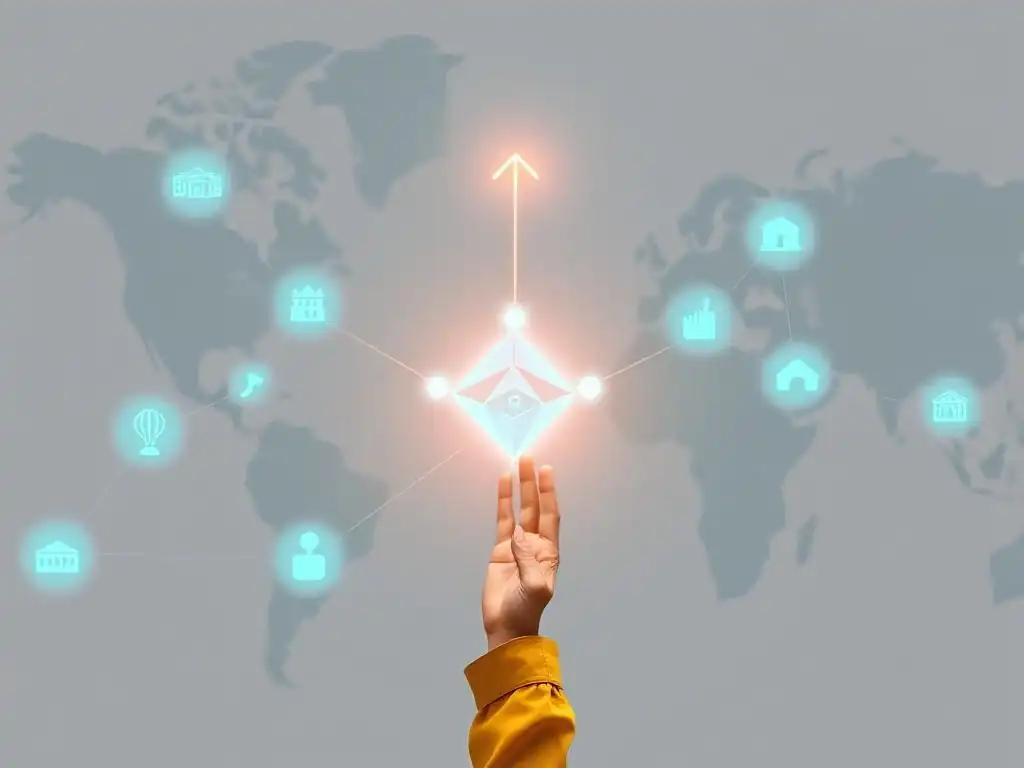
Decentralized Finance (DeFi) and its Role in Expanding Access
Decentralized Finance, commonly known as DeFi, represents a paradigm shift from traditional financial systems by leveraging blockchain technology to create open, permissionless, and transparent financial services. Unlike legacy institutions that often require extensive documentation, physical presence, and minimum balances, DeFi platforms are accessible to anyone with an internet connection and a digital wallet.
This dramatically lowers the barrier to entry for millions of individuals worldwide who are currently excluded from formal banking. DeFi protocols can offer services such as lending, borrowing, trading, and earning interest on digital assets, often at significantly lower costs than traditional counterparts.
For instance, accessing credit through a traditional bank might require a lengthy application process and a credit history, whereas some DeFi lending protocols allow users to borrow by collateralizing other digital assets, potentially providing financial liquidity to those previously deemed uncreditworthy by traditional standards. This inherent accessibility is a core component of how blockchain for financial inclusion is being realized through DeFi.
The growth of stablecoins within the DeFi ecosystem further enhances the potential for blockchain-powered financial inclusion. Stablecoins are cryptocurrencies pegged to the value of a stable asset, such as the US dollar, minimizing the volatility often associated with cryptocurrencies like Bitcoin or Ether. This stability makes them practical for everyday transactions, savings, and remittances, particularly in regions experiencing high inflation or currency instability.
Individuals can hold value in a stable digital currency without needing a bank account, protecting their savings from local currency depreciation. Furthermore, DeFi platforms built on blockchains enable peer-to-peer transactions and access to global markets, bypassing geographical limitations and correspondent banking networks that add cost and complexity in traditional finance. This open architecture fosters a more inclusive financial environment, expanding opportunities for individuals and small businesses in underserved communities to participate in the global economy.
Blockchain-Based Identity Solutions for the Unbanked
A fundamental barrier to accessing financial services for a significant portion of the global population is the lack of formal identification. Without government-issued IDs or proof of address, individuals cannot open bank accounts, receive remittances through official channels, or access credit.
Blockchain technology offers a compelling solution through the development of decentralized and self-sovereign identity (SSI) systems. In an SSI model, the individual owns and controls their digital identity, storing verifiable credentials (like proof of address, professional certifications, or even a limited transaction history) on a blockchain or linked via blockchain, rather than having a central authority manage it.
This allows users to selectively share specific pieces of verified information with service providers without revealing their entire identity profile, enhancing privacy and security. Such systems can integrate various forms of verification, including biometric data or attestations from trusted community members or NGOs, making it possible to establish a trustworthy identity for individuals who lack traditional documents.
Projects leveraging blockchain for financial inclusion are actively exploring and implementing these identity solutions. For example, initiatives have piloted blockchain-based digital identities for refugees and displaced persons, enabling them to access aid, healthcare, and even basic financial services in new locations where traditional identification is impossible or has been lost.
The World Food Programme's Building Blocks project, while not solely focused on identity, uses a private blockchain to manage assistance distribution in refugee camps, linking aid directly to individuals through identity verification, showcasing how DLT can manage sensitive information and transactions securely for vulnerable populations. By providing a portable, secure, and verifiable digital identity, blockchain technology can unlock access to formal financial systems, government programs, and other essential services for the estimated one billion people worldwide who currently lack official proof of identity, paving the way for greater economic participation.
Secure and Transparent Cross-Border Payments using Blockchain
Cross-border payments, particularly remittances sent by migrant workers to their families in developing countries, are often plagued by high fees, slow transaction times, and a lack of transparency regarding costs and exchange rates. Traditional methods involve multiple intermediary banks, each adding their own fees and delays, which disproportionately affects low-income individuals who rely heavily on these transfers. Blockchain technology offers a direct alternative by enabling peer-to-peer value transfer across borders without the need for numerous intermediaries.
Transactions on a blockchain network can be processed much faster, often within minutes or seconds, compared to the days it might take for a traditional bank transfer to clear internationally. The fees associated with blockchain transactions are typically significantly lower than traditional remittance charges.
For instance, the World Bank reported that the global average cost of sending $200 was 6.2% in the fourth quarter of 2023, while some blockchain-based payment solutions aim for costs well below 1%, sometimes closer to 0.5%. This reduction in cost means that more money reaches the intended recipients, directly improving the financial well-being of families.
Furthermore, blockchain's inherent transparency provides a clear, immutable record of every transaction. Senders and receivers can track the payment's progress on the public ledger (depending on the specific blockchain used), reducing uncertainty and disputes. This level of transparency is a key benefit of using blockchain for financial inclusion in the context of remittances and international aid distribution.
Networks like Stellar and Ripple have been specifically designed or utilized to facilitate faster and cheaper cross-border payments, partnering with financial institutions and money transfer operators to leverage DLT's benefits. Stablecoins also play a crucial role here, allowing value to be transferred across borders in a stable digital form, avoiding the volatility risks associated with transferring native cryptocurrencies. By streamlining and reducing the cost of cross-border payments, blockchain technology empowers individuals and families who depend on international transfers, injecting capital directly into local economies and supporting development.
Smart Contracts and Automated Financial Services
Smart contracts are self-executing agreements with the terms of the agreement directly written into code. This code resides on a blockchain, making the execution of the contract automatic, transparent, and tamper-proof once the predefined conditions are met. The application of smart contracts to financial services holds immense potential for creating automated, efficient, and accessible financial products, particularly for underserved populations.
By automating processes that traditionally require manual intervention, intermediaries, or legal frameworks that might be inaccessible or too costly for some, smart contracts can significantly reduce operational costs and increase speed. Examples include automated lending agreements where loan dispersal and repayment schedules are coded into the contract, or insurance policies that automatically trigger payouts based on verifiable external data feeds (oracles).
Consider the application of smart contracts in agricultural insurance, a crucial area for financial inclusion among smallholder farmers who are highly vulnerable to environmental risks. A blockchain-based crop insurance smart contract could be designed to automatically pay out claims based on data from weather stations or satellite imagery indicating drought or excessive rainfall in a specific geographic area. Once the oracle feeds data confirming the predefined conditions (e.g., rainfall below a certain threshold for a set period), the smart contract automatically releases funds to the farmer's digital wallet without requiring a lengthy claims process, adjusters, or bureaucratic approvals.
This provides timely financial relief, helping farmers recover and replant, thereby enhancing their economic resilience. This automation and reliance on verifiable data, rather than human assessment, reduces the potential for fraud and increases trust and efficiency, demonstrating how smart contracts are a powerful tool enabled by blockchain for financial inclusion.
Frequently Asked Questions
How does blockchain contribute to financial inclusion?
Blockchain can significantly improve financial inclusion by providing secure and transparent access to financial services for the unbanked and underbanked. This is achieved through decentralized systems that reduce reliance on traditional intermediaries and lower transaction costs.
What are some specific use cases of blockchain for financial inclusion beyond cryptocurrencies?
Beyond cryptocurrencies, blockchain enables microfinance platforms, supply chain finance solutions, and digital identity systems that can empower individuals excluded from traditional financial infrastructures. These applications promote economic growth and social development.
What are the regulatory challenges surrounding the use of blockchain for financial inclusion?
Regulatory challenges involve navigating AML/KYC compliance, establishing clear legal frameworks for decentralized finance (DeFi), and ensuring consumer protection in the nascent blockchain space. Harmonized global standards are crucial.
How can blockchain-based digital identities enhance financial inclusion?
Blockchain-based digital identities offer a secure and verifiable way for individuals to prove their identity, enabling them to access financial services without traditional documentation. This is particularly beneficial for vulnerable populations and those in developing countries.
The future looks promising, with blockchain poised to revolutionize access to finance through innovative solutions like DeFi and tokenized assets. Widespread adoption can lead to greater economic empowerment and reduced inequality globally.
Final Reflection: Embracing Blockchain's Inclusive Potential
The journey through understanding blockchain's transformative power in financial inclusion reveals a landscape ripe with opportunity and responsibility. What began as a technological innovation is now a tangible force, capable of reshaping economies and empowering marginalized communities. The potential to bridge the financial gap and foster sustainable development is not just theoretical; it's actively unfolding, demanding our attention and engagement.
This exploration underscores how blockchain is not merely a technological solution, but a catalyst for social change. Witnessing its potential to democratize access to financial services, particularly for those historically excluded, evokes a sense of profound responsibility. Financial inclusion is not just about access to banking services; it's about empowering individuals to participate fully in the economy and build a better future for themselves and their families.
This quote encapsulates the heart of the matter: blockchain offers a pathway to a more equitable and prosperous world, one transaction at a time.
As we conclude, consider the role you can play in fostering this revolution. How can you leverage your knowledge and resources to support initiatives that champion blockchain for financial inclusion? The future of finance is not just about technological advancement; it's about creating a system that serves all of humanity. Let us embrace this opportunity to build a more inclusive and equitable world, powered by the transformative potential of blockchain.
Empower Communities: Dive Deeper into Blockchain for Good!
Thank you for exploring how blockchain technology can unlock financial opportunities and drive positive change. You've gained valuable insights into its potential to foster social and economic development. Now, let's turn that knowledge into action!
Here's how you can contribute to a more inclusive financial future:
- Champion the cause: Promote blockchain-based financial inclusion initiatives within your network and community. Highlight its potential to empower underserved populations.
- Explore innovative projects: Learn from successful implementations of blockchain in microfinance, identity management, and other areas. See how these solutions are creating real impact.
- Share your perspective: Share your thoughts and insights on blockchain’s role in social impact efforts through comments or on social media, using the hashtag #BlockchainForGood.
Are you ready to help build a more equitable financial landscape powered by blockchain? Which blockchain project interests you the most, and how do you see it positively affecting communities?
Leave a Reply