
Blockchain's Contribution to SDG Goals: Ethical and Sustainable Supply Chains

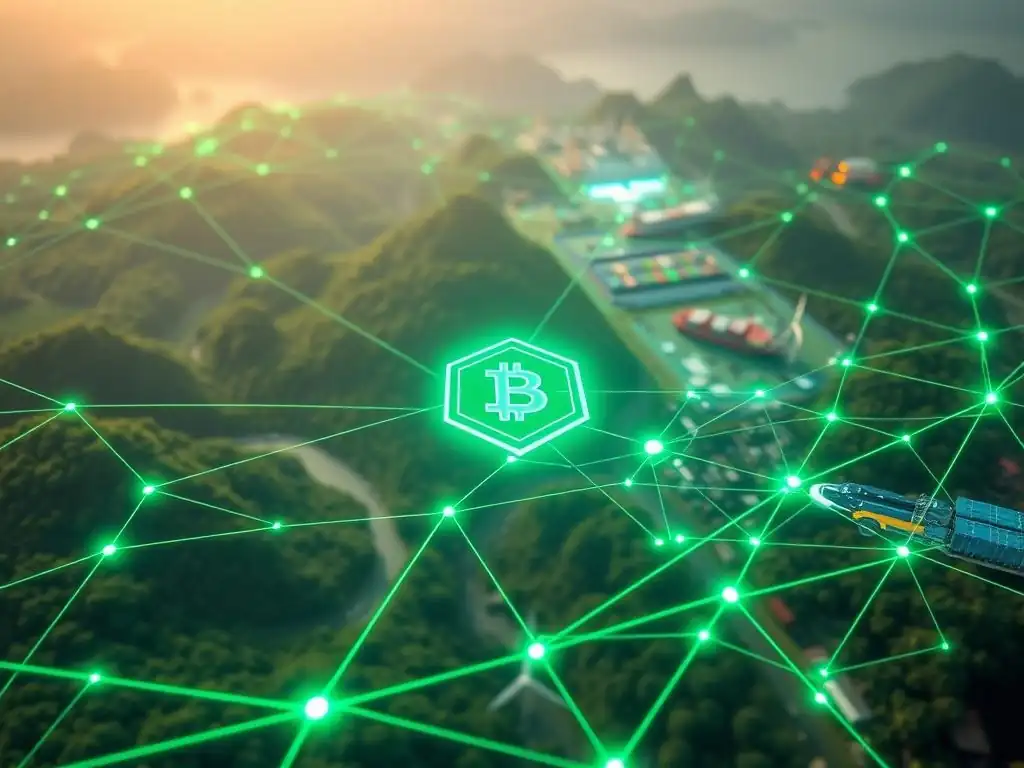
Welcome to Blockchain Trends, your guide to understanding the real-world impact of blockchain technology. Ever wondered how blockchain can move beyond cryptocurrencies and contribute to a more ethical and sustainable future? This article delves into the fascinating realm of Blockchain sustainable supply chain ethics, exploring how this technology is reshaping global networks and driving us closer to achieving the UN's Sustainable Development Goals. Discover the innovative solutions and challenges ahead, and join us as we unravel the potential of blockchain for positive social change. Intrigued? Read on to learn more!
Blockchain's Contribution to SDG Goals: Ethical and Sustainable Supply Chains
- Introduction: Blockchain Technology and Sustainable Development Goals (SDGs)
- The Role of Blockchain in Promoting Supply Chain Transparency
- Addressing Ethical Concerns in Supply Chains with Blockchain Solutions
- Blockchain for Environmental Sustainability in Supply Chains
- Case Studies: Real-World Applications of Blockchain in Sustainable Supply Chains
- Overcoming Challenges and Barriers to Blockchain Adoption in Supply Chains
- The Future of Blockchain and Sustainable Supply Chain Ethics
- Conclusion: Harnessing Blockchain for a More Ethical and Sustainable Future
-
Frequently Asked Questions
- How can blockchain technology contribute to sustainable supply chain ethics?
- What role does blockchain play in achieving the UN's Sustainable Development Goals (SDGs)?
- How can blockchain address issues of labor exploitation in global supply chains?
- What are the potential challenges in implementing blockchain for sustainable supply chain ethics?
- Beyond cryptocurrencies, what are some practical enterprise applications of blockchain for sustainable supply chain management?
- Final Reflection: Empowering a Sustainable Future with Blockchain
- Ignite Change: Build a More Ethical Supply Chain!
Introduction: Blockchain Technology and Sustainable Development Goals (SDGs)
Understanding the Intersection of Blockchain, Ethics, and Sustainability
Blockchain technology, initially recognized for its role in cryptocurrencies, possesses inherent characteristics that align strongly with the principles of ethics and sustainability, particularly within complex systems like global supply chains. Its core features – immutability, transparency (selective or public, depending on the network), decentralization, and cryptographic security – create a foundation for trust and accountability that is often lacking in traditional supply chain models. Ethical considerations, such as fair labor practices, safe working conditions, and equitable distribution of value, require mechanisms for verifiable truth and accountability.
Sustainability, encompassing environmental protection and social responsibility, demands granular tracking of resources, emissions, and impacts throughout a product's lifecycle. Blockchain's ability to create a shared, tamper-evident ledger of transactions and events makes it a powerful tool for addressing these critical requirements.
The intersection of blockchain, ethics, and sustainability is becoming a focal point for industries seeking to improve corporate social responsibility and meet global targets like the United Nations' Sustainable Development Goals (SDGs). SDGs like Goal 8 (Decent Work and Economic Growth), Goal 12 (Responsible Consumption and Production), Goal 13 (Climate Action), and Goal 16 (Peace, Justice, and Strong Institutions) are directly impacted by the practices within supply chains. Traditional supply chains often suffer from opacity, making it difficult to verify claims about sourcing, labor conditions, or environmental impacts.
Blockchain offers a technological solution to bridge this gap, providing a framework for verifiable data and fostering trust among stakeholders. Implementing blockchain sustainable supply chain ethics requires a collaborative effort to define standards and integrate data from disparate sources, but the potential for positive impact is significant.
The Growing Importance of Ethical and Sustainable Supply Chains
The global landscape for businesses is increasingly shaped by demands for ethical and sustainable practices within their supply chains. Consumers are more informed and concerned about the provenance of products, the conditions under which they are made, and their environmental footprint. Surveys consistently show a rising preference for brands that demonstrate transparency and commitment to social and environmental responsibility.
For instance, a 2021 IBM study found that a significant percentage of consumers are willing to pay a premium for sustainable and ethically sourced products. This consumer pressure is coupled with mounting regulatory requirements worldwide, such as due diligence laws in Europe regarding forced labor and deforestation, and stricter environmental reporting standards.
Beyond consumer and regulatory pressures, businesses themselves recognize the strategic importance of ethical and sustainable supply chains. Risks associated with unethical practices or environmental damage can lead to severe reputational damage, legal penalties, supply disruptions, and financial losses. Conversely, building a reputation for strong blockchain sustainable supply chain ethics can enhance brand loyalty, attract socially conscious investors, improve operational efficiency, and secure long-term resilience.
The complexity and global nature of modern supply chains, however, make achieving full visibility and ensuring compliance a monumental challenge. This growing imperative highlights the need for innovative technological solutions, such as blockchain, that can provide the necessary transparency and accountability to meet these evolving expectations effectively.
The Role of Blockchain in Promoting Supply Chain Transparency
How Blockchain Enhances Traceability and Accountability
Blockchain technology fundamentally transforms supply chain traceability by creating an immutable, shared record of every transaction and event that occurs along the chain. Unlike traditional centralized databases, where data can be altered or lost, each entry on a blockchain is cryptographically linked to the previous one, forming a tamper-evident chain.
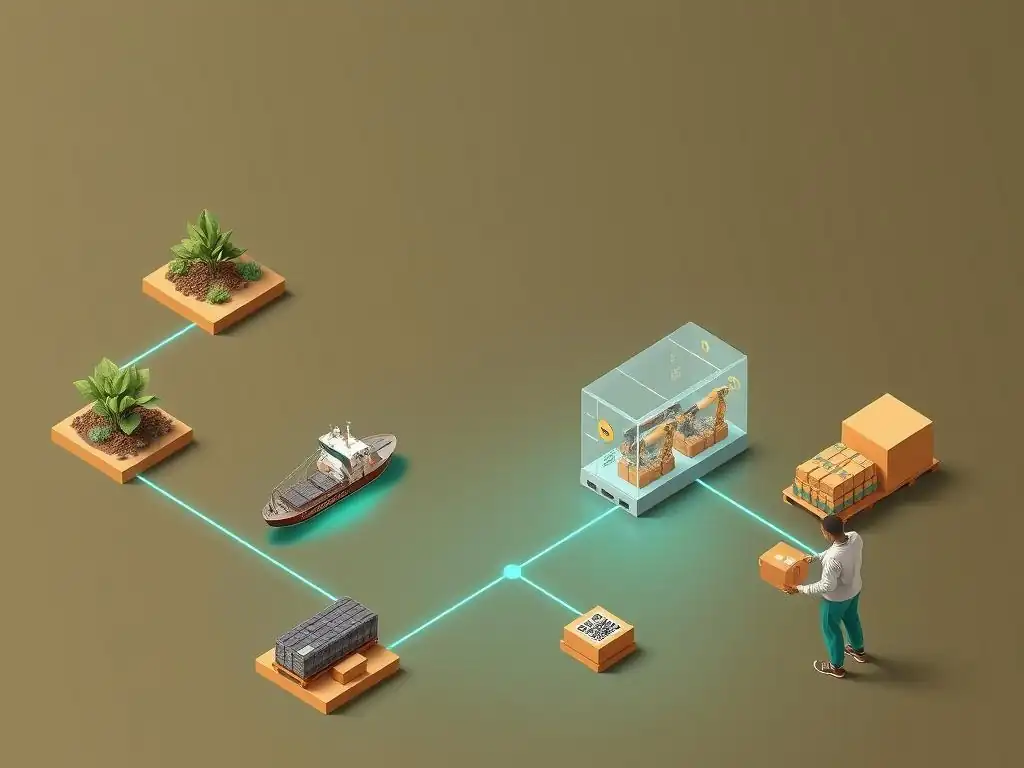
This means that from the point of origin (e.g., raw material extraction, farm production) to the final destination (e.g., retail store, consumer), every transfer of ownership, processing step, quality check, or logistical movement can be recorded as a transaction on the distributed ledger. This creates a comprehensive, verifiable audit trail that can be accessed by authorized participants, providing an unprecedented level of detail about a product's journey.
This enhanced traceability directly leads to increased accountability. Because every participant's actions (or inaction, if data is missing) are recorded on the shared ledger, it becomes significantly easier to pinpoint where issues arose – whether it's a delay, a quality defect, a compliance failure, or an ethical breach. If a batch of goods is found to be contaminated, for example, the blockchain record allows for rapid identification of the source and all parties involved in its handling.
Similarly, if a claim is made about sustainable sourcing or fair labor, the verifiable data on the blockchain can substantiate or refute that claim. This inherent accountability encourages participants to adhere to agreed-upon standards and practices, strengthening blockchain sustainable supply chain ethics across the network.
Blockchain's Impact on Supply Chain Visibility
Supply chain visibility refers to the ability of all relevant stakeholders – manufacturers, suppliers, logistics providers, distributors, retailers, and even consumers – to access and view critical information about goods as they move through the chain. Historically, data in supply chains has been siloed within individual companies' systems, making it difficult to get a holistic, real-time view. This lack of visibility leads to inefficiencies, delays, difficulty in managing risks, and a lack of trust among partners.
Blockchain addresses this by providing a single, shared source of truth. When data about a product's location, status, certifications, or condition is uploaded onto the blockchain by authorized parties, it becomes accessible to others in the network according to predefined permissions.
This shared visibility breaks down information silos and fosters collaboration. For instance, a retailer can see the status of a shipment from a supplier in real-time, logistics providers can optimize routes based on accurate inventory data, and regulators can verify compliance information instantly.
This improved flow of information reduces administrative overhead, minimizes disputes, and allows for quicker responses to disruptions. Furthermore, enhanced visibility is crucial for implementing blockchain sustainable supply chain ethics, as it allows companies to track not just where goods are, but also how they were produced and handled, verifying ethical claims regarding labor, sourcing, and environmental impact throughout the entire network, not just at the final point of assembly.
Addressing Ethical Concerns in Supply Chains with Blockchain Solutions
Combating Forced Labor and Human Trafficking using Blockchain
Forced labor and human trafficking remain significant ethical challenges in global supply chains, particularly in industries with complex, multi-tiered structures and reliance on migrant or vulnerable workers. The International Labour Organization (ILO) estimates that millions of people are in situations of forced labor globally, many linked to supply chains.
Traditional methods of auditing and compliance checks often fail to penetrate the deepest layers of the supply chain, where exploitation is most likely to occur. Blockchain offers a potential solution by enabling the creation of verifiable digital identities for workers (respecting privacy and data protection) and recording employment contracts, working hours, and wage payments on an immutable ledger.
By recording verifiable data points related to employment conditions, such as confirmed hours worked, payment amounts, and even grievance submissions, blockchain can provide a transparent and auditable record that is resistant to manipulation. Smart contracts can be programmed to ensure minimum wage payments are automatically triggered upon verification of work completed, reducing opportunities for wage theft.
While implementing such systems requires careful consideration of data privacy and access control, pilots in sectors like agriculture and manufacturing have explored using blockchain to empower workers with a verifiable history of their labor and compensation, providing a critical tool in the fight against exploitation and enhancing blockchain sustainable supply chain ethics.
Ensuring Fair Trade Practices with Decentralized Supply Chains
Fair trade aims to ensure that producers, particularly in developing countries, receive fair prices for their goods and that their working conditions are safe and equitable. Verifying fair trade claims in conventional supply chains is challenging due to the layers of intermediaries between producers and consumers.
Blockchain technology can facilitate more direct and transparent relationships within supply chains, often described as 'decentralized' supply chains in this context, by allowing all participants to interact on a shared platform. This enables tracking products from the point of origin (e.g., a coffee farm, a cocoa plantation) through processing, export, and distribution, with each step recorded on the ledger.
Crucially, blockchain can verify that fair trade premiums or agreed-upon prices are paid to producers. Smart contracts can automate payments based on the delivery and verification of goods, bypassing intermediaries that might otherwise reduce the payout to the producer.
By providing transparency into the distribution of value along the chain, blockchain empowers producers and gives consumers confidence that their purchase truly supports fair practices. Projects in commodities like coffee, cocoa, and minerals are leveraging blockchain to create more equitable value distribution and ensure adherence to fair trade principles, directly contributing to the development of robust blockchain sustainable supply chain ethics.
Verifying Product Origin and Authenticity through Blockchain Technology
Counterfeiting and misrepresentation of product origin are significant issues, impacting consumer trust, brand value, and public safety (especially for goods like pharmaceuticals and food). The global market for counterfeit goods is estimated to be in the hundreds of billions of dollars annually.
Blockchain's immutable ledger provides a powerful tool for creating a verifiable history of a product, from its raw materials or components to its final form. By assigning unique digital identifiers (like QR codes or NFC tags) to products and recording every step of their journey on the blockchain, companies can create a digital twin of the physical product's provenance.
Consumers or retailers can scan the product's identifier and access the blockchain record to verify its origin, authenticity, and history. This is particularly valuable for high-value goods, luxury items, pharmaceuticals, and food products where origin and handling are critical for safety, quality, or ethical validation.
For example, tracking food items from farm to table via blockchain allows consumers to see where their food came from and how it was handled, building trust and enabling rapid recalls if necessary. This capability is fundamental to establishing blockchain sustainable supply chain ethics, ensuring that claims about sourcing – whether it's conflict-free minerals, sustainably harvested timber, or organic produce – can be reliably verified.
Blockchain for Environmental Sustainability in Supply Chains
Reducing Carbon Footprint through Supply Chain Optimization using Blockchain
Supply chains are major contributors to global carbon emissions, primarily through transportation and inefficient resource utilization. Optimizing supply chain logistics and operations is key to reducing this environmental impact. Blockchain technology, by providing real-time, shared visibility and verifiable data across the network, can significantly aid in this optimization. Granular tracking of goods, combined with data from IoT sensors (e.g., location, temperature, fuel consumption), can be recorded on the blockchain, providing an accurate and immutable record of logistical activities.
This data can be used to analyze transportation routes, identify inefficiencies, minimize empty cargo space, and optimize warehousing and inventory management, reducing unnecessary shipments and storage energy use. Smart contracts can automate processes based on real-time conditions, further streamlining operations. Furthermore, blockchain can facilitate the tracking and verification of carbon credits or emissions data associated with specific shipments or production processes, allowing companies to accurately measure and report their environmental footprint and incentivize greener practices among partners. This data-driven approach is essential for implementing effective blockchain sustainable supply chain ethics focused on environmental impact reduction.
Managing Waste and Promoting Circular Economy with Blockchain-Enabled Tracking
The transition towards a circular economy – where materials are reused, repaired, and recycled rather than discarded – requires sophisticated tracking and management of products and materials throughout their lifecycle. Traditional linear supply chains often lack the visibility needed to effectively recover and reprocess materials. Blockchain technology can provide the necessary infrastructure to track materials and products from their initial production through consumption and into reverse logistics streams for recycling or reuse.
By recording the composition of products, their intended end-of-life pathway, and their movement through collection and processing facilities on a blockchain, companies can create a verifiable record of material flows. This enables efficient sorting, ensures materials are directed to appropriate recycling or repair facilities, and provides proof of responsible disposal or recycling. For example, tracking electronic waste components or plastic packaging via blockchain can incentivize collection and ensure materials re-enter the production cycle, reducing landfill waste and the need for virgin resources. This capability is vital for achieving the environmental goals inherent in blockchain sustainable supply chain ethics.
Monitoring Deforestation and Protecting Natural Resources with Blockchain
Unsustainable sourcing of raw materials like timber, palm oil, soy, and minerals is a major driver of deforestation and environmental degradation. Ensuring that products are sourced from legal, certified, and sustainable operations in often remote or high-risk areas is extremely challenging with traditional paper trails and audits. Blockchain can help by linking product data to verifiable information about land use, permits, certifications, and geographic locations.
By recording immutable data about the origin of raw materials, such as linking a batch of timber to a specific concession with verifiable logging permits, or tracking palm oil from certified sustainable plantations, blockchain creates a transparent record that can be audited by buyers, regulators, and NGOs. Integrating satellite imagery or other remote sensing data onto the blockchain via oracles can further enhance verification.
This makes it significantly harder for illegally sourced or environmentally damaging materials to enter the supply chain and be passed off as legitimate, providing a powerful tool for monitoring and protecting natural resources as part of comprehensive blockchain sustainable supply chain ethics efforts.
Case Studies: Real-World Applications of Blockchain in Sustainable Supply Chains
Provenance: Tracking Tuna from Ocean to Table
Provenance is a leading example of blockchain application for supply chain transparency, particularly focused on food and ethical sourcing. One of their notable projects involves tracking tuna from catch to consumer. The challenge in the seafood industry is verifying catch location, species, handling practices, and labor conditions, especially with complex global fishing routes and processing networks. Provenance utilizes blockchain to create digital passports for individual fish or batches.
Fishermen can record catch data, including location and time, directly at sea using mobile apps. This data, along with information from processors, distributors, and retailers, is added to the blockchain. Consumers can scan a QR code on the final product packaging to access this verifiable history, seeing details like where the fish was caught, by whom, and when, as well as certifications related to sustainable fishing practices or ethical labor. This level of traceability empowers consumers to make informed choices and holds supply chain participants accountable for their claims, demonstrating practical blockchain sustainable supply chain ethics in action.
Circulor: Tracing Cobalt for Electric Vehicle Batteries
Circulor focuses on tracing raw materials in complex industrial supply chains, with a significant emphasis on ethically sourcing minerals like cobalt, essential for electric vehicle batteries. Cobalt mining has been linked to significant ethical issues, including child labor and dangerous working conditions, particularly in regions like the Democratic Republic of Congo. Traditional tracking methods struggle to provide verifiable provenance from informal mining operations through refineries and manufacturing.
Circulor uses blockchain technology to track materials like cobalt from their point of extraction through various processing stages to the final battery cell manufacturer. They create digital identities for the materials and record data points related to their handling, location, and importantly, associated ethical and environmental compliance data collected at each step (e.g., worker conditions audits, emissions data). This provides manufacturers and consumers with assurance about the ethical sourcing and environmental footprint of the materials used in their products, offering a critical application of blockchain sustainable supply chain ethics in a high-stakes industry.
De Beers' Tracr: Diamond Provenance and Ethical Sourcing
The diamond industry has long faced challenges related to verifying the origin of stones, particularly concerning "conflict diamonds" or those mined unethically. De Beers, a major diamond company, developed the Tracr platform to address this through blockchain technology. Tracr aims to provide an immutable record of a diamond's journey from mine to retailer.
Each rough diamond is registered on the platform, given a unique ID, and key attributes are recorded. As the diamond moves through cutting, polishing, and setting, each transfer of custody and transformation is recorded on the blockchain. This creates a secure and tamper-evident history that verifies the diamond's origin and ensures it has passed through legitimate channels.
Retailers and consumers can potentially access this verifiable provenance data, providing confidence that the diamond was ethically sourced and not involved in conflict or illicit activities. This initiative showcases how blockchain can enhance transparency and trust in high-value, ethically sensitive supply chains, reinforcing blockchain sustainable supply chain ethics.
Overcoming Challenges and Barriers to Blockchain Adoption in Supply Chains
Addressing Scalability Issues in Blockchain-Based Supply Chain Systems
One significant technical challenge for widespread blockchain adoption in complex global supply chains is scalability. Public blockchains like Bitcoin or Ethereum, while highly secure and decentralized, can face limitations in transaction speed and volume, which may not be sufficient for the massive number of transactions and data points generated daily in large supply chains. Enterprise or permissioned blockchains offer higher throughput and faster transaction finality, as they involve a limited number of known participants, but may sacrifice some degree of decentralization.
Addressing scalability requires careful selection of the appropriate blockchain architecture (public, private, or consortium) based on the specific needs of the supply chain, the required level of decentralization, and the nature of the data being shared. Layer 2 scaling solutions and sharding techniques are also being developed to increase the transaction capacity of some blockchain platforms.
Furthermore, optimizing data storage by keeping large data payloads (like documents or high-resolution images) off-chain and storing only hashes or pointers on the blockchain can reduce the data volume on the ledger itself, improving performance. Continued technological advancements are crucial for making blockchain platforms robust enough to handle the scale of global supply chain operations while maintaining the core benefits for blockchain sustainable supply chain ethics.
Data Privacy and Security Considerations in Blockchain for Supply Chains
While blockchain is inherently secure due to cryptography and its distributed nature, implementing it in supply chains raises important data privacy and security questions. Not all data in a supply chain is meant to be public; companies have commercially sensitive information (e.g., pricing, customer lists, proprietary processes) that needs protection. Placing all data on a public, immutable ledger could expose confidential information.
Addressing privacy involves using permissioned blockchains where access to data is restricted to authorized participants, or employing privacy-enhancing technologies like zero-knowledge proofs, which allow verification of information without revealing the underlying data. Data security also relies heavily on the integrity of data before it is entered onto the blockchain – if inaccurate or false data is input, the immutable ledger will simply record the inaccuracy.
Implementing robust data governance policies, strong access controls, and secure methods for integrating off-chain data (using trusted oracles) are critical. Ensuring compliance with data protection regulations like GDPR is also paramount when handling personal or sensitive information within blockchain-based supply chain systems aimed at improving blockchain sustainable supply chain ethics.
Regulatory Compliance and Standardization in Blockchain Supply Chain Implementations
The regulatory landscape for blockchain technology is still evolving globally, creating uncertainty for businesses looking to implement blockchain solutions across international supply chains. Different jurisdictions may have varying rules regarding data ownership, digital signatures, smart contracts, and the legal status of blockchain records. The lack of clear, harmonized regulations can hinder cross-border adoption and interoperability between different blockchain systems.
Furthermore, the absence of widely accepted industry standards for blockchain implementation in supply chains poses another barrier. Standardization is needed for data formats, interoperability protocols between different blockchain platforms, and best practices for integrating blockchain with existing enterprise systems (like ERP and SCM software). Without standards, different blockchain initiatives might struggle to connect and share information effectively, limiting the network effect crucial for supply chain-wide adoption. Industry consortia and standards bodies are working to address these issues, but overcoming the regulatory and standardization hurdles is essential for the widespread and effective use of blockchain sustainable supply chain ethics solutions.
The Future of Blockchain and Sustainable Supply Chain Ethics
Emerging Trends in Blockchain for Supply Chain Management
The field of blockchain for supply chain management is rapidly evolving, with several key trends shaping its future. One major trend is the increasing integration of blockchain with other emerging technologies.
The Internet of Things (IoT) is being used to automatically collect data from sensors (e.g., temperature, location, humidity, shock) and feed it onto the blockchain, providing real-time, verifiable information about product conditions and movements without manual input. Artificial intelligence (AI) is being applied to analyze the vast amounts of data recorded on blockchain ledgers to identify patterns, predict potential issues (like delays or quality deviations), and optimize supply chain operations based on verifiable historical data.
Another trend is the development of more specialized blockchain platforms designed specifically for supply chain use cases, offering features like enhanced scalability, privacy controls, and easier integration with legacy systems. We are also seeing greater emphasis on interoperability between different blockchain networks, recognizing that a single supply chain might involve participants using different platforms.
Furthermore, the use of tokenization – representing physical assets or rights as digital tokens on a blockchain – is gaining traction, enabling new models for supply chain finance, inventory management, and fractional ownership, all of which can contribute to greater efficiency and transparency in blockchain sustainable supply chain ethics.
The Potential of Blockchain for Achieving the UN's Sustainable Development Goals
Blockchain technology holds significant potential as an enabler for achieving several of the United Nations' Sustainable Development Goals (SDGs), particularly those related to economic development, responsible consumption, climate action, and governance. By providing verifiable transparency and accountability in supply chains, blockchain directly contributes to SDG 8 (Decent Work and Economic Growth) by helping to ensure fair wages and combat forced labor. It supports SDG 12 (Responsible Consumption and Production) by enabling tracking of resources, promoting circular economy principles, and verifying sustainable sourcing.
Furthermore, blockchain's ability to track emissions data and optimize logistics contributes to SDG 13 (Climate Action). Its role in reducing corruption, increasing transparency, and building trust aligns with SDG 16 (Peace, Justice, and Strong Institutions).
By empowering smallholder farmers and producers with verifiable data and more direct market access, it can also contribute to SDG 1 (No Poverty) and SDG 2 (Zero Hunger). The future impact of blockchain sustainable supply chain ethics on these global goals depends on its widespread and responsible implementation, but the technological foundation exists to make supply chains significant drivers of positive social and environmental change.
Predictions for Blockchain's Long-Term Impact on Global Supply Chains
Over the long term, blockchain is predicted to fundamentally reshape global supply chains, moving them from opaque, fragmented systems to highly transparent, interconnected, and efficient networks. Adoption is expected to grow significantly as the technology matures, costs decrease, and regulatory clarity improves. While full, end-to-end blockchain integration across all global supply chains will take time, we will likely see increased adoption within specific industries (e.g., food, pharmaceuticals, luxury goods, extractives) and for specific high-priority use cases (e.g., ethical sourcing, anti-counterfeiting, carbon tracking).
The long-term impact includes greater resilience against disruptions due to enhanced visibility, reduced costs associated with disputes and manual verification processes, and increased trust among trading partners. Crucially, blockchain is expected to make blockchain sustainable supply chain ethics a non-negotiable standard rather than a niche concern. As verifiable data on environmental and social performance becomes readily available, companies will be incentivized to improve their practices to maintain competitiveness and meet stakeholder expectations. Ultimately, blockchain has the potential to make global trade not only more efficient but also inherently more ethical and sustainable.
Conclusion: Harnessing Blockchain for a More Ethical and Sustainable Future
Recap of Blockchain's Benefits for Supply Chain Sustainability
Blockchain technology offers a powerful suite of tools to address the complex challenges of creating ethical and sustainable supply chains. Its core characteristics of immutability, transparency, and decentralization provide the foundation for enhanced traceability and accountability from raw material to consumer. This capability is crucial for tackling critical ethical issues such as combating forced labor, ensuring fair trade practices, and verifying product authenticity.
Beyond ethical considerations, blockchain significantly contributes to environmental sustainability by enabling granular tracking necessary for optimizing logistics to reduce carbon footprints, managing waste effectively to promote circular economy principles, and monitoring sourcing to prevent deforestation and protect natural resources. Real-world case studies, like Provenance's work in seafood, Circulor's mineral tracing, and De Beers' diamond tracking, demonstrate the tangible benefits already being realized. While challenges related to scalability, privacy, and regulation persist, ongoing technological advancements and collaborative efforts are paving the way for broader adoption of blockchain sustainable supply chain ethics.
Call to Action: Promoting Responsible Blockchain Adoption in Supply Chains
Harnessing the full potential of blockchain for a more ethical and sustainable future requires concerted effort across industries, governments, and technology providers. It is not merely a technological upgrade but a systemic change that demands collaboration and a commitment to shared values. Companies should explore pilot programs to understand how blockchain can address their specific ethical and sustainability challenges, focusing on clear objectives and measurable outcomes.
Industry bodies and consortia must continue to work towards developing common standards and best practices to ensure interoperability and ease of adoption. Governments and regulatory bodies should strive to provide clear guidance and supportive frameworks that encourage responsible blockchain innovation while safeguarding data privacy and security.
Finally, consumers and civil society organizations can play a vital role by demanding greater transparency and supporting businesses that are actively implementing blockchain sustainable supply chain ethics solutions. By working together, we can leverage the transformative power of blockchain to build supply chains that are not only efficient and profitable but also truly ethical and sustainable for all.
Frequently Asked Questions
How can blockchain technology contribute to sustainable supply chain ethics?
Blockchain enables enhanced transparency and traceability within supply chains. This allows for better monitoring of ethical practices and environmental impact, promoting accountability and reducing the risk of exploitation.
What role does blockchain play in achieving the UN's Sustainable Development Goals (SDGs)?
Blockchain can support SDGs by improving supply chain transparency, enabling fairer trade practices, and facilitating access to finance for underserved communities, ultimately contributing to a more equitable and sustainable world.
How can blockchain address issues of labor exploitation in global supply chains?
By providing immutable records of worker conditions and payment history, blockchain can help ensure fair treatment and prevent exploitation, creating a more ethical and transparent labor market.
What are the potential challenges in implementing blockchain for sustainable supply chain ethics?
Challenges include the complexity of integrating blockchain with existing systems, the need for industry collaboration, and addressing concerns about data privacy and security. Overcoming these hurdles is crucial for successful adoption.
Beyond cryptocurrencies, what are some practical enterprise applications of blockchain for sustainable supply chain management?
Enterprises can use blockchain to track the origin and journey of products, verify certifications (e.g., fair trade, organic), and automate compliance processes, ensuring a more sustainable and ethically sound supply chain.
Final Reflection: Empowering a Sustainable Future with Blockchain
The exploration of blockchain's role in achieving the Sustainable Development Goals (SDGs) through ethical and sustainable supply chains reveals a powerful truth: technology, when guided by ethical principles, can be a potent force for global good. The potential for increased transparency, traceability, and accountability within supply chains, as facilitated by blockchain, directly addresses critical issues like fair labor practices, environmental protection, and responsible resource management, making the SDGs more attainable than ever before.
This journey into the intersection of blockchain and sustainability has profoundly underscored the urgent need for systemic change in how we produce and consume. The current linear model, rife with opacity and exploitation, is simply unsustainable. Blockchain offers a viable pathway towards a circular economy, where resources are valued, waste is minimized, and ethical considerations are paramount. As the saying goes: We do not inherit the earth from our ancestors, we borrow it from our children.
This quote serves as a constant reminder of our responsibility to future generations and the imperative to build a more just and sustainable world.
Now, as you reflect on the possibilities presented by blockchain in fostering ethical and sustainable supply chains, consider your own role in this transformation. How can you, as a consumer, a business leader, or a policymaker, champion the adoption of these technologies? How can you demand greater transparency and accountability from the companies you support? The power to create a more sustainable future lies within each of us. Let us embrace the potential of blockchain to build supply chains that are not only efficient and profitable but also equitable, environmentally sound, and ethically responsible.
Okay, I'm ready to craft a Call to Action (CTA) for the end of a web article on "Blockchain's Contribution to SDG Goals: Ethical and Sustainable Supply Chains" for the website "Blockchain Trends" (blockchaintrends.org). Here it is:
Ignite Change: Build a More Ethical Supply Chain!
Thanks for diving into the world of blockchain and sustainable development goals! You’ve now got a solid understanding of how blockchain can revolutionize supply chains and contribute to a better future. It’s time to put that knowledge into action and become part of the solution.
Here's how you can get started:
- Start small: Map one product in your life back to its origin using available blockchain-enabled tracking apps.: See for yourself how the technology works and identify potential improvements.
- Share this article with three colleagues or friends who are passionate about sustainability or working in supply chain management to spread awareness.
- Research one company already leveraging blockchain for ethical sourcing and leave a comment below detailing their innovative approach.
Ready to contribute to a more transparent and sustainable future with blockchain? What's one small change you can make today to support ethical supply chains?
Leave a Reply