
Democratizing DoGooding: The Power of CommunityDriven Social Impact DAOs

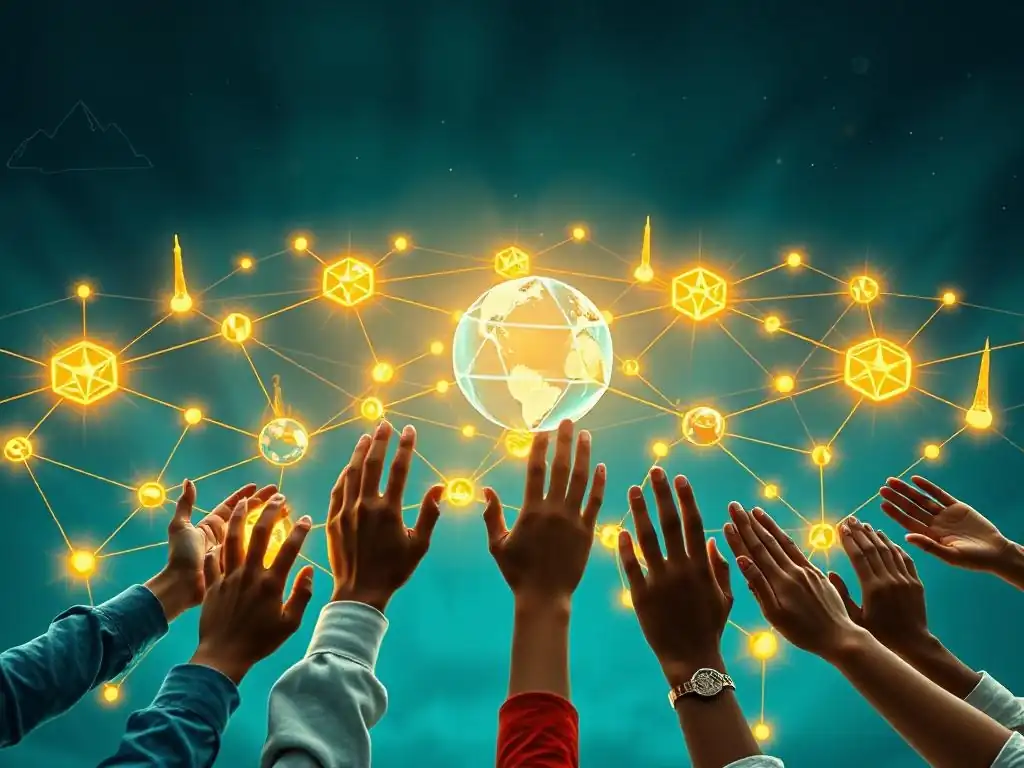
Welcome to Blockchain Trends, your compass in the rapidly evolving world of decentralized technologies. Beyond the hype of cryptocurrencies lies a vast landscape of innovation, and we're here to explore it with you.
Are you ready to witness the next evolution of social change? This week, we delve into the fascinating realm of Community-Driven Social Impact DAOs. Imagine a world where collective action, powered by blockchain, directly addresses global challenges. Intrigued? Discover how these decentralized autonomous organizations are revolutionizing philanthropy and creating a more equitable future. Explore the potential and the challenges of this innovative approach, and join us as we unpack the power of DAOs to democratize do-gooding.
Democratizing DoGooding: The Power of Community-Driven Social Impact DAOs
- Introduction: The Rise of Social Impact DAOs
- The Core Principles of Community-Driven Social Impact DAOs
- Benefits of Community-Driven Social Impact DAOs
- Use Cases: Community-Driven DAOs in Action
- Challenges and Considerations for Social Impact DAOs
- Building a Successful Community-Driven Social Impact DAO
- The Future of Community-Driven Social Impact
- Conclusion: Empowering Change Through Decentralized Communities
-
Frequently Asked Questions
- How do Community-Driven Social Impact DAOs differ from traditional charities?
- What are the key benefits of using DAOs for social impact initiatives?
- What challenges do Community-Driven Social Impact DAOs face in terms of regulation?
- How does blockchain technology contribute to the success of these DAOs?
- What are some examples of real-world applications of Community-Driven Social Impact DAOs?
- Final Reflection: Embracing Collective Good
- Ignite Your Impact: Join the DoGooding Revolution!
Blockchain technology, initially recognized primarily for its role in cryptocurrencies like Bitcoin, holds profound potential extending far beyond financial transactions. Its core attributes of transparency, immutability, and decentralization offer unique opportunities to address long-standing challenges in the social impact sector. Traditional philanthropic models often grapple with issues of trust, efficiency, and donor visibility regarding how funds are utilized. Blockchain provides a foundational layer to build more accountable and effective systems for charitable giving and project execution.
This technological intersection enables the creation of novel organizational structures that can streamline operations, verify impact, and foster greater participation from a global community. By leveraging distributed ledger technology, organizations can record donations, track fund flows, and even register impact metrics in a way that is publicly verifiable and resistant to tampering. This paradigm shift moves away from centralized control towards a more distributed and trustworthy ecosystem for driving positive change in the world, paving the way for innovative structures like community-driven social impact DAOs.
Community-driven social impact DAOs are decentralized autonomous organizations specifically designed and operated with the primary goal of achieving positive social or environmental outcomes. Unlike traditional non-profits governed by a central board, these DAOs utilize blockchain-based smart contracts and tokenomics to automate governance processes and distribute decision-making power among their community members. The "community-driven" aspect is critical, meaning that strategy, funding allocation, and project selection are determined by collective consensus mechanisms, typically involving token holders.
These innovative structures aim to harness the collective intelligence and resources of a distributed global community to tackle pressing issues such as poverty, climate change, inequality, and lack of access to education. They operate with a high degree of transparency, as all transactions and governance votes are recorded on a public ledger. This model represents a significant evolution in how social good initiatives can be organized, funded, and executed, empowering participants to directly influence and contribute to the causes they care about through a decentralized framework.
Decentralized governance is a cornerstone of community-driven social impact DAOs, fundamentally altering how decisions about social initiatives are made. Instead of a small group of executives or board members, the power to propose, discuss, and vote on proposals rests with the DAO's token holders or members. This can involve decisions ranging from selecting specific projects to fund, determining grant criteria, or even modifying the DAO's operational parameters. Governance mechanisms vary, from simple one-token-one-vote systems to more complex models incorporating quadratic voting or reputation systems to prevent plutocracy.
This distributed decision-making process aims to ensure that the DAO's actions truly reflect the priorities and values of its community. For example, a social impact DAO focused on environmental conservation might have its community vote on which reforestation projects receive funding or which policy advocacy efforts to support. This level of direct participation fosters a sense of ownership and engagement among members, potentially leading to more relevant and impactful initiatives aligned with grassroots needs, while building a robust community-driven social impact DAOs ecosystem.
Transparency and accountability are inherent advantages offered by the blockchain architecture underpinning community-driven social impact DAOs. Every transaction, including donations received, funds disbursed to projects, and operational expenses, is recorded on a public ledger. This means anyone can audit the flow of funds, providing an unprecedented level of visibility into how resources are being used. This contrasts sharply with traditional models where financial reporting might be less accessible or delayed.
Furthermore, governance decisions, such as voting on proposals, are also recorded on-chain. This creates a clear and immutable record of how collective decisions were reached, holding participants accountable for their votes and the outcomes. This radical transparency builds trust among donors, beneficiaries, and community members, assuring them that the DAO is operating ethically and effectively towards its social mission. It reinforces the core promise of community-driven social impact DAOs: a system where doing good is not only impactful but also openly verifiable.
Empowering Communities Through Blockchain Technology
Blockchain technology serves as a powerful tool for empowering communities within the framework of social impact DAOs. By issuing governance tokens, DAOs provide community members with a tangible stake and a voice in the organization's direction. This mechanism moves beyond passive donation, allowing individuals to become active participants in identifying problems, proposing solutions, and allocating resources. This is particularly impactful in enabling direct support for grassroots initiatives that might struggle to access funding through traditional channels.
Moreover, blockchain can facilitate direct, peer-to-peer interaction and collaboration among community members globally, breaking down geographical barriers. Smart contracts can automate the distribution of funds or incentives based on predefined conditions, ensuring that resources reach intended recipients efficiently and without intermediaries. This technological empowerment fosters a sense of collective agency, enabling diverse groups of people to coordinate effectively and drive meaningful social change together through community-driven social impact DAOs.
Increased Efficiency and Reduced Overhead in Charitable Giving
Community-driven social impact DAOs have the potential to significantly increase the efficiency of charitable giving by reducing administrative overhead. Traditional non-profits often incur substantial costs related to fundraising, administration, and compliance, sometimes accounting for 15-25% or even more of total expenses. By automating key processes like fund distribution and governance through smart contracts, DAOs can operate with a much leaner structure. This means a larger percentage of donated funds can directly reach the intended beneficiaries or projects.
For example, a DAO using a smart contract to release funds upon verification of project milestones can minimize the need for extensive manual oversight and paperwork. While initial setup costs for smart contracts and infrastructure exist, the ongoing operational costs for fund management and governance can be considerably lower in a well-designed DAO. This potential for greater efficiency makes community-driven social impact DAOs an attractive model for donors seeking to maximize the impact of their contributions.
Enhanced Trust and Traceability of Funds
One of the most compelling advantages of community-driven social impact DAOs is the enhanced trust and traceability they offer. Because all transactions are recorded on a public, immutable blockchain ledger, the flow of funds from donor to DAO treasury, and then from the DAO to specific projects or beneficiaries, is completely transparent. Donors can verify that their contributions arrived in the DAO's wallet and track exactly where those funds were subsequently allocated and spent, provided the recipient wallets are known or linked to public identities (where appropriate and privacy-respecting).
This level of verifiable transparency addresses a major concern in traditional philanthropy: lack of visibility into how donations are used after they leave the donor's hands. This traceability builds confidence among potential contributors and helps ensure accountability for the funds managed by the community-driven social impact DAOs. It allows for real-time auditing by anyone with access to the blockchain explorer, fostering a higher level of trust than traditional financial reporting mechanisms alone.
Community-driven social impact DAOs inherently facilitate global collaboration. Their decentralized nature means participants are not limited by geographical boundaries or organizational silos. Individuals from anywhere in the world can contribute resources (financial or otherwise), expertise, and participate in governance decisions simply by being part of the DAO community and holding the necessary tokens. This allows for the pooling of diverse talents and perspectives to tackle complex global challenges.
Consider a DAO focused on disaster relief. It can quickly mobilize resources from a global pool of donors and deploy them to affected regions based on real-time needs assessed and voted upon by a distributed community, rather than relying solely on a centralized headquarters. This ability to coordinate and act across borders, leveraging the collective intelligence and resources of a worldwide community, is a powerful benefit of community-driven social impact DAOs, enabling a truly global approach to philanthropy and social action.
Community-driven social impact DAOs have the potential to democratize access to funding and resources for grassroots initiatives and social entrepreneurs who might otherwise face significant barriers in accessing traditional grants or investment. The decentralized grant-making process within a DAO allows project proposals to be evaluated and funded directly by the community based on merit and alignment with the DAO's mission, bypassing bureaucratic hurdles and gatekeepers often found in traditional funding bodies.
This model enables smaller, local projects or individual social innovators in underserved regions to pitch their ideas directly to a global community of potential funders and supporters. For example, a project aiming to build a community garden in a specific neighborhood could receive funding through a DAO focused on urban sustainability, decided by a vote of DAO members worldwide. This empowers individuals and small groups with innovative ideas to secure the resources they need to implement solutions, leveling the playing field for social impact projects through community-driven social impact DAOs.
Use Cases: Community-Driven DAOs in Action
Funding Grassroots Initiatives with Decentralized Grants
A prime use case for community-driven social impact DAOs is the decentralized funding of grassroots initiatives. Platforms and DAOs like Gitcoin, while not solely focused on social impact but certainly including it, have pioneered mechanisms like quadratic funding rounds where matching funds are distributed based on the number of unique contributors rather than the total amount contributed, favoring broad community support. Projects seeking funding submit proposals, and community members review and vote on them.
For instance, a DAO dedicated to supporting open-source public goods might run quarterly grant rounds where small development teams or researchers propose projects related to privacy tools or decentralized infrastructure. In a specific Gitcoin grant round, hundreds of projects might receive funding from thousands of individual contributors, amplified by matching funds from a central pool. This model allows for nimble allocation of capital to a wide array of community-approved projects, demonstrating the power of community-driven social impact DAOs in directing resources where they are most needed, as determined by the collective.
Environmental Conservation Through Blockchain-Based Incentives
Community-driven social impact DAOs are emerging as powerful tools for environmental conservation efforts by using blockchain-based incentives. These DAOs can create tokenized economies around conservation activities. For example, a DAO might issue tokens to individuals or organizations that can prove they have planted trees, cleaned up pollution, or protected endangered habitats. These tokens could then be used for governance within the DAO, traded, or represent a stake in the conserved asset itself.
Consider a DAO focused on rainforest preservation. It could partner with local communities, using satellite data verified on-chain to confirm areas of preserved forest. Members of the local community could receive tokens for their stewardship efforts, providing an economic incentive linked directly to conservation outcomes. The DAO's global community could vote on which forest areas to prioritize or how to allocate funds for anti-poaching efforts. This creates a transparent, incentivized system for environmental protection, showcasing how community-driven social impact DAOs can drive tangible ecological benefits.
Supporting Education and Skill Development in Underserved Communities
Education and skill development in underserved communities can be significantly bolstered by community-driven social impact DAOs. These DAOs can fund scholarships, develop decentralized educational platforms, or provide direct grants to educational projects based on community consensus. By leveraging blockchain, they can also create verifiable credentials or digital identities for learners, providing them with portable proof of their skills and achievements.
An example could be a DAO focused on funding coding bootcamps in developing regions. The DAO's community could vote on which educational providers receive grants, set criteria for student eligibility, and even fund individual scholarships. Smart contracts could automate the release of funds upon student enrollment or completion milestones. Furthermore, verifiable credentials issued on a blockchain could help graduates demonstrate their skills to potential employers globally, overcoming geographical barriers. This illustrates how community-driven social impact DAOs can directly empower individuals through accessible and transparent educational funding and credentialing.
Addressing Global Poverty and Inequality with Innovative DAO Models
Addressing complex issues like global poverty and inequality requires innovative approaches, and community-driven social impact DAOs are exploring various models. These can range from DAOs focused on direct cash transfers (UBI experiments) to those funding sustainable development projects or supporting micro-enterprise through decentralized lending pools. The transparent and decentralized nature of DAOs can help ensure that aid reaches intended recipients with minimal leakage.
One model involves DAOs funding projects that create economic opportunities in low-income areas, such as supporting local cooperatives or funding infrastructure improvements. Community members globally could vote on which projects in specific regions receive funding. Another approach could involve a DAO designed to facilitate remittances with lower fees than traditional services, putting more money directly into the hands of families. While still nascent, these applications highlight the potential for community-driven social impact DAOs to deploy resources efficiently and equitably in the fight against poverty and inequality.

Regulatory Uncertainty and Legal Frameworks
One of the most significant challenges facing community-driven social impact DAOs is the prevailing regulatory uncertainty and the lack of clear legal frameworks in many jurisdictions. DAOs don't fit neatly into existing legal categories designed for corporations, non-profits, or trusts. This ambiguity creates challenges regarding legal liability, taxation, and the ability to interact with the traditional financial system or enter into contracts. Without clear legal recognition, it can be difficult for a social impact DAO to, for instance, open a bank account, employ staff, or own assets in the physical world.
Some jurisdictions are beginning to explore legal structures for DAOs, such as Wyoming in the United States which allows DAOs to register as limited liability companies (LLCs). However, these frameworks are still developing and vary widely globally. This lack of a standardized or widely accepted legal wrapper poses risks and creates operational complexities for community-driven social impact DAOs seeking to operate legitimately and at scale, particularly when their activities intersect with traditional financial or legal systems.
Security Risks and Vulnerabilities in DAO Infrastructure
Like any blockchain-based system, community-driven social impact DAOs are susceptible to security risks and vulnerabilities, particularly within their smart contracts and governance mechanisms. Errors or bugs in the underlying code can be exploited, potentially leading to the loss of funds stored in the DAO's treasury or the manipulation of governance processes. The immutable nature of blockchain means that once a vulnerable smart contract is deployed, it can be difficult or impossible to fix without complex and potentially risky upgrades.
Furthermore, governance attacks are a concern. If a malicious actor acquires a sufficient amount of governance tokens, they could potentially vote to approve proposals that benefit themselves at the expense of the DAO's social mission, a scenario known as a "51% attack" or more broadly, "governance capture." While various mechanisms exist to mitigate these risks, such as time locks on critical proposals, multi-signature requirements, and diverse token distribution strategies, ensuring robust security requires continuous vigilance, rigorous auditing, and careful design of the DAO's infrastructure to protect the community-driven social impact DAOs and their assets.
Ensuring Inclusivity and Accessibility for Diverse Communities
Ensuring inclusivity and accessibility for diverse communities is a critical challenge for community-driven social impact DAOs. While blockchain technology enables global participation, access requires digital literacy, internet connectivity, and often, ownership of cryptocurrency or governance tokens. This can inadvertently exclude individuals and communities in regions with limited technological infrastructure, lower digital literacy rates, or those who lack the financial means to acquire tokens.
Moreover, governance mechanisms must be designed to prevent the concentration of power and ensure that minority voices can be heard. Simple token-weighted voting can lead to plutocracy, where wealthy token holders dominate decisions. Overcoming these barriers requires intentional design choices, such as exploring alternative voting mechanisms (e.g., quadratic voting), providing educational resources in multiple languages, developing user-friendly interfaces, and potentially subsidizing access for underprivileged participants. Truly achieving the "community-driven" aspect for social impact requires actively working to bridge the digital and financial divides.
Overcoming Technical Barriers to Adoption
Overcoming technical barriers is essential for the widespread adoption of community-driven social impact DAOs. While blockchain technology offers powerful features, it can be complex for average users to interact with. Concepts like wallets, private keys, gas fees, and on-chain governance voting require a level of technical understanding that many potential participants, particularly those focused on social work rather than technology, may not possess.
User interfaces for interacting with DAOs can be cumbersome, and the process of participating in governance or claiming funds might not be intuitive. High transaction fees on certain blockchains can also make participation prohibitively expensive for small contributions or frequent voting. Addressing these barriers requires the development of more user-friendly platforms, educational initiatives to onboard non-technical users, and the utilization of more scalable and cost-effective blockchain networks. Simplifying the user experience is crucial for enabling broader participation in community-driven social impact DAOs and realizing their full potential.
Building a successful community-driven social impact DAO begins with clearly defining its social mission and the specific impact it aims to achieve. This mission should be concise, compelling, and serve as the guiding principle for all the DAO's activities and governance decisions. Without a clear purpose, community focus can become diluted, making it difficult to align efforts and resources effectively.
Equally important is establishing measurable impact metrics from the outset. How will the DAO track its progress towards its social goals? Will it be by the number of trees planted, students educated, funds distributed to specific causes, or other verifiable outcomes? Defining these metrics allows the DAO and its community to objectively assess their effectiveness, report on their achievements transparently, and make data-driven decisions to optimize their strategies. A well-defined mission and clear metrics are foundational for building a focused and effective community-driven social impact DAOs.
Establishing Transparent Governance and Decision-Making Processes
Transparent governance and robust decision-making processes are paramount for the health and legitimacy of a community-driven social impact DAO. The rules for proposing, discussing, and voting on initiatives must be clearly defined, well-documented, and ideally, encoded in smart contracts. The level of decentralization, quorum requirements, voting periods, and proposal thresholds should be set thoughtfully to balance efficiency with broad community participation and prevent malicious actors from manipulating the process.
Utilizing on-chain voting ensures that all decisions are publicly verifiable and immutable, reinforcing trust. However, effective governance also requires off-chain elements, such as forums or communication channels for rich discussion and debate before proposals are put to a vote. Establishing these transparent mechanisms fosters accountability among token holders and ensures that the DAO's operations and funding allocations are determined openly and fairly by the community, which is the essence of community-driven social impact DAOs.
Cultivating a Strong and Engaged Community
A thriving community is the lifeblood of any community-driven social impact DAO. Building and maintaining a strong, engaged community requires consistent effort beyond simply distributing governance tokens. It involves fostering a shared sense of purpose around the social mission, providing clear communication channels, and creating opportunities for members to contribute in various ways, not just through voting.
Strategies for cultivating engagement include regular updates on DAO activities and impact, facilitating discussions on proposals and relevant social issues, recognizing member contributions, and potentially creating working groups for specific initiatives. A vibrant community provides the collective intelligence, resources, and passion needed to drive the DAO's mission forward, making it resilient and adaptable. Empowering members and making them feel valued participants is key to the long-term success of community-driven social impact DAOs.
Leveraging Blockchain Technology for Efficiency and Scalability
To build a successful community-driven social impact DAO, it is crucial to strategically leverage blockchain technology for both efficiency and scalability. This means identifying which processes are best automated via smart contracts (e.g., fund distribution based on milestones, token vesting) to reduce manual effort and potential for error. Choosing the right blockchain or layer-2 solution is also critical, considering factors like transaction costs, speed, security, and environmental impact to ensure the DAO can operate sustainably and affordably as it grows.
Scalability is vital for a social impact DAO aiming for broad reach and significant impact. The underlying technology must be able to handle a potentially large number of transactions and community participants without becoming prohibitively expensive or slow. Continuously evaluating and integrating technological advancements, such as more efficient consensus mechanisms or interoperability solutions, can help the DAO scale its operations and impact effectively. Leveraging technology smartly is fundamental to the operational success of community-driven social impact DAOs.
The model of community-driven social impact DAOs holds the potential to unlock exponential growth in social impact initiatives. By lowering administrative barriers, increasing transparency, and enabling global participation, these decentralized structures can mobilize resources and human capital on an unprecedented scale. Traditional philanthropic models, while valuable, often face limitations in reaching grassroots projects or engaging a broad base of global citizens directly in decision-making.
DAOs, however, can pool micro-contributions from millions of individuals worldwide and direct them towards community-vetted projects with minimal friction. This crowdfunding-at-scale capability, combined with transparent execution facilitated by smart contracts, can significantly accelerate the funding and implementation of projects addressing global challenges. As the technology matures and adoption grows, the ability of community-driven social impact DAOs to aggregate resources and coordinate action could lead to a dramatic increase in the volume and effectiveness of social good efforts globally.
The Role of DAOs in Creating a More Equitable and Sustainable World
Community-driven social impact DAOs are poised to play a significant role in the ongoing effort to create a more equitable and sustainable world. Their decentralized and transparent nature can help address issues of power imbalance and lack of trust that sometimes hinder traditional development and aid efforts. By empowering marginalized communities with a voice in funding decisions and providing direct, traceable access to resources, DAOs can help ensure that aid is delivered effectively and equitably.
Furthermore, DAOs can incentivize sustainable behaviors through tokenomics, creating economic models that align individual and collective interests with environmental protection and social well-being. Whether funding renewable energy projects, supporting ethical supply chains, or enabling community ownership of local resources, DAOs provide a flexible and powerful tool for organizing collective action towards sustainability goals. As awareness grows, the unique capabilities of community-driven social impact DAOs will become increasingly vital in building a future that is both fair and environmentally conscious.
The field of community-driven social impact DAOs is still nascent, with continuous exploration of new applications and innovations. Beyond grant funding and environmental tokens, future developments could include DAOs focused on decentralized identity for refugees, blockchain-based systems for verifying ethical sourcing of goods, decentralized insurance pools for communities vulnerable to climate change impacts, or DAOs specifically designed to fund and govern public infrastructure projects.
Innovations in governance mechanisms are also expected, moving beyond simple token voting to incorporate reputation, expertise, or proof-of-contribution models to ensure more nuanced and inclusive decision-making. The potential for interoperability between different social impact DAOs could also lead to larger, coordinated efforts tackling complex, interconnected problems. The dynamic nature of blockchain technology suggests that the capabilities and applications of community-driven social impact DAOs will continue to evolve, opening up exciting new possibilities for leveraging decentralization for the greater good.
Conclusion: Empowering Change Through Decentralized Communities
Community-driven social impact DAOs represent a fundamental paradigm shift in the world of philanthropy and social good. Moving away from centralized, often opaque structures, they offer a model that is decentralized, transparent, and directly controlled by the community it serves and relies upon. This shift is powered by blockchain technology, which provides the immutable ledger for accountability and the smart contract infrastructure for autonomous operation.
By enabling global participation, reducing overhead, and ensuring verifiable traceability of funds and impact, these DAOs are setting a new standard for how charitable initiatives can be organized and executed. They empower individuals to become active participants in driving change, rather than just passive donors, fostering a deeper connection to the causes they support. This innovative approach promises to make the pursuit of social good more efficient, trustworthy, and inclusive.
The trajectory of social impact suggests that the future of doing good will increasingly be decentralized, transparent, and community-led. Community-driven social impact DAOs embody these principles, demonstrating how collective action coordinated through blockchain can lead to more effective and equitable outcomes. As the technology matures and understanding grows, more individuals and organizations will likely turn to this model to address pressing global challenges.
While challenges related to regulation, security, and accessibility remain, the core value proposition of community-driven social impact DAOs – pooling resources and decision-making power in a transparent, decentralized manner – is incredibly compelling. They offer a powerful framework for mobilizing global communities to tackle complex problems with unprecedented efficiency and accountability. The movement towards community-driven social impact DAOs signals a hopeful future where positive change is driven collectively, openly, and directly by those who care most about making a difference.
Frequently Asked Questions
Community-Driven Social Impact DAOs leverage blockchain technology to create transparent and decentralized governance, unlike traditional charities with top-down structures. This fosters greater community participation in decision-making and resource allocation.
DAOs offer enhanced transparency and accountability through their immutable ledger. They also facilitate direct community involvement in project selection and execution, leading to more effective and impactful initiatives.
The regulatory landscape for DAOs is still evolving, creating uncertainty and potential legal hurdles. Compliance with existing regulations and the development of DAO-specific frameworks are crucial for their long-term sustainability.
How does blockchain technology contribute to the success of these DAOs?
Blockchain provides the infrastructure for secure and transparent transactions, enabling automated governance and efficient resource distribution. Smart contracts automate processes, reducing the need for intermediaries and increasing trust.
Examples include DAOs funding environmental conservation projects, supporting educational initiatives in underserved communities, and facilitating disaster relief efforts with increased transparency and efficiency.
Final Reflection: Embracing Collective Good
The exploration of Community-Driven Social Impact DAOs reveals a powerful truth: the future of social impact lies in decentralization and collective action. No longer confined to traditional institutions, the power to effect meaningful change is being democratized, placing it directly in the hands of communities passionate about building a better world.
This shift is not merely a technological advancement; it's a cultural evolution. The rise of these DAOs signifies a growing desire for transparency, accountability, and genuine participation in addressing the world's most pressing challenges. It reminds us that every individual has the potential to be a changemaker, and that collective intelligence can unlock innovative solutions previously unimaginable. Never doubt that a small group of thoughtful, committed citizens can change the world; indeed, it's the only thing that ever has.
- Margaret Mead.
As we stand at the cusp of this new era, let us embrace the potential of Community-Driven Social Impact DAOs. Consider how you can contribute your skills, your passion, and your voice to these emerging ecosystems. Explore the DAOs already making a difference, and envision how you might help build the next generation of impactful, community-led initiatives. The power to shape a more just and equitable future is within our reach – let us seize it together.
Ignite Your Impact: Join the DoGooding Revolution!
Thank you for exploring the potential of Community-Driven Social Impact DAOs. You've now unlocked a new understanding of how blockchain can empower real-world change. Ready to move from understanding to action?
Here are a few ways to get started:
- Dive In: Propose a small-scale initiative for your local community and post it to a relevant DAO forum.: See how the community responds and iterate from there!
- Explore other Social Impact DAOs and identify projects that inspire you. Consider contributing your skills or resources.
- Share this article with three friends passionate about social change and blockchain technology. Let's grow this movement together!
What's one small step you can take today to contribute to a Community-Driven Social Impact DAO? Share your ideas in the comments below!
Leave a Reply