
Diamonds, Data, and Ethics: Blockchain's Impact on Responsible Mineral Sourcing


Welcome to Blockchain Trends, where we delve into the revolutionary applications of blockchain technology beyond the hype. Are you ready to uncover how this powerful tool is reshaping industries and fostering a more equitable world?
In this article, we're exploring a fascinating intersection of technology and ethics: blockchain ethical mineral sourcing. Discover how blockchain is being used to track minerals from mine to market, ensuring transparency, combating exploitation, and ultimately, building a more responsible and sustainable future. Intrigued? Read on to learn how this technology is impacting the future of diamonds and beyond.
Diamonds, Data, and Ethics: Blockchain's Impact on Responsible Mineral Sourcing
- The Growing Need for Ethical Mineral Sourcing
- Blockchain for Traceability: From Mine to Market
- Addressing Challenges in the Mineral Supply Chain with Blockchain
- Case Studies: Blockchain Initiatives in Ethical Mineral Sourcing
- The Role of Data in Blockchain-Based Ethical Sourcing
- Overcoming Barriers to Blockchain Adoption in Mineral Sourcing
- The Future of Blockchain and Ethical Mineral Sourcing
-
Frequently Asked Questions
- How can blockchain technology improve mineral sourcing?
- What are the key benefits of using blockchain for ethical mineral sourcing?
- What role does data play in blockchain-based mineral sourcing solutions?
- What are some of the challenges in implementing blockchain for mineral sourcing?
- How can blockchain help address the issue of conflict minerals specifically?
- Final Reflection: Illuminating the Path to Ethical Sourcing
- Empower Transparency: Become a Champion for Ethical Diamonds!
The Growing Need for Ethical Mineral Sourcing
Consumer Demand for Transparency in Mineral Supply Chains
Modern consumers are increasingly demanding transparency regarding the origin and journey of the products they purchase, extending this scrutiny to the raw materials like minerals used in everything from smartphones to jewelry. A 2021 survey by Accenture found that 62% of consumers are willing to pay more for products that are sustainably sourced and ethically produced.
This trend puts significant pressure on industries reliant on minerals, such as electronics, automotive, and luxury goods, to provide verifiable proof of ethical sourcing practices. Without clear, trustworthy information, companies risk reputational damage and loss of market share as consumers opt for brands that demonstrate a commitment to social and environmental responsibility.
This heightened awareness is driven by increased media coverage of issues like conflict minerals, child labor, and environmental disasters linked to mining. Social media and online platforms amplify this information, making it easier for consumers to research and hold companies accountable. As a result, businesses are recognizing that ethical mineral sourcing is no longer just a compliance issue but a critical component of brand value and consumer trust. They need robust systems that can track minerals from extraction to end product, providing an auditable history that can be shared with stakeholders and customers.
The Dark Side of Mineral Extraction: Human Rights Abuses, Environmental Degradation, and Funding of Armed Conflicts
The extraction of minerals, while essential for global industries, is often associated with severe negative impacts. Human rights abuses, including forced labor, child labor, unsafe working conditions leading to injuries and fatalities, and displacement of communities, are tragically common in many mining regions. A 2022 report by the Business & Human Rights Resource Centre documented over 150 allegations of human rights abuses linked to mining operations globally in just one year, highlighting the scale of the problem. These issues are particularly prevalent in artisanal and small-scale mining (ASM) sectors, which employ millions but often lack regulation and oversight.
Furthermore, mineral extraction is a significant driver of environmental degradation. This includes deforestation, soil erosion, water pollution from mining chemicals like mercury and cyanide, and habitat destruction. For instance, gold mining is a major source of mercury pollution globally, with artisanal miners often using the toxic substance to extract gold, contaminating local ecosystems and posing severe health risks.
In conflict-affected regions, the trade of certain minerals, often termed "conflict minerals" (like tin, tantalum, tungsten, and gold), directly funds armed groups, perpetuating violence and instability. The illicit trade of these minerals is estimated to be worth billions annually, fueling conflicts and hindering development in countries like the Democratic Republic of Congo.
How Blockchain Can Revolutionize Ethical Mineral Sourcing
Blockchain technology offers a transformative approach to addressing the complex challenges inherent in ethical mineral sourcing by providing an immutable, transparent, and decentralized ledger for tracking assets and data. Unlike traditional centralized databases that can be altered or are siloed, blockchain creates a shared, tamper-proof record of transactions and events across the supply chain. This inherent immutability is critical for building trust and verifying claims about mineral origin and handling. By recording each step a mineral takes – from the mine site, through processing, transport, manufacturing, and distribution – blockchain can create a complete, verifiable digital trail.
This capability directly tackles the opacity that has long plagued mineral supply chains, making it difficult to verify claims of ethical extraction and prevent the entry of illegally sourced or conflict minerals. A blockchain-based system can store data points such as the mine of origin, date of extraction, handling information, certifications (e.g., conflict-free, fair trade), and transfer of ownership. Participants in the network, with appropriate permissions, can access and verify this information, creating a level of accountability previously unattainable. This enhanced transparency and traceability are fundamental to enabling true blockchain ethical mineral sourcing and building consumer confidence.
Blockchain for Traceability: From Mine to Market
Tracking Diamonds and Other Minerals with Blockchain Technology
Tracking valuable and sensitive minerals like diamonds, cobalt, and rare earth elements from their point of extraction to their final use is a complex logistical and data management challenge. Blockchain technology provides a robust framework for creating unique digital identities for individual minerals or batches, allowing them to be tracked throughout their entire lifecycle.
For a diamond, this could involve recording its rough form's weight, color, clarity, and cut, along with its mine of origin, on the blockchain. As the diamond is cut, polished, and traded, each transaction and transformation is added to its digital record, creating an unbroken chain of custody.
This process relies on assigning a unique identifier to the mineral item or batch, which is then linked to data recorded on the blockchain. Physical markers, such as laser inscriptions or forensic tagging, can be used to connect the physical asset to its digital twin on the ledger.
As the mineral moves through the supply chain – from miner to sorter, cutter, polisher, jeweler, and finally to the consumer – each transfer of ownership and significant event is recorded as a transaction on the blockchain. This distributed record, shared among authorized participants, makes it extremely difficult to introduce illicitly sourced minerals into the legitimate supply chain without detection, thereby strengthening blockchain ethical mineral sourcing efforts.
Enhancing Supply Chain Visibility with Distributed Ledger Technology (DLT)
Distributed Ledger Technology (DLT), the underlying technology powering blockchain, fundamentally enhances visibility within complex mineral supply chains. Traditionally, supply chain data is fragmented, stored in disparate systems owned by different companies, making end-to-end visibility nearly impossible. DLT enables a shared, synchronized ledger accessible to all authorized participants, providing a single source of truth about the movement and status of minerals. This shared view allows stakeholders – including miners, refiners, manufacturers, auditors, and even regulators – to see the same, verified information in near real-time.
Improved visibility allows companies to identify bottlenecks, verify the provenance of materials more efficiently, and respond quickly to issues. For example, a manufacturer using cobalt in electric vehicle batteries can trace a specific batch back to its mine of origin, verifying certifications and due diligence steps taken at each stage.
This level of transparency helps build trust among supply chain partners and provides the necessary data for auditing and compliance with regulations such as the Dodd-Frank Act or EU Conflict Minerals Regulation. By illuminating previously opaque links, DLT supports more responsible and ethical mineral sourcing practices across the entire value chain.
Immutable Records: Ensuring Data Integrity in Mineral Provenance
One of the most powerful features of blockchain for ethical mineral sourcing is the immutability of the records stored on the ledger. Once data is added to a block and that block is added to the chain, it is cryptographically linked to previous blocks, making it virtually impossible to alter or delete without consensus from the network. This tamper-proof characteristic is crucial for ensuring the integrity of mineral provenance data. In traditional systems, records can be lost, altered, or fabricated, making it difficult to verify the authenticity of origin and ethical claims.
With blockchain, every data point related to a mineral's journey – including origin, weight, quality, handling certifications, and change of ownership – is securely and permanently recorded. This creates a reliable audit trail that can be trusted by all parties. Auditors can verify the consistency of information across the supply chain, and consumers can potentially access verified details about the product they are buying. This assurance of data integrity is fundamental to building trust in blockchain ethical mineral sourcing initiatives and provides a solid foundation for verifying compliance with ethical and environmental standards.
Addressing Challenges in the Mineral Supply Chain with Blockchain
Combating Conflict Minerals with Blockchain-Based Solutions
Conflict minerals pose a significant challenge to ethical sourcing, as their trade finances armed conflict and human rights abuses in vulnerable regions. Blockchain technology offers a powerful tool to combat this by creating transparent and verifiable supply chains for these specific minerals (tin, tantalum, tungsten, and gold).
By tracking these minerals from the mine source, blockchain platforms can record and verify that they originate from conflict-free areas and have been extracted and traded in compliance with due diligence standards. This involves registering mining sites, tracking mineral batches as they move through aggregators, processors, exporters, and manufacturers, and linking these movements to verified data and certifications.
Blockchain solutions enable companies to implement robust due diligence processes as required by regulations like the OECD Due Diligence Guidance for Responsible Supply Chains of Minerals from Conflict-Affected and High-Risk Areas. Each step of the due diligence process – risk assessment, auditing, reporting – can be recorded on the blockchain, creating an auditable history.
This makes it significantly harder for conflict minerals to enter the legitimate supply chain unnoticed. For instance, a smelter purchasing tungsten can verify through the blockchain that the material originated from a mine certified as conflict-free, based on immutable data provided by upstream suppliers and third-party auditors.
Reducing Fraud and Counterfeiting in the Diamond Industry
The high value and complex supply chain of diamonds make them particularly susceptible to fraud and counterfeiting. Issues range from replacing genuine stones with fakes to misrepresenting the origin, characteristics, or ethical sourcing claims of diamonds. Blockchain technology provides a strong defense against these practices by creating a secure and verifiable digital record for each diamond. By assigning a unique digital identity to a diamond and recording its journey and characteristics on the blockchain, it becomes possible to authenticate the stone and its associated data at any point in the supply chain.
Platforms like Tracr, developed by De Beers, demonstrate this capability by tracking diamonds from the mine mouth. Key data points such as carat weight, color grade, clarity grade, and cut grade are recorded, along with ownership transfers. This immutable record ensures that the identity and characteristics of the diamond cannot be easily falsified.
Furthermore, by linking the digital record to physical markers or secure sealing, the risk of swapping or counterfeiting is significantly reduced. This enhanced security and traceability build confidence among traders, retailers, and consumers, protecting the integrity of the diamond industry and supporting blockchain ethical mineral sourcing efforts.
Empowering Artisanal Miners through Blockchain-Enabled Fair Trade
Artisanal and small-scale mining (ASM) accounts for a significant portion of global mineral production and supports the livelihoods of millions, yet ASM miners often face exploitation, unfair prices, and dangerous working conditions. Blockchain technology can empower these miners by providing direct access to transparent markets and ensuring they receive fair compensation for their work. By using blockchain platforms, ASM cooperatives or individual miners can register their production, track their minerals, and connect directly with buyers, potentially bypassing exploitative intermediaries.
Blockchain can facilitate fair trade practices by recording the volume and quality of minerals produced by ASM sites and ensuring prompt, transparent payment upon sale. Smart contracts could potentially automate payments based on verified delivery and quality, reducing payment delays and disputes. Furthermore, blockchain can be used to track compliance with fair labor standards and environmental practices at the ASM level, linking these certifications to the mineral batches. This verifiable proof of responsible practices can help ASM miners access premium markets and secure better prices, improving their livelihoods and promoting more ethical mineral sourcing from the ground up.
Case Studies: Blockchain Initiatives in Ethical Mineral Sourcing
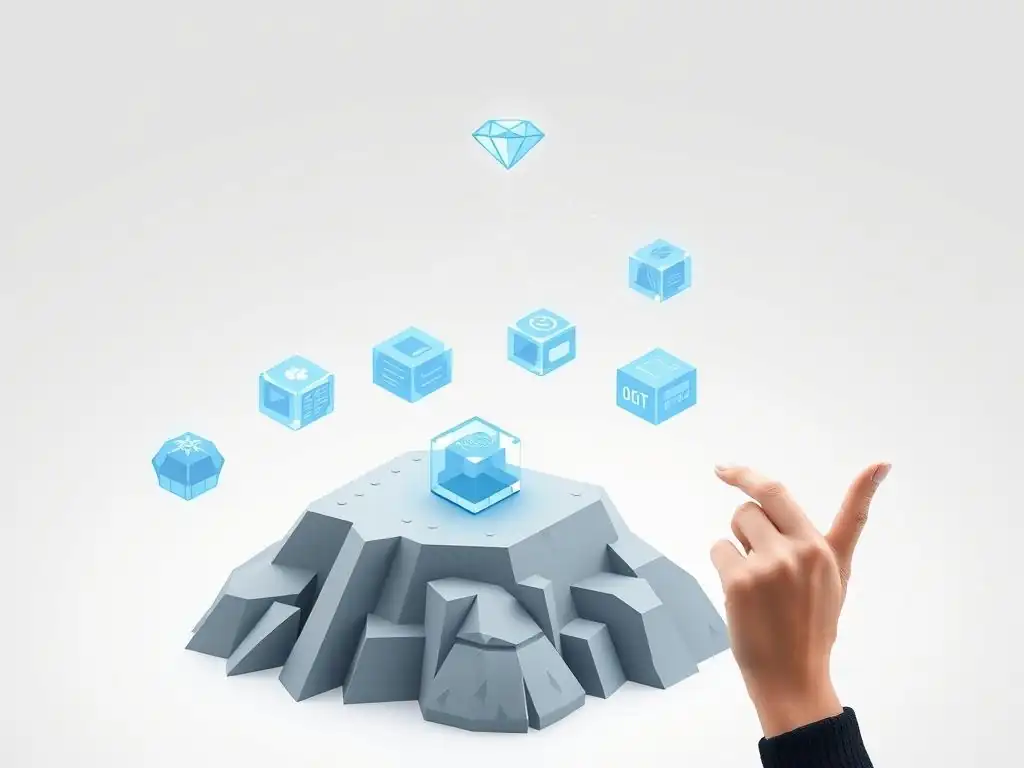
De Beers' Tracr: A Diamond Tracking Platform Using Blockchain
De Beers, one of the world's leading diamond companies, launched Tracr, a blockchain-based platform designed to track diamonds from mine to retailer. The initiative aims to enhance transparency and trust within the diamond industry by providing a secure and immutable record of a diamond's journey and provenance. Piloted with major diamond manufacturers and retailers, Tracr demonstrates a significant industry move towards leveraging blockchain for ethical mineral sourcing. The platform registers rough diamonds at the point of production, creating a unique digital twin for each stone.
Key Features and Implementation: Secure Digital Ledger, Integration with Existing Processes, and Customer-Facing Transparency
Tracr utilizes a private, permissioned blockchain network, allowing authorized participants (miners, manufacturers, diamantaires, retailers) to record and access data related to a diamond's lifecycle. Key features include the creation of a unique Global Diamond ID based on the diamond's immutable characteristics, recording ownership changes, and tracking transformations (like cutting and polishing). Implementation involved integrating the platform with participants' existing inventory management and operational systems. While initially focused on business-to-business tracking, the long-term vision includes enabling customer-facing applications where consumers can verify the provenance of their diamond using a unique identifier linked to the blockchain record.
Results and Impact on Transparency: Increased Consumer Confidence and Improved Supply Chain Accountability
Since its launch, Tracr has successfully tracked millions of rough diamonds, representing a substantial portion of De Beers' production. The platform has demonstrated its capability to provide an immutable record of a diamond's journey, significantly improving transparency within the supply chain. This enhanced visibility helps participants verify the authenticity and provenance of diamonds, reducing the risk of illicit stones entering the market.
While specific quantifiable metrics on fraud reduction or price premiums directly attributable to Tracr are still developing, the platform's existence signals a commitment to greater accountability. It directly addresses consumer demand for ethical sourcing, aiming to boost confidence in natural diamonds by providing verifiable proof of responsible origin and handling, thereby strengthening blockchain ethical mineral sourcing practices in the diamond sector.
RCS Global Group's Cobalt Blockchain: Cobalt Sourcing in Electric Vehicle Batteries
RCS Global Group, a supply chain audit and responsible sourcing specialist, developed a blockchain-based traceability system focused on cobalt from the Democratic Republic of Congo (DRC). Cobalt is a critical mineral for lithium-ion batteries used in electric vehicles and electronics, and its sourcing in the DRC has been linked to significant human rights issues, including child labor and unsafe working conditions, particularly in artisanal mining. This initiative directly addresses the urgent need for responsible sourcing in a high-demand, high-risk supply chain, showcasing the potential of blockchain ethical mineral sourcing in complex environments.
Addressing Child Labor Concerns: Supply Chain Mapping and Risk Assessment in the Democratic Republic of Congo
A primary driver for the RCS Global Cobalt Blockchain initiative was the pervasive risk of child labor in artisanal cobalt mines in the DRC. The project focuses on mapping the complex supply chain from specific mine sites to aggregators, traders, and exporters. This mapping process involves on-the-ground verification and data collection, which is then recorded on the blockchain.
By creating a transparent and verifiable record of origin and movement, the system helps companies conducting due diligence to identify high-risk areas and verify that cobalt originates from sites compliant with responsible sourcing standards, specifically those working to eliminate child labor. The system aims to provide auditable proof that cobalt entering the supply chain does not originate from mines where child labor is present.
Supply Chain Mapping and Due Diligence: End-to-End Tracking and Verification of Cobalt Sources
The RCS Global Cobalt Blockchain system focuses on providing end-to-end traceability for cobalt. This involves registering validated mine sites, tracking mineral batches from these sites, recording transfers between supply chain actors (like cooperatives, traders, and exporters), and linking these transactions to due diligence data. Auditors and supply chain participants record verification data, such as site inspections, worker interviews, and volume reconciliation, directly onto the blockchain.
This creates an immutable record that can be audited by third parties and accessed by downstream buyers (e.g., battery manufacturers, automotive companies) to verify the provenance and responsible sourcing claims of the cobalt they purchase. The project has been implemented in pilot programs with major industry players, demonstrating the feasibility of blockchain for ethical mineral sourcing in challenging environments, though scaling across the entire DRC cobalt sector remains a significant undertaking.
The Role of Data in Blockchain-Based Ethical Sourcing
Utilizing Data Analytics to Identify Risks in Mineral Supply Chains
While blockchain provides the secure ledger for data, the real power in blockchain ethical mineral sourcing comes from the data itself and the ability to analyze it. Data analytics plays a crucial role in identifying potential risks and anomalies within the recorded supply chain information. By analyzing patterns in the blockchain data – such as unusual transaction volumes from a specific region, frequent changes in ownership in a short period, or discrepancies between reported production volumes and export figures – companies can flag potential red flags indicative of illicit activities, fraud, or non-compliance with ethical standards.
Advanced analytics can be applied to the rich dataset accumulated on the blockchain to perform risk assessments in near real-time. For example, combining blockchain traceability data with external datasets like geopolitical risk maps, satellite imagery of mining sites, or public reports of human rights issues can provide a more comprehensive risk profile for specific mineral sources. This allows companies to move beyond simple compliance checks and proactively identify and mitigate risks related to conflict minerals, child labor, environmental damage, or illegal mining operations, making blockchain ethical mineral sourcing more effective.
The Importance of Data Standardization for Interoperability
For blockchain-based ethical mineral sourcing platforms to achieve widespread adoption and effectiveness, data standardization is paramount. Minerals move through complex global supply chains involving numerous actors using different systems and terminology. Without agreed-upon standards for how data is collected, formatted, and recorded on the blockchain, interoperability between different platforms and seamless data exchange between supply chain partners become significant challenges. This includes standardizing identifiers for mines, companies, and mineral batches, as well as standardizing the type and format of data recorded for due diligence, certifications, and provenance.
Industry-wide agreement on data standards is essential to create a connected ecosystem where information about a mineral can flow smoothly and be understood across different stages of the supply chain, regardless of the specific blockchain platform or system used by individual companies. Initiatives like the Responsible Minerals Initiative (RMI) are working towards developing common reporting standards that can be integrated with blockchain solutions. Standardized data ensures that information is accurate, comparable, and verifiable across the entire network, which is critical for building a truly transparent and reliable system for blockchain ethical mineral sourcing.
Leveraging IoT and Blockchain for Real-Time Tracking of Minerals
Integrating Internet of Things (IoT) devices with blockchain technology can provide real-time, verifiable data for mineral tracking, significantly enhancing the accuracy and reliability of ethical sourcing claims. IoT devices, such as GPS trackers, environmental sensors (monitoring air/water quality), and smart tags on mineral containers, can automatically collect data about a mineral's location, environmental conditions during transport, and handling. This data can then be automatically recorded onto the blockchain ledger via smart contracts, creating an objective, machine-generated record that is harder to tamper with than manual data entry.
For example, a container of cobalt concentrate could be fitted with a GPS tracker and a sensor monitoring for unauthorized opening. The IoT device periodically sends location data to the blockchain, confirming the route taken.
If the container is opened unexpectedly, the sensor triggers an alert, and this event is recorded on the immutable ledger. This combination of IoT for data capture and blockchain for secure recording provides a powerful mechanism for real-time monitoring and verification throughout the mineral supply chain, adding another layer of assurance to blockchain ethical mineral sourcing processes and reducing the reliance on potentially fallible manual checks.
Overcoming Barriers to Blockchain Adoption in Mineral Sourcing
Regulatory Challenges and Compliance Requirements
Adopting blockchain for ethical mineral sourcing faces various regulatory challenges. While regulations like the Dodd-Frank Act Section 1502 or the EU Conflict Minerals Regulation mandate due diligence, they do not specifically endorse or require blockchain technology. Companies need clarity on how blockchain-based tracking and data collection will be recognized and accepted by regulatory bodies and auditors. Integrating blockchain systems with existing compliance frameworks and reporting requirements can be complex. Furthermore, data privacy regulations, such as GDPR, need to be carefully considered when recording information about individuals or businesses on a distributed ledger, even a permissioned one.
Navigating the legal landscape surrounding digital assets and the legal standing of blockchain records in different jurisdictions is also an ongoing process. As blockchain technology is relatively new in this context, there is a lack of established legal precedents and clear guidelines in many countries regarding its use for supply chain traceability and compliance.
Industry participants and technology providers need to work closely with regulators to demonstrate the robustness and reliability of blockchain solutions and advocate for regulatory frameworks that support and recognize the use of distributed ledger technology for enhancing transparency and due diligence in mineral supply chains, fostering a more conducive environment for blockchain ethical mineral sourcing.
The Need for Collaboration and Industry-Wide Standards
Implementing blockchain for ethical mineral sourcing effectively requires significant collaboration across the entire value chain. No single company operates in isolation; minerals pass through numerous hands – miners, aggregators, processors, refiners, manufacturers, traders, and retailers. For a blockchain system to provide end-to-end traceability, all relevant stakeholders must participate and agree on common processes and standards. This necessitates developing industry-wide consortia or initiatives to establish shared protocols, data standards (as discussed earlier), and governance models for the blockchain network.
Reaching consensus among diverse stakeholders with potentially competing interests can be challenging. It requires trust-building, education about the technology's benefits, and a shared commitment to improving ethical sourcing practices. Without broad participation and a willingness to share data (within a permissioned framework), blockchain initiatives risk remaining siloed or limited in scope, failing to achieve true supply chain transparency. Successful blockchain ethical mineral sourcing depends on fostering an ecosystem of collaboration where industry players work together to build and maintain shared traceability infrastructure.
Cost Considerations and Implementation Strategies
Implementing blockchain technology is not without cost. Developing or adopting a blockchain platform requires initial investment in technology infrastructure, software development, integration with existing systems, and training for personnel. For large, complex supply chains like those for minerals, the cost of onboarding numerous participants, ensuring data accuracy at the source (especially challenging in artisanal mining contexts), and maintaining the network can be substantial. Small and medium-sized enterprises (SMEs), particularly at the upstream end of the supply chain, may face significant barriers to entry due to these costs.
Effective implementation strategies are crucial to address cost concerns and ensure successful adoption. This can involve phased rollouts, starting with pilot programs focused on specific minerals or regions, or leveraging existing industry platforms rather than building proprietary ones from scratch. Exploring different blockchain architectures (e.g., public vs. permissioned, different consensus mechanisms) and their associated costs is also necessary. Business models that share the costs and benefits across the supply chain, potentially through subscription fees or transaction-based pricing, can help make blockchain ethical mineral sourcing solutions more accessible and sustainable for all participants.
The Future of Blockchain and Ethical Mineral Sourcing
Emerging Technologies and Innovations in Supply Chain Management
The future of blockchain in ethical mineral sourcing will likely be shaped by the integration of emerging technologies and ongoing innovations in supply chain management. The combination of blockchain with Artificial Intelligence (AI) can enhance data analysis capabilities, enabling predictive risk assessment and automated anomaly detection based on the vast amounts of data recorded on the ledger. Machine learning algorithms can identify subtle patterns indicative of fraud or non-compliance that might be missed by manual review, further strengthening the integrity of blockchain ethical mineral sourcing systems.
Furthermore, advancements in digital identity solutions and biometric authentication can improve the verification of participants and data entry points at the source, particularly in remote mining locations. The development of more energy-efficient blockchain protocols can also address sustainability concerns related to the energy consumption of certain blockchain types. As these technologies mature and become more integrated, they will offer increasingly sophisticated tools for creating highly transparent, secure, and efficient supply chains for minerals, pushing the boundaries of what is possible in blockchain ethical mineral sourcing.
The Potential for Blockchain to Drive Sustainable Practices
Beyond just ethical sourcing related to human rights and conflict, blockchain has significant potential to drive broader sustainable practices within the mineral industry. By providing immutable records of environmental data – such as water usage, energy consumption, waste management, and land rehabilitation efforts at mining sites – blockchain can help verify compliance with environmental regulations and sustainability standards. Sensors and IoT devices can automatically record this data onto the blockchain, providing a transparent and auditable environmental footprint for specific mineral batches.
This verifiable environmental data can enable green financing initiatives, where miners or supply chain participants who demonstrate strong environmental performance via blockchain records can access preferential loans or investment. It can also support the development of markets for "green minerals" with a certified low environmental impact. By making environmental performance transparent and verifiable, blockchain incentivizes sustainable mining practices and allows companies and consumers to make informed choices based on a mineral's full ethical and environmental history, solidifying the role of blockchain ethical mineral sourcing in promoting sustainability.
Building a More Transparent and Responsible Mineral Industry
Ultimately, the impact of blockchain on ethical mineral sourcing is contributing to the broader goal of building a more transparent and responsible global mineral industry. By providing the technological foundation for immutable traceability and verifiable data sharing, blockchain empowers stakeholders across the supply chain, from miners to end consumers. It shifts the paradigm from opaque, trust-based systems to transparent, verifiable ones, where claims about origin, ethical treatment, and environmental impact can be substantiated with data on a shared ledger.
While challenges remain in terms of widespread adoption, standardization, and regulatory clarity, the initiatives already underway demonstrate the transformative potential of blockchain technology. As these platforms mature and gain wider acceptance, they will play an increasingly critical role in ensuring that the minerals powering our modern world are sourced responsibly, without contributing to conflict, human rights abuses, or environmental degradation. Blockchain ethical mineral sourcing is not just a technological trend; it is a key enabler for a more accountable and sustainable future for the global mineral supply chain.
Frequently Asked Questions
How can blockchain technology improve mineral sourcing?
Blockchain provides a transparent and immutable ledger to track minerals from mine to market. This helps ensure traceability and prevents conflict minerals from entering the supply chain.
What are the key benefits of using blockchain for ethical mineral sourcing?
The main benefits include increased transparency, enhanced accountability, and improved trust among stakeholders. This leads to better supply chain management and reduces the risk of fraud.
What role does data play in blockchain-based mineral sourcing solutions?
Data is crucial as it records the origin, processing, and transfer of minerals. This data, stored on the blockchain, is tamper-proof and provides verifiable evidence of ethical sourcing practices.
What are some of the challenges in implementing blockchain for mineral sourcing?
Challenges include the cost of implementation, the need for industry-wide adoption, and ensuring the accuracy of data entered into the blockchain. Also, lack of digital infrastructure in some mining regions.
How can blockchain help address the issue of conflict minerals specifically?
Blockchain facilitates traceability and allows buyers to verify the origin of minerals, ensuring they are not funding armed conflicts. This helps to disrupt illegal mining operations and promote responsible sourcing.
Final Reflection: Illuminating the Path to Ethical Sourcing
The journey through diamonds, data, and ethics reveals a powerful truth: blockchain technology offers a tangible pathway towards responsible mineral sourcing, but its potential hinges on our collective commitment to transparency and accountability. The challenges are significant, yet the opportunities to reshape the industry and protect vulnerable communities are even greater. The promise of verifiable provenance, from mine to market, is no longer a distant dream but a rapidly approaching reality.
The influence of blockchain on ethical mineral sourcing extends far beyond mere technological innovation; it represents a fundamental shift in how we perceive and value the origins of the products we consume. This shift is deeply personal, forcing us to confront our own complicity in systems that may perpetuate exploitation. The price of anything is the amount of life you exchange for it.
- Henry David Thoreau. This quote reminds us that every purchase carries a weight, a story, and a responsibility. Blockchain offers a tool to understand that story and ensure it aligns with our values.
As we stand on the cusp of a new era in mineral sourcing, let us not be passive observers. Let us actively engage with the potential of blockchain to create a more just and equitable world. Consider the origins of the products you purchase. Ask questions. Demand transparency. Embrace the power of informed consumerism to drive change and illuminate the path towards a future where ethical mineral sourcing is not just an aspiration, but a reality.
Empower Transparency: Become a Champion for Ethical Diamonds!
Thank you for exploring how blockchain is transforming responsible mineral sourcing. Now that you’re informed, you can take action to make a meaningful impact in the diamond industry.
Here are some ways you can contribute:
- Take Action Today: Support jewelers who prioritize ethically mined diamonds and seek out stones verified through blockchain technology. Your choice can send a powerful message.
- Share this article with friends, family, and colleagues on social media to raise awareness about the role of blockchain in promoting ethical mineral sourcing. Use hashtags like #EthicalDiamonds and #BlockchainTrends.
- Explore further: Look into blockchain initiatives aimed at increasing supply chain transparency in various industries. Discover innovative solutions that could be adapted for mineral sourcing.
What small step will you take today to support a more ethical and transparent diamond industry? Share your thoughts in the comments below!
Leave a Reply