
Ending Exploitation? Blockchain's Promise for Ethical Labor in Global Supply Chains

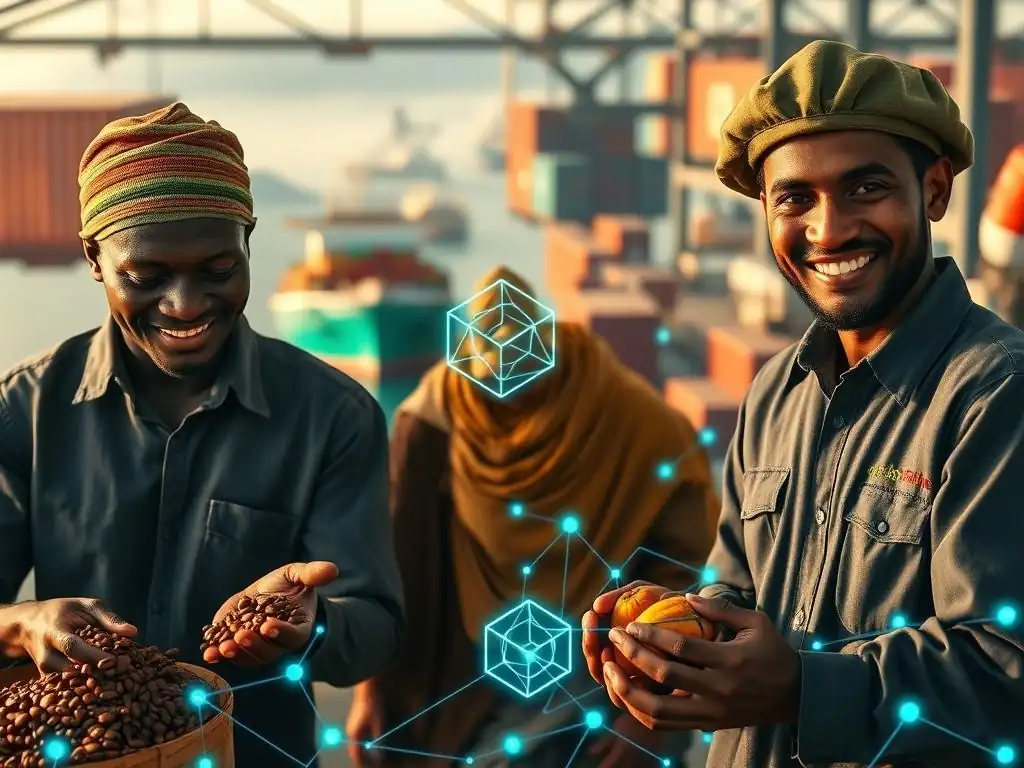
Welcome to Blockchain Trends, your guide to understanding the real-world impact of blockchain technology.
Can blockchain truly revolutionize global supply chains and ensure ethical labor practices? Dive into our analysis of " Blockchain ethical supply chain labor" and discover how this groundbreaking technology is being used to combat exploitation and bring transparency to a complex system. Learn about the challenges, the successes, and the future potential of this powerful tool for social good. Explore the possibilities and join the conversation.
Ending Exploitation? Blockchain's Promise for Ethical Labor in Global Supply Chains
- The Urgent Need for Ethical Labor Practices in Global Supply Chains
- Blockchain Technology: A Potential Solution for Ethical Supply Chain Labor
- Blockchain Applications for Ethical Labor: Use Cases and Examples
- Benefits of Using Blockchain for Ethical Labor in Supply Chains
- Challenges and Limitations of Blockchain in Supply Chain Ethics
- Overcoming the Obstacles: Strategies for Successful Blockchain Implementation
- The Future of Blockchain and Ethical Labor: Trends and Predictions
- Conclusion: Blockchain's Role in Building a More Ethical and Sustainable Future for Global Labor
-
Frequently Asked Questions
- How can blockchain technology contribute to ethical labor practices within global supply chains?
- What specific blockchain features are most useful in addressing ethical labor concerns?
- What are some potential challenges in implementing blockchain solutions for ethical supply chain labor?
- How can blockchain help consumers make more informed purchasing decisions regarding ethical labor?
- What role do regulations and industry standards play in ensuring the effective use of blockchain for ethical supply chain labor?
- Final Reflection: Empowering Workers Through Transparency
- Empower Workers: Start Building a More Ethical Future!
The Urgent Need for Ethical Labor Practices in Global Supply Chains
Understanding the Challenges of Labor Exploitation in Supply Chains
Global supply chains, while driving economic growth, are often riddled with complex and opaque structures that facilitate labor exploitation. Issues such as child labor, forced labor, unsafe working conditions, and wage theft are unfortunately prevalent in various sectors, from agriculture and textiles to electronics manufacturing. A significant challenge lies in the multi-tiered nature of these chains, where principal companies often lack direct visibility or control over subcontractors and suppliers operating several layers down. This lack of transparency makes it incredibly difficult to monitor compliance with labor laws and ethical standards effectively.
Reports from organizations like the International Labour Organization (ILO) estimate that millions of people are trapped in forced labor globally, generating billions in illicit profits. For instance, a 2014 ILO report estimated forced labor generated US$150 billion in illegal profits per year. The complexity means brands at the top may be unaware of, or unable to verify, the conditions under which their products are made deep within the supply network. This distance creates a fertile ground for exploitation, driven by pressures for cost reduction and speed, making the pursuit of ethical labor practices a significant challenge.
The Role of Transparency and Traceability in Combating Exploitation
Enhancing transparency and traceability within supply chains is paramount to combating labor exploitation. Transparency involves making information about sourcing, production processes, and labor conditions accessible to relevant stakeholders, including companies, regulators, and consumers. Traceability, on the other hand, focuses on the ability to track a product or component from its origin through all stages of production and distribution. When these elements are strong, it becomes significantly harder for unethical practices to hide.
Currently, traceability often relies on disparate, centralized databases and paper trails, which are prone to errors, manipulation, and inefficiency. This fragmented approach makes it difficult to establish a clear and verifiable chain of custody, both for goods and for the labor conditions associated with their production. Implementing systems that can provide verifiable, end-to-end visibility is crucial for identifying problematic areas, holding parties accountable, and ultimately fostering a more ethical supply chain labor environment.
Blockchain Technology: A Potential Solution for Ethical Supply Chain Labor
How Blockchain Can Enhance Transparency and Traceability
Blockchain technology offers a decentralized and immutable ledger that can significantly enhance transparency and traceability in supply chains. By recording every transaction or event – such as the movement of goods, changes in ownership, or even data points about working conditions – onto a shared, distributed ledger, blockchain creates a single, verifiable history that is accessible to authorized participants. This shared source of truth makes it much harder for information to be falsified or hidden, providing unprecedented visibility into the journey of a product and the processes involved.
Consider the journey of a raw material from extraction to finished product. At each step, data points related to labor (e.g., confirmation of fair wage payment, working hours, safety certifications) can be recorded on the blockchain. Unlike traditional systems where data might be stored in siloed databases owned by individual companies, the blockchain allows this information to be shared and verified across the network of participants. This inherent transparency is a powerful tool for shedding light on labor practices throughout the supply chain, paving the way for improved blockchain ethical supply chain labor standards.
Immutable Records and Enhanced Accountability: Key Blockchain Features
One of the most powerful features of blockchain for promoting ethical labor is its immutability. Once data is recorded on the blockchain, it is extremely difficult, if not impossible, to alter or delete it without the consensus of the network. This provides a tamper-proof record of transactions and events, ensuring the integrity of the data related to labor practices. If a supplier records that workers were paid a certain wage on a specific date, that record is permanently stored and verifiable by other parties on the network.
This immutability directly leads to enhanced accountability. With a permanent, verifiable record of actions and commitments, it becomes significantly easier to identify non-compliance or unethical behavior. Companies can be held accountable for the conditions in their supply chains based on the data recorded on the blockchain. This shifts the paradigm from relying on intermittent audits to having continuous, verifiable data trails, fostering a culture of greater responsibility and promoting blockchain ethical supply chain labor practices.
Blockchain Applications for Ethical Labor: Use Cases and Examples
Tracking Worker Conditions and Fair Wages with Blockchain
Blockchain platforms are being explored and piloted to track specific labor conditions and verify fair wage payments within supply chains. By creating digital profiles or identifiers for batches of goods or even individual workers (with appropriate privacy safeguards), data points related to working hours, minimum wage compliance, and safety training completion can be recorded directly onto a blockchain ledger. This provides a verifiable audit trail for labor inputs at different stages of production.
For instance, a project might involve workers scanning a QR code or using a simple app to confirm receipt of wages, with that confirmation being recorded on the blockchain. Alternatively, auditors or trusted third parties could upload data points about factory conditions directly to the ledger. This creates a transparent and verifiable record of compliance, moving beyond traditional paper-based systems or easily manipulated spreadsheets, thereby strengthening efforts for blockchain ethical supply chain labor.
Provenance: Blockchain Implementation in the Tuna Fishing Industry
The tuna fishing industry has historically faced challenges related to illegal fishing, mislabeling, and labor abuses, including forced labor on fishing vessels. Provenance, a technology company, has pioneered the use of blockchain to track tuna from catch to can. Their system allows consumers to scan a product's code and access verifiable data about its origin, including details about the vessel, the catch date, and crucially, information uploaded by auditors or NGOs regarding labor conditions on board.
By placing this information on a blockchain, Provenance ensures that the data is transparent and cannot be tampered with by intermediaries trying to hide unethical practices. This level of traceability empowers consumers to make informed choices and pressures suppliers to adhere to higher standards. While still evolving, such implementations demonstrate blockchain's practical application in verifying ethical sourcing and labor within complex global industries like fisheries, highlighting the potential for blockchain ethical supply chain labor improvements.
De Beers' Tracr: Blockchain for Verifying Ethical Sourcing of Diamonds
The diamond industry has long grappled with issues surrounding conflict diamonds and ensuring ethical sourcing. De Beers, a major player in the industry, launched Tracr, a blockchain platform designed to track diamonds from mine to retailer. The platform assigns a unique digital identifier to each rough diamond and records its journey through cutting, polishing, and distribution on an immutable ledger.
While Tracr initially focused heavily on verifying the authenticity and origin of diamonds to prevent the trade of conflict stones, the underlying technology provides a foundation for incorporating data related to labor practices at mines and cutting centers. By linking specific stones to auditable records of labor conditions at their point of origin and processing, Tracr helps ensure that diamonds are not only conflict-free but also sourced and handled using ethical labor, showcasing blockchain's utility in verifying responsible business practices.
Ensuring Secure and Transparent Labor Contracts via Smart Contracts
Smart contracts, self-executing contracts with the terms of the agreement directly written into code on a blockchain, offer a way to ensure secure and transparent labor agreements. For seasonal workers or those in temporary positions within a supply chain, key terms like minimum wage, working hours, and payment schedules can be embedded into a smart contract. Upon fulfillment of predefined conditions (e.g., completion of a task, verification of hours worked), the smart contract can automatically trigger a payment.
This use of smart contracts reduces reliance on manual processes prone to errors or deliberate manipulation. It provides workers with a clear, transparent, and immutable record of their contract terms and payment conditions. While challenges remain regarding legal enforceability and integrating off-chain data (like verified work completion), smart contracts hold significant promise for automating and securing fair payment processes, thereby strengthening blockchain ethical supply chain labor standards.
Benefits of Using Blockchain for Ethical Labor in Supply Chains
Increased Consumer Trust and Brand Reputation
Consumers are increasingly demanding ethically sourced products and are willing to support brands that demonstrate responsible practices. A 2020 survey by IBM and the National Retail Federation found that 70% of consumers in the US and Canada say traceability is important to them, and 57% are willing to change their shopping habits to help reduce negative environmental impact. By leveraging blockchain to provide verifiable proof of ethical labor practices, companies can build greater trust with their customer base.
Transparency enabled by blockchain allows brands to share the ethical journey of their products with consumers, moving beyond marketing claims to verifiable facts. This increased trust translates into enhanced brand reputation, potentially leading to increased sales and customer loyalty. Companies that proactively adopt blockchain ethical supply chain labor solutions gain a competitive advantage in a market where ethical considerations are becoming a significant purchasing factor.
Improved Regulatory Compliance and Reduced Risk
Global regulations concerning supply chain due diligence and modern slavery are becoming stricter. Legislation like the UK Modern Slavery Act, the California Transparency in Supply Chains Act, and the upcoming EU mandatory human rights due diligence laws require companies to take proactive steps to identify and mitigate risks of forced labor and other abuses within their supply chains. Non-compliance can result in significant fines, legal action, and severe reputational damage.
Blockchain provides companies with robust, verifiable data trails that can serve as proof of due diligence and compliance efforts. By recording audits, certifications, and labor data on an immutable ledger, companies can easily demonstrate to regulators that they have taken reasonable steps to ensure ethical labor practices. This significantly reduces the risk of non-compliance and its associated penalties, making blockchain ethical supply chain labor solutions a valuable risk management tool.
Enhanced Worker Empowerment and Fair Treatment
Ultimately, the goal of implementing blockchain for ethical labor is to improve the lives of workers at the bottom of the supply chain. By increasing transparency around wages, working hours, and conditions, blockchain technology can help empower workers. For instance, providing workers with access to a verifiable record of their payments via blockchain can help them identify wage theft or discrepancies more easily.
In some pilot programs, workers have been given digital identities linked to the blockchain, allowing them to report grievances or verify conditions anonymously or semi-anonymously, with those reports being recorded on the immutable ledger for follow-up. While technological access remains a barrier in some regions, the potential for blockchain to provide workers with a more direct voice and a verifiable record of their employment terms and conditions represents a significant step towards ensuring fair treatment and promoting blockchain ethical supply chain labor.
Challenges and Limitations of Blockchain in Supply Chain Ethics

Scalability and Interoperability Issues
While promising, blockchain technology faces challenges that impact its widespread adoption for complex global supply chains. Scalability is a significant concern; public blockchains like Bitcoin or Ethereum can handle only a limited number of transactions per second, which is insufficient for the massive volume of data generated by global trade. Private or permissioned blockchains offer higher transaction speeds but may sacrifice some degree of decentralization.
Furthermore, interoperability between different blockchain platforms and existing legacy systems remains a hurdle. Global supply chains involve numerous participants using diverse software and databases. Getting these disparate systems to communicate and share data seamlessly with a blockchain requires significant integration efforts and standardization, which can be costly and complex. Achieving true blockchain ethical supply chain labor monitoring requires overcoming these technical scaling and integration challenges.
Data Privacy and Security Concerns
Recording detailed information about supply chain activities, including labor data, on a blockchain raises significant data privacy concerns. While the data on a public blockchain is transparent, this level of openness may not be suitable for sensitive business information or personal data related to workers. Permissioned blockchains offer more control over data access, but careful design is needed to balance transparency with necessary confidentiality.
Ensuring the security of the data before it is entered onto the blockchain is also critical. A blockchain guarantees the integrity of data once recorded, but it cannot guarantee the accuracy or truthfulness of the data at the point of entry. If false information about wages or working hours is entered into the system initially, the blockchain will faithfully record that incorrect data. Robust mechanisms for data verification at the source are essential to ensure the integrity of blockchain ethical supply chain labor data.
The Need for Collaboration and Standardization
Implementing a blockchain solution for ethical labor across an entire supply chain requires the cooperation of numerous independent entities: raw material suppliers, manufacturers, logistics providers, auditors, and potentially even workers themselves. Achieving consensus among these diverse stakeholders on which platform to use, what data to record, and how to govern the network is a major undertaking.
Lack of industry-wide standards for blockchain implementation in supply chains further complicates adoption. Different companies or consortia may develop proprietary platforms that are not compatible with each other, hindering the creation of interconnected ethical supply chain networks. Establishing common protocols and data standards is crucial for enabling widespread adoption and maximizing the impact of blockchain ethical supply chain labor initiatives.
Overcoming the Obstacles: Strategies for Successful Blockchain Implementation
Choosing the Right Blockchain Platform for Supply Chain Needs
Selecting the appropriate blockchain platform is crucial for successful implementation. Companies must evaluate whether a public, private, or consortium blockchain best meets their needs, considering factors like required transaction speed, data privacy requirements, and the number and nature of participants. Private or consortium blockchains are often preferred for enterprise supply chain solutions due to their higher performance and controlled access.
Platforms like Hyperledger Fabric, R3 Corda, or enterprise versions of Ethereum are commonly used for supply chain applications, offering features like permissioning and smart contract capabilities tailored for business use cases. A thorough assessment of a platform's scalability, security features, cost of implementation, and the availability of developer support is necessary to ensure it can effectively support the goal of improving blockchain ethical supply chain labor.
Building a Collaborative Ecosystem for Data Sharing
Successful blockchain implementation for ethical labor hinges on building a collaborative ecosystem where participants are willing to share relevant data. This requires fostering trust among supply chain partners and clearly demonstrating the benefits of data sharing for all parties involved, including increased efficiency, reduced risk, and improved brand reputation.
Establishing clear data governance rules, including who owns the data, who can access it, and under what conditions, is essential. Incentivizing participation, perhaps through shared cost savings or marketing benefits derived from proven ethical sourcing, can encourage adoption. Consortia or industry-wide initiatives can play a vital role in bringing stakeholders together and establishing the framework for a shared blockchain ethical supply chain labor platform.
Addressing Data Integrity and Security Vulnerabilities
Ensuring data integrity at the source is paramount. This involves implementing robust data collection and verification processes before data is written to the blockchain. This might include integrating with IoT sensors, utilizing third-party auditors, or implementing multi-party verification protocols where multiple participants must validate data before it is added to the ledger.
Furthermore, while blockchain itself is secure, the systems interacting with it are not immune to vulnerabilities. Implementing strong cybersecurity measures for all nodes and applications connected to the blockchain is essential. Regular security audits, access controls, and robust identity management systems are necessary to protect the overall system and ensure the reliability of the blockchain ethical supply chain labor data.
The Future of Blockchain and Ethical Labor: Trends and Predictions
The Rise of Decentralized Supply Chains
The future may see the emergence of more decentralized supply chain models facilitated by blockchain. Instead of relying on a single central authority or platform, networks of interconnected, permissioned blockchains could manage different segments of a supply chain, from raw materials to final delivery. This decentralization could distribute power more evenly among participants, potentially giving smaller suppliers and even workers more agency.
Decentralized Autonomous Organizations (DAOs) could potentially govern aspects of these supply chains, with rules for ethical conduct and labor standards embedded in smart contracts. While this vision is still nascent, it suggests a future where the structure of supply chains themselves is transformed by blockchain, potentially leading to inherently more transparent and ethical models for blockchain ethical supply chain labor.
Integration with IoT and AI for Enhanced Monitoring
The integration of blockchain with Internet of Things (IoT) devices and Artificial Intelligence (AI) holds significant potential for enhancing ethical labor monitoring. IoT sensors can collect real-time, objective data about working conditions (e.g., temperature, air quality, noise levels) or working hours (e.g., tracking asset usage). This data can be automatically fed onto the blockchain, providing an immutable record that is harder to falsify manually.
AI can analyze this vast amount of data from IoT and blockchain records to identify patterns or anomalies that might indicate potential labor abuses. For example, AI could flag inconsistencies between reported working hours and sensor data or identify unusual payment patterns. This integration creates a powerful, automated system for continuous monitoring and risk assessment, significantly strengthening the enforcement of blockchain ethical supply chain labor standards.
Prediction: Widespread Adoption of Blockchain for Ethical Sourcing by 2030
While challenges remain, the trend towards greater corporate social responsibility, increasing regulatory pressure, and growing consumer demand for ethical products suggests a significant uptake of blockchain technology for ethical sourcing and labor monitoring by 2030. Early adopters in industries like diamonds, high-end fashion, and food are already demonstrating its value.
As blockchain technology matures, becomes more scalable, and interoperability standards develop, its implementation cost and complexity are expected to decrease. Industry consortia and regulatory bodies are likely to play a key role in driving standardization and adoption. It is a reasonable prediction that within the next decade, using blockchain to verify ethical labor practices will transition from a niche application to a standard practice for companies serious about sustainability and social responsibility, solidifying the role of blockchain ethical supply chain labor solutions.
Conclusion: Blockchain's Role in Building a More Ethical and Sustainable Future for Global Labor
Key Takeaways: Blockchain and Ethical Supply Chain Labor
Blockchain technology offers a compelling path forward for addressing long-standing issues of labor exploitation in global supply chains. Its core features of transparency, immutability, and decentralization provide the foundation for creating verifiable, tamper-proof records of labor practices, from wage payments to working conditions. Real-world examples in industries like diamonds and tuna fishing demonstrate the practical application of blockchain in tracking ethical sourcing and verifying provenance, laying the groundwork for broader adoption.
While obstacles related to scalability, data privacy, and the need for collaboration are significant, ongoing technological advancements and strategic initiatives are addressing these challenges. The integration with IoT and AI promises even more robust monitoring capabilities. The potential benefits – including increased consumer trust, reduced regulatory risk, and, most importantly, enhanced worker empowerment – make blockchain a powerful tool in the pursuit of blockchain ethical supply chain labor.
Call to Action: Embracing Blockchain for a More Just and Equitable World
The journey towards truly ethical global supply chains is complex and requires multi-faceted solutions. Technology alone is not a silver bullet, but blockchain provides a critical piece of the puzzle by enabling unprecedented levels of transparency and accountability. Businesses have a moral imperative, and increasingly a regulatory and market incentive, to ensure their operations do not contribute to exploitation.
Embracing blockchain ethical supply chain labor solutions is a proactive step towards building a more just and equitable world for workers. It requires commitment from companies to invest in the technology, collaborate with supply chain partners, and prioritize ethical considerations alongside efficiency and cost. By leveraging the power of blockchain, we can move closer to a future where the products we consume are made under conditions that respect human dignity and labor rights.
Frequently Asked Questions
How can blockchain technology contribute to ethical labor practices within global supply chains?
Blockchain offers enhanced transparency and traceability, allowing for the tracking of goods from origin to consumer. This immutable record can help verify fair labor practices and prevent exploitation by providing proof of compliance.
What specific blockchain features are most useful in addressing ethical labor concerns?
Decentralization and immutability are critical. Decentralization reduces the risk of single points of failure or manipulation, while immutability ensures that recorded data cannot be altered retroactively, guaranteeing reliable and verifiable records.
What are some potential challenges in implementing blockchain solutions for ethical supply chain labor?
Challenges include data privacy concerns, the need for interoperability between different blockchain systems, and the cost of implementation and maintenance, especially for smaller suppliers.
How can blockchain help consumers make more informed purchasing decisions regarding ethical labor?
By providing transparent supply chain information, consumers can access data about the working conditions and labor practices used to produce goods. This empowers them to support ethical brands and avoid products made through exploitation.
What role do regulations and industry standards play in ensuring the effective use of blockchain for ethical supply chain labor?
Clear regulations and industry standards are crucial for establishing trust and accountability within blockchain-based ethical supply chain systems. They help to ensure data accuracy and promote widespread adoption of ethical labor practices.
Final Reflection: Empowering Workers Through Transparency
The journey through exploring blockchain's potential to revolutionize ethical labor practices in global supply chains reveals a powerful truth: technology, when wielded responsibly, can be a potent force for good. While challenges remain in fully realizing this vision, the promise of increased transparency and accountability offered by blockchain is undeniably relevant in today's interconnected and often exploitative global economy.
The impact of unethical labor practices resonates deeply, impacting not only the lives of countless individuals but also the integrity of the products we consume. Witnessing the potential for blockchain to empower workers and hold corporations accountable has been profoundly inspiring, reinforcing the belief that ethical consumption is not just a trend, but a necessity. The price of anything is the amount of life you exchange for it.
- Henry David Thoreau. This quote serves as a stark reminder of the human cost often hidden within the complex web of global supply chains.
As we conclude this exploration, I invite you to consider your own role in shaping a more ethical future. Reflect on the products you consume, the companies you support, and the choices you make. Let the insights gained here inspire you to demand greater transparency, advocate for fair labor practices, and actively contribute to a world where technology serves to uplift and empower, rather than exploit. The power to create change lies within each of us.
Empower Workers: Start Building a More Ethical Future!
Thank you for exploring how blockchain technology can potentially revolutionize ethical labor practices within global supply chains. Now that you're equipped with this knowledge, it's time to turn awareness into action.
Here are a few ways you can contribute to creating a more just and transparent world:
- Demand Transparency: Actively seek out brands and companies that openly share their supply chain information and are committed to ethical labor practices. Make informed purchasing decisions to support these businesses. This is one of the most impactful steps you can take.
- Spread the Word: Share this article with your network to raise awareness about the potential of blockchain in promoting ethical labor. Start discussions and challenge traditional perspectives.
- Investigate Local Initiatives: Look into organizations in your community or around the world that are working to improve labor standards. Consider volunteering or donating to support their efforts. You might be surprised by what you discover!
What actions will you take today to promote ethical labor practices and hold businesses accountable?
Leave a Reply