
Mobile Money Meets Blockchain: A Powerful Combination for Financial Empowerment

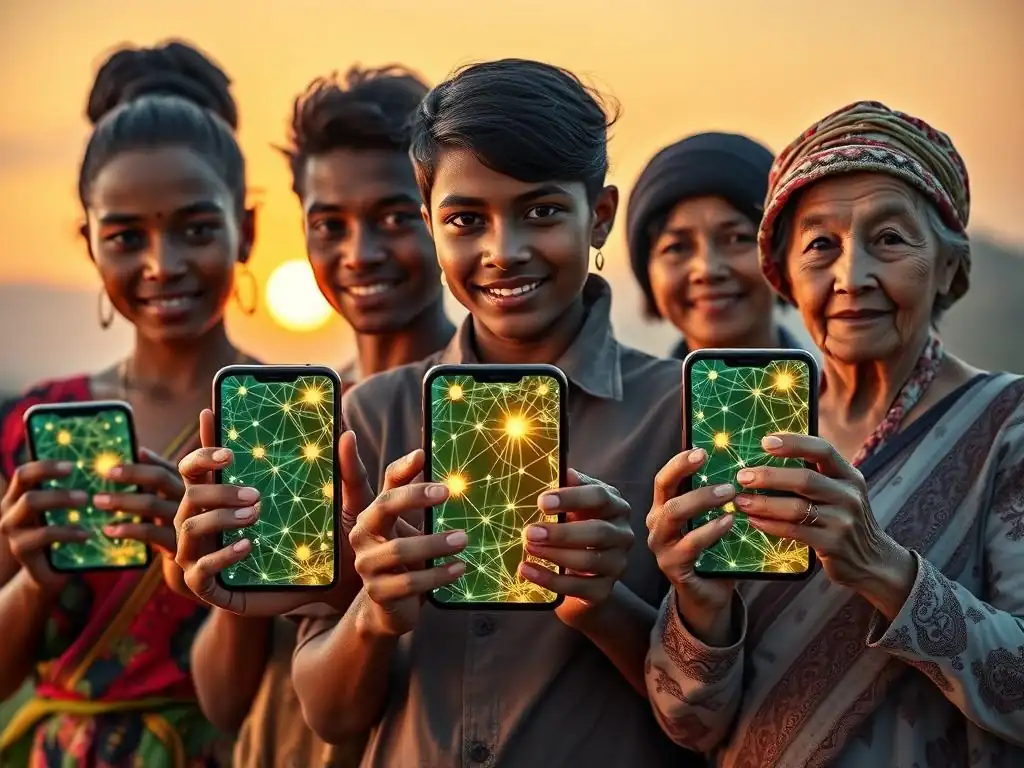
Welcome to Blockchain Trends, your compass in the ever-evolving world of decentralized technologies. Ever wondered how blockchain can truly transform lives beyond the hype? Dive in to explore the surprising ways this technology is being harnessed for social good. Our main feature delves into the groundbreaking potential of blockchain mobile money empowerment finance, revealing how this powerful combination is creating new avenues for financial inclusion. Ready to unlock the future of finance for all? Let's begin!
Mobile Money Meets Blockchain: A Powerful Combination for Financial Empowerment
- Introduction: Unleashing Financial Empowerment Through Blockchain and Mobile Money
- Understanding Mobile Money and its Limitations
- Blockchain Technology: A Solution for Mobile Money's Shortcomings
- Blockchain-Based Mobile Money: Use Cases and Applications
- Benefits of Integrating Blockchain with Mobile Money for Financial Empowerment
- Real-World Examples of Blockchain Mobile Money Initiatives
- Overcoming Challenges and Ensuring Responsible Implementation
- The Future of Blockchain and Mobile Money: A Vision for Financial Inclusion
- Conclusion: Blockchain Mobile Money - Paving the Way for a More Equitable Financial Future
-
Frequently Asked Questions
- How can blockchain technology enhance mobile money platforms?
- What are some potential benefits of integrating blockchain with mobile money for financial inclusion?
- What regulatory challenges might arise when combining blockchain and mobile money?
- How does blockchain's decentralized nature contribute to the empowerment of mobile money users?
- What is the future outlook for blockchain's role in mobile money empowerment finance?
- Final Reflection: Unlocking Financial Futures
- Unlock Financial Freedom: Begin Your Blockchain Journey!
Introduction: Unleashing Financial Empowerment Through Blockchain and Mobile Money
The Untapped Potential of Mobile Money in Emerging Economies
Mobile money has revolutionized access to financial services for millions in emerging economies. Historically, a significant portion of the world's population remained outside the formal financial system, often due to a lack of access to physical bank branches, prohibitive fees, or insufficient identification. Mobile money platforms, leveraging ubiquitous mobile phone networks, provided a crucial entry point, enabling users to store, send, and receive money directly from their phones. This innovation has fostered basic financial inclusion, allowing individuals to manage remittances, pay bills, and even access micro-savings products where traditional banking was unavailable.
The impact of mobile money is particularly profound in regions like Sub-Saharan Africa, where adoption rates are highest. As of recent reports, there are hundreds of millions of registered mobile money accounts globally, with a substantial number being active users conducting billions of transactions annually. This widespread adoption highlights the immense potential of mobile phones as a primary channel for financial services. However, while mobile money has addressed the initial hurdle of access, it faces inherent limitations that hinder true financial empowerment, particularly regarding cost, security, and the range of services available.
The Rise of Blockchain for Inclusive Financial Systems
Blockchain technology, initially known for powering cryptocurrencies like Bitcoin, has evolved far beyond its origins to offer a decentralized, transparent, and secure infrastructure for various applications, including finance. Its core features — immutability, cryptographic security, and distributed ledgers — provide a robust foundation for building more inclusive and efficient financial systems. Unlike traditional centralized databases that are controlled by a single entity, blockchain networks operate on a peer-to-peer basis, reducing reliance on intermediaries and potentially lowering costs.
The potential of blockchain for financial empowerment lies in its ability to create trustless systems where transactions are verified by the network rather than a single authority. This opens up possibilities for providing financial services to individuals and communities previously excluded due to lack of trust in institutions or geographical barriers. By offering features like smart contracts, which automatically execute terms of an agreement, blockchain can enable innovative financial products like decentralized lending, insurance, and asset management, all accessible via a mobile device, paving the way for integrated blockchain mobile money empowerment finance solutions.
Understanding Mobile Money and its Limitations
How Mobile Money Works: A Simplified Overview
Mobile money systems typically operate through a network of agents and mobile phone operators. Users deposit cash with an agent, who then credits their mobile money account electronically. Funds can be sent to other users via their mobile phone numbers, and recipients can withdraw cash from an agent. The system relies on a centralized database maintained by the mobile network operator or a partner financial institution to track balances and transactions.
The process is designed for simplicity and accessibility, requiring only a basic mobile phone and registration. Transactions are usually confirmed via SMS messages. While convenient for basic person-to-person transfers and bill payments, the underlying architecture is similar to traditional centralized finance, albeit delivered through a mobile channel. This centralized control, while facilitating initial rapid deployment, also introduces vulnerabilities and limitations that blockchain technology is well-positioned to address in the pursuit of enhanced financial empowerment.
Challenges Facing Traditional Mobile Money Systems: High Transaction Fees, Security Vulnerabilities, Limited Interoperability
Despite their success, traditional mobile money systems are not without significant drawbacks. Transaction fees, while often lower than traditional bank transfers for small amounts, can still be a substantial burden for low-income users, particularly for cross-border remittances. Fees can vary widely depending on the amount sent and the recipient country, sometimes reaching 5-10% or more, which significantly erodes the value received by families relying on these funds.
Security is another concern. Mobile money accounts can be vulnerable to threats like SIM swap fraud, where malicious actors gain control of a user's phone number and associated accounts. Furthermore, the centralized nature means the entire system is a single point of failure, potentially susceptible to outages or cyberattacks.
Finally, interoperability remains a major hurdle. Sending money between different mobile money providers, or between a mobile money account and a traditional bank account, can be difficult, expensive, or impossible, creating silos that limit the flow of finance and hinder seamless financial interactions, impacting overall blockchain mobile money empowerment finance goals.
Blockchain Technology: A Solution for Mobile Money's Shortcomings
Blockchain's Key Features: Decentralization, Transparency, and Security
Blockchain technology is fundamentally characterized by several key features that make it distinct from traditional centralized systems. Decentralization means that the network is not controlled by a single entity but is distributed across many participants. This distribution enhances resilience and reduces the risk of censorship or single points of failure. Data is recorded on blocks, which are cryptographically linked together in a chain, making past transactions virtually impossible to alter without the consensus of the network.
Transparency is another core feature; on public blockchains, all transactions are visible to anyone, although the identities of participants may be pseudonymous. This open ledger creates an auditable trail, fostering trust and accountability. Cryptographic security, including digital signatures and hashing, ensures the integrity and authenticity of transactions and prevents fraud. These features combined provide a robust foundation for addressing the limitations of existing mobile money systems and building more secure, transparent, and cost-effective finance solutions.
Addressing Mobile Money Challenges with Blockchain Solutions: Reduced Fees, Improved Security, Enhanced Interoperability
Integrating blockchain technology with mobile money offers compelling solutions to the challenges faced by traditional systems. By leveraging blockchain's decentralized nature, transaction costs can be significantly reduced. Instead of relying on multiple intermediaries, transfers can occur directly between users on the blockchain network, often for a fraction of a cent, especially when using efficient blockchain protocols or stablecoins. This cost reduction is crucial for low-value transactions common in emerging markets, boosting financial empowerment.
Blockchain's inherent cryptographic security provides a strong defense against fraud and unauthorized access, complementing or replacing the security measures of traditional mobile money. Transactions are cryptographically signed and verified by the network, making them highly secure. Furthermore, blockchain-based solutions can inherently improve interoperability. Different blockchain mobile money applications can potentially interact with each other or with traditional financial systems through standardized protocols or bridges, breaking down the silos that currently limit the flow of finance and enabling a more connected financial ecosystem beneficial for financial empowerment.
Blockchain-Based Mobile Money: Use Cases and Applications
Cross-Border Payments: Streamlining International Remittances with Blockchain
International remittances are a vital source of income for many families in emerging economies, yet they are often subject to high fees and slow processing times through traditional channels. Blockchain mobile money solutions offer a faster and more affordable alternative. By leveraging blockchain networks, funds can be transferred across borders in minutes, not days, and at significantly lower costs compared to the global average remittance fee, which often exceeds 6%.
This streamlining of cross-border payments directly enhances financial empowerment. Recipients receive more of the sent amount, increasing their disposable income and economic stability. Companies like those built on blockchain infrastructure are specifically targeting this market, enabling individuals to send money from a mobile wallet in one country to a mobile wallet in another, leveraging stablecoins or other cryptocurrencies as a low-cost transfer mechanism, bridging the gap between blockchain mobile money empowerment finance.
Microlending and Financial Inclusion: Democratizing Access to Credit
Access to affordable credit is a major barrier to economic growth and financial empowerment in many parts of the world. Traditional financial institutions often find it difficult or too risky to provide small loans (microlending) to individuals without formal credit history or collateral. Blockchain technology can facilitate new models for microlending accessible via mobile money interfaces.
Using smart contracts, lending terms can be automated and made transparent. Decentralized identity solutions built on blockchain can help establish trust and reputation without relying on traditional credit bureaus. Peer-to-peer lending platforms on blockchain allow individuals to lend directly to others globally, potentially offering more favorable terms than local moneylenders. This democratization of access to credit empowers individuals to start businesses, pay for education, or handle emergencies, fostering economic resilience through blockchain mobile money empowerment finance.
Secure and Transparent Aid Distribution: Ensuring Funds Reach the Intended Recipients
Distributing humanitarian aid efficiently and transparently is a persistent challenge. Traditional methods often involve multiple intermediaries, leading to potential delays, leakage, and lack of visibility on whether funds reach the intended beneficiaries. Blockchain mobile money systems offer a powerful solution for direct, secure, and transparent aid delivery.
By distributing aid funds as digital tokens or stablecoins directly to recipients' blockchain-enabled mobile wallets, organizations can ensure that funds go directly to those in need, bypassing intermediaries. The immutable nature of the blockchain ledger provides a transparent record of every transaction, allowing donors and aid agencies to track the flow of funds and verify delivery. This enhanced transparency and accountability can significantly improve the effectiveness of aid programs and build greater trust among stakeholders, contributing to financial empowerment through accountable finance.
Benefits of Integrating Blockchain with Mobile Money for Financial Empowerment
Enhanced Security and Reduced Fraud in Mobile Money Transactions
Integrating blockchain technology significantly bolsters the security of mobile money transactions. Unlike traditional centralized systems that store user data in a single location, blockchain's distributed ledger makes it extremely difficult for malicious actors to tamper with transaction records. Each transaction is cryptographically secured and validated by multiple participants on the network, making it nearly impossible to forge or reverse without network consensus.
This distributed security model is a strong defense against common threats like database hacks or insider fraud that can affect traditional systems. Furthermore, the use of private and public keys for accessing and authorizing transactions adds another layer of security, placing more control in the hands of the user. This enhanced security builds trust and confidence in blockchain mobile money systems, encouraging wider adoption and contributing to greater financial empowerment.
Lower Transaction Costs and Increased Efficiency for Users
One of the most compelling benefits of combining blockchain and mobile money is the potential for drastically reducing transaction costs. Traditional financial intermediaries, including banks and traditional mobile money operators, incur significant overheads which are passed on to users in the form of fees. Blockchain transactions, particularly on efficient networks, can be processed with minimal fees, often just a fraction of a cent, regardless of the transaction amount or location.
This cost reduction translates directly into increased efficiency and economic benefit for users. For individuals living on tight budgets, saving even a small percentage on each transaction can make a significant difference. Lower costs also make micro-transactions more viable, enabling new business models and encouraging more frequent use of digital finance. The efficiency gains come from automating processes via smart contracts and reducing the need for manual intervention and reconciliation across multiple parties, driving blockchain mobile money empowerment finance.
Greater Transparency and Accountability in Financial Services
Blockchain's inherent transparency provides a level of accountability often lacking in traditional mobile money systems and other financial services. On public blockchains, every transaction is recorded on a public ledger, visible to anyone. While user identities are typically pseudonymous (represented by wallet addresses), the flow of finance is fully auditable.
This transparency is invaluable for purposes like aid distribution, where tracking funds is critical, or for ensuring fair practices in lending and insurance. It allows users and regulators to verify transactions independently, reducing opportunities for corruption or mismanagement. This increased accountability builds trust in the financial system, particularly among populations who may have historically mistrusted traditional institutions, fostering financial empowerment through reliable and verifiable finance.
Increased Access to Financial Services for the Unbanked Population
The combination of widespread mobile phone penetration and blockchain technology holds immense potential to bridge the gap for the approximately 1.4 billion adults globally who remain unbanked (World Bank, 2021). While traditional mobile money has made inroads, the full suite of financial services remains out of reach for many. Blockchain mobile money can provide access to a much broader range of services directly through a mobile device.
Beyond basic payments, this includes access to savings protocols, decentralized lending and borrowing platforms, insurance products, and even investment opportunities, all without needing a traditional bank account or extensive paperwork. By providing a digital identity and a secure, accessible wallet on a mobile phone, blockchain enables individuals to participate more fully in the digital economy, unlocking new opportunities for economic growth and true financial empowerment through accessible finance.
Real-World Examples of Blockchain Mobile Money Initiatives
Case Study 1: Celo - Enabling Mobile-First Decentralized Finance
Celo is a blockchain platform specifically designed with a mobile-first approach, aiming to make decentralized finance (DeFi) tools and services accessible to anyone with a smartphone, particularly in emerging markets. The platform supports stablecoins pegged to major currencies like the US Dollar (cUSD) and Euro (cEUR), which are designed to be easily usable for everyday transactions, much like traditional mobile money.
Celo allows users to send and receive these stablecoins using just a phone number, simplifying the user experience and removing barriers to entry. The platform supports a growing ecosystem of decentralized applications (dApps) for lending, borrowing, saving, and peer-to-peer payments. By focusing on mobile accessibility and stable value, Celo is a prime example of how blockchain technology can be tailored to provide financial empowerment through familiar mobile interfaces, facilitating blockchain mobile money empowerment finance.
Case Study 2: BitPesa (now Chipper Cash) - Facilitating Cross-Border Payments in Africa
BitPesa, now part of Chipper Cash, was an early pioneer in using blockchain technology to facilitate cross-border payments, primarily in Africa. The company leveraged Bitcoin and other cryptocurrencies as a low-cost rail for moving value between different currencies and countries. While the user interface for customers was often similar to traditional remittance services or mobile money, the underlying use of blockchain significantly reduced the costs and time associated with international transfers.
By bypassing traditional correspondent banking networks, BitPesa could offer more competitive exchange rates and lower fees, enabling businesses and individuals to send and receive finance across African borders more efficiently. Chipper Cash has since expanded its services, but the foundation laid by BitPesa demonstrated the practical application of blockchain for improving remittance finance and fostering economic activity across the continent, contributing to financial empowerment.
Case Study 3: World Food Programme Building Blocks - Delivering Humanitarian Aid with Blockchain Transparency
The United Nations World Food Programme (WFP) launched the Building Blocks project to use blockchain technology to manage cash and voucher assistance for refugees. Instead of distributing physical cash or vouchers, the WFP records aid entitlements on a private blockchain network. Refugees can then redeem their entitlements at participating local retailers using iris scanning or other identity verification methods linked to their blockchain identity.
This system significantly enhances transparency and accountability. Every transaction where aid is redeemed is recorded on the blockchain, providing the WFP and donors with a clear, immutable audit trail of exactly how and where funds are spent. This reduces the risk of fraud and ensures that aid reaches the intended beneficiaries more directly. By implementing this system in refugee camps in Jordan and Bangladesh, reaching hundreds of thousands of beneficiaries, the WFP demonstrated how blockchain mobile money principles (using digital identity and value transfer) can improve the efficiency and integrity of humanitarian finance, supporting financial empowerment.
Overcoming Challenges and Ensuring Responsible Implementation
Addressing Regulatory Uncertainty and Compliance Issues
One of the significant challenges in deploying blockchain mobile money solutions is navigating the complex and often uncertain regulatory landscape. Governments and central banks are still developing frameworks for cryptocurrencies, stablecoins, and decentralized finance. Lack of clear regulations can create legal and operational hurdles for companies and organizations attempting to implement blockchain-based financial services.
Ensuring compliance with Know Your Customer (KYC) and Anti-Money Laundering (AML) regulations is critical. While blockchain offers pseudonymity, real-world financial applications require linking digital identities to real-world individuals to prevent illicit activities. Developers and implementers must work closely with regulators to ensure solutions meet compliance requirements while still leveraging the benefits of blockchain for financial empowerment. This often involves building identity verification layers on top of the blockchain protocol.
Ensuring Data Privacy and Security in Blockchain Mobile Money Systems
While blockchain offers inherent security features, implementing blockchain mobile money systems requires careful attention to data privacy and security. Public blockchains are transparent, which means transaction data is visible, even if user identities are pseudonymous. Protecting sensitive user information, such as transaction patterns or personal details linked to a mobile wallet, is paramount.
Solutions must incorporate privacy-enhancing technologies or operate on permissioned blockchains where access is restricted to authorized participants. Furthermore, securing users' private keys – the cryptographic passwords that control access to their funds – is critical. Loss of a private key means permanent loss of funds. Systems must provide user-friendly and secure methods for key management, such as multi-signature wallets or social recovery mechanisms, to prevent catastrophic loss and build trust in blockchain mobile money empowerment finance.
Promoting User Education and Adoption of Blockchain Technology
Adoption of blockchain mobile money solutions in emerging markets requires significant user education. While mobile money is familiar, the underlying blockchain technology can seem complex and intimidating. Users need to understand how blockchain works, the benefits it offers (like lower fees and increased security), and critically, how to secure their digital assets and protect themselves from scams.
Educational initiatives must be tailored to local contexts and languages, using accessible channels like community workshops and mobile-based tutorials. Building trust in the technology and the specific platforms is essential for driving adoption and achieving widespread financial empowerment. This involves demonstrating the reliability and benefits through pilot programs and clear communication about how the system protects user funds and data.
Mitigating Risks Associated with Cryptocurrency Volatility
Many blockchain mobile money solutions utilize cryptocurrencies, which can be highly volatile. Price swings can pose a significant risk to users, particularly those with limited financial resources. While using stablecoins (cryptocurrencies pegged to stable assets like the US Dollar) mitigates this risk considerably, ensuring the stability and reliability of stablecoins themselves is crucial.
Platforms must prioritize the use of robust, well-collateralized stablecoins for everyday transactions to protect users from market fluctuations. For applications involving other cryptocurrencies (e.g., for cross-border transfers using Bitcoin or Ethereum as intermediaries), mechanisms like instant conversion upon receipt can minimize exposure to volatility. Addressing volatility is key to ensuring that blockchain mobile money provides reliable finance and contributes positively to financial empowerment.
The Future of Blockchain and Mobile Money: A Vision for Financial Inclusion
The Convergence of DeFi and Mobile Money for Enhanced Financial Services
The future of blockchain mobile money lies in the increasing convergence of decentralized finance (DeFi) protocols with user-friendly mobile interfaces. Imagine mobile money apps that not only allow basic payments but also seamlessly connect users to DeFi services like yield farming (earning interest on savings), decentralized exchanges (trading assets), or insurance pools, all with a few taps on their phone.
This convergence will unlock a new level of financial empowerment. Users in emerging markets, who currently have limited access to traditional banking products, could potentially access sophisticated financial tools previously available only in developed markets. This could include earning passive income on savings, accessing collateralized loans without intermediaries, or pooling resources for community-based insurance, all within a secure and transparent blockchain framework accessible via their mobile phone, driving blockchain mobile money empowerment finance to new heights.
The Role of Blockchain in Building More Resilient and Inclusive Financial Systems
Blockchain technology is set to play a fundamental role in building financial systems that are not only more inclusive but also more resilient. By distributing financial infrastructure across a decentralized network, blockchain reduces reliance on single points of control or failure. This makes the system more robust against outages, censorship, or targeted attacks, ensuring continued access to finance even in challenging environments.
Furthermore, blockchain's ability to create immutable records and automate processes via smart contracts builds a foundation of trust and transparency that can underpin more inclusive financial institutions. This resilience and transparency are crucial for fostering long-term economic stability and growth, particularly in regions prone to economic volatility or institutional instability, ultimately contributing to widespread financial empowerment.
The Potential for Blockchain to Transform Financial Empowerment in Emerging Markets
The potential for blockchain to transform financial empowerment in emerging markets is immense. By addressing the core limitations of traditional mobile money – high costs, limited security, and lack of interoperability – while simultaneously unlocking access to a wider range of financial services through DeFi, blockchain can significantly improve the economic lives of billions.
From enabling cheaper and faster remittances that put more money in the hands of recipients, to providing access to credit and savings tools that foster entrepreneurship and resilience, to ensuring transparent and accountable aid distribution, blockchain mobile money is paving the way for a more equitable global financial system. The continued innovation and responsible implementation of this technology hold the key to unlocking unprecedented levels of financial empowerment through accessible, secure, and efficient finance for everyone, everywhere.
Conclusion: Blockchain Mobile Money - Paving the Way for a More Equitable Financial Future
Frequently Asked Questions
How can blockchain technology enhance mobile money platforms?
Blockchain offers enhanced security and transparency to mobile money transactions. It can also reduce transaction costs and improve cross-border payments by removing intermediaries.
What are some potential benefits of integrating blockchain with mobile money for financial inclusion?
Integrating blockchain can bring financial services to unbanked populations, providing access to secure and transparent transactions. This fosters economic empowerment and reduces reliance on traditional banking systems.
What regulatory challenges might arise when combining blockchain and mobile money?
Governments need to develop clear regulations around data privacy, security, and compliance for blockchain-based mobile money systems. Navigating these regulations is crucial for widespread adoption and trust.
How does blockchain's decentralized nature contribute to the empowerment of mobile money users?
Decentralization reduces reliance on central authorities, giving users greater control over their funds. It also fosters transparency and reduces the risk of censorship or manipulation.
What is the future outlook for blockchain's role in mobile money empowerment finance?
The future looks promising, with potential for increased adoption and innovation. Blockchain can transform mobile money into a powerful tool for financial inclusion and economic growth, especially in developing countries.
Final Reflection: Unlocking Financial Futures
The convergence of mobile money and blockchain technology, as explored throughout this article, isn't just a technological advancement; it's a fundamental shift in the landscape of financial empowerment. The potential to reach the unbanked and underbanked populations with secure, transparent, and accessible financial services is no longer a distant dream, but a tangible reality being shaped by these innovative solutions.
This fusion is more than just a trend; it's a catalyst for social and economic transformation. Witnessing the potential of blockchain to democratize finance and provide individuals with greater control over their assets is profoundly inspiring. It reminds us that technology, when harnessed ethically and strategically, can be a powerful force for good. Financial inclusion is not just about access to banking services; it's about empowering individuals to participate fully in the economy and build a better future for themselves and their families.
As we look ahead, let us all consider how we can contribute to this movement. Whether you're a developer, an entrepreneur, a policymaker, or simply an engaged citizen, reflect on how you can leverage the power of blockchain and mobile money to create a more equitable and financially inclusive world. The future of finance is being written now, and your contribution can help ensure that it's a future where everyone has the opportunity to thrive.
Unlock Financial Freedom: Begin Your Blockchain Journey!
Thank you for exploring the powerful intersection of mobile money and blockchain with us. We hope this article has shown how this innovative combination can promote greater financial empowerment worldwide. Ready to take the next step?
Here are some actionable ways you can get involved and deepen your understanding of this transformative technology:
- Research local mobile money providers that are integrating or exploring blockchain technology. Learn about their models and consider how this innovation could benefit your community.
- Share this article with friends or family members who might find it helpful, encouraging discussions and awareness.
- Consider contributing to open-source blockchain projects focused on financial inclusion to help improve the technology's development and accessibility.
What aspects of blockchain and mobile money excite you the most? How might you use these tools in your community? Share your ideas in the comments below!
Leave a Reply