
BlockchainBased Renewable Energy Certificates (RECs): A New Era of Accountability


Welcome to Blockchain Trends, your guide to understanding the real-world impact of blockchain technology.
Dive into the possibilities as we explore how blockchain is revolutionizing industries beyond cryptocurrency. Today, we're focusing on a critical application in the environmental sector: Blockchain RECs accountability tracking. Can blockchain finally bring true transparency and verifiability to renewable energy certificates? Let's uncover the innovative ways this technology is shaping a greener future and the challenges that lie ahead...
Blockchain-Based Renewable Energy Certificates (RECs): A New Era of Accountability
- Introduction: Revolutionizing Renewable Energy with Blockchain RECs
- Understanding Renewable Energy Certificates (RECs)
- Blockchain's Transformative Impact on REC Accountability
- Benefits of Blockchain-Based RECs for Stakeholders
- Real-World Applications of Blockchain RECs
- Overcoming Challenges in Implementing Blockchain RECs
- The Future of Blockchain RECs: A Vision for Sustainable Energy
- Conclusion: Blockchain RECs - Driving Accountability and Sustainability
-
Frequently Asked Questions
- What are Renewable Energy Certificates (RECs) and why are they important?
- How does blockchain technology enhance the accountability of RECs?
- What are some potential benefits of using blockchain for REC tracking?
- What are the key challenges to widespread adoption of blockchain-based REC systems?
- How might blockchain-based REC systems impact the future of renewable energy markets?
- Final Reflection: Embracing Transparency in Renewable Energy
- Empower Your Energy Future: Start Now!
Introduction: Revolutionizing Renewable Energy with Blockchain RECs
The Growing Need for Transparent Renewable Energy Tracking
The global push towards decarbonization and sustainable energy sources has significantly amplified the demand for verifiable renewable energy consumption. Businesses, governments, and individuals are increasingly seeking ways to prove their commitment to clean energy, often through the purchase and retirement of Renewable Energy Certificates (RECs). However, the traditional systems for tracking and verifying these certificates face significant challenges, including issues of double-counting, fraud, and lack of transparency.
Ensuring that every MWh of renewable energy generated and claimed corresponds to a unique, retired certificate is paramount for maintaining the integrity of the renewable energy market and fostering genuine environmental impact. The current landscape necessitates a robust, transparent, and reliable method for renewable energy tracking to meet escalating market demands and regulatory expectations.
This growing need for precision and trustworthiness in energy attribute tracking highlights the limitations of legacy systems. Manual processes, fragmented databases, and reliance on intermediaries can lead to inefficiencies and vulnerabilities that undermine confidence in the market. Stakeholders require a system that provides indisputable proof of renewable energy generation and consumption, allowing for accurate reporting and credible claims.
Without such a system, the risk of greenwashing or misrepresenting energy sourcing increases, potentially slowing down investment and adoption of renewable technologies. The imperative is clear: develop a tracking mechanism that offers unparalleled transparency and accountability from generation to retirement, ensuring the credibility of every renewable energy claim.
Introducing Blockchain Technology for Enhanced REC Management
Blockchain technology, renowned for its distributed, immutable ledger capabilities, presents a compelling solution to the inherent challenges of traditional REC systems. By providing a decentralized and tamper-proof record of transactions, blockchain can fundamentally transform how RECs are created, tracked, traded, and retired. Each step in the lifecycle of a REC – from the initial generation of renewable energy to its eventual claim by an end-user – can be recorded on a blockchain, creating a permanent and verifiable history.
This distributed ledger approach eliminates the need for a single central authority, reducing points of failure and increasing overall system resilience. The transparency inherent in blockchain allows participants to verify the authenticity and status of any REC on the network, significantly mitigating risks like double-selling or fraudulent issuance.
The integration of blockchain technology into REC management systems promises a new level of efficiency and trust. Smart contracts, self-executing contracts with the terms of the agreement directly written into code, can automate many of the manual processes involved in REC handling, such as issuance, transfer, and retirement. This automation not only speeds up transactions but also reduces administrative costs and the potential for human error.
Furthermore, the cryptographic security underpinning blockchain ensures that once a transaction is recorded, it cannot be altered or deleted, providing an immutable audit trail. This enhanced security and automation pave the way for a more dynamic, reliable, and accessible REC market, ultimately supporting the broader goals of renewable energy adoption and climate action.
Understanding Renewable Energy Certificates (RECs)
What are Renewable Energy Certificates and How Do They Work?
Renewable Energy Certificates (RECs), also known as Renewable Electricity Certificates, Green Tags, or Tradable Renewable Certificates (TRCs), are market-based instruments that represent the property rights to the environmental, social, and other non-power attributes of one megawatt-hour (MWh) of electricity generated from a renewable energy source. When one MWh of renewable electricity is produced and delivered to the grid, a corresponding REC is created. These certificates can then be bought and sold separately from the physical electricity itself.
This decoupling allows entities that cannot directly purchase renewable electricity (perhaps due to location or grid constraints) to still support renewable generation and make claims about their renewable energy use by purchasing and retiring RECs. The retirement of a REC signifies that its associated environmental attributes have been claimed by a specific entity and cannot be resold, preventing double-counting.
The operational flow typically involves a renewable energy generator registering with a tracking system. As they produce electricity, the system verifies the generation and issues an equivalent number of RECs. These RECs are then tracked as they are traded through brokers or directly between parties.
The final step is retirement, where a REC is permanently removed from circulation in the tracking system, marking the completion of the transaction and allowing the holder to legitimately claim the use of renewable energy. This system is designed to incentivize renewable energy production by providing generators with an additional revenue stream beyond the sale of the physical electricity. Market value of RECs fluctuates based on supply, demand, location, and the type of renewable source.
The Limitations of Traditional REC Systems: Challenges and Concerns
Traditional REC tracking systems, often relying on centralized databases and manual processes, face several significant limitations that hinder their efficiency and trustworthiness. One major challenge is the potential for double-counting or double-selling. Since certificates are tracked in potentially disparate systems or through manual spreadsheets, there's a risk that the same MWh of renewable energy could be claimed by multiple parties.
For instance, reports have indicated instances where a generator might sell the physical electricity and the associated REC to different parties without proper tracking, or where a REC is sold to two different buyers before retirement. This undermines the integrity of the market and the credibility of renewable energy claims.
Furthermore, traditional systems can be inefficient and costly due to the involvement of multiple intermediaries, manual verification steps, and the administrative burden of managing large volumes of certificates. Transaction delays are common, and the lack of real-time visibility makes it difficult for market participants to quickly verify the authenticity and ownership history of a REC. Ensuring robust Blockchain RECs accountability tracking in such fragmented systems is challenging.
The opacity of these systems also makes it difficult for consumers and investors to have full confidence that their purchase genuinely supports new renewable energy generation or displaces fossil fuel use. These limitations highlight the need for a more secure, transparent, and automated approach to REC management.
Key Issues in Current REC Tracking and Verification Processes
The current processes for tracking and verifying RECs suffer from several key issues that impact market efficiency and trust. A primary concern is the fragmentation of tracking systems. Different regions or countries often use separate, incompatible databases, making cross-border trading and verification complex and prone to errors. This lack of interoperability creates silos and hinders the development of a truly global, integrated renewable energy market. Verifying the origin and attributes of a REC across these disparate systems is cumbersome and requires significant manual effort, increasing operational costs and the likelihood of discrepancies.
Another critical issue is the reliance on manual audits and third-party verification bodies, which, while necessary, can be slow and expensive. The process of ensuring that generation data is accurate, that certificates are correctly issued, and that retirements are properly recorded is labor-intensive. This reliance on intermediaries introduces potential points of failure or manipulation.
The lack of real-time data flow from generators to tracking systems also means there can be delays in certificate issuance, impacting market liquidity and responsiveness. Addressing these issues in Blockchain RECs accountability tracking is crucial for scaling the renewable energy market effectively and ensuring that every REC represents a verified unit of clean energy contribution.
Blockchain's Transformative Impact on REC Accountability
How Blockchain Enables Secure and Transparent REC Tracking
Blockchain technology fundamentally changes the paradigm of REC tracking by providing a shared, distributed ledger that is transparent to all authorized participants and secured by cryptographic principles. When a MWh of renewable energy is generated, a corresponding REC can be tokenized on the blockchain. This creates a unique digital asset whose entire lifecycle – from issuance by the generator, through any subsequent trades, to its final retirement by the end-user – is recorded as a sequence of immutable transactions on the ledger.
Each transaction is time-stamped and cryptographically linked to the previous one, forming a chain that is virtually impossible to alter without being detected. This inherent structure ensures that the history of every REC is fully transparent and verifiable by anyone with access to the network, providing unprecedented Blockchain RECs accountability tracking.
This distributed and transparent nature eliminates the need for a single central database, significantly reducing the risk of data manipulation or loss. Participants on the network, such as generators, brokers, buyers, and auditors, can access the same real-time information about the status and ownership of RECs. This shared source of truth drastically improves confidence in the system.
Furthermore, the use of public or permissioned blockchains allows for varying degrees of transparency, ensuring that sensitive commercial data is protected while the essential information about the REC's origin, ownership, and retirement status remains accessible and verifiable. The result is a secure, efficient, and highly transparent system for managing renewable energy attributes.
Immutable Records: Ensuring Data Integrity in Renewable Energy Certification
One of the most powerful features of blockchain for REC management is the immutability of its records. Once a transaction is added to the blockchain – for example, the issuance of a REC based on verified generation data, or the transfer of ownership from one party to another – it is permanently recorded on the distributed ledger across multiple nodes. This means that the historical data associated with a REC, including its generation source, volume, date, and ownership chain, cannot be retrospectively altered or deleted.
This tamper-proof quality is critical for ensuring data integrity in renewable energy certification. It provides an undeniable audit trail, making it significantly harder for fraudulent activities like double-counting or creating fake certificates to occur undetected.
This immutability ensures that every claim made based on a blockchain-based REC is backed by a verifiable, unalterable record on the ledger. Auditors can easily trace a REC back to its point of origin and verify its entire transaction history, providing a level of confidence that is difficult to achieve with traditional systems.
For instance, if a company claims to have used 100 MWh of solar energy based on retired RECs, the blockchain record provides irrefutable proof of the issuance and retirement of exactly 100 RECs originating from verifiable solar sources. This enhanced data integrity is fundamental to building trust in the renewable energy market and underpinning credible Blockchain RECs accountability tracking.
Decentralized Verification: Reducing Fraud and Enhancing Trust in REC Markets
Blockchain enables a shift from centralized verification processes to a more decentralized model, which significantly reduces the potential for fraud and enhances trust within REC markets. In traditional systems, verification often relies on a single entity or a small group of intermediaries to validate generation data, issue certificates, and track ownership. This creates potential single points of failure and opportunities for collusion or error.
With a blockchain-based system, the validation and verification processes can be distributed across the network participants. For example, generation data from smart meters can be securely transmitted and recorded on the blockchain, and smart contracts can automatically issue RECs based on pre-defined, transparent rules once the data is validated by network consensus mechanisms.
This decentralized approach means that verifying the authenticity and status of a REC does not depend on trusting a single organization; instead, it relies on the collective security and transparency of the blockchain network. The consensus mechanisms used by the blockchain (such as Proof-of-Authority or Proof-of-Stake in permissioned networks often used for enterprise applications) ensure that transactions are validated by multiple parties before being added to the ledger.
This distributed validation process makes it extremely difficult for a single malicious actor or even a small group to manipulate the system or introduce fraudulent certificates. The transparency of the ledger allows any participant to audit the transaction history, further enhancing trust and providing robust Blockchain RECs accountability tracking.
Benefits of Blockchain-Based RECs for Stakeholders
Increased Transparency for Consumers and Investors
Blockchain-based RECs offer unprecedented transparency for consumers and investors who are increasingly demanding verifiable proof of sustainable practices. With traditional systems, end-users often receive a certificate or report from a broker or utility without a direct way to independently verify the origin and history of the purchased RECs.
Blockchain changes this by providing a public or permissioned ledger where the entire lifecycle of a REC is recorded. Consumers purchasing renewable energy or RECs can potentially scan a QR code on their energy bill or product packaging and be directed to a blockchain explorer that shows the specific RECs retired on their behalf, including details about the renewable power plant, the date of generation, and the date of retirement.
This level of granular transparency builds trust and empowers stakeholders to make informed decisions. Investors focused on Environmental, Social, and Governance (ESG) criteria can use blockchain data to verify the authenticity and impact of a company's renewable energy claims, reducing the risk of investing in companies engaged in greenwashing.
For example, a company reporting its Scope 2 emissions reduction based on REC purchases can provide auditors and investors with direct access to the immutable blockchain records of those retired RECs, offering irrefutable evidence. This enhanced visibility strengthens the credibility of renewable energy investments and corporate sustainability efforts, driving demand for genuine clean energy.
Streamlined REC Trading and Reduced Transaction Costs
The use of blockchain technology can significantly streamline the trading of RECs and reduce associated transaction costs compared to traditional, manual processes involving multiple intermediaries. By tokenizing RECs on a blockchain, they become digital assets that can be transferred directly between parties using smart contracts.
This peer-to-peer transfer capability eliminates the need for brokers or clearinghouses in many transactions, or at least reduces their administrative burden. Smart contracts can automate the execution of trades, ensuring that funds are exchanged simultaneously with the transfer of REC ownership, reducing counterparty risk and speeding up settlement times from days or weeks to minutes.
Estimates suggest that automating processes and reducing intermediaries through blockchain could potentially lower the administrative and transaction costs associated with REC trading by a notable percentage, though specific figures vary widely depending on the market and current practices. This cost reduction makes the REC market more accessible and efficient, encouraging greater participation from a wider range of buyers and sellers, including smaller generators and individual consumers. The increased efficiency in Blockchain RECs accountability tracking facilitates faster market response to supply and demand changes, leading to a more dynamic and liquid market.
Improved Regulatory Compliance and Auditing with Blockchain
Regulatory compliance and auditing processes for renewable energy claims and REC markets are significantly improved through the implementation of blockchain technology. The immutable and transparent nature of the blockchain ledger provides regulators and auditors with a reliable and easily accessible source of truth for verifying compliance. Every transaction, issuance, transfer, and retirement of a REC is recorded on the chain, creating a comprehensive and tamper-proof audit trail that can be accessed and verified in near real-time. This drastically reduces the time and effort required for audits, which traditionally involve sifting through disparate databases and paper records.
Regulatory bodies can potentially gain authorized access to monitor REC activities on the blockchain network, allowing for proactive oversight and identification of potential issues. For example, regulators could set up smart contracts to flag unusual transaction patterns or verify that issued RECs match reported generation data from connected meters.
The ease of access to verifiable data simplifies reporting requirements for market participants and provides regulators with the confidence that the data they are reviewing is accurate and has not been tampered with. This enhanced capability for Blockchain RECs accountability tracking supports stricter enforcement of market rules and ensures the integrity of environmental claims.
Enhanced Traceability of Renewable Energy Sources
Blockchain technology provides enhanced traceability of renewable energy sources, allowing market participants to not only track the quantity of renewable energy but also its specific origin and attributes. When a REC is issued on the blockchain, it can be linked to detailed metadata about the energy source, such as the type of renewable technology (solar, wind, hydro), the specific power plant's location, capacity, and even the date and time of generation.
This granular data is recorded alongside the REC token on the immutable ledger, creating a permanent record of its provenance. This goes beyond simply tracking certificate ownership; it tracks the source of the renewable energy itself.
For instance, a company wishing to power its operations specifically with energy from a local wind farm can purchase RECs on the blockchain that are explicitly tagged with the metadata of that particular facility. This level of traceability allows buyers to align their energy purchases with specific sustainability goals or preferences, such as supporting local renewable projects or specific technologies.
It also enables more precise reporting on the geographic and technological mix of renewable energy consumption. This detailed Blockchain RECs accountability tracking from source to retirement provides a level of transparency and verifiability previously unattainable in traditional systems, adding significant value to the environmental attributes of renewable energy.
Real-World Applications of Blockchain RECs
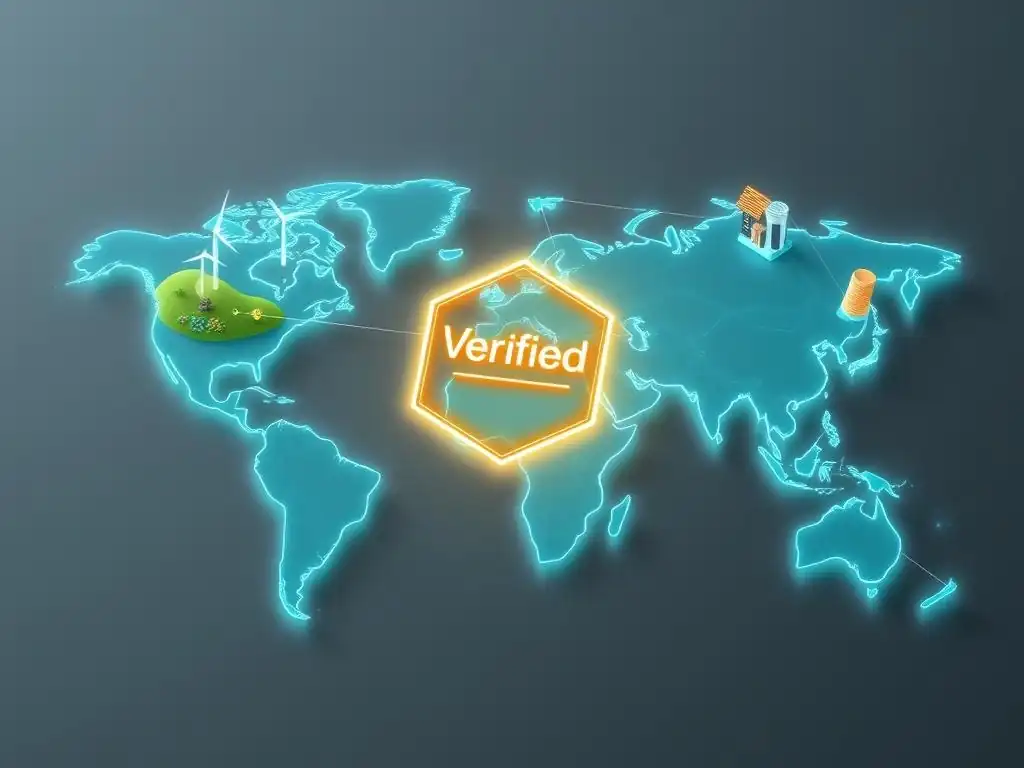
Case Study: Energy Web's Blockchain-Based REC System
One prominent example of blockchain being applied to RECs is the work done by Energy Web (EW). Energy Web is building a digital operating system for the energy sector, with a strong focus on using blockchain technology to track and manage energy assets, including RECs. Their Energy Web Zero (EW Zero) platform, for instance, aims to provide a marketplace for sourcing verified, low-carbon electricity using blockchain-based solutions.
EW's approach involves creating digital identities for energy assets and market participants on their public, permissioned blockchain, the Energy Web Chain. This allows for the tokenization of energy attributes like RECs, enabling their secure and transparent tracking from generation to consumption.
Energy Web has collaborated with numerous utilities, grid operators, and corporations globally to pilot and implement their solutions. Projects have involved tracking renewable energy generation from specific assets and issuing corresponding digital certificates on the blockchain. This allows corporate buyers, for example, to directly source and verify renewable electricity purchases with a high degree of confidence.
The system provides immutable records of generation, issuance, trading, and retirement, offering robust Blockchain RECs accountability tracking. While specific transaction volumes on EW Zero fluctuate, the platform demonstrates the technical feasibility and market potential of using blockchain for reliable and transparent renewable energy attribute tracking at scale.
Pilot Projects and Initiatives Exploring Blockchain for Renewable Energy
Beyond Energy Web, numerous pilot projects and initiatives are exploring the use of blockchain for renewable energy tracking and REC management worldwide. Several utilities and energy companies in Europe, North America, and Asia have launched pilot programs to test blockchain platforms for issuing and tracking RECs or similar energy attribute certificates.
For example, some projects focus on peer-to-peer energy trading where electricity generated from rooftop solar panels is automatically recorded on a blockchain, and associated RECs are issued and potentially traded directly with neighbors. Other initiatives involve using blockchain to track the origin of electricity from larger renewable plants for corporate power purchase agreements.
One pilot might involve connecting smart meters at a wind farm to a blockchain platform, where generation data is automatically fed and verified, triggering the issuance of tokenized RECs via smart contracts. These RECs can then be tracked as they are sold to corporate buyers and eventually retired on the blockchain.
These projects aim to demonstrate the efficiency gains, cost reductions, and enhanced transparency offered by blockchain compared to existing systems. While many are still in experimental phases, the proliferation of these pilots indicates growing industry interest in leveraging blockchain for improved Blockchain RECs accountability tracking and overall renewable energy market integrity.
The Potential for Global Adoption of Blockchain-Based REC Systems
The successful piloting and implementation of blockchain-based REC systems in various regions highlight their significant potential for global adoption. The inherent benefits of transparency, immutability, and efficiency address universal challenges faced by renewable energy markets worldwide. A global standard for blockchain-based RECs could facilitate seamless cross-border trading and enhance the liquidity of the market.
Imagine a system where RECs issued in one country can be easily verified and retired by a company operating in another, all on a common or interoperable blockchain network. This would require collaboration among international bodies, national regulators, and industry participants to establish common protocols and standards.
The increasing corporate demand for renewable energy and the associated need for credible tracking mechanisms are powerful drivers for adoption. As more large multinational corporations commit to 100% renewable energy goals, they require reliable and scalable solutions for sourcing and verifying renewable electricity globally. Blockchain offers a pathway to achieve this with enhanced confidence. While challenges related to regulation and interoperability remain, the foundational technology provides a robust framework for building a global, interconnected system for Blockchain RECs accountability tracking, accelerating the transition to a sustainable energy future on a global scale.
Overcoming Challenges in Implementing Blockchain RECs
Addressing Scalability Concerns in Blockchain REC Networks
One of the primary technical challenges in implementing blockchain-based REC systems, particularly for large-scale applications tracking millions or billions of MWhs annually, is scalability. Public blockchains like early versions of Ethereum faced limitations in transaction throughput, potentially leading to network congestion and high transaction fees (gas costs) when handling a high volume of transactions. For a REC system, which could involve frequent issuance, trading, and retirement events, high transaction volume is anticipated. This could impact the speed and cost-effectiveness of the system if not adequately addressed.
Solutions to enhance scalability in blockchain networks are actively being developed and implemented. These include using alternative consensus mechanisms (like Proof-of-Stake or Proof-of-Authority which are less energy-intensive and can offer higher transaction speeds), layer-2 scaling solutions (which process transactions off the main chain before settling them on the mainnet), and specialized blockchain architectures designed for high throughput (such as sharding or directed acyclic graphs - DAGs).
For enterprise-grade REC systems, permissioned blockchains or consortia chains are often favored, as they can be designed with higher transaction capacities from the outset and offer predictable transaction costs. Implementing efficient data structures and optimizing smart contract code are also crucial steps to ensure that a Blockchain RECs accountability tracking system can handle the required volume of transactions efficiently.
Implementing blockchain-based REC systems requires navigating complex regulatory hurdles and legal frameworks that vary significantly across different jurisdictions. Current regulations governing energy markets and environmental commodities were established long before the advent of blockchain technology. Questions arise regarding the legal status of tokenized RECs, the recognition of blockchain records as official proof of ownership or retirement, and the compliance requirements for platforms operating these systems. For instance, how do existing energy market regulations apply to decentralized trading platforms? What are the data privacy implications under regulations like GDPR when recording potentially sensitive generation or consumption data on a ledger?
Addressing these challenges necessitates close collaboration between blockchain developers, energy companies, and regulatory bodies. Developing clear legal and regulatory frameworks that acknowledge and integrate blockchain technology is crucial for widespread adoption. This might involve updating existing laws, issuing specific guidance on blockchain use in energy markets, or creating new regulatory categories for digital energy assets.
Establishing clear rules around data ownership, system governance, and liability will build confidence among market participants and ensure that Blockchain RECs accountability tracking systems operate within legal boundaries. Pilot projects often serve as valuable sandboxes for regulators to understand the technology and inform policy development.
Ensuring Interoperability with Existing Renewable Energy Infrastructure
A significant practical challenge is ensuring interoperability between new blockchain-based REC systems and existing renewable energy infrastructure, including power plants, smart meters, grid operators' systems, and legacy tracking databases. Renewable energy generation data needs to be securely and reliably fed into the blockchain platform to trigger REC issuance. This requires robust data integration layers and potentially the deployment of secure IoT devices at generation sites. Connecting these physical assets and data streams to the digital blockchain ledger is a complex undertaking involving hardware, software, and communication protocols.
Furthermore, achieving seamless interaction between different blockchain platforms or between blockchain systems and traditional databases is essential for a truly integrated market. Developing standards for data formatting, token specifications (e.g., using established token standards like ERC-721 or ERC-1155 for unique asset representation), and API access will be critical.
Initiatives like the Energy Web Decentralized Operating System (EW-DOS) aim to provide a suite of open-source tools and standards to facilitate this interoperability. Ensuring that Blockchain RECs accountability tracking systems can easily exchange information with existing energy infrastructure and other market platforms is key to avoiding new data silos and maximizing the benefits of the technology.
Data Privacy and Security Considerations for Blockchain RECs
While blockchain offers enhanced security through cryptography and immutability, implementing blockchain-based REC systems also introduces specific data privacy and security considerations. Public blockchains, while transparent, may expose sensitive commercial data (like transaction volumes or pricing) if not carefully designed. Permissioned blockchains offer more control over who can access the data, but require robust governance models to prevent centralized control. Ensuring that only necessary data is recorded on the chain and that sensitive information is handled off-chain or through privacy-preserving techniques is crucial. For instance, detailed generation data linked to a specific small generator might be considered private.
Security is paramount in preventing unauthorized access, manipulation, or denial-of-service attacks on the blockchain network or associated infrastructure. This includes securing the nodes participating in the network, protecting the private keys used to sign transactions, and ensuring the integrity of the data fed into the blockchain from external sources (the "oracle problem"). Smart contracts, while powerful, can also contain vulnerabilities if not rigorously audited. Implementing strong security protocols, conducting thorough smart contract audits, and establishing clear governance and incident response plans are essential to build and maintain a secure and trusted Blockchain RECs accountability tracking system.
The Future of Blockchain RECs: A Vision for Sustainable Energy
The Role of Blockchain in Accelerating the Transition to Renewable Energy
Blockchain technology is poised to play a significant role in accelerating the global transition to renewable energy by addressing key market frictions and enhancing confidence. By providing a trusted, transparent, and efficient system for tracking and verifying renewable energy attributes, blockchain can unlock new investment and participation in the renewable energy market.
Increased transparency and reduced fraud risks make RECs a more credible instrument for corporations and individuals seeking to reduce their carbon footprint, thereby increasing demand. The streamlined trading and lower transaction costs enabled by blockchain can make the market more accessible and liquid, providing better price signals for renewable energy generation.
Furthermore, blockchain can facilitate innovative financing mechanisms for renewable projects, such as tokenizing project equity or future REC streams. This could broaden the pool of investors beyond traditional financial institutions. By making the value of renewable energy attributes more tangible and tradable, blockchain helps internalize the environmental benefits of clean energy, providing additional economic incentives for generators. This combination of enhanced market efficiency, increased trust, and potential for new financing models positions blockchain as a key enabler for mobilizing the capital and participation needed to accelerate the deployment of renewable energy technologies worldwide and improve Blockchain RECs accountability tracking.
Integration with Smart Grids and IoT Devices for Real-Time Tracking
A future vision for blockchain-based RECs involves seamless integration with smart grids and Internet of Things (IoT) devices for real-time tracking and verification of renewable energy generation and consumption. Smart meters installed at generation sites and consumption points can securely and automatically record energy flows.
This data can then be fed directly into the blockchain network, triggering the automated issuance of RECs as energy is generated and potentially facilitating real-time retirement as renewable energy is consumed locally or matched virtually. This removes the need for manual data entry and periodic reporting, providing near-instantaneous updates on the status of renewable energy generation and attribute ownership.
This real-time data flow enhances the accuracy and timeliness of Blockchain RECs accountability tracking. It allows for more dynamic energy management, potentially enabling applications like automated peak demand management using local renewable generation or verifying the use of renewable energy for specific tasks (e.g., charging an electric vehicle with solar power). The combination of blockchain's secure ledger and the granular data from smart grids and IoT creates a powerful system for monitoring and verifying the flow of renewable energy and its associated attributes throughout the network, moving towards a more responsive and verifiable energy system.
Potential for Tokenization of RECs and New Investment Opportunities
The tokenization of RECs on a blockchain opens up exciting possibilities for new investment opportunities and market liquidity. Tokenized RECs are digital assets that can be easily divisible and traded on blockchain-based platforms.
This divisibility means that even small amounts of renewable energy attributes can be represented and traded, potentially allowing smaller generators or even individuals with rooftop solar to participate more easily in the REC market. The ease of transfer and potential for fractional ownership through tokenization can increase market liquidity and make RECs a more attractive asset class for a wider range of investors, including those interested in green finance or digital assets.
Furthermore, tokenization can facilitate the bundling of RECs with other digital assets or the creation of complex financial instruments based on renewable energy attributes. This could include derivatives, futures, or other structured products that allow investors to hedge against energy price volatility or invest in specific renewable energy profiles.
The transparency of the blockchain also provides investors with confidence in the underlying asset's authenticity. While still an emerging area, the tokenization of RECs has the potential to democratize access to the renewable energy market and unlock new avenues for financing and investment in sustainable energy projects, further enhancing Blockchain RECs accountability tracking by embedding value and ownership clearly on-chain.
Conclusion: Blockchain RECs - Driving Accountability and Sustainability
Summarizing the Benefits of Blockchain for Renewable Energy Certification
The integration of blockchain technology into Renewable Energy Certificate systems offers a transformative solution to the inherent limitations of traditional methods. By leveraging a distributed, immutable ledger, blockchain provides unparalleled transparency, security, and efficiency throughout the REC lifecycle. The technology enables secure and transparent tracking from generation to retirement, ensures data integrity through immutable records, and reduces fraud risks via decentralized verification. These core capabilities directly address critical issues like double-counting and lack of trust that have plagued legacy systems.
The benefits extend to all stakeholders. Consumers and investors gain increased confidence through verifiable, transparent data on renewable energy claims. Market participants benefit from streamlined trading processes and potentially reduced transaction costs. Regulators and auditors find compliance and verification significantly simplified due to the availability of a comprehensive, tamper-proof audit trail. Ultimately, blockchain enhances the traceability of renewable energy sources, providing granular detail about the origin and attributes of the clean energy being tracked. This robust Blockchain RECs accountability tracking is crucial for building a trustworthy and efficient renewable energy market.
Blockchain RECs: A Key Enabler for a More Sustainable Future
Blockchain-based RECs are not just an incremental improvement; they represent a fundamental shift towards a more accountable and sustainable energy future. By providing a credible mechanism for tracking and verifying renewable energy use, blockchain strengthens the environmental integrity of the REC market, ensuring that investments in RECs genuinely contribute to displacing fossil fuels and supporting clean energy development. This enhanced accountability is essential for mobilizing the significant investment required to transition global energy systems towards renewable sources.
The potential for integration with smart grids and IoT devices promises real-time tracking and dynamic energy management, further optimizing the use of renewable resources. The tokenization of RECs opens up new possibilities for market participation and innovative financing, democratizing access and increasing liquidity. As regulatory frameworks evolve and interoperability standards are established, blockchain-based REC systems are poised for wider adoption, becoming a critical piece of the digital infrastructure needed for a decentralized, decarbonized, and sustainable energy ecosystem. The technology provides the necessary foundation for reliable Blockchain RECs accountability tracking at the scale required for a global energy transition.
Call to Action: Embracing Blockchain for Enhanced Renewable Energy Accountability
The evidence suggests that blockchain technology offers a powerful pathway to enhance accountability and efficiency in the renewable energy market. It's time for stakeholders across the energy sector – including generators, utilities, corporations, policymakers, and technology providers – to actively explore and embrace the potential of blockchain-based REC systems. Engaging in pilot projects, contributing to the development of open standards, and advocating for supportive regulatory frameworks are crucial steps towards realizing this potential.
Adopting blockchain for Blockchain RECs accountability tracking is an investment in the future of sustainable energy. It promises a market built on trust, transparency, and efficiency, accelerating the transition to clean energy and enabling stakeholders to make credible claims about their environmental impact. The path forward involves continued innovation, collaboration, and a commitment to leveraging digital technologies to build a more sustainable and accountable energy world.
Frequently Asked Questions
What are Renewable Energy Certificates (RECs) and why are they important?
RECs represent the environmental attributes of 1 megawatt-hour (MWh) of electricity generated from renewable sources. They are important because they allow consumers and businesses to track and verify their renewable energy consumption, supporting a cleaner energy grid.
How does blockchain technology enhance the accountability of RECs?
Blockchain provides a transparent and immutable ledger for tracking RECs, preventing fraud and double-counting. This enhanced transparency builds trust in the renewable energy market and ensures accurate reporting of renewable energy usage.
What are some potential benefits of using blockchain for REC tracking?
Benefits include reduced administrative costs, improved efficiency in REC trading, and increased consumer confidence in the authenticity of renewable energy claims. Blockchain also enables better data integrity and auditing capabilities.
What are the key challenges to widespread adoption of blockchain-based REC systems?
Challenges include the lack of standardized protocols across different blockchain platforms and the need for regulatory clarity on the legal status of blockchain-based RECs. Interoperability issues between various systems also pose a hurdle.
How might blockchain-based REC systems impact the future of renewable energy markets?
Blockchain could democratize access to the REC market, allowing smaller renewable energy generators to participate more easily. It could also facilitate the development of new and innovative renewable energy financing mechanisms.
Final Reflection: Embracing Transparency in Renewable Energy
The journey of renewable energy certificates (RECs) from paper-based systems to blockchain-based platforms underscores a profound shift towards enhanced accountability and trust in the renewable energy sector. No longer can we afford to rely on opaque systems; the urgency of climate action demands verifiable and transparent mechanisms for tracking and validating renewable energy generation and consumption. This transition is not merely a technological upgrade; it's a fundamental reimagining of how we ensure the integrity of our sustainability efforts.
The impact of blockchain RECs extends far beyond simple tracking; it's reshaping the cultural landscape of energy consumption. The ability to trace the origin and impact of every kilowatt-hour of renewable energy empowers consumers and businesses alike, fostering a deeper connection to their environmental footprint. This transparency builds confidence and encourages greater investment in renewable energy projects, accelerating the transition to a cleaner, more sustainable future. Transparency is the currency of trust.
This quote perfectly encapsulates the transformative power of blockchain in building a more trustworthy and accountable renewable energy ecosystem.
As we stand on the cusp of this new era, let us embrace the potential of blockchain RECs to drive meaningful change. Consider how you can leverage this technology, whether as a consumer demanding greater transparency from your energy provider, a business seeking to validate your sustainability claims, or an investor supporting innovative renewable energy projects. The power to shape a more sustainable future lies within our collective commitment to accountability. Let us seize this opportunity and build a world powered by clean, verifiable energy for generations to come.
Empower Your Energy Future: Start Now!
Thank you for exploring how blockchain is revolutionizing renewable energy accountability. You've gained valuable insight into how this technology is making a real difference. Now it's time to turn that knowledge into action.
Here's how you can be part of the renewable energy revolution:
- Explore a pilot project! Many companies are now launching pilot initiatives to track renewable energy certificates. Find one near you and see how they plan to ensure transparency and accountability.
- Research blockchain-based REC platforms: Investigate platforms that utilize blockchain technology to improve energy tracking and verification.
- Share this article: Help spread awareness about the transformative role of blockchain in renewable energy by sharing this content with your network.
What innovative ways do you see blockchain technology impacting the future of sustainable energy?
Leave a Reply