
Decentralized Autonomous Organizations (DAOs) for Sustainability Initiatives

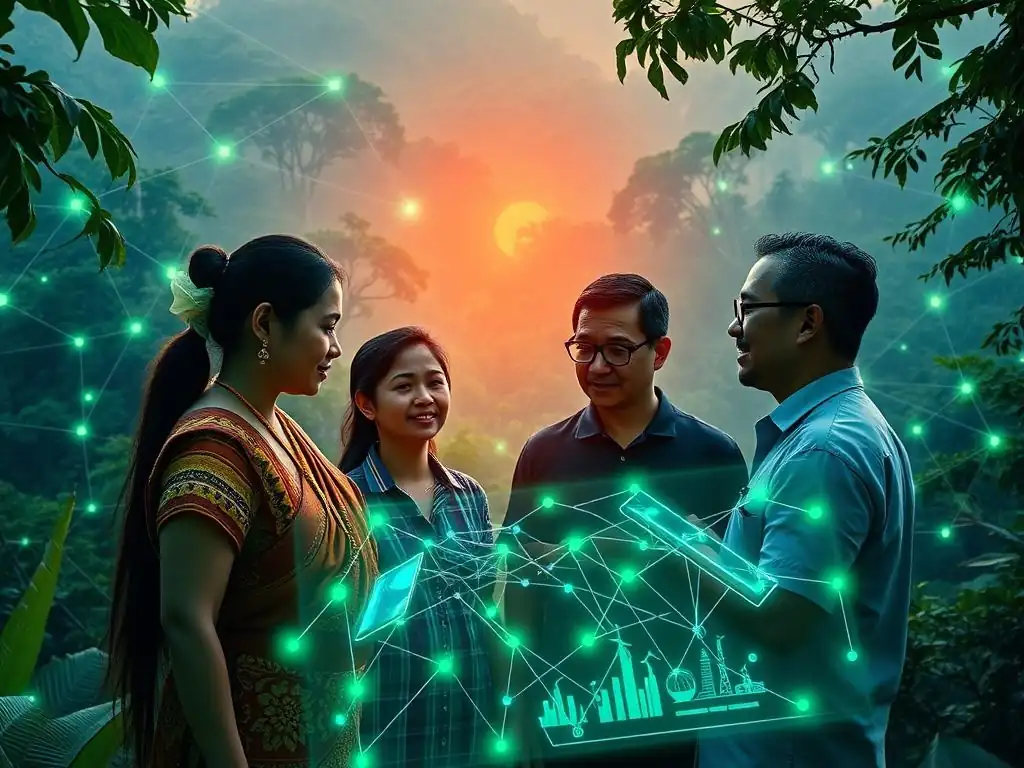
Welcome to Blockchain Trends, your gateway to understanding the revolutionary impact of blockchain beyond the hype.
Dive into the world of decentralized innovation and discover how this technology is reshaping industries, from finance to governance. Ever wondered if blockchain could actually save the planet? Our in-depth analysis of DAOs for sustainable projects explores precisely that. Uncover how decentralized autonomous organizations are empowering communities and driving impactful environmental initiatives, and learn about the potential – and the challenges – of this exciting new frontier. Intrigued? Read on to explore the future of sustainable development powered by blockchain.
Decentralized Autonomous Organizations (DAOs) for Sustainability Initiatives
- Introduction: DAOs and the Future of Sustainable Development
- What are Decentralized Autonomous Organizations (DAOs)?
- The Promise of DAOs for Sustainable Projects: Addressing Key Challenges
- Use Cases: DAOs Powering Sustainable Initiatives
- Benefits of Using DAOs for Sustainability
- Challenges and Limitations of DAOs in the Sustainability Sector
- Examples of Successful DAOs in Sustainability
- Building a Successful DAO for Sustainable Development: Key Considerations
- The Future of DAOs and Sustainable Initiatives: Trends and Predictions
- Conclusion: DAOs as a Catalyst for a Sustainable Future
-
Frequently Asked Questions
- What are DAOs, and how do they relate to sustainability?
- How can DAOs help overcome traditional funding challenges for sustainable initiatives?
- What are some examples of DAOs currently working on sustainability projects?
- What are the potential regulatory hurdles facing DAOs involved in sustainability?
- What is the future outlook for DAOs in driving sustainable development?
- Final Reflection: Empowering Sustainable Futures Through DAOs
- Ignite Change: Join the DAO Revolution for a Greener Future!
Introduction: DAOs and the Future of Sustainable Development
Understanding the Potential of DAOs in Environmental Projects
The global challenge of achieving sustainability requires innovative approaches that can mobilize resources, ensure transparency, and foster widespread participation. Traditional structures often face hurdles related to trust deficits, bureaucratic inefficiencies, and limited community engagement, which can impede the effectiveness of environmental and social initiatives. Decentralized Autonomous Organizations (DAOs), powered by blockchain technology, offer a compelling alternative by providing a framework for transparent, community-driven governance and operation of projects aimed at positive environmental impact.
DAOs have the potential to revolutionize how sustainable projects are funded, managed, and executed. By encoding rules and logic into smart contracts on a blockchain, DAOs can automate processes, reduce administrative overhead, and create an immutable record of activities and fund flows.
This inherent transparency and automation are particularly valuable in sectors often plagued by opacity, such as carbon markets or conservation funding, making DAOs for sustainable projects a promising area for exploration and development. The scale of investment needed for global sustainability is vast, estimated in the trillions over the coming decades, and DAOs could help unlock new funding streams and ensure funds are used effectively.
The Intersection of Blockchain, DAOs, and Sustainability
Blockchain technology provides the foundational layer of trust and transparency upon which DAOs are built. Its distributed ledger creates an immutable and publicly verifiable record of all transactions and interactions within the network, eliminating the need for a central authority. This is critical for sustainability initiatives where verifying impact, tracing funds, and ensuring accountability are paramount.
DAOs leverage blockchain's features to create organizations that operate according to pre-programmed rules, governed by their community. When applied to sustainability, this intersection means that environmental projects can be managed with unprecedented levels of transparency and community involvement. Decisions regarding resource allocation, project milestones, and impact verification can be voted on by stakeholders and automatically enforced by smart contracts, offering a robust alternative to traditional, often opaque, governance models for sustainable development efforts. The combination of blockchain's data integrity and DAO's governance structure creates a powerful synergy for driving impactful and verifiable sustainable change.
What are Decentralized Autonomous Organizations (DAOs)?
Core Principles and Functionality of DAOs
At their core, Decentralized Autonomous Organizations (DAOs) are organizations whose rules are embedded as computer code, typically on a blockchain, and are governed by their members rather than a central entity. Key principles include decentralization, meaning no single point of control; autonomy, as decisions are executed automatically by smart contracts once approved; transparency, with all transactions and votes recorded on a public ledger; and community governance, where members propose and vote on changes or actions based on their token holdings or other defined criteria.
The functionality of a typical DAO revolves around a treasury of assets (often cryptocurrency or tokens) and a governance mechanism. Members holding the DAO's governance tokens can submit proposals for actions, such as allocating funds, changing parameters, or initiating new projects. These proposals are then voted upon by other token holders. If a proposal meets the predefined consensus threshold (e.g., a certain percentage of 'yes' votes), the associated smart contract automatically executes the action. This structure makes DAOs particularly interesting models for collective action, including "DAOs for sustainable projects."
How DAOs Differ from Traditional Organizations
The fundamental difference between DAOs and traditional organizations lies in their structure and governance. Traditional organizations, whether corporations or non-profits, operate with hierarchical management structures, boards of directors, and centralized decision-making processes. Their operations and finances are often private, accessible only to internal management or select stakeholders.
In contrast, DAOs are designed to be flat, distributed, and transparent. There is no CEO or board in the traditional sense; leadership and decision-making power are distributed among token holders. All operational rules and financial transactions are recorded on a public blockchain, making them fully auditable by anyone. This transparency and decentralized control aim to reduce corruption and ensure that the organization operates strictly according to its programmed rules and the will of its community, presenting a fundamentally different paradigm especially relevant for trusted initiatives like "DAOs for sustainable projects."
The Role of Smart Contracts in DAO Operations
Smart contracts are the backbone of Decentralized Autonomous Organizations, serving as the digital embodiment of the organization's rules, bylaws, and operational logic. These self-executing contracts, with the terms of the agreement directly written into lines of code, live on a blockchain and automatically execute predefined actions when specific conditions are met. They automate proposal voting, fund distribution, and enforcement of governance decisions without the need for intermediaries.
For DAOs, smart contracts manage the treasury, dictate how proposals are submitted and voted upon, and automate the execution of approved proposals. This automation ensures that the DAO operates autonomously, free from human intervention or potential manipulation once the contracts are deployed. The reliability and immutability of smart contracts are crucial for maintaining trust within the DAO, especially for sensitive applications such as managing funds for environmental conservation or verifying carbon offsets in "DAOs for sustainable projects."
The Promise of DAOs for Sustainable Projects: Addressing Key Challenges
Overcoming Transparency Issues in Environmental Initiatives
A significant challenge in traditional environmental initiatives is the lack of transparency regarding fund allocation and project execution. Donors and stakeholders often have limited visibility into how contributions are used or whether stated goals are actually achieved. This opacity can erode trust and discourage future investment in vital sustainability efforts.
DAOs directly address this by leveraging the inherent transparency of blockchain technology. Every transaction, every funding allocation, and every governance decision made within a DAO is recorded on a public, immutable ledger. This means anyone can verify where funds are going and track the progress of projects managed by "DAOs for sustainable projects." For instance, a DAO funding a reforestation effort could transparently track payments to local workers or suppliers, providing verifiable proof of activity that is difficult to achieve with traditional accounting methods.
Enhancing Accountability in Sustainability Efforts with DAOs
Accountability is another area where traditional structures often fall short in environmental projects. When projects fail or funds are misused, it can be difficult to pinpoint responsibility or enforce consequences within complex, centralized organizations. This lack of clear accountability can lead to inefficiency and failed outcomes for crucial environmental goals.
Within a DAO, accountability is baked into the system through its decentralized governance and smart contract execution. Decisions are made collectively through a transparent voting process, and the execution is automated.
If a proposal leads to undesirable outcomes, the community can hold token holders who voted for it accountable (though not legally liable in the traditional sense) through the transparent record, and future governance decisions can correct course. The rules for fund dispersal or project milestones can be encoded in smart contracts, ensuring that funds are only released upon verifiable completion of tasks, thereby enhancing operational accountability for "DAOs for sustainable projects."
Fostering Community Engagement and Collaboration through DAOs
Many sustainability challenges require broad community support and collaboration, yet traditional models often limit public participation to donating or volunteering. Decision-making power typically resides with a small group of executives or board members, potentially overlooking valuable local knowledge or alienating stakeholders.
DAOs offer a powerful mechanism for fostering genuine community engagement. By distributing governance tokens, DAOs can empower a wide range of stakeholders – from donors and beneficiaries to experts and local community members – to propose ideas, discuss strategies, and vote on the direction of the project. This inclusive model can mobilize a more diverse group of participants, tap into distributed expertise, and build stronger buy-in for sustainable initiatives. For example, "DAOs for sustainable projects" focused on local conservation could give voting power to indigenous communities whose knowledge is critical for success.
Use Cases: DAOs Powering Sustainable Initiatives
DAOs for Carbon Offset Programs: Increasing Transparency and Efficiency
The voluntary carbon market, estimated to be worth around $2 billion in 2021 and projected to grow significantly, faces criticism regarding the quality, transparency, and additionality of offsets. Issues like double counting, lack of clear verification, and opaque project management undermine trust in these crucial climate tools.
DAOs can bring much-needed transparency and efficiency to carbon offset programs. By tokenizing verified carbon credits on a blockchain (like Toucan Protocol does with BCT), DAOs can create a transparent, on-chain registry of offsets, making double counting virtually impossible.
A DAO can govern a treasury of these tokenized credits, allowing members to vote on which offset projects to support, how to retire credits, or fund new carbon removal initiatives. This decentralized and transparent approach, exemplified by projects like KlimaDAO, aims to drive demand for high-quality offsets and make the market more effective for climate action, showcasing a powerful application of "DAOs for sustainable projects."
DAOs in Renewable Energy Projects: Facilitating Investment and Management
Investing in renewable energy, while crucial for sustainability, often requires significant upfront capital and centralized management structures that can exclude smaller investors or local communities. The energy sector globally requires trillions in investment over the next decade to transition effectively.
DAOs can democratize access to renewable energy investment and management. By tokenizing ownership or revenue streams of solar farms, wind projects, or local microgrids, DAOs allow fractional investment, enabling individuals to participate with smaller amounts of capital. A DAO's governance could manage aspects of the project, such as selecting new sites, deciding on maintenance schedules, or distributing revenue to token holders. Projects like SolarDAO (a historical example of this concept) aimed to pool funds for large-scale solar investments, demonstrating how "DAOs for sustainable projects" can facilitate broader participation in the clean energy transition.
DAOs for Sustainable Agriculture: Empowering Farmers and Consumers
The traditional agricultural supply chain is often complex and opaque, leading to issues like unfair pricing for farmers (who may receive as little as 10-15% of the final retail price) and lack of transparency for consumers regarding farming practices and product origins. This hinders the adoption of sustainable farming methods.
DAOs can create more equitable and transparent agricultural ecosystems. A DAO could establish a platform connecting farmers directly with consumers, ensuring fair prices and providing verifiable information about sustainable practices via blockchain-based traceability. The DAO's governance could manage quality standards, certify sustainable farms, or create a collective fund to support farmers transitioning to regenerative practices. An "Open Food Chain DAO" concept could empower farmers through collective bargaining and provide consumers with unprecedented insight into their food's journey, illustrating the potential of "DAOs for sustainable projects" in the food sector.
DAOs for Environmental Conservation: Protecting Ecosystems and Biodiversity
Funding and effectively managing environmental conservation efforts, such as protecting forests or endangered species, face challenges like securing consistent funding, ensuring funds reach the field, and involving local communities in decision-making. Billions are needed annually for effective global conservation, yet funding gaps persist.
DAOs can provide innovative solutions for conservation finance and governance. A DAO could tokenize natural assets or biodiversity credits, allowing global participation in funding conservation areas or projects. Governance tokens could grant local communities or conservation experts a direct say in how protected areas are managed, resources are allocated, or anti-poaching efforts are conducted. Transparent tracking of funds via the blockchain ensures donations directly support conservation activities. Concepts like tokenizing rainforest land or creating community-governed funds for marine protection exemplify how "DAOs for sustainable projects" can directly contribute to preserving vital ecosystems.
Benefits of Using DAOs for Sustainability
Increased Transparency and Traceability in Environmental Projects
One of the most significant benefits of using DAOs for sustainable projects is the unparalleled level of transparency they offer. Because all transactions and governance decisions are recorded on a public blockchain ledger, every aspect of the DAO's operations, from fund allocation to project milestones, is auditable by anyone. This eliminates information asymmetry and allows stakeholders, including donors, beneficiaries, and the public, to see exactly how resources are being utilized and verify that activities are taking place as promised.
This enhanced transparency builds crucial trust, which is often lacking in traditional environmental and non-profit sectors. Donors can be confident that their contributions are reaching their intended targets, and project outcomes can be verified on-chain. This traceability is invaluable for impact reporting and ensures accountability, making "DAOs for sustainable projects" a more trustworthy model for achieving environmental goals.
Enhanced Community Governance and Participation
DAOs inherently empower their communities through token-based governance models. Unlike traditional organizations where decisions are centralized, DAOs distribute decision-making power among token holders, who can represent a diverse group of stakeholders. This allows for a more democratic and inclusive approach to managing sustainable initiatives.
This model enables direct participation in proposals, voting on critical decisions like funding new projects or changing operational parameters, and actively shaping the direction of the initiative. It fosters a sense of ownership and collective responsibility among participants, potentially leading to greater engagement and support for the project's goals. For "DAOs for sustainable projects," this means tapping into a wider pool of expertise and ensuring that projects are aligned with the needs and priorities of the communities they aim to serve.
Improved Efficiency and Reduced Overhead Costs
By automating governance and operational processes through smart contracts, DAOs can potentially operate more efficiently and with lower overhead costs compared to traditional, bureaucratic organizations. Tasks such as fund dispersal upon milestone completion, voting tallying, and rule enforcement are handled automatically by code, reducing the need for extensive administrative staff and manual processing.
This automation minimizes human error and reduces the potential for administrative bottlenecks. Lower overhead means that a larger percentage of donated or invested funds can be directed towards the actual sustainable activities on the ground, maximizing the impact of contributions. The streamlined nature of "DAOs for sustainable projects" can make them more agile and responsive to changing needs or opportunities.
Democratized Access to Funding for Sustainable Initiatives
Accessing capital is a major hurdle for many sustainable projects, especially smaller, community-based initiatives that may lack the connections or infrastructure to attract traditional institutional funding. DAOs offer a mechanism to democratize access to funding through token sales or decentralized fundraising platforms.
By issuing governance or utility tokens, "DAOs for sustainable projects" can raise funds directly from a global pool of individuals and organizations interested in supporting their specific mission. This lowers the barrier to entry for both project creators seeking funding and individuals wanting to invest in or donate to sustainable causes. It allows a broader range of projects to potentially secure the necessary resources, fostering innovation and action at various scales.
Challenges and Limitations of DAOs in the Sustainability Sector

Regulatory Uncertainties Surrounding DAOs
One of the most significant hurdles facing DAOs, including "DAOs for sustainable projects," is the current lack of clear and consistent legal and regulatory frameworks across different jurisdictions. The decentralized nature of DAOs doesn't fit neatly into existing corporate or non-profit legal structures, creating uncertainty regarding legal status, liability, and compliance requirements.
This regulatory ambiguity can pose risks for participants and hinder the ability of DAOs to interact with the traditional financial system or operate effectively within existing legal boundaries related to environmental initiatives, such as carbon markets or land ownership. Navigating this evolving landscape requires careful legal consideration and can be a barrier to widespread adoption and scaling of "DAOs for sustainable projects."
Technical Complexity and Security Concerns
Building and managing a DAO requires a high level of technical expertise, particularly in smart contract development and blockchain technology. Designing robust, secure, and bug-free smart contracts is complex, and vulnerabilities can lead to significant financial losses or governance failures, as demonstrated by past incidents in the broader crypto space.
Ensuring the long-term security and maintainability of the DAO's technical infrastructure is an ongoing challenge. While the underlying blockchain may be secure, the smart contracts governing the DAO itself can be susceptible to exploits if not meticulously audited and tested. This technical barrier and the inherent security risks need to be carefully addressed for "DAOs for sustainable projects" to build and maintain trust.
Scalability Issues and Governance Challenges
While blockchain technology offers many benefits, some networks can face scalability limitations, potentially impacting the speed and cost of transactions and governance interactions within a DAO, especially as it grows. Furthermore, designing effective governance models that work for a large, diverse, and potentially global community presents significant challenges.
Issues such as voter apathy, the potential for concentrated power ("whale" wallets holding a large percentage of governance tokens), coordination difficulties among a large number of decentralized participants, and reaching consensus on complex or controversial issues can impede a DAO's ability to make timely and effective decisions. These governance hurdles are critical considerations for the long-term success and operational efficiency of "DAOs for sustainable projects."
The Need for Effective DAO Governance Models
The success of any DAO, particularly one focused on impactful initiatives like sustainability, heavily relies on its governance model. Designing a system that is fair, inclusive, secure, and efficient is paramount, yet complex. Different models exist, such as simple token-weighted voting, quadratic voting, or reputation-based systems, each with its own strengths and weaknesses regarding preventing centralization, encouraging participation, and resisting malicious attacks.
Developing and implementing a governance framework that effectively balances the need for decentralized control with the ability to make necessary operational decisions for a sustainable project is a continuous process of iteration and learning. Ensuring active community participation and establishing clear, accessible processes for proposal submission, discussion, and voting are crucial for the health and effectiveness of "DAOs for sustainable projects."
Examples of Successful DAOs in Sustainability
KlimaDAO: Addressing Carbon Offset
KlimaDAO is a prominent example of a DAO focused specifically on climate action through the voluntary carbon market. Its primary mission is to drive up the price of carbon offsets, thereby increasing the cost of polluting and incentivizing emissions reduction. KlimaDAO achieves this by accumulating tokenized carbon credits (specifically, bonds of verified carbon, or BCT, built on Toucan Protocol's infrastructure) in its treasury.
By holding a significant supply of these tokenized offsets, KlimaDAO reduces the circulating supply available on the market, aiming to exert upward pressure on prices. The DAO is governed by KLIMA token holders who can vote on proposals related to treasury management, bonding parameters, and other strategic decisions. As of late 2022/early 2023, KlimaDAO had accumulated millions of tonnes of tokenized carbon in its treasury, demonstrating a tangible approach to influencing the carbon market through a decentralized structure and highlighting the potential of "DAOs for sustainable projects" in climate finance.
SolarDAO: Investing in Solar Energy
SolarDAO was an early project (though its current status or structure may have evolved since its initial conception) that aimed to use a decentralized autonomous organization model to fund and manage solar energy projects. The idea was to pool investor funds via tokens to acquire stakes in operational solar power plants or develop new ones globally.
Token holders in SolarDAO theoretically had a say in decisions related to project selection and management, and aimed to earn returns from the revenue generated by the solar power plants. While the project faced challenges common to early DAO experiments, its concept demonstrated a compelling use case for "DAOs for sustainable projects" in making large-scale renewable energy investments more accessible and potentially more transparent and community-governed than traditional investment funds.
Open Food Chain DAO: Supporting Sustainable Farming
While a specific, widely recognized "Open Food Chain DAO" may not dominate the landscape currently, the concept represents a vital application of DAOs in sustainable agriculture, building on principles seen in various agritech and food traceability projects. Such a DAO would aim to create a transparent and equitable food supply chain, connecting sustainable farmers directly with consumers.
In this model, the DAO's governance could be composed of farmers, consumers, distributors, and food experts. They could collectively set standards for sustainable practices, vote on funding for farmers adopting these methods, manage a transparent traceability system on the blockchain, and ensure fair pricing by cutting out unnecessary intermediaries. This hypothetical yet highly feasible use case demonstrates how "DAOs for sustainable projects" could empower producers, inform consumers, and promote more sustainable food systems through decentralized governance and transparency.
Building a Successful DAO for Sustainable Development: Key Considerations
Defining a Clear Mission and Objectives
The cornerstone of any successful DAO, especially one tackling complex issues like sustainability, is a clearly defined mission and set of objectives. Before writing a single line of code, the founders and initial community must articulate precisely what environmental or social problem the DAO aims to solve, its specific goals, and the intended impact.
A clear mission serves as the guiding principle for all subsequent decisions, from designing the governance model to allocating treasury funds. It attracts individuals who are genuinely passionate about the cause and helps align the community towards common goals. Without a well-defined purpose, a "DAOs for sustainable projects" risks becoming directionless, inefficient, or susceptible to proposals that deviate from its core environmental mandate.
Establishing a Robust Governance Structure
The governance structure is the operating system of a DAO. Designing a robust and effective model is critical for long-term viability and impact. This involves determining how proposals are submitted, the voting mechanism (e.g., token-weighted, quadratic, reputation-based), the quorum and approval thresholds needed for proposals to pass, and how disputes will be resolved.
The governance model must be carefully considered to balance decentralization and security with the practical need for efficient decision-making necessary for project execution. It should ideally incentivize active participation from informed stakeholders and mitigate risks like voter apathy or the concentration of power. A well-designed governance structure is paramount for the resilience and effectiveness of "DAOs for sustainable projects."
Ensuring Transparency and Accountability
Leveraging the inherent transparency of blockchain is key, but the DAO's design must actively promote accountability. This means ensuring that not only transactions but also the execution of proposals and the measurement of impact are verifiable on-chain where possible. Smart contracts should be designed to enforce rules automatically and transparently.
Establishing clear reporting mechanisms and potentially integrating with oracles to bring real-world impact data onto the blockchain can further enhance accountability. For "DAOs for sustainable projects," demonstrating tangible environmental or social impact with verifiable data is crucial for building trust with stakeholders and proving the model's effectiveness.
Building a Strong and Engaged Community
A DAO is only as strong as its community. Building an active, informed, and committed group of participants is essential for governance, contribution, and overall success. This involves effective communication strategies, fostering a sense of shared ownership, and potentially implementing mechanisms to reward valuable contributions beyond just voting.
Encouraging diverse participation from different stakeholder groups relevant to the sustainability mission (e.g., scientists, local communities, policy experts, donors) can enrich discussions and lead to better decisions. A vibrant and engaged community is the lifeblood of "DAOs for sustainable projects," driving innovation, providing oversight, and contributing to the effort.
Complying with Relevant Regulations
Given the current regulatory uncertainty surrounding DAOs, it is crucial for any "DAOs for sustainable projects" to seek legal counsel early and ongoing. Understanding and attempting to comply with relevant regulations in the jurisdictions where the DAO operates or impacts is essential for avoiding legal pitfalls and ensuring long-term legitimacy.
This includes considering potential implications related to securities laws (if tokens are involved), environmental regulations specific to the project's focus area (e.g., carbon markets, conservation), and potentially even non-profit or corporate governance laws depending on the DAO's structure and activities. Proactive engagement with legal experts is vital for navigating this complex landscape.
The Future of DAOs and Sustainable Initiatives: Trends and Predictions
Increased Adoption of DAOs in the Environmental Sector
The potential benefits of DAOs – transparency, accountability, and decentralized governance – align well with the needs of the environmental sector. As the technology matures and regulatory clarity improves, we can expect to see increased adoption of the DAO model for various sustainability initiatives. This includes growth in areas like climate finance, where transparency in fund flows is critical, and biodiversity conservation, where community involvement is key.
More "DAOs for sustainable projects" are likely to emerge, focusing on specific niches such as waste management, sustainable supply chains for particular goods, or funding mechanisms for renewable energy infrastructure at a local level. The inherent features of DAOs provide a strong foundation for building trust and collective action around shared environmental goals.
Development of Specialized DAO Tools and Platforms for Sustainability
As the use cases for "DAOs for sustainable projects" become more defined, there will likely be a proliferation of specialized tools and platforms designed to simplify their creation and management. These tools could offer templates for governance structures tailored to environmental projects, integrate with oracles for verifiable impact data, or provide modules for managing tokenized environmental assets like carbon credits or biodiversity units.
Such platforms would lower the technical barrier to entry for environmental organizations and communities looking to leverage the DAO model. They could standardize best practices for transparency, governance, and compliance within the sustainability context, making it easier and safer to launch and operate effective "DAOs for sustainable projects."
Integration of DAOs with Other Blockchain Technologies
The power of DAOs for sustainability will be amplified through integration with other emerging blockchain technologies. For instance, combining DAOs with Non-Fungible Tokens (NFTs) could enable the tokenization of unique environmental assets, such as parcels of protected land or individual biodiversity credits, allowing for novel funding and governance models.
Integration with Decentralized Finance (DeFi) protocols could provide new avenues for funding sustainable projects through decentralized lending, borrowing, or yield farming mechanisms. Furthermore, integrating DAOs with supply chain traceability systems built on blockchain could empower consumers and communities to verify the sustainability claims of products. These synergies will create more sophisticated and impactful "DAOs for sustainable projects."
The Potential for DAOs to Drive Global Sustainability Goals
Ultimately, DAOs have the potential to contribute significantly to achieving global sustainability goals, such as those outlined in the UN's Sustainable Development Goals (SDGs). Their ability to facilitate transparent, cross-border collaboration and mobilize resources from a global community makes them powerful tools for tackling challenges that transcend national boundaries.
By providing a framework for collective action that is transparent, accountable, and inclusive, "DAOs for sustainable projects" can empower diverse stakeholders worldwide to work together towards a more sustainable and equitable future. As the technology evolves and gains wider acceptance, DAOs could become a key component in the global effort to address climate change, protect biodiversity, and foster sustainable development.
Conclusion: DAOs as a Catalyst for a Sustainable Future
Harnessing the Power of DAOs for Positive Environmental Impact
Decentralized Autonomous Organizations represent a significant paradigm shift in how organizations can be structured and operated, offering unique advantages particularly relevant to the sustainability sector. By leveraging the core principles of blockchain technology – transparency, immutability, and decentralization – DAOs provide a robust framework for managing environmental initiatives with enhanced accountability and reduced reliance on central authorities. Their ability to overcome issues of opacity and inefficiency inherent in many traditional models makes them powerful tools for driving positive environmental impact.
From revolutionizing carbon markets to democratizing investment in renewable energy and empowering local communities in conservation efforts, the potential applications of "DAOs for sustainable projects" are vast and promising. While challenges related to regulation, technical complexity, and governance design remain, the inherent benefits suggest that DAOs can play a crucial role in building trust and mobilizing collective action for environmental goals.
The Role of DAOs in Creating a More Sustainable and Equitable World
Beyond just environmental impact, DAOs also hold the potential to contribute to a more equitable world. Their decentralized and inclusive governance models can give voice and power to marginalized communities often most affected by environmental degradation but least heard in traditional decision-making processes. By democratizing access to funding and participation, "DAOs for sustainable projects" can help redirect resources and influence towards those who can most effectively steward local ecosystems and implement sustainable practices.
As the technology and governance models mature, DAOs could become instrumental in fostering global collaboration, mobilizing resources efficiently, and ensuring that sustainable development efforts are conducted transparently and accountably for the benefit of all stakeholders. The journey is still in its early stages, but the promise of "DAOs for sustainable projects" as catalysts for a sustainable and equitable future is compelling.
Key Takeaways: DAOs for sustainable projects
- DAOs offer enhanced transparency and accountability for environmental initiatives through blockchain technology.
- They foster community engagement and decentralized governance in sustainable development.
- Potential use cases include transparent carbon offsets, democratized renewable energy investment, and equitable sustainable agriculture.
- Benefits include increased trust, efficiency, and democratized access to funding for sustainable causes.
- Challenges involve regulatory uncertainty, technical complexity, and designing effective governance models.
- Despite challenges, the future shows potential for increased adoption and impact of DAOs for sustainable projects.
Frequently Asked Questions
What are DAOs, and how do they relate to sustainability?
DAOs are decentralized autonomous organizations, essentially online communities governed by rules encoded in smart contracts. They relate to sustainability by offering transparent and democratic governance for environmental projects, ensuring accountability and community involvement.
How can DAOs help overcome traditional funding challenges for sustainable initiatives?
DAOs can utilize crowdfunding mechanisms and tokenomics to attract capital from a wider range of investors interested in sustainability. This bypasses traditional, often bureaucratic, funding channels and provides greater financial autonomy for projects.
What are some examples of DAOs currently working on sustainability projects?
Several DAOs are emerging, focused on areas like renewable energy financing, carbon offsetting, and conservation efforts. They leverage blockchain to track impact, verify claims, and incentivize sustainable practices within their communities.
What are the potential regulatory hurdles facing DAOs involved in sustainability?
Regulatory clarity surrounding DAOs is still evolving, creating potential challenges related to legal liability, securities laws, and environmental compliance. Understanding these regulations is crucial for sustainable DAO success.
What is the future outlook for DAOs in driving sustainable development?
The future is bright, with DAOs poised to play a significant role in accelerating sustainable development through decentralized governance, transparent funding, and community-driven initiatives. Their potential for scaling impact and fostering collaboration is immense.
Final Reflection: Empowering Sustainable Futures Through DAOs
The exploration of Decentralized Autonomous Organizations (DAOs) as engines for sustainability initiatives reveals a potent synergy, especially relevant in today's world grappling with climate change and resource depletion. The potential of DAOs to democratize decision-making and incentivize collective action towards environmental goals is not just theoretical; it's a burgeoning reality. We've seen how these digital collectives can bypass traditional bureaucratic hurdles and directly fund, manage, and scale sustainable projects, offering a compelling alternative to conventional approaches.
The rise of DAOs for sustainable projects marks a significant shift in how we approach environmental stewardship. This movement resonates deeply because it empowers individuals and communities to become active participants in shaping a more sustainable future, rather than passive observers. The decentralized nature of DAOs fosters transparency and accountability, crucial elements for building trust and ensuring the long-term success of these initiatives. Never doubt that a small group of thoughtful, committed citizens can change the world; indeed, it's the only thing that ever has.
- Margaret Mead. This quote perfectly encapsulates the spirit of DAOs and their potential to drive meaningful change.
As we conclude this exploration, I invite you to consider your own role in this emerging landscape. How can you leverage the power of DAOs to support sustainable projects in your community or beyond? What skills and resources can you contribute to these decentralized ecosystems? The future of sustainability is not just about technological advancements; it's about empowering individuals to become active agents of change. Embrace the potential of DAOs, explore the opportunities they offer, and join the movement towards a more sustainable and equitable world for all.
Ignite Change: Join the DAO Revolution for a Greener Future!
Thank you for exploring how decentralized autonomous organizations can drive impactful sustainability initiatives. We hope this article has sparked your curiosity and inspired you to consider how blockchain technology can transform our approach to environmental responsibility. Now, it's time to turn that inspiration into action!
Here are a few ways you can get involved:
- Learn about DAO governance! Research existing sustainability-focused DAOs and consider participating in their voting processes or contributing to their projects.
- Explore tools and platforms to create your own DAO dedicated to a specific sustainability goal, such as reforestation or carbon offsetting.
- Share this article with your network and start a conversation about the role of DAOs in building a more sustainable future. Let’s spread the message!
What concrete step will you take today to leverage DAOs for a more sustainable world, and how can you encourage others to join you on this journey?
Leave a Reply