
The Decentralized Future of Green NFTs: Building a Sustainable Ecosystem

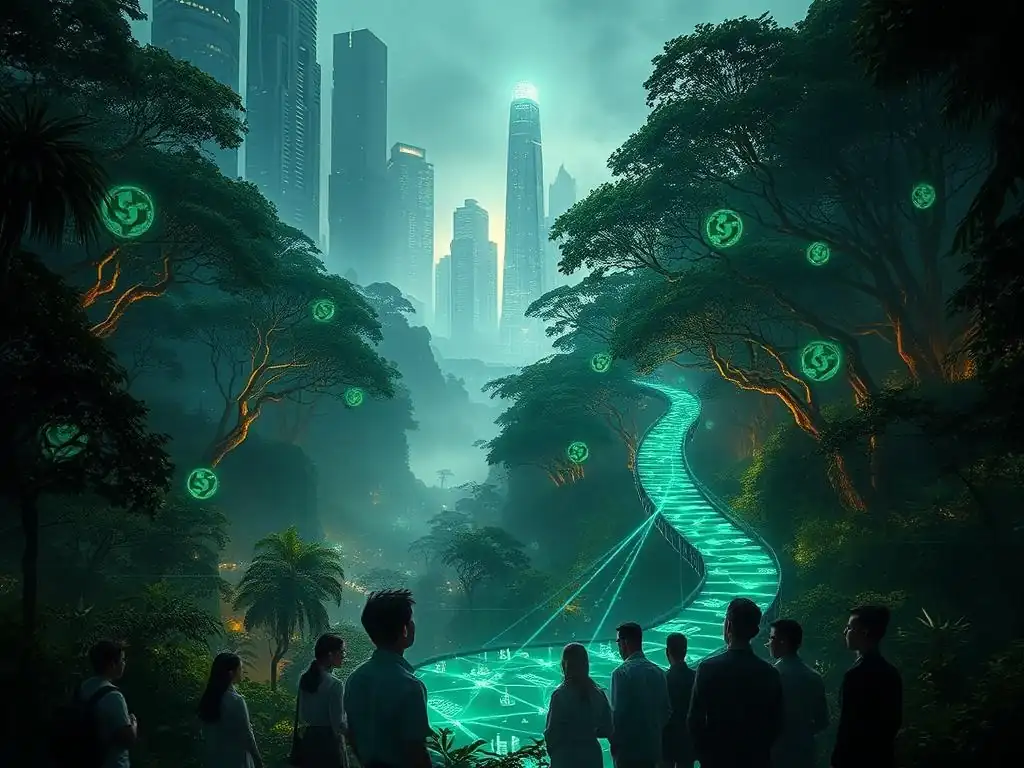
Welcome to Blockchain Trends, your guide to understanding the revolutionary power of blockchain beyond the hype! Are you ready to dive into a world where technology fosters a greener future? Discover how Green NFTs are leading the charge in blockchain sustainability, a movement reshaping the digital landscape and pushing the boundaries of environmental consciousness. Explore the possibilities and unlock the secrets of building a truly sustainable ecosystem, starting right here. What innovations are driving this change? Let's find out!
The Decentralized Future of Green NFTs: Building a Sustainable Ecosystem
- Introduction: The Rise of Green NFTs and Blockchain Sustainability
- What are Green NFTs? Defining Blockchain-Based Sustainability
- Building a Decentralized Ecosystem for Sustainable NFTs
- Green NFT Marketplaces: Promoting Sustainable Practices
- Use Cases: Green NFTs Driving Environmental Initiatives
- Overcoming Challenges in the Green NFT Space
- The Future of Green NFTs: A Vision for a Sustainable Digital World
- Conclusion: Embracing Blockchain for a Sustainable Future with Green NFTs
-
Frequently Asked Questions
- What are Green NFTs, and how do they differ from regular NFTs?
- How does blockchain technology contribute to sustainability efforts in the NFT space?
- What are some examples of enterprise applications of blockchain technology related to Green NFTs?
- What role does regulation play in fostering the growth of a sustainable Green NFT ecosystem?
- What does the future hold for Green NFTs and the broader decentralized landscape in terms of sustainability?
- Final Reflection: Embracing Sustainable Digital Ownership
- Ignite Your Green NFT Journey!
Introduction: The Rise of Green NFTs and Blockchain Sustainability
Understanding the Environmental Concerns of Traditional NFTs
The initial surge in popularity of Non-Fungible Tokens (NFTs) brought with it significant environmental scrutiny. This was primarily due to the reliance of early and dominant NFT marketplaces on blockchains utilizing a Proof-of-Work (PoW) consensus mechanism, most notably Ethereum 1.0 before its transition to Proof-of-Stake. PoW requires vast amounts of computational power from miners to validate transactions and secure the network. This process translates into substantial energy consumption, often powered by electricity generated from fossil fuels, leading to a significant carbon footprint associated with minting, trading, and transferring NFTs on these chains.
Critics highlighted alarming figures regarding the energy used per transaction, comparing it to the power consumption of entire households or even small countries over extended periods. While the energy usage isn't directly tied to each individual NFT transaction in isolation but rather the overall network activity, the sheer scale of the network's energy demand became a major point of concern for the digital art and collectibles space.
This environmental impact contradicted the growing global awareness and urgency around climate change, prompting a necessary conversation about the future of NFTs and their alignment with blockchain sustainability goals. The imperative became clear: for NFTs to gain mainstream acceptance and align with corporate and individual sustainability values, a shift towards more eco-friendly alternatives was essential.
The Promise of Eco-Friendly NFTs: A Sustainable Alternative
In response to the environmental concerns, the concept of eco-friendly or Green NFTs emerged, promising a path towards a more sustainable digital asset landscape. Green NFTs are essentially NFTs minted, traded, and managed on blockchain networks that have a significantly lower environmental impact compared to traditional PoW chains. This shift is powered by alternative consensus mechanisms and technological advancements designed to drastically reduce energy consumption per transaction.
The promise of Green NFTs lies in decoupling the value and utility of digital assets from excessive energy use. By leveraging sustainable blockchain technologies, creators, collectors, and platforms can engage with the NFT market while minimizing their carbon footprint.
This not only addresses the environmental critique but also opens up opportunities for NFTs to actively contribute to environmental initiatives, such as funding conservation projects or tokenizing carbon credits. The move towards Green NFTs represents a critical evolution, signaling the industry's commitment to blockchain sustainability and positioning NFTs as potential tools for positive environmental change rather than just contributors to carbon emissions.
What are Green NFTs? Defining Blockchain-Based Sustainability
Exploring Sustainable Blockchain Technologies for NFTs
Green NFTs fundamentally rely on the underlying blockchain technology being energy efficient. The primary driver of high energy consumption in early blockchain iterations was the Proof-of-Work (PoW) consensus mechanism, where network participants (miners) compete using computational power to solve complex puzzles and validate blocks. Sustainable blockchain technologies move away from this energy-intensive competition. Instead, they employ methods that require significantly less computational effort to achieve consensus and secure the network.
These sustainable alternatives often involve participants staking their assets (Proof-of-Stake) or relying on delegated validators (Delegated Proof-of-Stake) or other novel approaches that minimize the need for brute-force computation. Blockchains like Cardano, Solana, Algorand, Flow, and increasingly Ethereum (post-Merge) are examples of networks built on or transitioning to these more sustainable models. By choosing to operate on these chains, NFT projects and marketplaces drastically reduce the energy footprint associated with their activities, laying the foundation for true Green NFTs and promoting wider blockchain sustainability.
Proof-of-Stake (PoS) and Other Energy-Efficient Consensus Mechanisms
Proof-of-Stake (PoS) is the most prominent energy-efficient consensus mechanism used by sustainable blockchains. Unlike PoW, where energy translates to mining power, PoS requires validators to stake a certain amount of cryptocurrency as collateral to participate in the block validation process. The probability of being chosen to validate a block is proportional to the amount staked. This process eliminates the need for energy-intensive mining hardware and computational races. Ethereum's successful transition from PoW to PoS in September 2022, known as "The Merge," dramatically reduced its energy consumption by an estimated 99.95%, transforming it into a highly sustainable blockchain for NFTs.
Other energy-efficient mechanisms include Delegated Proof-of-Stake (DPoS), used by chains like EOS and Tron, where token holders elect a smaller group of validators; Proof-of-Authority (PoA), often used in private or consortium blockchains, where validation is done by pre-approved participants; and various forms of Proof-of-History (PoH) used by Solana, which improves transaction speed and efficiency. These mechanisms vary in their specifics, but they all share the common goal of securing the network and achieving consensus without the massive energy expenditure characteristic of PoW, making them suitable foundations for Green NFTs and contributing significantly to overall blockchain sustainability.
Carbon-Neutral and Carbon-Negative NFT Projects: Examples
Many projects and platforms in the NFT space are actively pursuing carbon neutrality or even carbon negativity to enhance blockchain sustainability. Carbon neutrality is typically achieved by calculating the energy consumption associated with their operations (often based on the underlying blockchain's energy use and transaction volume) and then purchasing carbon credits to offset that footprint. For instance, marketplaces operating on PoS chains inherently have a lower footprint to begin with, making offsetting more manageable.
Examples include platforms like Algorand, which claims to be carbon-negative by partnering with ClimateTrade to offset its minimal carbon emissions. Polygon, a popular Layer-2 scaling solution (which benefits from Ethereum's PoS but also has its own initiatives), has committed to becoming carbon-neutral and eventually carbon-negative by offsetting its network's environmental impact through funding climate projects.
Nifty Gateway, while historically associated with Ethereum PoW, has made efforts to offset the carbon emissions of transactions on its platform and primarily uses the Flow blockchain, which is PoS-based and energy efficient. These efforts demonstrate a growing commitment within the Green NFTs space to not only minimize direct energy use but also take responsibility for unavoidable emissions through verified offsetting initiatives, pushing the boundaries of blockchain sustainability.
Building a Decentralized Ecosystem for Sustainable NFTs
The Role of Layer-2 Solutions in Reducing NFT Carbon Footprint
Layer-2 (L2) scaling solutions play a crucial role in enhancing the sustainability of NFT ecosystems, particularly those built on Layer-1 chains like Ethereum. While Ethereum's transition to PoS drastically reduced its energy consumption, the base layer can still face congestion during peak demand, leading to higher transaction costs and potentially higher energy usage per transaction compared to a less congested state. L2 solutions, such as rollups (Optimistic and Zero-Knowledge), process transactions off-chain in large batches and then submit a compressed proof or summary of these transactions back to the main Layer-1 chain.
By processing hundreds or thousands of transactions in a single Layer-1 transaction, L2s distribute the energy cost of the Layer-1 settlement across a much larger number of individual operations. This significantly reduces the effective carbon footprint per NFT mint, trade, or transfer compared to executing each transaction directly on the Layer-1.
Popular L2 networks like Polygon (a sidechain often categorized with L2s due to its scaling function), Arbitrum, and Optimism host numerous NFT marketplaces and projects, enabling high transaction throughput at lower costs and with substantially reduced environmental impact, thereby contributing significantly to the Green NFTs movement and overall blockchain sustainability.
Decentralized Storage Solutions for Green NFT Metadata
The sustainability of an NFT ecosystem isn't solely about the blockchain's energy use; it also concerns the longevity and resilience of the data associated with the NFT, known as metadata. Traditional storage methods for NFT metadata often rely on centralized servers, which can be prone to outages, censorship, or simply going offline if the project is abandoned. Furthermore, the energy efficiency of these centralized data centers can vary widely. Decentralized storage solutions offer a more robust and often more sustainable alternative for storing the digital content or metadata linked to an NFT.
Platforms like IPFS (InterPlanetary File System) and Arweave provide decentralized, distributed storage networks. IPFS stores files across a peer-to-peer network, making content addressable and resilient to single points of failure. Arweave offers permanent data storage, funded by endowments.
By storing NFT metadata on such decentralized networks, the data is more likely to persist over time, independent of a single entity. While the energy consumption of these decentralized storage networks needs to be considered (Arweave, for example, uses a PoW-like mechanism called Proof-of-Access, though designed for efficiency), they often represent a more sustainable long-term solution than relying on potentially fragile centralized infrastructure for preserving digital cultural assets, supporting the core principles of Green NFTs and blockchain sustainability by ensuring the persistence of decentralized creations.
Smart Contracts for Environmental Impact Tracking and Offsetting
Smart contracts, the self-executing code on the blockchain, can be powerful tools for embedding sustainability features directly into Green NFTs and their associated ecosystems. They can be programmed to automatically calculate or reference the estimated environmental impact of an NFT transaction based on the underlying chain's data. More importantly, smart contracts can facilitate automated environmental contributions or carbon offsetting.
For example, a smart contract governing an NFT sale could be programmed to automatically allocate a percentage of the sale price or royalties to a verified carbon offsetting project or an environmental charity upon each transaction. This ensures that a portion of the value generated by the NFT directly funds positive environmental action, creating a built-in mechanism for blockchain sustainability.
Smart contracts can also be used to create tokenized carbon credits (like those on platforms such as Toucan Protocol), and NFTs can then represent ownership or retirement of these credits, directly linking digital assets to tangible environmental outcomes. This programmatic approach ensures transparency and immutability in environmental contributions, strengthening the integrity of Green NFTs.
Green NFT Marketplaces: Promoting Sustainable Practices
Identifying and Supporting Eco-Conscious NFT Platforms
For creators and collectors looking to engage with Green NFTs, choosing the right marketplace is paramount. Eco-conscious NFT platforms prioritize sustainability in their operations and the blockchain networks they support. Identifying these platforms involves looking for those built on or migrated to energy-efficient chains like Ethereum (PoS), Flow, Tezos, Cardano, Algorand, or Layer-2 solutions like Polygon. These platforms often highlight their commitment to blockchain sustainability prominently on their websites.
Supporting these marketplaces sends a clear signal to the industry that there is demand for Green NFTs. This encourages more platforms to adopt sustainable practices and transition away from energy-intensive models. Beyond the underlying blockchain, eco-conscious marketplaces may also implement features like optional carbon offsetting at the point of sale, transparent reporting on their environmental footprint, or partnerships with environmental organizations. By directing activity towards these platforms, the community actively contributes to building a more sustainable NFT ecosystem.
Transparency and Verification in Green NFT Marketplaces
Transparency is crucial for Green NFT marketplaces to build trust and combat greenwashing. Platforms claiming to be sustainable should be transparent about the blockchain networks they use and, if applicable, the methodologies behind their carbon offsetting or reduction efforts. This might involve publishing reports on their energy consumption, detailing their offsetting partnerships, or providing information on the energy efficiency of the chains they utilize.
Verification mechanisms are also important. While direct third-party audits of every platform's environmental claims are still developing in the blockchain space, marketplaces can provide verifiable evidence of their offsetting activities, such as receipts for purchased carbon credits from reputable providers. For users, verifying a platform's sustainability often involves researching the underlying blockchain's energy consumption data (readily available for major chains like Ethereum PoS, Solana, etc.) and looking for clear, specific information about the platform's own sustainability initiatives. A truly green marketplace will welcome scrutiny and provide accessible information to demonstrate its commitment to blockchain sustainability.
Nifty Gateway's Commitment to Sustainability
Nifty Gateway, a prominent NFT marketplace, provides an interesting case study in the evolution towards Green NFTs. Initially, as a platform primarily operating on Ethereum during its Proof-of-Work era, Nifty Gateway faced criticism regarding the environmental impact of the NFTs sold on its site. In response to these concerns and the broader push for blockchain sustainability, Nifty Gateway took steps to address its footprint.
The platform committed to becoming carbon negative by purchasing carbon offsets for the emissions associated with transactions on their platform. Furthermore, Nifty Gateway significantly expanded its support for NFTs minted on the Flow blockchain. Flow is a Proof-of-Stake-like network specifically designed for consumer applications like NFTs and gaming, boasting significantly lower energy consumption compared to PoW chains. By embracing Flow and implementing offsetting strategies, Nifty Gateway demonstrated an effort to align its operations with the principles of Green NFTs, responding to community demand and contributing to the broader goal of blockchain sustainability within the high-volume collectible market.
Use Cases: Green NFTs Driving Environmental Initiatives

NFTs for Carbon Offsetting and Climate Action
Green NFTs are increasingly being used as innovative tools to drive carbon offsetting and climate action. One direct use case involves tokenizing carbon credits. Verified carbon credits, representing a reduction or removal of greenhouse gas emissions, can be represented as NFTs on a blockchain. These "carbon NFTs" can then be easily traded, retired (taken out of circulation to permanently offset emissions), or used within decentralized finance (DeFi) protocols. This brings transparency, liquidity, and accessibility to carbon markets.
Beyond direct tokenization, NFTs can also be used to fund climate projects. Environmental organizations or climate tech companies can issue Green NFTs where a significant portion of the primary sale or subsequent royalties is directed towards specific initiatives like reforestation, renewable energy development, or carbon capture projects.
For instance, an NFT collection could be tied to the planting of a certain number of trees, with smart contracts ensuring funds flow directly to the tree-planting organization. This leverages the marketability of NFTs to attract funding for crucial climate action, directly linking the digital economy with tangible environmental benefits and demonstrating the potential of Green NFTs for blockchain sustainability.
NFTs Supporting Renewable Energy Projects
Another powerful application of Green NFTs lies in their ability to support and fund renewable energy projects. NFTs can be structured to represent fractional ownership in renewable energy assets like solar farms or wind turbines, allowing broader participation in funding these projects. Alternatively, NFTs can be used as fundraising mechanisms, where the sale of unique digital art or collectibles is specifically earmarked to finance the development or expansion of renewable energy infrastructure.
Furthermore, NFTs can represent verifiable claims of renewable energy generation or consumption. For instance, platforms are exploring ways to issue NFTs that prove a certain amount of energy was generated from a renewable source or consumed in an environmentally friendly way. This could potentially tie into decentralized energy grids or carbon accounting systems. By providing novel funding models and verifiable digital assets linked to clean energy, Green NFTs can accelerate the transition towards a renewable energy future, showcasing a practical implementation of blockchain sustainability in the energy sector.
NFTs for Conservation and Biodiversity Protection
Green NFTs offer a unique avenue for supporting conservation and biodiversity protection efforts worldwide. Environmental non-profits and conservation groups can leverage NFTs to raise funds for specific projects, such as protecting endangered species, preserving rainforests, restoring coral reefs, or acquiring land for conservation. An NFT could represent a digital artwork inspired by a specific ecosystem or species, with proceeds directly funding conservation work.
Some projects are exploring even more direct links, using NFTs to represent symbolic "ownership" or guardianship of a real-world natural asset, like a specific tree in a protected forest or a plot of land designated for rewilding (without conveying actual legal property rights). The sale of these NFTs provides funding for the upkeep and protection of these areas.
This model creates a direct connection between digital collectors and tangible conservation outcomes, fostering a sense of stewardship. Platforms facilitating these types of Green NFTs are building a bridge between the digital world and critical environmental causes, utilizing blockchain sustainability principles to protect the planet's natural heritage.
Dovu's Carbon Offset NFTs for Electric Vehicle Drivers
Dovu provides a concrete example of Green NFTs being used for real-world environmental impact, specifically in the realm of carbon offsetting for transportation. Dovu is building a platform that allows individuals and businesses to earn tokenized carbon credits for engaging in sustainable activities. A key use case focuses on drivers of electric vehicles (EVs).
Through integration with vehicle data, Dovu can verify the carbon savings achieved by driving an EV compared to a gasoline-powered car. These verified carbon savings are then tokenized into carbon credits on the blockchain. Dovu utilizes NFTs to represent these specific carbon offsets generated by individual users.
An EV driver can earn these carbon offset NFTs, which represent a tangible contribution to reducing their carbon footprint. These NFTs can then be held as proof of their sustainable actions or potentially traded. This innovative approach uses Green NFTs to incentivize and track individual contributions to climate action, making carbon offsetting more accessible and verifiable for everyday activities and showcasing a practical application of blockchain sustainability.
Overcoming Challenges in the Green NFT Space
Addressing Greenwashing and Ensuring Authenticity
One significant challenge facing the Green NFT space is the risk of greenwashing – projects making exaggerated or false claims about their environmental sustainability. With the growing demand for eco-friendly options, there's a temptation for projects to market themselves as "green" without genuinely minimizing their impact or providing verifiable evidence of offsetting. This can mislead consumers and undermine trust in legitimate Green NFTs.
Addressing greenwashing requires increased scrutiny, transparency, and potentially third-party verification. Marketplaces and platforms need to implement stricter standards and due diligence for projects claiming sustainability. They should demand clear information about the blockchain used, energy consumption data, and details of any offsetting initiatives, including the source and verification of carbon credits. The community also plays a role by demanding transparency and questioning unsubstantiated claims. Developing industry standards or certifications for Green NFTs could further help distinguish authentic efforts from misleading marketing, bolstering confidence in blockchain sustainability.
Educating Consumers on Sustainable NFT Choices
Another hurdle is the lack of widespread understanding among consumers about the environmental impact of different blockchain technologies and how to identify truly sustainable NFT options. Many users entering the NFT space may not be aware of the energy differences between PoW and PoS chains or the role of Layer-2 solutions. This knowledge gap makes it difficult for them to make informed choices and inadvertently support projects on less sustainable networks.
Educating consumers is vital for the growth of Green NFTs. Marketplaces, creators, and industry publications need to provide clear, accessible information explaining blockchain sustainability. This includes explaining why certain chains are more energy-efficient, how to check which blockchain an NFT is minted on, and what questions to ask about a project's environmental claims. By empowering users with knowledge, the industry can encourage demand for Green NFTs and foster a community that actively seeks out and supports sustainable blockchain practices.
Regulatory Considerations for Green NFTs and Blockchain Sustainability
The evolving regulatory landscape also presents challenges and opportunities for Green NFTs and broader blockchain sustainability. Governments and regulatory bodies worldwide are increasingly scrutinizing the environmental impact of cryptocurrencies and blockchain technology, particularly PoW mining. While this focus has largely been on the energy consumption itself, future regulations could potentially target specific activities or assets on high-emission chains.
For Green NFTs, this regulatory attention could be a double-edged sword. On one hand, potential regulations penalizing energy-intensive blockchain activities could accelerate the shift towards sustainable alternatives. On the other hand, overly broad or poorly designed regulations could inadvertently hinder the growth of legitimate Green NFT projects or create compliance burdens. Industry participants need to engage with regulators to provide education on the advancements in blockchain sustainability, such as the efficiency of PoS and L2s, to ensure that future frameworks support, rather than impede, the development of eco-friendly decentralized technologies and Green NFTs.
The Future of Green NFTs: A Vision for a Sustainable Digital World
The Convergence of Blockchain, Sustainability, and Digital Art
The future of Green NFTs lies in the deepening convergence of blockchain technology, sustainability principles, and the world of digital art and collectibles. As blockchain technology matures and energy-efficient chains become the norm, the environmental concerns that overshadowed early NFTs will diminish significantly. This allows the focus to shift fully to the creative, cultural, and functional aspects of NFTs, now underpinned by robust blockchain sustainability.
This convergence means that creating and collecting digital art can be done in a way that aligns with global environmental goals. Artists can use Green NFTs to express themes of nature and conservation, knowing their medium is not contributing to environmental harm. Collectors can acquire unique digital assets with confidence in their low environmental footprint. The technology facilitates new forms of digital expression and ownership while embodying eco-conscious values, paving the way for a digital world where creativity and sustainability are not mutually exclusive but deeply intertwined through Green NFTs and responsible blockchain practices.
Potential for Increased Adoption of Green NFTs by Corporations and Individuals
As blockchain sustainability becomes a more prominent consideration, the potential for increased adoption of Green NFTs by corporations and individuals is substantial. Corporations, under pressure from consumers, investors, and regulators to meet Environmental, Social, and Governance (ESG) goals, are seeking ways to engage with emerging technologies responsibly. Green NFTs offer a pathway for brands to enter the Web3 space, launch digital collectibles, or create loyalty programs without compromising their sustainability commitments.
Individuals, increasingly aware of their own environmental impact, are more likely to support and purchase NFTs that they know are minted and traded on energy-efficient blockchains. The availability of clear information and easy-to-use platforms for Green NFTs will drive this individual adoption. As the technology becomes more accessible and the benefits of blockchain sustainability are better understood, Green NFTs are poised to become the standard, moving from a niche, eco-conscious choice to the mainstream way digital assets are created and exchanged.
The Impact of Green NFTs on Environmental Awareness and Action
Beyond their direct reduction in energy consumption, Green NFTs have the potential to significantly impact environmental awareness and action. By creating digital assets tied to environmental causes (like conservation NFTs or carbon offset NFTs), they can serve as powerful tools for education and engagement. Owning a Green NFT linked to a rainforest protection project can foster a personal connection to the cause and raise awareness about the importance of conservation.
Furthermore, the use of smart contracts to automate contributions to environmental charities or carbon offsetting provides a transparent and verifiable mechanism for funding positive change. As more Green NFT projects emerge with clear environmental mandates, they can mobilize resources and attention towards critical ecological issues. This positions Green NFTs not just as sustainable digital collectibles, but as active agents in promoting environmental awareness and driving tangible action for a healthier planet, demonstrating the transformative potential of blockchain sustainability.
Conclusion: Embracing Blockchain for a Sustainable Future with Green NFTs
Frequently Asked Questions
What are Green NFTs, and how do they differ from regular NFTs?
Green NFTs are non-fungible tokens designed to minimize their environmental impact. Unlike traditional NFTs, which often rely on energy-intensive blockchains, Green NFTs leverage eco-friendly blockchains or mitigation strategies to reduce their carbon footprint.
How does blockchain technology contribute to sustainability efforts in the NFT space?
Blockchain enables transparency and traceability in NFT creation and ownership, allowing for accurate carbon footprint tracking. Proof-of-stake (PoS) blockchains, for instance, consume significantly less energy than Proof-of-work (PoW) blockchains, promoting blockchain sustainability.
Enterprises can use blockchain to verify the authenticity and origin of sustainable assets, such as carbon credits or renewable energy certificates represented as NFTs. This fosters trust and transparency in environmental markets and helps combat greenwashing.
What role does regulation play in fostering the growth of a sustainable Green NFT ecosystem?
Clear regulations are crucial for establishing standards and guidelines for Green NFT creation and trading. This includes defining what constitutes a "Green NFT" and ensuring accountability and transparency in environmental claims.
What does the future hold for Green NFTs and the broader decentralized landscape in terms of sustainability?
The future envisions wider adoption of energy-efficient blockchains and innovative solutions like carbon offsetting and renewable energy integration. This could lead to a more sustainable and responsible decentralized ecosystem, driving positive environmental impact.
Final Reflection: Embracing Sustainable Digital Ownership
The journey into Green NFTs and blockchain sustainability reveals a profound shift in how we perceive digital ownership and environmental responsibility. The potential for NFTs to contribute positively to our planet, rather than exacerbating its problems, is no longer a distant dream but a tangible opportunity. This article has explored the pathways towards a decentralized, eco-conscious future, highlighting the innovative solutions and collaborative efforts needed to make this vision a reality.
The rise of Green NFTs represents more than just a technological advancement; it signifies a fundamental change in our values. It's about aligning our digital lives with our commitment to a sustainable future, ensuring that innovation serves both human progress and environmental preservation. We do not inherit the earth from our ancestors; we borrow it from our children.
This ancient proverb resonates deeply with the core principles of Green NFTs, reminding us of our responsibility to future generations.
As we stand at the cusp of this decentralized green revolution, let us all consider our role in shaping its trajectory. How can we, as individuals and as a collective, champion the adoption of sustainable blockchain practices? Let us embrace the power of Green NFTs to not only create value but also to contribute to a healthier, more equitable, and truly sustainable world for all.
Ignite Your Green NFT Journey!
Thank you for exploring the decentralized future of Green NFTs with Blockchain Trends! We hope you found valuable insights into building a more sustainable ecosystem. Now, let's put that knowledge into action:
- Launch your own Green NFT project leveraging eco-friendly blockchains!
- Delve deeper:Research innovative carbon offsetting strategies to further minimize the environmental impact of your NFT creations.
- Share this article with your network and spark a conversation about the potential of decentralized technologies for a greener future.
What steps will you take today to contribute to a more sustainable NFT ecosystem? Share your ideas in the comments below!
Leave a Reply