
DeFi Goes Green: Exploring EcoFriendly Decentralized Finance Solutions


Welcome to Blockchain Trends, your guide to understanding the revolutionary power of blockchain technology.
Is DeFi inherently unsustainable? Think again. Dive into our exploration of Ecofriendly DeFi solutions, uncovering innovative approaches that are reshaping the decentralized finance landscape and paving the way for a greener, more sustainable future. Discover how blockchain is moving beyond its environmental challenges and embracing a new era of responsible innovation. What are the key drivers behind this shift, and how can you participate in building a more sustainable decentralized ecosystem? Let's explore!
- DeFi Goes Green: Exploring Eco-Friendly Decentralized Finance Solutions
- Understanding the Problem: Energy Consumption in DeFi
- Eco-Friendly DeFi Solutions: A Deep Dive
- Tokenized Carbon Credits in DeFi: A Promising Avenue
- Sustainable Yield Farming: Aligning Incentives with Environmental Goals
- The Role of NFTs in Promoting Green Initiatives within DeFi
- Challenges and Obstacles to Widespread Adoption of Eco-Friendly DeFi
- The Future of Green DeFi: Trends and Predictions
- Conclusion: Embracing a Greener Future for Decentralized Finance
-
Frequently Asked Questions
- What are Ecofriendly DeFi solutions, and why are they important?
- How do Ecofriendly DeFi solutions differ from traditional DeFi protocols?
- What are some examples of Ecofriendly DeFi solutions currently available?
- How can regulation impact the development and adoption of Ecofriendly DeFi solutions?
- What is the future outlook for Ecofriendly DeFi solutions, and what challenges remain?
- Final Reflection: Cultivating a Sustainable Financial Future
- Embrace the Future: Power Up Sustainable DeFi!
DeFi Goes Green: Exploring Eco-Friendly Decentralized Finance Solutions
The Environmental Impact of Traditional DeFi
Decentralized Finance (DeFi) has revolutionized financial services, offering accessibility and innovation previously unimaginable. However, the underlying blockchain technology, particularly early implementations reliant on Proof-of-Work (PoW), has raised significant concerns regarding its environmental footprint. The energy consumption required to validate transactions and secure networks like Bitcoin and early Ethereum was substantial, often compared to the energy usage of entire countries. This high energy demand stems directly from the computational power needed for mining, where participants compete to solve complex mathematical problems.
While DeFi applications themselves run on these networks, their widespread adoption and the sheer volume of transactions contribute directly to the overall energy burden. Every swap on a decentralized exchange (DEX), every loan taken out on a lending protocol, and every yield farming interaction added to the computational load.
This environmental cost became increasingly apparent as DeFi scaled, leading to calls for more sustainable practices within the ecosystem and driving the development of Ecofriendly DeFi solutions. The industry recognized that for DeFi to achieve its full potential and gain mainstream acceptance, it needed to address its impact on the planet.
Why Eco-Friendly DeFi Solutions Are Crucial for the Future
The future of finance is increasingly digital and decentralized, but it must also be sustainable. The urgency of climate change demands that every industry, including emerging ones like DeFi, prioritize environmental responsibility. Ecofriendly DeFi solutions are not just a niche concern; they are essential for the long-term viability and ethical standing of the decentralized financial system. Protocols and platforms that ignore their environmental impact risk alienating users, facing regulatory scrutiny, and ultimately hindering global adoption.
Furthermore, integrating sustainability principles into DeFi aligns with the broader goals of creating a more equitable and resilient financial system. By reducing energy consumption and exploring green alternatives, DeFi can minimize its external costs and contribute positively to global environmental efforts. This includes fostering innovation in areas like tokenized carbon markets and sustainable investing. Embracing eco-friendly practices is not just about mitigating harm; it's about building a future where decentralized finance operates in harmony with the environment, ensuring that the benefits of financial innovation do not come at an unacceptable ecological price.
Understanding the Problem: Energy Consumption in DeFi
Proof-of-Work (PoW) and its High Energy Demands in Early DeFi
Proof-of-Work (PoW) was the original consensus mechanism powering major blockchains like Bitcoin and, for many years, Ethereum. In PoW, miners compete to add the next block to the blockchain by expending computational power to solve cryptographic puzzles. The first miner to solve the puzzle wins the right to add the block and receives a reward. This process, while secure, is inherently energy-intensive. The more hash power (computational power) directed at the network, the more secure it becomes, but also the more energy it consumes. Early DeFi activity largely occurred on these PoW networks, directly inheriting their high energy demands.
The energy consumption of PoW networks is staggering. Estimates for Bitcoin's annual electricity consumption vary but are often cited as comparable to that of medium-sized countries, potentially exceeding 150 TWh per year according to some analyses in recent years. Ethereum's PoW phase also consumed significant energy, though generally less than Bitcoin due to design differences and faster block times.
This massive energy use, often sourced from fossil fuels, resulted in a substantial carbon footprint, directly linked to the operation of early DeFi protocols running on these chains. The environmental cost of each transaction, while difficult to isolate precisely for a single DeFi operation, was a fraction of this enormous network-wide energy expenditure.
The Carbon Footprint of Popular DeFi Platforms (Ethereum)
Ethereum, before its transition to Proof-of-Stake, was the dominant platform for DeFi, hosting the vast majority of protocols, total value locked (TVL), and user activity. Consequently, the carbon footprint of DeFi was heavily tied to Ethereum's energy consumption. Running a full Ethereum node and participating in PoW mining required significant electricity. While the exact carbon emissions per transaction varied based on the energy mix used by miners globally, the cumulative impact was substantial.
For example, analyses conducted before Ethereum's transition often estimated that a single Ethereum transaction could have the carbon footprint equivalent to tens or even hundreds of thousands of Visa transactions, or watching many hours of YouTube videos. These comparisons, while sometimes debated in methodology, highlighted the disproportionate energy cost associated with using the network for DeFi activities. This stark reality served as a major catalyst for the development and adoption of Ecofriendly DeFi solutions, pushing the ecosystem towards less energy-intensive consensus mechanisms and scaling technologies to drastically reduce its environmental impact.
Eco-Friendly DeFi Solutions: A Deep Dive
Proof-of-Stake (PoS) and its Role in Green DeFi
Proof-of-Stake (PoS) represents a fundamental shift away from energy-intensive mining. In PoS, validators don't compete using computational power; instead, they are chosen to create new blocks based on the amount of cryptocurrency they "stake" as collateral. Staking involves locking up a certain amount of the network's native token. Validators are rewarded for proposing and validating blocks and penalized (slashed) for malicious behavior or downtime. This mechanism drastically reduces energy consumption because it replaces competitive computation with economic incentives and cryptographic proofs.
The most significant example of PoS adoption in DeFi is the Ethereum network's transition from PoW to PoS, often referred to as "The Merge," completed in September 2022. This transition is estimated to have reduced Ethereum's energy consumption by over 99.9%. Before the Merge, Ethereum's energy use was comparable to that of Finland; afterward, it plummeted to levels comparable to a small town. This massive reduction in energy footprint directly benefits all DeFi protocols and applications built on Ethereum, making them orders of magnitude more energy-efficient and paving the way for truly Ecofriendly DeFi solutions on the network.
Exploring Alternative Consensus Mechanisms for Sustainable DeFi
Beyond PoS, several other consensus mechanisms offer energy efficiency compared to PoW, contributing to the landscape of Ecofriendly DeFi solutions. These mechanisms employ different approaches to achieving distributed agreement and network security, often with significantly lower energy overhead. While PoS is becoming the dominant alternative, understanding these other mechanisms is crucial for a comprehensive view of green blockchain technology.
These alternative mechanisms power various blockchains that host or interact with DeFi protocols. Their design inherently avoids the energy arms race characteristic of PoW mining. As DeFi expands to multiple chains, the energy efficiency of these underlying protocols becomes increasingly important for the overall sustainability of the decentralized finance ecosystem.
Delegated Proof-of-Stake (DPoS)
Delegated Proof-of-Stake (DPoS) is a variation of PoS where token holders vote for a limited number of delegates or witnesses who are responsible for validating transactions and producing blocks. This system introduces a layer of representation, similar to a democratic process. Only the elected delegates (typically a small, fixed number, e.g., 21 or 101) participate in block production, making the consensus process faster and more efficient than open PoS where anyone can potentially become a validator by meeting staking requirements.
Because the number of participants in the consensus process is small and fixed, DPoS networks consume significantly less energy than PoW systems. The delegates typically run powerful, but not competitively energy-intensive, hardware. Examples of networks using DPoS include EOS, TRON, and Polygon (for its sidechain). While DPoS introduces centralization concerns due to the small number of delegates, its energy efficiency makes it a viable option for building Ecofriendly DeFi solutions on these platforms.
Proof-of-Authority (PoA)
Proof-of-Authority (PoA) is a consensus mechanism where transaction validators are pre-approved, typically based on their identity or reputation. This mechanism is often used in private or consortium blockchains where trust among participants is already established. Validators are selected based on criteria that make them trustworthy, rather than through staking or computational competition.
PoA is extremely energy-efficient because it doesn't require any form of mining or staking competition. Validators are simply authorized entities running validation nodes. Networks like the Binance Smart Chain (now BNB Smart Chain) and the VeChainThor blockchain utilize variations of PoA or PoSA (Proof-of-Staked-Authority). While highly centralized and not suitable for truly permissionless public chains, PoA can power energy-efficient DeFi applications within specific use cases or enterprise settings, contributing to the broader landscape of Ecofriendly DeFi solutions where applicable.
Proof-of-History (PoH)
Proof-of-History (PoH) is a concept introduced by the Solana blockchain, which is often used in conjunction with a PoS mechanism (specifically, Tower BFT, a variation of PBFT optimized with PoH). PoH is not a consensus mechanism itself but rather a cryptographic clock that creates a historical record of events, proving that a specific event occurred at a specific time. This allows validators to agree on the order of events without needing to communicate timestamps extensively, significantly improving transaction speed and throughput.
By providing a verifiable order of events, PoH reduces the overhead required for validators to reach consensus, allowing the network to process a high volume of transactions very quickly. This efficiency, combined with Solana's underlying PoS-based Tower BFT consensus, results in a highly energy-efficient network compared to PoW. Solana claims that a single transaction on its network uses significantly less energy than a few Google searches. This high throughput and low energy per transaction make Solana a platform capable of hosting Ecofriendly DeFi solutions at scale.
Layer-2 Scaling Solutions for Reducing Gas Fees and Energy Use
Layer-2 (L2) scaling solutions are protocols built on top of a Layer-1 (L1) blockchain (like Ethereum) that aim to increase transaction throughput and reduce costs. While their primary goal is scalability, they inherently contribute to energy efficiency by batching many off-chain transactions into a single transaction submitted to the L1 chain. This drastically reduces the computational and energy load on the energy-intensive L1 (especially when it was PoW), even though L1 is now PoS.
By processing the bulk of transactions off-chain or on a separate layer, L2 solutions minimize the number of interactions required with the main chain. This leads to lower gas fees for users and a reduced overall energy footprint for the combined L1+L2 system compared to executing all transactions directly on the L1. Various Ecofriendly DeFi solutions are increasingly leveraging L2 networks to offer cheaper and more sustainable services.
Rollups: Optimistic and ZK-Rollups
Rollups are a popular type of Layer-2 scaling solution that executes transactions outside the Layer-1 blockchain but posts transaction data back to L1. There are two main types: Optimistic Rollups and ZK-Rollups. Optimistic Rollups assume transactions are valid by default and only run computations (like fraud proofs) if a transaction is challenged. ZK-Rollups, on the other hand, use zero-knowledge proofs to instantly verify the validity of batches of transactions before posting them to L1.
Both types of rollups significantly reduce the data and computation required on the L1 chain. For example, instead of processing hundreds or thousands of individual DeFi swaps on Ethereum's L1, a rollup can batch these transactions off-chain and post a summary or proof to L1 in a single transaction. This drastically lowers the effective energy cost per DeFi operation executed on the rollup, making DeFi on these L2s much more energy-efficient than direct L1 interactions, thus contributing to the development of Ecofriendly DeFi solutions.
Sidechains and Their Environmental Benefits
Sidechains are independent blockchains that are connected to a main blockchain (L1) via a two-way peg. They have their own consensus mechanisms and process transactions independently of the L1. DeFi protocols can be deployed directly onto sidechains. Because sidechains operate separately, they alleviate congestion on the L1 and can process transactions much faster and cheaper.
Many sidechains utilize energy-efficient consensus mechanisms like PoS or PoA, making them inherently greener than PoW L1s. For instance, the Polygon PoS chain, a popular sidechain for Ethereum, uses a form of DPoS and is significantly more energy-efficient than Ethereum was under PoW. While data transfer between the L1 and sidechain still requires L1 transactions, the bulk of activity on the sidechain itself is processed with a lower energy footprint. This makes sidechains a viable platform for building and deploying Ecofriendly DeFi solutions that require high throughput and low transaction costs.
Green DeFi Projects and Initiatives: Case Studies
The focus on sustainability has led to the emergence of specific DeFi projects and initiatives explicitly designed with environmental goals in mind. These projects often leverage blockchain technology to address climate issues directly, such as carbon offsetting and promoting renewable energy. They represent concrete examples of how DeFi can be applied to create positive environmental impact.
These case studies demonstrate the potential for DeFi to move beyond purely financial applications and become a tool for environmental good. By tokenizing environmental assets or creating incentives for sustainable behavior, these projects are building a new category of Ecofriendly DeFi solutions.
KlimaDAO and its Sustainable Approach
KlimaDAO is a decentralized autonomous organization focused on increasing the price of carbon and driving climate action. It aims to achieve this by acquiring tokenized carbon credits (specifically, Verified Carbon Units or VCUs) and locking them in its treasury. By holding these carbon credits, KlimaDAO effectively removes them from circulation in the voluntary carbon market, increasing scarcity and driving up the price. A higher price for carbon credits makes carbon-intensive activities more expensive and incentivizes carbon reduction and removal projects.
KlimaDAO operates on the Polygon network, an energy-efficient sidechain, making its operations significantly less energy-intensive than if it were built on a PoW chain. The core mechanism involves bonding (selling carbon credits to KlimaDAO in exchange for its native token, KLIMA) and staking KLIMA tokens. This economic model is designed to incentivize participation while directly impacting the carbon market.
As of late 2023, KlimaDAO's treasury held millions of carbon credits, representing millions of tonnes of carbon effectively taken off the market. This demonstrates a tangible way DeFi can be used for environmental impact, showcasing a unique example of Ecofriendly DeFi solutions.
Toucan Protocol Focused on Carbon Offsetting
Toucan Protocol is infrastructure that brings carbon credits onto the blockchain, specifically on Polygon. It provides the tools and standards for bridging tokenized carbon credits from traditional carbon registries (like Verra) into web3, creating fungible tokens like BCT (Base Carbon Tonne) and NCT (Nature Carbon Tonne). These tokens represent retired carbon credits, making them easily transferable, composable, and usable within the DeFi ecosystem.
By tokenizing carbon credits, Toucan makes them accessible to a wider range of participants and enables new use cases within DeFi, such as providing liquidity for carbon markets, using carbon tokens as collateral, or integrating carbon offsetting into dApps. This increased transparency and liquidity in the carbon market can help channel more funding towards climate projects. Toucan's infrastructure is fundamental to projects like KlimaDAO and others seeking to build Ecofriendly DeFi solutions centered around carbon assets. The protocol has facilitated the bridging of millions of tonnes of carbon onto the blockchain.
Moss Earth Promoting Renewable Energy Integration
Moss Earth is a platform that offers tokenized carbon credits (MCO2 token) derived from rainforest conservation projects in the Amazon. Similar to Toucan, Moss bridges carbon credits from traditional registries onto the blockchain (initially Ethereum, now also Polygon and others). The MCO2 token represents one tonne of CO2 avoided by these conservation efforts.
Moss Earth actively promotes the use of its MCO2 token for offsetting carbon footprints, including those related to blockchain and crypto activities. They have partnered with various companies and individuals to facilitate offsetting. While their primary focus is on conservation and offsetting, their use of blockchain to create a liquid, tradable carbon asset integrates directly with the potential for DeFi applications. Using MCO2 within DeFi protocols for offsetting or investment purposes contributes to the ecosystem of Ecofriendly DeFi solutions by providing a readily available tokenized asset tied to environmental benefit.
Tokenized Carbon Credits in DeFi: A Promising Avenue
How Tokenized Carbon Credits Work
Tokenized carbon credits are digital assets on a blockchain that represent verified carbon emission reductions or removals. These credits are typically generated from projects that reduce greenhouse gas emissions (e.g., renewable energy farms, energy efficiency improvements) or remove carbon from the atmosphere (e.g., reforestation, carbon capture technologies). Traditionally, carbon credits are tracked in centralized registries. Tokenization involves taking a credit from a traditional registry, retiring it in that registry, and issuing a corresponding token on a blockchain.
Each token represents a specific amount of carbon reduction or removal, usually one tonne of CO2 equivalent. Once tokenized, these credits can be traded on decentralized exchanges, held in digital wallets, or used within other DeFi protocols. This process leverages the transparency, immutability, and programmability of blockchain technology to create a more efficient and accessible market for carbon assets. Projects like Toucan Protocol and Moss Earth are key players in this space, providing the infrastructure for bringing these assets into the decentralized world, enabling new Ecofriendly DeFi solutions.
The Potential of DeFi to Increase Transparency and Accessibility in Carbon Markets
DeFi has the potential to significantly improve the voluntary carbon market, which has historically faced challenges related to transparency, liquidity, and accessibility. By tokenizing carbon credits and bringing them onto public blockchains, DeFi increases transparency. Every transaction involving a tokenized carbon credit is recorded on the immutable ledger, making it easy to track the origin, ownership, and retirement of credits. This contrasts with traditional registries where information can be less accessible.
Furthermore, DeFi increases accessibility and liquidity. Tokenized carbon credits can be easily bought, sold, and traded on decentralized exchanges 24/7, without needing intermediaries or participating in opaque over-the-counter markets. This lowers transaction costs and barriers to entry, allowing smaller businesses and individuals to participate in carbon offsetting or investing in carbon projects.
The composability of DeFi also allows these tokens to be used in novel ways, such as providing liquidity pools for carbon tokens or using them as collateral in lending protocols. This increased efficiency and transparency fostered by Ecofriendly DeFi solutions can help channel more capital towards impactful climate projects.
Challenges and Opportunities for Carbon Credit Integration in DeFi
Despite the promise, integrating tokenized carbon credits into DeFi faces several challenges. One major hurdle is ensuring the quality and integrity of the underlying carbon credits. The value of a tokenized credit depends entirely on the legitimacy and environmental impact of the project it represents. Ensuring that only high-quality, verified credits are tokenized and that there is no double-counting is paramount. Bridging from traditional registries requires robust processes and audits.
Another challenge is market volatility. Like other crypto assets, tokenized carbon credits can experience significant price swings, which can deter participants seeking stable offsetting costs. Regulatory uncertainty around carbon markets and digital assets also poses a risk. However, the opportunities are substantial.
DeFi can unlock significant liquidity for carbon assets, making it easier for climate projects to raise funding. It can enable innovative financial instruments tied to carbon prices or environmental metrics. As the infrastructure matures and standards improve, tokenized carbon credits within DeFi could become a powerful force in mobilizing capital for climate action, representing a significant opportunity for developing impactful Ecofriendly DeFi solutions.
Sustainable Yield Farming: Aligning Incentives with Environmental Goals
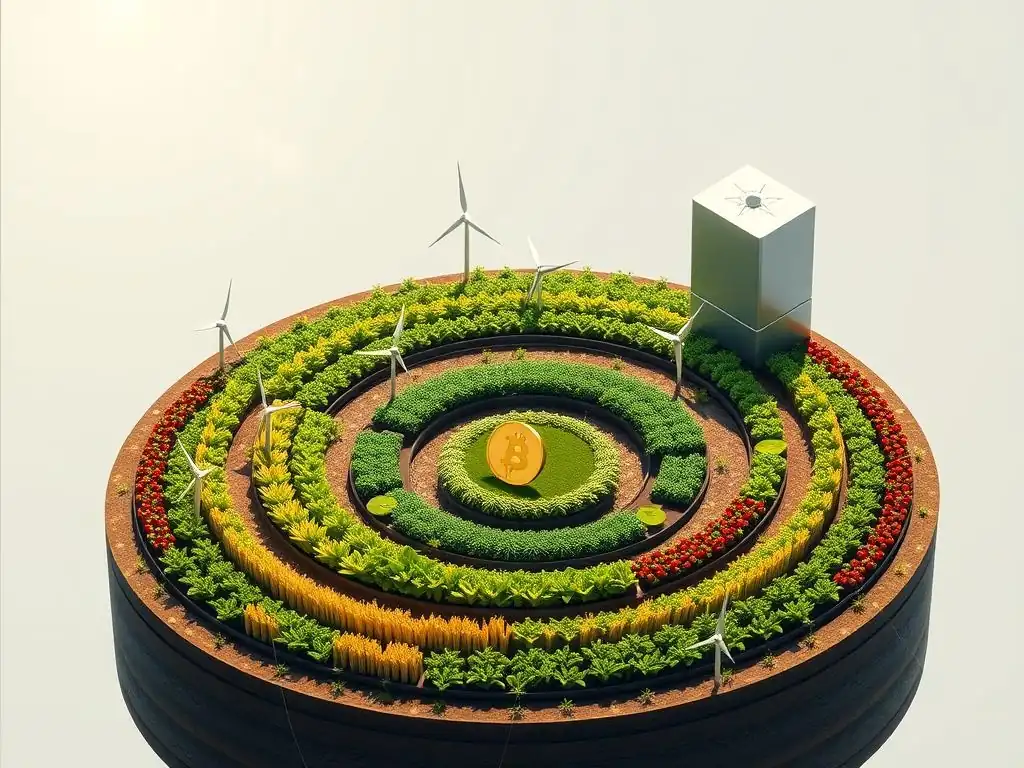
Exploring Eco-Conscious Yield Farming Strategies
Yield farming, a core component of DeFi, involves users depositing cryptocurrency into liquidity pools or lending protocols to earn yield in the form of transaction fees or governance tokens. While lucrative, traditional yield farming often occurred on energy-intensive chains (historically) or involves frequent, costly transactions (gas fees) for depositing, withdrawing, and claiming rewards. Eco-conscious yield farming strategies aim to mitigate these environmental impacts.
These strategies primarily involve favoring platforms and protocols built on energy-efficient blockchains (like PoS chains, DPoS chains, or L2s) over those on PoW chains. Users can choose to provide liquidity or stake on networks that have a significantly lower carbon footprint per transaction. Furthermore, protocols are emerging that offer yield farming opportunities tied to green assets, such as tokenized carbon credits or tokens from renewable energy projects.
This aligns financial incentives with environmental goals, encouraging participation in activities that support sustainability. Exploring platforms that minimize on-chain transactions through efficient smart contract design or batching also contributes to more Ecofriendly DeFi solutions for yield farmers.
Reducing the Environmental Impact of Liquidity Mining
Liquidity mining, a specific form of yield farming, rewards users with protocol tokens for providing liquidity. This often involves depositing pairs of tokens into a DEX's liquidity pool. The environmental impact arises from the transactions required to enter and exit positions, claim rewards, and manage impermanent loss, especially on networks with high gas fees and energy consumption.
To reduce the environmental impact of liquidity mining, users can prioritize pools on energy-efficient L2 scaling solutions or alternative PoS/DPoS chains. These platforms offer significantly lower transaction costs and energy consumption per operation. Some protocols are also designing liquidity mining programs that require fewer on-chain interactions, perhaps by accumulating rewards off-chain and allowing claiming in batches.
Additionally, platforms focused on sustainable assets, like those involving tokenized carbon, offer liquidity mining opportunities that directly support environmental initiatives, creating a positive feedback loop for Ecofriendly DeFi solutions. Choosing pools on networks like Polygon, Arbitrum, or Optimism dramatically reduces the carbon footprint compared to similar activities on legacy PoW chains.
The Role of NFTs in Promoting Green Initiatives within DeFi
Green NFTs: Supporting Environmental Causes Through Digital Art
Non-Fungible Tokens (NFTs), while often associated with digital art and collectibles, can also play a role in promoting green initiatives, sometimes intersecting with the DeFi space. "Green NFTs" are typically minted on energy-efficient blockchains (like Flow, Tezos, or PoS Ethereum) or are explicitly linked to environmental causes. Artists and projects can donate a portion of NFT sales proceeds to environmental charities, conservation efforts, or climate research.
Beyond direct donations, NFTs can represent ownership in environmental assets, such as plots of protected land, shares in renewable energy projects, or even tokenized trees. Platforms are exploring ways to use NFTs to fractionalize ownership of large-scale environmental assets, making investment in conservation or green infrastructure more accessible. While the primary use case of NFTs is not financial in the traditional DeFi sense, their ability to uniquely represent ownership or participation can be leveraged to create incentives and funding mechanisms for environmental projects, thus contributing to the broader goal of Ecofriendly DeFi solutions by channeling funds towards sustainable causes.
Using NFTs to Track and Verify Carbon Offsets
NFTs can also be used as a mechanism for tracking and verifying the retirement of carbon credits or other environmental claims. While tokenized fungible tokens like BCT or MCO2 represent the carbon credit itself, an NFT could potentially represent the unique certificate of retirement for a specific batch of credits. This could add an additional layer of transparency and immutability, proving that a specific offset has been claimed and retired and cannot be used again.
Projects are exploring using NFTs to represent participation in specific climate actions, like planting a tree or investing in a solar panel. The NFT could serve as a unique, verifiable badge of participation. While still an emerging area, the combination of the unique identification property of NFTs and the financial mechanisms of DeFi could create innovative ways to fund, track, and verify environmental actions, offering novel approaches within the realm of Ecofriendly DeFi solutions. For example, an NFT could represent a stake in a tokenized renewable energy farm, with yield distributed via DeFi protocols.
Challenges and Obstacles to Widespread Adoption of Eco-Friendly DeFi
Scalability Issues and Transaction Costs
While significant progress has been made with L2 solutions and alternative chains, scalability remains a challenge for widespread, low-cost DeFi adoption, even for eco-friendly options. Even on PoS chains or L2s, periods of high network activity can lead to increased transaction fees (gas costs), although typically much lower than historical PoW levels. High fees can price out users, especially in developing economies, hindering the goal of inclusive finance.
Achieving truly massive scale comparable to traditional financial systems while maintaining decentralization and low environmental impact is an ongoing technical hurdle. While L2 rollups offer significant improvements, they still have limitations in terms of throughput and latency for certain types of applications. Further innovation in scaling technology is required to support a global, high-frequency DeFi ecosystem based entirely on Ecofriendly DeFi solutions.
Regulatory Uncertainty Surrounding Green DeFi
The regulatory landscape for both cryptocurrencies and DeFi is still evolving globally. Adding the layer of "green" initiatives, such as tokenized carbon credits or environmental NFTs, introduces additional complexity. Regulators are grappling with how to classify and oversee these new digital assets and activities. Uncertainty around how tokenized carbon credits will be treated (e.g., as securities, commodities, or something else) can create legal risks for projects and participants.
Furthermore, there's a risk of "greenwashing," where projects market themselves as eco-friendly without providing verifiable proof of their environmental claims. Regulators may step in to establish standards or require audits for projects making sustainability claims. This regulatory uncertainty can slow down innovation and adoption, as businesses and investors may be hesitant to engage with Ecofriendly DeFi solutions until there is clearer guidance.
The Need for Greater Awareness and Education
Despite the environmental concerns surrounding blockchain being widely discussed, awareness and understanding of Ecofriendly DeFi solutions are not yet universal among users, developers, and investors. Many users may not be aware of the energy consumption differences between various blockchains or the existence of L2 scaling solutions. Developers might default to familiar, but less efficient, implementation patterns.
Educating the community about the importance of choosing energy-efficient platforms, utilizing L2s, and supporting projects with explicit environmental goals is crucial. Highlighting the success stories of projects like KlimaDAO or the impact of Ethereum's transition to PoS can help shift perceptions and drive adoption of greener practices. Overcoming the knowledge gap is essential for the widespread embrace of sustainable decentralized finance.
The Future of Green DeFi: Trends and Predictions
Increased Adoption of Sustainable Consensus Mechanisms
The trend towards energy-efficient consensus mechanisms is expected to accelerate. Following Ethereum's successful transition, more older blockchains may explore similar moves to PoS or hybrid models. New blockchains launching specifically for DeFi or other applications are overwhelmingly choosing PoS, DPoS, PoA, or novel, energy-efficient alternatives like PoH.
This widespread shift away from PoW will drastically reduce the overall energy footprint of the blockchain space, making the vast majority of DeFi activity inherently more sustainable. As the technology matures and becomes more battle-tested, the perceived risks associated with non-PoW consensus mechanisms are decreasing, paving the way for their broader adoption across the ecosystem. This fundamental shift is perhaps the most significant driver towards a future dominated by Ecofriendly DeFi solutions.
Greater Integration of Renewable Energy Sources
While moving to PoS reduces energy consumption, the energy source still matters. There is a growing focus within the blockchain and crypto mining industries (where PoW still exists) on sourcing energy from renewables. Initiatives are exploring ways to incentivize the use of solar, wind, hydro, and geothermal power for validating transactions or mining.
For PoS networks, while energy consumption is minimal, the energy used by validators still contributes to the footprint. There's a push for validators to power their operations using renewable energy. Furthermore, DeFi protocols themselves could potentially integrate with renewable energy markets, allowing users to invest in renewable projects or trade tokenized renewable energy certificates. This focus on the energy source, in addition to consumption, will further enhance the environmental credentials of Ecofriendly DeFi solutions.
Growing Demand for Environmentally Responsible DeFi Products
As climate awareness grows globally, users, investors, and institutions are increasingly demanding products and services that align with their environmental values. This trend is expected to impact the DeFi space significantly. Users may prefer to interact with protocols known for their low carbon footprint or those that actively support environmental causes.
This growing demand will incentivize developers and entrepreneurs to build and promote Ecofriendly DeFi solutions. We can anticipate more DeFi protocols launching on or migrating to energy-efficient chains, offering yield farming opportunities tied to green assets, or integrating carbon offsetting features directly into their platforms. Investment vehicles within DeFi focused on environmental, social, and governance (ESG) criteria are also likely to become more prominent, channeling capital towards sustainable initiatives within and outside the blockchain ecosystem.
Conclusion: Embracing a Greener Future for Decentralized Finance
The Importance of Supporting Eco-Friendly DeFi Solutions
The environmental impact of technology is a critical concern in the 21st century. For decentralized finance to fulfill its promise of revolutionizing finance and becoming a cornerstone of the future global economy, it must do so responsibly. Supporting Ecofriendly DeFi solutions is not merely an option but a necessity. This support can take many forms: users choosing to transact on energy-efficient networks and L2s, developers building protocols with sustainability in mind, investors allocating capital to green DeFi projects, and educators raising awareness about the importance of environmental considerations in the space.
By prioritizing eco-friendliness, the DeFi community can mitigate the negative externalities associated with blockchain technology, improve its public perception, and align with global efforts to combat climate change. This collective effort is vital for building a decentralized financial system that is not only innovative and inclusive but also sustainable for the planet.
Building a Sustainable and Inclusive Financial Ecosystem with Blockchain
Blockchain technology holds immense potential to create a more open, efficient, and inclusive financial system. However, realizing this potential requires a conscious commitment to sustainability. By embracing and developing Ecofriendly DeFi solutions, the industry can build an ecosystem that provides financial access and opportunity without imposing an unacceptable environmental cost.
The progress already made with PoS, L2 scaling, and dedicated green DeFi projects demonstrates that a sustainable decentralized future is achievable. Continued innovation in energy efficiency, integration with renewable energy, and the development of financial tools for climate action will be key. The goal is to build a global financial infrastructure powered by blockchain that serves humanity and the planet, proving that financial innovation and environmental responsibility can go hand in hand.
Frequently Asked Questions
What are Ecofriendly DeFi solutions, and why are they important?
Ecofriendly DeFi solutions aim to reduce the environmental impact of decentralized finance. This is important because traditional DeFi can consume significant energy, particularly through Proof-of-Work consensus mechanisms.
How do Ecofriendly DeFi solutions differ from traditional DeFi protocols?
The main difference lies in their energy consumption. Ecofriendly solutions often utilize more sustainable consensus mechanisms, like Proof-of-Stake, or focus on carbon offsetting initiatives.
What are some examples of Ecofriendly DeFi solutions currently available?
Examples include DeFi platforms built on Proof-of-Stake blockchains like Cardano and Solana, as well as protocols that actively invest in carbon offsetting or renewable energy projects.
How can regulation impact the development and adoption of Ecofriendly DeFi solutions?
Regulation can incentivize the adoption of sustainable practices in DeFi by providing clear guidelines and standards for environmental impact. This could drive more investment into ecofriendly projects.
What is the future outlook for Ecofriendly DeFi solutions, and what challenges remain?
The future looks promising, with growing demand for sustainable financial systems. However, challenges remain in ensuring transparency and accountability regarding environmental claims and impact measurement.
Final Reflection: Cultivating a Sustainable Financial Future
The exploration of Ecofriendly DeFi solutions reveals a critical intersection of technological innovation and environmental responsibility. The urgency of addressing climate change demands that every sector, including finance, actively seeks sustainable alternatives. This article highlights the promising potential of DeFi to evolve beyond its energy-intensive origins and embrace practices that minimize its ecological footprint, paving the way for a truly sustainable financial ecosystem.
The shift towards Ecofriendly DeFi solutions is not merely a trend; it represents a fundamental rethinking of how we interact with finance and technology. This evolution is deeply personal for me, as it underscores the importance of aligning our technological advancements with our ethical responsibilities to future generations. We do not inherit the earth from our ancestors, we borrow it from our children.
This ancient proverb resonates profoundly as we contemplate the long-term consequences of our financial choices and the imperative to build a more sustainable and equitable world.
As you navigate the evolving landscape of decentralized finance, I invite you to consider the environmental impact of your choices. Seek out and support projects that prioritize sustainability, advocate for responsible innovation, and contribute to a future where financial prosperity and ecological well-being go hand in hand. Let us collectively cultivate a financial ecosystem that not only empowers individuals but also safeguards the planet for generations to come.
Embrace the Future: Power Up Sustainable DeFi!
Thank you for exploring the world of eco-friendly DeFi solutions with us! Now that you understand the potential of green finance in the decentralized world, it's time to take action and help build a more sustainable blockchain ecosystem.
Here's how you can get involved:
- Research and invest in DeFi projects that focus on sustainability, such as those utilizing proof-of-stake or renewable energy sources to operate. This is the most impactful step you can take.
- Learn about alternative blockchain technologies, like layer-2 scaling solutions or sidechains, that help reduce the carbon footprint of transactions on major networks.
- Share your insights! Start a discussion on social media or in the comments about your favorite green DeFi projects and encourage others to join the movement.
What innovative green DeFi projects are you most excited to see grow, and how will you contribute to their success? Let’s work together to build a more sustainable financial future!
Leave a Reply