
The Future of Environmental Governance: Is Blockchain the Solution?

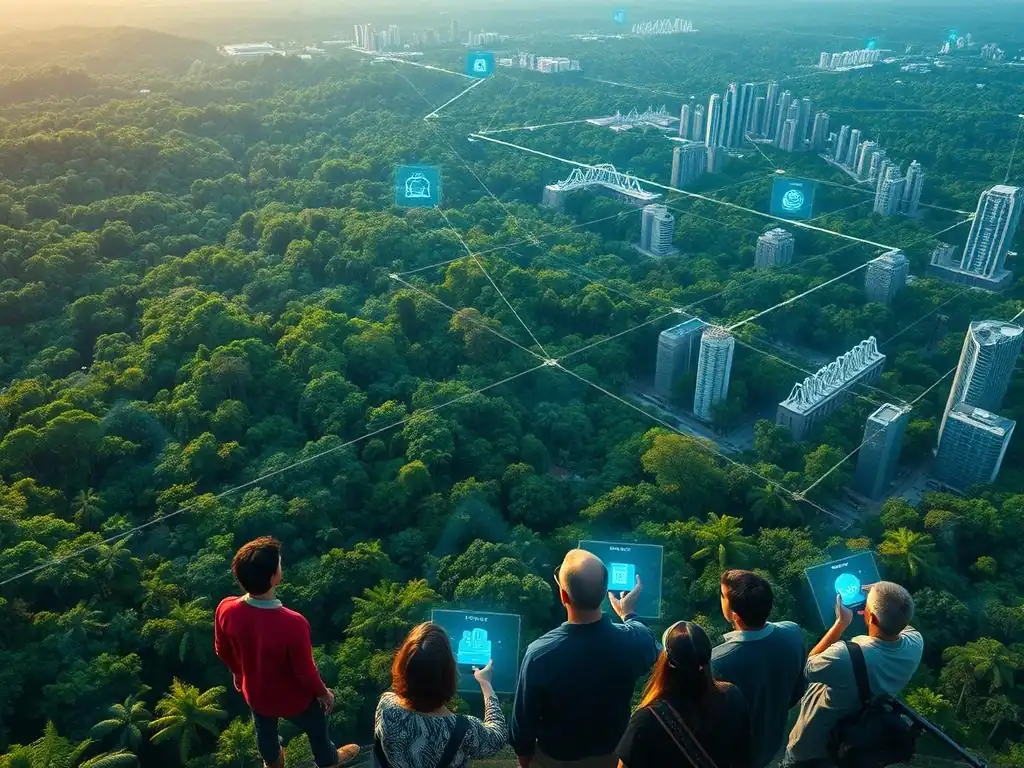
Welcome to Blockchain Trends, where we delve into the revolutionary world of blockchain technology and its vast potential beyond cryptocurrencies. Today, we invite you to explore a fascinating intersection of innovation and sustainability with our main article, "The Future of Environmental Governance: Is Blockchain the Solution?" Here, we unravel how blockchain environmental governance solutions could reshape our approach to ecological challenges and drive accountability in a rapidly changing world. Are you ready to discover how decentralized systems might hold the key to a greener future? Join us as we embark on this intriguing journey!
The Future of Environmental Governance: Is Blockchain the Solution?
- Introduction: The Urgent Need for Enhanced Environmental Governance
- Understanding Blockchain Technology for Environmental Applications
- Blockchain Environmental Governance Solutions: A Detailed Overview
- Benefits of Blockchain-Based Environmental Governance
- Challenges and Limitations of Blockchain in Environmental Governance
- Case Studies: Successful Implementations of Blockchain for Environmental Protection
-
The Future of Blockchain Environmental Governance Solutions: Trends and Predictions
- Integration with IoT and other Emerging Technologies
- Development of New Blockchain Platforms for Environmental Applications
- Increased Adoption by Governments and Organizations
- The Role of Blockchain in Achieving Sustainable Development Goals (SDGs)
- Evolution of Environmental DAOs Towards Community-Led Conservation
- Conclusion: Blockchain as a Catalyst for Sustainable Environmental Governance
-
Frequently Asked Questions
- What are some key benefits of using blockchain for environmental governance?
- How can blockchain technology help combat illegal logging and deforestation?
- What role can blockchain play in carbon credit trading and offsetting?
- What are some challenges to implementing blockchain-based environmental governance solutions?
- How does regulation impact the adoption of blockchain in environmental governance?
- Final Reflection: Embracing Transparency for a Sustainable Tomorrow
- Empower the Planet: Begin Your Blockchain Journey Today!
Introduction: The Urgent Need for Enhanced Environmental Governance
Environmental Challenges Demanding Innovative Solutions
The planet faces unprecedented environmental challenges, from accelerating climate change and biodiversity loss to pervasive pollution of air, water, and soil. According to reports from the Intergovernmental Panel on Climate Change (IPCC), global temperatures have already risen by approximately 1.1°C above pre-industrial levels, leading to more frequent and intense extreme weather events.
Concurrently, the World Wildlife Fund's Living Planet Report indicates a 69% average decrease in monitored wildlife populations between 1970 and 2018, highlighting a severe biodiversity crisis driven primarily by habitat destruction and overexploitation. These complex, interconnected problems require innovative solutions that can enhance transparency, accountability, and effectiveness in environmental management and conservation efforts.
Traditional governance structures often struggle to effectively address these global and interconnected issues due to limitations in data sharing, lack of trust between stakeholders, and difficulties in enforcing regulations across borders. For instance, tracking deforestation rates accurately across vast, remote areas remains challenging, and ensuring compliance with international agreements like the Paris Agreement requires robust monitoring and verification mechanisms that are often cumbersome and prone to errors or manipulation.
The scale and urgency of environmental degradation necessitate exploring novel approaches, such as blockchain environmental governance solutions, that can provide the necessary infrastructure for more efficient, transparent, and collaborative global environmental stewardship.
Exploring Blockchain's Potential for Sustainable Development
Blockchain technology, known for its decentralized and immutable ledger system, offers unique characteristics that hold significant promise for revolutionizing environmental governance and contributing to sustainable development goals. Its ability to create transparent and tamper-proof records can be leveraged to track environmental impacts throughout supply chains, from the origin of raw materials to the final product, helping to identify and mitigate unsustainable practices.
Furthermore, smart contracts – self-executing contracts with the terms of the agreement directly written into code – can automate environmental compliance checks and trigger actions based on predefined conditions, reducing the need for manual oversight and minimizing the potential for human error or corruption.
Beyond tracking and automation, blockchain can also facilitate innovative financing mechanisms for environmental projects. Concepts like tokenization of environmental assets, such as carbon credits or biodiversity offsets, can create new markets and incentivize conservation efforts. Decentralized Autonomous Organizations (DAOs) powered by blockchain can enable more democratic and community-driven environmental initiatives, allowing stakeholders to collectively manage resources and make decisions. Exploring these diverse applications is crucial for unlocking the full potential of blockchain environmental governance solutions to build a more sustainable future.
Why Traditional Environmental Governance Systems Fall Short
Traditional environmental governance systems, often centralized and bureaucratic, face inherent limitations that hinder their effectiveness. Information silos between government agencies, non-governmental organizations (NGOs), and private sector entities make data sharing difficult, leading to incomplete or inconsistent environmental data that impedes informed decision-making. For example, monitoring pollution levels might involve data collected independently by multiple bodies using different standards, making aggregation and analysis complex. This fragmentation can obscure the true scale of environmental problems and complicate the coordination of mitigation efforts.
Furthermore, traditional systems often suffer from a lack of transparency and accountability. It can be challenging for the public or watchdogs to verify claims made by corporations or governments regarding environmental compliance or the impact of specific projects. This opacity can foster distrust and create opportunities for greenwashing or non-compliance. The slow pace of regulatory processes and the difficulty in enforcing penalties across jurisdictions also weaken the efficacy of existing frameworks. These shortcomings highlight the need for more robust, transparent, and collaborative systems, which blockchain environmental governance solutions are uniquely positioned to provide.
Understanding Blockchain Technology for Environmental Applications
Blockchain Basics: A Decentralized and Transparent Ledger
At its core, blockchain is a distributed ledger technology that records transactions across many computers in a way that is secure, transparent, and tamper-resistant. Instead of a single central database, the ledger is shared and synchronized among all participants in the network. Each new transaction or block of data is cryptographically linked to the previous one, forming a chain.
Once a block is added to the chain, it is extremely difficult to alter or remove it without the consensus of the majority of network participants, ensuring the integrity and immutability of the data. This decentralized nature eliminates the need for a central authority or intermediary to validate transactions, distributing trust across the network.
This fundamental design makes blockchain inherently resistant to manipulation and provides a high degree of transparency, as network participants can typically view the transaction history. While the identity of parties involved might be pseudonymous, the record of their interactions is publicly verifiable on the chain. This transparency is a key characteristic that distinguishes blockchain from traditional databases and is particularly relevant for applications requiring public trust and verifiability, such as blockchain environmental governance solutions where tracking compliance or resource flows is critical.
Key Features of Blockchain: Immutability, Transparency, and Security
The power of blockchain technology for environmental applications stems from its core features: immutability, transparency, and security. Immutability means that once data is recorded on the blockchain, it cannot be altered or deleted. This is crucial for maintaining reliable records of environmental data, such as pollution emissions, resource extraction, or conservation activities, preventing data falsification or manipulation that could undermine environmental regulations and accountability. For instance, an immutable record of carbon offset transactions ensures that the same offset cannot be sold multiple times.
Transparency, as mentioned earlier, allows stakeholders to view and verify the data on the ledger. This shared visibility can significantly improve trust among diverse parties involved in environmental initiatives, from governments and corporations to NGOs and local communities. While specific details might be kept private off-chain, the fact that a transaction or event occurred can be verified on the public or permissioned blockchain.
Security is ensured through sophisticated cryptography, which protects the data within each block and the links between them. This cryptographic security makes it extremely difficult for malicious actors to tamper with the ledger, providing a robust foundation for building secure blockchain environmental governance solutions.
How Blockchain Can Revolutionize Environmental Management
Blockchain's unique capabilities offer transformative potential for various aspects of environmental management. By providing a shared, transparent, and immutable ledger, it can significantly improve the tracking and verification of environmental data and actions. For example, tracking the movement of goods through supply chains can verify the sustainable sourcing of materials like timber or minerals, ensuring compliance with environmental standards. This level of transparency can empower consumers to make informed choices and hold companies accountable for their environmental footprint.
Furthermore, blockchain can enable more efficient and trustworthy environmental markets, such as those for carbon credits or renewable energy certificates. By providing a secure and transparent platform for issuing, trading, and retiring these assets, it can reduce fraud and increase market liquidity.
Smart contracts can automate the distribution of funds for conservation projects based on verifiable outcomes, such as successful reforestation or habitat restoration, ensuring that funding is directly tied to impact. These applications demonstrate how blockchain environmental governance solutions can move beyond traditional systems, offering more dynamic, trustworthy, and effective ways to manage environmental resources and address pressing challenges.
Blockchain Environmental Governance Solutions: A Detailed Overview
Tracking and Monitoring Supply Chains with Blockchain
One of the most impactful applications of blockchain environmental governance solutions is in enhancing the transparency and traceability of global supply chains. Complex supply chains often involve numerous intermediaries, making it difficult to verify the origin of materials, ensure ethical sourcing, or track environmental impacts like carbon emissions or waste generation at each stage. By creating a shared, immutable record of transactions and movements along the supply chain, blockchain allows stakeholders – from producers and manufacturers to regulators and consumers – to access verified information about a product's journey.
For example, a pilot project tracked tuna from boat to plate using blockchain, providing verifiable data on fishing location, species, and handling practices. This helps combat illegal fishing and ensures seafood sustainability. Similarly, in the timber industry, blockchain can record the origin of wood products, verifying that they come from sustainably managed forests and not from illegal logging operations. This level of granular traceability, enabled by blockchain environmental governance solutions, empowers businesses to demonstrate their commitment to sustainability and allows regulators to enforce standards more effectively.
Enhancing Transparency in Carbon Markets Using Blockchain
Carbon markets, designed to incentivize emissions reductions, have historically faced challenges related to transparency, double-counting of credits, and market manipulation. Blockchain technology offers a promising solution to these issues by providing a transparent and secure platform for the issuance, trading, and retirement of carbon credits. Each credit can be represented as a unique digital token on the blockchain, with its entire lifecycle recorded on the immutable ledger. This ensures that each credit is unique and can only be retired once, preventing double-counting.
Platforms are emerging that leverage blockchain for carbon credit issuance and trading, aiming to increase trust and efficiency in these markets. For instance, some initiatives are tokenizing verified carbon offsets, allowing them to be traded more easily and transparently. This not only enhances the integrity of the market but also potentially increases liquidity, making it more attractive for companies and individuals to invest in emissions reduction projects. The transparency provided by blockchain environmental governance solutions in carbon markets is vital for building confidence in the effectiveness of these climate mitigation tools.
Smart Contracts for Automated Environmental Compliance
Smart contracts on the blockchain can automate the execution of environmental regulations and agreements based on predefined conditions and verifiable data inputs. This can significantly improve compliance rates and reduce the burden of manual monitoring and enforcement. For instance, a smart contract could be programmed to automatically release payment for an environmental service (like maintaining a protected forest area) only when verifiable data confirms that the service has been performed (e.g., satellite imagery showing no deforestation).
Another application involves automating compliance reporting. Companies could use smart contracts to automatically submit verified emissions data to regulatory bodies based on real-time sensor readings. If emissions exceed a predefined threshold, the smart contract could automatically trigger a notification or even a penalty, as stipulated in the contract terms. This automation, powered by blockchain environmental governance solutions, reduces the potential for delays, errors, or intentional non-compliance, creating a more efficient and proactive regulatory environment.
Decentralized Autonomous Organizations (DAOs) for Environmental Projects
Decentralized Autonomous Organizations (DAOs) are blockchain-based organizations governed by rules encoded as computer programs (smart contracts), rather than by a central authority. This structure allows for collective decision-making and resource management among stakeholders, making DAOs well-suited for managing environmental projects that require collaboration among diverse parties. Environmental DAOs can pool funds, vote on project proposals (e.g., which conservation initiatives to support), and manage the execution of these projects transparently on the blockchain.
For example, a DAO could be formed to manage a community-based conservation fund. Members could contribute funds (often in cryptocurrency or tokens) and vote on how those funds are used for local environmental initiatives, such as tree planting or waste cleanup. The allocation and use of funds would be recorded on the blockchain, providing transparency and accountability to all members. This decentralized approach, enabled by blockchain environmental governance solutions, can empower local communities and foster a sense of ownership and collective responsibility for environmental stewardship.
Blockchain for Reforestation Credit Management
Reforestation and afforestation projects are critical for carbon sequestration and biodiversity restoration, but managing and verifying the impact of these projects can be complex. Blockchain can provide a robust system for tracking and managing reforestation credits. When trees are planted and their growth is monitored (perhaps using satellite imagery or ground sensors), this data can be recorded on the blockchain. This allows for the issuance of verifiable reforestation credits, representing a specific amount of sequestered carbon or restored habitat.
These credits can then be tokenized and traded on a blockchain-based marketplace. The immutable ledger ensures that each credit corresponds to verified reforestation efforts and prevents double-counting. This system creates a transparent mechanism for financing reforestation projects by allowing companies and individuals to purchase verifiable credits, knowing that their investment is supporting real environmental outcomes. Such blockchain environmental governance solutions provide a trustworthy framework for scaling up reforestation efforts and leveraging market mechanisms for ecological restoration.
Benefits of Blockchain-Based Environmental Governance
Increased Transparency and Accountability
One of the most significant benefits of blockchain environmental governance solutions is the dramatic increase in transparency and accountability they can provide. By recording environmental data, transactions, and compliance actions on a shared, immutable ledger, blockchain makes this information accessible and verifiable to authorized stakeholders. This inherent transparency reduces information asymmetry and makes it much harder for parties to hide non-compliance or misrepresent their environmental performance.
For instance, tracking supply chains on a blockchain allows consumers and regulators to see verified information about a product's environmental footprint. In carbon markets, blockchain makes the issuance and trading of credits publicly visible, reducing the risk of fraud or double-counting. This enhanced transparency fosters greater accountability, as companies and individuals know that their actions are being recorded on an unalterable ledger, incentivizing more responsible environmental behavior.
Improved Data Integrity and Security
The cryptographic nature of blockchain ensures a high level of data integrity and security. Once data is added to the blockchain, it is extremely difficult to alter or delete it without the consensus of the network. This immutability is crucial for environmental data, which must be reliable for accurate monitoring, reporting, and verification. Traditional databases are more vulnerable to hacking or internal manipulation, potentially leading to inaccurate environmental reporting or fraudulent activities.
Blockchain's distributed nature also adds a layer of security. There is no single point of failure that can be targeted by attackers to compromise the entire system. Data is replicated across multiple nodes, making it highly resilient. This improved data integrity and security provided by blockchain environmental governance solutions build trust in the information used for environmental decision-making and enforcement.
Enhanced Efficiency and Reduced Costs
Implementing blockchain environmental governance solutions can lead to significant improvements in efficiency and reductions in costs compared to traditional systems. Automating processes through smart contracts, such as compliance checks or payment disbursements based on verified environmental outcomes, eliminates the need for manual intervention and reduces administrative overhead. This can speed up processes like permit issuance, reporting, and verification.
Furthermore, by creating direct, peer-to-peer interactions between parties on the blockchain, intermediaries can be reduced or eliminated in areas like environmental markets or supply chain tracking. This disintermediation can lower transaction costs and increase the efficiency of environmental management processes. While initial setup costs for blockchain solutions can be substantial, the long-term operational efficiencies can offer significant savings.
Fostering Collaboration and Trust among Stakeholders
Environmental challenges often require collaboration among a diverse group of stakeholders, including governments, businesses, NGOs, scientists, and local communities. Building trust among these parties, who may have conflicting interests or historical mistrust, is crucial for effective environmental governance. Blockchain's transparency and immutability can serve as a foundation for building this trust.
By providing a shared, neutral, and verifiable record of environmental data and actions, blockchain creates a single source of truth that all parties can rely on. This shared understanding and verifiable data can facilitate collaboration, enable joint monitoring efforts, and support the development of consensus on environmental issues. Blockchain environmental governance solutions can thus act as a catalyst for breaking down silos and fostering more effective partnerships for environmental protection.
Empowering Local Communities in Environmental Management
Blockchain technology has the potential to empower local communities, particularly those directly impacted by environmental degradation or involved in conservation efforts. By participating in blockchain-based environmental projects, such as community-managed DAOs for conservation funds or blockchain systems for tracking local resource use, communities can gain greater control and transparency over environmental decision-making and resource management.
For instance, a community involved in a reforestation project could use a blockchain platform to track tree planting progress and receive tokenized payments based on verified milestones. This direct link between their efforts and tangible rewards, managed transparently on the blockchain, can incentivize participation and provide a sense of ownership. Blockchain environmental governance solutions can thus support bottom-up approaches to conservation and ensure that the benefits of environmental projects are shared equitably with local populations.
Challenges and Limitations of Blockchain in Environmental Governance

Scalability Issues and Energy Consumption
Despite its potential, blockchain technology faces significant challenges that need to be addressed before widespread adoption in environmental governance. One major concern is scalability. Public blockchains, like Bitcoin or Ethereum (though Ethereum is transitioning), can process a limited number of transactions per second compared to traditional payment systems. While newer blockchain platforms are designed for higher throughput, scaling to handle the vast amount of environmental data and transactions globally remains a technical hurdle.
Another significant challenge, particularly with proof-of-work blockchains, is high energy consumption. The computational power required for mining new blocks consumes substantial amounts of electricity, raising concerns about the environmental footprint of the technology itself. While proof-of-stake and other consensus mechanisms offer more energy-efficient alternatives, the energy consumption of some blockchain networks remains a paradox for blockchain environmental governance solutions aiming for sustainability.
Regulatory Uncertainty and Legal Frameworks
The regulatory landscape for blockchain technology is still evolving in many jurisdictions, creating uncertainty for implementing blockchain environmental governance solutions. Clear legal frameworks are needed to define the legal status of blockchain-based data, smart contracts, and tokenized environmental assets. For example, the legal enforceability of smart contracts in the context of environmental regulations is not yet fully established in many countries.
Furthermore, environmental regulations are often complex and jurisdiction-specific. Integrating blockchain solutions seamlessly into existing legal and regulatory structures requires careful consideration and potential legal reforms. Without clear guidelines and legal certainty, organizations may be hesitant to adopt blockchain for critical environmental compliance and governance functions.
Data Privacy Concerns and Security Risks
While blockchain offers transparency, it also presents challenges regarding data privacy, especially when dealing with sensitive environmental data related to specific locations, businesses, or individuals. Public blockchains are inherently transparent, meaning data recorded on them is visible to all participants. Ensuring that sensitive or proprietary environmental data is handled appropriately while maintaining the necessary transparency is a delicate balance.
Although blockchain is generally secure against tampering with recorded data, the systems built around the blockchain can be vulnerable to security risks, such as bugs in smart contract code, private key management issues, or attacks on off-chain data sources that feed information to the blockchain. Robust security protocols and careful system design are essential to mitigate these risks when deploying blockchain environmental governance solutions.
The Need for Interoperability and Standardization
The blockchain landscape is fragmented, with numerous different blockchain platforms and protocols. For blockchain environmental governance solutions to be truly effective on a global scale, there is a critical need for interoperability between different blockchain networks and traditional data systems. Data related to environmental issues often resides in various databases and is collected using different standards.
Developing common standards for environmental data representation on the blockchain and ensuring that different blockchain platforms can communicate and share information seamlessly are crucial challenges. Without interoperability and standardization, different blockchain environmental governance initiatives might operate in isolation, limiting their overall impact and preventing the creation of a comprehensive global environmental data infrastructure.
Overcoming the Digital Divide and Ensuring Inclusivity
Implementing blockchain environmental governance solutions requires access to technology, internet connectivity, and digital literacy. This poses a significant challenge in many parts of the world, particularly in developing countries and remote communities that are often at the forefront of environmental challenges and conservation efforts. The digital divide could exclude these crucial stakeholders from participating in and benefiting from blockchain-based environmental initiatives.
Ensuring inclusivity requires investing in digital infrastructure, providing education and training on blockchain technology, and designing user-friendly interfaces that are accessible to individuals with varying levels of technical expertise. Overcoming this digital divide is essential to ensure that blockchain environmental governance solutions empower, rather than marginalize, vulnerable communities and those most directly involved in environmental stewardship.
Case Studies: Successful Implementations of Blockchain for Environmental Protection
Blockchain for Sustainable Seafood Traceability
Several projects have successfully demonstrated the use of blockchain for tracking seafood from catch to consumption, enhancing sustainability and combating illegal, unreported, and unregulated (IUU) fishing. For example, a pilot program involving Bumble Bee Foods and SAP used a blockchain platform to track yellowfin tuna from Indonesia to the US. By scanning QR codes on the packaging, consumers could access information about where and when the fish was caught, by whom, and how it was processed.
This system provided verifiable proof of the fish's origin and journey, ensuring compliance with sustainability standards and providing transparency to consumers. The immutable record on the blockchain made it difficult to falsify information about the catch, helping to prevent IUU fishing products from entering the legitimate supply chain. This case highlights how blockchain environmental governance solutions can improve transparency and accountability in complex global supply chains.
Blockchain for Plastic Waste Recycling Incentives
Blockchain is also being used to incentivize and track plastic waste collection and recycling. Projects in various countries are issuing digital tokens to individuals who collect and bring in plastic waste. These tokens can then be exchanged for goods, services, or local currency, creating an economic incentive for waste management. The blockchain ledger records the amount of waste collected and the tokens distributed, providing a transparent and auditable system.
For instance, the Plastic Bank initiative uses a blockchain-powered platform to help people in poverty earn income by collecting plastic waste. The collected plastic is then processed and sold to companies as recycled material. The blockchain ensures that collectors receive fair compensation based on the amount of plastic they bring in and provides traceability for the recycled material. This demonstrates how blockchain environmental governance solutions can drive positive environmental behavior through innovative incentive mechanisms.
Blockchain for Monitoring Forest Carbon Credits
Monitoring and verifying forest carbon credits traditionally involves complex and costly processes. Blockchain is being explored and implemented to make this process more transparent and efficient. Projects are using a combination of satellite imagery, remote sensing, and ground-based data collection, with the verified data recorded on a blockchain. This data is then used to issue tokenized carbon credits representing the amount of carbon sequestered by the forest.
Platforms like Nori or Toucan Protocol are working to bring nature-based carbon credits onto the blockchain, aiming to increase the integrity and liquidity of the voluntary carbon market. By providing a transparent record of the forest project's location, methodology, and verified carbon sequestration data, blockchain ensures that the issued credits are legitimate and not double-counted. This application of blockchain environmental governance solutions is crucial for scaling up nature-based climate solutions like reforestation and forest preservation.
The Future of Blockchain Environmental Governance Solutions: Trends and Predictions
Integration with IoT and other Emerging Technologies
The future of blockchain environmental governance solutions will likely see deeper integration with other emerging technologies, particularly the Internet of Things (IoT). IoT devices, such as sensors monitoring air quality, water levels, soil conditions, or wildlife movements, can generate vast amounts of real-time environmental data. Recording this data directly onto a blockchain can create a secure, immutable, and transparent stream of environmental information.
This integration allows for automated monitoring and verification of environmental conditions and compliance. For example, smart sensors on industrial sites could report emission levels directly to a blockchain, triggering automated alerts or penalties via smart contracts if thresholds are exceeded. Combining blockchain's secure ledger with the real-time data capabilities of IoT promises more dynamic and responsive environmental management systems.
Development of New Blockchain Platforms for Environmental Applications
While existing blockchains like Ethereum or specialized platforms are being used for environmental projects, the unique requirements of blockchain environmental governance solutions may drive the development of new, purpose-built blockchain platforms. These platforms could be optimized for handling specific types of environmental data, ensuring scalability for large datasets, or incorporating features specifically designed for environmental markets or regulatory compliance.
These new platforms might focus on energy efficiency from the outset, utilizing consensus mechanisms with minimal environmental impact. They could also incorporate features for enhanced data privacy while maintaining necessary transparency, or include built-in tools for integrating with environmental monitoring technologies. The evolution of blockchain technology itself will likely yield more tailored and effective solutions for environmental challenges.
Increased Adoption by Governments and Organizations
As the potential benefits of blockchain environmental governance solutions become clearer and pilot projects demonstrate success, it is predicted that adoption by governments, international organizations, and corporations will increase. Governments could use blockchain for managing environmental permits, tracking natural resource extraction, or enhancing the transparency of environmental impact assessments.
International organizations might leverage blockchain for monitoring compliance with global environmental agreements or managing international climate finance flows transparently. Corporations, driven by regulatory requirements, consumer demand for sustainability, and the potential for cost savings, are likely to expand their use of blockchain for supply chain traceability and environmental reporting. This broader institutional adoption will be a key factor in scaling up the impact of blockchain on environmental governance.
The Role of Blockchain in Achieving Sustainable Development Goals (SDGs)
Blockchain environmental governance solutions are poised to play a significant role in helping achieve several of the United Nations Sustainable Development Goals (SDGs). Goals such as SDG 13 (Climate Action), SDG 14 (Life Below Water), SDG 15 (Life on Land), and SDG 12 (Responsible Consumption and Production) directly benefit from improved transparency, traceability, and accountability in environmental management.
By enabling more effective tracking of emissions, combating illegal fishing and deforestation, promoting sustainable supply chains, and facilitating climate finance, blockchain can provide the infrastructure needed to measure progress towards these goals more accurately and accelerate their achievement. Blockchain's potential to empower communities and foster collaboration also aligns with the spirit of global partnership central to the SDGs.
Evolution of Environmental DAOs Towards Community-Led Conservation
The concept of Decentralized Autonomous Organizations (DAOs) for environmental projects is still relatively nascent but holds immense potential. In the future, environmental DAOs are predicted to evolve into more sophisticated structures, enabling truly community-led conservation and environmental management initiatives on a larger scale. These DAOs could manage vast tracts of land, oversee conservation funds, or govern access to shared natural resources.
With refined governance models and user-friendly interfaces, environmental DAOs could empower local populations and indigenous communities to become direct stewards of their environment, making decisions and managing resources collectively and transparently on the blockchain. This evolution could shift power dynamics in environmental governance, leading to more equitable and effective conservation outcomes driven by those closest to the environmental issues.
Conclusion: Blockchain as a Catalyst for Sustainable Environmental Governance
Embracing Innovation for a Greener Future
The urgent environmental challenges facing the planet demand a fundamental shift in how we govern and manage our natural resources. Traditional systems, while foundational, often lack the transparency, efficiency, and accountability required to address complex, interconnected global issues like climate change and biodiversity loss effectively. Embracing technological innovation, particularly blockchain environmental governance solutions, offers a promising pathway towards a greener and more sustainable future.
Blockchain's core attributes – immutability, transparency, and security – provide a robust foundation for building more trustworthy and effective environmental management systems. From tracking supply chains and enhancing carbon markets to automating compliance and empowering communities, the potential applications of this technology are vast and directly address key limitations of existing governance frameworks. Leveraging these capabilities is not just an option, but increasingly a necessity for building a resilient planet.
The Path Forward: Collaboration, Education, and Implementation
Realizing the full potential of blockchain environmental governance solutions requires a concerted effort involving collaboration, education, and strategic implementation. Governments, businesses, technology developers, NGOs, and local communities must work together to design, test, and deploy blockchain-based systems that are tailored to specific environmental challenges and contexts. This collaboration is essential to ensure that solutions are practical, inclusive, and meet the needs of all stakeholders.
Equally important is widespread education about blockchain technology and its environmental applications. Building capacity and understanding among policymakers, industry professionals, and citizens is crucial for fostering adoption and addressing concerns related to the technology's complexities and limitations. Finally, moving beyond pilot projects to large-scale implementation, supported by appropriate regulatory frameworks and standards, will be key to transforming environmental governance and achieving significant, measurable environmental improvements globally.
Blockchain's Transformative Potential for Environmental Stewardship
Blockchain technology possesses transformative potential to revolutionize environmental stewardship by providing unprecedented levels of transparency, accountability, and efficiency. While challenges related to scalability, energy consumption, and regulation must be navigated, the ongoing development of the technology and increasing awareness of its benefits are paving the way for its broader adoption in environmental governance.
Blockchain environmental governance solutions are not a standalone panacea, but rather a powerful tool that, when integrated with other technologies and collaborative efforts, can significantly enhance our ability to monitor, manage, and protect the environment. By fostering trust, enabling verifiable actions, and empowering stakeholders, blockchain can act as a catalyst for positive change, helping humanity move towards a more sustainable and environmentally responsible future.
Frequently Asked Questions
What are some key benefits of using blockchain for environmental governance?
Blockchain offers enhanced transparency and traceability in environmental data, facilitating accountability and trust among stakeholders. This can lead to more effective monitoring and enforcement of environmental regulations.
How can blockchain technology help combat illegal logging and deforestation?
Blockchain's immutable ledger can track the origin and movement of timber, creating a verifiable chain of custody. This helps ensure sustainable sourcing and prevents illegally harvested wood from entering the market.
What role can blockchain play in carbon credit trading and offsetting?
Blockchain can create a more transparent and efficient system for carbon credit trading, reducing fraud and double-counting. It can also facilitate the direct connection between carbon offset projects and buyers.
What are some challenges to implementing blockchain-based environmental governance solutions?
Challenges include the scalability of blockchain networks, the energy consumption of some blockchain types, and the need for interoperability with existing systems.
How does regulation impact the adoption of blockchain in environmental governance?
Clear and supportive regulatory frameworks are crucial for fostering innovation and trust in blockchain-based environmental solutions. Uncertainty or overly restrictive regulations can hinder adoption and limit the technology's potential.
Final Reflection: Embracing Transparency for a Sustainable Tomorrow
The exploration of blockchain's potential in environmental governance, as detailed throughout this article, highlights its transformative power to foster transparency and accountability. While challenges remain, the promise of immutable records and decentralized decision-making offers a compelling vision for a future where environmental stewardship is not just a policy, but a verifiable reality.
The journey toward integrating blockchain into environmental governance is far from over, but its impact is already being felt in pilot projects and innovative initiatives around the globe. This potential to revolutionize how we monitor and manage our planet's resources resonates deeply, reminding us that technological advancements can be powerful tools for positive change. We are at an inflection point where technology can either exacerbate or alleviate the environmental crisis. Blockchain offers a path towards the latter, but only if we embrace its potential responsibly.
As we conclude this exploration of blockchain environmental governance solutions, I invite you to consider your own role in shaping this future. How can you leverage your knowledge, skills, and influence to support the development and implementation of these innovative technologies? Let us all strive to be active participants in building a more sustainable and transparent world, one block at a time.
Empower the Planet: Begin Your Blockchain Journey Today!
Thank you for exploring how blockchain can transform environmental governance. We hope this article has highlighted the exciting potential for creating a more transparent and sustainable future. Now, it's time to turn that knowledge into action.
Here are a few ways you can get involved:
- Explore open-source blockchain projects focused on environmental monitoring and reporting. Consider contributing your skills or ideas!
- Share this article with your network to spark conversations and raise awareness about blockchain's role in environmental solutions.
- Research blockchain-based carbon offsetting initiatives and support projects that align with your values.
What innovative application of blockchain for environmental protection excites you the most? What challenges do you anticipate in its widespread adoption? Share your thoughts below!
Leave a Reply