
Tokenizing Nature: Funding Conservation Efforts with BlockchainBased Systems

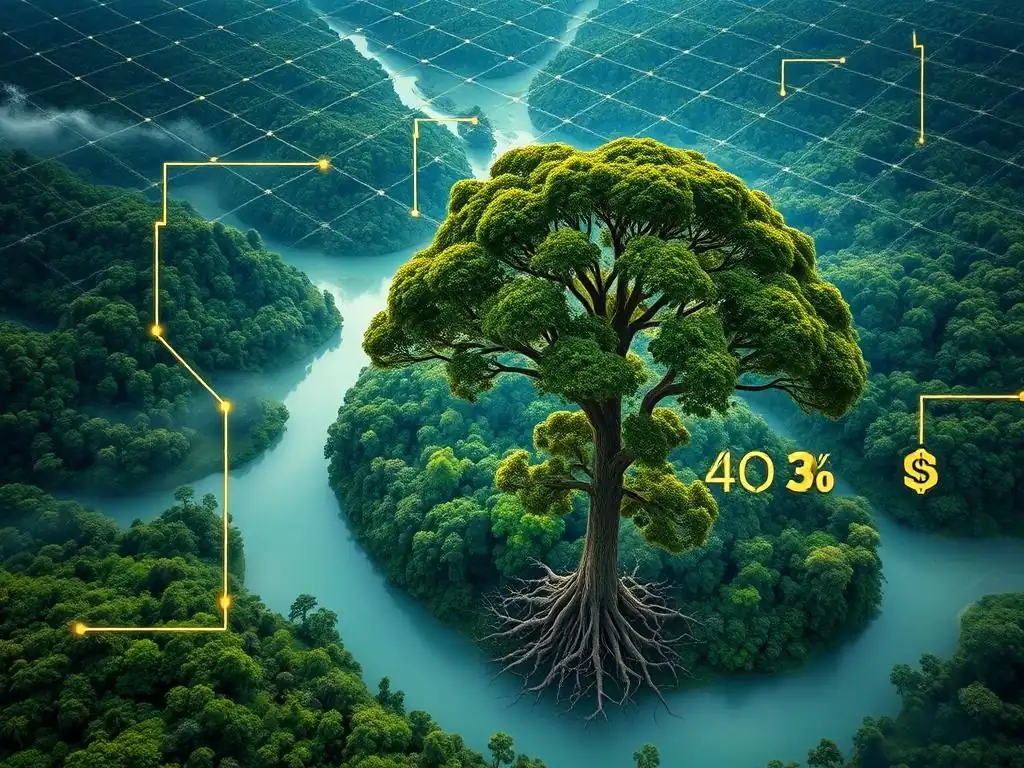
Welcome to Blockchain Trends, your go-to source for understanding the profound impact of blockchain technology beyond the hype. Are you ready to see how this revolutionary technology is being used to solve some of the world's most pressing problems?
Dive into our latest article, " Tokenizing Nature: Funding Conservation Efforts with Blockchain-Based Systems," and discover the exciting world of blockchain conservation funding opportunities. Could blockchain be the key to unlocking a sustainable future? Explore the possibilities and see how decentralized finance is making a real-world impact.
Tokenizing Nature: Funding Conservation Efforts with Blockchain-Based Systems
- Introduction: Blockchain's Role in Environmental Conservation
- Understanding Blockchain Conservation Funding Opportunities
- Exploring Different Blockchain-Based Conservation Models
- Case Studies: Successful Blockchain Conservation Initiatives
- Overcoming Challenges in Blockchain-Based Conservation Funding
- The Future of Blockchain and Environmental Conservation
- Investing in Blockchain Conservation: Opportunities and Considerations
- Conclusion: Blockchain as a Catalyst for Environmental Sustainability
-
Frequently Asked Questions
- How can blockchain technology facilitate conservation funding?
- What are "tokens" in the context of blockchain-based conservation?
- What are some potential benefits of using blockchain for conservation funding opportunities?
- What are some challenges or risks associated with using blockchain for conservation funding?
- How does tokenizing nature improve access to "Blockchain conservation funding opportunities"?
- Final Reflection: Seeds of Change in a Digital Garden
- Ignite Change: Reimagine Conservation Through Blockchain!
Introduction: Blockchain's Role in Environmental Conservation
The Growing Need for Innovative Conservation Funding
Environmental conservation faces a persistent and significant funding gap. Experts estimate that current spending on biodiversity conservation, for example, falls far short of the amount needed to halt species loss and protect critical ecosystems. Traditional funding mechanisms, often reliant on government budgets, philanthropic donations, or grants, are frequently insufficient, unpredictable, and can suffer from administrative inefficiencies and a lack of transparency regarding impact. This shortfall hampers efforts to protect forests, oceans, wildlife, and vital natural habitats, underscoring the urgent need for novel and scalable approaches to generate resources.
Furthermore, the complexity of global environmental challenges requires funding solutions that can mobilize capital from diverse sources, including private investors and the public. Existing financial instruments often struggle to effectively channel investment into granular, localized conservation projects or to provide investors with clear visibility into the ecological outcomes of their contributions. Developing new avenues that can tap into global markets and provide direct, transparent pathways for capital to flow towards conservation is paramount to closing this funding gap and unlocking significant blockchain conservation funding opportunities.
How Blockchain Technology Can Revolutionize Conservation Finance
Blockchain technology offers a compelling pathway to address many of the limitations inherent in traditional conservation finance. Its core properties—transparency, immutability, and the ability to facilitate peer-to-peer transactions without intermediaries—can fundamentally change how conservation projects are funded and managed. By enabling the creation of digital assets representing environmental value or outcomes, blockchain opens up possibilities for fractional ownership, increased liquidity, and broader investor participation in conservation initiatives.
The application of blockchain can streamline funding flows, reduce administrative overhead, and create verifiable records of transactions and, potentially, environmental impact. This enhanced accountability can build trust among donors, investors, and project implementers. Ultimately, blockchain technology has the potential to democratize access to conservation investment, allowing individuals and institutions globally to contribute to and benefit from successful environmental stewardship, thereby creating entirely new categories of blockchain conservation funding opportunities.
Understanding Blockchain Conservation Funding Opportunities
What is Tokenization of Nature?
Tokenization of nature refers to the process of representing natural assets, ecosystem services, or verifiable conservation outcomes as digital tokens on a blockchain. These tokens can represent a variety of environmental values, such as a metric tonne of sequestered carbon dioxide, a unit of biodiversity associated with a specific habitat restoration project, or even fractional ownership in conserved land. The tokens are recorded on a distributed ledger, providing a transparent and immutable history of their creation, ownership, and transfer.
This process transforms illiquid or complex environmental values into tradable digital assets. By standardizing these values into tokens, they can be more easily bought, sold, or used in decentralized finance (DeFi) applications. This allows for the creation of markets where participants can directly invest in or support specific conservation activities, making environmental assets accessible to a wider range of investors and generating novel blockchain conservation funding opportunities.
Benefits of Tokenizing Natural Assets for Conservation
Tokenizing natural assets offers several key benefits for conservation efforts. Firstly, it can unlock significant liquidity by allowing fractional ownership, making large or valuable natural assets accessible to smaller investors. An individual might not be able to buy an entire forest, but they could purchase tokens representing a portion of its carbon sequestration potential or biodiversity value. This broadens the potential investor base dramatically.
Secondly, tokenization enhances transparency and traceability. Every transaction involving a token is recorded on the blockchain, providing a clear audit trail of funding flows and ownership. When linked to verifiable environmental data (e.g., through oracles or robust MRV systems), tokens can also provide a clearer picture of the ecological impact being achieved. This transparency builds confidence and can attract more investment, creating more robust blockchain conservation funding opportunities. Additionally, tokens can potentially reduce transaction costs by removing intermediaries and facilitate direct payments to land stewards or conservation projects, ensuring a greater portion of funds reaches the ground.
Exploring Different Blockchain-Based Conservation Models
Conservation DAOs: Decentralized Autonomous Organizations for Environmental Protection
Conservation DAOs (Decentralized Autonomous Organizations) leverage blockchain technology to create member-owned and managed entities focused on environmental protection. These organizations operate based on rules encoded in smart contracts, and decisions regarding funding allocation, project selection, or governance are typically made through token-based voting mechanisms. This decentralized structure can empower communities and stakeholders directly involved in conservation efforts, giving them a greater say in how projects are run and funded.
For instance, a Conservation DAO might raise funds by issuing governance tokens. Token holders could then vote on proposals to acquire land for preservation, fund specific restoration projects, or support anti-poaching initiatives. An example could be a theoretical "Rainforest DAO" where token holders collectively decide which Amazonian land parcels to purchase and protect, or which sustainable businesses to support in the region. This model creates direct blockchain conservation funding opportunities governed by the collective will of participants, potentially increasing engagement and trust compared to traditional hierarchical structures.
Carbon Credit Tokenization: A Blockchain-Based Approach to Offset Emissions
Tokenizing carbon credits involves representing verified carbon offsets as digital tokens on a blockchain. Traditionally, carbon markets can be complex, illiquid, and sometimes suffer from issues of double-counting or lack of transparency. By bringing carbon credits onto a blockchain, platforms aim to create more efficient, transparent, and accessible markets for offsetting emissions. Each token typically represents one metric tonne of carbon dioxide equivalent (CO2e) that has been prevented from entering or removed from the atmosphere.
Projects like Toucan Protocol have bridged millions of tonnes of Verified Carbon Units (VCUs) from legacy registries onto blockchain networks, making them available as "Bridged Carbon" tokens (e.g., BCT, NCT). These tokens can then be used in various decentralized applications, including carbon pools or DeFi protocols. This process enhances liquidity and allows a wider range of participants, from large corporations to individual consumers, to easily purchase and retire carbon credits, thereby driving significant blockchain conservation funding opportunities for projects that generate these credits through activities like reforestation or renewable energy.
Biodiversity Tokens: Investing in Ecosystem Preservation
Biodiversity tokens are an emerging class of digital assets designed to channel investment directly into projects that protect and enhance biodiversity. Unlike carbon tokens which focus on a single metric (CO2e), biodiversity tokens aim to represent the value or outcome of preserving complex ecosystems and the species within them. The challenge lies in defining and verifying units of biodiversity in a standardized way, but various approaches are being explored, such as linking tokens to specific conservation actions, ecological metrics measured over time, or the health of a defined habitat area.
An initiative might issue biodiversity tokens where each token represents the protection of a certain area of coral reef for a year, or the successful restoration of a hectare of native grassland. Investors purchasing these tokens would directly fund the ongoing conservation work in those specific ecosystems. While still in early stages compared to carbon tokenization, biodiversity tokens hold immense potential to unlock dedicated blockchain conservation funding opportunities for the multitude of projects focused on saving species and restoring degraded habitats globally.
Case Studies: Successful Blockchain Conservation Initiatives
Regen Network: Facilitating Ecological Regeneration Through Blockchain
Regen Network is a leading example of a blockchain platform focused on ecological regeneration. It provides infrastructure for creating "Ecological State Protocols" and "Ecological Credits" that represent verified positive environmental outcomes. Land stewards, farmers, and conservation organizations can use the network to register projects, measure ecological improvements (such as soil carbon sequestration, biodiversity uplift, or water quality improvement), and issue digital credits based on these verified outcomes.
These ecological credits are then available on the Regen Marketplace, creating a market where corporations or individuals can purchase credits to support regenerative practices and conservation. Regen Network's approach emphasizes rigorous, science-backed verification of ecological claims, ensuring that the credits represent real-world impact. By connecting ecological data directly to digital assets on a transparent ledger, Regen Network is actively building robust blockchain conservation funding opportunities for land regeneration projects across different ecosystems and geographies, providing a new revenue stream for stewards of ecological health.
Toucan Protocol: Building Infrastructure for a Carbon-Negative Future
Toucan Protocol is a prominent infrastructure provider in the tokenized carbon space. Their primary contribution has been bridging large volumes of verified, legacy carbon credits (issued under standards like Verra) onto blockchain networks, primarily Polygon. By bringing these credits on-chain, Toucan makes them accessible to the burgeoning decentralized finance ecosystem and Web3 applications. This process involves retiring the credit in the legacy registry and issuing a corresponding token on the blockchain.
Toucan's infrastructure has facilitated the creation of tokenized carbon pools, such as the Base Carbon Tonne (BCT) and Nature Carbon Tonne (NCT) managed by KlimaDAO, which have seen significant trading volume. While bridging legacy credits has generated debate, it has undeniably injected significant liquidity into the tokenized carbon market, demonstrating the potential scale of blockchain conservation funding opportunities via this route. As of late 2022/early 2023, Toucan had facilitated the bridging of several million tonnes of carbon, showcasing the technology's capacity to mobilize capital into carbon offset projects.
Open Forest Protocol: Transparent and Verifiable Forest Monitoring
Open Forest Protocol (OFP) focuses on using blockchain to create a transparent and verifiable Measurement, Reporting, and Verification (MRV) system specifically for forests. Accurate and trustworthy data on forest carbon stocks and growth is crucial for forest conservation and carbon projects, but traditional MRV can be costly and opaque. OFP utilizes a decentralized network of data validators and leverages blockchain to ensure the integrity and transparency of forest data.
Project developers submit forest data (e.g., from satellite imagery, ground plots, remote sensing) to the OFP network. A decentralized community of independent validators reviews and verifies this data, with consensus recorded on the blockchain. This creates a highly credible and publicly accessible record of forest health and carbon sequestration. By providing robust, transparent MRV, OFP increases confidence in forest carbon projects, making them more attractive investments and unlocking significant blockchain conservation funding opportunities for forest protection and reforestation initiatives globally, including projects currently operating in countries like Ethiopia and Tanzania.
Overcoming Challenges in Blockchain-Based Conservation Funding

Addressing Regulatory Uncertainty in Environmental Tokenization
One significant hurdle for scaling blockchain conservation funding opportunities is the current regulatory uncertainty surrounding environmental tokens. Governments and financial regulators worldwide are still developing frameworks for digital assets, and the specific classification and treatment of tokens representing environmental values (like carbon or biodiversity) remain largely undefined. This lack of clarity can deter institutional investors and large corporations who require regulatory certainty before engaging in these markets.
Establishing clear legal and regulatory guidelines for issuing, trading, and retiring environmental tokens is crucial. This includes determining how these tokens fit within existing securities laws, how they should be taxed, and ensuring consumer protection. Collaboration between blockchain innovators, conservation organizations, regulators, and policymakers is essential to develop frameworks that foster innovation while ensuring market integrity and environmental effectiveness, thereby paving a clearer path for future blockchain conservation funding.
Ensuring Transparency and Accountability in Blockchain Conservation
While blockchain provides inherent transparency for on-chain transactions, a key challenge in conservation is ensuring transparency and accountability for the off-chain environmental impact. A token's value is ultimately tied to the real-world conservation outcome it represents. Verifying that a project is actually protecting a forest, restoring a wetland, or sequestering carbon requires robust Measurement, Reporting, and Verification (MRV) systems that collect accurate data from the physical world and link it reliably to the blockchain.
Ensuring accountability goes beyond just transparency. It involves robust governance structures for projects, clear terms associated with the tokens, and mechanisms to address potential issues like non-performance or fraud in the underlying conservation activity. Developing standardized, verifiable methodologies for measuring ecological outcomes and integrating them securely with blockchain oracles is paramount to building trust and ensuring that blockchain conservation funding genuinely translates into positive environmental results on the ground.
Mitigating the Environmental Impact of Blockchain Technology Itself
Ironically, some blockchain networks, particularly those using energy-intensive Proof-of-Work (PoW) consensus mechanisms (like early Bitcoin or Ethereum before its transition), have faced criticism for their high energy consumption. This presents a challenge for using blockchain in an environmentally focused context like conservation funding. The environmental footprint of the technology itself must be considered and mitigated to ensure that the solution is not worse than the problem it aims to solve.
Fortunately, the blockchain space is rapidly evolving. Many newer blockchains and upgrades to existing ones utilize more energy-efficient consensus mechanisms like Proof-of-Stake (PoS). Ethereum's successful transition to PoS, for example, dramatically reduced its energy footprint (estimated by the Ethereum Foundation to be over 99.9% reduction). Focusing on building blockchain conservation funding opportunities on these energy-efficient networks, or those committed to carbon neutrality, is essential for the long-term sustainability and credibility of tokenized nature initiatives.
The Future of Blockchain and Environmental Conservation
Emerging Trends in Blockchain-Based Conservation Finance
The landscape of blockchain-based conservation finance is rapidly evolving, with several exciting trends on the horizon. One key trend is the deeper integration of conservation tokens with decentralized finance (DeFi) protocols. This could enable innovative mechanisms like yield farming where returns are generated from conservation assets, or using tokens as collateral for loans, providing liquidity to conservation projects. Another area of growth is the development of more sophisticated token designs that directly link token value to verified, real-time ecological metrics or project milestones, moving beyond simple representations of carbon tonnes.
Impact NFTs (Non-Fungible Tokens) are also emerging as a way to fund specific conservation assets or experiences, allowing donors/investors to own a unique digital representation linked to a particular tree, animal, or conservation plot, often with associated benefits or governance rights. Furthermore, there is increasing interest in creating "natural capital markets" where various ecosystem services (water purification, pollination, etc. ), not just carbon, are measured, tokenized, and traded. These trends promise to create an even wider array of blockchain conservation funding opportunities.
Scaling Blockchain Conservation Initiatives for Global Impact
For blockchain to truly transform environmental conservation, initiatives need to move beyond pilot projects and achieve global scale. This requires overcoming technical, social, and financial hurdles. Technically, interoperability between different blockchain networks and platforms is needed to create a more unified market for environmental tokens. Developing user-friendly interfaces and tools is also crucial for broader adoption by conservation organizations, land stewards, and the general public.
Socially, building trust and capacity within local communities where conservation work takes place is paramount. Ensuring that blockchain solutions are designed in a way that benefits these communities and respects local knowledge and governance structures is key. Financially, attracting larger pools of institutional capital will require greater regulatory clarity and proven track records of ecological and financial returns. Successfully scaling these factors will unlock the full potential of blockchain conservation funding opportunities to address environmental challenges on a global scale.
The Potential for Blockchain to Transform Environmental Stewardship
The long-term potential of blockchain technology in environmental stewardship is profound. It offers the possibility of creating a global, transparent, and efficient system for valuing, funding, and managing natural assets and ecosystem services. By creating liquid markets for environmental outcomes, blockchain can incentivize sustainable practices and make conservation economically viable for landowners and communities worldwide. Imagine a future where the health of a forest or the biodiversity of a reef is not just an ecological concern but also a source of verifiable economic value, accessible and investable via digital tokens.
This technology can facilitate more direct connections between those who want to fund conservation and those doing the work on the ground, cutting out intermediaries and ensuring greater accountability. It can empower local stewards by providing them with direct access to global funding markets. While challenges remain, the unique capabilities of blockchain offer a powerful new set of tools to mobilize resources, increase transparency, and build a more sustainable and regenerative relationship with the natural world, fundamentally transforming how we approach and fund environmental protection through robust blockchain conservation funding opportunities.
Investing in Blockchain Conservation: Opportunities and Considerations
Assessing the Risks and Rewards of Environmental Crypto Assets
Investing in environmental crypto assets, such as tokenized carbon credits or biodiversity tokens, presents a unique blend of opportunities and risks. The potential rewards include financial returns from the appreciation of token value (driven by market demand or underlying project success) and the non-financial reward of contributing to positive environmental impact. The growth of the voluntary carbon market and increasing corporate net-zero commitments suggest potential for significant demand for credible environmental tokens, bolstering blockchain conservation funding opportunities.
However, risks are also present. Like all crypto assets, environmental tokens can be subject to significant price volatility. Project-specific risks include the possibility that the underlying conservation effort may not achieve its stated environmental goals, or that the verification of outcomes is flawed. Regulatory changes could also impact the market value and usability of these tokens. Investors must carefully evaluate both the potential for financial gain and the actual likelihood and scale of the environmental impact being claimed.
Due Diligence for Blockchain-Based Conservation Projects
Performing thorough due diligence is critical before investing in any blockchain-based conservation project or environmental token. Investors should look beyond the technology and assess the credibility and track record of the team behind the project, including their expertise in both blockchain and environmental science/conservation.
Key areas for investigation include:
- Conservation Strategy: Is the environmental goal clearly defined and scientifically sound?
- Technology & Tokenomics: Is the blockchain implementation appropriate and energy-efficient? Are the token economics (how tokens are created, distributed, and used) sustainable and aligned with the project's goals?
- MRV System: How are environmental outcomes measured and verified? Is the process transparent and independent?
- Governance: How are decisions made within the project or DAO? Is there community involvement?
- Legal & Regulatory Compliance: Has the project considered existing regulations, or are they actively working towards compliance?
- Real-world Impact: Is there evidence of actual conservation work happening on the ground?
Investing in blockchain conservation funding opportunities requires a blend of traditional investment analysis and careful evaluation of the environmental and technological components.
The Role of Investors in Driving Sustainable Blockchain Innovation
Investors play a crucial role not only in providing capital but also in driving the evolution of sustainable blockchain solutions for conservation. By choosing to invest in projects with robust environmental methodologies, transparent governance, and energy-efficient technology, investors signal market demand for high-quality, impactful initiatives. This encourages project developers to prioritize best practices and innovation in both the conservation and blockchain aspects of their work.
Engaged investors can also provide valuable feedback, participate in project governance (in the case of DAOs), and help promote successful models. Their willingness to explore and fund these novel blockchain conservation funding opportunities is essential for moving the sector from niche experiments to mainstream solutions capable of attracting the significant capital needed to address global environmental crises. Investor confidence, built on transparency and verifiable impact, is key to unlocking the full potential of this space.
Conclusion: Blockchain as a Catalyst for Environmental Sustainability
The Transformative Power of Blockchain for Conservation Finance
Blockchain technology possesses a unique capacity to revolutionize the way we fund and manage environmental conservation. By enabling the tokenization of natural assets and ecological outcomes, it creates new, accessible, and potentially more liquid markets for environmental value. The inherent transparency and immutability of blockchain can build trust and accountability, ensuring that funds flow efficiently to where they are needed most on the ground and that claimed environmental impacts are verifiable.
From decentralized autonomous organizations empowering local communities to global markets for tokenized carbon and biodiversity credits, blockchain is unlocking innovative blockchain conservation funding opportunities that were previously difficult or impossible to scale. While challenges related to regulation, off-chain verification, and the technology's own environmental footprint must be diligently addressed, the foundation is being laid for a more efficient, equitable, and impactful system of conservation finance.
Call to Action: Supporting Blockchain-Based Conservation Initiatives
The potential for blockchain to serve as a powerful catalyst for environmental sustainability is clear. As this field matures, exploring and supporting credible blockchain-based conservation initiatives becomes increasingly important for anyone concerned with the future of our planet. Whether through direct investment in environmental tokens, participation in conservation DAOs, or simply staying informed about developments in this space, engaging with blockchain conservation funding opportunities can contribute to a more innovative and effective approach to protecting nature.
Individuals, corporations, and institutions are encouraged to research projects carefully, understand the underlying conservation goals and verification methods, and consider how they can participate in building this new paradigm of environmental finance. Supporting sustainable blockchain innovation is an investment not just in a technology, but in a potentially transformative tool for global conservation efforts.
Frequently Asked Questions
How can blockchain technology facilitate conservation funding?
Blockchain can enable direct funding from donors to conservation projects, creating transparency and accountability. This bypasses traditional intermediaries and reduces administrative overhead, allowing more funds to reach conservation efforts.
What are "tokens" in the context of blockchain-based conservation?
Tokens represent digital assets tied to conservation efforts, such as carbon credits or protected land. These tokens can be bought, sold, and traded, providing a new avenue for investment in environmental sustainability.
What are some potential benefits of using blockchain for conservation funding opportunities?
Benefits include increased transparency in fund allocation, reduced fraud, and improved tracking of conservation outcomes. Blockchain also allows for fractional ownership and easier access to conservation investments.
What are some challenges or risks associated with using blockchain for conservation funding?
Challenges include the complexity of blockchain technology, the lack of regulatory frameworks, and the potential for greenwashing if projects are not properly vetted. Ensuring accurate data and preventing misuse are crucial.
How does tokenizing nature improve access to "Blockchain conservation funding opportunities"?
Tokenization allows smaller investors to participate in large-scale conservation projects by purchasing fractional ownership of assets. This democratizes access to funding opportunities and broadens the base of support for conservation.
Final Reflection: Seeds of Change in a Digital Garden
The exploration of tokenizing nature for conservation funding, as presented in this article, underscores a critical juncture: the intersection of technological innovation and environmental stewardship. The potential of blockchain to unlock new avenues for conservation funding is not merely theoretical; it represents a tangible opportunity to reshape how we value and protect our planet's invaluable natural resources.
The impact of this approach extends far beyond simple financial transactions. It fosters a sense of shared ownership and responsibility, empowering individuals and communities to directly participate in conservation efforts. Witnessing the nascent stages of this paradigm shift fills me with hope, knowing that technology can be harnessed for such profound good. We do not inherit the earth from our ancestors; we borrow it from our children.
- Native American Proverb. This proverb resonates deeply, reminding us that our actions today will determine the legacy we leave for future generations.
As we stand on the precipice of a new era in conservation finance, I invite you to consider your role in this digital garden. How can you contribute to nurturing these seeds of change? Explore blockchain conservation funding opportunities, support projects that resonate with your values, and advocate for policies that promote sustainable development. Let us collectively cultivate a future where technology empowers us to protect the natural world for generations to come.
Ignite Change: Reimagine Conservation Through Blockchain!
Thank you for exploring how blockchain technology can revolutionize the way we fund and support vital conservation efforts. We hope you've gained a new perspective on the potential of tokenization to protect our planet. Now, let's put that knowledge into action.
Here are a few things you can do right now:
- Learn more: Research existing blockchain-based conservation projects. Understanding real-world implementations is key to driving future innovation.
- Share this article with friends and colleagues interested in environmental protection and blockchain technology. Let's spark a conversation about the possibilities!
- Consider donating to a reputable environmental organization that accepts cryptocurrency. Every contribution, no matter the size, helps preserve our planet.
What small step will you take today to support conservation through blockchain? Share your thoughts in the comments below!
Leave a Reply