
Blockchain and Edge Computing: Decentralized Processing at the Network Edge


Welcome to Blockchain Trends, your guide to understanding the revolution reshaping industries beyond cryptocurrency! Delve into the transformative power of blockchain through Decentralized Finance (DeFi), enterprise solutions, and the evolving regulatory landscape. Curious about how these powerful technologies can converge? We're starting with a deep dive into the Blockchain edge computing integration benefits, exploring how they're poised to unlock unprecedented efficiency and security. Discover the potential – read on to learn more!
Blockchain and Edge Computing: Decentralized Processing at the Network Edge
- Introduction: The Synergy of Blockchain and Edge Computing
- Blockchain Edge Computing Integration Benefits: A Deep Dive
- Use Cases of Blockchain and Edge Computing
- Challenges of Integrating Blockchain and Edge Computing
- Overcoming the Challenges: Solutions and Strategies
- The Future of Blockchain and Edge Computing
- Conclusion: The Transformative Potential of Decentralized Edge Processing
-
Frequently Asked Questions
- How does integrating blockchain and edge computing enhance security?
- What are the primary benefits of using blockchain for data provenance in edge computing environments?
- What role does blockchain play in managing and securing IoT devices within an edge computing network?
- How can blockchain facilitate microtransactions and incentivize participation in edge computing networks?
- What are some of the regulatory considerations when implementing blockchain and edge computing solutions?
- Final Reflection: Embracing the Decentralized Future
- Unleash the Power of Decentralized Edge!
Introduction: The Synergy of Blockchain and Edge Computing
Understanding the Core Concepts: Blockchain and Edge Computing Defined
Blockchain technology, at its core, is a decentralized and distributed ledger system that records transactions across many computers. This record is secured cryptographically, making it tamper-proof and transparent. Imagine a digital record book shared across numerous participants, where every transaction is verified and permanently recorded in blocks that are chained together chronologically and cryptographically linked. This foundational structure underpins cryptocurrencies like Bitcoin but extends far beyond, offering solutions for data integrity, security, and transparency across various industries.
Edge computing, on the other hand, brings computation and data storage closer to the location where data is generated. Instead of sending all data to a centralized cloud or data center for processing, edge computing distributes processing capabilities to the "edge" of the network, near the source of data. Think of smart sensors in a factory or autonomous vehicles generating massive amounts of data. Edge computing allows for real-time analysis and decision-making locally, reducing reliance on distant servers and minimizing latency. This approach is crucial for applications requiring immediate responses and efficient data handling in geographically dispersed environments.
Why Combine Blockchain and Edge Computing? The Promise of Decentralization
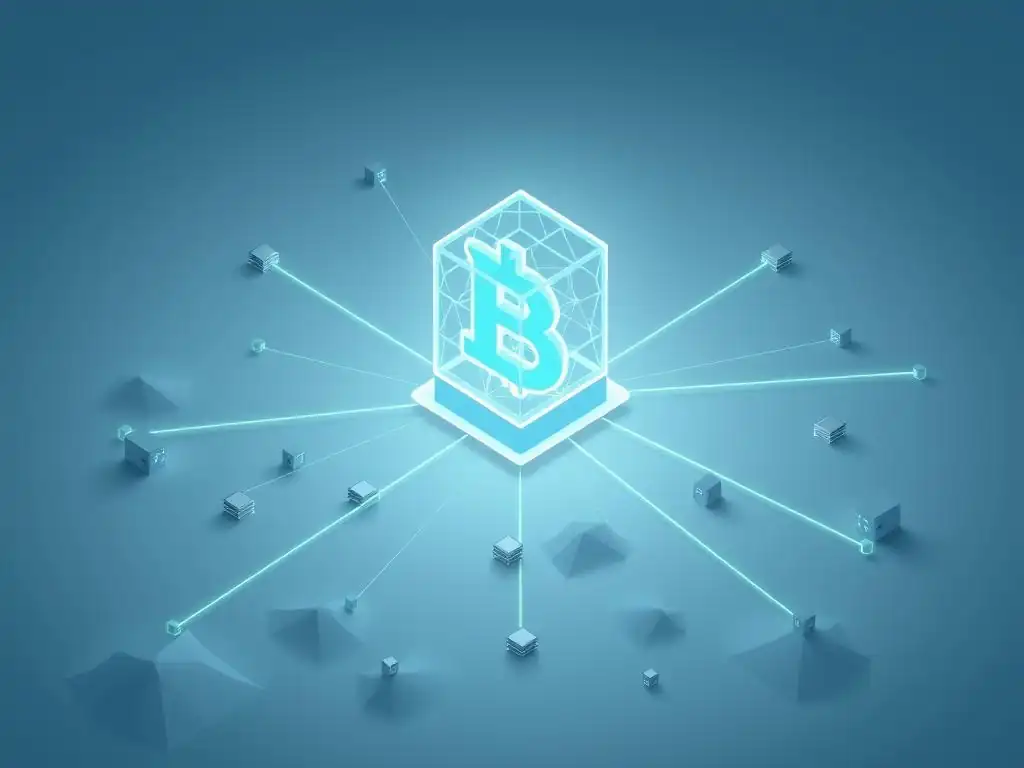
The convergence of blockchain and edge computing creates a powerful synergy by combining the strengths of both technologies. Edge computing addresses the scalability and latency challenges often associated with traditional blockchain implementations, especially when dealing with massive datasets generated by edge devices. Conversely, blockchain brings enhanced security, transparency, and data integrity to edge computing environments, which are often vulnerable due to their distributed and sometimes less secure nature.
This combination unlocks the potential for truly decentralized processing at the network edge. By integrating blockchain's distributed ledger and consensus mechanisms with edge computing's distributed infrastructure, we can achieve a system where data is processed, secured, and validated locally, without relying on centralized authorities. This paradigm shift fosters trust, improves efficiency, and opens up new possibilities for various applications that require secure, low-latency, and scalable solutions, making blockchain edge computing integration benefits increasingly apparent.
Blockchain Edge Computing Integration Benefits: A Deep Dive
Enhanced Security and Data Integrity through Blockchain at the Edge
Integrating blockchain into edge computing architectures significantly enhances security and data integrity. Edge devices, often deployed in less controlled environments, are inherently more vulnerable to physical tampering and cyberattacks. By leveraging blockchain's cryptographic security and distributed consensus mechanisms, data generated and processed at the edge can be secured against unauthorized access and modifications. Imagine a network of smart sensors monitoring critical infrastructure; blockchain ensures that the data collected from these sensors is tamper-proof and verifiable, preventing malicious actors from manipulating the data to cause disruptions or damage.
Furthermore, blockchain's immutability ensures data integrity throughout its lifecycle, from generation at the edge to processing and storage. Every transaction or data update is recorded on the blockchain, creating an auditable and transparent trail. This is particularly crucial for sensitive data in sectors like healthcare or finance, where data integrity and provenance are paramount.
For example, in a distributed medical sensor network, blockchain can guarantee the integrity of patient data collected by edge devices, ensuring that healthcare professionals can rely on the accuracy and trustworthiness of the information for diagnosis and treatment. This inherent security and data integrity are key blockchain edge computing integration benefits.
Reduced Latency and Improved Performance with Edge-Based Processing
Edge computing inherently reduces latency by processing data closer to its source, minimizing the round trip time to centralized servers. When combined with blockchain, this advantage is amplified, especially for applications requiring real-time responses. Traditional blockchain systems can experience latency due to network congestion and consensus processes, particularly when dealing with a high volume of transactions. By offloading processing tasks to the edge and using blockchain primarily for secure data validation and transaction recording, the overall system performance is significantly improved.
Consider autonomous vehicles that rely on real-time sensor data for navigation and decision-making. Edge computing enables rapid processing of sensor data within the vehicle itself, while blockchain can be used to securely record critical event data and ensure the integrity of software updates. This combination reduces reliance on cloud connectivity and minimizes latency, crucial for safety-critical applications where milliseconds can make a difference. The reduced latency and improved performance are significant blockchain edge computing integration benefits for time-sensitive applications.
Scalability and Efficiency Gains from Decentralized Infrastructure
Scalability is a major challenge for many blockchain applications, especially those dealing with large-scale IoT deployments. Centralized blockchain systems can become bottlenecks as the number of transactions and participants increases. Edge computing offers a solution to this scalability issue by distributing processing and storage across a network of edge devices. This decentralized infrastructure reduces the load on the main blockchain network, allowing it to handle a larger volume of transactions and participants more efficiently.
Imagine a smart grid with millions of connected devices generating energy data. Processing all this data on a central blockchain would be computationally expensive and slow. By deploying edge computing nodes throughout the grid, data can be processed and validated locally, with only aggregated or critical data being recorded on the blockchain. This distributed approach significantly enhances the scalability and efficiency of the system, making it feasible to manage massive IoT deployments. These scalability and efficiency gains are vital blockchain edge computing integration benefits for large-scale applications.
Cost Optimization through Resource Sharing and Reduced Bandwidth Usage
Integrating blockchain and edge computing can lead to significant cost optimization in several ways. Edge computing reduces the need to transmit vast amounts of raw data to centralized cloud servers, thereby decreasing bandwidth consumption and associated costs. Processing data closer to the source minimizes data transfer distances, leading to lower network traffic and infrastructure requirements. For bandwidth-intensive applications like video surveillance or industrial IoT, this reduction in bandwidth usage can translate into substantial cost savings.
Furthermore, edge computing infrastructure can be designed to share resources among multiple applications and users. Blockchain can facilitate secure and transparent resource sharing in edge networks, enabling efficient utilization of computing and storage resources. For example, in a smart city environment, edge computing infrastructure deployed for traffic management can also be used for environmental monitoring or public safety applications. Blockchain can manage access control and resource allocation in a decentralized and auditable manner, optimizing resource utilization and reducing overall infrastructure costs. This cost optimization through resource sharing and reduced bandwidth is a compelling blockchain edge computing integration benefit.
Use Cases of Blockchain and Edge Computing
Smart Cities: Secure and Efficient Data Management
Smart cities generate vast amounts of data from sensors, devices, and infrastructure. Blockchain and edge computing can revolutionize smart city management by providing secure and efficient data processing and management. Edge computing nodes deployed throughout the city can process data locally, enabling real-time traffic management, optimized energy consumption, and improved public safety.
Blockchain can secure the data collected by these edge devices, ensuring its integrity and preventing manipulation. For instance, smart traffic management systems can use edge computing to analyze traffic flow in real-time and adjust traffic signals dynamically, while blockchain can secure the data generated by traffic sensors and ensure the integrity of the traffic management system itself.
Real-world examples are emerging. Some cities are exploring blockchain-based platforms for secure data sharing among different city departments and agencies. By combining this with edge computing, cities can build resilient and efficient smart city infrastructures that enhance the quality of life for citizens while ensuring data security and privacy. The combination allows for localized data processing for faster responses and blockchain-secured data sharing for inter-departmental collaboration, a key blockchain edge computing integration benefit for smart cities.
IoT (Internet of Things): Decentralized Device Authentication and Management
The Internet of Things (IoT) involves billions of interconnected devices, many of which operate at the network edge. Securing and managing these devices is a significant challenge. Blockchain and edge computing offer a decentralized and secure solution for IoT device authentication and management. Edge computing can handle the massive data streams generated by IoT devices, while blockchain can provide a secure and tamper-proof identity and access management system for these devices. Imagine a network of smart home devices; blockchain can be used to securely authenticate and manage these devices, preventing unauthorized access and ensuring data privacy.
Consider industrial IoT applications where numerous sensors monitor machinery and production processes. Blockchain can provide a secure and auditable ledger of device identities and configurations, while edge computing can process sensor data in real-time for predictive maintenance and process optimization. This combination enhances security, improves efficiency, and reduces the risk of cyberattacks targeting IoT devices. Decentralized device authentication and management are major blockchain edge computing integration benefits for IoT deployments.
Supply Chain Management: Enhanced Traceability and Transparency
Supply chain management relies heavily on data sharing and transparency across multiple stakeholders. Blockchain and edge computing can significantly enhance supply chain traceability and transparency. Edge computing can be deployed at various points in the supply chain to collect and process data in real-time, from manufacturing facilities to distribution centers and retail locations. Blockchain can then be used to record this data in a secure and immutable ledger, providing a transparent and auditable record of product provenance and movement.
For instance, in the food industry, edge computing sensors can monitor temperature and humidity conditions during transportation, while blockchain can record this data along with product tracking information, ensuring food safety and authenticity. Consumers can then access this information through blockchain-based platforms to verify the origin and quality of the products they purchase. Enhanced traceability and transparency are significant blockchain edge computing integration benefits for supply chain management.
Healthcare: Secure and Private Data Sharing
Healthcare generates sensitive patient data that requires robust security and privacy protection. Blockchain and edge computing can enable secure and private data sharing in healthcare environments. Edge computing can process patient data closer to the point of care, reducing the risk of data breaches during transmission to centralized servers. Blockchain can provide a secure and auditable platform for sharing patient data among authorized healthcare providers, researchers, and patients themselves, while maintaining patient privacy and control over their data.
Consider remote patient monitoring systems that collect data from wearable devices. Edge computing can process this data locally, alerting healthcare providers to critical events in real-time, while blockchain can securely store and share patient data with authorized personnel, ensuring data privacy and compliance with regulations like HIPAA. Secure and private data sharing are crucial blockchain edge computing integration benefits for healthcare applications.
Energy Sector: Decentralized Energy Grids and Trading
The energy sector is undergoing a transformation towards decentralized and renewable energy sources. Blockchain and edge computing can facilitate the development of decentralized energy grids and peer-to-peer energy trading. Edge computing can manage local energy generation and consumption, optimizing energy distribution and grid stability. Blockchain can enable secure and transparent peer-to-peer energy trading, allowing consumers to buy and sell energy directly from each other without intermediaries.
Microgrids and smart grids are increasingly utilizing edge computing for localized control and optimization. Blockchain can be integrated to create transparent and secure energy marketplaces where prosumers (consumers who also produce energy) can trade excess energy with their neighbors. This decentralized approach can enhance grid resilience, promote the adoption of renewable energy, and reduce energy costs. Decentralized energy grids and trading platforms are promising blockchain edge computing integration benefits for the energy sector.
Challenges of Integrating Blockchain and Edge Computing
Scalability Limitations of Blockchain on Edge Devices
While edge computing enhances the scalability of blockchain systems overall, the scalability of blockchain protocols on resource-constrained edge devices themselves remains a challenge. Many traditional blockchain consensus mechanisms, like Proof-of-Work (PoW), are computationally intensive and require significant energy consumption, making them unsuitable for deployment on low-power edge devices. For example, running a full Bitcoin node on a typical IoT sensor is practically infeasible due to its computational and energy demands.
Lightweight blockchain protocols and consensus mechanisms are being developed to address this limitation. However, finding the right balance between security, decentralization, and resource efficiency for blockchain implementations on edge devices is an ongoing research area. Scalability limitations of blockchain on edge devices are a key challenge that needs to be overcome for widespread adoption.
Edge devices, by their nature, are often deployed in physically accessible and less secure environments, making them vulnerable to tampering, physical attacks, and cyberattacks. Compromised edge devices can become attack vectors for the entire blockchain and edge computing system. For instance, if an attacker gains physical access to an edge device, they could potentially extract cryptographic keys or manipulate data before it is recorded on the blockchain.
Securing edge devices requires a multi-layered approach, including hardware security measures, secure software development practices, and robust device management protocols. Addressing security concerns related to edge device vulnerabilities is crucial for ensuring the overall security and trustworthiness of blockchain and edge computing systems.
Interoperability Issues between Different Blockchain Platforms and Edge Computing Frameworks
The blockchain and edge computing landscapes are fragmented, with various platforms, protocols, and frameworks vying for adoption. Interoperability issues between different blockchain platforms and edge computing frameworks can hinder the seamless integration of these technologies. For example, integrating a Hyperledger Fabric blockchain with an AWS Greengrass edge computing environment might require significant custom development and integration efforts.
Standardization efforts are needed to promote interoperability and simplify the integration of blockchain and edge computing technologies. Developing common interfaces, protocols, and data formats can facilitate seamless communication and data exchange between different platforms and frameworks, reducing integration complexity and costs. Interoperability issues are a significant challenge that needs to be addressed for wider adoption.
Regulatory Hurdles and Compliance Requirements
The regulatory landscape for blockchain and edge computing is still evolving, and regulatory hurdles and compliance requirements can pose challenges to the adoption of these technologies, particularly in regulated industries like healthcare and finance. Data privacy regulations, such as GDPR and CCPA, impose strict requirements on data processing and storage, which need to be carefully considered when designing blockchain and edge computing systems.
For example, storing personal data on a public blockchain might raise compliance concerns under GDPR. Navigating the complex and evolving regulatory landscape and ensuring compliance with relevant regulations are critical challenges for organizations deploying blockchain and edge computing solutions.
Overcoming the Challenges: Solutions and Strategies
Lightweight Blockchain Protocols for Edge Devices
To address the scalability limitations of blockchain on edge devices, the development and adoption of lightweight blockchain protocols are crucial. These protocols are designed to be less computationally intensive and energy-efficient, making them suitable for resource-constrained edge devices. Examples include Proof-of-Stake (PoS) and Delegated Proof-of-Stake (DPoS) consensus mechanisms, which require significantly less computational power compared to Proof-of-Work (PoW).
Furthermore, techniques like sharding and sidechains can be employed to reduce the load on individual edge devices and improve the overall scalability of blockchain networks in edge computing environments. Research and development in lightweight blockchain protocols are essential for enabling wider adoption of blockchain on edge devices.
Secure Enclaves and Hardware Security Modules (HSMs) for Enhanced Security
To mitigate security concerns related to edge device vulnerabilities, incorporating secure enclaves and Hardware Security Modules (HSMs) into edge device architectures can significantly enhance security. Secure enclaves are tamper-resistant hardware regions within a processor that provide a secure execution environment for sensitive code and data. HSMs are dedicated hardware devices designed to protect cryptographic keys and perform cryptographic operations securely.
By using secure enclaves and HSMs, sensitive data and cryptographic keys can be isolated from the main system, reducing the risk of compromise even if the edge device itself is physically compromised. These hardware-based security measures provide a strong foundation for securing edge devices in blockchain and edge computing systems.
Standardization Efforts for Interoperability
To address interoperability issues, standardization efforts are essential. Industry consortia and standards organizations are working to develop common standards and specifications for blockchain and edge computing technologies. These standards aim to define common interfaces, protocols, and data formats that enable seamless communication and data exchange between different platforms and frameworks.
Examples include standardization efforts around APIs for blockchain platforms and data exchange formats for IoT devices. Promoting and adopting these standards can significantly reduce integration complexity and costs, fostering wider adoption of blockchain and edge computing technologies.
Developing Clear Regulatory Frameworks
To overcome regulatory hurdles, developing clear and consistent regulatory frameworks for blockchain and edge computing is crucial. Governments and regulatory bodies need to provide clear guidelines and regulations that address data privacy, security, and other relevant concerns related to these technologies. These frameworks should strike a balance between fostering innovation and protecting consumer interests and societal values.
Industry collaboration and dialogue with regulators are essential for developing effective and practical regulatory frameworks that promote responsible innovation and adoption of blockchain and edge computing technologies.
The Future of Blockchain and Edge Computing
Emerging Trends: Federated Learning, Zero-Knowledge Proofs
Several emerging trends are shaping the future of blockchain and edge computing. Federated learning, a machine learning technique that enables training models on decentralized data sources without sharing the raw data itself, is particularly relevant for edge computing environments. Combining federated learning with blockchain can enhance data privacy and security while enabling collaborative model training across distributed edge devices.
Zero-knowledge proofs, a cryptographic technique that allows proving the validity of a statement without revealing any information beyond the validity itself, are also gaining traction in blockchain and edge computing. Zero-knowledge proofs can enhance privacy and security in various applications, such as secure data sharing and anonymous authentication in edge networks.
The Role of 5G and Other Emerging Technologies
The rollout of 5G and other emerging technologies, such as advanced sensors and AI accelerators, will further accelerate the adoption of blockchain and edge computing. 5G's high bandwidth and low latency will enhance the performance and capabilities of edge computing networks, enabling more sophisticated applications. AI accelerators integrated into edge devices will enable more powerful on-device processing and AI inferencing at the edge.
These technological advancements will create new opportunities for combining blockchain and edge computing to solve complex problems and create innovative solutions across various industries. The synergy between 5G, AI, blockchain, and edge computing will drive the next wave of technological innovation.
Future Research: Optimized Consensus Mechanisms for Resource-Constrained Environments
Future research in blockchain and edge computing will focus on optimizing consensus mechanisms for resource-constrained environments. Developing new consensus algorithms that are both secure and highly efficient in terms of computation, energy consumption, and communication overhead is critical for enabling wider adoption of blockchain on edge devices.
Research will also explore novel approaches to data management, security, and privacy in decentralized edge computing environments. Addressing the challenges and unlocking the full potential of blockchain and edge computing will require ongoing research and innovation across multiple disciplines.
Conclusion: The Transformative Potential of Decentralized Edge Processing
Key Takeaways: Blockchain edge computing integration benefits summary
The integration of blockchain and edge computing offers a compelling paradigm shift towards decentralized processing at the network edge. Blockchain edge computing integration benefits are numerous, including enhanced security and data integrity, reduced latency and improved performance, scalability and efficiency gains, and cost optimization. By combining the strengths of these two technologies, we can unlock new possibilities for secure, efficient, and scalable decentralized applications.
Use cases span across various sectors, from smart cities and IoT to supply chain management, healthcare, and energy. While challenges exist, such as scalability limitations on edge devices, security concerns, interoperability issues, and regulatory hurdles, solutions and strategies are emerging to overcome these obstacles.
Looking Ahead: The Future of Decentralized and Secure Computing
The future of computing is increasingly decentralized and secure, and blockchain and edge computing are at the forefront of this transformation. As emerging trends like federated learning and zero-knowledge proofs mature and technologies like 5G and AI accelerators become more widely available, the synergy between blockchain and edge computing will only strengthen. Continued research, innovation, and standardization efforts will pave the way for a future where decentralized edge processing becomes the norm, enabling a new era of secure, efficient, and user-centric computing.
Frequently Asked Questions
How does integrating blockchain and edge computing enhance security?
Integrating blockchain with edge computing enhances security by providing a decentralized and immutable record of data processing at the edge. This makes it significantly harder for malicious actors to tamper with sensitive data, increasing trust.
What are the primary benefits of using blockchain for data provenance in edge computing environments?
Blockchain provides an unalterable audit trail for data generated and processed at the edge. This enhances data integrity and allows for transparent verification of data lineage, which is critical in many applications.
What role does blockchain play in managing and securing IoT devices within an edge computing network?
Blockchain can be used to securely identify and authenticate IoT devices within an edge network. It can also manage device access and permissions, preventing unauthorized access and improving overall security.
How can blockchain facilitate microtransactions and incentivize participation in edge computing networks?
Blockchain enables secure and transparent microtransactions to compensate edge nodes for their computational resources. This incentivizes greater participation and fosters a more robust and distributed edge computing ecosystem.
What are some of the regulatory considerations when implementing blockchain and edge computing solutions?
Regulatory considerations include data privacy laws (e.g., GDPR) and compliance with industry-specific regulations. Ensuring data sovereignty and adhering to jurisdictional requirements are crucial for legal compliance.
Final Reflection: Embracing the Decentralized Future
The exploration of blockchain edge computing integration benefits reveals a powerful synergy poised to reshape industries and redefine data processing. The ability to decentralize processing power at the network edge, secured by the immutable ledger of blockchain, is no longer a theoretical concept but a tangible reality with the potential to unlock unprecedented efficiency, security, and innovation across various sectors.
The fusion of these technologies has already begun to subtly but profoundly influence our digital landscape. Witnessing the nascent stages of this integration inspires a sense of wonder and responsibility, urging us to consider the ethical implications and societal impact of such powerful tools. The future is already here – it's just not evenly distributed.
- William Gibson. This quote resonates deeply as we navigate the uneven adoption of blockchain edge computing, striving to ensure its benefits are accessible to all, fostering a more equitable and decentralized future.
As we stand on the cusp of this technological revolution, let us not be passive observers. Instead, let us actively engage in shaping the future of blockchain edge computing. Consider how you can leverage these technologies to solve real-world problems, contribute to open-source development, and advocate for responsible innovation. The power to build a more decentralized, secure, and efficient future lies within each of us. Embrace the challenge, explore the possibilities, and become an architect of the decentralized revolution.
Unleash the Power of Decentralized Edge!
Thank you for exploring the exciting intersection of blockchain and edge computing with us. We hope you now have a clearer understanding of how this synergy is transforming data processing. Ready to expand your knowledge further?
Here are some actionable steps you can take today:
- Explore real-world implementations of blockchain-enabled edge solutions in our Case Studies section. This is one of the most valuable takeaways from the article!
- Join the conversation! Share your insights or innovative ideas on how blockchain and edge computing can revolutionize specific industries in the comments below. We look forward to hearing your thoughts.
- For a creative challenge: Think of a completely new use case that combines blockchain and edge computing. What problem could this address that hasn't been solved yet?
What unexpected application of blockchain-enabled edge computing excites you the most? Let's discuss!
Leave a Reply