
Blockchain Explained: How Does This Decentralized Technology Actually Work?


Welcome to Blockchain Trends, your go-to source for navigating the ever-evolving world of blockchain. Beyond the buzzwords, we delve into the real transformative power of this technology. Are you ready to unlock the potential of blockchain technology decentralized applications benefits? Prepare to discover how decentralized systems are revolutionizing industries and shaping the future, starting with our in-depth exploration of how blockchain actually works. Intrigued? Let's dive in!
- Introduction to Blockchain Technology: A Beginner's Guide
- Understanding the Core Concepts of Blockchain Technology
- How Blockchain Technology Works: A Step-by-Step Explanation
- Exploring the Benefits of Blockchain Technology
-
Blockchain Technology Beyond Cryptocurrencies: Decentralized Applications (dApps) and Use Cases
- Decentralized Finance (DeFi): Revolutionizing Financial Services with Blockchain
- Supply Chain Management: Tracking Products from Origin to Consumer
- Healthcare: Securing Patient Data and Improving Interoperability
- Voting Systems: Ensuring Secure and Transparent Elections
- Identity Management: Creating Self-Sovereign Identities
- Enterprise Applications of Blockchain Technology
- The Future of Blockchain Technology and Decentralized Systems
- Conclusion: The Transformative Potential of Blockchain Technology
-
Frequently Asked Questions
- What are the primary benefits of using blockchain technology for decentralized applications?
- How does blockchain technology enable the creation of decentralized applications (dApps)?
- Beyond cryptocurrencies, what are some real-world applications of blockchain technology in decentralized systems?
- What are some of the key challenges facing the widespread adoption of blockchain technology for decentralized applications?
- How is the regulatory landscape evolving around blockchain technology and its use in decentralized applications?
- Final Reflection: Embracing the Decentralized Future
- Unlock Your Blockchain Future!
Introduction to Blockchain Technology: A Beginner's Guide
What is Blockchain? Defining Decentralized Ledger Technology
Blockchain, at its core, is a revolutionary form of record-keeping technology known as Distributed Ledger Technology (DLT). Imagine a digital ledger, similar to a spreadsheet, that is duplicated and distributed across a vast network of computers. This shared, synchronized database is what constitutes a blockchain. Unlike traditional databases that are centralized and controlled by a single entity, blockchain operates on a decentralized model. This means no single authority controls the information; instead, it is collectively maintained by all participants in the network.
This decentralization is a key characteristic that defines blockchain. Each participant, or node, in the network holds a copy of the entire ledger, ensuring transparency and redundancy. Every new transaction is grouped together into a "block," which is then verified by the network participants through complex cryptographic processes. Once verified, the block is added to the chain, linked to the previous block using cryptography, creating an immutable and transparent record of all transactions. This chain of blocks, hence the name "blockchain," grows continuously as new blocks are added, forming a permanent and auditable history of data.
Why is Blockchain Important? Exploring the Benefits of Blockchain Technology
The importance of blockchain technology stems from its unique ability to offer enhanced security, transparency, and efficiency in various applications. Traditional systems often rely on intermediaries, which can introduce points of vulnerability, increase costs, and slow down processes. Blockchain technology, with its decentralized and distributed nature, addresses these issues head-on, offering a more robust and trustworthy alternative.
One of the primary benefits of blockchain technology is its enhanced security. Due to its decentralized nature and cryptographic security, tampering with data becomes exceptionally difficult. Any attempt to alter a record on one node would require altering it across the majority of the network simultaneously, making it computationally infeasible in most cases.
Furthermore, the transparency inherent in many blockchains allows participants to audit transactions, fostering trust and accountability. Beyond security, blockchain technology promises increased efficiency by streamlining processes, reducing the need for intermediaries, and automating tasks through smart contracts. These benefits collectively contribute to making blockchain a transformative technology with the potential to revolutionize numerous industries.
Understanding the Core Concepts of Blockchain Technology
Decentralization: The Foundation of Blockchain Networks
Decentralization is arguably the most fundamental principle underpinning blockchain technology. In a centralized system, power and control are concentrated in a single entity, creating potential points of failure and censorship. Decentralization, in contrast, distributes control across a network of participants, removing single points of failure and enhancing resilience. In the context of blockchain, decentralization means that transaction records are not stored in one central location but are distributed across numerous computers, or nodes, within the network.
This distributed architecture offers several key advantages. Firstly, it significantly increases security. For a malicious actor to tamper with the blockchain, they would need to simultaneously compromise a significant portion of the network, a task that becomes exponentially more difficult as the network grows. Secondly, decentralization enhances transparency.
In many blockchain networks, all participants have access to the same ledger, allowing for greater visibility into transactions and data. Finally, decentralization fosters trust. By removing the need to rely on a central authority, blockchain systems enable peer-to-peer interactions, building trust directly between participants rather than through intermediaries. This foundational concept of decentralization is what makes blockchain technology a disruptive force across various sectors.
Cryptographic Hash Functions: Securing Blockchain Data
Cryptographic hash functions are the mathematical workhorses that underpin the security and integrity of blockchain technology. A hash function is a mathematical algorithm that takes an input of any size (like a transaction, a document, or even an entire block of data) and produces a fixed-size output, known as a hash or hash value. This hash value acts as a unique digital fingerprint of the input data. Even a tiny change in the input data will result in a drastically different hash value.
Crucially, cryptographic hash functions are designed to be one-way functions. This means that while it is easy to compute the hash of a given input, it is computationally infeasible to reverse the process – that is, to derive the original input data from its hash value. In blockchain, hash functions are used extensively to link blocks together in the chain. Each block contains the hash of the previous block, creating a cryptographic link that is virtually unbreakable.
If anyone attempts to tamper with a block's data, its hash value will change, breaking the link to subsequent blocks and immediately making the tampering evident to the network. This cryptographic chain of hashes is a core mechanism ensuring the immutability and security of blockchain data. Examples of widely used cryptographic hash functions include SHA-256, used in Bitcoin, and Keccak-256, used in Ethereum.
Distributed Ledger Technology (DLT): The Backbone of Blockchain Systems
Distributed Ledger Technology (DLT) is the overarching category of technologies to which blockchain belongs. DLT is essentially a database that is replicated, shared, and synchronized across a network of participants. Unlike traditional databases that are centralized and managed by a single entity, DLTs distribute data across multiple nodes, making them inherently more resilient and transparent. Blockchain is a specific type of DLT characterized by its organization of data into blocks that are cryptographically linked together in a chronological chain.
While all blockchains are DLTs, not all DLTs are blockchains. Other types of DLTs exist, such as Hashgraphs and Directed Acyclic Graphs (DAGs), which organize data in different structures and may employ different consensus mechanisms. However, the fundamental principle of distributed, replicated, and synchronized data remains common across all DLTs. The benefits of DLT, including increased transparency, enhanced security, and improved efficiency, are derived from this distributed nature. By eliminating single points of failure and making data tampering extremely difficult, DLTs, and particularly blockchain, offer a robust foundation for building secure and trustworthy decentralized systems.
Consensus Mechanisms: Achieving Agreement in a Decentralized Environment
Consensus mechanisms are the crucial algorithms that enable blockchain networks to achieve agreement on the validity of transactions and the state of the ledger in a decentralized environment. In the absence of a central authority, these mechanisms ensure that all participants in the network agree on which transactions are legitimate and should be added to the blockchain. Without consensus mechanisms, a decentralized blockchain would be susceptible to attacks and inconsistencies, undermining its core value proposition.
Different blockchain networks employ various consensus mechanisms, each with its own trade-offs in terms of security, speed, and energy efficiency. The choice of consensus mechanism is a critical design decision that impacts the overall performance and characteristics of a blockchain. Two of the most prominent consensus mechanisms are Proof-of-Work (PoW) and Proof-of-Stake (PoS), each representing a distinct approach to achieving distributed consensus.
Proof-of-Work (PoW): How Bitcoin Achieves Consensus
Proof-of-Work (PoW) is the original consensus mechanism pioneered by Bitcoin and remains a widely used approach in many cryptocurrencies. PoW relies on computational effort to secure the blockchain and validate transactions. In a PoW system, network participants, known as miners, compete to solve complex cryptographic puzzles. These puzzles require significant computational resources and energy to solve. The first miner to solve the puzzle and find a valid "proof-of-work" gets to propose the next block of transactions to the network.
The "proof-of-work" itself is computationally expensive to generate but easy for the rest of the network to verify. This asymmetry is key to PoW's security. By requiring miners to expend significant resources, PoW makes it economically costly for malicious actors to attack the network.
To successfully attack a PoW blockchain like Bitcoin, an attacker would need to control a majority of the network's computing power, a feat that would require immense investment and energy consumption, making it highly improbable and financially unviable. While PoW is known for its robust security, it is also criticized for its high energy consumption, leading to the development of more energy-efficient alternatives like Proof-of-Stake.
Proof-of-Stake (PoS): A More Energy-Efficient Alternative
Proof-of-Stake (PoS) emerged as a more energy-efficient alternative to Proof-of-Work (PoW), addressing concerns about the environmental impact of blockchain technology. Instead of relying on computational power, PoS mechanisms rely on network participants staking or "locking up" a certain amount of their cryptocurrency holdings to participate in the block validation process. Validators are then chosen to propose and validate new blocks based on the amount of cryptocurrency they have staked and the length of time they have staked it.
In PoS systems, the probability of being selected as a validator is proportional to the amount of stake a participant holds. Those with larger stakes have a higher chance of being chosen to validate blocks and earn rewards. This mechanism eliminates the need for energy-intensive mining computations associated with PoW.
PoS is considered more energy-efficient because it does not require validators to expend vast amounts of electricity solving cryptographic puzzles. Furthermore, PoS can also offer faster transaction processing times compared to some PoW blockchains. Examples of blockchains utilizing PoS or variations of PoS include Ethereum (post-Merge), Cardano, and Solana, highlighting its growing adoption as a viable and sustainable consensus mechanism.
How Blockchain Technology Works: A Step-by-Step Explanation
Transaction Initiation: Starting a Blockchain Transaction
The journey of a blockchain transaction begins with initiation. Imagine Alice wants to send cryptocurrency to Bob. Alice uses her digital wallet, a software interface that allows her to interact with the blockchain, to initiate a transaction. This transaction essentially states Alice's intention to transfer a specific amount of cryptocurrency to Bob's address. The transaction is digitally signed using Alice's private key, a cryptographic key that proves ownership and authorizes the transaction. This digital signature ensures that only Alice, the owner of the cryptocurrency, can initiate the transfer.
Once Alice initiates the transaction, it is broadcast to the blockchain network. This means the transaction is sent out to multiple nodes in the network, awaiting verification and inclusion in a block. At this stage, the transaction is pending and not yet considered finalized or confirmed on the blockchain. The network then begins the process of validating and incorporating this transaction into the distributed ledger.
Block Creation: Grouping Transactions into Blocks
After transactions are initiated and broadcast to the network, they are gathered and grouped together into blocks. Miners (in PoW systems) or validators (in PoS systems) are responsible for collecting pending transactions and organizing them into a block. A block can be visualized as a container holding a batch of verified transactions. The size of a block is typically limited, influencing the number of transactions that can be included in each block and, consequently, the transaction processing capacity of the blockchain.
In addition to transactions, each block contains crucial metadata, including a timestamp, a reference to the hash of the previous block in the chain, and a summary of all the transactions within the block, often represented as a Merkle Root. The inclusion of the previous block's hash is critical as it creates the cryptographic link between blocks, forming the "chain" and ensuring the immutability of the blockchain. Once a block is constructed, it is ready for the next stage: validation.
Block Validation: Ensuring Transaction Integrity
Block validation is the critical step that ensures the integrity and security of the blockchain. Once a block of transactions is proposed by a miner or validator, it must be verified by the other nodes in the network. This validation process involves checking several aspects to ensure the block and its transactions are legitimate and adhere to the blockchain's rules. Nodes independently verify that all transactions within the block are valid, meaning that the sender has sufficient funds, the digital signatures are valid, and the transactions follow the protocol's rules.
For Proof-of-Work systems, validation also includes verifying that the proposed block contains a valid "proof-of-work," demonstrating that the miner has expended the required computational effort. For Proof-of-Stake systems, validation involves confirming that the proposer was correctly selected according to the staking rules. If the block and its transactions are deemed valid by a majority of the network nodes (achieving consensus), the block is then accepted and ready to be added to the blockchain. This rigorous validation process is essential for preventing fraudulent transactions and maintaining the integrity of the distributed ledger.
Adding Blocks to the Chain: The Immutable Blockchain
The final step in the blockchain process is adding the validated block to the existing chain. Once a block has been validated by the network, it is permanently added to the blockchain, chronologically following the previous block. The hash of the newly added block is then incorporated into the next block to be created, forming an unbroken cryptographic chain of blocks. This linking of blocks through hashes is what gives blockchain its immutability.
Because each block contains the hash of the previous block, any attempt to alter a block's data would require changing its hash, which would, in turn, invalidate the hash in the subsequent block, and so on down the chain. To successfully tamper with a block deep within the chain, an attacker would need to re-calculate the hashes of all subsequent blocks, a computationally daunting and practically impossible task for a well-established blockchain.
This inherent immutability is a key characteristic of blockchain technology, ensuring that once data is recorded on the blockchain, it cannot be altered or deleted, creating a permanent and auditable record of transactions.
Exploring the Benefits of Blockchain Technology
Enhanced Security and Transparency: Reducing Fraud and Increasing Trust
Blockchain technology inherently offers enhanced security and transparency compared to traditional centralized systems, significantly reducing the potential for fraud and fostering greater trust. The decentralized and distributed nature of blockchain means there is no single point of failure or control, making it far more resistant to attacks and censorship. The cryptographic mechanisms employed, such as hash functions and digital signatures, further bolster security by ensuring data integrity and authenticity.
Transparency is another key benefit. In many blockchain networks, particularly public blockchains, all transaction data is publicly accessible and auditable. While the identities of participants may be pseudonymous, the transaction history is transparently recorded on the ledger, allowing anyone to verify transactions and track the flow of assets.
This transparency, combined with immutability, makes blockchain an ideal technology for applications requiring high levels of trust and accountability, such as supply chain management, financial transactions, and voting systems. For example, in supply chains, blockchain can provide an immutable record of product provenance, reducing the risk of counterfeit goods and enhancing consumer trust.
Increased Efficiency and Speed: Streamlining Processes
Blockchain technology has the potential to significantly increase efficiency and speed in various processes by streamlining operations and eliminating intermediaries. Traditional systems often involve multiple intermediaries, such as banks, clearinghouses, and brokers, adding complexity, delays, and costs to transactions. Blockchain, through its decentralized and peer-to-peer nature, can bypass these intermediaries, enabling faster and more direct transactions.
Smart contracts, self-executing contracts coded on the blockchain, further automate processes and reduce manual intervention, enhancing efficiency. For instance, in international payments, which can typically take days to settle through traditional banking networks, blockchain-based solutions can facilitate near real-time settlements, significantly improving speed and efficiency. While some blockchains may currently face scalability limitations that can impact transaction speed, ongoing technological advancements and layer-2 solutions are actively addressing these challenges to unlock the full potential of blockchain in terms of speed and efficiency.
Reduced Costs: Eliminating Intermediaries
One of the most compelling economic benefits of blockchain technology is its potential to reduce costs by eliminating intermediaries. In many traditional systems, intermediaries play a crucial role in facilitating transactions and providing trust, but they also add fees and overhead costs. Blockchain, with its decentralized and trustless nature, can disintermediate many of these processes, directly connecting parties and reducing the need for intermediaries.
For example, in the financial sector, blockchain can reduce transaction fees associated with cross-border payments, securities trading, and other financial services by removing the need for multiple intermediary banks and institutions. Similarly, in supply chain management, blockchain can streamline processes and reduce administrative costs by providing a shared, transparent record of goods movement, eliminating the need for redundant paperwork and manual reconciliation. By reducing reliance on intermediaries, blockchain technology can lead to significant cost savings across various industries, making processes more efficient and affordable.
Improved Traceability: Enhancing Supply Chain Management
Blockchain technology offers a powerful solution for improving traceability, particularly in supply chain management. Traditional supply chains often lack transparency, making it difficult to track products from origin to consumer, leading to inefficiencies, counterfeiting risks, and difficulties in verifying ethical sourcing. Blockchain provides an immutable and transparent record of each step in the supply chain, from raw materials to finished goods, enabling enhanced traceability and accountability.
By recording information such as product origin, manufacturing dates, transportation details, and ownership changes on a blockchain, businesses can create a comprehensive and auditable history of a product's journey. This improved traceability can be invaluable for verifying product authenticity, combating counterfeiting, ensuring compliance with regulations, and providing consumers with greater transparency about the products they purchase. For example, in the food industry, blockchain can track food products from farm to table, enhancing food safety and building consumer trust by providing verifiable information about the origin and handling of food items.
Blockchain Technology Beyond Cryptocurrencies: Decentralized Applications (dApps) and Use Cases
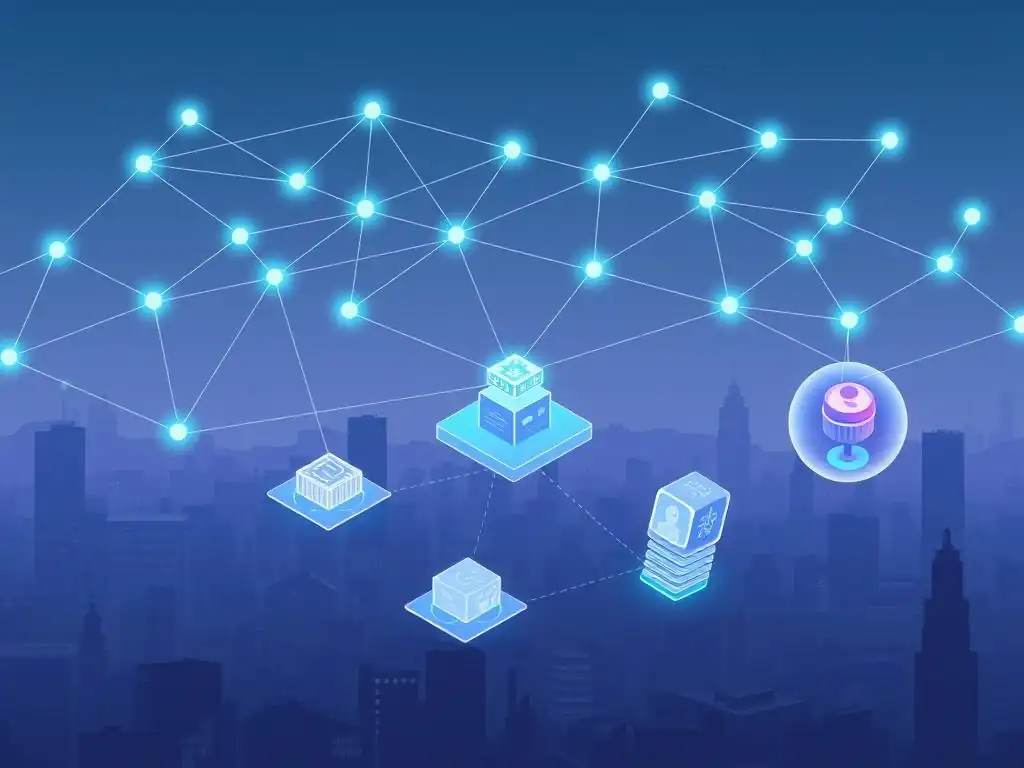
Decentralized Finance (DeFi): Revolutionizing Financial Services with Blockchain
Decentralized Finance (DeFi) represents a groundbreaking application of blockchain technology, aiming to revolutionize traditional financial services by creating open, permissionless, and transparent alternatives. DeFi leverages blockchain's decentralized nature to build financial applications that operate without intermediaries like banks or brokers. These applications range from decentralized exchanges (DEXs) that allow users to trade cryptocurrencies directly with each other, to lending and borrowing platforms, stablecoins, and yield farming opportunities.
DeFi seeks to democratize finance, making financial services more accessible to a wider population, particularly those underserved by traditional financial systems. By eliminating intermediaries, DeFi can potentially offer lower fees, faster transaction times, and greater transparency compared to traditional finance. The total value locked in DeFi protocols has grown significantly, reaching over $50 billion in 2023, demonstrating the increasing adoption and potential of decentralized finance to reshape the financial landscape. Examples of prominent DeFi platforms include Uniswap, Aave, and MakerDAO, showcasing the diverse range of financial services being built on blockchain.
Supply Chain Management: Tracking Products from Origin to Consumer
Blockchain technology is transforming supply chain management by providing enhanced transparency, traceability, and efficiency. Traditional supply chains are often complex and opaque, involving numerous intermediaries and manual processes, leading to inefficiencies, delays, and difficulties in tracking products effectively. Blockchain offers a solution by creating a shared, immutable ledger that records each step in a product's journey from origin to consumer.
By tracking products on a blockchain, businesses can gain real-time visibility into their supply chains, improve inventory management, reduce counterfeiting, and enhance product safety. For example, companies like Walmart and Unilever are using blockchain to track food products, allowing them to quickly identify and trace contaminated food in case of recalls, improving food safety and consumer trust. Beyond food, blockchain is being applied to various supply chains, including pharmaceuticals, luxury goods, and electronics, demonstrating its broad applicability in enhancing supply chain transparency and efficiency.
Healthcare: Securing Patient Data and Improving Interoperability
Blockchain technology holds significant promise for transforming the healthcare industry, particularly in areas such as securing patient data and improving interoperability between healthcare systems. Healthcare data is highly sensitive and often fragmented across different providers and systems, raising concerns about security and data sharing. Blockchain can provide a secure and decentralized platform for managing and sharing patient data while ensuring patient privacy and control.
By storing patient records on a blockchain, healthcare providers can create a more secure and interoperable system. Patients can have greater control over their health data, granting permissioned access to doctors and hospitals as needed. Blockchain can also improve the efficiency of clinical trials, streamline pharmaceutical supply chains, and enhance the tracking of medical devices.
For instance, MediLedger is a blockchain network focused on the pharmaceutical industry, aiming to improve drug supply chain transparency and combat counterfeit drugs. The application of blockchain in healthcare is still evolving, but its potential to enhance data security, interoperability, and patient empowerment is substantial.
Voting Systems: Ensuring Secure and Transparent Elections
Blockchain technology is being explored for its potential to enhance the security and transparency of voting systems. Traditional voting systems are often criticized for their lack of transparency and vulnerability to fraud, leading to concerns about election integrity. Blockchain-based voting systems offer the promise of greater transparency, auditability, and security by recording votes on an immutable and distributed ledger.
By using blockchain, each vote can be recorded as a transaction on the ledger, making it publicly auditable and tamper-proof. This can increase voter confidence and reduce the potential for election fraud. Blockchain-based voting systems can also potentially improve voter turnout by enabling remote voting and simplifying the voting process. However, challenges remain in implementing blockchain voting systems at scale, including ensuring voter privacy, accessibility, and addressing potential security vulnerabilities. Pilot projects and trials of blockchain voting systems are underway in various parts of the world, exploring the feasibility and benefits of this technology for enhancing democratic processes.
Identity Management: Creating Self-Sovereign Identities
Blockchain technology is enabling the concept of self-sovereign identity (SSI), empowering individuals with greater control over their digital identities. Traditional identity management systems often rely on centralized authorities to verify and manage identities, giving individuals limited control over their personal data. SSI, leveraging blockchain, aims to give individuals ownership and control of their digital identities, allowing them to manage and share their identity data without relying on intermediaries.
With SSI, individuals can create and control their own digital identities, storing verifiable credentials on a blockchain or a decentralized storage system. They can then selectively share their identity data with relying parties, such as websites or services, without revealing unnecessary information. This can enhance privacy, security, and user experience. SSI has applications in various areas, including online authentication, digital credentials, and cross-border identity verification. Projects like Sovrin and uPort are developing SSI solutions using blockchain technology, paving the way for a more user-centric and privacy-preserving approach to digital identity management.
Enterprise Applications of Blockchain Technology
Supply Chain Tracking with IBM Food Trust
IBM Food Trust is a prominent example of enterprise blockchain application in supply chain management, specifically focused on the food industry. Developed by IBM, Food Trust is a blockchain-based platform designed to enhance food safety, traceability, and transparency across the food supply chain. It connects various stakeholders in the food ecosystem, including farmers, processors, distributors, retailers, and consumers, on a shared, permissioned blockchain network.
IBM Food Trust allows participants to track food products throughout the supply chain, from farm to store shelf, recording information such as origin, processing details, expiration dates, and storage conditions. This provides unprecedented visibility into the food supply chain, enabling faster and more efficient food recalls, improved food safety, and reduced food waste.
Major food companies like Walmart, Carrefour, and Nestlé are using IBM Food Trust to track various food products, demonstrating the practical benefits of blockchain for enhancing supply chain transparency and building consumer trust in the food industry. The platform showcases how blockchain technology can be effectively deployed in complex enterprise environments to address real-world challenges.
Secure Data Sharing in Pharmaceutical Research with MediLedger
MediLedger is a real-world example of enterprise blockchain application focused on secure data sharing and collaboration within the pharmaceutical industry. The pharmaceutical industry involves complex processes, including drug development, clinical trials, and supply chain management, often requiring secure and efficient data sharing among multiple stakeholders. MediLedger is a blockchain network designed to address these challenges by providing a secure and transparent platform for pharmaceutical companies, distributors, and other healthcare entities to collaborate and share data.
One of the key applications of MediLedger is in pharmaceutical supply chain integrity, particularly in combating counterfeit drugs. By tracking drugs on the blockchain, MediLedger helps ensure the authenticity and provenance of medications, reducing the risk of counterfeit drugs entering the supply chain. MediLedger is also being used for secure data sharing in pharmaceutical research and clinical trials, enabling faster and more efficient drug development processes. Major pharmaceutical companies are participating in the MediLedger network, highlighting the industry's recognition of blockchain's potential to improve data security, transparency, and collaboration in pharmaceutical operations.
The Future of Blockchain Technology and Decentralized Systems
Scalability Challenges and Solutions
Scalability remains a significant challenge for blockchain technology, particularly for public blockchains aiming to handle high transaction volumes comparable to traditional payment networks like Visa or Mastercard. Many early blockchain platforms, like Bitcoin and Ethereum (before the Merge), faced limitations in transaction throughput, leading to slower transaction times and higher fees during periods of network congestion. Addressing scalability is crucial for the widespread adoption of blockchain technology and its ability to support mass-market applications.
Various solutions are being developed to address blockchain scalability challenges. Layer-2 solutions, such as Lightning Network for Bitcoin and Optimistic Rollups and zk-Rollups for Ethereum, are designed to process transactions off-chain, reducing the load on the main blockchain and significantly increasing transaction throughput. Sharding is another promising approach that involves dividing a blockchain into multiple shards, allowing parallel processing of transactions and increasing overall network capacity.
Furthermore, advancements in consensus mechanisms, such as Proof-of-Stake and variations thereof, are contributing to improved scalability compared to Proof-of-Work. Ongoing research and development efforts in scalability solutions are essential for unlocking the full potential of blockchain technology and enabling its deployment in high-volume applications.
Interoperability: Connecting Different Blockchains
Interoperability, the ability for different blockchains to communicate and interact with each other, is becoming increasingly important for the future of blockchain technology and decentralized systems. Currently, many blockchains operate in silos, making it difficult to transfer assets or data between different networks. This lack of interoperability can limit the potential of blockchain and hinder the development of a truly interconnected decentralized ecosystem.
Addressing interoperability is crucial for realizing the vision of a "blockchain internet," where different blockchains can seamlessly interact and collaborate. Various interoperability solutions are being developed, including cross-chain bridges that enable the transfer of assets and data between blockchains, and protocols that facilitate communication and data exchange between different networks. Projects like Polkadot and Cosmos are specifically designed to address interoperability by providing frameworks for building interconnected blockchain networks. Achieving seamless interoperability will unlock new possibilities for blockchain applications, fostering greater collaboration and innovation across the decentralized landscape.
Regulation and the Future of Blockchain
Regulation is a critical factor shaping the future of blockchain technology and decentralized systems. As blockchain adoption grows and its applications expand across various industries, governments and regulatory bodies worldwide are grappling with how to regulate this nascent technology. The decentralized and global nature of blockchain poses unique challenges for regulators, requiring a nuanced and balanced approach that fosters innovation while mitigating potential risks.
The regulatory landscape for blockchain is still evolving, with varying approaches being taken in different jurisdictions. Some countries are adopting a more proactive and supportive stance towards blockchain innovation, while others are taking a more cautious and regulatory-focused approach. Key regulatory considerations include the legal status of cryptocurrencies, the regulation of DeFi activities, data privacy concerns, and consumer protection.
Clear and well-defined regulations are essential for providing legal certainty, fostering responsible innovation, and promoting the mainstream adoption of blockchain technology. The future of blockchain will be significantly influenced by the evolving regulatory landscape and the ability of regulators to strike a balance between fostering innovation and managing risks.
Conclusion: The Transformative Potential of Blockchain Technology
Blockchain technology, initially known for its role in cryptocurrencies, has emerged as a transformative force with far-reaching potential beyond digital currencies. Its core characteristics – decentralization, transparency, immutability, and security – offer compelling advantages across diverse sectors, from finance and supply chain management to healthcare and identity management. The ability of blockchain to enhance security, increase efficiency, reduce costs, and improve traceability is driving its adoption in enterprise applications and fueling innovation in decentralized applications (dApps).
While challenges remain, particularly in scalability and interoperability, ongoing technological advancements and a growing ecosystem of developers and innovators are actively addressing these hurdles. As regulatory frameworks evolve and mature, blockchain technology is poised to play an increasingly significant role in shaping the future of decentralized systems and transforming industries worldwide. The journey of blockchain is still in its early stages, but its transformative potential to create more transparent, secure, and efficient systems is undeniable, promising a future where decentralized technologies play a central role in our digital world.
Frequently Asked Questions
What are the primary benefits of using blockchain technology for decentralized applications?
Blockchain offers enhanced security through its immutable ledger, increased transparency by making data verifiable, and improved efficiency by automating processes and eliminating intermediaries.
How does blockchain technology enable the creation of decentralized applications (dApps)?
Blockchain provides a secure and transparent infrastructure where dApps can operate without a central authority, ensuring data integrity and preventing censorship.
Beyond cryptocurrencies, what are some real-world applications of blockchain technology in decentralized systems?
Examples include supply chain management, where tracking goods becomes more transparent, digital identity verification, enabling secure access to services, and voting systems, ensuring fair and auditable elections.
What are some of the key challenges facing the widespread adoption of blockchain technology for decentralized applications?
Scalability limitations, regulatory uncertainties, and the need for greater user-friendliness are significant hurdles that need to be addressed for broader adoption.
How is the regulatory landscape evolving around blockchain technology and its use in decentralized applications?
Governments worldwide are exploring ways to regulate blockchain, focusing on consumer protection, data privacy, and preventing illegal activities while fostering innovation.
Final Reflection: Embracing the Decentralized Future
The journey through the intricacies of blockchain technology reveals more than just a complex system; it unveils a paradigm shift in how we perceive trust, security, and data ownership. The rise of blockchain technology and its decentralized applications is not merely a technological advancement, but a fundamental reshaping of power dynamics in the digital age. Understanding its benefits is crucial for navigating the future landscape of finance, governance, and beyond.
The impact of blockchain extends far beyond cryptocurrency, permeating various sectors and influencing the very fabric of our digital interactions. Witnessing the evolution of this technology, from its nascent stages to its current widespread adoption, underscores its transformative potential. The blockchain is to Bitcoin what the internet is to email. A big electronic system, on top of which you can build applications. Currency is just one.
- Andreas Antonopoulos. This quote encapsulates the true essence of blockchain, highlighting its versatility and its capacity to revolutionize countless industries.
As we stand at the cusp of a decentralized future, it's imperative to consider the implications of this technology and its potential to empower individuals. What role will you play in shaping this new era? How can you leverage the benefits of blockchain to create a more transparent, secure, and equitable world? The power to build a better future lies within our collective understanding and responsible application of this groundbreaking technology.
Unlock Your Blockchain Future!
Thank you for exploring the fascinating world of blockchain with us! We hope this article has clarified how the technology works and sparked your curiosity about its potential. Now, it's time to deepen your understanding and become an active participant in the blockchain revolution.
Here are a few ways to continue your journey:
- Learn more: Start building your first decentralized application using online tutorials. It's easier than you might think!:
- Explore: Subscribe to our newsletter for the latest news, insights, and opportunities in the blockchain space.
- Connect: Share this article with a friend who's also curious about blockchain and start a conversation!
What innovative blockchain application are you most excited to see in the next five years? Share your thoughts in the comments below!
Leave a Reply