
Blockchain in the Metaverse: Building the Foundation for Virtual Worlds


Welcome to Blockchain Trends, your compass in the rapidly evolving world of decentralized technologies. Are you ready to venture beyond the hype and explore the real transformative power of blockchain? Our latest article dives deep into blockchain metaverse development opportunities, revealing how this technology is laying the groundwork for immersive, decentralized virtual worlds. Discover the untapped potential and cutting-edge applications that are shaping the future – what possibilities await you in this exciting new frontier? Read on to unlock the secrets of the blockchain metaverse!
Blockchain in the Metaverse: Building the Foundation for Virtual Worlds
- Introduction: Exploring Blockchain Metaverse Development Opportunities
- Understanding the Metaverse and its Challenges
- Blockchain's Role in Solving Metaverse Challenges
- Key Blockchain Technologies Powering the Metaverse
- Blockchain Metaverse Development Opportunities: A Deep Dive
- Real-World Examples of Blockchain Metaverses
- The Future of Blockchain and the Metaverse
- Conclusion: Embracing the Blockchain Metaverse Revolution
-
Frequently Asked Questions
- What are some key blockchain metaverse development opportunities mentioned in the article?
- How does blockchain technology contribute to the development of the metaverse?
- What are some of the enterprise applications of blockchain technology within the metaverse?
- What are some of the regulatory challenges associated with blockchain and the metaverse?
- How might Decentralized Finance (DeFi) play a role in the future of the metaverse?
- Final Reflection: Embracing the Decentralized Future
- Ignite Your Metaverse Journey!
Introduction: Exploring Blockchain Metaverse Development Opportunities
The Convergence of Blockchain and the Metaverse: A New Frontier
The metaverse, once a concept confined to science fiction, is rapidly evolving into a tangible reality, promising immersive digital experiences that blur the lines between the physical and virtual worlds. At the heart of this transformation lies blockchain technology, offering a decentralized and secure infrastructure to underpin these nascent virtual realms. This convergence represents a new frontier for innovation, presenting unprecedented blockchain metaverse development opportunities across various sectors, from entertainment and commerce to social interaction and governance. The fusion of these technologies is not merely about creating virtual spaces; it's about building persistent, user-centric, and economically vibrant ecosystems.
The synergy between blockchain and the metaverse is creating a paradigm shift in how we interact with technology and each other. Blockchain's inherent characteristics, such as transparency, immutability, and decentralization, address critical limitations of current centralized digital platforms. By integrating blockchain, the metaverse can overcome issues related to data ownership, digital asset security, and governance, paving the way for more equitable and user-controlled virtual experiences. This powerful combination is fostering a wave of blockchain metaverse development opportunities for developers, creators, and businesses looking to shape the future of digital interaction.
Why Blockchain is Essential for Metaverse Development
Blockchain's role in metaverse development is not merely supplementary; it is foundational. The metaverse, in its ideal form, envisions a decentralized and interconnected network of virtual worlds. This vision inherently requires the core principles that blockchain embodies: decentralization, security, and user empowerment. Without blockchain, the metaverse risks becoming just another iteration of centralized platforms controlled by corporations, repeating the issues of data exploitation and lack of user ownership prevalent in Web2.
Consider digital ownership within the metaverse. In traditional online games and virtual worlds, in-game assets are typically owned by the platform provider, not the users. Blockchain, through Non-Fungible Tokens (NFTs), provides a solution by enabling verifiable digital ownership. This is crucial for creating a robust metaverse economy where users can truly own, trade, and monetize their digital assets, fostering genuine blockchain metaverse development opportunities centered around user-generated content and digital economies. Furthermore, blockchain facilitates secure and transparent transactions within the metaverse, ensuring trust and reliability in virtual interactions and commerce.
Understanding the Metaverse and its Challenges
Defining the Metaverse: Beyond Virtual Reality
The metaverse is more than just virtual reality (VR) or augmented reality (AR). It's a persistent, shared, 3D virtual environment where users can interact with each other, digital objects, and the virtual world through avatars. While VR and AR technologies provide access points to the metaverse, the concept itself extends beyond these interfaces. The metaverse aims to be an interconnected network of virtual worlds, creating a seamless transition between different experiences and platforms. This interconnectedness is a defining characteristic, differentiating it from isolated VR experiences and online games.
Think of the metaverse as the next evolution of the internet, moving from a collection of websites to immersive, interactive virtual spaces. It's envisioned as a digital twin of the real world, where people can socialize, work, play, and transact. The metaverse is characterized by several key features: persistence (it exists continuously), real-time interactivity (users interact dynamically), spatial presence (a sense of being in a virtual space), and economic opportunity (virtual economies and digital asset ownership). Understanding these core characteristics is crucial to grasping the potential and the blockchain metaverse development opportunities it presents.
Key Challenges in Current Metaverse Platforms: Interoperability and Ownership
Despite the excitement surrounding the metaverse, current platforms face significant challenges, particularly in interoperability and ownership. Many existing metaverse-like environments are siloed, meaning that assets and identities are confined to specific platforms. Users cannot seamlessly move their avatars, digital assets, or social connections between different virtual worlds. This lack of interoperability fragments the metaverse experience and hinders the creation of a truly unified digital realm.
Another critical challenge is digital ownership. In many centralized metaverse platforms, users are granted licenses to use digital assets rather than true ownership. This means that platforms retain control over these assets and can alter or revoke user access at any time. This lack of true ownership discourages user investment and participation in the metaverse economy. Addressing these challenges of interoperability and ownership is paramount for the long-term success and widespread adoption of the metaverse, and blockchain technology offers viable solutions to these very problems, fueling blockchain metaverse development opportunities that prioritize user empowerment.
Blockchain's Role in Solving Metaverse Challenges
Enhancing Interoperability with Blockchain Technology
Blockchain provides a powerful mechanism for enhancing interoperability across different metaverse platforms. By leveraging blockchain-based standards and protocols, developers can create virtual worlds that can communicate and interact with each other. Imagine avatars and digital assets being seamlessly transferable between various metaverse environments. This level of interoperability is crucial for creating a unified and interconnected metaverse experience, rather than a collection of isolated virtual islands.
Blockchain-based interoperability solutions are emerging, utilizing technologies like cross-chain bridges and standardized NFT formats. These solutions allow for the transfer of digital assets and data between different blockchains and, consequently, different metaverse platforms built on those blockchains. This fosters a more open and connected metaverse, where users are not locked into a single ecosystem. The pursuit of interoperable metaverse solutions is a significant driver of blockchain metaverse development opportunities, pushing the industry towards a more unified and user-centric future.
Establishing Digital Ownership and Scarcity Through NFTs
NFTs, or Non-Fungible Tokens, are a cornerstone of blockchain's role in the metaverse, fundamentally changing the concept of digital ownership. NFTs are unique cryptographic tokens that represent ownership of a specific digital asset. This can be anything from virtual land and avatars to in-game items and digital art. Because NFTs are recorded on a blockchain, their ownership is verifiable, transparent, and immutable, providing true digital ownership to users.
The scarcity created by NFTs is also crucial for metaverse economies. Unlike traditional digital assets that can be infinitely copied, NFTs are unique and limited in supply. This scarcity drives value and creates a digital economy where users can buy, sell, and trade digital assets with confidence. The ability to own and control digital assets through NFTs is a key incentive for user participation in the metaverse and a central element in blockchain metaverse development opportunities focused on building robust and user-driven virtual economies.
Decentralized Governance in the Metaverse: Empowering Users
Decentralized governance, often facilitated through Decentralized Autonomous Organizations (DAOs), offers a compelling alternative to centralized control in metaverse platforms. DAOs are community-led entities that operate based on rules encoded in smart contracts on a blockchain. This allows for transparent and democratic decision-making processes within the metaverse, empowering users to participate in the governance of the virtual worlds they inhabit.
In a DAO-governed metaverse, users can have a say in platform policies, development decisions, and the allocation of resources. This contrasts sharply with centralized platforms where decisions are made by a single entity. Decentralized governance fosters a sense of community ownership and accountability, making the metaverse more democratic and user-centric. The development of effective DAO governance models for metaverses is a significant area of blockchain metaverse development opportunities, aiming to create virtual worlds that are truly owned and governed by their users.
Key Blockchain Technologies Powering the Metaverse
NFTs (Non-Fungible Tokens): Verifiable Digital Assets
NFTs, as previously mentioned, are fundamental to establishing digital ownership within the metaverse. They are more than just digital collectibles; they are the building blocks for virtual economies and user-owned digital assets. Each NFT is unique and represents verifiable ownership of a specific item on the blockchain. This could be virtual land in Decentraland, a unique character skin in a game, or a piece of digital art in a metaverse gallery.
The verifiable nature of NFTs provides trust and security in digital asset transactions within the metaverse. When a user buys an NFT, their ownership is recorded on the blockchain, making it publicly verifiable and tamper-proof. This transparency and security are essential for building robust and trustworthy metaverse economies. The ongoing innovation around NFT utility and applications is a key driver of blockchain metaverse development opportunities, expanding their use beyond collectibles to encompass functional assets within virtual worlds.
DAOs (Decentralized Autonomous Organizations): Community-Driven Governance
DAOs are revolutionizing governance models within the metaverse, moving away from centralized control towards community-driven decision-making. DAOs operate based on smart contracts, which automatically execute actions based on predefined rules and community votes. This ensures transparency and fairness in governance processes, as all rules and decisions are publicly auditable on the blockchain.
Within a metaverse DAO, token holders typically have voting rights, allowing them to participate in decisions related to platform development, policy changes, and resource allocation. This empowers users to shape the direction of the metaverse they are part of. DAOs are particularly relevant for metaverse platforms that aim for decentralization and user ownership, fostering a sense of community and shared governance. The development and refinement of DAO structures for metaverse governance represent significant blockchain metaverse development opportunities, aiming to create more democratic and participatory virtual worlds.
Cryptocurrencies: The Metaverse's Native Currency
Cryptocurrencies are emerging as the native currencies of the metaverse, facilitating seamless and efficient transactions within virtual worlds. Unlike traditional fiat currencies, cryptocurrencies operate globally and digitally, perfectly suited for the borderless and digital nature of the metaverse. They enable fast and low-cost transactions, essential for the high volume of micro-transactions expected within metaverse economies.
Using cryptocurrencies within the metaverse enhances user autonomy and reduces reliance on traditional financial intermediaries. Users can directly transact with each other without needing banks or payment processors, fostering a more decentralized and peer-to-peer economy. Furthermore, many metaverse platforms are developing their own native cryptocurrencies, which can be used for in-world purchases, rewards, and governance participation. The integration of cryptocurrencies into metaverse platforms is a crucial aspect of blockchain metaverse development opportunities, enabling the creation of robust and self-sustaining virtual economies.
Smart Contracts: Automating Agreements and Interactions
Smart contracts are self-executing contracts with the terms of the agreement directly written into code. They automate and enforce agreements and interactions within the metaverse without the need for intermediaries. In the context of the metaverse, smart contracts can be used for a wide range of applications, from automating NFT transactions and managing virtual land ownership to governing in-world events and interactions.
Smart contracts bring efficiency, transparency, and trust to metaverse interactions. They eliminate the need for manual processes and reduce the risk of fraud or disputes, as the terms of the contract are automatically enforced by the blockchain. For example, when a user purchases virtual land represented by an NFT, a smart contract can automatically transfer ownership and execute payment. The versatility of smart contracts makes them a powerful tool for blockchain metaverse development opportunities, enabling the creation of complex and automated systems within virtual worlds.
Blockchain Metaverse Development Opportunities: A Deep Dive
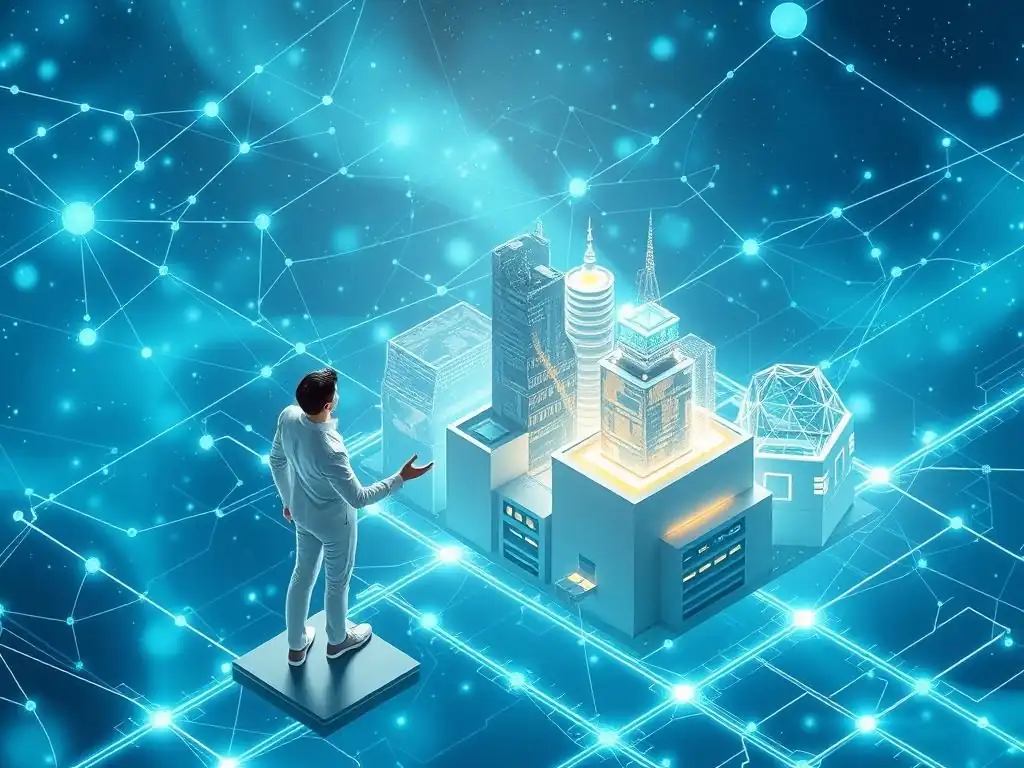
Developing NFT-Based Virtual Land and Real Estate
The concept of virtual land ownership in the metaverse is gaining significant traction, and NFTs are the key to making this a reality. Blockchain metaverse development opportunities in this area are abundant. Developers can create platforms that allow users to purchase, own, and develop virtual land represented by NFTs. This virtual real estate can be used for various purposes, from building virtual homes and businesses to hosting events and creating immersive experiences.
The scarcity and verifiable ownership of NFT-based virtual land create a digital real estate market within the metaverse. Projects like Decentraland and The Sandbox are prime examples of platforms where users can buy, sell, and trade virtual land NFTs. The value of virtual land is driven by factors similar to real-world real estate, such as location, scarcity, and potential for development.
This emerging market offers significant blockchain metaverse development opportunities for creators, investors, and businesses looking to establish a presence in the virtual world. For instance, in 2021, virtual land sales in metaverse projects reached approximately $500 million, showcasing the burgeoning market.
Creating Play-to-Earn (P2E) Games with Blockchain Integration
Play-to-Earn (P2E) gaming is a revolutionary model enabled by blockchain, transforming the traditional gaming industry. Blockchain metaverse development opportunities in P2E gaming are exploding, as it allows players to earn cryptocurrency and NFTs through gameplay. These digital assets can then be traded or sold, providing players with real economic incentives for their time and skills. This contrasts sharply with traditional gaming models where players invest time and money without direct financial returns.
P2E games often utilize NFTs for in-game assets and cryptocurrencies for rewards and transactions. Axie Infinity, a prominent example, allows players to earn its native token, AXS, and SLP by playing the game. This model has gained immense popularity, particularly in regions where traditional income opportunities are limited.
The growth of P2E gaming is fueled by the desire for greater player ownership and control over in-game assets, and represents a massive area of blockchain metaverse development opportunities that is reshaping the gaming landscape. By 2022, the P2E gaming market was estimated to be worth billions of dollars, with continued growth projected.
Social interaction is a core aspect of the metaverse, and blockchain offers the potential to create decentralized social platforms that empower users and prioritize privacy. Blockchain metaverse development opportunities in decentralized social media are emerging as an alternative to centralized platforms that control user data and content. These platforms leverage blockchain to give users greater control over their data, identity, and social interactions.
Decentralized social metaverses can utilize blockchain for identity management, content ownership, and governance. Users can own their data and control who has access to it, addressing privacy concerns prevalent in current social media. Furthermore, blockchain can enable content creators to directly monetize their work without relying on centralized intermediaries.
Platforms like Mastodon and Peepeth, while not strictly metaverse platforms, demonstrate the principles of decentralized social networking that can be applied to metaverse environments. The development of robust and user-centric decentralized social metaverses represents a significant area of blockchain metaverse development opportunities, aiming to create more equitable and privacy-respecting virtual social spaces.
Launching Metaverse-Based Digital Art Marketplaces
The metaverse provides a new frontier for digital art, and blockchain, particularly NFTs, is revolutionizing how digital art is created, owned, and traded. Blockchain metaverse development opportunities in digital art marketplaces are expanding rapidly. Virtual galleries and marketplaces within the metaverse allow artists to showcase and sell their digital art as NFTs to a global audience. This provides artists with new revenue streams and empowers them to directly connect with collectors.
NFT-based art marketplaces within the metaverse offer unique immersive experiences for art enthusiasts. Users can explore virtual galleries, interact with digital art in 3D environments, and participate in virtual art events. Platforms like SuperRare and KnownOrigin, while primarily Web3 platforms, are paving the way for integrated metaverse art experiences.
The increasing demand for digital art and the immersive possibilities of the metaverse are driving significant blockchain metaverse development opportunities in this sector, creating new avenues for artists and collectors to engage with digital creativity. In 2021, the NFT art market surged to billions of dollars in sales volume, demonstrating the strong demand for digital art ownership.
Exploring New E-commerce Models in Blockchain-Enabled Virtual Worlds
E-commerce within the metaverse is poised to be transformative, and blockchain is essential for enabling secure, transparent, and decentralized virtual economies. Blockchain metaverse development opportunities in e-commerce are vast, extending beyond traditional online shopping to immersive and interactive virtual commerce experiences. Metaverse e-commerce can involve virtual storefronts, digital product sales, and virtual services, all facilitated by blockchain technology.
Blockchain can enhance metaverse e-commerce through secure payment systems using cryptocurrencies, verifiable digital ownership of purchased goods via NFTs, and transparent supply chain management for virtual products. Imagine purchasing a virtual item in the metaverse and having its ownership instantly and securely recorded on the blockchain. Furthermore, blockchain can enable new e-commerce models like decentralized marketplaces and creator economies within the metaverse.
The potential for immersive and decentralized e-commerce within blockchain-enabled virtual worlds represents a massive area of blockchain metaverse development opportunities, promising to reshape the future of online commerce. Brands like Nike and Adidas are already exploring metaverse e-commerce, indicating the growing interest and potential in this space.
Real-World Examples of Blockchain Metaverses
Decentraland: User-Owned Virtual World
Decentraland stands out as a prime example of a user-owned virtual world built on blockchain. It is a decentralized metaverse platform where users can buy, sell, and develop virtual land represented by NFTs. Decentraland is governed by a DAO, giving LAND (virtual land NFT) and MANA (Decentraland's cryptocurrency) holders voting rights on key platform decisions. This decentralized governance model embodies the principles of user empowerment and community ownership.
Within Decentraland, users can create and explore a wide range of experiences, from virtual art galleries and casinos to concerts and social gatherings. The platform's open and decentralized nature encourages creativity and innovation, making it a vibrant and evolving metaverse ecosystem. Decentraland showcases the potential of blockchain metaverse development opportunities to create truly user-centric virtual worlds. As of 2023, Decentraland has seen millions of dollars in virtual land sales and continues to attract a growing community of users and creators.
The Sandbox: Voxel-Based Gaming Platform
The Sandbox is another leading blockchain-based metaverse platform, focusing on user-generated content and voxel-based gaming experiences. It empowers users to create, own, and monetize their gaming assets and experiences using NFTs and its utility token, SAND. The Sandbox provides tools for users to easily create voxel-based assets, games, and virtual experiences without requiring coding knowledge.
Like Decentraland, The Sandbox also utilizes a DAO for governance, giving SAND holders voting rights. It has partnered with numerous brands and celebrities, bringing diverse content and experiences to its metaverse. The Sandbox exemplifies the blockchain metaverse development opportunities in creating user-generated content platforms and play-to-earn gaming ecosystems. The platform has seen significant growth in user activity and NFT sales, demonstrating the appeal of its creative and monetizable virtual world. The Sandbox has reported millions of registered users and a thriving marketplace for user-created NFTs.
Axie Infinity: Play-to-Earn NFT Game
Axie Infinity is a prominent example of a play-to-earn NFT game built on blockchain. It's a Pokémon-inspired game where players collect, breed, and battle digital creatures called Axies, which are represented as NFTs. Players can earn cryptocurrency (SLP and AXS) by playing the game, participating in battles, and trading Axies on the marketplace.
Axie Infinity gained massive popularity, particularly in Southeast Asia, demonstrating the potential of P2E gaming to provide income opportunities. It showcases how blockchain metaverse development opportunities in gaming can create new economic models and empower players through digital asset ownership. While Axie Infinity has faced challenges related to its tokenomics, it remains a significant example of a successful blockchain-based game that has pioneered the P2E model and highlighted the economic potential of blockchain gaming. At its peak, Axie Infinity boasted millions of daily active users and billions of dollars in NFT trading volume.
The Future of Blockchain and the Metaverse
Scalability Solutions for Blockchain Metaverses
Scalability is a critical challenge for blockchain metaverses to achieve mass adoption. Current blockchain technologies, particularly Ethereum (upon which many early metaverse projects are built), face limitations in transaction throughput and speed, which can hinder the smooth operation of large-scale virtual worlds. Therefore, developing and implementing scalability solutions is crucial for the future of blockchain metaverse development opportunities.
Layer-2 scaling solutions, such as rollups and sidechains, are being actively explored to address blockchain scalability issues. These solutions aim to increase transaction throughput and reduce gas fees, making blockchain more efficient and cost-effective for metaverse applications. Furthermore, the development of more scalable Layer-1 blockchains is also crucial for supporting the growth of the metaverse. Advancements in blockchain scalability are essential to enable seamless and high-performance metaverse experiences for millions of users, unlocking the full potential of blockchain metaverse development opportunities.
Addressing Security Concerns in Decentralized Virtual Worlds
Security is paramount in the metaverse, especially as it becomes a place where users store valuable digital assets and conduct financial transactions. Blockchain metaverse development opportunities must prioritize robust security measures to protect users from fraud, theft, and other security risks. While blockchain itself offers a secure foundation, metaverse platforms need to implement comprehensive security protocols at all levels.
Smart contract security audits, secure key management, and robust cybersecurity practices are essential for mitigating security risks in blockchain metaverses. Furthermore, user education on security best practices is crucial to prevent phishing attacks and social engineering. As the metaverse evolves and becomes more complex, addressing security concerns will be an ongoing priority for blockchain metaverse development opportunities, ensuring a safe and trustworthy virtual environment for all users.
The Evolution of Digital Identity in the Metaverse
Digital identity in the metaverse is poised to evolve significantly, moving beyond simple usernames and passwords to more sophisticated and user-controlled identity systems. Blockchain metaverse development opportunities are emerging in decentralized identity solutions that empower users to own and control their digital identities across different virtual worlds. Self-sovereign identity (SSI) is a key concept in this evolution, allowing users to manage their own digital credentials and selectively share information as needed.
Blockchain-based identity solutions can provide users with portable and interoperable digital identities that are not tied to specific platforms. This enhances user privacy, control, and convenience across the metaverse. Furthermore, verifiable credentials and decentralized identifiers (DIDs) are key technologies enabling SSI in the metaverse. The development and adoption of decentralized identity solutions are crucial for creating a user-centric and privacy-respecting metaverse, driving significant blockchain metaverse development opportunities in the identity management space.
Regulatory Landscape of Blockchain Metaverse Development
The regulatory landscape surrounding blockchain and the metaverse is still evolving and presents both challenges and opportunities. Governments and regulatory bodies worldwide are grappling with how to regulate these emerging technologies, addressing issues related to digital assets, data privacy, and consumer protection. Understanding and navigating this evolving regulatory landscape is crucial for blockchain metaverse development opportunities.
Clarity in regulations regarding NFTs, cryptocurrencies, and metaverse activities is needed to foster innovation and investment in the space. While over-regulation could stifle innovation, a lack of regulation could lead to risks and uncertainties. Striking the right balance is essential to create a regulatory environment that encourages responsible blockchain metaverse development opportunities while protecting users and promoting innovation. The ongoing dialogue between regulators and the blockchain and metaverse industries is crucial for shaping a clear and supportive regulatory framework.
Conclusion: Embracing the Blockchain Metaverse Revolution
The Transformative Potential of Blockchain in Virtual Worlds
Blockchain technology is not just an enabler of the metaverse; it is a transformative force that is fundamentally reshaping the concept of virtual worlds. By providing decentralization, security, ownership, and interoperability, blockchain is unlocking the true potential of the metaverse to become a user-centric, open, and economically vibrant digital realm. The convergence of these technologies represents a paradigm shift in how we interact with the digital world, offering unprecedented opportunities for innovation and societal transformation.
The blockchain metaverse is more than just a technological advancement; it's a cultural and economic revolution. It empowers users, creators, and communities, fostering new forms of digital ownership, social interaction, and economic participation. Embracing this transformative potential is crucial for businesses, developers, and individuals looking to shape the future of the internet and participate in the next evolution of digital experiences. The blockchain metaverse development opportunities are immense and are poised to redefine how we live, work, and play in the digital age.
Navigating the landscape of blockchain metaverse development opportunities requires a strategic and forward-thinking approach. It involves understanding the core principles of blockchain and the metaverse, identifying key areas of innovation, and adapting to the evolving technological and regulatory landscape. For developers, this means exploring blockchain development tools, NFT technologies, and decentralized governance models. For businesses, it means identifying how the metaverse can enhance their operations, engage with customers, and create new revenue streams.
The future of the blockchain metaverse is bright, but it also requires collaboration, innovation, and a commitment to building a user-centric and equitable virtual world. By embracing the transformative potential of blockchain and actively participating in the development of the metaverse, we can collectively shape a future where virtual worlds are not just immersive and engaging, but also empowering and beneficial for all. The current era presents a unique window of opportunity to contribute to the blockchain metaverse development opportunities that will define the next generation of digital experiences.
Frequently Asked Questions
What are some key blockchain metaverse development opportunities mentioned in the article?
The article highlights opportunities in building decentralized virtual worlds, creating NFT-based digital assets, and developing secure and transparent governance systems within the metaverse.
How does blockchain technology contribute to the development of the metaverse?
Blockchain provides the underlying infrastructure for the metaverse, enabling ownership of digital assets, secure transactions, and interoperability between different virtual environments.
What are some of the enterprise applications of blockchain technology within the metaverse?
Enterprises can leverage blockchain in the metaverse for supply chain management, digital identity verification, and creating immersive customer experiences through virtual storefronts.
What are some of the regulatory challenges associated with blockchain and the metaverse?
Regulatory uncertainties surround data privacy, intellectual property rights, and anti-money laundering compliance within these emerging decentralized environments.
How might Decentralized Finance (DeFi) play a role in the future of the metaverse?
DeFi offers financial services like lending, borrowing, and trading within virtual worlds, enabling new economic models and empowering users with greater financial autonomy.
Final Reflection: Embracing the Decentralized Future
The exploration of blockchain's role in the metaverse reveals a paradigm shift in how we interact with digital spaces and assets. No longer are we confined to centralized platforms; the metaverse, powered by blockchain, offers a future of true ownership, interoperability, and decentralized governance. This is not just a technological advancement; it's a fundamental change in the power dynamics of the digital world.
The potential of blockchain to reshape the metaverse is profound, influencing everything from digital art ownership to virtual land management. Witnessing this evolution firsthand underscores the importance of understanding and engaging with these emerging technologies. The metaverse is coming, and it will affect every product, company, and person that we touch.
- Matthew Ball, Metaverse Expert. This quote encapsulates the transformative potential, urging us to consider the ethical and societal implications of this new frontier.
As we stand on the cusp of this decentralized future, consider how you can contribute to its responsible development. Embrace the blockchain metaverse development opportunities, not just for their potential financial rewards, but for the chance to shape a more equitable and empowering digital world for all. Let's build a metaverse that truly reflects the values of decentralization, transparency, and community.
Ignite Your Metaverse Journey!
Thank you for exploring the potential of blockchain in virtual worlds with us. You've gained a deeper understanding of how this technology is shaping digital environments. Are you ready to take the next step and be part of this exciting future?
Here are a few ways to get involved:
- Start building your own NFT collection on a metaverse platform like Decentraland or Sandbox — this is a great way to immerse yourself and see how blockchain integrates with virtual spaces.
- Explore blockchain-based metaverse projects beyond gaming. Investigate virtual real estate, digital art galleries, and educational platforms to discover the full scope of innovation.
- Share this article with your network and help spark conversations about the future of the metaverse and blockchain's role in it. Let’s raise awareness together.
What innovative uses of blockchain in the metaverse excite you the most? Share your thoughts in the comments below!
Leave a Reply