
Integrating Oracles into Your Smart Contracts: Securely Access External Information

Welcome to Blockchain Trends, your guide to navigating the revolutionary world of blockchain technology. Beyond the hype, we delve into its real-world applications and future potential. Ever wondered how to bridge the gap between your smart contracts and the outside world, securely? This article explores the critical topic of secure smart contract oracle integration, revealing how to confidently access external information and unlock new possibilities for your decentralized applications. Ready to learn how?
- Introduction to Smart Contract Oracles and External Data
-
Frequently Asked Questions
- What is a smart contract oracle and why is it needed?
- What are the primary security risks associated with integrating oracles into smart contracts?
- How can I ensure my smart contract oracle integration is secure?
- What are some common types of secure smart contract oracle integration strategies?
- How does regulation impact the use of oracles in blockchain applications?
- Final Reflection: Embracing Secure Data in a Decentralized World
- Unleash the Power of Connected Contracts!
Introduction to Smart Contract Oracles and External Data
Why Smart Contracts Need Oracles: Bridging the On-Chain and Off-Chain Worlds
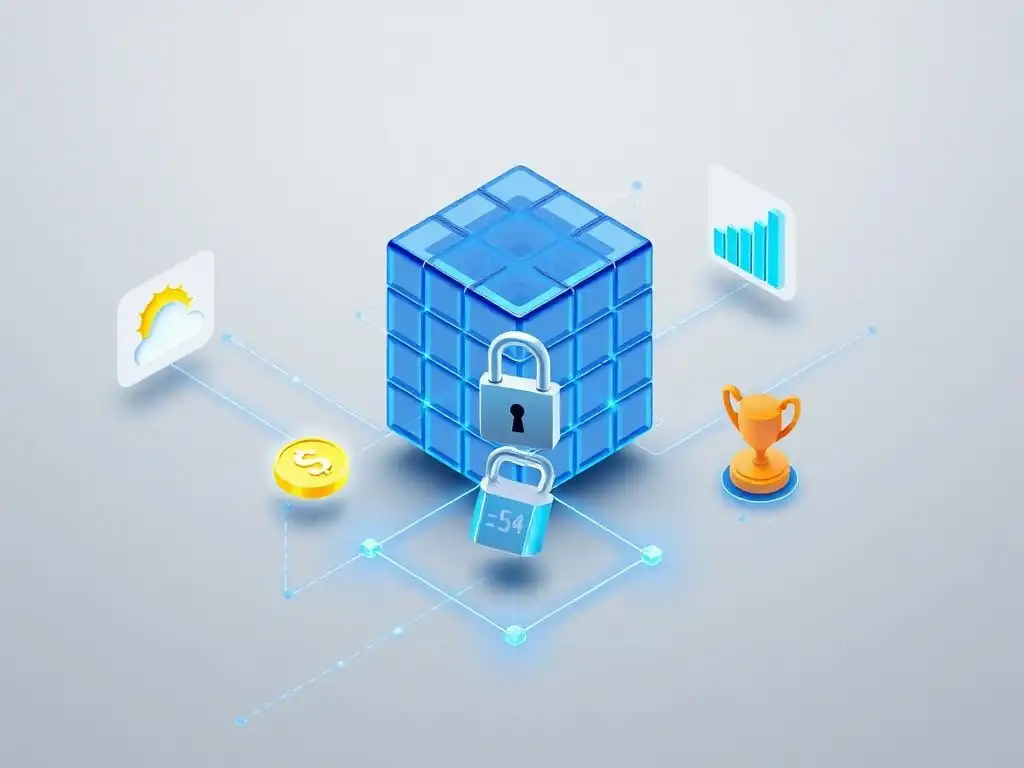
Smart contracts, by their very nature, operate within the confines of the blockchain environment. This design ensures determinism and security, as all computations are executed and verified across the network's nodes. However, this inherent characteristic also isolates smart contracts from the vast amount of data and events that occur outside the blockchain – the "off-chain" world.
Smart contracts, in their native form, cannot directly access real-world data such as price feeds for assets, weather information, election results, or even simple random numbers generated externally. This limitation arises because blockchains are designed to be self-contained and rely on consensus within the network, not on external, potentially unreliable sources.
Imagine a decentralized application (dApp) built on a blockchain to facilitate crop insurance. This smart contract needs to automatically pay farmers based on real-time weather data, specifically rainfall levels in their region. Without a mechanism to reliably bring external weather data onto the blockchain, the smart contract would be unable to determine if a payout is warranted.
This is where oracles become indispensable. Oracles act as bridges, connecting the on-chain world of smart contracts with the off-chain world of data and events. They are essential third-party services that find, verify, and authenticate real-world information and then relay this information to smart contracts in a blockchain-understandable format, enabling them to react to and interact with the external environment in a secure and trustworthy manner.
The Importance of Secure Oracle Integration for Smart Contract Reliability
The reliability of a smart contract is intrinsically linked to the reliability of the data it uses. If a smart contract relies on external data to execute its functions – as many sophisticated smart contracts do – then the source of that data, the oracle, becomes a critical point of dependency. In scenarios where smart contracts manage significant value or automate critical processes, the security of the oracle integration is paramount.
A compromised or unreliable oracle can feed inaccurate or manipulated data to a smart contract, leading to unintended, and potentially detrimental, outcomes. Consider a decentralized finance (DeFi) protocol that uses price feeds from oracles to determine collateralization ratios for loans. If an attacker can manipulate the oracle to report an artificially low price for a collateral asset, they could potentially trigger unwarranted liquidations, causing significant financial losses for users.
Secure smart contract oracle integration is not merely about ensuring data accuracy; it's about maintaining the integrity and trustworthiness of the entire decentralized application. A robust oracle integration strategy mitigates risks such as data tampering, single points of failure, and malicious manipulation.
By prioritizing secure oracle integration, developers can build smart contracts that are not only functionally rich and responsive to the real world but also resilient and dependable, fostering greater user trust and wider adoption of blockchain technology. The security of the oracle directly impacts the security of the smart contract, making it a foundational element of any secure and functional decentralized application.
Understanding the Oracle Problem in Blockchain Development
The "Oracle Problem" is a fundamental challenge in blockchain development that arises from the need to bridge the gap between deterministic, on-chain smart contracts and the uncertain, real-world data that resides off-chain. At its core, the oracle problem questions how to ensure that external data fed to a smart contract is truthful, accurate, and tamper-proof. Since smart contracts are designed to execute code based on predefined rules and inputs, the integrity of these inputs is crucial for the contract's correct and secure operation.
However, relying on a single, centralized oracle introduces a point of trust, effectively shifting the trust requirement from the smart contract code itself to the oracle provider. This contradicts the very principles of decentralization and trustlessness that blockchain technology aims to uphold.
The challenge is further compounded by the fact that blockchains have no inherent way to verify the authenticity of off-chain data. Unlike on-chain transactions, which are validated by the network's consensus mechanism, data retrieved from external sources lacks this inherent verification. A malicious or compromised oracle could provide false information, and the smart contract, operating deterministically, would execute its logic based on this flawed data, leading to incorrect or harmful outcomes.
Addressing the oracle problem requires developing mechanisms to minimize trust in individual oracles and enhance the security and reliability of data delivery to smart contracts. Solutions often involve decentralized oracle networks, data verification techniques, and incentive mechanisms that encourage honest and accurate data reporting, aiming to create secure smart contract oracle integration and mitigate the inherent risks associated with relying on external data.
Frequently Asked Questions
What is a smart contract oracle and why is it needed?
An oracle is a third-party service that provides external data to smart contracts. Smart contracts, inherently, cannot access off-chain information, making oracles essential for applications needing real-world data.
What are the primary security risks associated with integrating oracles into smart contracts?
The main risks stem from data manipulation by the oracle or a compromised oracle service. This can lead to incorrect contract execution and financial losses for users.
How can I ensure my smart contract oracle integration is secure?
Employ multiple oracles for data validation and use reputable oracle providers with proven security track records. Also, implement data verification within the smart contract itself.
What are some common types of secure smart contract oracle integration strategies?
Common strategies include using decentralized oracles, implementing data aggregation, and incorporating economic incentives for honest oracle reporting.
How does regulation impact the use of oracles in blockchain applications?
Regulatory bodies are increasingly scrutinizing the reliability and security of oracles. Compliance requires demonstrating robust data integrity and risk management practices when using oracles.
Final Reflection: Embracing Secure Data in a Decentralized World
The journey of building decentralized applications hinges on trust and reliability, and secure smart contract oracle integration is no longer a luxury, but a necessity. As we've explored the various methods and considerations for connecting smart contracts to external data, it's clear that the future of blockchain innovation depends on our ability to bridge the gap between the deterministic world of code and the dynamic realities of the world around us. The stakes are high, and the potential rewards are even higher.
This integration profoundly impacts the cultural and social landscape by enabling more sophisticated and trustworthy decentralized applications. The ability to securely access real-world data empowers smart contracts to handle complex scenarios, from decentralized finance (DeFi) to supply chain management, fostering greater transparency and accountability. Data is the new oil, and oracles are the pipelines that deliver it to the smart contract ecosystem.
This quote perfectly encapsulates the transformative potential of secure oracle integration, allowing us to build a future where trust is verifiable and data is democratized.
As you embark on your own journey of building decentralized applications, remember that the security and reliability of your oracle integration are paramount. Take the lessons learned here, and apply them diligently to your projects. Embrace the challenge of building secure and robust systems, and contribute to a future where blockchain technology empowers individuals and transforms industries. The future of decentralized innovation is in your hands.
Unleash the Power of Connected Contracts!
Thank you for exploring the world of oracles and understanding how they can connect your smart contracts to external data sources. Now that you recognize the importance of secure and reliable data feeds, it's time to apply this knowledge and enhance your blockchain projects.
What’s next?
- Start experimenting! Implement a simple oracle integration in a test environment using platforms like Chainlink or API3. This hands-on approach will help you grasp how oracles function and their potential impact on your contracts.
- Explore various oracle solutions and data feeds to find options that best suit your specific needs. Consider factors such as decentralization, cost, and data accuracy.
- Share your experience with integrating oracles in the community. Document your journey, challenges, and insights to help others learn and grow.
What type of real-world data will you incorporate into your smart contracts first? Share your ideas in the comments below!
Leave a Reply