
Interplanetary File System (IPFS) and Blockchain: Decentralized Data Storage Revolution


Welcome to Blockchain Trends, your go-to source for understanding the far-reaching impact of blockchain technology. Beyond the hype of cryptocurrencies, explore the exciting world of DeFi, enterprise blockchain applications, and the evolving regulatory landscape. But how will all this data be securely and efficiently stored in the future? Dive into our exploration of decentralized data storage solutions, starting with the groundbreaking Interplanetary File System (IPFS) and its revolutionary integration with blockchain – a crucial step towards a truly decentralized future. Discover how this powerful combination is reshaping data management and opening up unprecedented possibilities.
Decentralized Data Storage: IPFS and Blockchain Integration
- Introduction: Secure Data Management Through Decentralization
- IPFS: Decentralized File Storage Explained
- Blockchain: Trust and Transparency in Data Management
- IPFS and Blockchain: Decentralized Data Partnership
- Real-World Applications of IPFS and Blockchain
- Benefits of IPFS and Blockchain for Data Management
- Implementation Challenges and Considerations
- The Future of Decentralized Data Storage
- Conclusion: Decentralized Data Revolution
-
Frequently Asked Questions
- What is IPFS and how does it relate to blockchain?
- Why is decentralized data storage important in the context of blockchain?
- How does IPFS ensure data integrity and immutability?
- What are some potential use cases for IPFS and blockchain working together?
- What are the regulatory considerations surrounding decentralized data storage solutions like IPFS?
- Final Reflection: Embracing the Decentralized Future
- Ignite Your Decentralized Storage Journey!
Introduction: Secure Data Management Through Decentralization
The Need for Decentralized Data Storage
In today's digital age, data is being generated at an unprecedented rate. Centralized data storage solutions, while prevalent, face growing challenges in terms of security, resilience, and control. Traditional cloud storage, for instance, relies on a few large corporations to manage vast amounts of user data.
This centralization creates single points of failure, making systems vulnerable to cyberattacks, data breaches, and censorship. Recent years have witnessed numerous high-profile data breaches affecting companies like Equifax and Yahoo, exposing the inherent risks of storing sensitive information in centralized repositories. Moreover, centralized systems can be susceptible to government regulations and corporate policies that may limit data access or availability, raising concerns about data sovereignty and control for individuals and organizations alike.
The increasing reliance on data necessitates a paradigm shift towards more robust and user-centric storage solutions. Decentralized data storage emerges as a compelling alternative, distributing data across a network of nodes rather than relying on a central authority. This approach inherently enhances security by eliminating single points of failure, making it significantly harder for malicious actors to compromise the entire system.
Furthermore, decentralization promises greater data resilience, as data remains accessible even if some nodes fail. This distributed model empowers users with greater control over their data, fostering a more democratic and secure digital landscape. The need for decentralized data storage solutions is not merely a technological preference; it's a fundamental requirement for building a more secure, resilient, and equitable digital future.
Synergies Between IPFS and Blockchain
The concepts of decentralized data storage and blockchain technology, while distinct, are powerfully synergistic. Blockchain, renowned for its secure and transparent ledger system, provides an ideal framework for managing and verifying data integrity in decentralized storage networks. While blockchain excels at recording transactions and ensuring data immutability, it is not inherently designed for storing large volumes of data efficiently.
This is where the InterPlanetary File System (IPFS) steps in. IPFS is a peer-to-peer distributed file system that excels at storing and sharing large files in a decentralized manner. It uses content addressing to identify files based on their content, rather than location, making data retrieval more efficient and resilient.
The synergy arises from combining the strengths of both technologies. IPFS provides the infrastructure for decentralized data storage, offering scalability and efficient content distribution. Blockchain complements IPFS by providing a secure and immutable record of data stored on IPFS, verifying its integrity and provenance.
Imagine using IPFS to store large datasets or media files, while recording the content identifiers (hashes) of these files on a blockchain. This combination ensures that the data stored on IPFS is tamper-proof and verifiable, as any alteration to the data would change its content hash, which would be immediately detectable by comparing it to the hash recorded on the blockchain. This powerful partnership creates a robust ecosystem for decentralized data management, offering enhanced security, transparency, and control over digital assets.
IPFS: Decentralized File Storage Explained
IPFS Architecture: Distributed Hash Tables and Content Addressing
IPFS operates on a decentralized architecture, moving away from traditional client-server models to a peer-to-peer network. At the heart of IPFS lies the concept of Content Addressing, a revolutionary approach to data identification. Instead of locating files by their server address (location addressing), IPFS identifies each file by its unique cryptographic hash, known as the Content Identifier (CID). This CID is generated based on the file's content itself, ensuring that any change to the file results in a different CID. This fundamental principle underpins data integrity and efficient retrieval in IPFS.
To manage and locate these content-addressed files across the distributed network, IPFS utilizes Distributed Hash Tables (DHTs). DHTs are decentralized databases that map CIDs to the network locations where the corresponding data chunks are stored. When a user requests a file using its CID, the IPFS network queries the DHT to find nodes that are hosting the data. This distributed lookup mechanism ensures that data retrieval is efficient and resilient, even in the face of node failures.
Furthermore, IPFS employs a Merkle DAG (Directed Acyclic Graph) data structure to represent files and directories. This structure allows for efficient data deduplication, versioning, and integrity verification. By breaking files into smaller chunks and linking them using cryptographic hashes, IPFS ensures that data is stored and retrieved in a secure and efficient manner across the decentralized network.
Content Addressing vs. Location Addressing
The distinction between content addressing and location addressing is crucial to understanding the benefits of IPFS. Traditional location-based addressing, like URLs (Uniform Resource Locators), relies on the server's address to locate data. For example, www.example.com/image.jpg points to a specific server and file path. This system is inherently centralized and fragile. If the server goes offline or the file path changes, the link breaks, and the data becomes inaccessible. This vulnerability is commonly known as link rot, a pervasive problem on the internet.
Content addressing, as employed by IPFS, offers a fundamentally different approach. Instead of pointing to a location, a CID like QmXoypizjW3WknFiJnKLwHCnL72vedxjQkDDP1mXWo6uco directly represents the content itself. This CID is generated by hashing the file's data, ensuring that it's unique to that specific content. When you request data using a CID in IPFS, the network searches for any node holding that content, regardless of its physical location. This system is inherently more resilient and robust. Data remains accessible as long as at least one node in the network is hosting it. Content addressing also ensures data integrity, as any modification to the content would result in a different CID, making it easy to detect tampering. This content-centric approach provides a more reliable and persistent way to access and share data compared to traditional location-based systems.
Data Immutability in IPFS
While IPFS itself does not inherently enforce immutability in the same way as a blockchain, it provides mechanisms that strongly support data immutability. The foundation of this lies in content addressing. Once a file is added to IPFS, it is assigned a unique CID based on its content.
If the content is modified, the CID changes, effectively creating a new version of the file. The original file with its original CID remains unchanged and accessible on the network as long as nodes continue to pin it. This versioning system naturally promotes data immutability by making it difficult to alter existing data without changing its identifier.
Furthermore, IPFS's use of cryptographic hashes for content addressing ensures that any tampering with the data would be immediately detectable. If a malicious actor attempts to modify a file stored on IPFS, the resulting hash will no longer match the original CID. While nodes could theoretically unpin and replace content associated with a CID, the decentralized nature of the network and the cryptographic integrity checks make such manipulations highly impractical and easily detectable.
For applications requiring absolute immutability and verifiable history, integrating IPFS with blockchain, as will be discussed later, provides an even stronger guarantee of data integrity and permanence by anchoring the CIDs on an immutable ledger. Therefore, while IPFS on its own offers strong support for practical immutability through its design, combining it with blockchain further solidifies data permanence in decentralized systems.
Blockchain: Trust and Transparency in Data Management
Blockchain Basics: Data Integrity and Consensus Mechanisms
Blockchain technology, initially popularized by cryptocurrencies like Bitcoin, is fundamentally a distributed, immutable ledger. It operates as a chain of blocks, where each block contains a set of transactions. These blocks are cryptographically linked together, forming a tamper-proof record of all data added to the chain.
The key to blockchain's data integrity lies in its cryptographic hashing and consensus mechanisms. Each block contains a hash of the previous block, creating an unbroken chain of cryptographic links. Any attempt to alter data in a previous block would require changing the hash of that block and all subsequent blocks, which is computationally infeasible due to the cryptographic security of the hashing algorithms.
Furthermore, blockchain networks employ consensus mechanisms to ensure that all participants agree on the validity of new blocks and transactions. These mechanisms, such as Proof-of-Work (PoW) or Proof-of-Stake (PoS), require network participants (nodes) to expend computational resources or stake cryptocurrency to validate transactions and add new blocks to the chain.
This decentralized consensus process ensures that no single entity can control or manipulate the blockchain, enhancing its security and trustworthiness. The combination of cryptographic hashing and consensus mechanisms makes blockchain an inherently secure and transparent system for recording and verifying data, forming the basis for its application in various fields beyond cryptocurrencies, including decentralized data management.
Smart Contracts for Automated Data Access Control
Smart contracts are self-executing contracts with the terms of the agreement directly written into code. Deployed on a blockchain, smart contracts automatically enforce the terms of an agreement when predefined conditions are met. In the context of decentralized data storage, smart contracts can play a crucial role in automating and securing data access control. Imagine a scenario where users store encrypted data on IPFS and want to grant access to specific individuals or applications under certain conditions. Smart contracts can be used to manage these access permissions in a transparent and auditable manner.
For example, a smart contract could define rules for data access based on payment, user identity, or other pre-agreed conditions. When a user requests access to data, the smart contract automatically verifies if the conditions are met. If the conditions are satisfied, the smart contract can release decryption keys or grant access tokens, allowing the user to decrypt and access the data stored on IPFS.
This automated access control mechanism eliminates the need for intermediaries and ensures that data access is granted only according to the predefined rules encoded in the smart contract. Smart contracts enhance the security and efficiency of data access management in decentralized storage systems, providing a programmable and trustless way to control who can access specific data and under what circumstances.
Blockchain's Role in IPFS Data Verification
Blockchain technology provides a critical layer of verification and trust to IPFS decentralized data storage. While IPFS ensures content addressing and efficient data distribution, blockchain can be used to create an immutable record of the CIDs (Content Identifiers) of data stored on IPFS. This integration addresses potential concerns about data integrity and provenance in a purely decentralized storage system. By recording IPFS CIDs on a blockchain, it becomes possible to cryptographically verify that the data associated with a specific CID has not been tampered with since its creation.
Imagine a scenario where critical documents or valuable digital assets are stored on IPFS. By anchoring the IPFS CID of these assets on a blockchain, users can publicly and independently verify the authenticity and integrity of the data at any time. If someone attempts to modify the data on IPFS, the CID will change, and this change will be immediately detectable by comparing the new CID with the original CID recorded on the blockchain.
Furthermore, blockchain timestamps provide verifiable proof of when data was stored on IPFS, establishing provenance and audit trails. This combination of IPFS for efficient decentralized storage and blockchain for immutable verification creates a powerful and trustworthy system for managing sensitive and valuable data in a decentralized environment.
IPFS and Blockchain: Decentralized Data Partnership
Addressing Blockchain's Data Storage Limitations with IPFS
Blockchain technology, while excellent for recording transactions and ensuring data integrity, is not inherently designed for storing large volumes of data. Storing large files directly on a blockchain can be extremely expensive and inefficient due to the distributed and replicated nature of blockchain networks. Every node in the network needs to store a copy of the entire blockchain, making it impractical to store large files or datasets directly on-chain. For instance, storing a high-resolution video file directly on a blockchain would be prohibitively costly in terms of storage space and transaction fees.
IPFS elegantly addresses this limitation by serving as an off-chain storage layer for blockchain applications. Instead of storing the entire file on the blockchain, only the IPFS CID (Content Identifier) of the file is recorded on the blockchain. This CID acts as a cryptographic fingerprint of the file's content.
The actual file data is stored on the IPFS network, which is optimized for efficient and scalable decentralized storage. When a blockchain application needs to access the data, it retrieves the IPFS CID from the blockchain and uses it to fetch the corresponding data from the IPFS network. This approach significantly reduces the storage burden on the blockchain, allowing it to focus on its core strengths: transaction processing, security, and immutability, while leveraging IPFS for efficient and cost-effective decentralized data storage.
Blockchain for IPFS Content Integrity and Provenance
While IPFS provides robust mechanisms for content addressing and data distribution, integrating blockchain adds an extra layer of security and trust, particularly concerning content integrity and provenance. IPFS relies on cryptographic hashes (CIDs) to ensure data integrity, but the persistence of these CIDs and the associated data ultimately depends on nodes pinning the content. While IPFS incentives and community support encourage pinning, there isn't an inherent guarantee of long-term data persistence or immutable record-keeping within IPFS itself in the same way as a blockchain provides.
Blockchain addresses this by providing an immutable and auditable ledger to record IPFS CIDs. By anchoring IPFS CIDs on a blockchain, a permanent and verifiable record of data existence and integrity is created. This blockchain record serves as irrefutable proof that specific data, identified by its CID, existed at a particular time and has not been tampered with since its creation.
This is especially crucial for applications requiring high levels of trust and auditability, such as legal documents, intellectual property, or sensitive records. Blockchain's timestamping and immutability provide a verifiable chain of custody for data stored on IPFS, enhancing its trustworthiness and making it suitable for applications where data integrity and provenance are paramount.
Use Cases for IPFS and Blockchain Integration
The integration of IPFS and blockchain unlocks a wide range of powerful use cases across various industries. One prominent area is decentralized applications (dApps). dApps often require both secure data storage and transparent transaction management. IPFS provides the decentralized storage infrastructure for dApp data, while blockchain handles transaction processing, user authentication, and smart contract logic. This combination enables the creation of truly decentralized and resilient applications that are not reliant on centralized servers.
Another compelling use case is in digital asset management. For example, NFTs (Non-Fungible Tokens), which represent ownership of unique digital assets, often store the actual asset data (like images or music) on IPFS and link the IPFS CID to the NFT on the blockchain. This ensures that the digital asset associated with the NFT is persistently stored and verifiable, even if the original marketplace or platform disappears.
Beyond digital assets, IPFS and blockchain are also being applied to supply chain management for improved traceability and transparency, healthcare for secure and patient-controlled medical records, and decentralized social media platforms to resist censorship and empower users with data ownership. The synergy between these technologies is driving innovation in numerous sectors, paving the way for a more decentralized and user-centric digital future.
Real-World Applications of IPFS and Blockchain
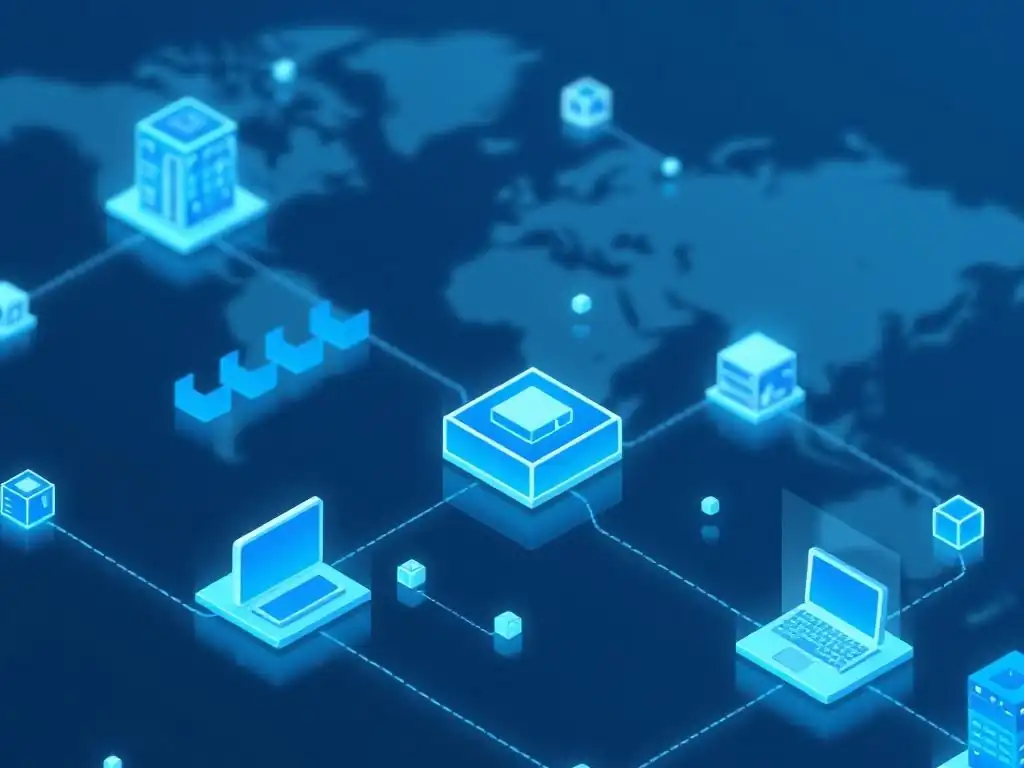
Decentralized Applications (dApps) and Storage Solutions
Decentralized Applications (dApps) are leveraging the combined power of IPFS and blockchain to create a new generation of internet services that are more resilient, transparent, and user-centric. Many dApps utilize IPFS for storing application data, user-generated content, and media files, while blockchain is used for managing user identities, transactions, and smart contract logic. This architecture allows dApps to avoid reliance on centralized servers, mitigating risks of censorship, single points of failure, and data breaches common in traditional web applications.
For example, consider decentralized social media platforms. Platforms like Peepeth and Mastodon (in some federated instances) utilize IPFS to store user posts and media, making content more resistant to censorship and ensuring data availability even if parts of the network are disrupted. Similarly, decentralized storage platforms like Filecoin (which is built on IPFS) and Sia offer alternatives to centralized cloud storage providers, allowing users to rent out their spare storage space and earn cryptocurrency, creating a more distributed and competitive storage market. These dApps demonstrate the practical application of IPFS and blockchain in building robust and user-empowering decentralized services.
Secure Healthcare Records Management with IPFS and Blockchain
The healthcare industry handles highly sensitive patient data, making data security and privacy paramount. Traditional centralized Electronic Health Record (EHR) systems are vulnerable to data breaches and raise concerns about patient data control. IPFS and blockchain offer a promising solution for creating more secure and patient-centric healthcare data management systems. IPFS can be used to store large medical images, reports, and patient records in a decentralized and secure manner, while blockchain can manage access control, audit trails, and data integrity verification.
For instance, patient records can be encrypted and stored on IPFS, with the IPFS CIDs recorded on a private or consortium blockchain. Smart contracts on the blockchain can manage patient consent and access permissions, allowing patients to control who can access their medical data. Blockchain's immutable ledger provides an auditable record of data access and modifications, enhancing transparency and accountability.
While still in early stages of adoption, pilot projects are exploring the use of IPFS and blockchain to create more secure, interoperable, and patient-controlled healthcare data ecosystems. The potential benefits include reduced data breaches, improved data interoperability, and greater patient empowerment in managing their health information.
Supply Chain Transparency and Traceability
Supply chains are complex networks involving numerous stakeholders, making it challenging to track products and ensure transparency. Lack of transparency can lead to issues like counterfeiting, inefficient logistics, and difficulty in verifying product origin and quality. IPFS and blockchain can be combined to create more transparent and traceable supply chains, improving efficiency, reducing fraud, and enhancing consumer trust. IPFS can be used to store product information, provenance data, and supply chain documentation in a decentralized and accessible manner, while blockchain can provide an immutable record of product movements and ownership changes.
Imagine tracking a food product from farm to consumer. Using IPFS, information about the product's origin, processing, and transportation can be stored and linked to a unique product identifier. This IPFS CID can then be recorded on a blockchain along with each step in the supply chain, creating an auditable and tamper-proof record of the product's journey.
Consumers can scan a QR code on the product to access this information, verifying its authenticity and origin. Companies like Provenance are already utilizing blockchain and similar technologies to enhance supply chain transparency and traceability, demonstrating the real-world applicability of these technologies in improving supply chain efficiency and building consumer trust.
Centralized social media platforms have faced criticism regarding data privacy, censorship, and lack of user control. Decentralized social media platforms, built on IPFS and blockchain, offer an alternative model that aims to address these concerns. IPFS can be used to store user-generated content, posts, and media in a decentralized and censorship-resistant manner, while blockchain can manage user identities, social graphs, and content moderation policies in a transparent and community-governed way.
Platforms like Mastodon (in federated instances), Diaspora, and Peepeth are exploring decentralized architectures. These platforms often use IPFS or similar decentralized storage solutions to host user content, making it more difficult for platforms or governments to censor information. Blockchain can be used to implement decentralized identity management, giving users more control over their data and online presence. Furthermore, blockchain-based governance mechanisms can enable community-driven content moderation and platform policies, shifting power away from centralized corporations and towards users. While decentralized social media is still evolving, it represents a significant step towards a more user-centric and democratized internet.
Benefits of IPFS and Blockchain for Data Management
Enhanced Security and Data Integrity
The combination of IPFS and blockchain provides a significant enhancement to data security and integrity compared to traditional centralized systems. Decentralization itself inherently improves security by eliminating single points of failure. Data stored on IPFS is distributed across a network of nodes, making it significantly harder for attackers to compromise the entire system. Even if some nodes are compromised, the data remains available from other nodes in the network. Furthermore, IPFS's content addressing ensures data integrity. Any modification to the data results in a different CID, making tampering easily detectable.
Blockchain further strengthens data integrity by providing an immutable ledger to record IPFS CIDs. This blockchain record serves as irrefutable proof that the data associated with a specific CID has not been altered. The cryptographic security of blockchain and IPFS, combined with their decentralized nature, creates a robust and resilient data management system that is significantly more secure and trustworthy than centralized alternatives. This enhanced security is crucial for protecting sensitive data and building trust in digital systems.
Improved Data Availability and Resilience
Decentralized data storage solutions, particularly when leveraging IPFS and blockchain, offer significantly improved data availability and resilience. Traditional centralized storage systems are vulnerable to single points of failure. If a central server goes down due to technical issues, cyberattacks, or natural disasters, the data becomes inaccessible. IPFS, by distributing data across a peer-to-peer network, eliminates this single point of failure. Data remains accessible as long as at least one node in the network is hosting it. This distributed architecture inherently enhances data availability and resilience.
Furthermore, IPFS's content addressing ensures that data can be retrieved from any node hosting the content, improving network efficiency and redundancy. The combination with blockchain further strengthens resilience by providing a tamper-proof record of data CIDs, ensuring that the integrity of the data is maintained over time. This improved data availability and resilience is critical for applications requiring continuous access to data, such as critical infrastructure, financial systems, and healthcare.
Reduced Storage Costs
Decentralized storage solutions, especially those utilizing IPFS and blockchain-based marketplaces like Filecoin, have the potential to reduce storage costs compared to traditional centralized cloud storage. Centralized cloud storage providers often operate with significant overhead costs, including infrastructure maintenance, marketing, and profit margins, which are reflected in their pricing. Decentralized storage networks, on the other hand, leverage distributed networks of storage providers, creating a more competitive and efficient storage market.
Platforms like Filecoin allow users to rent out their spare storage space and earn cryptocurrency, creating a decentralized storage marketplace. This competitive market can drive down storage prices as providers compete for storage deals. While the actual cost savings can vary depending on usage patterns and network conditions, decentralized storage has the potential to offer more cost-effective storage solutions, particularly for large datasets and long-term storage needs. This cost efficiency can be particularly beneficial for individuals, startups, and organizations looking to reduce their storage expenses.
Increased Transparency and Auditability
Blockchain technology, by its very nature, provides increased transparency and auditability to data management systems. Every transaction and data entry on a blockchain is recorded in an immutable and auditable ledger, accessible to all network participants. When IPFS CIDs are recorded on a blockchain, it creates a transparent and auditable record of data storage and modifications. This transparency is particularly valuable for applications requiring accountability and trust, such as supply chain management, financial transactions, and regulatory compliance.
Auditors and stakeholders can independently verify the integrity and provenance of data by examining the blockchain record. Smart contracts, used for access control and data management, also enhance transparency by making the rules governing data access and usage publicly auditable. This increased transparency and auditability can build trust in decentralized data management systems, making them suitable for applications requiring high levels of accountability and regulatory scrutiny.
Implementation Challenges and Considerations
Scalability of Decentralized Storage
Scalability remains a significant challenge for decentralized storage solutions, including those based on IPFS and blockchain. While IPFS is designed to be scalable through its distributed architecture, handling massive amounts of data and high transaction volumes can still pose challenges. As the network grows, ensuring efficient data routing, retrieval, and synchronization across a large number of nodes becomes more complex. Blockchain, especially public blockchains, also face scalability limitations due to consensus mechanisms and transaction processing capacity.
While Layer-2 scaling solutions are being developed for both IPFS and blockchain, achieving truly massive scalability to rival centralized cloud storage providers remains an ongoing area of research and development. Factors like network latency, bandwidth limitations, and the efficiency of DHT lookups can impact the scalability of IPFS networks. For blockchain, transaction throughput and block confirmation times can limit scalability. Addressing these scalability challenges is crucial for the widespread adoption of decentralized storage solutions for large-scale applications.
Data Privacy and Compliance (GDPR, CCPA)
Data privacy and regulatory compliance, particularly with regulations like GDPR (General Data Protection Regulation) and CCPA (California Consumer Privacy Act), are critical considerations for implementing decentralized data storage solutions. While decentralization offers enhanced security, it also raises complexities regarding data control and jurisdiction. GDPR and CCPA grant individuals rights over their personal data, including the right to access, rectify, and erase their data. Implementing these rights in a decentralized environment, where data is distributed across multiple nodes and potentially across different jurisdictions, can be challenging.
Ensuring data anonymization, encryption, and compliance with data residency requirements in decentralized storage systems requires careful planning and implementation. Organizations deploying decentralized storage solutions need to consider data governance frameworks, data access control mechanisms, and legal compliance strategies to ensure they meet regulatory requirements and protect user privacy. Balancing the benefits of decentralization with the need for data privacy and regulatory compliance is a key challenge for the adoption of decentralized storage in regulated industries.
Technical Complexity
Implementing and managing decentralized data storage solutions based on IPFS and blockchain can be technically complex. Understanding the underlying technologies, setting up and managing IPFS nodes, integrating with blockchain networks, and developing decentralized applications require specialized technical expertise. The development tools, documentation, and ecosystem for decentralized technologies are still evolving, which can add to the complexity for developers and organizations transitioning to decentralized systems.
Compared to using familiar centralized cloud storage services, setting up and managing decentralized infrastructure requires a steeper learning curve. Organizations may need to invest in training or hire specialized personnel with expertise in IPFS, blockchain, and decentralized application development. Simplifying the development process, improving documentation, and building user-friendly tools are crucial steps in reducing the technical complexity and facilitating wider adoption of decentralized data storage solutions.
Regulatory Uncertainty in Decentralized Systems
Regulatory uncertainty surrounding decentralized technologies, including blockchain and decentralized storage, poses a challenge to their widespread adoption. The regulatory landscape for decentralized systems is still evolving globally, and different jurisdictions may have varying approaches to regulating these technologies. Lack of clarity and consistency in regulations can create uncertainty for businesses and organizations considering adopting decentralized solutions.
Issues like data governance, cross-border data transfers, and the legal status of decentralized entities are still being debated and clarified by regulators worldwide. Businesses need to navigate this regulatory uncertainty and ensure their decentralized data management practices comply with applicable laws and regulations. Engaging with regulators, participating in industry discussions, and adopting best practices for data governance in decentralized systems are important steps in addressing regulatory uncertainty and fostering responsible innovation in this space.
The Future of Decentralized Data Storage
Emerging Decentralized Storage Technologies
The field of decentralized data storage is rapidly evolving, with new technologies and innovations constantly emerging. Beyond IPFS, several other decentralized storage projects are gaining traction, each with its unique approach and features. Projects like Filecoin, Arweave, Sia, and Storj are building decentralized storage networks with different consensus mechanisms, incentive models, and storage architectures. Filecoin, for example, offers a blockchain-based marketplace for storage and retrieval, incentivizing storage providers to offer reliable and cost-effective storage services.
Arweave focuses on permanent data storage, ensuring data availability for centuries. Sia utilizes a decentralized marketplace connecting users needing storage with hosts renting out spare capacity. Storj employs a distributed network and sharding techniques for secure and efficient object storage.
These emerging technologies are pushing the boundaries of decentralized storage, exploring different approaches to scalability, security, and usability. As the field matures, we can expect further innovations in storage protocols, incentive mechanisms, and integration with other decentralized technologies, leading to more robust and versatile decentralized storage solutions.
IPFS and Blockchain in Web3
IPFS and blockchain are considered foundational technologies for Web3, the vision of a decentralized and user-centric internet. Web3 aims to shift power away from centralized platforms and empower users with greater control over their data and digital assets. Decentralized storage, enabled by IPFS and blockchain, is a key component of this vision. Web3 applications are increasingly leveraging IPFS for storing content and data, while blockchain provides the infrastructure for decentralized identity, transactions, and governance.
In Web3, users are expected to have greater ownership and control over their data. Decentralized storage allows users to store their data in a more secure and private manner, without relying on centralized intermediaries. Blockchain-based identity solutions can give users self-sovereign identities, allowing them to control their online presence and data sharing. The combination of IPFS and blockchain is enabling the development of a new generation of Web3 applications that are more decentralized, secure, and user-empowering, paving the way for a more open and equitable internet.
Adoption Predictions for Decentralized Data Storage
Predictions for the adoption of decentralized data storage vary, but there is a growing consensus that decentralized storage will play an increasingly important role in the future of data management. While centralized cloud storage will likely remain dominant for certain use cases, decentralized storage is expected to gain traction in specific sectors and applications where its benefits are particularly compelling. Industries requiring high levels of data security, privacy, and resilience, such as healthcare, finance, and government, are likely to be early adopters of decentralized storage solutions.
The growth of Web3 and decentralized applications is also expected to drive demand for decentralized storage. As more developers build applications on decentralized platforms, the need for scalable and secure decentralized storage infrastructure will increase. While widespread mainstream adoption of decentralized storage may still be some years away, the underlying trends and technological advancements suggest a promising future for decentralized data management. Factors like increasing data breaches, growing concerns about data privacy, and the rise of Web3 are likely to accelerate the adoption of decentralized storage solutions in the coming years.
Conclusion: Decentralized Data Revolution
Transformative Potential of Decentralized Data Storage
Decentralized data storage, particularly through the integration of IPFS and blockchain, represents a transformative shift in how we manage and interact with data. This approach moves away from centralized control and vulnerabilities, offering a more secure, resilient, and user-centric paradigm for data management. The benefits of enhanced security, improved data availability, reduced storage costs, and increased transparency are compelling, particularly in an increasingly data-driven world.
The combination of IPFS for efficient decentralized storage and blockchain for immutable verification creates a powerful synergy that addresses many of the limitations of traditional centralized systems. From decentralized applications and secure healthcare records to supply chain transparency and censorship-resistant social media, the real-world applications of IPFS and blockchain are vast and growing.
While challenges remain in terms of scalability, regulatory compliance, and technical complexity, the ongoing innovation and development in this space suggest a bright future for decentralized data storage. This revolution in data management has the potential to reshape the internet and empower users with greater control over their digital assets and information.
Key Takeaways: Secure and Efficient Data Management
The integration of IPFS and blockchain offers a powerful solution for building secure and efficient decentralized data storage solutions. IPFS provides a robust peer-to-peer network for content-addressed storage, while blockchain adds a crucial layer of trust, immutability, and verifiable data integrity. This combination addresses the limitations of centralized storage, offering enhanced security, improved data availability, reduced costs, and increased transparency.
While implementation challenges exist, the transformative potential of decentralized data storage is undeniable. As Web3 and decentralized applications continue to grow, IPFS and blockchain are poised to play a central role in shaping the future of data management, creating a more open, secure, and user-centric digital landscape.
Frequently Asked Questions
What is IPFS and how does it relate to blockchain?
IPFS (InterPlanetary File System) is a decentralized data storage protocol. It complements blockchain by providing a solution for storing large files off-chain, while the blockchain stores immutable pointers to that data.
Why is decentralized data storage important in the context of blockchain?
Blockchain's inherent limitations make storing large amounts of data directly on the chain costly and inefficient. Decentralized data storage solutions like IPFS offer a more scalable and cost-effective way to manage data associated with blockchain applications, enabling the development of complex and data-rich dApps.
How does IPFS ensure data integrity and immutability?
IPFS uses content addressing, where files are identified by a cryptographic hash of their content. This ensures that any change to the file results in a different hash, making the data tamper-proof and verifiable.
What are some potential use cases for IPFS and blockchain working together?
This combination unlocks possibilities for various applications, including secure document storage, decentralized media platforms, and immutable audit trails for supply chain management, where large amounts of supporting data are necessary.
What are the regulatory considerations surrounding decentralized data storage solutions like IPFS?
Regulatory landscapes are still evolving, but considerations include data privacy, data residency, and compliance with laws like GDPR, especially when handling sensitive information in a decentralized and distributed manner.
Final Reflection: Embracing the Decentralized Future
The exploration of IPFS and its synergy with blockchain technology reveals a powerful paradigm shift, and its relevance is more pronounced than ever. The promise of truly decentralized data storage solutions is no longer a futuristic fantasy, but a tangible reality reshaping how we interact with information and build trust in the digital age. From securing sensitive data to fostering open-source collaboration, the implications of this revolution are profound and far-reaching.
This convergence of technologies has not only influenced the technical landscape but also deeply impacted the cultural and social fabric of the internet. The potential for empowering individuals and communities with greater control over their data is immense, offering a counterbalance to the centralized power structures that have long dominated the digital realm. The Internet was built to be decentralized, and IPFS and blockchain are helping to bring that vision back to life.
This sentiment underscores the fundamental shift towards a more equitable and resilient information ecosystem.
As we stand at the cusp of this decentralized revolution, let us embrace the opportunity to shape its trajectory. Consider how you can leverage these technologies to build more secure, transparent, and equitable systems. Reflect on the role you can play in fostering a future where data ownership and control are truly in the hands of the people. The time to act is now, to build a decentralized future that benefits all.
Okay, here's a CTA designed to be used at the end of a web article titled "Interplanetary File System (IPFS) and Blockchain: Decentralized Data Storage Revolution" on the website "Blockchain Trends" (blockchaintrends.org):
Ignite Your Decentralized Storage Journey!
Thank you for diving into the fascinating world of IPFS and blockchain integration! You've gained valuable insights into how these technologies are shaping the future of data storage. Now, let's put that knowledge into action and contribute to the decentralized revolution:
- Start Exploring IPFS Today! Download the IPFS desktop app and begin pinning your favorite content to the decentralized web. See how easy it is to become part of the network!
- Share this article with three friends passionate about blockchain or data privacy to spark a conversation about decentralized data solutions.
- Delve deeper! Research existing projects utilizing IPFS on blockchain networks and contribute to their open-source code.
What innovative applications of IPFS and blockchain will you build to reshape data storage as we know it? Let us know in the comments!
Leave a Reply