
Smart Contracts and IoT: Connecting Physical Devices to the Blockchain


Welcome to Blockchain Trends, your compass navigating the evolving landscape of blockchain technology.
Delve into the transformative power of blockchain, extending far beyond cryptocurrencies. In this article, we unravel the intricate connection between Blockchain IoT smart contracts and how they are revolutionizing industries. Curious about how secure, automated agreements are shaping the future of connected devices? Prepare to explore the groundbreaking potential of this synergy, as we examine real-world applications, challenges, and the exciting possibilities that lie ahead.
Smart Contracts and IoT: Connecting Physical Devices to the Blockchain
- Introduction to Blockchain IoT Smart Contracts
- Smart Contract Fundamentals for IoT Applications
- Building a Blockchain IoT Smart Contract: A Step-by-Step Guide
- Security Considerations for Blockchain IoT Smart Contracts
- Real-World Applications of Blockchain IoT Smart Contracts
- Challenges and Opportunities in Blockchain IoT Integration
- Tools and Technologies for Developing Blockchain IoT Solutions
- Conclusion: The Transformative Potential of Blockchain IoT Smart Contracts
-
Frequently Asked Questions
- What is the relationship between Blockchain, IoT, and Smart Contracts?
- How can Smart Contracts improve the security of IoT devices?
- What are some real-world applications of Blockchain IoT smart contracts?
- What are the main challenges in integrating IoT devices with Blockchain and Smart Contracts?
- How can Smart Contracts facilitate decentralized automation in IoT environments?
- Final Reflection: Bridging the Physical and Digital Worlds
- Unlock the Power of Connected Contracts!
Introduction to Blockchain IoT Smart Contracts
Understanding the Synergies Between IoT and Blockchain Technology
The Internet of Things (IoT) has unleashed a torrent of data from billions of interconnected devices, ranging from smart sensors in factories to wearable health monitors. However, this vast network often struggles with data security, integrity, and efficient automation. Blockchain technology, initially famed for cryptocurrencies, offers a compelling solution.
Its decentralized, immutable, and transparent nature provides a robust framework to address these IoT challenges. When these two powerful technologies converge, they create a synergistic ecosystem where IoT devices can operate with enhanced security and trust, while blockchain benefits from real-world data and applications beyond digital currencies. This convergence paves the way for innovative solutions across industries, improving efficiency and creating new business models.
The synergy is further amplified by the inherent strengths of each technology addressing the weaknesses of the other. IoT devices, while prolific in data generation, often lack robust security and a standardized platform for data exchange. Blockchain provides the missing security layer through cryptographic methods and consensus mechanisms, ensuring data integrity from device to platform.
Conversely, blockchain, which can be data-dependent, gains access to a continuous stream of real-time data from IoT devices, enabling more dynamic and responsive smart contracts and decentralized applications (dApps). This powerful combination fuels the development of Blockchain IoT smart contracts, which automate interactions and data processing within this interconnected environment.
The Role of Smart Contracts in IoT Ecosystems
Smart contracts are self-executing agreements written in code and stored on a blockchain. Within an IoT ecosystem, they act as the crucial middleware layer, automating interactions between devices, platforms, and users based on predefined conditions. Imagine a scenario in supply chain management: sensors on a shipment container continuously monitor temperature and location.
A smart contract can be programmed to automatically trigger actions, such as alerting stakeholders or initiating insurance claims, if the temperature deviates from the acceptable range or the shipment veers off course. This automation, driven by real-time IoT data and governed by immutable smart contract logic, minimizes human intervention and reduces the potential for errors or delays.
Furthermore, smart contracts in IoT ecosystems enhance trust and transparency. Because the terms of the agreement are coded and publicly auditable on the blockchain, all participants have a clear understanding of the rules and conditions governing device interactions and data processing. For example, in a smart agriculture setting, IoT sensors monitoring soil conditions can trigger automated irrigation systems via a smart contract.
The contract ensures that irrigation is activated only when specific soil moisture thresholds are met, optimizing water usage and crop yield. The transparency of the smart contract also allows farmers to verify that the automated system is operating as intended, building confidence in the technology and its outcomes.
Key Benefits of Integrating Blockchain with IoT Devices
Integrating blockchain with IoT devices offers a multitude of benefits, primarily centered around enhanced security, improved data integrity, and increased operational efficiency. Security is significantly bolstered by blockchain's cryptographic nature, making it exceedingly difficult to tamper with data transmitted by IoT devices. In traditional IoT systems, data breaches are a major concern, but blockchain's decentralized and immutable ledger makes it significantly harder for malicious actors to compromise data in transit or at rest. This is particularly critical in sensitive applications like healthcare and industrial control systems where data security is paramount.
Data integrity is another key advantage. Blockchain ensures that data collected by IoT devices is accurate and untampered with. Each data entry, or transaction, is cryptographically linked to the previous one, creating an immutable chain of records. This feature is crucial for applications requiring verifiable data trails, such as supply chain tracking and quality assurance.
For instance, in pharmaceutical supply chains, blockchain IoT can track drugs from manufacturing to distribution, ensuring authenticity and preventing counterfeiting. Finally, operational efficiency is improved through the automation enabled by smart contracts. These contracts streamline processes, reduce reliance on intermediaries, and facilitate faster, more reliable transactions within IoT networks, leading to cost savings and improved overall performance.
Smart Contract Fundamentals for IoT Applications
What are Smart Contracts and How Do They Work?
Smart contracts are essentially digital agreements encoded as computer programs and stored on a blockchain. They automatically execute the terms of a contract when predefined conditions are met, without the need for intermediaries. Think of them as self-enforcing contracts where the code itself dictates the obligations and actions of the involved parties. In the context of Blockchain IoT smart contracts, these agreements define how IoT devices interact with each other, how data is processed, and what actions are triggered based on sensor readings or other device-generated events.
The functionality of smart contracts is built upon the core principles of blockchain technology: decentralization, immutability, and transparency. When a smart contract is deployed to a blockchain, it is replicated across numerous nodes in the network. This decentralization makes it resistant to censorship and single points of failure.
Once deployed, the code of a smart contract is immutable, meaning it cannot be altered. This immutability ensures that the terms of the agreement remain consistent and predictable. Furthermore, the code and transaction history of smart contracts are typically transparent and auditable on the blockchain, fostering trust and accountability among participants in the Blockchain IoT smart contracts ecosystem.
Choosing the Right Blockchain Platform for IoT Smart Contracts
Selecting the appropriate blockchain platform is crucial for the success of Blockchain IoT smart contracts applications. Different blockchain platforms offer varying features and capabilities that cater to different needs. Public blockchains like Ethereum are popular for their large developer community and robust ecosystem, offering a wide range of tools and resources. Ethereum, while widely adopted, can face scalability challenges and higher transaction fees, which might be a concern for IoT applications generating high volumes of transactions. However, Layer-2 scaling solutions are actively being developed to address these limitations.
Private or permissioned blockchains, such as Hyperledger Fabric or Corda, offer alternatives with enhanced control, privacy, and often better scalability for enterprise IoT deployments. Hyperledger Fabric, for example, is designed for enterprise use cases and provides modularity and permissioned access, making it suitable for applications requiring strict data privacy and regulatory compliance.
Corda is another permissioned blockchain particularly well-suited for financial applications and supply chain scenarios, emphasizing data privacy and restricted data access. The choice between public and private blockchains, and among specific platforms, depends heavily on the specific requirements of the Blockchain IoT smart contracts application, including scalability needs, security considerations, privacy requirements, and cost implications.
Smart Contract Languages for IoT: Solidity, Rust, and More
Developing Blockchain IoT smart contracts requires choosing the right programming language, which often depends on the target blockchain platform. Solidity is currently the most widely used language for developing smart contracts on Ethereum and other Ethereum-compatible blockchains. It is a high-level, contract-oriented language with syntax similar to JavaScript, making it relatively accessible for developers familiar with web development technologies. Solidity's extensive tooling and community support make it a popular choice for many Blockchain IoT smart contracts projects.
However, other languages are gaining traction, particularly for platforms focusing on performance and security. Rust, for example, is increasingly favored for its memory safety and performance characteristics. Platforms like Polkadot and Solana utilize Rust for smart contract development, offering potential advantages in terms of scalability and security for demanding IoT applications.
Furthermore, languages like Go are also used in blockchain development, particularly in platforms like Hyperledger Fabric. The selection of a smart contract language for Blockchain IoT smart contracts should consider factors like the target blockchain platform, the language's features and performance, developer familiarity, and the availability of supporting tools and libraries.
Building a Blockchain IoT Smart Contract: A Step-by-Step Guide
Defining the Use Case: Temperature Controlled Supply Chain Monitoring
To illustrate the development of a Blockchain IoT smart contract, let’s consider a practical use case: temperature-controlled supply chain monitoring for perishable goods, such as pharmaceuticals or food products. In this scenario, IoT temperature sensors are attached to shipping containers to continuously monitor the temperature of the goods during transit. The goal is to use a smart contract to automatically verify that the temperature remains within a predefined safe range throughout the journey. If the temperature deviates outside this range, the smart contract should automatically trigger alerts and potentially initiate actions like refusing delivery or initiating insurance claims.
This use case is relevant due to the significant losses experienced in industries dealing with temperature-sensitive goods. According to the World Health Organization, approximately 50% of vaccines are wasted globally each year, often due to temperature excursions during transportation. In the food industry, it is estimated that around 1.3 billion tonnes of food is wasted annually, with temperature control issues contributing significantly to spoilage. Implementing Blockchain IoT smart contracts for temperature monitoring can help mitigate these losses by providing transparent, auditable, and automated verification of temperature compliance throughout the supply chain, ensuring product quality and reducing waste.
Designing the Smart Contract Logic for IoT Integration
The smart contract for temperature-controlled supply chain monitoring would need to incorporate several key logical components. First, it needs to define the acceptable temperature range for the transported goods. This could be a fixed range or a more complex set of temperature profiles depending on the specific product and transit duration.
Second, it needs to interface with the IoT temperature sensors to receive real-time temperature data. This typically involves an oracle or a bridge that securely relays data from the external IoT network to the blockchain. Third, the smart contract must continuously evaluate the incoming temperature data against the defined acceptable range.
If the temperature falls outside the acceptable range for a specified duration, the smart contract logic should trigger predefined actions. These actions could include: sending alerts to relevant stakeholders (e.g., shipper, receiver, logistics provider), logging the temperature violation on the blockchain for auditability, and potentially initiating automated processes like payment adjustments or insurance claim procedures.
The smart contract should also include mechanisms for handling data integrity and security, ensuring that the temperature data received from IoT sensors is authentic and has not been tampered with. This could involve cryptographic signatures and secure communication protocols between the sensors and the blockchain oracle.
Developing and Deploying the Smart Contract on Ethereum
For this example, we can consider developing and deploying the smart contract on the Ethereum blockchain using Solidity. The development process typically involves writing the smart contract code in Solidity, defining the contract's functions, variables, and event triggers. Tools like Truffle or Hardhat are commonly used for smart contract development, providing frameworks for compilation, testing, and deployment. The Solidity code would define functions to set the acceptable temperature range, receive temperature readings from the oracle, and implement the logic for temperature monitoring and action triggering.
Once the smart contract is written and tested in a local development environment or a test network like Goerli, it can be deployed to the main Ethereum network or a suitable Ethereum Layer-2 scaling solution for production use. Deployment involves compiling the Solidity code into bytecode and submitting it to the Ethereum blockchain along with a transaction fee (gas).
After deployment, the smart contract becomes publicly accessible at its assigned address on the blockchain, and it can interact with the IoT temperature sensors through a designated oracle service. The entire process, from development to deployment, requires careful consideration of security best practices, gas optimization, and thorough testing to ensure the robustness and reliability of the Blockchain IoT smart contracts application.
Security Considerations for Blockchain IoT Smart Contracts
Addressing Security Vulnerabilities in IoT Smart Contract Development
Developing secure Blockchain IoT smart contracts requires addressing potential vulnerabilities at both the smart contract level and the IoT device level. Smart contracts themselves can be susceptible to vulnerabilities like reentrancy attacks, integer overflows, and gas limit issues if not coded carefully. Reentrancy attacks exploit vulnerabilities in contract logic to drain funds, while integer overflows can lead to unexpected behavior due to incorrect arithmetic operations.
Gas limit issues can prevent contracts from executing correctly if they require more computational resources than initially estimated. Therefore, secure smart contract development practices, including thorough code audits, formal verification, and adherence to security guidelines, are essential.
On the IoT device side, vulnerabilities can arise from insecure firmware, weak authentication mechanisms, and lack of proper encryption for data transmission. Many IoT devices, especially older or less expensive models, may have limited security features and are often targeted by malware and botnets. Compromised IoT devices can be used to inject malicious data into smart contracts, leading to unintended or harmful outcomes. Addressing these vulnerabilities requires implementing robust security measures at the device level, such as regular firmware updates, strong passwords, secure boot processes, and end-to-end encryption for communication with the blockchain and oracle services.
Best Practices for Securing IoT Devices and Smart Contract Interactions
Securing Blockchain IoT smart contracts interactions involves implementing best practices across the entire system architecture, from device security to smart contract coding and communication protocols. For IoT devices, security best practices include: using strong, unique passwords or certificate-based authentication; regularly updating device firmware to patch known vulnerabilities; implementing secure boot processes to prevent unauthorized firmware modifications; and employing hardware security modules (HSMs) or secure enclaves for protecting cryptographic keys. Network security is also crucial, requiring the use of secure communication protocols like TLS/SSL for data transmission and network segmentation to isolate IoT devices from critical infrastructure.
For smart contract development, best practices include: following secure coding guidelines and avoiding known vulnerabilities like reentrancy and integer overflows; conducting thorough code audits by independent security experts; using formal verification tools to mathematically prove contract correctness; and implementing robust access control mechanisms to restrict contract functionality to authorized parties. When integrating IoT devices with smart contracts, secure oracle services are essential for relaying data reliably and securely.
Oracles should be carefully vetted and employ security measures to prevent data manipulation or injection of false data. Furthermore, continuous monitoring and security assessments are necessary to identify and address emerging threats and vulnerabilities in the evolving Blockchain IoT smart contracts landscape.
Data Privacy and Compliance in Blockchain IoT Solutions
Data privacy and compliance are critical considerations for Blockchain IoT solutions, especially in applications dealing with sensitive personal or business data. Blockchain's inherent transparency, while beneficial for auditability, can pose challenges for data privacy, as transaction data is typically publicly visible on the blockchain. For Blockchain IoT smart contracts, this means that sensor data and transaction details might be accessible to anyone on the network, which could violate privacy regulations like GDPR or CCPA. Therefore, implementing privacy-preserving techniques is often necessary.
Techniques like zero-knowledge proofs (ZKPs), homomorphic encryption, and secure multi-party computation (MPC) can enable privacy-preserving data processing on blockchain. ZKPs allow proving the validity of data without revealing the data itself, while homomorphic encryption enables computations on encrypted data. MPC allows multiple parties to jointly compute a function over their private inputs without revealing the inputs to each other.
Furthermore, using permissioned or private blockchains can provide enhanced control over data access and visibility compared to public blockchains. Compliance with relevant data privacy regulations requires careful consideration of data storage, processing, and access control mechanisms within the Blockchain IoT smart contracts system, along with implementing appropriate privacy-enhancing technologies and policies.
Real-World Applications of Blockchain IoT Smart Contracts
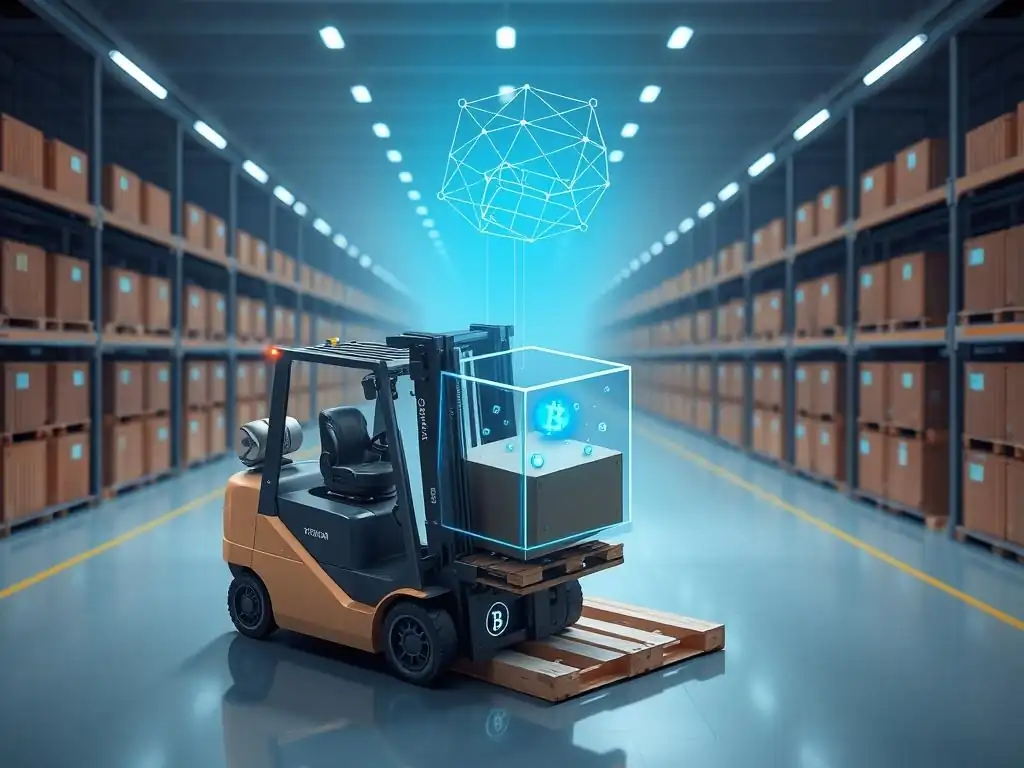
Supply Chain Management and Tracking with Blockchain IoT
Supply chain management and tracking represent a significant area where Blockchain IoT smart contracts are demonstrating tangible benefits. Traditional supply chains often suffer from opacity, inefficiencies, and lack of trust among participants. By integrating IoT devices with blockchain and smart contracts, businesses can create more transparent, efficient, and secure supply chains. For example, sensors embedded in shipping containers can track location, temperature, humidity, and other critical parameters of goods in real-time, with this data recorded immutably on a blockchain.
Walmart, for instance, has implemented a blockchain-based system for tracking food products, particularly mangoes. By using blockchain and IoT, they reduced the time to trace a package of mangoes from farm to store from days to seconds. This enhanced traceability not only improves efficiency but also enhances food safety and reduces food waste.
Similarly, pharmaceutical companies are exploring Blockchain IoT smart contracts to track drugs throughout the supply chain, combating counterfeiting and ensuring the integrity of medications. These real-world examples illustrate how Blockchain IoT smart contracts can revolutionize supply chain operations by providing real-time visibility, enhancing trust, and automating key processes.
Smart Agriculture and Precision Farming Using IoT and Smart Contracts
Smart agriculture and precision farming are leveraging Blockchain IoT smart contracts to optimize agricultural practices, improve yields, and enhance sustainability. IoT sensors deployed in fields can collect data on soil conditions (moisture, pH, nutrient levels), weather patterns, and crop health. This data, combined with blockchain and smart contracts, enables automated and data-driven decision-making in farming operations. For example, smart contracts can automatically trigger irrigation systems based on real-time soil moisture data, optimizing water usage and reducing water waste.
Companies like AgriDigital are using blockchain to track grain from farm to consumer, providing transparency and traceability in the agricultural supply chain. In precision farming, Blockchain IoT smart contracts can facilitate the automated execution of tasks like fertilizer application or pesticide spraying based on real-time sensor data and predefined thresholds. This data-driven approach optimizes resource utilization, reduces environmental impact, and ultimately increases crop yields and farm profitability. Moreover, blockchain can provide farmers with verifiable records of their sustainable practices, enabling them to access premium markets and certifications.
Healthcare Applications: Secure Data Sharing and Device Management
Healthcare is another sector poised for transformation through Blockchain IoT smart contracts, particularly in areas like secure data sharing, remote patient monitoring, and medical device management. Patient data security and privacy are paramount in healthcare, and blockchain's security features offer a robust solution for protecting sensitive medical information. IoT devices, such as wearable health monitors and implantable medical devices, generate a vast amount of patient data. Blockchain IoT smart contracts can enable secure and auditable sharing of this data among authorized healthcare providers, researchers, and patients themselves, while maintaining patient privacy and control.
For example, Chronicled, in collaboration with pharmaceutical companies, has developed a blockchain-based network called MediLedger for tracking pharmaceuticals and managing supply chains. In remote patient monitoring, Blockchain IoT smart contracts can automatically trigger alerts to healthcare providers if a patient's vital signs, collected by wearable sensors, deviate from normal ranges. Smart contracts can also manage access to medical devices, ensuring that only authorized personnel can operate or maintain them. These applications demonstrate the potential of Blockchain IoT smart contracts to enhance data security, improve patient care, and streamline healthcare operations.
Smart City Initiatives: Optimizing Infrastructure with Blockchain and IoT
Smart city initiatives are increasingly exploring Blockchain IoT smart contracts to optimize urban infrastructure, enhance public services, and improve the quality of life for citizens. Smart cities deploy vast networks of IoT sensors to monitor various aspects of urban environments, including traffic flow, air quality, energy consumption, and waste management. Blockchain IoT smart contracts can provide a secure and transparent platform for managing this data and automating city services. For instance, smart traffic management systems can use IoT sensors to monitor traffic congestion and dynamically adjust traffic signals through smart contracts to optimize traffic flow and reduce commute times.
In energy management, smart meters equipped with IoT connectivity can automatically record energy consumption and execute smart contracts for billing and grid management. Companies like Electron are using blockchain to create decentralized energy grids, enabling peer-to-peer energy trading and improving grid resilience. For waste management, smart bins with sensors can signal when they are full, triggering automated waste collection routes through smart contracts, optimizing collection efficiency and reducing operational costs. These examples illustrate how Blockchain IoT smart contracts can contribute to building more efficient, sustainable, and citizen-centric smart cities.
Challenges and Opportunities in Blockchain IoT Integration
Scalability Issues in Blockchain IoT Networks
Scalability remains a significant challenge for Blockchain IoT networks. IoT devices often generate massive amounts of data at high frequencies, and processing this volume of data on a blockchain can strain the network's capacity. Traditional blockchain platforms, particularly public blockchains like Ethereum, can have limitations in transaction throughput and block confirmation times, which may not be suitable for the real-time data demands of many IoT applications. For example, Ethereum's mainnet currently processes around 15-20 transactions per second, which might be insufficient for large-scale IoT deployments involving thousands or millions of devices.
Addressing scalability challenges requires exploring various solutions. Layer-2 scaling solutions for Ethereum, such as rollups and state channels, aim to increase transaction throughput without compromising security. Sidechains and parachains, as seen in platforms like Polkadot, offer alternative architectures for scaling blockchain networks.
Furthermore, sharding, a technique to partition a blockchain into smaller, more manageable shards, is being explored to improve scalability. For private and permissioned blockchains, scalability can often be better managed through network design and resource allocation. However, achieving truly scalable Blockchain IoT networks that can handle the data deluge from billions of devices remains an ongoing area of research and development.
Interoperability Challenges Between Different IoT Devices and Blockchain Platforms
Interoperability is another key challenge in realizing the full potential of Blockchain IoT integration. The IoT landscape is highly fragmented, with a wide variety of devices, communication protocols, and data formats. Similarly, the blockchain ecosystem consists of numerous platforms with different architectures, smart contract languages, and consensus mechanisms. Ensuring seamless interoperability between diverse IoT devices and various blockchain platforms is crucial for building truly interconnected and integrated Blockchain IoT smart contracts solutions.
Addressing interoperability requires standardization efforts at both the IoT and blockchain levels. Developing common communication protocols, data formats, and APIs for IoT devices would facilitate easier integration with blockchain platforms. Similarly, cross-chain communication protocols and interoperability frameworks are needed to enable seamless interaction between different blockchain networks.
Projects like Polkadot and Cosmos are focused on building interoperable blockchain ecosystems. Furthermore, the use of standardized smart contract interfaces and data exchange formats can improve interoperability between smart contracts deployed on different platforms. Overcoming interoperability challenges is essential for unlocking the full potential of Blockchain IoT smart contracts and creating truly interconnected decentralized systems.
The Future of Blockchain IoT: Emerging Trends and Innovations
The future of Blockchain IoT is bright, with several emerging trends and innovations poised to shape its evolution. One key trend is the increasing adoption of edge computing in Blockchain IoT architectures. Edge computing involves processing data closer to the source, i.e., at the edge of the network, rather than solely in centralized cloud servers. This approach can reduce latency, bandwidth requirements, and improve responsiveness for IoT applications. Combining edge computing with blockchain can create more efficient and scalable Blockchain IoT networks, enabling real-time data processing and faster smart contract execution.
Another emerging trend is the development of more specialized blockchain platforms specifically designed for IoT applications. These platforms may be optimized for handling high-volume data streams, low-power devices, and specific IoT use cases. Furthermore, advancements in privacy-enhancing technologies, such as zero-knowledge proofs and homomorphic encryption, will play a crucial role in addressing data privacy concerns in Blockchain IoT solutions.
The convergence of AI and Blockchain IoT is also an exciting area, with the potential to create intelligent IoT systems that can learn from data, make autonomous decisions, and further automate processes through smart contracts. As these trends mature, Blockchain IoT smart contracts are expected to become increasingly prevalent, driving innovation across various industries and transforming the way we interact with connected devices and decentralized systems.
Tools and Technologies for Developing Blockchain IoT Solutions
IoT Development Platforms and Frameworks
Developing Blockchain IoT solutions requires leveraging appropriate tools and technologies across both the IoT and blockchain domains. On the IoT side, numerous development platforms and frameworks simplify the process of building and managing IoT devices and networks. Platforms like Arduino and Raspberry Pi are popular choices for prototyping and developing IoT devices, offering flexibility and ease of use. For more robust industrial IoT deployments, platforms like AWS IoT, Azure IoT, and Google Cloud IoT provide comprehensive suites of services for device management, data ingestion, analytics, and security.
IoT frameworks, such as Eclipse Kura and ThingsBoard, offer open-source solutions for building IoT applications, providing features like device connectivity, data processing, and visualization. These platforms and frameworks often provide SDKs and APIs in various programming languages, simplifying the development of IoT applications and their integration with other systems, including blockchain platforms. Choosing the right IoT development platform and framework depends on the specific requirements of the Blockchain IoT smart contracts application, including device types, data volume, scalability needs, and integration with blockchain infrastructure.
Blockchain Development Tools and APIs
Developing the blockchain component of a Blockchain IoT solution requires utilizing appropriate blockchain development tools and APIs. For Ethereum-based smart contracts, tools like Truffle and Hardhat provide comprehensive development environments for compiling, testing, and deploying smart contracts. These tools offer features like automated testing, contract migration, and network deployment management. Solidity, as the primary smart contract language for Ethereum, has a rich ecosystem of libraries and resources.
Blockchain platforms like Hyperledger Fabric and Corda offer their own SDKs and tools for developing smart contracts and decentralized applications. Hyperledger Fabric, for example, provides SDKs in Go, Java, and Node.js, enabling developers to build applications and interact with Fabric networks.
Blockchain-as-a-Service (BaaS) offerings from cloud providers like AWS, Azure, and Google Cloud simplify blockchain deployment and management, providing pre-configured blockchain networks and tools for development and integration. Choosing the right blockchain development tools and APIs depends on the target blockchain platform, the complexity of the smart contracts, and the required level of integration with IoT devices and other systems.
Data Analytics and Visualization for Blockchain IoT Data
Effectively leveraging the data generated by Blockchain IoT smart contracts requires robust data analytics and visualization tools. IoT devices can generate massive datasets, and blockchain adds another layer of data related to transactions, smart contract executions, and network activity. Analyzing and visualizing this data is crucial for gaining insights, monitoring system performance, and making data-driven decisions in Blockchain IoT applications. Traditional data analytics tools, such as time-series databases, data warehouses, and business intelligence platforms, can be adapted for analyzing Blockchain IoT data.
Furthermore, specialized tools are emerging for blockchain data analytics, providing capabilities for querying blockchain data, tracking transactions, and visualizing smart contract activity. Platforms like The Graph and Dune Analytics enable indexing and querying of blockchain data, making it easier to extract meaningful insights.
For visualizing Blockchain IoT data, tools like Grafana and Kibana are commonly used to create dashboards and visualizations of sensor data, transaction metrics, and system performance indicators. Combining these data analytics and visualization tools allows developers and users to effectively monitor, analyze, and optimize Blockchain IoT smart contracts solutions, unlocking the full potential of data-driven decision-making in interconnected decentralized systems.
Conclusion: The Transformative Potential of Blockchain IoT Smart Contracts
Summarizing the Key Benefits and Applications
Blockchain IoT smart contracts represent a powerful convergence of two transformative technologies, offering a synergistic solution to address challenges in data security, integrity, and automation across various industries. The key benefits of integrating blockchain with IoT devices include enhanced security through decentralization and cryptography, improved data integrity through immutability and auditability, and increased operational efficiency through smart contract-driven automation. These benefits translate into a wide range of real-world applications, spanning supply chain management, smart agriculture, healthcare, smart cities, and beyond.
In supply chains, Blockchain IoT smart contracts enhance traceability and transparency, reducing fraud and improving efficiency. In agriculture, they enable precision farming and optimize resource utilization. In healthcare, they secure patient data sharing and improve remote monitoring. In smart cities, they optimize infrastructure and enhance public services. The combination of blockchain and IoT, orchestrated by smart contracts, unlocks new possibilities for creating more secure, efficient, and transparent systems, driving innovation and transforming traditional processes across diverse sectors.
Looking Ahead: The Future of Connected Devices and Decentralized Systems
Looking ahead, the future of connected devices and decentralized systems is inextricably linked to the continued evolution and adoption of Blockchain IoT smart contracts. As scalability challenges are addressed through Layer-2 solutions and specialized blockchain platforms, and as interoperability improves through standardization efforts, the potential for large-scale Blockchain IoT deployments will expand significantly. Emerging trends like edge computing, AI integration, and privacy-enhancing technologies will further enhance the capabilities and applicability of Blockchain IoT solutions.
We can expect to see Blockchain IoT smart contracts playing an increasingly crucial role in building more resilient, secure, and autonomous systems. From smart homes and connected vehicles to industrial automation and decentralized energy grids, the transformative potential of Blockchain IoT smart contracts is vast and far-reaching. As the technology matures and adoption accelerates, it is poised to reshape industries, create new business models, and fundamentally alter the way we interact with the increasingly connected world, ushering in an era of truly intelligent and decentralized systems.
Frequently Asked Questions
What is the relationship between Blockchain, IoT, and Smart Contracts?
Blockchain provides a secure and transparent ledger, IoT generates real-world data, and smart contracts automate actions based on that data. They combine to create autonomous and verifiable systems.
How can Smart Contracts improve the security of IoT devices?
Smart contracts can enforce access control policies and authenticate devices on the blockchain, making it harder for unauthorized access and manipulation, thereby improving IoT device security.
What are some real-world applications of Blockchain IoT smart contracts?
Supply chain management, automated payments for energy consumption, and remote monitoring of industrial equipment are just a few examples where this technology can be applied.
What are the main challenges in integrating IoT devices with Blockchain and Smart Contracts?
Scalability, data privacy concerns, and the limited processing power of some IoT devices pose significant challenges to widespread adoption.
How can Smart Contracts facilitate decentralized automation in IoT environments?
Smart contracts enable autonomous decision-making based on sensor data, automating processes like controlling devices, triggering alerts, or executing pre-defined agreements without human intervention.
Final Reflection: Bridging the Physical and Digital Worlds
The exploration of Blockchain IoT smart contracts reveals a powerful synergy poised to redefine how we interact with the physical world. No longer are devices isolated entities; they are now capable of participating in secure, transparent, and automated agreements, fundamentally altering industries from supply chain management to smart homes. This convergence represents not just technological advancement, but a paradigm shift in trust and efficiency.
This fusion of technologies has profoundly impacted the cultural and social landscape, fostering a new era of decentralized control and data ownership. The potential for increased transparency and reduced reliance on intermediaries is particularly compelling, offering a glimpse into a future where trust is built on code, not institutions. The blockchain is to trust what the internet is to information.
- Don Tapscott. This quote encapsulates the transformative power of blockchain in enabling trustless interactions, a cornerstone of the emerging IoT ecosystem.
As we stand at the cusp of this technological revolution, let us consider the implications of a world where physical devices are seamlessly integrated with the blockchain. How can we harness the power of Blockchain IoT smart contracts to create a more equitable, sustainable, and secure future? The answer lies in our collective ability to innovate responsibly, ensuring that this technology serves humanity's best interests. Let us embrace the potential of this convergence and build a future where trust and efficiency are not just ideals, but the very foundation of our interconnected world.
Unlock the Power of Connected Contracts!
Thank you for exploring the exciting intersection of smart contracts and IoT with us! We hope this article shed light on how blockchain technology can transform the way physical devices communicate. Now, it's time to take the next step and explore the possibilities firsthand.
- Get hands-on: Start experimenting with a simple smart contract that interacts with a simulated IoT device using development platforms. Observe how data flows and automation can change your perspective.:
- Share your insights: Discuss potential applications of smart contracts and IoT within your industry on relevant forums and groups. Your unique perspective could inspire the next breakthrough.
- Surprise yourself: Research how distributed ledger technology might improve the security of environmental sensors, creating transparent and immutable data records for climate monitoring.
How will you leverage smart contracts and IoT to create a more connected and secure future? Share your ideas in the comments below!
Leave a Reply