
Understanding Recursive SNARKs for Blockchain Scalability

Welcome to Blockchain Trends, your gateway to understanding the revolutionary world of blockchain technology!
Are you ready to unlock the next level of blockchain scalability? Dive into our exploration of Recursive SNARKs, a groundbreaking solution poised to transform decentralized systems. Discover how this innovative technology is paving the way for faster, more efficient, and truly scalable blockchains. Intrigued? Let's unravel the mysteries of Recursive SNARKs and their potential to reshape the future.
- Introduction to Blockchain Scalability Challenges
- What are SNARKs? Zero-Knowledge Succinct Non-Interactive Argument of Knowledge
- Recursive SNARKs: Compounding Proofs for Enhanced Scalability
- Recursive SNARKs and Blockchain Scalability
- Use Cases of Recursive SNARKs in Blockchain
- Examples of Blockchain Projects Utilizing Recursive SNARKs
- Advantages and Disadvantages of Using Recursive SNARKs
- The Future of Recursive SNARKs in Blockchain Technology
- Conclusion: Recursive SNARKs - A Solution for Blockchain Scaling
-
Frequently Asked Questions
- What are Recursive SNARKs and how do they relate to blockchain scalability?
- How do Recursive SNARKs improve blockchain transaction throughput?
- What are the key benefits of using Recursive SNARKs compared to other blockchain scaling solutions?
- Are there any limitations or challenges associated with implementing Recursive SNARKs?
- What is the future outlook for Recursive SNARKs in the context of blockchain technology and scalability?
- Final Reflection: Unlocking Blockchain's Potential Through Recursion
- Power Up Your Blockchain Knowledge: Dive Deeper!
Introduction to Blockchain Scalability Challenges
The Blockchain Scalability Problem
Blockchain technology, since its inception with Bitcoin, has promised a revolutionary shift in how we handle data and transactions. However, a fundamental hurdle to widespread adoption remains: scalability. The core principle of decentralization, where every node in the network must verify each transaction, inherently limits the number of transactions a blockchain can process in a given timeframe.
This limitation manifests as slow transaction speeds and high fees, especially during periods of network congestion. For instance, early blockchain networks like Bitcoin can process around 7 transactions per second (TPS), and Ethereum, while improved, still hovers around 15-30 TPS on its base layer. These figures are dwarfed by centralized payment processors like Visa, which can handle thousands of transactions per second, highlighting the significant scalability gap that needs to be addressed for blockchain to achieve mainstream utility.
Transaction Throughput Limitations in Traditional Blockchains
Traditional blockchain architectures, particularly those employing Proof-of-Work (PoW) consensus mechanisms, face inherent bottlenecks in achieving high transaction throughput. The time it takes to mine a block, which includes verifying and ordering transactions, is a critical factor. Bitcoin, for example, targets a block time of approximately 10 minutes, while Ethereum 1.0 aimed for around 15 seconds.
These block times, coupled with block size limitations, directly restrict the number of transactions that can be included in each block and, consequently, the overall TPS. Moreover, as network activity increases, the competition to include transactions in the next block intensifies, leading to escalating transaction fees. This creates a negative feedback loop, where scalability limitations exacerbate cost issues, hindering user experience and broader adoption, especially for applications requiring high transaction volumes and low latency.
The Need for Scalable Blockchain Solutions
The limitations in transaction throughput of early blockchains necessitate the development of scalable solutions to unlock the full potential of this technology. For blockchain to move beyond niche applications and become a foundational technology for global finance, supply chain management, social media, and more, it must be able to handle transaction volumes comparable to or exceeding those of existing centralized systems. Scalability is not merely about increasing TPS; it's about maintaining decentralization and security while doing so.
Solutions that compromise on these core tenets in the pursuit of speed are ultimately unsustainable. Therefore, the blockchain community is actively exploring various scaling solutions, including Layer-2 protocols, sharding, and advanced cryptographic techniques like zero-knowledge proofs, all aimed at achieving the elusive goal of a truly scalable, secure, and decentralized blockchain ecosystem.
What are SNARKs? Zero-Knowledge Succinct Non-Interactive Argument of Knowledge
Defining SNARKs
SNARKs, or Zero-Knowledge Succinct Non-Interactive Argument of Knowledge, are a type of cryptographic proof system that allows one party (the prover) to convince another party (the verifier) that a certain statement is true, without revealing any information beyond the truth of the statement itself. The "Zero-Knowledge" aspect ensures privacy, as no sensitive data is disclosed during the verification process. "Succinct" refers to the proof size being significantly smaller than the computation it verifies, and verification is also fast, typically taking milliseconds.
"Non-Interactive" means the prover and verifier do not need to engage in multiple rounds of communication; a single proof is sufficient for verification. Finally, "Argument of Knowledge" signifies that the prover not only proves the statement is true but also demonstrates they possess the knowledge to make it true.
Key Properties of SNARKs
SNARKs possess several key properties that make them incredibly valuable for blockchain scalability and privacy. Firstly, Zero-Knowledge is paramount for privacy-preserving applications, allowing for verification of computations without revealing underlying data. Secondly, Succinctness is crucial for scalability, as small proof sizes minimize the data that needs to be transmitted and stored on the blockchain.
Thirdly, Non-Interactivity simplifies the process, making them practical for automated systems and reducing communication overhead. Fourthly, Computational Efficiency is vital; while proof generation can be computationally intensive, verification is designed to be extremely fast and cheap, enabling efficient on-chain verification of complex computations performed off-chain. These properties combined make SNARKs a powerful tool for enhancing both the scalability and privacy of blockchain systems.
SNARKs Enable Verifiable Computation Off-Chain
The ability of SNARKs to enable verifiable computation off-chain is fundamental to their role in blockchain scalability. Instead of executing complex computations directly on the blockchain, which is resource-intensive and slow, computations can be performed off-chain by a prover. The prover then generates a SNARK proof that attests to the correctness of the computation. This proof, being small and quick to verify, can then be submitted to the blockchain.
The blockchain nodes only need to verify the SNARK proof, a computationally lightweight operation, rather than re-executing the entire computation. This significantly reduces the computational burden on the blockchain, freeing up resources and increasing transaction throughput. For example, a complex financial transaction or a large batch of transactions can be processed off-chain, and a single SNARK proof can be used to verify their validity on the blockchain, drastically improving efficiency.
Recursive SNARKs: Compounding Proofs for Enhanced Scalability
The Core Concept of Recursive SNARKs
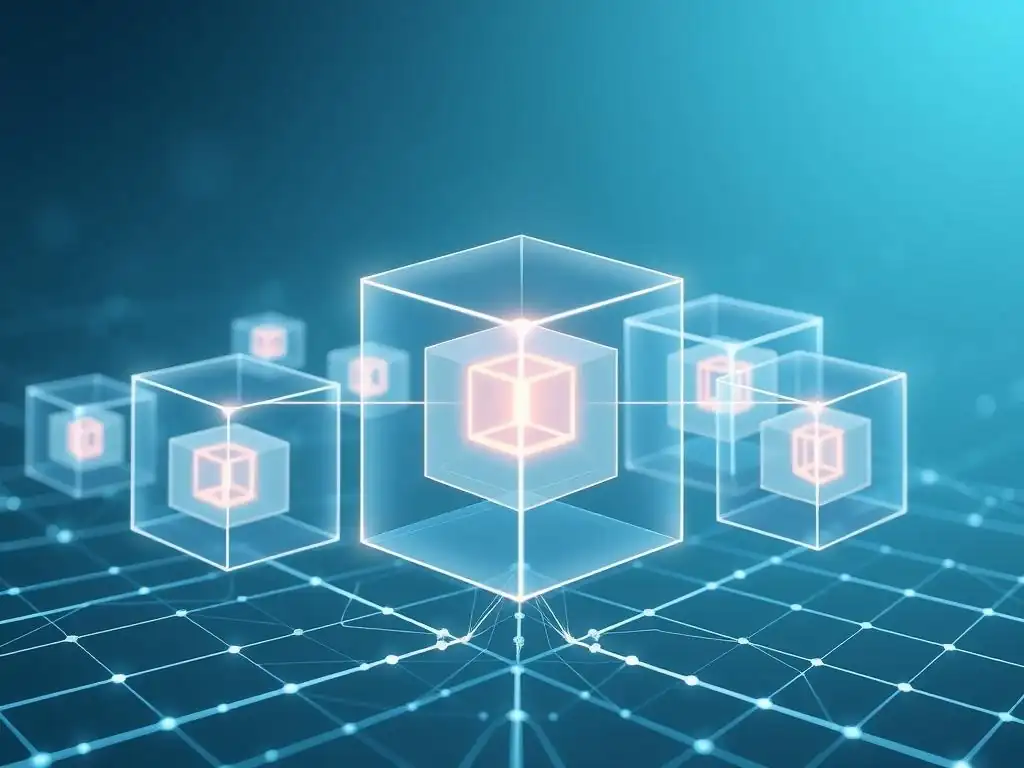
Recursive SNARKs take the power of SNARKs a step further by enabling the composition of proofs. Imagine you have a SNARK proof verifying a certain computation. A recursive SNARK allows you to create another SNARK proof that verifies the validity of the first SNARK proof, along with potentially additional computations.
This process can be repeated, creating a chain or tree of proofs, where each proof verifies the validity of the previous ones. The core concept is to "compound" proofs, aggregating the verification of multiple computations into a single, succinct proof. This proof of proofs significantly reduces the verification overhead, especially when dealing with a sequence of computations or transactions.
How Recursive SNARKs Differ from Standard SNARKs
While standard SNARKs verify a single computation, recursive SNARKs verify the validity of other SNARK proofs. This distinction is crucial for scalability. Standard SNARKs can offload computation from the blockchain, but they still require individual verification for each computation. Recursive SNARKs, on the other hand, allow for the aggregation of verifications.
Instead of verifying numerous individual SNARK proofs on-chain, a single recursive SNARK proof can verify a batch of proofs. This drastically reduces the on-chain verification cost because the blockchain only needs to verify one aggregated proof instead of many individual ones. Think of it like summarizing multiple reports into a single executive summary; the executive summary (recursive SNARK) verifies that all the individual reports (standard SNARKs) are valid, saving significant time and effort.
Benefits of Recursive SNARKs
The primary benefit of recursive SNARKs is enhanced scalability through proof aggregation. By compounding proofs, they dramatically reduce the amount of data and computation that needs to be processed on the blockchain. This leads to several advantages. Firstly, increased transaction throughput: more transactions can be processed and verified per unit of time.
Secondly, reduced transaction fees: lower on-chain computation translates to lower gas costs for users. Thirdly, improved efficiency: blockchain nodes spend less computational resources verifying transactions. Furthermore, recursive SNARKs can enable more complex and scalable Layer-2 solutions, as they allow for the efficient verification of state transitions and rollups. They also pave the way for more private and scalable decentralized applications by allowing for the aggregation of privacy-preserving computations.
Recursive SNARKs and Blockchain Scalability
Scaling Blockchains with Proof Aggregation
Recursive SNARKs directly address blockchain scalability by enabling efficient proof aggregation. In a typical scaling scenario, many transactions are processed off-chain, and standard SNARKs are used to generate proofs for each batch of transactions. However, verifying each of these SNARK proofs on-chain can still be a bottleneck if the number of batches is large.
Recursive SNARKs solve this by allowing for the aggregation of these SNARK proofs into a single, overarching proof. For instance, instead of verifying 100 SNARK proofs individually, a recursive SNARK can be used to generate a single proof that verifies the validity of all 100 original proofs. This aggregated proof is then verified on-chain, significantly reducing the verification burden and dramatically increasing the scalability of the blockchain system.
Reducing On-Chain Verification Costs
The reduction in on-chain verification costs is a direct consequence of proof aggregation with recursive SNARKs. Verifying SNARK proofs, while much cheaper than re-executing computations, still incurs a cost. In scaling solutions that rely on standard SNARKs without recursion, the cumulative cost of verifying many individual proofs can become substantial as transaction volume grows.
Recursive SNARKs minimize this cost by requiring only a single verification for a batch of transactions or computations represented by aggregated proofs. This drastically lowers the gas fees associated with verification, making blockchain transactions more affordable and efficient. For example, in a rollup system using recursive SNARKs, the cost of verifying the state transition for thousands of transactions can be compressed into the verification cost of a single, small recursive SNARK proof, making the rollup solution highly cost-effective.
Achieving Scalability Improvements
By enabling proof aggregation and significantly reducing on-chain verification costs, recursive SNARKs pave the way for substantial scalability improvements in blockchain technology. They facilitate the development of more efficient Layer-2 scaling solutions, such as zk-rollups and Validiums, which can process thousands of transactions off-chain and then anchor the validity of these transactions to the main chain using a single, recursively generated proof. This approach dramatically increases the overall transaction throughput of the blockchain system without compromising security or decentralization.
Estimates suggest that recursive SNARK-based solutions can potentially achieve orders of magnitude improvements in TPS compared to base layer blockchains. This level of scalability is crucial for supporting mass adoption and enabling blockchain technology to handle real-world transaction volumes for various applications, from decentralized finance to global payments and beyond.
Use Cases of Recursive SNARKs in Blockchain
Recursive SNARKs in Layer-2 Scaling
Recursive SNARKs are particularly impactful in Layer-2 scaling solutions, especially in the context of zk-rollups. Zk-rollups bundle numerous transactions off-chain and generate a single SNARK proof to represent the validity of all these transactions. However, as the number of transactions within a rollup grows, so does the complexity of generating and verifying the SNARK proof.
Recursive SNARKs address this by allowing for the incremental aggregation of proofs within the rollup. Instead of generating one massive SNARK proof for a large batch of transactions, smaller SNARK proofs can be generated for smaller batches and then recursively combined into a single, final proof. This significantly reduces the computational burden of proof generation and verification within the rollup, making zk-rollups more efficient and scalable.
Application in Validiums and Rollups
Beyond zk-rollups, recursive SNARKs are also beneficial in Validiums and other types of rollup architectures. Validiums, similar to zk-rollups, also use zero-knowledge proofs to ensure the validity of off-chain computations, but data availability differs. Recursive SNARKs can enhance the scalability of Validiums in similar ways by enabling proof aggregation and reducing on-chain verification costs.
In both Validiums and rollups, recursive SNARKs can be used to optimize the process of state transitions. For example, as the state of the Layer-2 chain evolves with each batch of transactions, recursive SNARKs can be used to prove the correctness of each state transition and then aggregate these proofs into a single proof that represents the validity of a series of state updates. This makes the process of anchoring Layer-2 state transitions to the Layer-1 blockchain more efficient and scalable.
Enabling Private and Scalable dApps
Recursive SNARKs are not only crucial for scaling blockchain infrastructure but also for enabling the development of private and scalable decentralized applications (dApps). Many dApps require both privacy and scalability to be viable for real-world use cases, such as decentralized exchanges, private voting systems, and confidential data marketplaces. Recursive SNARKs allow dApp developers to build applications where sensitive computations and data are processed off-chain, preserving user privacy, while the validity of these computations is verifiably anchored on-chain through succinct, aggregated proofs.
This combination of privacy and scalability unlocks new possibilities for dApps that were previously constrained by the limitations of traditional blockchain architectures. For example, a private decentralized exchange could utilize recursive SNARKs to ensure the confidentiality of trades while maintaining high transaction throughput and low fees.
Examples of Blockchain Projects Utilizing Recursive SNARKs
Mina Protocol: Implementation and Results
Mina Protocol is a prime example of a blockchain project built from the ground up with recursive SNARKs at its core. Mina utilizes recursive SNARKs to maintain a constant blockchain size of approximately 22 kilobytes, regardless of transaction history. This is achieved by recursively composing SNARK proofs that verify the entire history of the blockchain. Each new block's proof verifies the validity of the previous block's proof, effectively compressing the entire blockchain's state into a single, small proof.
This approach results in a blockchain that is incredibly lightweight and accessible, allowing anyone to easily verify the chain's validity on resource-constrained devices like smartphones. Mina's implementation demonstrates the power of recursive SNARKs to achieve extreme scalability and accessibility in blockchain technology. Initial tests and operational experience show significantly reduced computational overhead for nodes compared to traditional blockchains, making Mina a unique and highly scalable Layer-1 solution.
Celo: Implementation and Results
Celo, a mobile-first blockchain platform focused on financial inclusion, also leverages recursive SNARKs to enhance its scalability and efficiency. Celo utilizes Plumo, a recursive SNARK-based light client protocol, to enable fast and efficient synchronization for mobile devices. Traditional blockchain light clients still require downloading and verifying a significant amount of block headers. Plumo, using recursive SNARKs, allows mobile clients to verify the chain's state with a significantly smaller amount of data, drastically reducing synchronization times and data usage.
This is particularly crucial for mobile users in areas with limited bandwidth or expensive data plans. Celo's implementation of recursive SNARKs showcases their practical application in making blockchain technology more accessible and user-friendly, especially for mobile-first applications in emerging markets. The reduced data synchronization requirements of Plumo have been shown to improve user onboarding and reduce barriers to entry for mobile users interacting with the Celo blockchain.
Comparing Different Approaches to Recursive SNARK Integration
While Mina and Celo both utilize recursive SNARKs, their approaches and goals differ. Mina uses recursive SNARKs to achieve constant blockchain size and extreme light client capabilities at the Layer-1 level. Celo, on the other hand, employs recursive SNARKs primarily to optimize light client synchronization for mobile devices, enhancing user experience and accessibility within its ecosystem. Other projects are exploring recursive SNARKs for different purposes, such as scaling zk-rollups and Validiums at Layer-2.
For example, projects building zk-rollup solutions are investigating recursive SNARKs to further optimize proof aggregation and reduce on-chain verification costs within their rollups. The specific implementation and benefits of recursive SNARKs vary depending on the project's architecture, goals, and the specific scalability challenges they aim to address. However, the underlying principle of proof aggregation and reduced verification overhead remains consistent across different applications of recursive SNARKs in the blockchain space.
Advantages and Disadvantages of Using Recursive SNARKs
Benefits of Recursive SNARKs
The primary benefit of recursive SNARKs is, as repeatedly emphasized, enhanced scalability. This manifests in several ways: increased transaction throughput, reduced transaction fees, and improved network efficiency. Furthermore, recursive SNARKs contribute to reduced on-chain computation, freeing up blockchain resources and allowing for more complex and scalable applications.
They also enable more efficient and scalable Layer-2 solutions, like zk-rollups and Validiums, making them more practical for mass adoption. Another significant advantage is the potential for improved privacy when combined with zero-knowledge proof techniques, enabling private and scalable dApps. Finally, recursive SNARKs can lead to reduced data storage and bandwidth requirements, particularly for light clients and mobile users, as demonstrated by projects like Mina and Celo.
Potential Challenges and Limitations
Despite their significant advantages, recursive SNARKs also present certain challenges and limitations. One primary challenge is the computational complexity of proof generation. Generating SNARK proofs, and especially recursive SNARK proofs, can be computationally intensive and require specialized hardware and expertise. This can lead to longer proof generation times and potentially higher infrastructure costs for provers.
Another limitation is the complexity of implementation. Recursive SNARKs are advanced cryptographic tools, and their implementation requires a high level of cryptographic expertise and careful engineering to ensure security and correctness. Furthermore, auditability can be complex.
While SNARK proofs are mathematically sound, ensuring the security of the entire recursive SNARK system and the underlying code requires thorough audits and formal verification. Finally, there can be performance trade-offs. While verification is fast, the overall performance of a recursive SNARK-based system depends on the efficiency of both proof generation and verification, and optimizing both aspects can be a complex engineering challenge.
Security Considerations
Security is paramount when deploying recursive SNARKs in blockchain systems. The cryptographic assumptions underlying SNARKs must be robust and well-vetted. Any vulnerabilities in the underlying cryptography could compromise the security of the entire system. Furthermore, the implementation of recursive SNARKs must be carefully audited to prevent vulnerabilities in the code.
This includes both the proof generation and verification circuits, as well as the overall system architecture. Trusted setup is another important security consideration for some SNARK constructions. While some newer SNARK schemes mitigate the need for trusted setups, older schemes require a secure setup process to generate cryptographic parameters.
If this setup is compromised, it could lead to the creation of fraudulent proofs. Therefore, careful consideration must be given to the choice of SNARK construction and the security of the setup process, if required. Ongoing research and development are focused on developing more robust and secure SNARK constructions and mitigating potential security risks associated with their implementation.
The Future of Recursive SNARKs in Blockchain Technology
Ongoing Research and Development
Research and development in the field of recursive SNARKs are actively progressing, focusing on several key areas. One area is improving proof generation efficiency. Researchers are working on developing faster and more efficient algorithms for generating recursive SNARK proofs, reducing the computational burden on provers. Another area is developing more versatile and flexible SNARK constructions.
This includes exploring new cryptographic primitives and techniques to create SNARKs that are better suited for specific blockchain applications and use cases. Enhancing security and auditability is also a major focus. Researchers are working on developing more robust and secure SNARK schemes, as well as tools and methodologies for formally verifying the security of recursive SNARK implementations. Furthermore, there is ongoing research into standardization and interoperability of SNARK-based systems, aiming to facilitate wider adoption and integration of recursive SNARKs across different blockchain platforms and applications.
Potential for Wider Adoption
The potential for wider adoption of recursive SNARKs in blockchain technology is significant. As scalability remains a critical challenge for blockchain adoption, recursive SNARKs offer a powerful tool to address this issue. As research progresses and implementation challenges are overcome, we can expect to see increasing adoption of recursive SNARKs in various blockchain applications.
Layer-2 scaling solutions, particularly zk-rollups and Validiums, are likely to be early adopters, leveraging recursive SNARKs to achieve higher transaction throughput and lower fees. Privacy-focused blockchains and dApps will also benefit significantly from recursive SNARKs, enabling private and scalable solutions for sensitive applications.
Furthermore, as blockchain infrastructure matures, we may see recursive SNARKs integrated into Layer-1 protocols to enhance their base layer scalability, as demonstrated by projects like Mina. Wider adoption will depend on the continued maturation of the technology, the development of robust and user-friendly implementations, and the growing awareness of the benefits of recursive SNARKs within the blockchain community.
The Role of Recursive SNARKs in Decentralized Systems
Recursive SNARKs are poised to play a crucial role in shaping the future of decentralized systems. By enabling scalable and private computation, they address two of the most significant limitations hindering the widespread adoption of decentralized technologies.
They empower the creation of more efficient and user-friendly decentralized applications, capable of competing with centralized alternatives in terms of performance and scalability. Recursive SNARKs can also contribute to greater decentralization by reducing the computational burden on blockchain nodes, making it easier for individuals to participate in network validation and governance.
Furthermore, they can enhance user privacy and data sovereignty within decentralized systems, allowing users to control their data and participate in applications without compromising their privacy. In the long term, recursive SNARKs have the potential to be a foundational technology for building a more scalable, private, and truly decentralized internet, enabling a new generation of decentralized applications and services that benefit individuals and society as a whole.
Conclusion: Recursive SNARKs - A Solution for Blockchain Scaling
Recap of Key Benefits and Applications
Recursive SNARKs represent a significant advancement in cryptographic techniques for blockchain scalability. Their key benefit lies in proof aggregation, allowing for the verification of multiple computations or transactions with a single, succinct proof. This leads to reduced on-chain verification costs, increased transaction throughput, and improved network efficiency.
Recursive SNARKs are particularly applicable in Layer-2 scaling solutions like zk-rollups and Validiums, enabling them to achieve greater scalability and efficiency. They also play a crucial role in enabling private and scalable dApps, unlocking new possibilities for privacy-preserving decentralized applications. Projects like Mina and Celo demonstrate the practical application of recursive SNARKs in achieving constant blockchain size and efficient light client synchronization, respectively.
The Potential Impact of Recursive SNARKs
The potential impact of recursive SNARKs on blockchain technology is transformative. They offer a viable path towards achieving the elusive goal of blockchain scalability without sacrificing security or decentralization. By overcoming the scalability bottleneck, recursive SNARKs can unlock the full potential of blockchain technology, enabling it to support mass adoption and real-world applications across various industries.
They can facilitate the development of more efficient and affordable financial services, scalable and private social media platforms, secure and transparent supply chain management systems, and many other innovative decentralized solutions. The widespread adoption of recursive SNARKs has the potential to revolutionize the digital landscape, paving the way for a more decentralized, private, and user-centric internet.
Final Thoughts on Blockchain Scalability
Blockchain scalability remains a critical challenge, but recursive SNARKs offer a promising solution. While challenges related to implementation complexity and computational overhead still exist, ongoing research and development are continuously addressing these limitations. As the technology matures and becomes more accessible, recursive SNARKs are poised to become a cornerstone of scalable blockchain architectures. Their ability to aggregate proofs and reduce on-chain verification costs represents a paradigm shift in how blockchain scalability is approached. By embracing and further developing recursive SNARKs, the blockchain community can move closer to realizing the vision of a truly scalable, secure, and decentralized future.
Frequently Asked Questions
What are Recursive SNARKs and how do they relate to blockchain scalability?
Recursive SNARKs (Succinct Non-Interactive Arguments of Knowledge) are cryptographic proofs that can verify other proofs. This allows for proof aggregation, drastically reducing the amount of data needed on the blockchain and thus improving scalability.
How do Recursive SNARKs improve blockchain transaction throughput?
By aggregating multiple transactions into a single, verifiable proof, Recursive SNARKs significantly reduce the data load on the blockchain. This allows for more transactions to be processed in a given time frame, increasing throughput.
What are the key benefits of using Recursive SNARKs compared to other blockchain scaling solutions?
Recursive SNARKs offer a powerful combination of scalability and security. Unlike some other scaling solutions, they don't compromise the security of the underlying blockchain, maintaining trust in the system.
Are there any limitations or challenges associated with implementing Recursive SNARKs?
Implementing Recursive SNARKs is computationally intensive and requires specialized hardware. Furthermore, the complexity of the technology presents a barrier to entry for many developers.
What is the future outlook for Recursive SNARKs in the context of blockchain technology and scalability?
Recursive SNARKs are considered a promising solution for achieving true blockchain scalability. Ongoing research and development are focused on improving their efficiency and accessibility, paving the way for wider adoption.
Final Reflection: Unlocking Blockchain's Potential Through Recursion
The journey through the intricacies of Recursive SNARKs reveals not just a technological advancement, but a paradigm shift in how we approach blockchain scalability. The ability to compress and verify complex computations efficiently is no longer a theoretical possibility, but a tangible solution poised to revolutionize decentralized systems. This has immediate relevance as blockchains grapple with increasing transaction volumes and the urgent need for sustainable, scalable solutions that don't compromise security or decentralization.
The impact of Recursive SNARKs extends far beyond mere technical improvements; it touches upon the very core of trust and accessibility within the digital realm. Witnessing the evolution of this technology has reinforced my belief in the power of cryptographic innovation to shape a more equitable and transparent future. As the technology matures and becomes more widely adopted, its potential to unlock new applications and use cases across various industries is immense. The beauty of zero-knowledge proofs lies in their ability to prove something without revealing anything about the proof itself. Recursive SNARKs amplify this power, allowing us to build increasingly complex and scalable systems while maintaining the highest levels of privacy and security.
Now, as we stand on the cusp of this new era, consider the implications of this technology in your own life. How can Recursive SNARKs, and the principles they embody – efficiency, security, and privacy – inform your approach to problem-solving and innovation? Let us embrace the potential of this transformative technology and actively contribute to building a more scalable, secure, and decentralized future for all.
Power Up Your Blockchain Knowledge: Dive Deeper!
Thank you for exploring the potential of recursive SNARKs with us and discovering how they can revolutionize blockchain scalability. Now, it's time to put that knowledge into action and contribute to the future of decentralized technology!
Here's how you can take the next step:
- Master the Fundamentals: Explore coding tutorials and resources to implement basic SNARK constructions and strengthen your practical understanding. This is your primary action—solidify your knowledge!
- Join the Conversation: Share this article on social media and start discussions about the possibilities and challenges of recursive SNARKs.
- Explore Advanced Research: Investigate recent research papers on SNARK optimization techniques and contribute to developing more efficient and secure implementations.
What application of recursive SNARKs excites you the most, and how do you see it shaping the future of blockchain technology? Share your thoughts in the comments below!
Leave a Reply