
Blockchain and the Internet of Things: Securing Device Identities


Welcome to Blockchain Trends, your go-to source for understanding the real-world impact of blockchain technology!
Intrigued by the potential of blockchain beyond cryptocurrencies? We are too. Today, we delve into the crucial intersection of blockchain and the Internet of Things, specifically focusing on IoT blockchain device identity security. How can blockchain revolutionize the way we protect the ever-expanding network of connected devices? Discover how decentralized solutions are creating a more secure and trustworthy future – read on to learn more!
- Blockchain and the Internet of Things: Securing Device Identities
- Understanding the Challenges of IoT Device Identity Management
- Blockchain-Based Solutions for IoT Device Identity Security
- How Blockchain Improves IoT Device Security: A Layered Approach
- Use Cases: Blockchain Securing IoT Device Identities in Action
- Benefits of Implementing Blockchain for IoT Security
- Challenges and Considerations for IoT Blockchain Implementation
- The Future of IoT Blockchain Device Identity Security
- Conclusion: Embracing Blockchain for a More Secure IoT Future
-
Frequently Asked Questions
- What is the primary security concern addressed by integrating blockchain with IoT devices?
- How does blockchain enhance IoT device identity security compared to traditional methods?
- What are some key applications of IoT blockchain device identity security beyond smart homes?
- What regulatory challenges exist regarding the implementation of blockchain for IoT device identity security?
- What is the future outlook for IoT blockchain device identity security and its impact on decentralized systems?
- Final Reflection: Securing Tomorrow's Connected World
- Unleash the Power of Secure IoT!
Blockchain and the Internet of Things: Securing Device Identities
The Growing Need for IoT Security Solutions
The proliferation of Internet of Things (IoT) devices has introduced unprecedented convenience and efficiency across industries, from smart homes and connected cars to industrial automation and critical infrastructure. However, this rapid expansion has also created a vast and complex attack surface.
With billions of devices expected to be connected in the coming years – figures often cited range from 25 billion to over 50 billion by 2030 – the potential for security breaches is enormous. These devices, often resource-constrained and deployed in diverse environments, are vulnerable to a wide array of threats, including unauthorized access, data tampering, denial-of-service attacks, and identity spoofing, making robust IoT blockchain device identity security solutions critically important.
Traditional security models, often relying on centralized servers and static credentials, struggle to cope with the scale and dynamic nature of IoT ecosystems. A single compromised device can serve as an entry point for attackers to infiltrate an entire network, potentially leading to data theft, operational disruption, or even physical harm.
The lack of standardized security protocols and the difficulty in patching and updating devices remotely exacerbate these challenges, highlighting the urgent need for innovative approaches to ensure the integrity and trustworthiness of every connected device and its interactions within the network, thus driving the exploration of advanced IoT blockchain device identity security methods.
Blockchain's Role in Addressing IoT Vulnerabilities
Blockchain technology offers a compelling framework to address many of the inherent security vulnerabilities in IoT networks, particularly concerning device identity and data integrity. Its decentralized, immutable ledger provides a tamper-proof record of transactions and interactions, making it significantly harder for attackers to alter data or impersonate devices without detection. By leveraging blockchain, each IoT device can be assigned a unique, verifiable identity registered on the distributed ledger, establishing a foundational layer of trust that is absent in many current centralized systems, thereby enhancing IoT blockchain device identity security.
Furthermore, blockchain's consensus mechanisms can ensure that all participants in an IoT network agree on the state of device identities and transactions, preventing malicious nodes from introducing false information or compromising device credentials. This distributed trust model eliminates single points of failure associated with centralized identity management systems. The cryptographic principles underlying blockchain also facilitate secure communication and data exchange between devices, providing a robust alternative to traditional, often weak, security protocols used in many IoT deployments, paving the way for more resilient IoT blockchain device identity security.
Understanding the Challenges of IoT Device Identity Management
Scalability Issues in Traditional IoT Security
Traditional security approaches for IoT devices face significant scalability hurdles as the number of connected devices continues its exponential growth. Centralized databases commonly used for managing device identities, authentication credentials, and access policies can become bottlenecks under the strain of processing billions of authentication requests and data streams simultaneously. For instance, a large-scale smart city deployment could involve millions of sensors, cameras, and actuators, each requiring frequent authentication and authorization checks; a centralized system designed for enterprise IT might buckle under this load, leading to latency, service disruptions, or outright failure.
Moreover, updating security credentials or revoking compromised device identities across a massive, geographically dispersed network of IoT devices using traditional methods is a complex and resource-intensive task. This often results in delays in patching vulnerabilities or removing compromised devices, leaving the network exposed for extended periods. The infrastructure required to support such massive centralized identity management systems also demands substantial investment in hardware, software, and maintenance, making them potentially cost-prohibitive for many large-scale IoT applications seeking robust IoT blockchain device identity security.
Centralized Architectures and Single Points of Failure
A fundamental weakness in many existing IoT security frameworks is their reliance on centralized architectures for device identity management, authentication, and data storage. In such setups, a single server or database holds critical information about all connected devices, including their identities, cryptographic keys, and access permissions. This central repository becomes a prime target for cyberattacks, representing a significant single point of failure. A successful breach of this central system can compromise the identities of potentially millions of devices, allowing attackers to impersonate legitimate devices, inject malicious data, or take control of critical infrastructure.
For example, a breach in a centralized system managing smart grid device identities could allow an attacker to spoof substation sensors, sending false readings or commands that disrupt power distribution. Similarly, a compromised central server in a connected vehicle ecosystem could potentially allow unauthorized access to vehicle identities and control systems. Decentralized approaches, like those offered by blockchain for IoT blockchain device identity security, distribute this critical identity information across multiple nodes, eliminating the single point of failure and making the system far more resilient to targeted attacks.
The Lack of Standardized Security Protocols in IoT
The IoT landscape is characterized by a fragmented ecosystem with a wide variety of devices from different manufacturers, utilizing diverse communication protocols (e.g., MQTT, CoAP, HTTP), operating systems, and hardware capabilities. This heterogeneity has led to a significant lack of standardized security protocols and practices across the industry. Many devices are deployed with default or weak credentials, insecure communication channels, and limited or no support for security updates, creating widespread vulnerabilities.
The absence of universally adopted standards for device identity provisioning, authentication, and authorization complicates the implementation of consistent and robust security measures. This means that securing a network often requires integrating disparate security solutions for different device types, increasing complexity and potential for configuration errors. Establishing a common, verifiable layer for IoT blockchain device identity security across this diverse landscape is challenging but essential for building trust and ensuring interoperability between devices from different vendors in a secure manner.
Blockchain-Based Solutions for IoT Device Identity Security
Decentralized Identity Management (DID) for IoT Devices
Decentralized Identity (DID) models, often built upon blockchain or other distributed ledger technologies, offer a powerful paradigm for managing IoT device identities without relying on a central authority. In a DID system, an IoT device can own and manage its own identity (a unique identifier) and the credentials associated with it.
This identity is registered on a blockchain, providing a tamper-proof and globally verifiable record. For instance, a smart meter in a utility grid could have a DID registered on a permissioned blockchain network, allowing it to securely authenticate itself to other authorized entities like the grid operator or billing system.
This approach contrasts sharply with traditional methods where a manufacturer or service provider issues and controls the device's identity. With DID, the device's identity information, including its public key, is stored on the decentralized ledger, while sensitive private keys remain under the device's control (or a secure module associated with it). This self-sovereign identity model enhances IoT blockchain device identity security by reducing the risk associated with centralized databases and giving devices more control over their own authentication processes and data sharing permissions.
Immutable Ledger Technology for Device Authentication
Blockchain's core feature, the immutable ledger, provides a robust foundation for verifying the authenticity and status of IoT devices. Once a device's identity, public key, and initial registration details are recorded on the blockchain, this information becomes extremely difficult to alter or delete without the consensus of the network participants. This immutability is crucial for preventing identity spoofing and ensuring that only legitimate, registered devices can participate in the network. When a device attempts to authenticate, other network participants can verify its identity against the permanent record on the blockchain.
For example, in a smart manufacturing plant, robots and sensors could have their identities and authorized roles registered on a blockchain. Before a robot executes a command or a sensor reports data, its identity can be verified against the immutable ledger. If an attacker attempts to introduce a rogue device with a fake identity, or if a legitimate device's private key is compromised and used to impersonate it, the discrepancy with the recorded identity on the blockchain would be detectable, enhancing IoT blockchain device identity security and overall system integrity.
Blockchain's Role in Ensuring Data Integrity in IoT Networks
Beyond securing device identities, blockchain technology can also play a vital role in ensuring the integrity of the data generated and exchanged by IoT devices. By timestamping and cryptographically linking data transactions to specific device identities on the blockchain, it becomes possible to create an unalterable audit trail of all device activity and data submissions. Each data point or transaction can be signed by the device's private key and recorded on the ledger, allowing any authorized party to verify that the data originated from a specific, authenticated device and has not been tampered with since it was recorded.
Consider a network of environmental sensors monitoring air quality in a city. If these sensors record data and submit it to a blockchain, the integrity of this data can be guaranteed.
Citizens, researchers, or regulatory bodies can access the blockchain to verify that the data came from a specific, authorized sensor at a particular time and has not been altered. This capability is essential for applications where data trust is paramount, such as environmental monitoring, supply chain tracking, or critical infrastructure management, further bolstering the overall IoT blockchain device identity security framework by ensuring the data linked to verified identities is also trustworthy.
How Blockchain Improves IoT Device Security: A Layered Approach
Device Registration and Onboarding Using Blockchain
Implementing IoT blockchain device identity security begins with a secure and transparent registration and onboarding process. Instead of relying on a centralized database, new IoT devices can be registered on a blockchain network. When a device is manufactured or deployed, its unique identifier, public key, and potentially other metadata (like manufacturer, model, or initial location) are recorded as a transaction on the distributed ledger. This process can be managed by authorized entities within the network, such as manufacturers, network operators, or even the devices themselves in a DID model.
This blockchain-based registration creates an immutable record of the device's initial identity and status. Any subsequent changes to the device's status, such as ownership transfer, firmware updates, or decommissioning, can also be recorded as transactions on the blockchain, creating a complete and verifiable lifecycle history.
This transparency and auditability make it significantly harder for attackers to introduce unauthorized devices into the network or tamper with device identities during the onboarding phase, which is often a vulnerable point in traditional systems. For example, a smart meter being installed in a home could have its unique serial number and public key registered on a utility company's permissioned blockchain, linking it immutably to a specific customer account from the outset.
Secure Device-to-Device Communication via Blockchain
Blockchain can facilitate secure communication directly between IoT devices without necessarily routing all data through a central server. Devices can use their blockchain-verified identities and associated public keys to establish secure communication channels. For instance, a smart lock could verify the identity of a smart doorbell requesting access using their respective blockchain-registered DIDs before establishing a secure, encrypted connection to exchange information or commands. This peer-to-peer authentication and communication reduce reliance on central brokers which can be points of congestion or failure.
Furthermore, smart contracts deployed on the blockchain can define and enforce rules for device interactions and data sharing. A smart contract could specify which devices are authorized to communicate with each other, what type of data they can exchange, and under what conditions.
For example, in a smart factory, a robotic arm might only be authorized to receive commands from a specific control sensor whose identity is verified via blockchain and whose command structure conforms to a smart contract's rules. This layered approach, combining IoT blockchain device identity security with smart contract logic, enhances the security and trustworthiness of device-to-device interactions.
Data Encryption and Access Control with Blockchain Technology
While blockchain itself is not primarily an encryption tool for large volumes of data, it provides a secure and decentralized mechanism for managing the keys and permissions required for data encryption and access control in IoT networks. Device identities registered on the blockchain can be linked to public keys used for encrypting data.
The corresponding private keys, held securely by the device or authorized users/systems, are required to decrypt the data. Access control policies, specifying which identities (devices, users, applications) have permission to access or decrypt data from specific devices, can be managed and enforced via smart contracts on the blockchain.
For instance, a wearable health device could encrypt patient data using the patient's public key and its own public key. This encrypted data, along with a reference or hash, could be recorded on a blockchain.
The patient's doctor, whose identity is also registered on the blockchain, could use their private key to decrypt the data, provided a smart contract confirms their authorized access based on the patient's permission. This approach leverages blockchain for managing the secure distribution and verification of encryption keys and access rights, thereby significantly enhancing data privacy and IoT blockchain device identity security by ensuring only verified identities can access sensitive information.
Use Cases: Blockchain Securing IoT Device Identities in Action
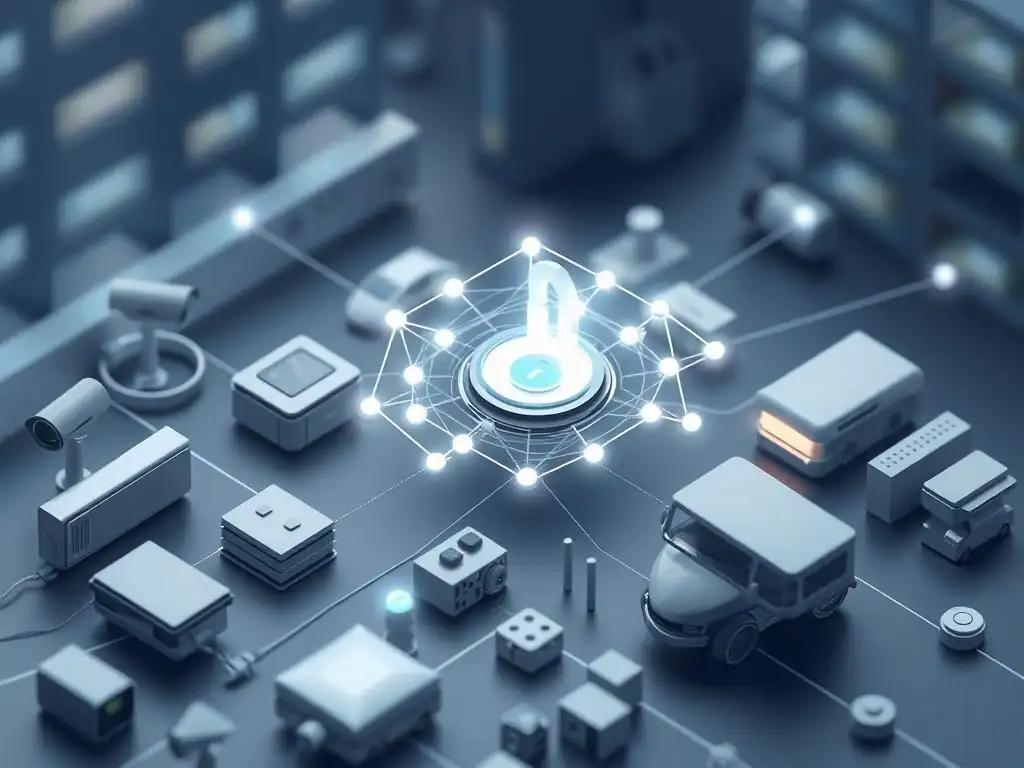
Supply Chain Management: Tracking and Authenticating IoT Sensors
In modern supply chains, IoT sensors are increasingly used to monitor conditions like temperature, humidity, and location of goods during transit. Ensuring the integrity and authenticity of these sensors and the data they report is critical for maintaining product quality and preventing fraud. Blockchain technology can provide robust IoT blockchain device identity security for these sensors. Each sensor can be registered on a blockchain with a unique, immutable identity linked to its manufacturer, calibration data, and ownership history.
As goods move through the supply chain, sensors can report their data to the blockchain, cryptographically signed with their private key. This creates a verifiable, tamper-proof record of the environmental conditions linked directly to the authenticated sensor. For example, a pharmaceutical company shipping vaccines could use temperature sensors with blockchain identities. If a sensor reports a temperature excursion, the immutable blockchain record verifies which specific sensor reported the data and when, providing indisputable evidence for quality control or insurance claims. This system prevents the introduction of fake sensors or the tampering of data from legitimate ones.
Healthcare: Securing Medical Device Data with Blockchain
The healthcare industry relies heavily on medical devices, from wearable health monitors to sophisticated diagnostic equipment. Securing the identity of these devices and the sensitive patient data they generate is paramount for patient privacy and safety. Blockchain-based solutions can enhance IoT blockchain device identity security in healthcare by providing a secure framework for device registration, authentication, and data access control. Each medical device can be assigned a unique, decentralized identity recorded on a permissioned blockchain, ensuring its authenticity within the healthcare network.
When a wearable device collects a patient's vital signs, this data can be encrypted and a hash or reference recorded on the blockchain, linked to the device's verified identity and the patient's record. Access to this data can be controlled via smart contracts, allowing only authorized healthcare professionals or the patient themselves (using their blockchain identity) to decrypt and view the information.
This prevents unauthorized devices from submitting fake data and ensures that sensitive patient information is only accessible to verified identities, significantly improving the security and privacy of healthcare IoT data. A pilot program might involve securing data streams from continuous glucose monitors for diabetic patients, ensuring data integrity and controlled access for both patient and clinician via a blockchain identity layer.
Smart Cities: Enhancing Security and Privacy in IoT Infrastructure
Smart cities deploy vast networks of IoT devices for managing traffic, monitoring environmental conditions, optimizing energy consumption, and providing public safety. Securing the identities of these diverse devices and protecting the privacy of the data they collect is a major challenge. Blockchain can provide a decentralized and transparent layer for IoT blockchain device identity security across smart city infrastructure. Streetlights, traffic sensors, waste management bins, and public cameras can all have their unique identities registered on a city-wide or regional blockchain network.
This allows city authorities and authorized service providers to verify the authenticity of every device participating in the network, preventing the introduction of rogue devices that could be used for surveillance, disruption, or data theft. Furthermore, smart contracts can manage access permissions, ensuring that only authorized personnel or applications can interact with specific devices or access the data they generate, while respecting privacy regulations.
For instance, traffic flow data from sensors might be publicly accessible, but data from public cameras might be restricted to law enforcement with specific permissions, all managed through blockchain identities and smart contracts, building a more resilient and trustworthy urban digital environment.
Benefits of Implementing Blockchain for IoT Security
Enhanced Security and Trust in IoT Ecosystems
Implementing blockchain technology significantly enhances the overall security posture and trust within IoT ecosystems, particularly regarding IoT blockchain device identity security. By providing a decentralized, immutable, and transparent ledger for managing device identities and interactions, blockchain eliminates many of the vulnerabilities inherent in traditional centralized systems. The tamper-proof nature of the ledger ensures that once a device's identity and status are recorded, they cannot be maliciously altered without consensus, making identity spoofing and data manipulation far more difficult.
This distributed trust model removes reliance on a single authority whose compromise could jeopardize the entire network. Devices can authenticate each other and exchange data based on verifiable identities recorded on the blockchain, building a chain of trust from the device level upwards. This enhanced security and inherent trust are crucial for deploying IoT in critical applications like industrial control systems, healthcare, and public infrastructure, where the integrity of device identities and data is non-negotiable.
Increased Transparency and Accountability in Device Management
Blockchain's transparent nature provides an unprecedented level of visibility and accountability in IoT device management. Every transaction related to a device's identity – from its initial registration and onboarding to firmware updates, status changes, and decommissioning – can be recorded on the blockchain.
This creates a complete and auditable history of each device's lifecycle that is accessible to authorized parties. For example, in a large enterprise IoT deployment, administrators can easily track when a specific sensor was installed, who performed the installation (if linked to user identities on the blockchain), when its firmware was last updated, and any recorded security events associated with its identity.
This transparency makes it easier to identify the source of issues, trace security incidents, and hold entities accountable for their actions within the network. If a device malfunctions or is compromised, the blockchain record provides an immutable log of its activity and state changes leading up to the event. This level of auditability is invaluable for debugging, security forensics, and demonstrating compliance with regulations, significantly improving the governance and management of complex IoT deployments and reinforcing IoT blockchain device identity security.
Reduced Operational Costs through Automation and Decentralization
While initial setup costs for blockchain infrastructure can be significant, implementing blockchain for IoT blockchain device identity security can lead to reduced operational costs in the long run through automation and decentralization. Smart contracts deployed on the blockchain can automate many routine tasks related to device identity management, such as authentication, authorization, and status updates. This reduces the need for manual intervention and the associated labor costs.
Decentralization also eliminates the need to maintain expensive, large-scale centralized servers for identity management and security monitoring, distributing the load and infrastructure requirements across the network. Furthermore, by enhancing security and preventing breaches, blockchain can significantly reduce the costs associated with security incidents, including data recovery, system downtime, regulatory fines, and reputational damage. For instance, automating device provisioning and decommissioning via smart contracts on a blockchain could streamline operations for utility companies managing millions of smart meters, leading to substantial savings compared to traditional, manual processes.
Challenges and Considerations for IoT Blockchain Implementation
Scalability Limitations of Blockchain Networks
Despite its potential, one of the primary challenges in implementing blockchain for large-scale IoT networks, particularly for IoT blockchain device identity security, is the scalability limitations of many existing blockchain platforms. Public blockchains like Bitcoin or Ethereum, designed for financial transactions, can process only a limited number of transactions per second (e.g., Bitcoin ~7 tx/sec, Ethereum ~15-30 tx/sec on its mainnet before Layer 2 scaling).
While enterprise and permissioned blockchains (like Hyperledger Fabric or R3 Corda) offer higher throughput, they may still struggle to handle the sheer volume of identity registrations, authentication requests, and data transactions generated by billions of IoT devices.
Recording every single data point or device interaction on a traditional blockchain could quickly overwhelm the network and lead to high transaction costs and latency. Solutions being explored include using lightweight consensus mechanisms, employing off-chain transactions for high-volume data while using the blockchain for identity and critical events, or leveraging specialized IoT-focused distributed ledgers. Scaling blockchain technology to match the growth trajectory of IoT remains a significant area of research and development.
Interoperability Issues Between Different Blockchain Platforms
The blockchain landscape is not monolithic; there are numerous different blockchain platforms, each with its own protocols, consensus mechanisms, and smart contract languages. This fragmentation presents interoperability challenges when trying to build a unified IoT blockchain device identity security system across diverse devices and applications that might operate on different blockchain networks. For instance, a smart home system might use one blockchain for device identity, while a connected car uses another.
Ensuring seamless and secure communication and identity verification between devices registered on different blockchain platforms requires robust interoperability solutions. This could involve developing standards for cross-chain communication, using relay networks, or creating identity bridges between different ledgers. Without effective interoperability, the vision of a truly connected and secure IoT ecosystem, where devices from different vendors and applications can securely interact based on verifiable identities, remains hampered.
Regulatory Compliance and Data Privacy Concerns
Implementing blockchain for IoT blockchain device identity security must also navigate complex regulatory landscapes and address data privacy concerns, particularly with regulations like GDPR (General Data Protection Regulation) in Europe or CCPA (California Consumer Privacy Act) in the US. While blockchain offers transparency and immutability, the "right to be forgotten" principle in GDPR poses a challenge, as deleting data from an immutable ledger is inherently difficult or impossible. Recording sensitive personal data, even indirectly linked to device identities, on a public or even permissioned blockchain requires careful consideration.
Solutions involve storing only hashes or encrypted references to sensitive data on the blockchain, with the actual data stored off-chain in compliant databases. Access control mechanisms managed by blockchain identities and smart contracts are crucial to ensure that only authorized parties can access sensitive data, aligning with privacy requirements. Furthermore, determining legal responsibility and governance models for decentralized IoT networks operating on blockchain requires clarification from regulators. Navigating these legal and ethical considerations is essential for the successful and responsible deployment of blockchain-based IoT security solutions.
The Future of IoT Blockchain Device Identity Security
Advancements in Blockchain Technology for IoT
The future of IoT blockchain device identity security is closely tied to ongoing advancements in blockchain technology itself. Researchers and developers are actively working on improving blockchain scalability through various techniques, including sharding, layer-2 solutions (like state channels and rollups), and specialized IoT-focused distributed ledgers designed for high throughput and low transaction costs. New consensus mechanisms that are more energy-efficient and faster are also being developed.
Furthermore, developments in privacy-preserving technologies on blockchain, such as zero-knowledge proofs, could allow for the verification of device identities and credentials without revealing sensitive underlying information, better addressing privacy concerns. Interoperability solutions, including cross-chain protocols and standards, are also maturing, promising to enable smoother communication between devices registered on different blockchain networks. These technological strides are paving the way for more practical and widespread adoption of blockchain for securing the identities of billions of IoT devices.
The Rise of Decentralized IoT Ecosystems
Blockchain is a key enabler for the emergence of truly decentralized IoT ecosystems, moving away from siloed, centralized platforms managed by individual companies. In a decentralized IoT future, devices could interact directly with each other, share data, and even participate in decentralized marketplaces based on their verified blockchain identities. For example, smart energy devices in a neighborhood could trade excess renewable energy peer-to-peer, with transactions and device authenticity verified on a blockchain.
This shift towards decentralization, powered by robust IoT blockchain device identity security, fosters greater resilience, reduces vendor lock-in, and unlocks new business models. Devices become active participants in a decentralized economy, rather than passive data sources controlled by a central entity. This future vision relies on the ability of devices to securely authenticate themselves and establish trusted relationships within a dynamic, distributed network, a capability inherently supported by blockchain identity solutions.
Edge Computing and Blockchain Integration for Enhanced IoT Security
The combination of edge computing and blockchain technology holds significant promise for enhancing IoT blockchain device identity security. Edge computing involves processing data closer to the source, on devices themselves or nearby gateways, reducing latency and bandwidth requirements. Integrating blockchain capabilities at the edge allows for faster identity verification and transaction processing locally, without needing to send every piece of data or authentication request to a remote cloud or centralized blockchain node.
For instance, an edge gateway in a factory could run a lightweight blockchain node responsible for managing and verifying the identities of sensors and robots within that specific local network. Critical identity checks and local transactions could be handled almost instantly at the edge, with periodic synchronization of key identity updates or aggregate data hashes to a main blockchain. This hybrid approach leverages the speed and efficiency of edge computing while retaining the security and immutability benefits of the blockchain ledger for critical identity management and security events, creating a powerful architecture for future secure IoT deployments.
Conclusion: Embracing Blockchain for a More Secure IoT Future
Key Takeaways on IoT Blockchain Device Identity
The convergence of the Internet of Things and blockchain technology presents a transformative opportunity to address the critical security challenges facing the rapidly expanding IoT landscape. Central to this is enhancing IoT blockchain device identity security. Traditional centralized models are proving inadequate for managing the sheer scale and complexity, suffering from single points of failure and a lack of standardization. Blockchain offers a compelling alternative, providing a decentralized, immutable, and transparent ledger for registering, authenticating, and managing the lifecycle of IoT device identities.
Key takeaways include the potential of Decentralized Identifiers (DIDs) for enabling devices to own their identities, the power of the immutable ledger for preventing identity spoofing and data tampering, and the use of smart contracts for automating secure interactions and access control. Real-world applications in supply chain, healthcare, and smart cities demonstrate the tangible benefits of using blockchain to secure device identities and ensure data integrity. While challenges like scalability, interoperability, and regulatory compliance remain, ongoing technological advancements and growing industry focus are actively addressing these hurdles.
The Importance of Investing in Blockchain Security Solutions for IoT
As the world becomes increasingly connected through IoT devices, the imperative to secure these devices and the networks they form grows stronger. The potential consequences of insecure IoT range from data breaches and privacy violations to critical infrastructure failures and physical harm. Investing in robust security solutions is no longer optional but a necessity. Blockchain technology, specifically for enhancing IoT blockchain device identity security, offers a foundational layer of trust and resilience that is difficult to achieve with traditional methods alone.
Organizations and governments deploying large-scale IoT systems must recognize the value proposition of blockchain in establishing verifiable device identities, securing device interactions, and ensuring data integrity from the edge to the cloud. While initial investments in expertise and infrastructure are required, the long-term benefits in terms of reduced security risks, increased operational efficiency through automation, enhanced transparency, and building public trust in IoT ecosystems are substantial. Embracing blockchain is a strategic step towards building a more secure, reliable, and trustworthy IoT future.
Frequently Asked Questions
What is the primary security concern addressed by integrating blockchain with IoT devices?
The primary concern is securing device identities to prevent unauthorized access and data manipulation. Blockchain provides a tamper-proof ledger for verifying device authenticity.
How does blockchain enhance IoT device identity security compared to traditional methods?
Traditional methods often rely on centralized systems, which are vulnerable to single points of failure. Blockchain offers a decentralized and immutable solution, making it harder for attackers to compromise device identities.
What are some key applications of IoT blockchain device identity security beyond smart homes?
Beyond smart homes, key applications include supply chain management, industrial automation, and healthcare, where verifiable device data is critical for trust and compliance.
What regulatory challenges exist regarding the implementation of blockchain for IoT device identity security?
Regulatory challenges involve data privacy, compliance with industry standards, and establishing clear legal frameworks for blockchain-based device authentication.
What is the future outlook for IoT blockchain device identity security and its impact on decentralized systems?
The future involves widespread adoption, increased interoperability, and the development of more sophisticated blockchain solutions for securing an ever-growing network of interconnected IoT devices.
Okay, here's a final reflection designed to close your article on Blockchain and the Internet of Things, focusing on securing device identities, and optimized for the keyword "IoT blockchain device identity security":
Final Reflection: Securing Tomorrow's Connected World
The exploration of IoT blockchain device identity security reveals more than just a technological solution; it underscores the urgent need for trust and integrity in an increasingly interconnected world. As we've seen, the convergence of blockchain and IoT offers a powerful framework for establishing verifiable identities and securing the vast network of devices that are rapidly becoming integral to our daily lives. This isn't just about preventing hacks; it's about building a foundation of confidence in the systems we rely on.
The impact of this technology extends far beyond the technical realm. The ability to definitively verify device identities and secure data flows is crucial for fostering innovation and trust in areas like smart cities, healthcare, and supply chain management. Without robust security measures, the potential of the IoT remains constrained by concerns about data breaches and manipulation. Security is always seen as too expensive until you need it.
This quote perfectly encapsulates the proactive approach necessary to ensure the long-term viability and ethical use of IoT technologies.
As you consider the implications of IoT blockchain device identity security, I invite you to reflect on your own role in shaping the future of the connected world. How can you advocate for the adoption of these security measures in your own industry or community? How can you contribute to the ongoing dialogue about responsible innovation and ethical data management? The future of the IoT depends on our collective commitment to building a secure and trustworthy ecosystem for all.
Unleash the Power of Secure IoT!
Thank you for exploring how blockchain is transforming the security of IoT devices. Now that you understand the potential, it's time to take the next step and actively contribute to this exciting field.
Here are some actions you can take right now:
- Research a specific IoT security vulnerability and explore blockchain-based solutions to address it. This is your chance to become a mini-expert!
- Share this article with your network on LinkedIn or Twitter, adding your thoughts on the future of blockchain and IoT security.
- Think creatively: Can you imagine a new application of blockchain for device identity management beyond what we've discussed? Explore the possibilities!
What's one unexpected way you could leverage blockchain to enhance the security of your everyday connected devices? Share your ideas in the comments below!
Leave a Reply