
Why Businesses Need to Pay Attention to Verifiable Credentials and Blockchain


Welcome to Blockchain Trends, your compass in the rapidly evolving world of decentralized technology! Are you ready to discover how blockchain is revolutionizing industries beyond just cryptocurrencies? This month we're diving deep into the game-changing power of blockchain verifiable credentials and their profound impact on the business landscape. Intrigued? We'll uncover why these credentials are no longer a futuristic concept but a present-day necessity. Keep reading to explore how they're reshaping digital identity and unlocking unprecedented opportunities for trust and efficiency.
Why Businesses Need to Pay Attention to Verifiable Credentials and Blockchain
- Understanding the Convergence of Blockchain and Verifiable Credentials
- Key Benefits of Blockchain Verifiable Credentials for Business
-
Use Cases: Blockchain Verifiable Credentials in Action
- Supply Chain Management: Tracking Product Provenance and Authenticity
- Human Resources: Verifying Employee Credentials and Skills
- Healthcare: Securely Sharing Medical Records and Credentials
- Education: Issuing and Verifying Academic Degrees and Certificates
- Finance: Identity Verification and KYC/AML Compliance
- Implementing Blockchain Verifiable Credentials: Key Considerations
- The Future of Blockchain Verifiable Credentials for Business
- Overcoming Barriers to Adoption of Blockchain Credentials for Business
- Conclusion: Embracing the Power of Blockchain for Secure and Trusted Credentials
-
Frequently Asked Questions
- What are verifiable credentials, and how are they related to blockchain?
- How can blockchain enhance the security and trust of verifiable credentials?
- Beyond identity verification, what other business applications exist for blockchain-based verifiable credentials?
- What are the key regulatory considerations for businesses adopting blockchain verifiable credentials?
- What is the future outlook for blockchain verifiable credentials in the business world?
- Final Reflection: Embracing Trust in the Digital Age
- Unlock the Future: Start Building Your Blockchain Advantage!
Understanding the Convergence of Blockchain and Verifiable Credentials
The Growing Importance of Digital Identity in the Business World
The digital transformation sweeping across industries has elevated the significance of robust and reliable digital identity solutions. Businesses today operate in an increasingly interconnected environment, where verifying the identity of customers, partners, employees, and even devices is crucial for security, trust, and operational efficiency. Traditional identity management systems, often centralized and siloed, struggle to keep pace with the demands of a decentralized digital landscape, frequently leading to data breaches, identity theft, and cumbersome verification processes. The need for a portable, secure, and user-controlled digital identity is becoming paramount.
Consider the sheer volume of digital interactions. A report from 2023 indicated that global e-commerce sales were projected to exceed $6 trillion. Each transaction, each login, each interaction requires some form of identity verification.
Furthermore, the average cost of a data breach globally reached $4.45 million in 2023, according to IBM's Cost of a Data Breach Report. A significant portion of these breaches are linked to compromised credentials and identity-related security incidents. This highlights the urgent need for more resilient and secure methods for managing digital identities, making the adoption of advanced technologies like blockchain verifiable credentials for business a critical strategic imperative.
Defining Blockchain Verifiable Credentials: A Secure and Trusted Approach
Verifiable Credentials (VCs) are tamper-evident digital credentials that can be cryptographically verified. They are based on open standards developed by organizations like the W3C (World Wide Web Consortium). A VC consists of claims made by an issuer about a subject (e.g., a university issuing a degree to a student, or an employer verifying an employee's work history). The key innovation is that the subject (the holder) can store these credentials securely and share them selectively with a verifier (e.g., a potential employer or a bank) without relying on the original issuer to be online or involved in every verification.
When combined with blockchain technology, these credentials gain enhanced security, immutability, and trust. The blockchain acts as a distributed ledger that can record the cryptographic proofs associated with the issuance and revocation of VCs. This doesn't mean the sensitive data within the credential is stored on the blockchain, which would be a privacy risk.
Instead, cryptographic hashes or identifiers linked to the credential's status are recorded. This provides a decentralized, transparent, and tamper-proof log of credential issuance and revocation events, offering a higher degree of assurance to verifiers that the credential is valid and has not been altered since it was issued. This integration is what powers blockchain verifiable credentials for business applications.
How Blockchain Enhances the Security and Trustworthiness of Credentials
Blockchain technology inherently provides features that significantly boost the security and trustworthiness of verifiable credentials. Its decentralized nature means there is no single point of failure or central authority that can be easily compromised. Data recorded on a blockchain is cryptographically linked in blocks, making it extremely difficult and computationally expensive to alter past records without detection. This immutability ensures that once a credential's issuance or status is recorded on the ledger (via a cryptographic proof), that record cannot be retroactively changed without the network's consensus, which is practically impossible for a malicious actor.
Furthermore, blockchain leverages public-key cryptography, which is fundamental to the security of VCs. The issuer signs the credential using their private key, and this signature can be verified by anyone using the issuer's public key, which can be anchored on the blockchain. The holder also uses cryptographic keys to manage and present their credentials.
The distributed ledger provides a reliable mechanism for verifiers to check the status of the issuer's public key and potentially the revocation status of the credential itself, all in a trust-minimized way without needing to directly contact the issuer every time. This cryptographic foundation, combined with the distributed ledger, makes blockchain verifiable credentials for business a highly secure and trustworthy solution for digital identity.
Key Benefits of Blockchain Verifiable Credentials for Business
Streamlining Business Processes with Verifiable Credentials
Implementing verifiable credentials can dramatically streamline numerous business processes that currently rely on manual or inefficient verification steps. For instance, onboarding new employees or verifying contractors often involves requesting physical documents, contacting previous employers or educational institutions, and waiting for responses – a process that can take days or even weeks. With VCs, an applicant can instantly share cryptographically verified credentials of their past employment, education, or certifications directly from their digital wallet. A verifier can then instantly check the validity of these credentials against the blockchain or decentralized identifiers (DIDs) without intermediary delays.
Consider the process of verifying professional licenses in regulated industries. In healthcare, verifying a doctor's license and certifications can be a time-consuming administrative burden. Using blockchain verifiable credentials for business, a healthcare provider could verify a physician's credentials in minutes. Similarly, in finance, onboarding a new client requires extensive Know Your Customer (KYC) and Anti-Money Laundering (AML) checks. VCs allow clients to share pre-verified identity attributes securely, drastically reducing the time and cost associated with these compliance procedures. Estimates suggest that streamlining identity verification processes can reduce onboarding times by up to 90% in some sectors.
Reducing Fraud and Enhancing Security with Blockchain Technology
Fraudulent credentials pose a significant risk across many business functions, from hiring unqualified personnel to accepting falsified documents in financial transactions. Traditional paper or easily forgeable digital certificates are susceptible to tampering. Blockchain verifiable credentials, by contrast, are designed to be tamper-evident and cryptographically verifiable. The integrity of the credential and the identity of the issuer are anchored using cryptographic proofs, often recorded on a blockchain. Any attempt to alter the credential after issuance would break the cryptographic link, making the fraud immediately detectable upon verification.
The use of decentralized identifiers (DIDs) and blockchain anchors provides a robust security layer. Instead of relying on centralized databases that are honeypots for attackers, the verification process leverages distributed ledgers. A verifier checks the credential against the issuer's public key and the status recorded on the blockchain, ensuring authenticity without needing to access sensitive personal data stored within the credential itself.
This decentralized security model significantly reduces the attack surface compared to traditional systems. The inherent immutability of the blockchain record for issuance and revocation status adds another layer of trust, making blockchain verifiable credentials for business a powerful tool in the fight against identity fraud.
Improving Data Privacy and Compliance with Regulations
Data privacy is a growing concern globally, with regulations like GDPR in Europe, CCPA in California, and others imposing strict requirements on how personal data is collected, processed, and stored. Traditional identity systems often require individuals to share excessive amounts of personal information for verification purposes, which is then stored in centralized databases, creating privacy risks and increasing the burden of compliance for businesses. Verifiable credentials fundamentally change this paradigm by putting the individual (the holder) in control of their data.
With VCs, individuals receive credentials containing specific claims (e.g., "is over 21," "holds a valid driver's license," "has a Bachelor's degree"). When presenting a credential, the holder can share only the minimum necessary information required for a specific transaction or verification, often through zero-knowledge proofs or selective disclosure. For example, proving you are over 21 for buying alcohol doesn't require sharing your date of birth or address, just a credential that asserts "over 21."
This principle of data minimization is central to privacy-preserving design and aligns perfectly with modern data protection regulations. By using blockchain verifiable credentials for business, companies can reduce the amount of sensitive data they need to collect and store, thereby lowering their compliance risk and demonstrating a commitment to user privacy.
Cost Savings and Efficiency Gains Through Automation
The administrative costs associated with verifying identities and credentials manually or through outdated systems can be substantial. These costs include staff time spent on processing paperwork, contacting third parties, and managing physical documents. Furthermore, delays in verification can impact business operations, such as delaying employee onboarding or slowing down customer acquisition. Blockchain verifiable credentials enable automation of the verification process, leading to significant cost savings and efficiency gains.
Once an individual presents a digital verifiable credential, the verifier's system can automatically check its cryptographic validity, issuer authenticity, and revocation status against the relevant blockchain or DID infrastructure within seconds. This eliminates manual checks, reduces the need for human intervention, and drastically speeds up processes. For instance, a large corporation hiring thousands of employees annually could potentially save hundreds of thousands or even millions of dollars in administrative costs by automating background checks and credential verification using VCs.
A study by the Linux Foundation Public Health initiative exploring the use of VCs for vaccine credentials estimated potential cost savings of 30-40% compared to traditional paper-based systems. The inherent efficiency of automated, trust-minimized verification makes blockchain verifiable credentials for business a compelling proposition for operational improvement.
Use Cases: Blockchain Verifiable Credentials in Action
Supply Chain Management: Tracking Product Provenance and Authenticity
Ensuring the authenticity and provenance of goods is a critical challenge in complex global supply chains, particularly for high-value, sensitive, or regulated products like pharmaceuticals, luxury goods, or food items. Counterfeit products cost the global economy hundreds of billions of dollars annually and can pose serious health and safety risks. Traditional tracking methods often rely on centralized databases or physical documentation that can be forged or tampered with.
Verifiable credentials, anchored by blockchain, offer a robust solution. As a product moves through the supply chain, each participant (manufacturer, distributor, logistics provider, retailer) can issue verifiable credentials about the product's state, location, or handling at their specific point. For example, a manufacturer issues a VC asserting the product's authenticity and batch number. A logistics company issues a VC confirming the date and conditions of transport.
These VCs can be cryptographically linked to the physical product via QR codes or NFC tags. Consumers or regulators can then scan the product and instantly verify its journey and authenticity by checking the VCs against the blockchain record, providing an immutable audit trail. Companies like Everledger have explored using blockchain verifiable credentials for business to track diamonds and other valuable assets, providing tamper-proof provenance information.
Human Resources: Verifying Employee Credentials and Skills
Recruiting and onboarding new employees involves verifying a multitude of claims made by applicants, including educational degrees, professional certifications, previous employment history, and skills. This process is often manual, slow, and prone to errors or fraud. Contacting universities, past employers, and certification bodies individually is resource-intensive.
Verifiable credentials can transform HR processes. Educational institutions can issue VCs for degrees and diplomas. Professional bodies can issue VCs for certifications and licenses. Previous employers can issue VCs verifying employment dates and roles.
Job applicants can collect these VCs in a digital wallet and share them instantly and selectively with potential employers. The HR department can then automatically verify the authenticity of these VCs against the relevant issuers' DIDs and the blockchain anchor. This not only speeds up the hiring process significantly – potentially reducing background check times from weeks to hours – but also reduces the risk of hiring based on fraudulent information. This application of blockchain verifiable credentials for business streamlines operations and enhances trust in the hiring process.
Healthcare: Securely Sharing Medical Records and Credentials
Healthcare is an industry where secure, private, and interoperable sharing of sensitive data is paramount. Patients often struggle to access and share their medical records across different providers. Healthcare professionals need quick and reliable ways to verify patient identity, insurance details, and their own professional credentials. Traditional systems are often fragmented and lack robust security mechanisms for data exchange, leading to inefficiencies and privacy concerns.
Verifiable credentials can empower patients with control over their health data. Hospitals and clinics can issue VCs for patient medical records, lab results, or vaccination status. Patients can store these VCs in their digital wallets and share them with new doctors or specialists as needed, without requiring complex data transfers between institutions.
Similarly, licensing boards can issue VCs for medical licenses, certifications, and specialties for doctors, nurses, and other professionals. Healthcare providers can instantly verify the credentials of their staff, locum tenens, or visiting practitioners against the blockchain anchor. Projects like the Sovrin Foundation's work have explored using blockchain verifiable credentials for business in healthcare to enable secure and patient-controlled health data exchange, improving interoperability and privacy.
Education: Issuing and Verifying Academic Degrees and Certificates
Issuing and verifying academic credentials like degrees, diplomas, and transcripts is a core function of educational institutions. However, paper-based certificates are easily lost, damaged, or forged. Verifying academic claims for employment or further education can be a slow and costly process for graduates and institutions alike.
Educational institutions can become issuers of verifiable credentials for the academic achievements of their students. Upon graduation, a university issues a digital VC for the degree, cryptographically signed by the university. The graduate receives this VC and stores it in their digital wallet. When applying for a job or further study, the graduate presents the VC to the employer or next institution.
The verifier can instantly and reliably check the VC's authenticity against the university's DID and the blockchain anchor. This eliminates the need for requesting physical transcripts or contacting the registrar's office, making verification instant and tamper-proof. Many universities globally, including MIT and some in Europe, have piloted or implemented the use of blockchain verifiable credentials for business purposes related to academic records, demonstrating the practical application of this technology.
Finance: Identity Verification and KYC/AML Compliance
The financial services industry is heavily regulated, with strict requirements for identity verification (KYC - Know Your Customer) and anti-money laundering (AML) compliance. Onboarding new customers involves collecting and verifying identity documents, which is a costly and time-consuming process. Furthermore, banks and other financial institutions are frequent targets for identity theft and fraud.
Verifiable credentials can significantly streamline KYC/AML processes. Governments or trusted identity providers can issue VCs for foundational identity attributes (e.g., name, date of birth, legal address), potentially verified against official records. Banks can issue VCs confirming account ownership or financial standing. Customers can collect these VCs and present them to new financial service providers.
The new provider can verify the necessary attributes instantly using the VC, potentially performing checks like proving the customer is "over 18 and a resident of [country]" without needing to see the full date of birth or exact address. This reduces the data shared, enhances privacy, and speeds up onboarding. Some financial institutions are exploring decentralized identity solutions leveraging blockchain verifiable credentials for business to reduce KYC costs, which can range from tens to hundreds of dollars per customer depending on the complexity.
Implementing Blockchain Verifiable Credentials: Key Considerations
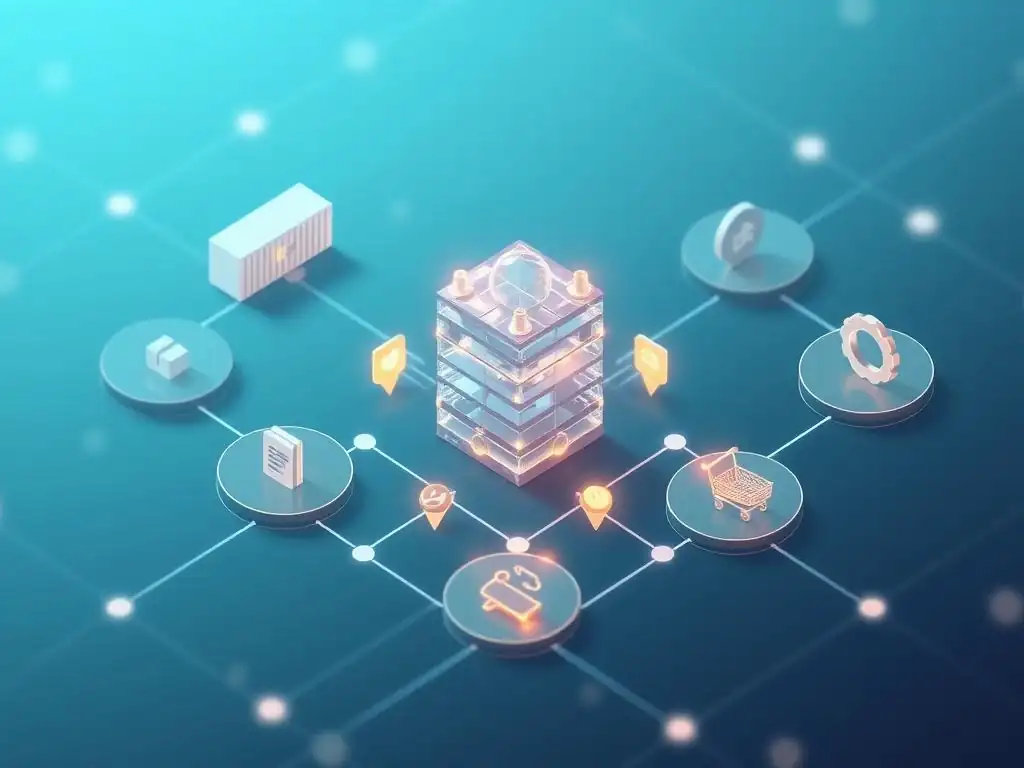
Choosing a Suitable Blockchain Platform
Selecting the right blockchain platform is a critical first step when implementing blockchain verifiable credentials for business. Not all blockchain platforms are equally suited for this purpose. Key factors to consider include the platform's consensus mechanism (Proof-of-Work, Proof-of-Stake, etc. ), transaction speed and cost, scalability, smart contract capabilities, and the maturity of its ecosystem and development tools. Public blockchains like Ethereum or Bitcoin might be suitable for anchoring decentralized identifiers (DIDs) or public keys, but storing large volumes of credential status data directly on them can be expensive and slow.
Private or permissioned blockchains, or even distributed ledger technologies (DLTs) that are not strictly blockchains but share similar properties (like Hyperledger Fabric or Corda), might be more appropriate for specific enterprise use cases where transaction throughput, privacy among participants, and predictable costs are essential. Some identity-focused blockchain networks, such as Sovrin or Polygon ID, are specifically designed to support decentralized identity and VCs. The choice will depend heavily on the specific business requirements, the need for public verifiability versus privacy, and the desired level of decentralization. Thorough research and potentially pilot projects are necessary to evaluate platform suitability.
Understanding Technical Requirements and Integration
Implementing blockchain verifiable credentials for business requires a solid understanding of the underlying technical components and how they integrate with existing business systems. Key technical elements include Decentralized Identifiers (DIDs), Verifiable Credentials (VCs) encoded according to W3C standards, cryptographic wallets for holders, issuers, and verifiers, and the interaction layer with the chosen blockchain or DLT platform. Businesses need to consider how to securely generate and manage cryptographic keys, how to integrate VC issuance into their existing data systems (e.g., HR databases, student information systems, supply chain platforms), and how verifier applications will consume and validate VCs.
Integration is a significant challenge. VCs and DIDs represent a new paradigm for identity management. Businesses need to develop or acquire software components for issuing, holding (digital wallets), and verifying credentials. These components must seamlessly integrate with existing enterprise software such as CRM systems, HR platforms, supply chain management tools, and customer portals. APIs and standardized protocols are essential for enabling this interoperability. Furthermore, securing the infrastructure and managing the lifecycle of keys and DIDs are paramount technical considerations that require expertise in cryptography and distributed systems.
Developing a Strategy for Issuing and Verifying Credentials
A clear strategy for issuing and verifying credentials is fundamental to a successful blockchain verifiable credentials for business implementation. Businesses must define what types of credentials they will issue (e.g., employee status, training completion, product authenticity) and to whom. They also need to establish the criteria and processes for verifying the claims before issuing a VC. This involves integrating with internal data sources or relying on trusted third-party attestations.
Equally important is the strategy for verification. How will verifiers (internal departments, partners, customers) receive and validate the VCs? Will they use a dedicated application, a web portal, or integrate verification capabilities into their own systems? Establishing clear verification policies and procedures is crucial. For example, defining what constitutes a valid credential, how to handle revocations, and what steps to take if a credential cannot be verified. A well-defined issuance and verification strategy ensures that the system is trustworthy, efficient, and meets the specific needs of the business and its stakeholders.
Ensuring Interoperability and Standardization
For blockchain verifiable credentials for business to achieve widespread adoption and realize their full potential, interoperability and adherence to open standards are essential. Credentials issued by one organization must be verifiable by others, regardless of the specific software or blockchain platform used by the issuer or verifier. Relying on proprietary systems or non-standard formats would create silos, limiting the utility and network effects of VCs.
Adopting open standards developed by bodies like the W3C (for VCs and DIDs) and the Decentralized Identity Foundation (DIF) is crucial. These standards define the data models, protocols, and methods for creating, presenting, and verifying credentials in a way that is independent of the underlying technology stack. Businesses should prioritize solutions that are built on or compatible with these standards. Furthermore, participating in industry-specific working groups or alliances focused on decentralized identity can help drive standardization and ensure that implementations meet the needs of specific sectors, fostering a more interconnected and usable ecosystem of blockchain verifiable credentials for business.
The Future of Blockchain Verifiable Credentials for Business
The Evolution of Digital Identity and Decentralized Systems
The future of digital identity is increasingly pointing towards decentralized models, where individuals and organizations have greater control over their own identity data. Verifiable credentials, powered by blockchain and decentralized identifiers, are at the forefront of this evolution. This shift moves away from the current paradigm of siloed, centralized identity providers that hold vast amounts of personal data, which are attractive targets for cyberattacks and often lead to poor user experiences.
In the coming years, we can expect to see a proliferation of self-sovereign identity (SSI) solutions built on these principles. Individuals will curate a digital wallet containing verifiable credentials issued by various trusted sources – governments, employers, universities, healthcare providers, etc. They will then be able to selectively share specific, verifiable proofs about themselves without exposing unnecessary personal information. This decentralized approach promises enhanced privacy, security, and user agency, fundamentally changing how businesses interact with and trust digital identities. This evolution is a key driver for the continued development and adoption of blockchain verifiable credentials for business.
The Role of Verifiable Credentials in Emerging Technologies
Verifiable credentials are poised to play a critical role in enabling trust and identity within emerging technological paradigms, such as the Metaverse, Web3 applications, and the Internet of Things (IoT). As users navigate immersive digital worlds or interact with decentralized applications, proving identity, ownership of digital assets, or qualifications will be essential, yet traditional identity methods are ill-suited for these environments.
In the Metaverse, VCs could be used to prove ownership of digital assets (like NFTs), verify identity for social interactions, or confirm qualifications for accessing specific virtual spaces or jobs. For Web3, VCs are fundamental to building trust layers on decentralized platforms, enabling reputation systems, verified participation in DAOs (Decentralized Autonomous Organizations), and secure interactions without relying on centralized authorities.
In the IoT space, VCs could be issued to devices to prove their identity, manufacturer, or maintenance history, enabling trusted communication and data exchange between machines. The ability of VCs to provide verifiable, portable, and privacy-preserving identity information makes them a foundational technology for the future of decentralized digital interactions across various domains, directly impacting the potential of blockchain verifiable credentials for business in these new frontiers.
Addressing Scalability and Performance Challenges
While the potential of blockchain verifiable credentials is vast, widespread adoption requires addressing current challenges related to scalability and performance. Public blockchains, while offering high decentralization, can sometimes suffer from limited transaction throughput and high costs (gas fees), which can be prohibitive for applications requiring high transaction volumes or frequent credential updates.
Ongoing research and development are focused on improving the scalability of blockchain and DLT platforms through various techniques, including Layer 2 scaling solutions, sharding, and optimized consensus mechanisms. Furthermore, many VC architectures are designed to minimize the data stored on the blockchain itself, using it primarily for anchoring DIDs, public keys, or revocation status hashes, while the credential data resides off-chain in the holder's wallet.
This approach helps mitigate some scalability concerns. As blockchain technology matures and specialized identity layers develop, these performance bottlenecks are expected to decrease, making blockchain verifiable credentials for business more viable for large-scale enterprise deployments.
Regulatory Landscape and Emerging Standards
The regulatory landscape surrounding digital identity, data privacy, and the use of blockchain technology is still evolving globally. Clarity from regulators is crucial for fostering trust and encouraging widespread adoption of verifiable credentials. Different jurisdictions are taking varied approaches to recognizing and regulating digital identities and the underlying technologies.
Simultaneously, the development and ratification of open standards for VCs and DIDs by organizations like the W3C are progressing. These standards provide a necessary framework for interoperability and ensure that different implementations can communicate with each other. Future developments will likely involve greater collaboration between standards bodies, industry consortia, and regulatory agencies to establish clear guidelines, legal recognition, and trust frameworks for verifiable credentials. As these standards mature and regulatory clarity increases, it will significantly lower the barriers to entry and accelerate the adoption of blockchain verifiable credentials for business across regulated industries.
Overcoming Barriers to Adoption of Blockchain Credentials for Business
Addressing Concerns About Data Privacy and Security
Despite the inherent privacy-enhancing features of verifiable credentials compared to traditional systems, concerns about data privacy and security remain a significant barrier to adoption. Businesses and individuals may be hesitant due to a lack of understanding of how VCs work, particularly how sensitive data is handled off-chain and what information is actually stored on the blockchain. Misconceptions about the immutability of data on the blockchain, sometimes confused with storing all personal data immutably, need to be addressed.
Overcoming this requires clear communication and education about the architecture of VC systems. Emphasizing that sensitive data remains in the holder's control and wallet, and only cryptographic proofs or status indicators are typically anchored on the blockchain, is crucial. Showcasing implementations that prioritize privacy-preserving techniques like selective disclosure and zero-knowledge proofs can build confidence. Robust security audits and certifications of VC platforms and wallets are also necessary to demonstrate their resilience against cyber threats. Building trust requires transparency and a commitment to privacy-by-design principles in all blockchain verifiable credentials for business implementations.
Educating Stakeholders on the Benefits of Verifiable Credentials
A major hurdle is the lack of awareness and understanding among potential stakeholders – business leaders, IT professionals, employees, and customers – about what verifiable credentials are and the tangible benefits they offer. The concepts of decentralized identity, DIDs, VCs, and blockchain can seem complex and abstract to those unfamiliar with the technology. Without a clear understanding of the value proposition, there is little incentive to invest in or adopt new systems.
Comprehensive education and training programs are essential. Businesses need to clearly articulate how blockchain verifiable credentials for business can solve specific pain points, such as reducing fraud, streamlining operations, enhancing privacy, or improving customer experience. Pilot projects and demonstrations showcasing successful use cases can provide concrete examples of the benefits. Focusing on the outcomes – faster onboarding, lower costs, enhanced security, improved compliance – rather than just the underlying technology can help stakeholders grasp the relevance and potential impact of VCs on their specific roles and the business as a whole.
Fostering Collaboration and Standardization Across Industries
The utility of verifiable credentials increases exponentially as more organizations adopt them and as they become interoperable across different industries and use cases. However, achieving this requires significant collaboration and adherence to common standards. Without cross-industry cooperation, businesses might develop isolated VC systems that cannot interact, limiting their value and fragmenting the ecosystem.
Industry consortia, standards bodies, and open-source initiatives play a vital role in fostering this collaboration. Participating in or supporting these groups helps align efforts, develop shared frameworks, and promote the adoption of open standards like W3C VCs and DIDs. Cross-industry pilot programs and joint initiatives can demonstrate the power of interoperability and build momentum. Encouraging the development of open-source tools and infrastructure also lowers the barrier to entry for businesses looking to implement blockchain verifiable credentials for business. A collaborative approach is key to building a robust, interconnected ecosystem where VCs can truly flourish.
Future Trends and Predictions
Looking ahead, several trends are likely to shape the future of blockchain verifiable credentials for business. We can anticipate increased adoption in regulated industries like finance, healthcare, and government as regulatory clarity improves and successful case studies emerge. The integration of VCs with other emerging technologies, such as AI for enhanced verification processes and the continued evolution of Layer 2 solutions for scalability, will likely accelerate.
Furthermore, the concept of "selective disclosure" and "zero-knowledge proofs" within VCs will become more sophisticated and widely used, enabling even greater privacy for individuals and businesses. The development of user-friendly digital wallets that make it easy for individuals to manage and present their VCs will be crucial for mass adoption. Finally, expect to see the rise of specialized identity networks and infrastructure built specifically to support VCs and DIDs, offering optimized performance and features for decentralized identity applications. These trends suggest a future where blockchain verifiable credentials for business are a fundamental component of digital trust and identity management.
Conclusion: Embracing the Power of Blockchain for Secure and Trusted Credentials
The digital landscape demands a more secure, private, and efficient approach to managing identities and credentials. Traditional systems are increasingly inadequate in the face of rising cyber threats, stringent privacy regulations, and the need for seamless digital interactions. Verifiable credentials, particularly when enhanced by the security and immutability of blockchain technology, offer a compelling solution to these challenges.
By adopting blockchain verifiable credentials for business, organizations can unlock significant benefits: streamlining cumbersome processes like hiring and customer onboarding, drastically reducing the risk and cost associated with fraud, improving data privacy and compliance with regulations, and achieving substantial cost savings through automation. Use cases across diverse sectors like supply chain, HR, healthcare, education, and finance demonstrate the broad applicability and transformative potential of this technology.
While challenges related to technical implementation, interoperability, and stakeholder education remain, the ongoing development of standards, increasing regulatory clarity, and successful pilot programs are paving the way for wider adoption. Businesses that proactively explore and embrace blockchain verifiable credentials for business are positioning themselves at the forefront of the next evolution in digital identity, building more secure, trustworthy, and efficient operations for the future.
Frequently Asked Questions
Verifiable Credentials are digital credentials that are cryptographically secured, allowing for trusted and tamper-proof sharing of information. Blockchain provides a decentralized and immutable ledger to manage and verify the issuance and revocation of these credentials.
How can blockchain enhance the security and trust of verifiable credentials?
Blockchain's inherent security features, like cryptographic hashing and distributed consensus, ensure that verifiable credentials haven't been altered or tampered with. This creates a higher level of trust and transparency compared to traditional methods of credentialing.
Beyond identity verification, what other business applications exist for blockchain-based verifiable credentials?
They can be used for supply chain management, ensuring product authenticity and provenance. They can also streamline employee onboarding and compliance, and even facilitate secure data sharing between organizations.
What are the key regulatory considerations for businesses adopting blockchain verifiable credentials?
Businesses must navigate data privacy regulations like GDPR, ensuring compliance in handling personal data. They also need to be aware of emerging standards and interoperability frameworks for digital identity and credentialing.
What is the future outlook for blockchain verifiable credentials in the business world?
The future is bright, with increasing adoption expected as businesses recognize the efficiency and security benefits. We anticipate greater standardization and interoperability, leading to widespread use across various industries and applications.
Final Reflection: Embracing Trust in the Digital Age
The journey through the landscape of blockchain verifiable credentials for business reveals a profound truth: trust is the new currency of the digital age. As we've explored the potential of these technologies, it becomes clear that they are not merely futuristic concepts, but rather essential tools for building transparent, secure, and efficient business ecosystems in the present. The ability to instantly and verifiably confirm identities, qualifications, and data points is rapidly shifting from a competitive advantage to a fundamental requirement for success.
The impact of blockchain verifiable credentials extends far beyond simple efficiency gains. It's about fostering a culture of trust, empowering individuals with control over their data, and creating a more equitable and accessible digital world. This shift resonates deeply with the growing demand for transparency and accountability in all aspects of life. As the saying goes: Trust is hard to win, easy to lose, and nearly impossible to regain.
Blockchain verifiable credentials offer a pathway to building and maintaining that trust in a world increasingly reliant on digital interactions.
Now, as you consider the implications of blockchain verifiable credentials for your own business, I urge you to embrace the possibilities. Don't just see this as a technological upgrade, but as an opportunity to build stronger relationships with your customers, partners, and employees. Explore how these technologies can enhance your processes, improve your security, and ultimately, create a more trustworthy and resilient organization. The future of business is built on trust, and blockchain verifiable credentials are the key to unlocking that future.
Unlock the Future: Start Building Your Blockchain Advantage!
Thank you for exploring the world of verifiable credentials and blockchain with us. We hope you now see the immense potential for your business to leverage these technologies for increased trust, security, and efficiency. Now, it's time to turn knowledge into action!
Here's how you can start your journey today:
- Dive Deep: Begin experimenting with a small-scale project using verifiable credentials within your existing business processes. This hands-on experience will provide invaluable insights.
- Explore Beyond: Research different blockchain platforms and verifiable credential standards to find the best fit for your unique needs and challenges. Don't be afraid to get technical!
- Share the Knowledge: Discuss the potential of verifiable credentials and blockchain with your colleagues and industry peers to spark innovation and collaborative exploration.
Are you ready to take the first step toward a more secure and trustworthy future for your business? Identify one specific process in your organization where implementing verifiable credentials could have an immediate and meaningful impact.
Leave a Reply