
Combating Identity Theft with SelfSovereign Identity: A Proactive Approach


Welcome to Blockchain Trends, where we delve into the transformative potential of blockchain technology beyond the realm of cryptocurrencies. In our latest article, we explore the compelling concept of self-sovereign identity protection, an innovative approach to combating identity theft. As we navigate through the complexities of decentralized systems and their applications in digital identity, you'll uncover how this groundbreaking technology empowers individuals with control over their personal information. Curious to learn how self-sovereign identity can revolutionize your online security? Join us on this journey and discover the future of identity protection in the blockchain era!
Combating Identity Theft with Self-Sovereign Identity: A Proactive Approach
- Introduction: The Rising Threat of Identity Theft and the Need for Enhanced Identity Protection
- What is Self-Sovereign Identity (SSI)?
- Key Benefits of Self-Sovereign Identity
- Implementing Self-Sovereign Identity
- Real-World Use Cases
- Challenges and Considerations for SSI Adoption
- Future Trends and Innovations in SSI
- Conclusion: A Secure and Trustworthy Digital Future
-
Frequently Asked Questions
- How does Self-Sovereign Identity (SSI) help combat identity theft?
- What are the key benefits of using SSI for identity protection in enterprise applications?
- How does blockchain technology enable Self-Sovereign Identity?
- What is the role of regulation in the adoption of Self-Sovereign Identity for identity protection?
- Beyond identity theft, what other applications benefit from Self-Sovereign Identity protection?
- Final Reflection: Empowering Individuals Through Self-Sovereign Identity
- Reclaim Your Digital Identity!
Introduction: The Rising Threat of Identity Theft and the Need for Enhanced Identity Protection
Understanding Current Identity Theft Tactics (e.g., Phishing, Data Breaches)
Identity theft remains a pervasive and escalating threat in the digital age, costing individuals and businesses billions annually. Common tactics employed by cybercriminals include sophisticated phishing attacks, where users are tricked into revealing sensitive information like passwords and credit card numbers through fraudulent emails or websites. These schemes often mimic legitimate organizations, making them difficult for the average user to spot. A study by the FBI's Internet Crime Complaint Center (IC3) reported over $10.2 billion in potential losses from cybercrimes in 2023, with phishing being a significant contributor.
Beyond phishing, large-scale data breaches represent a critical vector for identity theft. When centralized databases holding millions or even hundreds of millions of user records (including names, addresses, social security numbers, and financial details) are compromised, the fallout is immense. For example, major breaches have exposed sensitive data from companies across various sectors, impacting vast numbers of individuals. This stolen data is then often sold on the dark web, enabling fraudsters to open fraudulent accounts, take out loans, or file fake tax returns, highlighting the urgent need for more robust Selfsovereign identity protection methods.
Limitations of Centralized Identity Databases and Password-Based Systems
Traditional identity management systems largely rely on centralized databases where organizations store vast amounts of user data. While convenient for the service provider, these centralized repositories act as attractive "honey pots" for cybercriminals, presenting a single point of failure that, if breached, can compromise millions of identities simultaneously. The sheer volume of data concentrated in one place makes these systems prime targets for complex cyberattacks.
Furthermore, the widespread reliance on password-based authentication, often coupled with static personal information (like date of birth or mother's maiden name) for verification, is inherently weak. Passwords can be guessed, cracked, or stolen, and static information is easily compromised through data breaches or social engineering. This dependency on vulnerable credentials and centralized data storage underscores the fundamental limitations of current systems in providing adequate Selfsovereign identity protection against modern threats.
Introducing Self-Sovereign Identity (SSI)
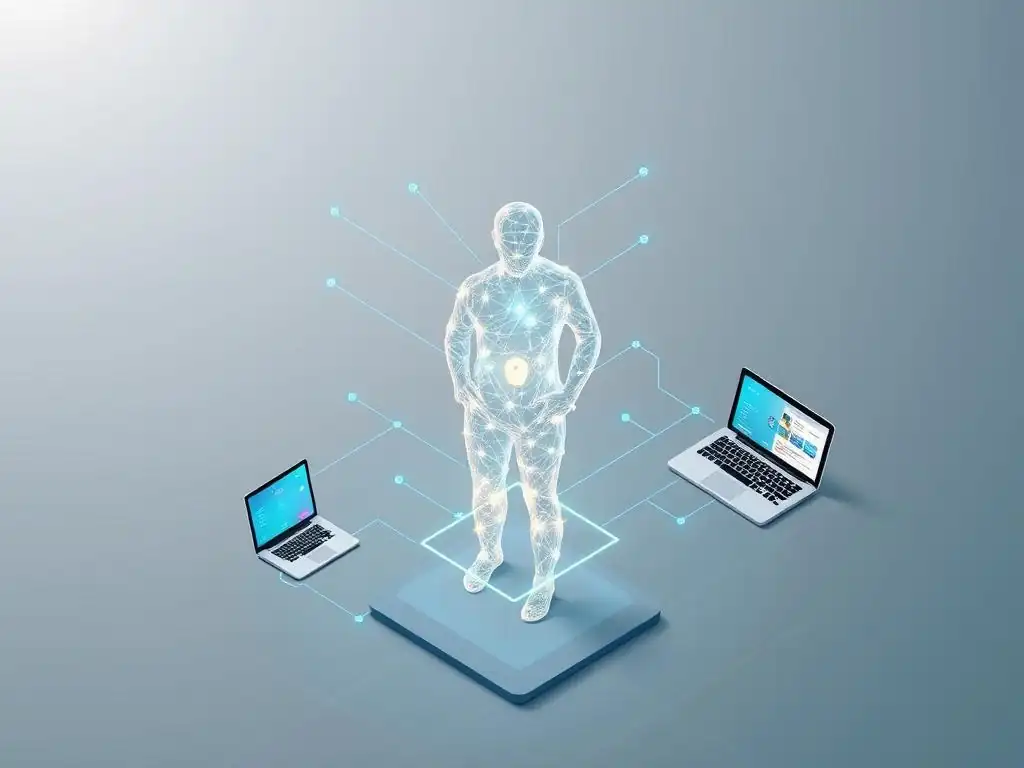
Self-Sovereign Identity (SSI) emerges as a transformative paradigm shift in digital identity management, fundamentally altering how identity is established, maintained, and used online. Unlike traditional models where identity is issued and controlled by central authorities (governments, corporations), SSI places the individual at the center, giving them complete ownership and control over their digital identity. This approach leverages decentralized technologies to enable users to manage their credentials securely and selectively share only the necessary information with service providers.
The core promise of SSI is to empower individuals, moving away from a system where users are merely subjects of identity management to one where they are the sovereign controllers of their own data. This shift is crucial for enhancing privacy, security, and overall trust in digital interactions. By enabling individuals to manage their own identity data via secure digital wallets and verifiable credentials, SSI offers a proactive and robust framework for Selfsovereign identity protection, significantly reducing the attack surface currently exploited by identity thieves.
What is Self-Sovereign Identity (SSI)?
Core Principles: User Control, Portability, Minimization, Transparency
Self-Sovereign Identity is built upon several foundational principles designed to empower the individual. User Control is paramount; it means individuals own their identity data and decide who they share it with and under what conditions, rather than relying on third parties to manage it. This contrasts sharply with current models where companies often control user data.
Portability ensures that an individual's digital identity is not tied to a single platform or service provider. Users can take their credentials with them and use them across different services seamlessly.
Data Minimization is also key; users can share only the specific piece of information required for a transaction (e.g., proving they are over 18 without revealing their exact birth date), significantly reducing the amount of sensitive data exposed. Finally, Transparency in SSI means the underlying processes and technologies are open and verifiable, allowing users and verifiers to trust the system without relying on opaque intermediaries, thereby enhancing Selfsovereign identity protection.
Role of Decentralized Ledgers (e.g., Blockchain) in SSI
Decentralized ledgers, such as blockchain technology, play a crucial role in enabling the principles of SSI, particularly in ensuring the integrity and verifiability of credentials. While the user holds their personal data securely in a digital wallet, the blockchain provides a tamper-evident, immutable record of the issuance and revocation of verifiable credentials. This distributed nature eliminates the single point of failure inherent in centralized identity systems.
Specifically, blockchain is used to anchor Decentralized Identifiers (DIDs) and record the cryptographic proofs associated with Verifiable Credentials (VCs). A DID is a persistent identifier that does not require a centralized registry, controlled solely by its owner. VCs are digital attestations signed by trusted issuers (like a university issuing a degree or a government issuing a driver's license). The blockchain allows anyone to verify the authenticity of a credential by checking its cryptographic proof against the public ledger, without needing to access the issuer's or holder's database, thus bolstering the security and trust of Selfsovereign identity protection solutions.
User Empowerment Through Data Control
At the heart of SSI is the radical shift in power dynamics regarding personal data. In the current digital landscape, users often surrender control of their personal information to numerous entities – social media platforms, e-commerce sites, financial institutions, etc. This data is then stored, managed, and potentially monetized by these entities, often without the user's full awareness or explicit consent for every use case.
SSI reverses this paradigm by making the individual the primary custodian of their identity data. Users store their verifiable credentials securely in their personal digital wallets. When a service provider requires proof of a specific attribute (e.g., age, employment status, professional license), the user can selectively present the relevant credential from their wallet. This granular control over data sharing minimizes exposure and significantly enhances privacy, providing a level of Selfsovereign identity protection previously unattainable in centralized systems.
Key Benefits of Self-Sovereign Identity
Enhanced Data Security and Privacy Through Decentralization
One of the most significant advantages of SSI is the inherent enhancement of data security and privacy stemming from its decentralized architecture. Unlike traditional systems where sensitive personal data is aggregated in large, vulnerable databases, SSI distributes data control to the individual. Users store their identity attributes and credentials locally in secure digital wallets on their devices.
When a service requires identity verification, the user shares only the specific, necessary credential, often through a zero-knowledge proof that validates an attribute without revealing the underlying data. This drastically reduces the amount of sensitive information transmitted and stored by third parties. By eliminating the centralized "honey pot" of personal data, SSI significantly diminishes the risk and impact of large-scale data breaches, offering a superior form of Selfsovereign identity protection.
Reduced Data Breach and Fraud Risk
By decentralizing identity management and minimizing the data shared and stored by service providers, SSI directly combats the root causes of many identity theft incidents. A single breach of a user's personal wallet would only compromise that individual's credentials, not millions of records as seen in corporate database breaches. Furthermore, the use of cryptographically secured verifiable credentials makes it exceedingly difficult for fraudsters to forge or tamper with identity documents.
The process of verifying credentials in SSI relies on checking cryptographic proofs against a public, immutable ledger, rather than trusting a central authority or relying on easily faked physical documents or static digital information. This cryptographically secured verification process, combined with the principle of data minimization, drastically reduces the opportunities for identity fraud and provides a robust layer of Selfsovereign identity protection against malicious actors.
Improved User Experience and Control
Beyond security, SSI promises a significantly improved user experience. Imagine a world where instead of repeatedly filling out forms, creating new usernames and passwords, and undergoing cumbersome verification processes for every new service, you simply present a credential from your digital wallet. Onboarding processes for new services could be dramatically streamlined, taking minutes instead of days.
Users gain unprecedented control over their digital lives. They can see exactly what information is being requested and choose whether or not to share it. This transparency and control foster greater trust between individuals and service providers. The ability to manage all digital identities and credentials from a single, secure wallet simplifies online interactions and empowers individuals in a way that centralized systems cannot, contributing significantly to user-centric Selfsovereign identity protection.
Streamlined Identity Verification
SSI revolutionizes identity verification by replacing manual, often paper-based, or cumbersome digital processes with efficient, cryptographic verification. Instead of sending copies of documents or waiting for manual checks, a service provider can instantly verify the authenticity and validity of a verifiable credential presented by the user.
For example, a bank onboarding a new customer could request a "Proof of Address" credential issued by a trusted utility company. The customer presents the credential from their wallet, and the bank's system cryptographically verifies it against the public ledger and the issuer's public key. This process is faster, more secure, and less prone to human error or document fraud, leading to a more efficient and trustworthy identity verification process that enhances Selfsovereign identity protection.
Implementing Self-Sovereign Identity
Steps for Adopting SSI Solutions
Implementing Self-Sovereign Identity requires a multi-faceted approach involving technology, policy, and user education. The initial steps for an organization or government agency typically involve defining the specific use cases for SSI, such as customer onboarding, employee identity management, or service access. This is followed by selecting an appropriate SSI framework or platform that aligns with industry standards like those developed by the Decentralized Identity Foundation (DIF) and W3C.
Next, organizations need to integrate their existing identity systems with the chosen SSI platform, enabling them to act as Issuers (creating and signing verifiable credentials) and/or Verifiers (checking the authenticity of presented credentials). This often involves developing or integrating with SSI wallet applications for users and backend systems for credential issuance and verification. Finally, user adoption is critical, requiring clear communication, training, and easy-to-use wallet applications to encourage individuals to embrace this new form of Selfsovereign identity protection.
Choosing a Suitable SSI Wallet and Verifiable Credential Issuer
For individuals, adopting SSI begins with selecting a suitable digital wallet application. SSI wallets are software applications (often mobile apps) that securely store, manage, and present verifiable credentials. Key considerations when choosing a wallet include security features (e.g., biometric authentication, secure key storage), ease of use, compatibility with different SSI frameworks and standards, and the wallet provider's reputation and privacy policy.
Organizations looking to issue credentials must become Verifiable Credential Issuers. This involves setting up the necessary infrastructure and processes to securely issue cryptographically signed credentials to users. Choosing an issuer platform depends on factors like scalability, security requirements, integration capabilities, and compliance needs. Building a trusted network of issuers is essential for the SSI ecosystem to flourish and provide reliable Selfsovereign identity protection.
Secure Storage and Management of Digital Credentials
Secure storage and management of digital credentials within the user's wallet are paramount for Self-Sovereign Identity protection. The user's private keys, which control their DIDs and are used to sign presentations of credentials, must be stored in a highly secure environment. Modern SSI wallets often use secure enclave technology on mobile devices or hardware security modules (HSMs) to protect these critical keys.
Users also need to manage their credentials responsibly, understanding which credentials they possess, who issued them, and when to share them. The wallet interface should provide clear visibility into this information and allow users to easily present specific credentials when requested by a verifier. Regular backups of the wallet (in a secure manner) are also important to prevent loss of identity data in case of device failure, ensuring the long-term viability of Selfsovereign identity protection.
Real-World Use Cases
Financial Services: Secure KYC and AML Compliance
The financial services sector is a prime candidate for SSI adoption, particularly for Know Your Customer (KYC) and Anti-Money Laundering (AML) compliance. Current KYC processes are often manual, repetitive, and require customers to repeatedly submit sensitive documents to different institutions, increasing the risk of data exposure.
With SSI, a customer could obtain a verified "KYC Compliant" credential from a trusted third-party identity verification service or even their bank. This credential, stored in their SSI wallet, attests that they have completed a full KYC check. When opening a new account with another financial institution, they can simply present this credential, along with perhaps a specific "Proof of Address" credential, without sharing all their underlying personal documents again. This streamlines compliance, reduces operational costs, and significantly enhances Selfsovereign identity protection for customers.
Healthcare: Patient Data Protection and Privacy
In healthcare, SSI can revolutionize patient data management and access control, addressing critical issues of privacy and interoperability. Patients could hold verifiable credentials related to their health status, medical history, vaccinations, or prescriptions in their SSI wallets. They could then grant specific healthcare providers (doctors, specialists, hospitals) temporary or limited access to relevant subsets of this data.
For instance, a patient visiting a new specialist could present a credential verifying their recent test results or medication list, without giving the specialist access to their entire medical history. This puts the patient in control of their sensitive health information, ensuring privacy while facilitating necessary care. Furthermore, SSI can streamline patient registration and consent processes, improving efficiency and bolstering Selfsovereign identity protection within the healthcare ecosystem.
Supply Chain: Authenticity Verification and Counterfeit Prevention
SSI principles can be applied within supply chains to create verifiable digital identities for products, components, and even locations. By issuing verifiable credentials at various stages of the supply chain – from raw material sourcing to manufacturing, shipping, and retail – stakeholders can create a trusted, transparent record of a product's journey.
Consumers could scan a QR code on a product and receive verifiable credentials proving its origin, authenticity, and ethical sourcing, issued by the manufacturer or a certifying body. This helps combat counterfeiting and builds consumer trust. Businesses can also use SSI for verifying the identity and credentials of suppliers and partners, ensuring compliance and security throughout the supply network, thereby enhancing Selfsovereign identity protection across the value chain.
Government Services: Citizen Identity Management
Governments are exploring SSI for issuing official digital identities and credentials to citizens, such as digital IDs, driver's licenses, or proofs of eligibility for social services. Instead of relying on physical documents or centralized government databases, citizens could hold these credentials securely in their SSI wallets.
Citizens could then use these digital credentials to access various government services online or in person, selectively sharing only the information needed. For example, proving residency for a local service without revealing other personal details on a physical ID. This approach can improve the efficiency and accessibility of government services while providing citizens with greater control and Selfsovereign identity protection over their official identity information. Several countries and regions are piloting digital identity initiatives based on decentralized principles.
Challenges and Considerations for SSI Adoption
Overcoming Technical Implementation Barriers
Despite its promise, SSI adoption faces several technical hurdles. Integrating SSI solutions with existing legacy systems within organizations can be complex and costly. Many enterprises have deeply entrenched identity and access management (IAM) infrastructure that was not designed for decentralized paradigms. Achieving seamless interoperability between different SSI platforms and wallets developed by various vendors is another significant technical challenge, requiring adherence to common standards.
The development of user-friendly and secure SSI wallet applications is also critical. These applications must be intuitive enough for mass adoption while providing robust cryptographic security for private keys and credentials. Furthermore, ensuring the scalability of decentralized ledgers and associated infrastructure to handle a potentially massive volume of transactions and verifications remains an ongoing area of development and optimization within the SSI ecosystem, impacting the feasibility of widespread Selfsovereign identity protection.
Ensuring Interoperability and Standardization
A crucial factor for the success of SSI is the establishment and widespread adoption of open standards for Decentralized Identifiers (DIDs), Verifiable Credentials (VCs), and related protocols (e.g., DIDComm for secure messaging). Without common standards, different SSI wallets, issuers, and verifiers would be unable to interact, creating fragmented ecosystems.
Significant progress has been made by organizations like the W3C (World Wide Web Consortium) and the Decentralized Identity Foundation (DIF) in defining these standards. The W3C's Verifiable Credentials Data Model 1.0 is a foundational standard, and work continues on DID specifications and related protocols. However, ensuring consistent implementation and adoption across diverse industries and geographies requires ongoing collaboration and effort from technology providers, businesses, and regulatory bodies to truly enable global Selfsovereign identity protection.
Addressing Legal and Regulatory Considerations
The decentralized nature of SSI introduces novel legal and regulatory questions. Existing laws and regulations surrounding data privacy (like GDPR or CCPA), digital signatures, and identity verification were primarily designed for centralized systems. Applying these frameworks to a decentralized model where individuals control their data and credentials are cryptographically verified presents challenges.
Issues such as liability in case of misuse, the legal status of verifiable credentials compared to traditional documents, and cross-border recognition of decentralized identities need careful consideration. Regulatory clarity and adaptation are essential for fostering trust and enabling widespread adoption of SSI solutions. Governments and legal bodies need to engage with SSI technologists and implementers to develop appropriate legal frameworks that support Selfsovereign identity protection while ensuring compliance and accountability.
Mitigating Potential Risks
While SSI significantly reduces many traditional identity theft risks, it introduces new ones that must be mitigated. A primary concern is the secure management of the user's private keys. If a user loses their private key or it is compromised, they could lose access to their DIDs and credentials, or worse, a malicious actor could impersonate them. Secure key recovery mechanisms that maintain the principles of user control are vital.
Another consideration is the trustworthiness of credential Issuers. While the blockchain verifies the integrity of a credential, it doesn't inherently guarantee the truthfulness of the claim being attested to. Users and verifiers must trust the issuer's process for verifying the underlying information before issuing a credential. Building a reputation system for issuers and educating users on verifying issuer trustworthiness are important steps in mitigating these risks and ensuring the effectiveness of Selfsovereign identity protection.
Future Trends and Innovations in SSI
Emerging Technologies Enhancing SSI
The field of SSI is continuously evolving, driven by advancements in related technologies. Zero-Knowledge Proofs (ZKPs) are becoming increasingly sophisticated, allowing individuals to prove an attribute (e.g., "I am over 21") without revealing any unnecessary underlying data (e.g., their date of birth). This enhances privacy and data minimization beyond simple selective disclosure.
Advancements in cryptography, such as post-quantum cryptography, are being monitored to ensure SSI systems remain secure against future computational threats. Furthermore, the development of more efficient and scalable decentralized ledger technologies continues, aiming to reduce transaction costs and increase throughput, making SSI infrastructure more viable for large-scale enterprise and government applications. These technological strides are crucial for advancing Selfsovereign identity protection capabilities.
Role of AI in SSI Management
Artificial intelligence is poised to play a supportive role in future SSI systems, particularly in assisting users with managing their credentials and enhancing security. AI could power intelligent SSI wallets that help users organize their credentials, identify when a specific credential is required, and even proactively alert users to potential security risks or phishing attempts targeting their identity.
AI could also assist Verifiable Credential Issuers and Verifiers in automating parts of their processes, such as initial checks on identity documents before issuing a VC or analyzing patterns in verification requests to detect fraudulent activity. However, it's crucial that the integration of AI maintains the core principles of SSI, ensuring user control, transparency, and avoiding bias in automated decision-making processes related to identity verification and Selfsovereign identity protection.
Future Predictions for Digital Identity and SSI
Looking ahead, experts predict that elements of Self-Sovereign Identity will become increasingly integrated into the fabric of our digital lives. While a complete overnight shift from centralized systems is unlikely, a hybrid model is expected to emerge, where users gradually adopt SSI wallets and verifiable credentials for specific high-value interactions, such as accessing financial services, managing health records, or interacting with government agencies.
The drive for enhanced privacy, security, and user control, coupled with the limitations of current identity systems, will fuel this transition. As standards mature, technical barriers decrease, and regulatory clarity improves, SSI is set to become a foundational layer for trust in the digital economy, moving towards a future where individuals are truly sovereign over their digital identities and benefit from robust Selfsovereign identity protection.
Conclusion: A Secure and Trustworthy Digital Future
Recap of SSI Benefits
Self-Sovereign Identity offers a compelling alternative to traditional, centralized identity management systems. By placing the individual at the center of their digital identity, SSI provides numerous benefits, including significantly enhanced data security and privacy through decentralization, a drastic reduction in the risk of large-scale data breaches and fraud, an improved and more controlled user experience, and streamlined, verifiable identity verification processes. These advantages collectively pave the way for a more secure and trustworthy digital environment by implementing a proactive approach to Selfsovereign identity protection.
Call to Action for SSI Adoption
The journey towards a future where individuals have true control over their digital identities requires collective effort. Technology providers must continue developing user-friendly, secure, and interoperable SSI solutions based on open standards. Organizations and governments should explore and pilot SSI use cases, recognizing the long-term benefits in terms of security, efficiency, and trust.
Most importantly, individuals should become aware of the potential of SSI and demand greater control over their personal data, embracing the tools that enable Selfsovereign identity protection. Adopting SSI is not just a technical upgrade; it's a fundamental step towards reclaiming ownership and building a more equitable and secure digital future for everyone.
Frequently Asked Questions
How does Self-Sovereign Identity (SSI) help combat identity theft?
SSI empowers individuals with control over their digital identities. This reduces reliance on centralized databases, minimizing the risk of large-scale data breaches and subsequent identity theft.
What are the key benefits of using SSI for identity protection in enterprise applications?
SSI offers improved data privacy and security, reduced compliance burdens, and enhanced user trust. It allows enterprises to verify user credentials without storing sensitive personal information.
How does blockchain technology enable Self-Sovereign Identity?
Blockchain provides a decentralized and immutable ledger for storing and verifying identity credentials. This ensures the authenticity and integrity of identity data, enhancing security.
What is the role of regulation in the adoption of Self-Sovereign Identity for identity protection?
Clear and supportive regulations can foster wider adoption of SSI. Regulations can also provide a framework for data privacy and security, building trust in decentralized identity solutions.
Beyond identity theft, what other applications benefit from Self-Sovereign Identity protection?
SSI can be used for secure data sharing, verifiable credentials for education and employment, and streamlined access to services. It also supports greater user control over personal data in various contexts.
Final Reflection: Empowering Individuals Through Self-Sovereign Identity
The exploration of Self-Sovereign Identity (SSI) in combating identity theft reveals a crucial truth: the future of digital security hinges on empowering individuals with control over their own data. The vulnerabilities exposed by traditional centralized identity systems demand a paradigm shift, and SSI offers a compelling solution by placing the power back into the hands of the user. This proactive approach is not just a technological advancement; it's a fundamental re-evaluation of trust and ownership in the digital age.
The impact of SSI extends far beyond mere data protection; it reshapes the very fabric of our online interactions. Witnessing the growing adoption of SSI principles, even in nascent forms, underscores its potential to revolutionize how we interact with services, conduct business, and manage our digital lives. The ability to selectively share verifiable credentials, without relying on intermediaries, promises a more secure, efficient, and equitable digital ecosystem. As philosopher and technologist Jaron Lanier aptly stated: Information wants to be free. Information also wants to be expensive. Information wants to be free because it has become so cheap to distribute, copy, and recombine—putting a premium on being free. Information wants to be expensive because people want to be paid for creating it, and because it is so hard to get people to pay attention.
SSI offers a path to reconcile these competing desires, allowing individuals to control the value and access to their own information.
As you navigate the increasingly complex digital landscape, consider the profound implications of Self-Sovereign Identity. Embrace the principles of ownership and control, and actively seek out solutions that empower you to protect your digital identity. The future of security is not just about technology; it's about empowering you to be the guardian of your own digital self. Let us all strive to build a future where identity theft is a relic of the past, replaced by a system of trust and control that puts individuals first.
Reclaim Your Digital Identity!
Thank you for taking the time to learn how Self-Sovereign Identity can empower you to protect yourself from identity theft. Now that you’re informed, it’s time to take action. Here’s how to get started:
- Begin by researching self-sovereign identity wallets that match your needs and privacy preferences. Compare their features, security measures, and user feedback to find the best option for you. This is a crucial step toward owning and controlling your digital identity.
- Join online communities and forums focused on self-sovereign identity. Share your insights from this article and learn from others’ experiences.
- Consider sharing this article with friends and family to help them understand the importance of proactive identity protection.
Which feature of a self-sovereign identity wallet are you most excited to explore first? Share your thoughts in the comments below!
Leave a Reply