
Cryptography and Verifiable Credentials: Securing Digital Identities with Blockchain

Welcome to Blockchain Trends, your compass in the ever-evolving landscape of decentralized innovation! Dive deep into a world where blockchain transcends cryptocurrency and reshapes industries. Are you ready to explore how blockchain is revolutionizing digital identity? This article unveils the crucial role of cryptography and verifiable credentials in enhancing Blockchain verifiable digital identity security, sparking a future where trust and privacy converge. Read on to discover how this foundational technology is poised to redefine ownership and access in the digital age.
Cryptography and Verifiable Credentials: Securing Digital Identities with Blockchain
- Introduction to Blockchain-Based Verifiable Credentials
- Cryptography at the Core of Verifiable Credentials
- Blockchain Technology for Decentralized Identity
- Security Benefits of Blockchain-Based Verifiable Credentials
- Use Cases for Blockchain and Verifiable Credentials
- Challenges and Future Trends in Blockchain-Based Digital Identity
- Implementing Blockchain-Based Verifiable Credentials
- Conclusion: The Transformative Power of Blockchain-Based Verifiable Credentials
-
Frequently Asked Questions
- What is the role of cryptography in blockchain-based verifiable digital identity?
- How does blockchain technology enhance verifiable digital identity security?
- What are the key benefits of using verifiable credentials for digital identity management?
- What challenges need to be addressed for widespread adoption of blockchain verifiable digital identity security?
- How are enterprises leveraging blockchain for verifiable digital identity security applications?
- Final Reflection: Embracing Trust in a Digital Age
- Unlock Your Secure Digital Future
Introduction to Blockchain-Based Verifiable Credentials
The Growing Need for Secure Digital Identities
In today's interconnected digital landscape, the need for secure and reliable digital identities has become paramount. Individuals and organizations alike navigate a complex web of online services, requiring proof of identity for everything from accessing healthcare records to conducting financial transactions and verifying professional qualifications. Traditional identity systems, often centralized and prone to data breaches, struggle to keep pace with the scale and sophistication of modern cyber threats.
Reports indicate that identity theft remains a significant issue, with millions of cases reported annually globally, leading to substantial financial losses and erosion of trust. The average cost of a data breach involving identity information can run into millions of dollars for affected organizations.
The current reliance on centralized databases creates single points of failure, making them attractive targets for malicious actors. When a large repository of personal data is compromised, the fallout affects a vast number of individuals, potentially exposing sensitive information like social security numbers, addresses, and dates of birth. This vulnerability highlights an urgent requirement for a more resilient, privacy-preserving, and user-centric approach to digital identity management. A robust solution must empower individuals to control their own data while providing reliable verification mechanisms for relying parties, addressing the critical challenge of achieving strong blockchain verifiable digital identity security.
Understanding Verifiable Credentials (VCs)
Verifiable Credentials (VCs) represent a digital equivalent of physical credentials such as passports, driver's licenses, or academic diplomas. They are tamper-evident, cryptographically secured, and privacy-preserving. A VC is essentially a set of claims made by an issuer (e.g., a university, a government agency, an employer) about a subject (the individual).
Unlike traditional digital credentials, VCs are designed to be held and managed by the subject, who can then present them to a verifier (e.g., a bank, an employer, a landlord) for verification. The World Wide Web Consortium (W3C) has developed a comprehensive specification for Verifiable Credentials, outlining the data model and processing rules, providing a foundational standard for interoperability.
The core components of a Verifiable Credential include the issuer, the subject, the claims, the issuance date, and potentially an expiration date. Crucially, a VC is digitally signed by the issuer, allowing any verifier to cryptographically confirm that the credential was indeed issued by the claimed party and has not been altered since its issuance. This structure shifts the control of the credential from the issuer or a central repository to the individual, enabling a self-sovereign identity model. This model is foundational for enhancing blockchain verifiable digital identity security, giving users greater agency over their personal information.
How Blockchain Enhances Verifiable Credential Security
Blockchain technology provides a powerful layer of security and trust for Verifiable Credentials, primarily by acting as a decentralized, immutable ledger. While the credentials themselves are typically not stored entirely on the blockchain due to privacy and scalability concerns, cryptographic proofs or hashes related to the VCs are anchored to the distributed ledger. This anchoring process leverages the blockchain's inherent properties of immutability and transparency (for public blockchains) or controlled transparency (for private/permissioned blockchains).
By recording a cryptographic hash of the VC or a related transaction on the blockchain, a permanent and verifiable record of the credential's issuance or revocation is created. Any attempt to tamper with the credential off-chain would result in a hash mismatch when compared to the one on the blockchain, immediately signaling that the credential is invalid.
Furthermore, the decentralized nature of blockchain eliminates the single point of failure associated with centralized databases, making the system more resilient to attacks. This strategic use of blockchain significantly strengthens blockchain verifiable digital identity security by providing a robust trust anchor and audit trail that is resistant to manipulation.
Cryptography at the Core of Verifiable Credentials
The Role of Cryptography in Digital Identity Management
Cryptography is not just a component; it is the foundational pillar upon which secure digital identity management systems, including those utilizing Verifiable Credentials and blockchain, are built. It provides the essential tools for ensuring confidentiality, integrity, and authenticity of digital information. In the context of identity, cryptography enables individuals to prove who they are (authentication), ensures that identity data has not been tampered with (integrity), and protects sensitive information from unauthorized access (confidentiality).
Techniques such as hashing, digital signatures, and encryption are indispensable. Hashing, for instance, creates a unique, fixed-size fingerprint of data, crucial for verifying data integrity without revealing the original data. Digital signatures bind an identity to a piece of data or a transaction, offering non-repudiation.
Without strong cryptography, digital identities would be easily forgeable, modifiable, or stealable. The entire system of trust collapses if the underlying mechanisms for verifying identity and securing data are weak. The application of robust cryptographic algorithms, such as SHA-256 for hashing or ECDSA for digital signatures, is critical for the reliability of Verifiable Credentials. These algorithms ensure that the cryptographic link between the issuer, subject, and claims within a VC is secure and verifiable, laying the groundwork for effective blockchain verifiable digital identity security.
Public Key Infrastructure (PKI) and Verifiable Credentials
Public Key Infrastructure (PKI) plays a significant role in traditional digital identity and is often integrated into Verifiable Credential systems. PKI relies on the use of public and private key pairs and digital certificates issued by trusted Certificate Authorities (CAs) to bind a public key to an identity. In a VC context, an issuer uses its private key to digitally sign a credential, and the verifier uses the issuer's corresponding public key (obtained, perhaps, via a digital certificate) to verify the signature. While traditional PKI relies on centralized CAs, the principles of public/private key cryptography are fundamental to VCs.
In blockchain-based systems, the role of the CA can be partially or entirely decentralized or distributed. Decentralized Identifiers (DIDs), often used with VCs, utilize cryptographic key pairs where the public key is discoverable via a DID document, which might be stored or referenced on a blockchain. This shifts trust from a single CA to the decentralized network or a distributed ledger, potentially reducing the risks associated with centralized trust authorities. However, secure management of private keys remains paramount, as their compromise can undermine the entire system, regardless of whether a traditional PKI or a DID-based approach is used.
Digital Signatures: Ensuring Authenticity and Integrity
Digital signatures are a cornerstone of Verifiable Credentials, providing cryptographic proof of origin and ensuring data integrity. When an issuer creates a VC, they use their unique private key to generate a digital signature over the credential's data. This signature is then attached to the credential. The process is mathematically linked such that only the issuer's private key could have produced that specific signature for that specific set of data.
A verifier, upon receiving the VC, uses the issuer's publicly available key to perform a verification process. If the verification is successful, it confirms two critical things: first, that the credential was indeed signed by the holder of the corresponding private key (authenticity), and second, that the credential's data has not been altered since it was signed (integrity).
Any change, no matter how small, to the credential data or the signature itself will cause the verification to fail. This cryptographic proof is essential for establishing trust in the digital credential and is a core mechanism for achieving strong blockchain verifiable digital identity security.
Zero-Knowledge Proofs (ZKPs) for Enhanced Privacy in VCs
Zero-Knowledge Proofs (ZKPs) offer a powerful cryptographic technique to enhance privacy within Verifiable Credential systems. A ZKP allows one party (the prover) to prove to another party (the verifier) that a statement is true, without revealing any information beyond the validity of the statement itself.
In the context of VCs, this means a user could prove they meet certain criteria specified in a credential without disclosing the full credential or sensitive details within it. For example, a user could prove they are over 18 without revealing their exact date of birth, or prove they have a specific degree without showing their full transcript.
Implementing ZKPs with VCs allows for selective disclosure of information. Instead of presenting the entire credential, the user can construct a ZKP that proves they possess a credential with specific attributes satisfying the verifier's requirements. This significantly improves user privacy and minimizes the exposure of sensitive personal data during verification processes. While cryptographically complex, ZKPs are becoming increasingly practical and are seen as a vital tool for building privacy-preserving blockchain verifiable digital identity security solutions.
Blockchain Technology for Decentralized Identity
Blockchain as a Trust Anchor for Verifiable Credentials
Blockchain technology serves as a critical trust anchor for Verifiable Credentials, providing a decentralized and immutable layer that enhances the reliability and security of the overall system. While the credentials themselves are not typically stored on the blockchain, cryptographic hashes or identifiers related to the VCs are often recorded on the ledger. This creates a tamper-evident link between the off-chain credential and the on-chain record.
For instance, an issuer might publish the hash of a newly issued credential on a public blockchain. Later, a verifier can retrieve the credential from the subject, re-calculate its hash, and compare it to the hash recorded on the blockchain. If the hashes match and the transaction is confirmed on the blockchain, it provides strong evidence that the credential is valid and hasn't been altered since its issuance time recorded on the ledger.
This anchoring mechanism leverages the blockchain's inherent security properties: decentralization means no single entity controls the record, and immutability ensures that once a record is added, it cannot be retroactively changed or deleted without detection. This provides a far more robust foundation for trust compared to systems reliant on centralized databases, which are susceptible to unilateral modification or deletion. The blockchain thus acts as a publicly auditable or permissioned, yet tamper-proof, timestamping and anchoring service that underpins blockchain verifiable digital identity security.
Immutable Record Keeping: Benefits for Digital Identity
The immutable nature of blockchain is a significant advantage for digital identity systems, particularly when dealing with records of issuance, revocation, or status changes for Verifiable Credentials. Once a transaction is added to a blockchain, it is computationally infeasible to alter or remove it. For digital identity, this means that a record of a credential being issued, a key being registered, or a credential being revoked becomes a permanent part of the ledger.
This immutability provides a strong audit trail and prevents malicious actors or even the issuer from fraudulently denying the issuance of a credential or backdating a revocation. For example, if an employee presents a credential for a past job, the verifier can check the blockchain record to confirm when it was issued and if it was valid during the stated employment period.
This transparency (on public blockchains) or controlled transparency (on permissioned blockchains) builds confidence in the system and significantly enhances the integrity of blockchain verifiable digital identity security. It ensures that the history of an identity attribute is preserved accurately over time.
Decentralized Identifiers (DIDs) and Blockchain Interoperability
Decentralized Identifiers (DIDs) are a new type of identifier designed to enable verifiable, decentralized digital identity. Unlike traditional identifiers (like usernames or email addresses) which are tied to specific organizations or domains, DIDs are globally unique and resolvable, and they are registered and controlled by the individual or entity they identify. A DID is typically associated with a DID document, which contains cryptographic keys, service endpoints, and other metadata necessary to interact with the DID subject.
Blockchain technology is frequently used as a "DID method" – a specific system for registering, resolving, and updating DIDs and their associated DID documents. By anchoring DID documents or pointers to them on a blockchain (such as Ethereum, Hyperledger Indy, or others designed for identity), the system leverages the blockchain's decentralized and immutable properties to ensure the DID and its associated information are highly available and resistant to censorship or tampering.
This blockchain-based approach to DIDs is crucial for enabling interoperability across different identity systems and platforms, fostering a more connected and secure ecosystem for blockchain verifiable digital identity security.
Smart Contracts: Automating Verification Processes
Smart contracts, self-executing contracts with the terms of the agreement directly written into code, can play a vital role in automating various aspects of Verifiable Credential issuance, management, and verification on a blockchain. For instance, a smart contract could be deployed to manage the issuance of credentials for a specific type (e.g., academic degrees). When a university wants to issue a degree credential, it could interact with this smart contract, which would then record the necessary cryptographic proof (like a hash) on the blockchain in a standardized way.
Similarly, smart contracts can facilitate the verification process. A verifier could interact with a smart contract to check the status of a credential or retrieve information from the DID document associated with the credential's subject or issuer. Smart contracts can enforce predefined rules for verification, ensuring consistency and reducing the need for manual intervention.
This automation streamlines the process, reduces potential for human error, and enhances the overall efficiency and trustworthiness of blockchain verifiable digital identity security systems. For example, a smart contract could automatically verify if an issuer's signing key is still valid based on records stored or referenced on the blockchain.
Security Benefits of Blockchain-Based Verifiable Credentials
Enhanced Security Against Identity Theft and Fraud
Blockchain-based Verifiable Credentials offer significant enhancements in security against identity theft and fraud compared to traditional systems. By decentralizing the storage and control of credentials, the risk associated with large, centralized databases—prime targets for hackers—is drastically reduced. With VCs, the individual holds their own credentials, and sensitive data is not aggregated in honeypot databases managed by relying parties. Furthermore, the use of strong cryptography, particularly digital signatures anchored via blockchain, makes VCs extremely difficult to forge or alter without detection. Any modification breaks the cryptographic link and fails verification against the blockchain record.
The immutable nature of the blockchain record also provides a reliable audit trail of issuance and revocation events, making it harder for fraudulent credentials to be presented as valid or for past revocations to be hidden. For example, if a professional license is revoked, this status can be recorded or referenced on the blockchain, allowing any verifier to confirm its invalidity instantly and reliably. This layered approach, combining user control, cryptography, and blockchain immutability, creates a far more resilient defense against the common tactics used in identity theft and fraud, bolstering overall blockchain verifiable digital identity security.
Improved Data Privacy and Control for Users
A core benefit of Verifiable Credentials, especially when combined with blockchain and concepts like Self-Sovereign Identity (SSI), is the significant improvement in data privacy and user control. In traditional systems, users often surrender control of their personal data to various service providers, who store it in their own databases. With VCs, the user becomes the custodian of their digital credentials. They decide which credentials to hold, who to present them to, and when.
Furthermore, cryptographic techniques like Zero-Knowledge Proofs (ZKPs) enable users to share only the minimum amount of information necessary for a verification. Instead of revealing their full address to prove residency, they could use a ZKP to prove that the address on their credential is within a specific jurisdiction. This principle of "minimal disclosure" drastically reduces the exposure of sensitive personal data during transactions, aligning with modern privacy regulations like GDPR. By empowering users and minimizing data sharing, blockchain verifiable digital identity security solutions prioritize privacy by design.
Reduced Reliance on Centralized Identity Providers
Traditional digital identity systems often rely heavily on centralized identity providers (IdPs), such as government agencies, large corporations (like social media giants or email providers), or dedicated identity verification services. While convenient, this creates points of control and potential points of failure or censorship. These centralized entities hold significant power over user identities and data, which can lead to privacy concerns, vendor lock-in, and vulnerability to breaches or service outages.
Blockchain-based Verifiable Credentials, particularly within the framework of Decentralized Identifiers (DIDs), aim to reduce or eliminate this reliance. By allowing individuals to control their own identifiers and credentials anchored on a decentralized ledger, the need to trust a single, centralized authority is minimized. The trust shifts to the distributed network and the cryptographic proofs. This decentralization enhances resilience, reduces the power of intermediaries, and gives users greater autonomy over their digital presence, contributing significantly to robust blockchain verifiable digital identity security.
Increased Trust and Transparency in Identity Verification
Blockchain technology inherently promotes transparency (in public networks) and auditability, which translates into increased trust in identity verification processes. When credential issuance or revocation events are recorded or referenced on a distributed ledger, there is a permanent, verifiable record accessible to relevant parties. This transparency makes it difficult for fraudulent activities to go unnoticed and provides a clear audit trail for compliance and dispute resolution.
Verifiers can have higher confidence in the authenticity and validity of a Verifiable Credential presented to them because they can cryptographically verify the issuer's signature and potentially check the status of the credential against an immutable blockchain record. This move away from opaque, centralized systems towards a more transparent and cryptographically verifiable framework builds greater trust among all participants – issuers, holders, and verifiers. This enhanced trust is a direct outcome of leveraging blockchain for verifiable digital identity security.
Use Cases for Blockchain and Verifiable Credentials
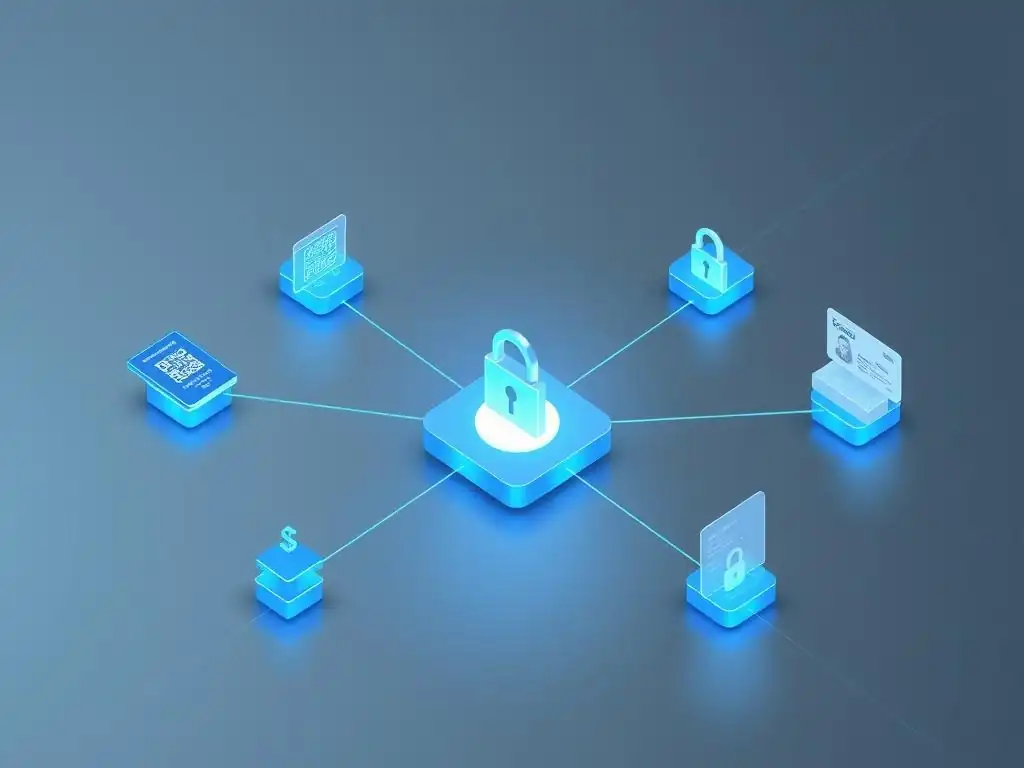
Healthcare: Secure and Interoperable Patient Records
In healthcare, blockchain and Verifiable Credentials can revolutionize the management of patient data and professional credentials. Patients could hold VCs representing their medical history, lab results, or vaccination records, issued by healthcare providers. These credentials would be cryptographically signed and could be anchored on a permissioned blockchain accessible to authorized healthcare entities.
This allows patients to share their medical history securely and selectively with different doctors or hospitals without relying on faxing records or cumbersome portal access across disparate systems. For instance, a patient could present a VC proof of a specific allergy or medication list to a new doctor instantly during an emergency.
Furthermore, VCs can be used for healthcare professionals' credentials, such as medical licenses, certifications, and training records. Issuing bodies could issue VCs for these qualifications, anchored on a shared ledger. Hospitals and clinics could then instantly verify the credentials of potential hires or existing staff, reducing the risk of employing unqualified individuals. This application streamlines verification processes, improves data security, and enhances interoperability across fragmented healthcare systems, significantly improving blockchain verifiable digital identity security within the sector.
Education: Streamlining Credential Verification for Learners and Institutions
The education sector is an early adopter of Verifiable Credentials, particularly for academic records and degrees. Universities and colleges can issue VCs for diplomas, transcripts, certificates, and even individual course completions directly to students. These digital credentials, signed by the institution, can be stored in the student's digital wallet. When applying for jobs or further education, students can share these VCs instantly with prospective employers or institutions.
Employers and other educational bodies can verify the authenticity of these credentials in seconds by checking the issuer's signature and potentially referencing a hash or record on a blockchain ledger maintained by a consortium of educational institutions. This eliminates the time-consuming and often costly process of requesting paper transcripts or relying on third-party verification services. Institutions like MIT and others have piloted issuing blockchain-anchored credentials, demonstrating the potential to save significant administrative costs and provide students with portable, verifiable proof of their achievements, enhancing blockchain verifiable digital identity security for academic records.
Supply Chain: Enhancing Traceability and Combating Counterfeiting
Blockchain and Verifiable Credentials can play a crucial role in supply chain management, particularly for verifying the authenticity of products and tracking their provenance. Manufacturers can issue VCs for individual products or batches, containing details about origin, materials, and production date. These VCs, potentially anchored on a supply chain-focused blockchain, can follow the product through the distribution network. Each handler in the supply chain (distributor, retailer) could potentially add their own signed VC attesting to their role and handling of the product.
Consumers could scan a QR code on the product packaging to access and verify these VCs, confirming the product's legitimacy and journey. This system makes it significantly harder to introduce counterfeit goods into the supply chain, as they would lack the verifiable digital trail. It also provides consumers with greater transparency and confidence in the products they purchase. The use of blockchain verifiable digital identity security principles applied to products creates a robust system for ensuring authenticity and traceability from source to consumer.
Government: Secure and Efficient Citizen Identity Management
Governments are exploring the use of blockchain and Verifiable Credentials for various citizen identity services, including digital IDs, professional licenses, and benefit entitlements. Instead of physical cards or centralized databases, citizens could hold VCs for their driver's license, professional certifications (e.g., lawyer, engineer), or proof of eligibility for social services. These VCs would be issued by the relevant government agency and potentially anchored on a government-run or consortium blockchain.
Citizens could then use these digital credentials to interact with government services, access private sector services requiring identity verification (like opening a bank account), or prove qualifications for employment. This approach can streamline administrative processes, reduce the potential for identity fraud in accessing services, and provide citizens with greater control over their official identity attributes. Countries like Estonia have been pioneers in digital identity, and blockchain/VCs offer further potential for building secure, efficient, and privacy-preserving government identity systems, strengthening blockchain verifiable digital identity security at a national level.
Challenges and Future Trends in Blockchain-Based Digital Identity
Scalability Issues with Blockchain Identity Solutions
While blockchain offers significant benefits for digital identity, scalability remains a notable challenge, particularly for public blockchains. Processing millions or billions of identity-related transactions (issuance, verification proofs, revocations) can strain the throughput capabilities of some blockchain networks. Transaction speed and cost (gas fees) can become prohibitive if the underlying blockchain cannot handle the volume. For instance, early explorations on public Ethereum faced challenges with transaction costs and confirmation times.
Solutions are being developed to address this, including Layer 2 scaling solutions for public blockchains, the use of permissioned or private blockchains specifically designed for enterprise or identity use cases (like Hyperledger Indy or Fabric), and off-chain data storage with on-chain proofs. Future trends point towards more efficient consensus mechanisms and sharding techniques to increase transaction capacity. Overcoming scalability limitations is crucial for widespread adoption of blockchain verifiable digital identity security solutions.
Interoperability Challenges Between Different Blockchain Platforms
The blockchain landscape is diverse, with numerous platforms and protocols (e.g., Ethereum, Hyperledger, Sovrin, Polygon). Identity solutions built on one blockchain may not be easily interoperable with solutions built on another. This fragmentation poses a challenge for creating a seamless digital identity ecosystem where credentials issued on one platform can be verified by relying parties operating on a different one. A user with a credential anchored on Blockchain A might struggle to use it with a service that only checks Blockchain B.
Standards like the W3C Verifiable Credentials specification and the Decentralized Identifiers (DIDs) specification are working to promote interoperability at the credential and identifier layers, independent of the underlying ledger. However, ensuring that different blockchain networks and identity platforms can communicate and trust each other's proofs remains an area of active development. Future efforts will focus on cross-chain communication protocols and standardized APIs to bridge these gaps and enable a truly interconnected ecosystem for blockchain verifiable digital identity security.
Regulatory Considerations for Digital Identity and Data Privacy
Implementing blockchain-based digital identity solutions, especially those involving personal data, must navigate complex and evolving regulatory landscapes. Data privacy regulations like GDPR in Europe, CCPA in California, and similar laws globally impose strict requirements on how personal data is collected, processed, stored, and managed. The principles of immutability on blockchain can sometimes conflict with the "right to erasure" or "right to be forgotten" mandated by these regulations, particularly if personally identifiable information (PII) is stored directly on the ledger.
Solutions typically involve storing only cryptographic hashes or non-PII pointers on the blockchain, with the actual sensitive data stored off-chain under the user's control, adhering to privacy principles. Regulatory clarity on the legal status of blockchain-based identities, the roles and responsibilities of issuers, holders, and verifiers, and the implications of decentralized control is still developing. Navigating these legal and compliance hurdles is critical for the successful deployment of blockchain verifiable digital identity security systems.
The Future of Self-Sovereign Identity (SSI) with Blockchain
The future of digital identity is increasingly pointing towards Self-Sovereign Identity (SSI), where individuals have ultimate control over their digital identities and personal data. Blockchain technology is widely seen as a key enabler for SSI. By providing a decentralized, tamper-proof ledger for anchoring identifiers (DIDs) and cryptographic proofs related to credentials (VCs), blockchain empowers individuals to manage their digital identity without reliance on centralized authorities.
In an SSI future powered by blockchain, individuals will collect Verifiable Credentials from various trusted issuers and store them securely in their digital wallets. They will then selectively present cryptographic proofs derived from these credentials to verifiers, revealing only the necessary information. This vision promises enhanced privacy, security, and user agency. While challenges remain in widespread adoption and interoperability, the trajectory towards SSI, underpinned by robust blockchain verifiable digital identity security, represents a fundamental shift in how we perceive and manage identity in the digital age.
Implementing Blockchain-Based Verifiable Credentials
Choosing the Right Blockchain Platform for VCs
Selecting the appropriate blockchain platform is a critical first step in implementing a Verifiable Credential system. The choice depends heavily on the specific use case requirements, including the required level of decentralization, transaction throughput, cost sensitivity, privacy needs, and the ecosystem of participants. Public blockchains like Ethereum (often with Layer 2 scaling) or newer identity-focused chains offer high decentralization and transparency, suitable for broad, public trust anchors. Permissioned blockchains like Hyperledger Indy, Hyperledger Fabric, or Corda provide more control over network participants and data visibility, often preferred for enterprise or consortium-based identity solutions where privacy and governance are paramount.
Factors to consider include the platform's consensus mechanism (Proof-of-Work, Proof-of-Stake, etc. ), transaction speed and cost, smart contract capabilities, community support, development tools, and regulatory compliance features. Evaluating these aspects against the project's goals is essential for building a foundation that can effectively support blockchain verifiable digital identity security for the intended application.
Developing Verifiable Credential Issuance and Verification Systems
Developing a functional VC ecosystem requires building systems for credential issuance, holding (digital wallets), and verification. Issuance systems, used by trusted authorities (like universities or governments), must securely create and digitally sign VCs according to W3C standards and potentially anchor cryptographic proofs on the chosen blockchain. This involves secure private key management for the issuer.
Holding systems, typically digital wallets on users' devices, must securely store VCs and associated private keys, allow users to manage their credentials, and enable the creation of presentations (proofs) to verifiers. Verification systems, used by relying parties (like employers or banks), must be able to receive VC presentations, verify the issuer's signature, and check the status or anchoring proof of the credential on the blockchain or via a DID resolver. Each of these components requires careful design and implementation to ensure the integrity and usability of the blockchain verifiable digital identity security system.
Integrating VCs with Existing Identity Management Systems
A significant challenge in adopting blockchain-based VCs is integrating them with existing legacy identity management systems, such as enterprise directories (like Active Directory), single sign-on (SSO) solutions, and compliance workflows. Organizations have invested heavily in current infrastructure, and a seamless transition or coexistence strategy is often necessary. Integration can involve mapping attributes from VCs to existing user profiles, using VCs as a form of authentication or authorization alongside existing methods, or using VCs to streamline onboarding processes.
APIs and middleware are often required to bridge the gap between the decentralized VC world and centralized enterprise systems. For example, a company's HR system might verify an employee's academic credentials presented as VCs and update the employee record accordingly. Successful integration requires careful planning and development to ensure that the benefits of blockchain verifiable digital identity security can be realized within the context of current IT environments.
Secure Key Management for Verifiable Credentials
Secure management of cryptographic keys, particularly private keys, is absolutely paramount for the security of any Verifiable Credential system. Issuers must securely manage the private keys used to sign credentials; compromise of an issuer's private key could allow fraudulent credentials to be issued. Holders (users) must securely manage the private keys associated with their DIDs and digital wallets; loss or compromise of these keys could lead to loss of control over their identity or potential impersonation. Verifiers need secure access to issuer public keys or DID documents to perform verification.
Key management solutions can range from hardware security modules (HSMs) for institutional issuers to secure enclaves on mobile devices or specialized key management services for users. Multi-factor authentication, secure backup strategies, and robust key rotation policies are essential. The security of the entire blockchain verifiable digital identity security system ultimately rests on the strength of its key management practices.
Conclusion: The Transformative Power of Blockchain-Based Verifiable Credentials
Blockchain verifiable digital identity security: A Paradigm Shift in Identity Management
The convergence of blockchain technology, cryptography, and the Verifiable Credentials framework represents a fundamental paradigm shift in how we approach digital identity. Moving away from centralized, vulnerable databases and towards a decentralized, user-centric model empowers individuals with greater control and privacy over their personal data. Blockchain provides the essential trust layer, acting as an immutable anchor for cryptographic proofs, ensuring the integrity and authenticity of digital credentials. This architectural shift significantly enhances blockchain verifiable digital identity security, offering a robust defense against identity theft, fraud, and data breaches that plague traditional systems.
The ability to issue, hold, and verify tamper-evident digital credentials, combined with techniques like Zero-Knowledge Proofs for privacy-preserving disclosure, creates a more secure, efficient, and trustworthy digital identity ecosystem. This is not just an incremental improvement; it's a foundational change that redefines the relationship between individuals, their data, and the entities that rely on verifying identity attributes.
The Potential for a More Secure and Decentralized Future
The widespread adoption of blockchain-based Verifiable Credentials holds the potential to build a more secure, private, and decentralized digital future for everyone. Imagine a world where you control your own credentials – your proof of age, your professional licenses, your health records – and can share them instantly and securely without relying on intermediaries or risking the exposure of unnecessary personal information. This future promises reduced friction in online interactions, greater protection against malicious actors, and increased trust in digital transactions.
While challenges related to scalability, interoperability, and regulation still need to be fully addressed, the foundational technology and standards are maturing rapidly. Ongoing development in areas like Layer 2 scaling, cross-chain compatibility, and privacy-enhancing cryptography continues to pave the way for broader implementation. The vision of Self-Sovereign Identity, powered by blockchain verifiable digital identity security, is becoming increasingly attainable, promising a future where digital identity is truly in the hands of the individual.
Next Steps: Exploring Blockchain Solutions for Digital Identity
For organizations and individuals interested in leveraging the benefits of blockchain-based Verifiable Credentials for digital identity, the next steps involve education and exploration.
- Educate: Learn more about the W3C Verifiable Credentials specification, Decentralized Identifiers (DIDs), and the specific blockchain platforms being used for identity solutions. Understand the underlying cryptographic principles.
- Explore Use Cases: Identify specific areas within your organization or industry where secure, verifiable digital identities could solve existing problems (e.g., onboarding, compliance, service access).
- Pilot Programs: Consider participating in or initiating pilot programs to test the feasibility and benefits of issuing, holding, and verifying VCs in a controlled environment. Many consortia and technology providers are active in this space.
- Engage with Standards: Follow the development of identity standards from bodies like the W3C and Decentralized Identity Foundation (DIF) to ensure solutions are interoperable and future-proof.
- Assess Technology Providers: Research vendors and platforms offering VC and DID solutions built on blockchain, evaluating their approach to security, scalability, interoperability, and compliance with regulations.
By taking these steps, stakeholders can begin to unlock the transformative power of blockchain verifiable digital identity security and contribute to building a more trustworthy digital world.
Frequently Asked Questions
What is the role of cryptography in blockchain-based verifiable digital identity?
Cryptography is fundamental to ensuring the security and integrity of verifiable credentials. It uses techniques like digital signatures to prove the credential's authenticity and prevent tampering.
How does blockchain technology enhance verifiable digital identity security?
Blockchain provides a decentralized and immutable ledger. This makes it difficult to alter or forge identities, enhancing the security and trustworthiness of verifiable credentials.
What are the key benefits of using verifiable credentials for digital identity management?
Verifiable credentials offer improved privacy, security, and interoperability. They empower individuals to control their data and selectively share information with trusted parties.
What challenges need to be addressed for widespread adoption of blockchain verifiable digital identity security?
Scalability, regulatory clarity, and user education remain significant hurdles. Establishing industry standards and addressing privacy concerns are also crucial for broader acceptance.
How are enterprises leveraging blockchain for verifiable digital identity security applications?
Enterprises are exploring use cases like supply chain management, employee onboarding, and access control. The goal is to create more secure and efficient processes while reducing fraud and improving data management.
Final Reflection: Embracing Trust in a Digital Age
The exploration of cryptography and verifiable credentials within the blockchain ecosystem underscores a critical need in our increasingly digital world: establishing trust and security in online interactions. As we've seen, blockchain offers a powerful framework for managing and verifying digital identities, promising a future where individuals have greater control over their personal data and can engage in secure, seamless transactions. This isn't just a technological advancement; it's a fundamental shift in how we perceive and interact with identity in the digital realm.
The impact of blockchain-based verifiable credentials extends far beyond simple authentication. It's about empowering individuals and fostering a more equitable and transparent digital landscape. The potential to revolutionize sectors like education, healthcare, and finance is immense, offering solutions to long-standing challenges related to data privacy, security, and accessibility. The future of identity is decentralized, self-sovereign, and secure,
a sentiment that perfectly captures the transformative power of these technologies.
As we stand on the cusp of this digital revolution, let us consider the implications of these advancements for our own lives and communities. How can we leverage the power of blockchain and verifiable credentials to build a more secure, trustworthy, and equitable digital future? Let us embrace the opportunity to shape this future, ensuring that technology serves humanity and empowers individuals to control their digital identities with confidence and security.
Unlock Your Secure Digital Future
Thank you for exploring the world of cryptography and verifiable credentials! We hope you now have a clearer understanding of how blockchain technology is transforming digital identity. Are you ready to take control of your data and move toward a more secure future?
Here are some ways to explore further:
- Consider how implementing verifiable credentials could enhance identity management within your industry or organization.
- Investigate different cryptographic libraries and technologies to understand the principles that enable verifiable credentials.
- Share this article with colleagues or friends interested in blockchain and digital identity. Let’s start a conversation about the future of secure data!
What challenges do you anticipate in applying verifiable credentials in real-world situations, and how can the blockchain community work to overcome them? Share your thoughts below!
Leave a Reply