
Decentralized Identity for Education: Secure and Portable Academic Records


Welcome to Blockchain Trends, your compass in the rapidly evolving world of decentralized technologies. Dive in with us as we explore the transformative power of blockchain, moving beyond cryptocurrency hype to uncover its real-world applications. Ever wondered how blockchain can revolutionize education? Our featured article delves into the groundbreaking potential of blockchain identity education records, offering a glimpse into a future where academic credentials are secure, verifiable, and universally accessible. Discover how this innovative approach is reshaping the landscape of digital identity and opening new doors for learners and institutions alike. Ready to unlock the potential?
Decentralized Identity for Education: Secure and Portable Academic Records
- The Rise of Decentralized Identity in Education
- What is Decentralized Identity (DID) and How It Applies to Education?
- DID-Based Education Records: A Deep Dive
- Use Cases of Decentralized Identity in Education
- Implementing Decentralized Identity Systems in Educational Institutions
- The Future of DID-Based Academic Credentials
- Challenges and Opportunities in Decentralized Education Records
- Examples of DID-Based Academic Record Projects
- Conclusion: Empowering Education with Decentralized Identity
-
Frequently Asked Questions
- What are the main benefits of using blockchain for education records?
- How does decentralized identity (DID) work in the context of education?
- What kind of education records can be stored on a blockchain?
- What are the potential challenges to implementing blockchain for education records?
- How can blockchain identity education records improve the job application process?
- Final Reflection: Embracing the Future of Educational Trust
- Unlock Your Future: Master Your Academic Journey!
The Rise of Decentralized Identity in Education
Understanding the Need for Secure and Portable Academic Records
The traditional system for managing academic records, such as diplomas, transcripts, and certificates, is often cumbersome, insecure, and inefficient. Institutions typically maintain centralized databases that are vulnerable to cyberattacks, data breaches, and administrative errors. Students face challenges in accessing and sharing their records, especially when transferring between institutions or applying for jobs abroad. The process of verifying credentials for employers or other educational bodies can take days or even weeks, involving manual checks and communication between disparate systems. This inherent friction creates delays, increases administrative costs, and can hinder opportunities for individuals.
Furthermore, the lack of easy portability means that a student's complete academic history is often fragmented across multiple institutions they attended. This makes it difficult for individuals to compile a comprehensive, lifelong learning record. With the increasing emphasis on continuous skill development and micro-credentials, the need for a system that allows individuals to easily collect, manage, and share a diverse portfolio of learning achievements from various sources is becoming critical. The current reliance on paper documents or static digital files makes it challenging to prove the authenticity and ownership of these varied credentials effectively and efficiently.
How Decentralized Identity Addresses Educational Data Challenges
Decentralized Identity (DID) offers a promising solution to many of the long-standing problems in educational data management. By shifting control of identity and credentials from centralized authorities to the individual, DID empowers students to own and manage their academic records. These records, anchored on a blockchain or similar distributed ledger technology, become inherently more secure and resistant to tampering. The decentralized nature means there is no single point of failure for data storage.
DID systems leverage cryptographic proofs to verify the authenticity and integrity of credentials without relying on a central intermediary. This dramatically speeds up the verification process, potentially reducing verification times from weeks to minutes or seconds. For instance, an employer or university can instantly verify a digital diploma issued using DID technology by checking its cryptographic signature against the public record on the distributed ledger. This not only enhances security and reduces fraud but also streamlines administrative processes for institutions and improves the experience for students and verifiers alike, paving the way for more reliable blockchain identity education records.
What is Decentralized Identity (DID) and How It Applies to Education?
Defining Decentralized Identity (DID)
Decentralized Identity (DID) is a digital identity framework that enables individuals, organizations, and devices to create, control, and manage their digital identities without relying on a centralized identity provider. Unlike traditional systems where entities like governments or corporations issue and control identities, DID puts the individual (or entity) in control.
It typically involves three core components: a decentralized identifier (DID), which is a unique, persistent identifier generated cryptographically; a DID document, which contains public keys and service endpoints associated with the DID; and verifiable credentials (VCs), which are tamper-evident digital assertions about a subject, issued by a trusted entity (like a university issuing a diploma) and held by the subject.
The underlying technology for DID often involves blockchain or other distributed ledgers, which provide an immutable and verifiable public registry for DID documents or anchors for credentials. This ensures that the existence and state of a DID can be cryptographically verified by anyone. The individual holding the verifiable credential can then choose who to share specific parts of their identity or credentials with, using cryptographic proofs (like Zero-Knowledge Proofs) to reveal only the necessary information, thereby enhancing privacy and control. This model fundamentally changes how digital trust is established and managed online.
The Benefits of DID for Students, Institutions, and Employers
Decentralized Identity offers significant benefits across the educational ecosystem. For students, it provides true ownership and control over their academic data. They can securely store all their credentials in a digital wallet and selectively share them with third parties. This portability and ease of access eliminate the friction associated with requesting transcripts or proving qualifications, especially for lifelong learners accumulating credentials from various sources. Students gain enhanced privacy as they control what data is shared and with whom, moving away from systems where institutions hold and potentially share sensitive information without granular consent.
Educational institutions benefit from reduced administrative overhead related to issuing, managing, and verifying credentials. By issuing verifiable credentials via a DID system, they can significantly lower printing costs, mailing expenses, and the labor involved in responding to verification requests. The security provided by the blockchain ensures the integrity of the issued documents, protecting the institution's reputation against fraudulent credentials.
For employers and other universities, DID streamlines the hiring and admissions processes. They can instantly and reliably verify the authenticity of blockchain identity education records presented by applicants, reducing the risk of accepting fraudulent degrees or transcripts and saving considerable time and resources previously spent on manual verification processes.
DID-Based Education Records: A Deep Dive
Immutable and Verifiable Academic Credentials
One of the most compelling features of DID-based education records is their immutability and verifiability. When an educational institution issues a credential, such as a diploma or transcript, as a verifiable credential, a cryptographic hash of that credential can be anchored onto a blockchain or distributed ledger. This process creates a permanent, tamper-evident record of the credential's issuance. Any attempt to alter the credential after issuance would result in a different hash, which would not match the hash recorded on the ledger, immediately revealing the alteration.
This cryptographic link ensures that the credential held by the student is the exact, unaltered version issued by the institution. Verifiers (like employers or other universities) can use the public key of the issuing institution and the information stored on the distributed ledger to cryptographically verify the authenticity and integrity of the credential presented by the student. This process is automatic, transparent, and does not require contacting the issuing institution directly for every verification request, making blockchain identity education records highly reliable and efficient.
Enhancing Data Privacy and Student Control with DID
Decentralized Identity fundamentally shifts control over data from institutions to the individual student. In traditional systems, institutions hold vast amounts of sensitive personal and academic data, often subject to privacy regulations like GDPR in Europe or FERPA in the United States. While these regulations mandate protection, the centralized nature of the data inherently creates risks. With DID, students hold their verifiable credentials in their personal digital wallets. They are the custodians of their data.
When a student needs to share a credential, they don't give a third party direct access to an institutional database. Instead, they present the verifiable credential from their wallet. They can often use privacy-preserving technologies like Zero-Knowledge Proofs to prove specific attributes of their credential (e.g., "this person has a Bachelor's degree" or "this person graduated after 2020") without revealing other sensitive details like their full transcript or exact GPA. This granular control over data sharing significantly enhances student privacy compared to traditional methods and aligns well with the principles of self-sovereign identity.
Reducing Fraud and Counterfeit Degrees Using DID Technology
Degree and transcript fraud is a significant problem globally, costing employers and institutions millions annually and undermining the value of legitimate qualifications. Counterfeit documents can be difficult to detect, especially when they mimic official paper formats or static digital copies. DID technology provides a robust defense against such fraud by making credentials tamper-evident and instantly verifiable against an immutable record.
Since the authenticity of a DID-based credential is cryptographically linked to the issuing institution and anchored on a distributed ledger, it is virtually impossible to create a convincing counterfeit. A fraudulent document would lack the correct cryptographic signature from the legitimate issuer and its hash would not match any record on the public ledger. This makes the verification process for blockchain identity education records straightforward and highly reliable.
Employers and institutions can have high confidence in the credentials presented, significantly reducing the risk and cost associated with hiring or admitting individuals based on false qualifications. Estimates suggest that implementing verifiable credentials could reduce verification costs by 50-70% and drastically decrease the incidence of application fraud.
Use Cases of Decentralized Identity in Education
Secure Storage and Sharing of Diplomas and Transcripts
One of the most immediate and impactful use cases for Decentralized Identity in education is the secure storage and sharing of official academic documents like diplomas, degrees, and transcripts. Instead of receiving a paper certificate or a PDF that can be easily copied or potentially altered, students receive a verifiable credential representing their achievement. This digital credential is held securely in the student's personal digital wallet, which could be an app on their smartphone or a dedicated digital wallet service.
When a student applies for a job or further education, they can share this digital credential directly from their wallet with the verifier. The verifier can then use a simple application or service to instantly confirm the credential's authenticity and integrity by checking its cryptographic signature and its anchor on the distributed ledger. This eliminates the need for mailing paper copies, requesting official transcripts from institutions, or relying on potentially insecure email attachments, making the process faster, more secure, and significantly more convenient for all parties involved in managing blockchain identity education records.
Streamlining the Verification Process for Employers and Universities
The current process for verifying academic credentials is notoriously slow and resource-intensive. Employers often need to contact universities directly to confirm degrees, a process that can take days or even weeks, involving administrative staff time and communication delays. Universities verifying transfer credits or previous degrees face similar hurdles. Decentralized Identity radically streamlines this process.
With DID-based verifiable credentials, verification can happen almost instantaneously. An employer or admissions officer receives the digital credential from the applicant and uses a verification tool. This tool automatically checks the credential's cryptographic signature against the issuing institution's public key and verifies its anchor on the distributed ledger.
The result is an immediate confirmation of the credential's legitimacy. This speed and efficiency not only reduce administrative burden and cost for institutions and employers but also accelerate hiring and admissions decisions, benefiting applicants by providing faster feedback on their applications. This streamlined approach is a core benefit of implementing blockchain identity education records.
Facilitating Lifelong Learning and Continuous Skill Development
The modern economy demands continuous learning and upskilling. Individuals acquire credentials from various sources throughout their careers, including traditional universities, online course providers, professional certification bodies, and corporate training programs. Managing this diverse portfolio of achievements using traditional methods is challenging, leading to fragmented records and difficulty in presenting a comprehensive picture of one's skills and qualifications.
Decentralized Identity and verifiable credentials are perfectly suited to address this challenge. Individuals can receive verifiable credentials for every learning achievement, regardless of the issuer – a university degree, a Coursera certificate, a professional license, or even badges for completing internal company training modules. All these credentials can reside securely in the individual's digital wallet.
This allows individuals to build a verifiable, comprehensive record of their lifelong learning journey, making it easy to showcase their full skill set to potential employers or educational institutions. This portable, unified record facilitates career transitions, supports professional development, and empowers individuals in the evolving landscape of work and education.
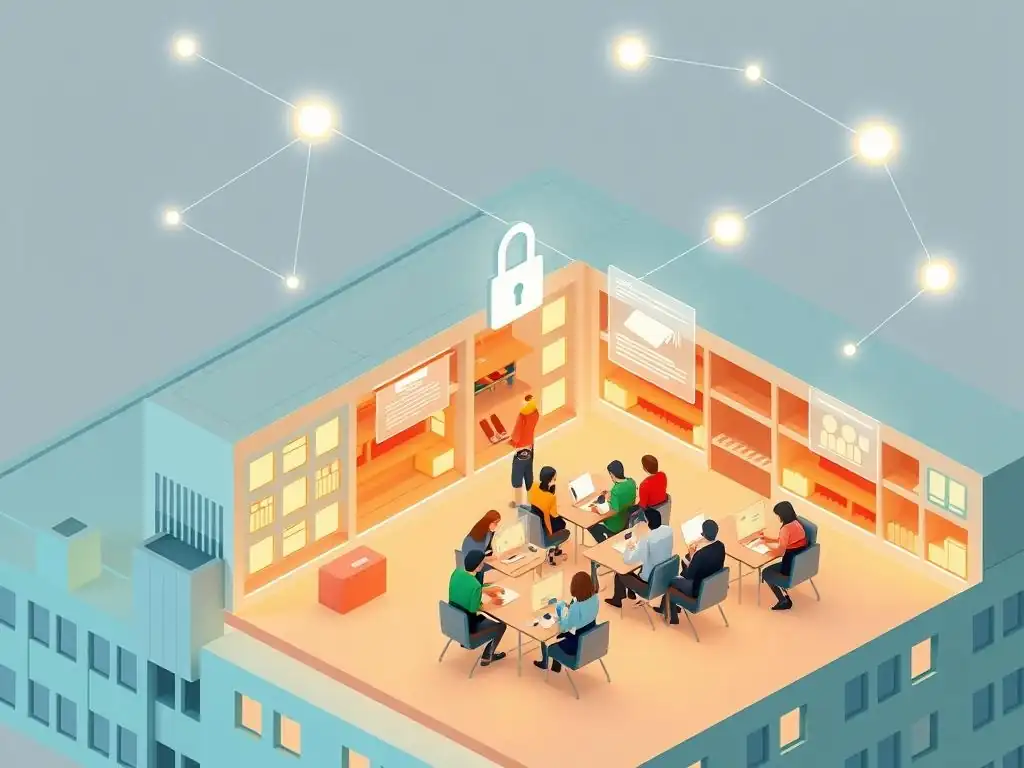
Implementing Decentralized Identity Systems in Educational Institutions
Choosing the Right DID Solution for Education Records
Implementing a Decentralized Identity system for managing academic records requires careful consideration of available solutions. The market for DID and verifiable credentials technology is evolving, with various platforms and protocols emerging.
Institutions need to evaluate solutions based on several criteria: the underlying distributed ledger technology (e.g., public blockchain, private ledger, or a hybrid approach) and its associated costs and scalability; compliance with relevant identity and credential standards (such as those developed by the W3C or the Decentralized Identity Foundation); the ease of integration with existing Student Information Systems (SIS); and the level of support and maturity offered by the solution provider.
Some solutions might offer open-source frameworks like Blockcerts, providing flexibility but requiring significant internal development expertise. Others might be commercial off-the-shelf platforms offering more comprehensive support and features but potentially at a higher cost. Institutions must assess their technical capabilities, budget constraints, and specific requirements (e.g., the volume of credentials to be issued, desired level of privacy for different credential types) to select a DID solution that is robust, secure, and capable of handling the specific needs of managing blockchain identity education records effectively. Pilot programs are often a prudent first step to test the chosen technology.
Integrating DID Solutions with Existing Student Information Systems (SIS)
A critical aspect of implementing DID for academic records is integrating the new system with the institution's existing Student Information System (SIS). The SIS is the central repository for student data, including enrollment history, grades, degrees awarded, and personal information. The DID issuance process needs to pull accurate data from the SIS to create verifiable credentials. This integration requires APIs or other data exchange mechanisms that can securely transfer the necessary information from the SIS to the credential issuance platform.
The complexity of integration can vary significantly depending on the SIS used (e.g., Banner, PeopleSoft, internal systems) and the architecture of the chosen DID solution. Institutions need to map data fields between the SIS and the verifiable credential standard, ensuring data accuracy and consistency. Secure data transfer protocols are essential to protect sensitive student information during this process. Successful integration ensures that the issuance of verifiable credentials is automated, accurate, and scalable, allowing institutions to efficiently issue blockchain identity education records to large student populations without manual data entry or verification steps.
Addressing Data Security and Compliance Considerations (e.g., GDPR, FERPA)
Implementing Decentralized Identity and verifiable credentials in education must be done in strict compliance with data privacy regulations like GDPR in Europe and FERPA in the United States. These regulations place stringent requirements on how educational institutions collect, use, and protect student data. While DID empowers individuals with control, institutions remain responsible for lawful data processing and the security of the data they manage within their systems, including the SIS that feeds the DID system.
DID systems need to be designed to support compliance requirements. For example, while the credential itself is held by the student, the process of issuing it must adhere to institutional data handling policies. The underlying distributed ledger technology should be chosen carefully to ensure it meets privacy requirements – public blockchains might raise concerns about data visibility, while private or permissioned ledgers might offer more control but potentially less decentralization.
Mechanisms for handling data corrections or revocations of credentials (while maintaining an audit trail) must also be in place. Institutions must conduct thorough legal and technical reviews to ensure their DID implementation for blockchain identity education records fully complies with all applicable data protection laws and institutional policies.
The Future of DID-Based Academic Credentials
The Potential for Interoperable and Globally Recognized Credentials
One of the most exciting future possibilities for DID-based academic credentials is the creation of a truly interoperable and globally recognized system. Currently, academic credentials vary significantly in format, language, and verification processes across countries and even within regions. This lack of standardization makes it difficult and time-consuming for individuals to use their qualifications internationally, whether for work or further study.
The adoption of open standards for Decentralized Identity and verifiable credentials, such as those developed by the W3C, lays the groundwork for global interoperability. If educational institutions worldwide begin issuing credentials using these common standards and anchoring them on accessible distributed ledgers, a credential issued in one country could be easily understood and verified in another.
This would create a seamless global market for talent and educational mobility, allowing individuals to leverage their blockchain identity education records anywhere in the world without bureaucratic hurdles. Initiatives are already underway to establish frameworks and pilot programs aimed at achieving this level of cross-border recognition.
Exploring the Role of Self-Sovereign Identity (SSI) in Education
Self-Sovereign Identity (SSI) is a specific model of Decentralized Identity where the individual has complete control over their digital identity and data. In the context of education, SSI means students not only hold their credentials but also manage their entire digital persona related to their learning journey. This includes controlling access to their academic history, managing their profile information, and choosing how their data is used for purposes like personalized learning recommendations or career matching.
The future of education could see SSI empowering students to build dynamic, verifiable learning portfolios that go beyond traditional degrees and transcripts. Students could collect credentials for skills learned on the job, volunteer work, personal projects, and informal learning experiences, all verifiable through SSI. This puts the individual at the center of their learning ecosystem, enabling them to curate their narrative and demonstrate their capabilities in a richer, more nuanced way than current systems allow. SSI could transform how skills are recognized and valued throughout a person's life.
The Impact of Decentralized Identity on the Future of Learning
Decentralized Identity has the potential to profoundly impact the future of learning itself. By enabling secure, portable, and verifiable credentials for any learning experience, DID can support more flexible and modular approaches to education. Learners can acquire credentials for micro-courses, bootcamps, workshops, and online modules from diverse providers, building a comprehensive, verifiable record of their skills over time. This makes non-traditional learning paths more credible and valuable.
Furthermore, DID could facilitate innovative learning models. For instance, peer-to-peer learning platforms could issue verifiable badges for contributions or demonstrated expertise. Employers could issue credentials for on-the-job training or achieved competencies. This ecosystem of verifiable credentials, all managed by the individual using their blockchain identity education records, could incentivize continuous learning, make skills more transparent to the market, and support personalized learning pathways tailored to individual goals and career aspirations. The focus shifts from accumulating degrees to accumulating verifiable skills and competencies throughout life.
Challenges and Opportunities in Decentralized Education Records
Overcoming Adoption Barriers in the Education Sector
Despite the compelling benefits, the adoption of Decentralized Identity systems in the education sector faces several significant barriers. One major challenge is the inherent inertia and risk aversion within educational institutions, which are often slow to adopt new technologies, especially those as transformative as DID and blockchain. Integrating new systems with legacy Student Information Systems (SIS) can be technically complex and costly, requiring significant IT resources and expertise that may not be readily available.
Furthermore, there are challenges related to awareness and understanding among administrators, faculty, and even students about how DID works and its benefits. Establishing trust in the new system and ensuring buy-in from all stakeholders is crucial. While some pioneering institutions like MIT have launched pilot projects, widespread adoption requires overcoming these technical, financial, and cultural hurdles. Opportunities lie in demonstrating clear ROI through pilot programs, providing robust integration tools, and offering comprehensive training and support to ease the transition for institutions looking to implement blockchain identity education records.
Ensuring Accessibility and Inclusivity in DID Solutions
As educational institutions explore Decentralized Identity, it is paramount to ensure that the resulting systems are accessible and inclusive for all students, regardless of their socioeconomic background, technical literacy, or access to technology. DID solutions typically require students to manage digital wallets and interact with cryptographic concepts, which could pose challenges for individuals without reliable internet access, smartphones, or digital fluency.
Designing DID systems for education must prioritize user-friendliness and provide multiple options for accessing and managing credentials. This could include web-based interfaces, support for different types of digital wallets, and clear, simple instructions. Institutions also need to consider how to support students who may struggle with the technology, potentially offering assistance or alternative methods for accessing and sharing credentials where necessary. Ensuring equitable access to blockchain identity education records is crucial to avoid creating a digital divide and to ensure that all students can benefit from the portability and security offered by DID.
Implementing Decentralized Identity in education requires careful navigation of complex regulatory frameworks and institutional data governance policies. While DID empowers individuals, institutions are still bound by laws governing student data privacy (like GDPR, FERPA) and institutional record-keeping requirements. The legal status of verifiable credentials compared to traditional paper or digital documents also needs to be clarified in various jurisdictions.
Institutions must ensure that their DID implementation complies with all relevant laws regarding data processing, storage, and security. This might involve choosing DID architectures that allow for data minimization and provide auditable trails of credential issuance and verification. Clear policies on how credentials are issued, revoked, and managed within the institutional context are essential. Navigating these regulatory landscapes requires collaboration between IT departments, legal counsel, and academic administration. Successfully addressing these challenges while upholding data privacy and security principles is key to the widespread and responsible adoption of blockchain identity education records.
Examples of DID-Based Academic Record Projects
MIT's Digital Certificates Initiative
One of the earliest and most prominent examples of using blockchain-like technology for academic credentials is MIT's Digital Certificates initiative, launched in 2015. MIT partnered with Learning Machine (now part of Hyland) to issue digital diplomas using the Blockcerts open standard, which leverages blockchain technology (initially Bitcoin's blockchain, later expanding to others) to anchor credential hashes.
This initiative allowed graduates to receive a cryptographically signed, tamper-proof digital version of their diploma stored on their mobile device. Graduates could then share this verifiable credential with employers or others, who could instantly verify its authenticity against the record on the blockchain without needing to contact MIT directly. MIT's project demonstrated the feasibility and benefits of using decentralized technology for issuing secure and portable academic records, paving the way for other institutions to explore similar solutions for blockchain identity education records.
Blockcerts Open Standard
Blockcerts is an open standard for creating, issuing, viewing, and verifying blockchain-based certificates. Developed initially by MIT and Learning Machine, it provides a framework for issuing verifiable credentials anchored on a blockchain. The standard defines how a credential's data is structured, how it is cryptographically signed by the issuer, and how its integrity can be verified by anchoring a hash of the credential on a distributed ledger.
Being an open standard, Blockcerts allows any educational institution to issue credentials that can be verified by anyone using a compatible Blockcerts wallet or verifier application. This promotes interoperability and avoids vendor lock-in. While MIT was an early adopter, other institutions and credential issuers globally have also explored or implemented solutions based on the Blockcerts standard, contributing to the development of an ecosystem for verifiable blockchain identity education records that are portable across different platforms and institutions.
Conclusion: Empowering Education with Decentralized Identity
The Transformative Power of Decentralized Identity in Education
Decentralized Identity, underpinned by blockchain technology, holds transformative power for the education sector. By shifting control of academic records from institutions to individuals, it addresses fundamental challenges related to security, portability, and verification that have plagued traditional systems for decades. DID enables the issuance of academic credentials that are inherently tamper-proof, instantly verifiable, and securely held by the student. This not only streamlines administrative processes for institutions and employers but also significantly empowers students by giving them true ownership and control over their educational achievements.
The ability to manage a comprehensive, lifelong portfolio of verifiable credentials from diverse sources using blockchain identity education records is particularly relevant in today's rapidly changing world, where continuous learning is essential. DID provides the foundational technology to support flexible learning pathways, recognize non-traditional achievements, and enable seamless global mobility for learners and professionals. While challenges related to adoption, accessibility, and regulation remain, the potential benefits for creating a more efficient, secure, and student-centric education system are immense.
Moving Towards a More Secure, Transparent, and Student-Centric Education System
The implementation of Decentralized Identity systems marks a significant step towards building a more secure, transparent, and student-centric education ecosystem. Security is enhanced through the use of cryptographic proofs and immutable distributed ledgers, drastically reducing the risk of fraud and data breaches compared to centralized databases. Transparency is improved as the verification process is open and verifiable by anyone with the necessary tools, building trust in the authenticity of credentials.
Crucially, the shift to DID places the student at the center. Students gain unprecedented control over their academic data, deciding who sees what information and when. This aligns with the principles of self-sovereign identity, empowering individuals to manage their digital reputation and learning journey. As institutions increasingly adopt these technologies, we can anticipate a future where academic records are not just proofs of past achievements but dynamic, verifiable assets that individuals use to navigate their educational and professional lives with greater ease, privacy, and control, truly realizing the promise of blockchain identity education records.
Frequently Asked Questions
What are the main benefits of using blockchain for education records?
Blockchain offers enhanced security and verifiable credentials, making academic records tamper-proof and easily portable. This allows students to own and control their educational data.
How does decentralized identity (DID) work in the context of education?
DID provides students with a unique digital identifier stored on a blockchain. They can then use this DID to securely access and share their academic records with institutions or employers.
What kind of education records can be stored on a blockchain?
Beyond traditional transcripts, blockchain can store degrees, certifications, skills badges, and even extracurricular activities, creating a comprehensive and verifiable academic portfolio.
What are the potential challenges to implementing blockchain for education records?
Challenges include interoperability between different blockchain systems, data privacy concerns, and the need for widespread adoption by educational institutions and employers.
How can blockchain identity education records improve the job application process?
By providing instant verification of credentials, blockchain streamlines the hiring process, reduces fraud, and allows employers to easily assess a candidate's skills and qualifications.
Final Reflection: Embracing the Future of Educational Trust
The exploration of decentralized identity within education underscores a critical shift in how we perceive and manage academic records. The promise of secure, portable, and student-owned credentials is no longer a distant dream, but a tangible possibility reshaping the landscape of educational trust. This technology offers a powerful antidote to the current fragmented and often inefficient systems, empowering learners and institutions alike with greater control and transparency.
The impact of blockchain identity on education extends far beyond mere efficiency; it fundamentally alters the power dynamic, placing ownership back in the hands of the student. This paradigm shift is crucial for fostering lifelong learning and enabling individuals to seamlessly showcase their skills and achievements throughout their careers. Education is not preparation for life; education is life itself.
- John Dewey. This quote resonates deeply with the potential of decentralized identity to create a continuous and verifiable record of learning, reflecting the evolving journey of each individual.
As we stand at the cusp of this technological revolution, let us embrace the opportunity to build a more equitable and transparent educational ecosystem. Consider how you, as an educator, student, or policymaker, can champion the adoption of decentralized identity solutions. Let us work together to unlock the full potential of blockchain technology, ensuring that education records become a true reflection of individual growth and achievement, accessible and verifiable for all.
Unlock Your Future: Master Your Academic Journey!
Thank you for exploring the potential of decentralized identity in education. We hope this article has highlighted how secure and portable academic records can give you greater control over your learning experience. Now, it’s time to turn that knowledge into action!
Here's how to get started:
- Create a verifiable credential profile. Think of it as your digital academic passport, easily shareable and permanently secure.
- Discover other ways blockchain can enhance education. Investigate how it could transform aspects like curriculum development and personalized learning paths.
- Share this article with educators, students, and administrators in your network. Help initiate conversations about the future of education and the role decentralized identity can play.
What small step can you take this week to incorporate decentralized identity into your educational journey? Share your ideas in the comments below!
Leave a Reply