
Decentralized Identity and the Evolution of Trust in the Digital World


Welcome to Blockchain Trends, your go-to source for understanding the real impact of blockchain technology.
Beyond the buzz around cryptocurrencies, a revolution is quietly unfolding. Are you ready to discover how blockchain is reshaping trust in the digital world? Our latest exploration delves into the groundbreaking blockchain identity management solutions benefits, revealing how they're poised to redefine security and control. Intrigued? Let's unravel the future of decentralized identity together...
Decentralized Identity: Building Trust in the Digital Age
- Introduction: The Need for Self-Sovereign Identity
- Understanding Decentralized Identity (DID)
- Benefits of Decentralized Identity
- Decentralized Identity Use Cases
- Technological Foundations of DID Systems
- Addressing DID Adoption Challenges
- The Future of Trust: DID and Beyond
- Conclusion: Embracing the DID Revolution
-
Frequently Asked Questions
- What are the primary benefits of blockchain identity management solutions compared to traditional systems?
- How does decentralized identity (DID) relate to blockchain identity management solutions?
- Besides security, what other practical benefits of blockchain identity management solutions exist for businesses?
- What is the role of regulation in the adoption of blockchain identity management solutions?
- How can blockchain identity management solutions contribute to a more trustworthy digital world beyond financial applications?
- Final Reflection: Embracing Trust in a Decentralized Future
- Unlock Your Digital Freedom: Start Building Your Decentralized Identity Today!
Introduction: The Need for Self-Sovereign Identity
Limitations of Centralized Identity Systems
Traditional centralized identity systems, where large databases store vast amounts of personal information, are inherently vulnerable. These honey pots of sensitive data are prime targets for cybercriminals, leading to frequent and large-scale data breaches. For example, the 2017 Equifax breach exposed the personal data of roughly 147 million individuals, including Social Security numbers, birth dates, and addresses.
Similarly, the Marriott data breach in 2018 affected an estimated 500 million guests, compromising details like passport numbers and payment card information. These incidents highlight the significant risks associated with entrusting personal identity data to single points of failure, demonstrating a clear need for more robust and secure alternatives.
Beyond security risks, centralized systems also strip individuals of control over their own data. Users often have little visibility into how their information is collected, stored, and shared across various online services and platforms. This lack of transparency and control contributes to a pervasive sense of digital vulnerability and hinders the ability of individuals to manage their digital footprint effectively. The process of verifying identity across different services is also often cumbersome and repetitive, requiring users to repeatedly submit sensitive documents, increasing the exposure risk with each interaction.
The Promise of Blockchain for Enhanced Digital Trust
Blockchain technology offers a paradigm shift in how digital identity can be managed, moving away from centralized control towards a decentralized, user-centric model. By leveraging the inherent properties of blockchain – immutability, transparency (of transactions, not necessarily personal data), and distributed ledger technology – it becomes possible to create identity systems that are more secure, private, and resistant to censorship and single points of failure. This foundational technology enables the concept of self-sovereign identity (SSI), empowering individuals to control their own digital identities and decide who gets access to their personal information, and under what conditions.
The integration of blockchain provides a secure and verifiable layer for managing credentials and assertions about an identity without requiring a central authority to store the underlying personal data. This approach significantly mitigates the risk of mass data breaches like those seen with centralized systems. Furthermore, the cryptographic nature of blockchain ensures the integrity and authenticity of identity-related transactions and verifiable credentials, fostering a higher level of trust in digital interactions. The Blockchain identity management solutions benefits extend beyond security to include enhanced privacy and efficiency in verification processes.
Understanding Decentralized Identity (DID)
What is Decentralized Identity?
Decentralized Identity (DID) is a new form of digital identity that is owned and controlled by the individual, rather than a third party like a government, corporation, or social media platform. It is built on decentralized technologies, primarily blockchain or other distributed ledgers, to provide a secure, verifiable, and privacy-preserving method for individuals and organizations to manage their digital identities. Unlike traditional systems where identity is fragmented across numerous databases, DID aims to create a unified, yet private, digital persona that the user controls entirely.
At its core, DID allows users to create unique identifiers (DIDs) that are anchored to a decentralized network. These DIDs can then be linked to verifiable credentials – digital attestations about an individual (e.g., a driver's license, a university degree, proof of employment) issued by trusted parties but held by the user. The user can then selectively share these credentials with verifiers without exposing unnecessary personal data, thereby minimizing privacy risks and enhancing security.
Core Principles of Self-Sovereign Identity
Self-Sovereign Identity (SSI) is the philosophical framework underpinning Decentralized Identity, emphasizing the user's ultimate control over their digital identity. The World Wide Web Consortium (W3C) and the Decentralized Identity Foundation (DIF) have outlined several key principles that define SSI:
- Existence: The user must exist in the digital realm.
- Control: Users must control their identifiers and associated data.
- Access: Users must have access to their own data.
- Portability: Identity information should be portable across different locations and contexts.
- Consent: Users must provide explicit consent for the use of their data.
- Transparency: The systems used for SSI must be transparent.
- Persistence: Identifiers should be persistent (last a long time).
- Interoperability: Systems should be interoperable across different platforms and providers.
- Security: The systems must be secure.
- Convenience: The systems must be easy to use.
These principles collectively aim to shift the power dynamic from centralized authorities to the individual, ensuring that digital identity serves the user's best interests, prioritizing privacy, security, and autonomy. Adherence to these principles is crucial for realizing the full Blockchain identity management solutions benefits.
Components of a DID System: Wallets, DIDs, and Verifiable Credentials
A functional Decentralized Identity system comprises several key components working together:
- Decentralized Identifiers (DIDs): These are unique, persistent identifiers that resolve to DID documents. A DID document contains public keys and service endpoints associated with the DID, enabling verifiable interactions. DIDs are typically anchored on a decentralized ledger like a blockchain, ensuring their global uniqueness and resolution.
- DID Documents: These are JSON documents containing information about a DID, including public keys for cryptographic operations (like signing and encryption) and service endpoints (like communication channels or credential repositories). They act as the digital "address book" for a DID.
- Verifiable Credentials (VCs): These are tamper-evident digital credentials issued by a trusted party (the "issuer") about a subject (the "holder"). VCs contain claims (e.g., "John Doe is a graduate of XYZ University") that are cryptographically signed by the issuer. The holder stores these VCs in their digital wallet and can present them to a "verifier" who can cryptographically verify the issuer's signature and the integrity of the claims against the issuer's public key found via the issuer's DID.
- DID Wallets: These are applications (often mobile apps or browser extensions) that allow users to manage their DIDs, store their private keys securely, receive and store Verifiable Credentials, and present these credentials to verifiers. The wallet acts as the user's interface for interacting with the decentralized identity ecosystem.
+-----------------+       +-------------------+       +--------------------+
|     Issuer      | ----> | Verifiable        | ----> |      Holder        |
| (e.g., University)|       | Credential (VC)   |       |  (DID Wallet User) |
+-----------------+       | (signed claims)   |       +--------------------+
         ^                +-------------------+               |
         |                                                      |
         |                                                      | Presents VC
         |                                                      |
+-----------------+       +-------------------+               |
|  Decentralized  | <---- |    Verifier       | <--------------+
| Identity Ledger |       | (e.g., Employer)  |
| (Blockchain)    |       +-------------------+
+-----------------+
This flow illustrates how issuers issue credentials to holders, who store them in their wallet, and then present them to verifiers, who can verify the credentials using the decentralized ledger.
Benefits of Decentralized Identity
Enhanced Security and Privacy
One of the primary Blockchain identity management solutions benefits is the significant enhancement of security and privacy for individuals. In a DID system, sensitive personal data is not stored in a central database that could be compromised. Instead, users hold their verifiable credentials in their secure digital wallets, typically encrypted and protected by cryptographic keys. When verification is needed, the user selectively shares only the necessary credentials, often without exposing the underlying sensitive data itself through zero-knowledge proofs or selective disclosure techniques.
This model drastically reduces the attack surface compared to centralized systems. There is no single point of failure storing millions of records for hackers to target. Even if a user's wallet is compromised, the impact is limited to that individual's credentials, not a massive database affecting millions. Furthermore, the use of cryptographic signatures ensures that credentials cannot be tampered with, and their authenticity can be verified independently. This approach aligns with privacy-by-design principles, giving users granular control over their information and minimizing the risk of identity theft and unauthorized data sharing.
User Control Over Personal Data
Decentralized Identity fundamentally shifts control of personal data from third-party service providers back to the individual. This empowerment is a cornerstone of SSI and a major Blockchain identity management solutions benefit. Users decide which verifiable credentials they accept, store, and share. They can choose to use different DIDs for different contexts (e.g., one for work, one for social interactions) to further compartmentalize their digital life and enhance privacy.
This level of user agency is a stark contrast to the current digital landscape, where users often implicitly agree to broad terms and conditions that permit extensive data collection and usage without meaningful control. With DID, users can grant specific, time-limited access to certain pieces of information, revoking access when no longer needed. This capability is particularly relevant in the era of stringent data protection regulations like GDPR, where the right to control personal data and the right to be forgotten are increasingly emphasized. DID provides the technical means to enforce these rights effectively.
Improved Efficiency and Reduced Costs
Implementing Blockchain identity management solutions benefits organizations by significantly improving efficiency and reducing costs associated with identity verification and management. Traditional Know Your Customer (KYC) and Anti-Money Laundering (AML) processes, for instance, are often manual, time-consuming, and expensive. Requiring users to repeatedly submit documents and wait for verification can take days or even weeks, leading to high onboarding costs and customer drop-off rates.
With DID and verifiable credentials, a user who has already verified their identity with one trusted issuer (e.g., a bank or a government agency) can receive a verifiable credential. They can then reuse this credential to onboard with other services instantly, without going through the full verification process again. Verifiers can trust the credential because it's cryptographically signed by a known issuer and verified on the blockchain. This streamlining can reduce identity verification costs by an estimated 10-25% or more per transaction and cut onboarding times from days to minutes, offering substantial operational savings and improving the user experience.
Decentralized Identity Use Cases
Supply Chain Transparency and Traceability
Decentralized Identity can revolutionize supply chain management by providing unprecedented transparency and traceability for products and components. By assigning a unique DID to each product, batch, or even individual component, and issuing verifiable credentials at each stage of the supply chain (manufacturing, shipping, customs, retail), stakeholders can create a verifiable history of a product's journey. For instance, a luxury goods manufacturer could issue a VC for a specific handbag's authenticity when it's made. When it's shipped, the logistics company adds a VC confirming its transfer.
Consumers could scan a QR code on the product to view a verifiable history of its origin, handling, and authenticity, all without revealing sensitive internal company data. This helps combat counterfeiting, verify ethical sourcing, and improve recall processes. For example, a pilot program might use DIDs for tracking pharmaceuticals, ensuring that each bottle's journey from the factory floor to the pharmacy shelf is recorded and verifiable, significantly reducing the risk of counterfeit drugs entering the supply chain, which is a multi-billion dollar problem globally.
Secure and Efficient Digital Credentials for Education
The education sector stands to gain significantly from Blockchain identity management solutions benefits in issuing and verifying academic credentials. Universities and colleges can issue verifiable credentials for degrees, diplomas, transcripts, and certifications directly to students' DID wallets. These digital credentials are cryptographically signed by the issuing institution, making them tamper-proof and instantly verifiable by employers, other educational institutions, or licensing bodies.
This eliminates the need for manual verification processes, which can be slow and costly, sometimes taking weeks to confirm a degree's authenticity. Students gain immediate access to their official records and can share them securely and selectively. For example, a recent graduate applying for a job can instantly share a verifiable credential of their degree with a prospective employer, who can verify its authenticity in seconds using the university's public key anchored to its DID. This improves efficiency for both students and institutions and reduces the administrative burden associated with transcript requests and verification services.
Streamlined KYC/AML Processes
As highlighted earlier, KYC (Know Your Customer) and AML (Anti-Money Laundering) compliance is a significant area where Decentralized Identity offers substantial Blockchain identity management solutions benefits. Financial institutions, exchanges, and other regulated entities must verify the identity of their customers to prevent fraud and illicit activities. This often involves collecting and verifying sensitive personal documents.
With DID, a user can undergo a robust identity verification process with a trusted identity verification service or a bank once. Upon successful verification, the service or bank issues a verifiable credential attesting to the user's verified identity (e.g., "Identity verified to meet Level 2 KYC requirements"). The user stores this credential in their wallet.
When signing up for a new service that requires KYC, the user can simply present this credential. The new service (the verifier) can cryptographically verify the credential's authenticity against the issuer's DID on the ledger without needing to re-collect and process all the user's personal documents. This not only speeds up onboarding from potentially days to minutes but also reduces the risk of storing duplicated sensitive data across multiple organizations.
Enhanced Data Privacy in Healthcare
Patient data privacy is paramount in healthcare, and Decentralized Identity offers a powerful way to manage access to sensitive medical records while giving patients control. Patients can be assigned a DID, and their medical records can be associated with this identifier, though not stored directly on the ledger. Instead, access permissions and logs could potentially be managed using verifiable credentials or associated smart contracts.
A patient could receive verifiable credentials about their medical history, test results, or prescriptions from various healthcare providers. They could then grant specific healthcare professionals, specialists, or even family members temporary, granular access to particular sets of records via their DID wallet. For instance, a patient visiting a new specialist could grant them access to only their relevant allergy information and recent test results for a limited time. This model enhances patient autonomy over their health information and improves interoperability between different healthcare systems while strictly adhering to privacy regulations like HIPAA in the US or GDPR in Europe.
Technological Foundations of DID Systems
DIDs and Verifiable Credentials Explained
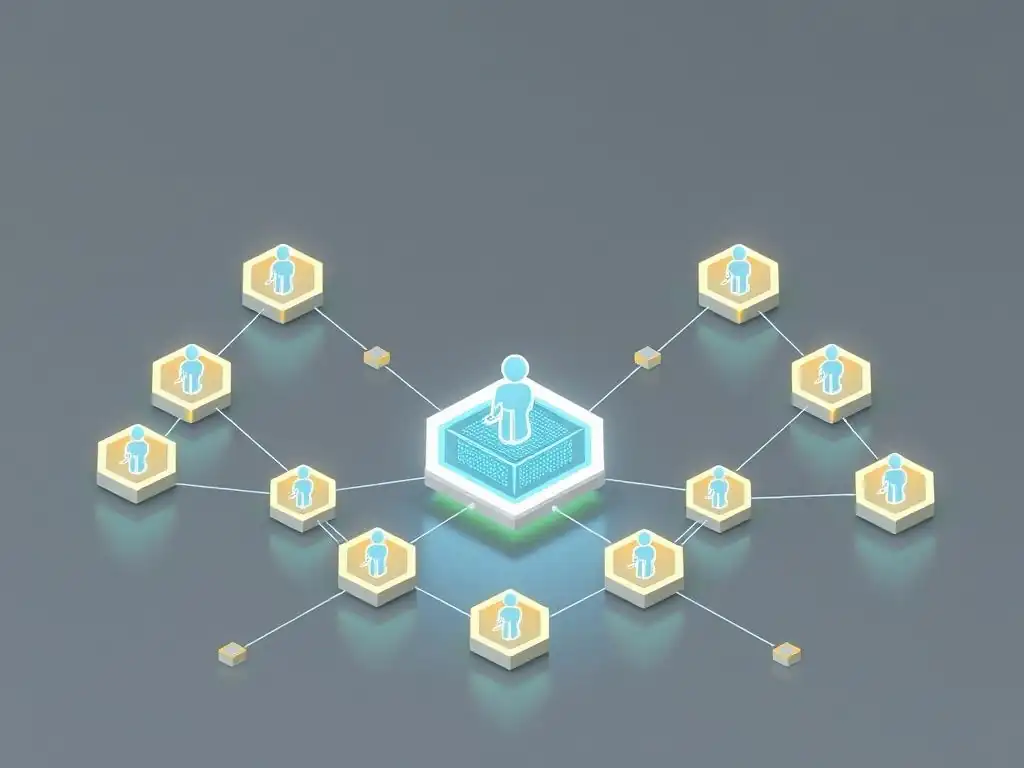
At the heart of Decentralized Identity are Decentralized Identifiers (DIDs) and Verifiable Credentials (VCs). A DID is a URI (Uniform Resource Identifier) that identifies a subject (person, organization, thing, etc.) and is designed to be resolvable to a DID document. The DID document contains cryptographic information, such as public keys, and service endpoints necessary to interact with the subject's DID. DIDs are typically anchored to a decentralized ledger, ensuring their persistence and global uniqueness without relying on a central naming authority. For example, a DID might look like did:example:123456789abcdefg.
Verifiable Credentials are data structures that represent claims made by an issuer about a subject. These claims are cryptographically signed by the issuer, making them tamper-evident and verifiable by any party (the verifier) that trusts the issuer and can access the issuer's public key (typically found via the issuer's DID). VCs are based on standards developed by the W3C, ensuring interoperability.
A VC contains information about the issuer, the subject, the claim itself (e.g., "degree: Bachelor of Science"), issuance date, and cryptographic proofs. The holder of the VC stores it and presents it to a verifier, who uses the proof and the issuer's DID document to verify the VC's authenticity and integrity without needing to contact the issuer directly in real-time.
Blockchain Platforms for DIDs (e.g., Polygon ID, Veramo)
While DID systems are designed to be ledger-agnostic, many implementations leverage blockchain technology to provide the decentralized, immutable layer needed for DID resolution and anchoring. Several blockchain platforms and frameworks are specifically designed or adapted to support DID systems.
Polygon ID, for instance, is a prominent example built on the Polygon network. It provides the tools for issuing and verifying zero-knowledge (ZK) based verifiable credentials, allowing users to prove facts about themselves without revealing the underlying sensitive data. Polygon ID focuses on privacy-preserving verification using ZK proofs, making it suitable for use cases requiring strong privacy guarantees. Veramo, on the other hand, is an open-source framework and suite of libraries for building DID applications.
It provides tools for creating, managing, and resolving DIDs, issuing and verifying VCs, and interacting with various decentralized identity networks and protocols. Veramo supports multiple DID methods and ledger integrations, offering flexibility for developers building Blockchain identity management solutions. Other platforms like Sovrin, cheqd, and ION (built on Bitcoin) also provide infrastructure specifically for decentralized identity.
Interoperability Solutions in the DID Ecosystem
Interoperability is a critical challenge and an ongoing area of development in the nascent DID ecosystem. For DIDs and VCs to be truly useful, they must be able to function seamlessly across different platforms, wallets, issuers, and verifiers, regardless of the underlying blockchain or ledger technology used. The W3C DID and Verifiable Credentials specifications provide foundational standards, but real-world interoperability requires more.
Efforts are underway to create robust interoperability frameworks. The Decentralized Identity Foundation (DIF) and the W3C are key organizations driving standardization. Initiatives like the Trust over IP (ToIP) Foundation are developing comprehensive architectures for digital trust ecosystems, including governance frameworks necessary for different parties (issuers, holders, verifiers) to trust each other and the technical infrastructure. Implementing common DID methods (like did:web, did:key, or ledger-specific methods) and ensuring wallets and verifiers correctly implement W3C standards for VCs are crucial steps. The development of cross-chain or multi-ledger DID resolution mechanisms is also essential to ensure that a DID registered on one network can be resolved and verified by a party operating on a different network, maximizing the Blockchain identity management solutions benefits across diverse digital environments.
Addressing DID Adoption Challenges
Scalability and Performance
One significant challenge facing widespread adoption of Decentralized Identity systems, particularly those leveraging blockchain, is scalability and performance. Traditional blockchains can sometimes face limitations in transaction throughput and latency, which could potentially impact the speed at which DIDs can be registered or updated, or the efficiency of verifying credentials if verification relies heavily on real-time ledger lookups. While storing the full credential on-chain is rare (only hashes or proofs are typically stored), resolving DIDs and verifying issuer status might interact with the ledger.
Solutions are being explored and implemented to address these issues. Layer 2 scaling solutions for blockchains, such as rollups or sidechains, can increase transaction capacity and reduce costs. Furthermore, many DID methods are designed to minimize on-chain interactions. For example, did:key doesn't require any ledger interaction for creation or resolution, while did:web uses existing web infrastructure. Methods anchored to scalable ledgers or using off-chain resolution mechanisms with on-chain anchoring for security are also being developed to ensure that DID systems can handle millions or billions of users and transactions required for global adoption, unlocking the full Blockchain identity management solutions benefits at scale.
User Experience and Accessibility
For Decentralized Identity to become mainstream, the user experience (UX) must be significantly improved. Current DID wallets and applications can sometimes be complex for the average user who is not familiar with concepts like public/private keys, seed phrases, or cryptographic proofs. Managing multiple DIDs and VCs across different wallets and platforms could become cumbersome if not designed intuitively.
Efforts are focused on developing user-friendly wallet interfaces that abstract away the underlying cryptographic complexity. This includes features like easy credential management, clear explanations of what is being shared during verification, and secure key recovery mechanisms that don't compromise the decentralized nature of the system. Designing accessible interfaces for diverse user groups, including those with limited technical literacy or disabilities, is also critical. The goal is to make managing a decentralized identity as simple, or even simpler, than managing traditional online accounts, ensuring that the Blockchain identity management solutions benefits are accessible to everyone.
Regulatory Compliance and Standardization
Navigating the complex landscape of global regulations presents another hurdle for DID adoption. While DID systems offer technical solutions for privacy and control that align with regulations like GDPR or CCPA, the legal recognition of DIDs and Verifiable Credentials varies significantly across jurisdictions. Clarity is needed on how DIDs are treated legally, the legal status of VCs as proof of identity or claims, and the responsibilities of issuers, holders, and verifiers within a decentralized framework.
Ongoing standardization efforts by bodies like the W3C, DIF, and ToIP are crucial for establishing common protocols and governance frameworks that can be recognized and potentially incorporated into regulations. Collaboration between technologists, legal experts, and policymakers is essential to develop clear guidelines and legal frameworks that support the use of DID while ensuring compliance with existing and future identity-related regulations. Achieving this regulatory clarity and technical standardization is vital for fostering trust and enabling widespread adoption of Blockchain identity management solutions.
The Future of Trust: DID and Beyond
The Role of AI in Identity Management
The intersection of Artificial Intelligence (AI) and identity management, particularly within decentralized frameworks, holds significant potential. AI can be used to enhance the security and usability of DID systems. For example, AI algorithms could help detect fraudulent credential issuance attempts or suspicious activity patterns associated with a DID. Machine learning could also personalize the user experience within DID wallets, suggesting relevant credentials to share or helping users manage their digital footprint more effectively.
Furthermore, AI models themselves could potentially be assigned DIDs, allowing for the verification of their origin, version, or training data through verifiable credentials. This could be crucial for establishing trust in AI systems, especially in sensitive applications. However, integrating AI also raises new privacy concerns; it is paramount that AI tools used within DID systems are designed with privacy-preserving techniques and adhere strictly to the principles of SSI, ensuring that AI enhances, rather than undermines, user control and data protection, maximizing the ethical Blockchain identity management solutions benefits.
Impact on Digital Governance and Online Communities
Decentralized Identity has the potential to fundamentally change digital governance and the dynamics of online communities. By providing verifiable, self-sovereign identities, DID enables new models for online participation, voting, and reputation management. Users can prove their identity or qualifications (e.g., being a resident of a specific city, holding a professional license) to participate in online governance processes without revealing their full personal identity.
This can facilitate more secure and trustworthy online voting systems, enhance moderation in online forums by allowing verifiable reputation or expertise, and enable decentralized autonomous organizations (DAOs) to manage membership and access based on verifiable attributes rather than relying on centralized databases. The ability to link verifiable credentials to online personas can foster more accountable and civil online interactions, moving beyond anonymous free-for-alls while still preserving user privacy where needed. This represents a significant Blockchain identity management solutions benefit for building more trustworthy and functional digital societies.
Future Trends in Decentralized Identity
Several key trends are shaping the future of Decentralized Identity. One is the increasing focus on privacy-preserving technologies like Zero-Knowledge Proofs (ZKPs), which allow users to prove they meet certain criteria (e.g., "I am over 18") without revealing the specific data point (e.g., their birth date). This will make DID systems even more privacy-centric.
Another trend is the development of institutional and enterprise adoption. As standards mature and successful pilot programs demonstrate the Blockchain identity management solutions benefits in areas like supply chain, finance, and government services, more large organizations are expected to integrate DID into their operations.
We will also likely see greater convergence and interoperability between different DID methods and networks, creating a more unified global identity layer. Finally, the integration of DID with other emerging technologies like Web3, the Metaverse, and IoT is anticipated, enabling verifiable identities and credentials for digital assets, avatars, and connected devices, further expanding the scope and impact of decentralized trust.
Conclusion: Embracing the DID Revolution
Transformative Potential of Self-Sovereign Identity
The shift towards Self-Sovereign Identity, powered by Decentralized Identity technology and blockchain, represents a profound transformation in how we manage trust and identity in the digital world. By moving away from vulnerable, centralized systems, DID empowers individuals with unprecedented control over their personal data, dramatically enhancing security and privacy. The Blockchain identity management solutions benefits are clear: reduced risk of mass data breaches, greater user autonomy, streamlined processes, and significant cost savings for organizations across various sectors.
From securing supply chains and simplifying educational credential verification to enhancing privacy in healthcare and revolutionizing digital interactions, DID offers tangible solutions to long-standing problems with traditional identity models. While challenges related to scalability, user experience, and regulatory clarity remain, ongoing development and collaboration are steadily paving the way for broader adoption.
Building a More Trustworthy Digital Future
Embracing the Decentralized Identity revolution is essential for building a more trustworthy, equitable, and efficient digital future. By putting individuals in control of their identities, we can foster a digital environment where privacy is a default, security is inherent, and interactions are based on verifiable trust rather than reliance on centralized intermediaries.
The widespread implementation of Blockchain identity management solutions benefits not just individuals, but also businesses and governments, by creating more secure systems, reducing fraud, lowering administrative costs, and enabling innovative new services. As the technology matures and standards become universally accepted, Decentralized Identity is set to become a foundational layer of the next generation of the internet, enabling a future where digital trust is not granted by institutions, but earned and verified through decentralized, user-controlled means.
Frequently Asked Questions
What are the primary benefits of blockchain identity management solutions compared to traditional systems?
Blockchain identity management offers enhanced security through cryptography, greater user control over personal data, and improved trust due to its decentralized and immutable nature.
How does decentralized identity (DID) relate to blockchain identity management solutions?
DIDs are a core component of blockchain identity management, enabling individuals to own and control their digital identities independently of centralized authorities, leveraging the security and transparency of the blockchain.
Besides security, what other practical benefits of blockchain identity management solutions exist for businesses?
Businesses benefit from reduced administrative overhead, improved data privacy compliance (e.g., GDPR), and enhanced interoperability of identity data across different systems.
What is the role of regulation in the adoption of blockchain identity management solutions?
Regulation plays a crucial role in shaping the future of blockchain identity, influencing the legal framework for data privacy, standards for interoperability, and trust in decentralized systems.
How can blockchain identity management solutions contribute to a more trustworthy digital world beyond financial applications?
By providing verifiable credentials and self-sovereign identity, blockchain identity management fosters trust in areas like supply chain management, healthcare, and government services, enhancing transparency and accountability.
Final Reflection: Embracing Trust in a Decentralized Future
The exploration of decentralized identity and its potential to revolutionize trust in the digital realm culminates in a powerful realization: the future of online interaction hinges on empowering individuals with control over their own data. The benefits of blockchain identity management solutions, as we've discussed, are not merely theoretical advantages; they represent a fundamental shift towards a more secure, transparent, and equitable digital landscape, one where trust is earned through verifiable credentials, not granted by centralized authorities.
This shift has profoundly influenced, and continues to influence, the cultural and social landscape. The promise of self-sovereign identity resonates deeply with the growing desire for autonomy and privacy in an increasingly surveilled world. It's about more than just convenience; it's about reclaiming ownership of our digital selves. Identity is the new perimeter of security, and individuals must be at the center of it.
This quote underscores the urgency of adopting decentralized solutions that prioritize individual agency and control over personal information.
As we conclude this exploration, I invite you to consider your own role in shaping this decentralized future. How can you advocate for and adopt blockchain identity management solutions in your own life and work? The power to build a more trustworthy and equitable digital world lies within each of us. Let us embrace the potential of decentralized identity to create a future where trust is not a privilege, but a fundamental right.
Unlock Your Digital Freedom: Start Building Your Decentralized Identity Today!
Thanks for exploring the concept of decentralized identity and its potential to transform digital trust. You now have a clear understanding of how this technology can empower you and give you greater control over your online presence. Are you ready to take the next step?
Here are some actions you can take right now:
- Claim your first decentralized identity! Use platforms like Civic or Sovrin to get started and experience the future of digital ownership firsthand.
- Dive deeper into the technical aspects: research different DID methods such as DID:Web or DID:Key to understand various approaches. This will help you determine which one best suits your needs.
- Share this article with your network to spark a conversation about decentralized identity. Let's educate others about this revolutionary technology!
What steps are you taking today to reclaim control of your digital identity? Share your thoughts and experiences in the comments below!
Leave a Reply